Premises and facilities management
Slip, trip, and fall prevention: keeping floors, stairs, and walkways safe every day
Slip, trip, and fall prevention means keeping floors clean and dry, walkways clear, and walking surfaces in good repair, and inspecting them regularly so that any hazard is fixed or guarded before employees or visitors use the surface again.
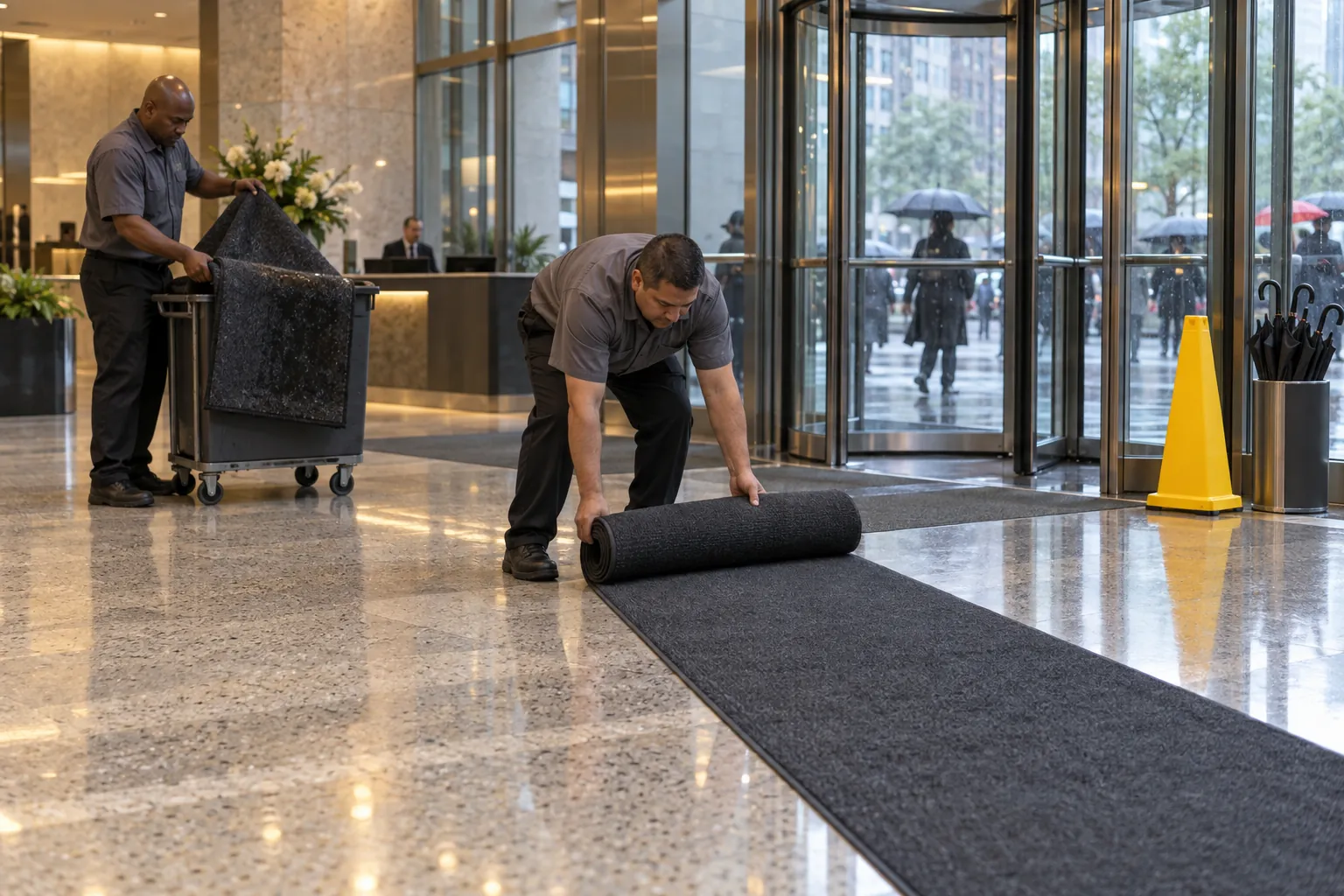
Most slips, trips, and falls in a commercial building happen in the same few places: the entrance on a wet morning, the restroom floor, the stair with a worn nosing, the cord across a walkway, the sidewalk after an overnight freeze. None of them needs an engineering project to fix. They need someone to look, someone to act, and a way of knowing both happened. This guide covers what OSHA's walking-working surfaces standard requires, where the hazards are, the controls that work, how often to check, and what a useful record looks like.
01
What OSHA requires: 29 CFR 1910.22
For most private employers in general industry, the rule is 29 CFR 1910.22, General requirements, in Subpart D, Walking-Working Surfaces, as rewritten by OSHA's 2016 final rule; most of its provisions took effect on January 17, 2017. OSHA's Walking-Working Surfaces page calls slip, trip, and fall hazards among the leading causes of serious work-related injuries and deaths.
The standard is short, and four paragraphs do most of the work:
- Surface conditions, 1910.22(a). All places of employment, passageways, storerooms, service rooms, and walking-working surfaces are "kept in a clean, orderly, and sanitary condition." The floor of each workroom is "maintained in a clean and, to the extent feasible, in a dry condition," and where wet processes are used, drainage is maintained and "dry standing places, such as false floors, platforms, and mats" are provided where feasible. Surfaces are kept free of hazards such as "sharp or protruding objects, loose boards, corrosion, leaks, spills, snow, and ice."
- Loads, 1910.22(b): each surface can support the maximum intended load. Access and egress, 1910.22(c): the employer provides, and ensures each employee uses, a "safe means of access and egress."
- Inspection, maintenance, and repair, 1910.22(d). Walking-working surfaces are "inspected, regularly and as necessary, and maintained in a safe condition"; hazardous conditions are "corrected or repaired before an employee uses the walking-working surface again," and if that cannot be done immediately, "the hazard must be guarded to prevent employees from using the walking-working surface" until it is; and where a repair involves structural integrity, "a qualified person performs or supervises the correction or repair."
Under the definitions in 29 CFR 1910.21, a walking-working surface is any horizontal or vertical surface on or through which an employee walks, works, or gains access to a work area or workplace location: the lobby, restroom, stairwell, loading dock, and roof walkway all count. And under 29 CFR 1910.37, exit routes must be free and unobstructed, with no materials or equipment placed in them, even temporarily.
The cost is not abstract. NIOSH's page on falls in the workplace reports that in 2020, 805 workers died from falls and 211,640 private-sector workers were injured badly enough to need days away from work. It says the highest counts of nonfatal fall injuries are in the educational and health services and the healthcare and social assistance industries, and names nursing and residential care and building cleaning and maintenance among the other industries at high risk of fall injuries.
02
Where slips, trips, and falls happen in a commercial building
A slip is a loss of traction on water, grease, polish, ice, or dust. A trip is a foot caught by something unseen: a cord, a curled mat edge, a lip in the floor. NIOSH says falls in the workplace frequently involve water, grease, and other contaminants on the floor, clutter in walkways, and irregularities in the floor, and the same places come up in almost every building:
- Entrances and vestibules: rain, snow, and slush carried in on shoes, and the transition from mat to hard floor.
- Restrooms: water around sinks and urinals, leaks under fixtures, and floors mopped while people are still using them.
- Break rooms, cafeterias, and kitchens: spilled drinks and food, grease near cooking equipment, and ice machine drip.
- Freshly cleaned or refinished floors: wet mopping, water left at the edges by an auto-scrubber, and finish that is slick while it cures.
- Stairs: worn or loose nosings, missing contrast on the edge, poor lighting, handrails that are loose or blocked, and items left on treads.
- Loading docks and back-of-house corridors: dock plates, uneven slabs, pallet wrap, and liquid from trash carts.
- Offices and corridors: cords and cables across walkways, lifted carpet seams, curled mat edges, open file drawers, and boxes stacked in circulation space.
- Changes in level and uneven walking surfaces: thresholds, expansion joints, and the small step nobody expects. The 2010 ADA Standards for Accessible Design ask for floor and ground surfaces on an accessible route that are "stable, firm, and slip resistant" (302.1) and allow a vertical change in level of up to 1/4 inch, with changes between 1/4 and 1/2 inch beveled (303.2 and 303.3); a lip bigger than that on a main route is worth a work order.
Your building's list will be shorter and more specific. Build it with the people who clean, patrol, and maintain the building, and from last year's incident and near-miss reports.
03
The controls that work: floors, mats, signs, footwear, and light
OSHA's Recommended Practices for Safety and Health Programs put it simply: finding and fixing hazards before they cause injury is far more effective than waiting. For slips, trips, and falls, what reduces the risk is mostly housekeeping and maintenance done at the right time and place.
- Keep contamination off the floor. Entrance matting long enough to take several steps on, kept flat and changed out when it is saturated; drip trays and absorbent mats at ice machines and drinking fountains; leaks reported and fixed rather than mopped every day.
- Clean up spills at once, and clean wet in sections. The custodian who finds a spill guards it and cleans it, rather than walking on to get the right tools. Wet mopping and scrubbing go in halves or sections that leave a dry path, at quiet times where possible, and the floor is dry before traffic returns.
- Use caution signs properly. Under 29 CFR 1910.145, caution signs are used "only to warn against potential hazards or to caution against unsafe practices." A wet-floor sign warns while the hazard is there; it does not make the floor safe, and one left out all day teaches people to ignore it. Put it out before the floor gets wet and take it in when the floor is dry.
- Clear walkways and exit routes. Carts, boxes, and equipment go in storage, not in corridors or stairwells. Cords are routed along walls or covered with a cord protector, not left across a walkway.
- Maintain stairs and handrails. Secure nosings, keep edge contrast visible, keep treads clear, and fix a loose rail the day it is found.
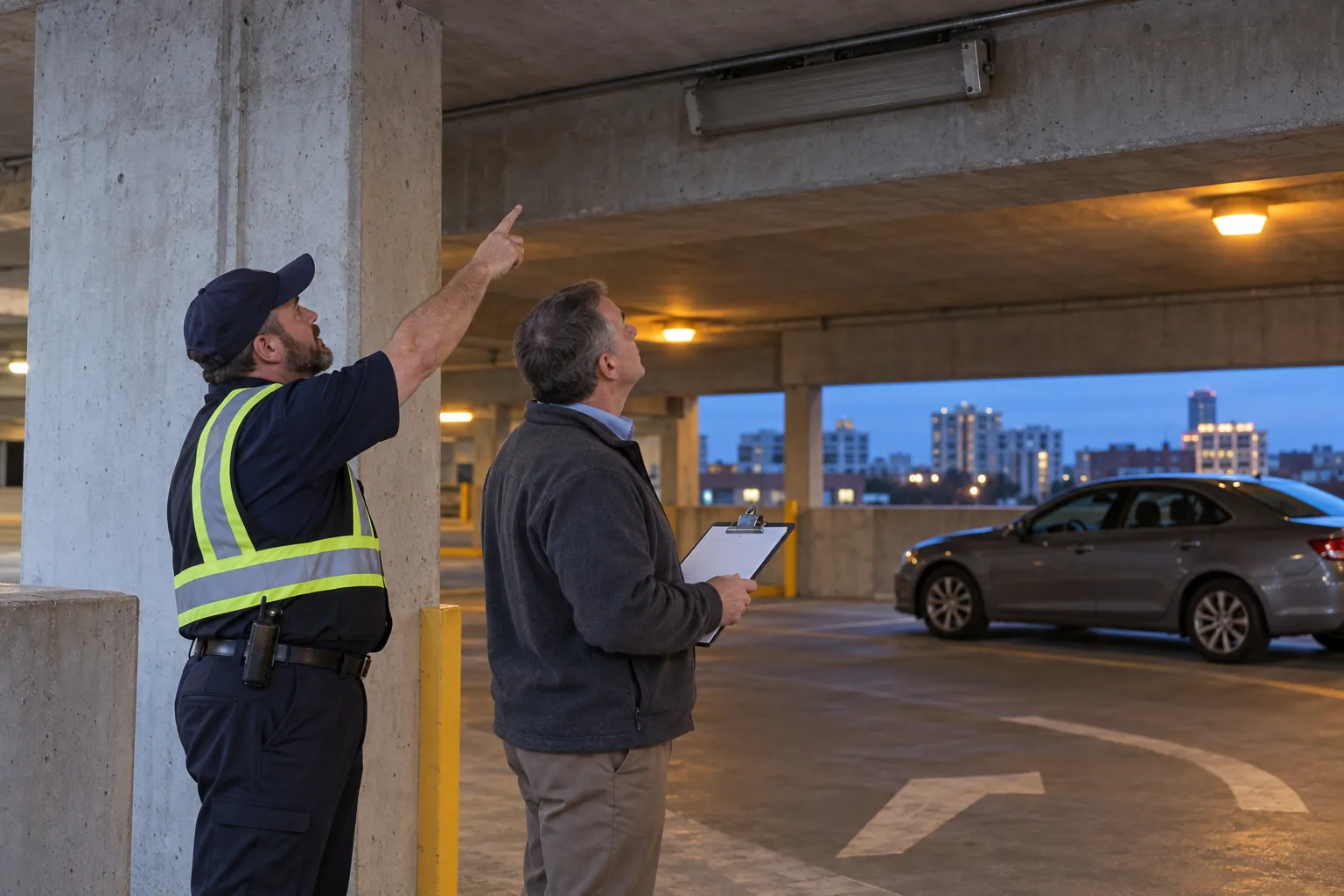
- Light the route. Replace failed lamps in stairwells, parking structures, and back corridors promptly, and check exterior lighting after dark.
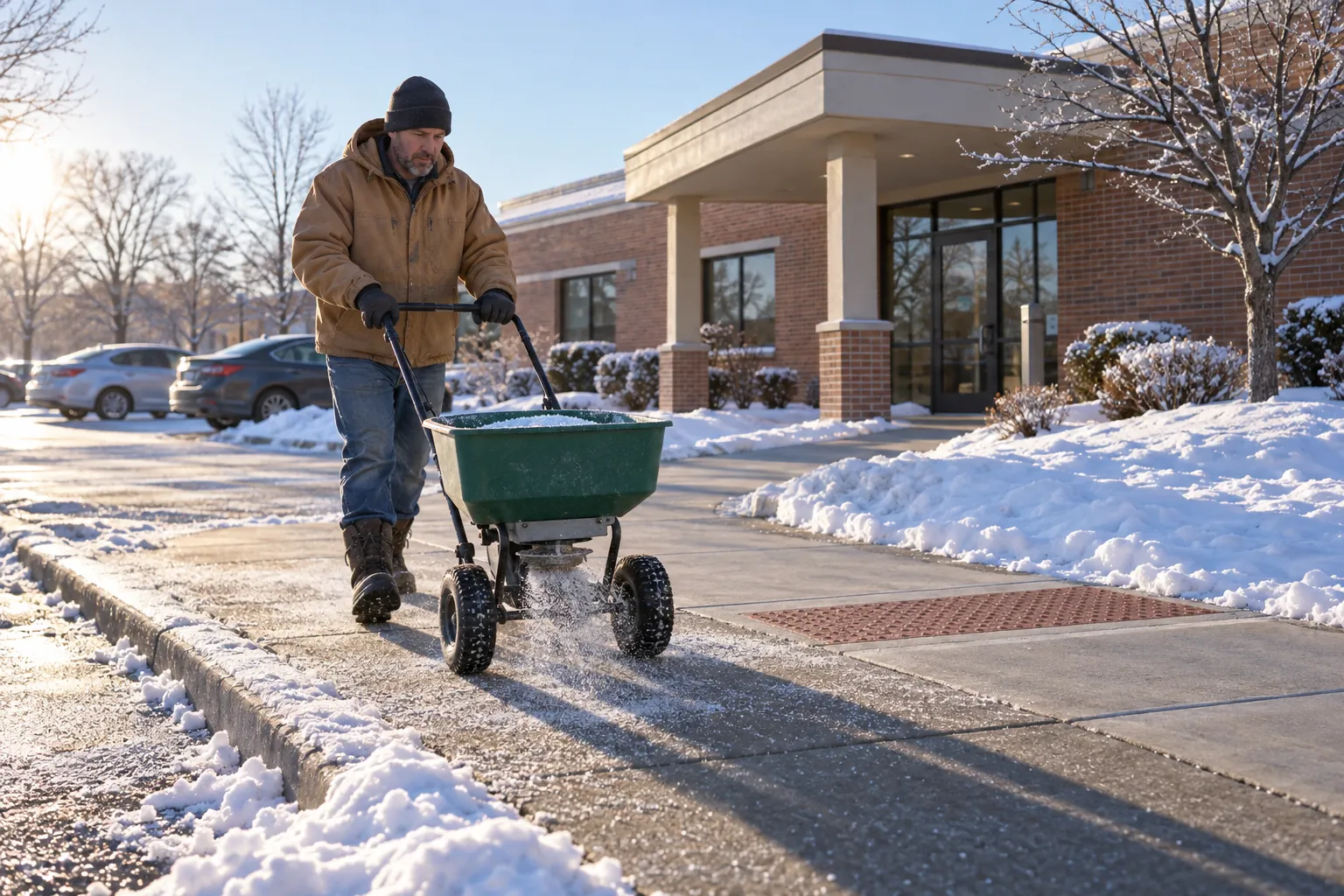
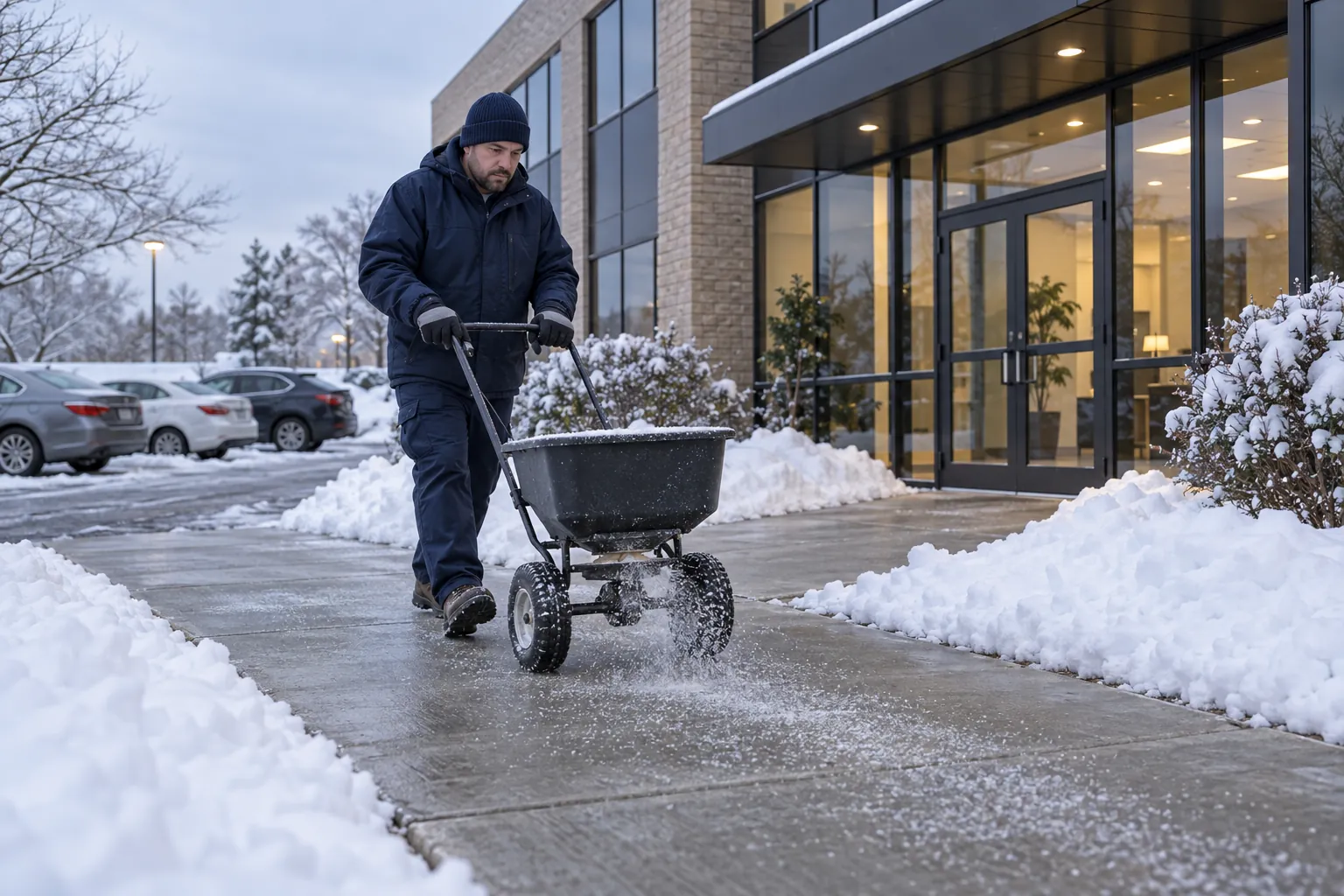
- Plan for winter. OSHA's winter weather hazards guidance tells employers to "clear walking surfaces of snow and ice, and spread deicer, as quickly as possible after a winter storm," and recommends boots with good rubber treads for walking during or after a storm.
- Footwear for the job. NIOSH names slip-resistant footwear as one way to cut fall injuries; where a crew works on wet or greasy floors, say what is expected.
None of this is a one-time project: a mat that was right in October is saturated in January. That is why 1910.22(d) is about inspection and repair, not only design.
04
Who checks what, and how often
1910.22(d) says surfaces are inspected "regularly and as necessary," and sets no fixed frequency. The frequency is the employer's to decide, and it should follow the traffic, the weather, and what the building's own history shows. A practical routine for a mid-sized office, school, or retail building looks something like this:
- Opening walk, every day: entrances, lobbies, main corridors, and stair cores before the building fills, usually by the day porter or the security officer on the morning patrol.
- Entrance checks during wet weather: every hour or more often while it is raining or snowing, with mats swapped when they stop absorbing.
- Restroom checks: on the building's normal restroom round, looking at the floor as well as the supplies.
- After floor work: the floor and its edges are dry and the signs collected.
- Weekly: stairs, handrails, nosings, stairwell lighting, back corridors, the loading dock, and cords in open-plan areas.
- Monthly: sidewalks, parking lots, curbs, drainage, and exterior lighting after dark; carpet seams and transitions.
- Before and after storms: the snow and ice plan, with each pass recorded; see the snow removal log guide.
- As necessary: after a leak, a delivery, a renovation, or an event.
The people who see the floors most rarely own the budget. Custodial and day porter crews find the spills and lifted mats; security officers on patrol see the unlit stair and the ice at the side door at 2 a.m.; the building engineer fixes the nosing and the leak; the facility manager or property manager sets the routine and approves the capital repair. Write down who does each check, including nights and weekends, and who fixes what they find.
Where cleaning, security, or maintenance is contracted, put the split in the contract or the post orders: which checks the contractor makes, how fast a spill is dealt with, and how a building defect is reported. A crew paid to clean may not repair a stair edge, but it can guard it and report it within minutes.
The safety walkthrough, a manager and the crew walking together, is the less frequent, wider look. It complements the routine checks; it does not replace them.
05
Fixing hazards, and what good evidence looks like
The order in 1910.22(d)(2) is the right one for any finding: correct the hazard before anyone uses the surface again, and if that cannot be done at once, guard it until it is. A spill is cleaned. A loose nosing is coned off and the stair closed until the building engineer arrives. A pothole in a walkway gets a barricade today and a repair this week. Where the repair affects structural integrity, such as a damaged stair or a failing dock leveler, 1910.22(d)(3) requires a qualified person to perform or supervise it: under 1910.21, someone who, by a recognized degree, certificate, or professional standing, or by extensive knowledge, training, and experience, has successfully demonstrated the ability to solve or resolve problems relating to the subject matter, the work, or the project.
A useful record answers the questions asked after a fall: was this area checked, when, by whom, what was found, and what was done. A good record shows:
- Where: the specific location, not "first floor": the east entrance vestibule, the stair B landing at level 3.
- When: the date and time of the check as it happened, not a column filled in at the end of the shift.
- Who: the named person who made the check.
- What was found: nothing, or the hazard in a few words, with a photo where it helps.
- What was done: cleaned, guarded, reported, and to whom; and when the repair was completed and checked.
- What was missed: a check that was due and not done, with the reason, such as a crew short on the night or an area locked.
Hazards found before anyone is hurt belong in near-miss reporting, which is where the patterns show up: the same entrance on every wet day, the same stair every month. When someone is hurt, the employer's own process for a workplace incident report applies, and a work-related injury that meets OSHA's recording criteria goes, for an employer required to keep one, on the OSHA 300 log.
06
Where the record fails, and what SiteClara does about it
Slip and fall records fail in familiar ways. The restroom sheet on the back of the door is initialed for the whole afternoon at 1 p.m. The wet-weather entrance checks are in the post orders and nowhere else. The night security officer mentions the ice at the side door to the day porter, and nothing is written down until someone falls there.
SiteClara works on those gaps for the routine checks. A printed QR poster at each location, with an optional NFC tag behind it, lets staff scan or tap with their own phone, with no app to install. They see the checks due there, such as the hourly entrance check on a wet day, and mark each one done or say what stopped them, with a photo when asked. A hazard found there is reported with a photo and stays on the team's list of jobs until someone closes it.
The supervisor sees what was due, done, and missed, and can record why a check was missed. A job the team cannot fix, such as a sidewalk repair that needs capital money, can be escalated to the building manager to answer. Each day the supervisor approves a report that goes to nominated management or client contacts at 8 a.m. the next morning: what was reported, what was completed, and what is still open.
07
Questions people ask
What does OSHA say about slips, trips, and falls?
OSHA's Walking-Working Surfaces page says that falls from heights and on the same level are among the leading causes of serious work-related injuries and deaths. For general industry, 29 CFR 1910.22, General requirements requires floors kept clean and, to the extent feasible, dry, and walking-working surfaces kept free of hazards such as leaks, spills, snow, and ice. It also requires surfaces to be inspected regularly and as necessary, with hazardous conditions corrected or repaired before an employee uses the surface again.
What is the main thing you should do to prevent slips, trips, and falls?
Find hazards and fix them before anyone is hurt. OSHA's Recommended Practices for Safety and Health Programs say that finding and fixing hazards before they cause injury or illness is "a far more effective approach." For slips, trips, and falls, that means regular checks of floors, stairs, and walkways, spills cleaned up at once, and anything that cannot be fixed right away guarded until it is, as 29 CFR 1910.22(d) requires.
What are the most common slip, trip, and fall hazards in the workplace?
NIOSH's Falls in the Workplace page says falls in the workplace frequently involve water, grease, and other contaminants on the floor, clutter and tripping hazards in walkways, and irregularities in the floor. It names slip-resistant footwear and educating the workforce among the ways to reduce fall injuries.
Is there a slip, trip, and fall prevention guide for healthcare workers?
Yes: NIOSH's Slip, Trip, and Fall Prevention for Healthcare Workers (DHHS (NIOSH) Publication No. 2011-123). It sets out ten hazards, from contaminants on the floor, poor drainage, uneven walking surfaces indoors and out, ice and snow, and inadequate lighting to stairs and handrails, stepstools and ladders, clutter and loose cords, and the improper use of floor mats and runners, and its tools section includes a slips, trips, and falls checklist. Most of it applies to any building with heavy foot traffic.
08
Where to read more, and a list to take away
Start with 29 CFR 1910.22 and its definitions in 29 CFR 1910.21; OSHA's Walking-Working Surfaces page links the 2016 final rule, a fact sheet, and questions and answers. Read NIOSH's falls in the workplace page, OSHA's winter weather hazards for exterior surfaces, and the 2010 ADA Standards for accessible routes. In a State Plan state, read the state's own rule, and check the local building and property maintenance codes your jurisdiction has adopted.
Before the next wet week, check that:
- you have a list of the building's slip, trip, and fall locations, built with the people who clean, patrol, and maintain it;
- each location has a check, a frequency, and a named owner, including nights, weekends, and bad weather;
- entrance mats are long enough, flat, and swapped when saturated;
- wet cleaning leaves a dry path, and caution signs go out before the floor is wet and come in when it is dry;
- spills are guarded and cleaned by whoever finds them, and leaks are reported for repair;
- each hazard is recorded with a location, a time, a name, a photo, and what was done, and closed only when the fix is checked;
- the records are reviewed for repeat locations at least once a quarter.
Sources
Every document this guide quotes or links to, in the order it first cites them.
- 29 CFR 1910.22, General requirements osha.gov
- Walking-Working Surfaces osha.gov
- 29 CFR 1910.21 osha.gov
- 29 CFR 1910.37 osha.gov
- State Plans osha.gov
- Falls in the workplace cdc.gov
- 2010 ADA Standards for Accessible Design ada.gov
- Recommended Practices for Safety and Health Programs osha.gov
- 29 CFR 1910.145 osha.gov
- Winter weather hazards osha.gov
- Slip, Trip, and Fall Prevention for Healthcare Workers cdc.gov
Related guides
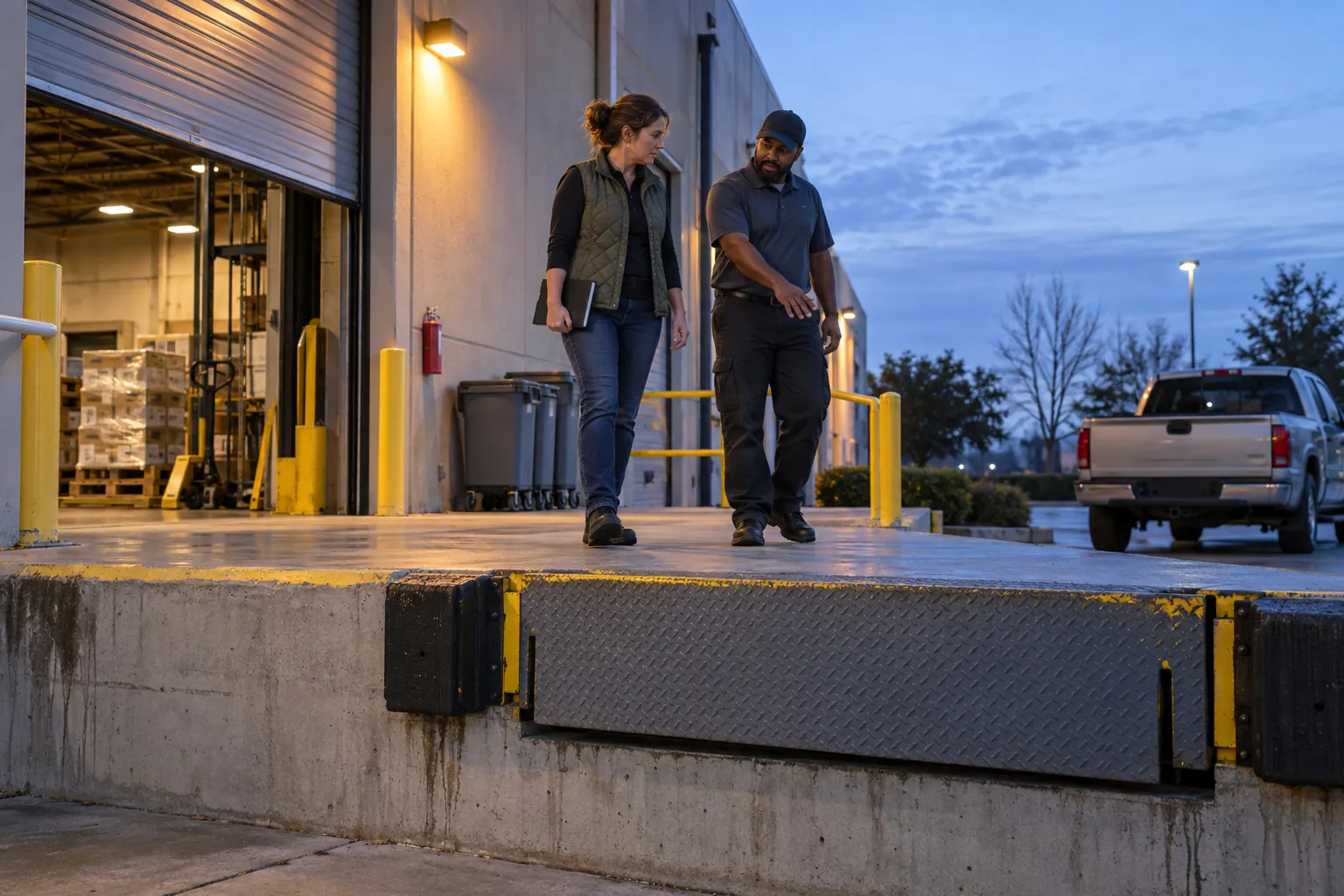 Premises and facilities managementSafety walkthroughs: how to walk a building, talk to the crew and fix what you findWhat a safety walk is under OSHA's Recommended Practices, what to look at in a commercial building, how often to walk, how to record findings and close them out.
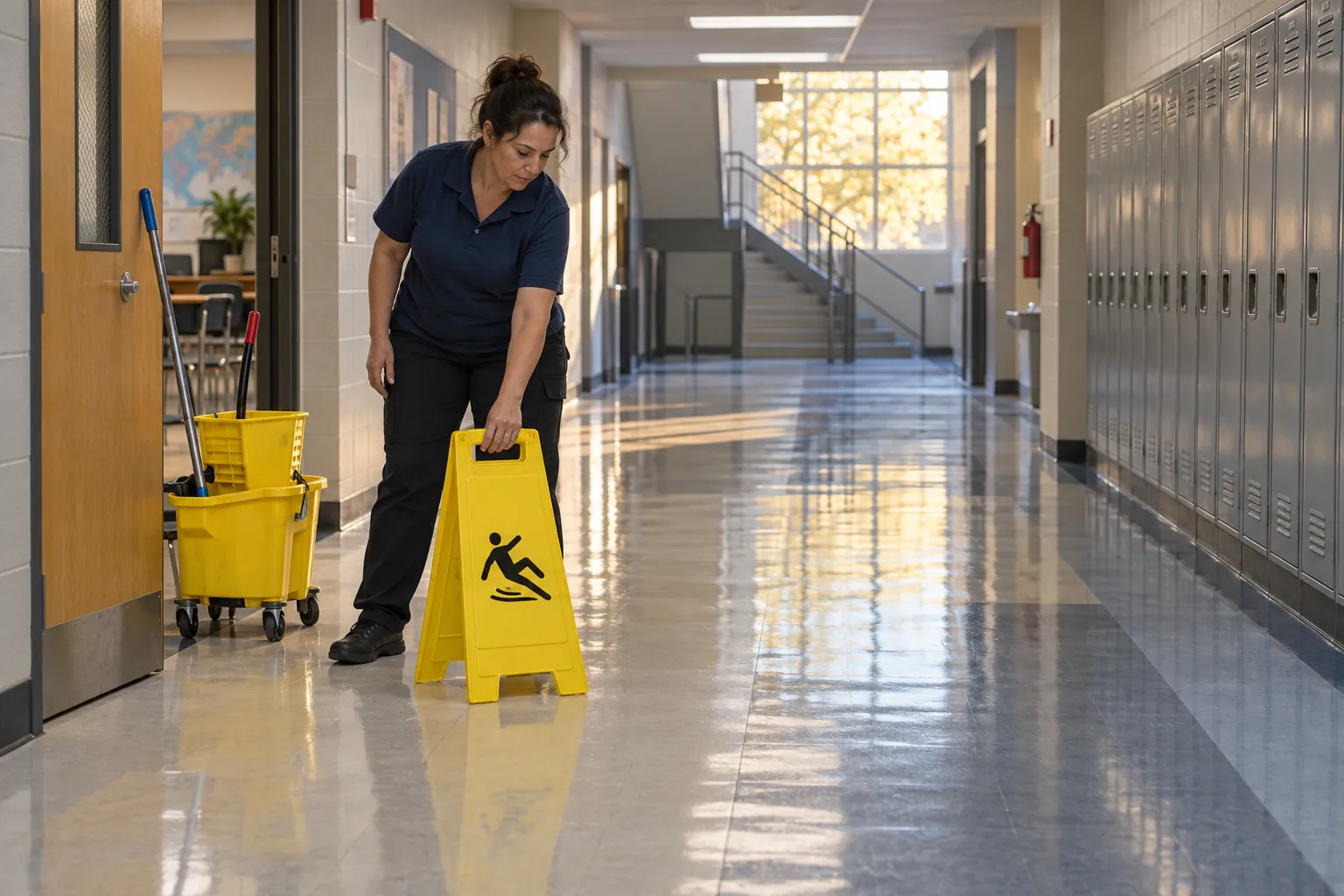 CleaningWet floor sign requirements: what OSHA asks for, and how to use the sign wellWhat OSHA and ANSI Z535 require of a wet floor sign, when one is needed, where to place it, when to take it in, and how to show the wet floor was managed.
 Premises and facilities managementSnow removal log: what to record, and how to make it stand upWhat a snow removal log for a commercial property should record, the OSHA and local rules behind it, how often to check, and what makes the log worth having.
 Premises and facilities managementNear miss reporting: catching the close calls before they become injuriesWhat counts as a near miss, what OSHA recommends, what a near miss report should capture, and how to follow it up so people keep reporting in your buildings.