Premises and facilities management
Winterization checklist: getting a commercial building ready for freezing weather
A winterization checklist is the list of tasks that gets a building ready for winter, covering freeze protection for water-filled pipes and fire sprinklers, the heating plant and HVAC system, windows and doors, outside water to drain, and snow and ice.
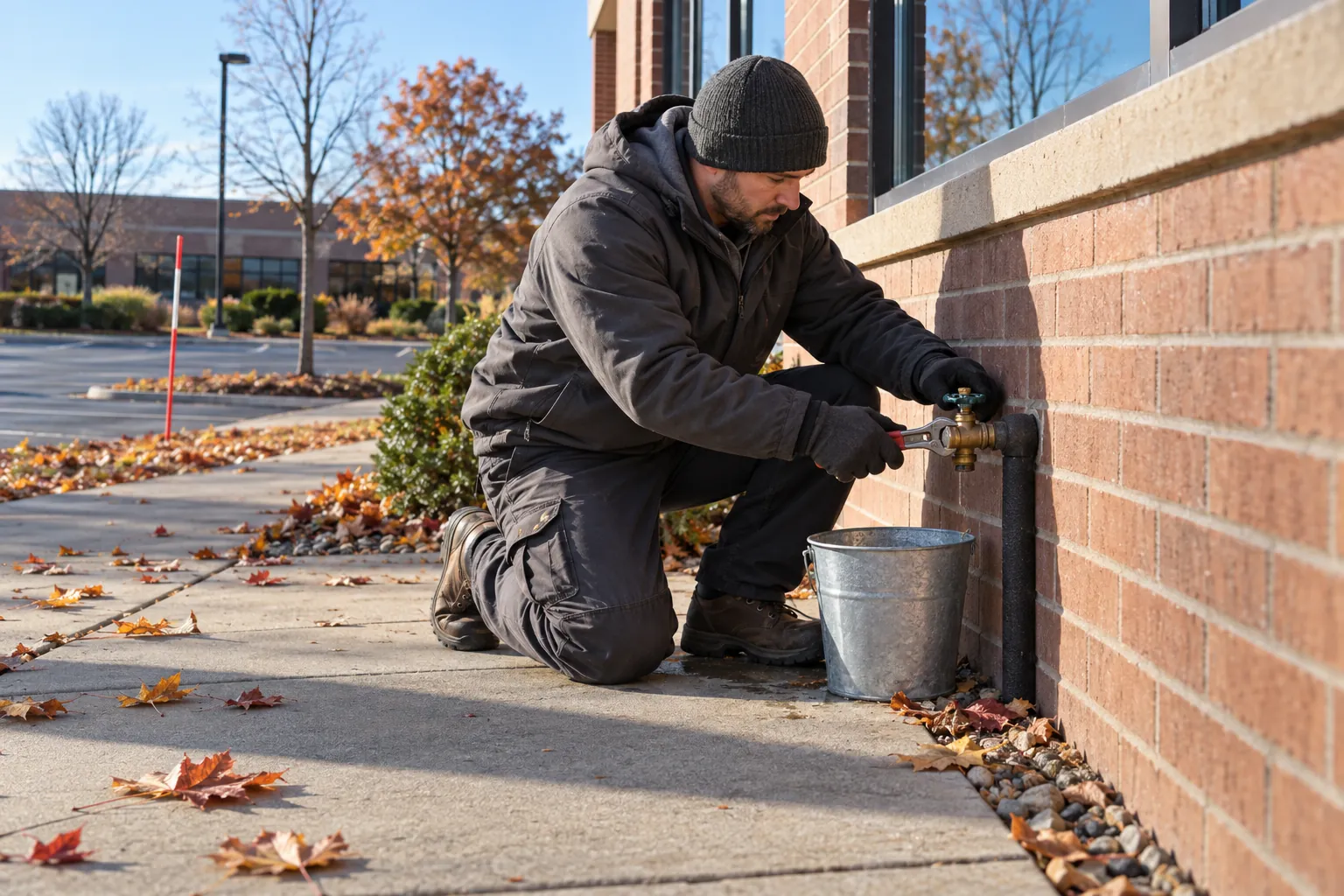
A facility team starts it before freezing weather arrives and keeps working through it until spring. This guide covers the duties behind it, what the checklist should include, when each part is done, who does it, and what a record of it should show.
01
What a winterization checklist is, and the duties behind it
No federal rule is called "winterization." A winterization checklist gathers several duties that bite hardest in cold weather, plus the maintenance a building needs to get through a freeze without a burst pipe, a frozen sprinkler main or a fall on an icy sidewalk. For an office, school, church, warehouse or apartment community, the duties usually come from four places.
- Walking-working surfaces. Under OSHA's general industry standard, 29 CFR 1910.22, walking-working surfaces must be "maintained free of hazards such as sharp or protruding objects, loose boards, corrosion, leaks, spills, snow, and ice," and "inspected, regularly and as necessary, and maintained in a safe condition." A hazard has to be corrected before anyone uses the surface again, or guarded until it is.
- Exit routes. 29 CFR 1910.37 says "exit routes must be free and unobstructed," and 29 CFR 1910.36 requires each exit discharge to "lead directly outside or to a street, walkway, refuge area, public way, or open space with access to the outside." A fire exit door drifted shut with snow, or an exit path that ends in an unplowed yard, is an egress problem as well as a slip hazard.
- Fire sprinklers. Where an automatic sprinkler system is installed to meet an OSHA standard, 29 CFR 1910.159 requires the employer to "assure that automatic sprinkler system piping is protected against freezing and exterior surface corrosion," and that dry sprinkler pipes can be totally drained. More widely, the fire code your jurisdiction has adopted usually calls up NFPA 25, Standard for the Inspection, Testing, and Maintenance of Water-Based Fire Protection Systems. NFPA's own summary of the owner's duties under that standard is plain: the owner is responsible for ensuring that all areas of the building containing water-filled piping "that does not have another means of freeze protection shall be maintained at a minimum temperature of 40°F (4°C)."
- Workers in the cold. OSHA's Winter Weather guidance says employers "must prevent illnesses, injuries, or fatalities, by controlling these hazards in workplaces impacted by winter weather," and its winter weather hazards page adds that employers "must evaluate snow removal tasks for hazards and plan how to do the work safely."
Two cautions before you cite any of this. First, 21 states and Puerto Rico run their own OSHA-approved State Plans covering private employers, and seven more plans (six states and the U.S. Virgin Islands) cover only state and local government workers; a State Plan must be "at least as effective as OSHA," and some go further. Check which applies to your building before citing 29 CFR. Second, NFPA 25 is a standard, not law, until a jurisdiction adopts it, usually through the International Fire Code or NFPA 1, with local amendments, and the authority having jurisdiction (AHJ), normally the fire marshal, decides what applies. Your property insurer may add freeze requirements of its own.
02
What a commercial winterization checklist covers
The list below is a starting point for a typical commercial building. Walk your own building with the building engineer and add every cold spot, outside tap and exposed pipe run you find.
- Building envelope. Windows and doors close and latch fully, weatherstripping and door sweeps are intact, broken glass is replaced, louvers and dampers close, and holes where pipes and cables pass through outside walls are sealed. Loading dock doors and seals get the same attention.
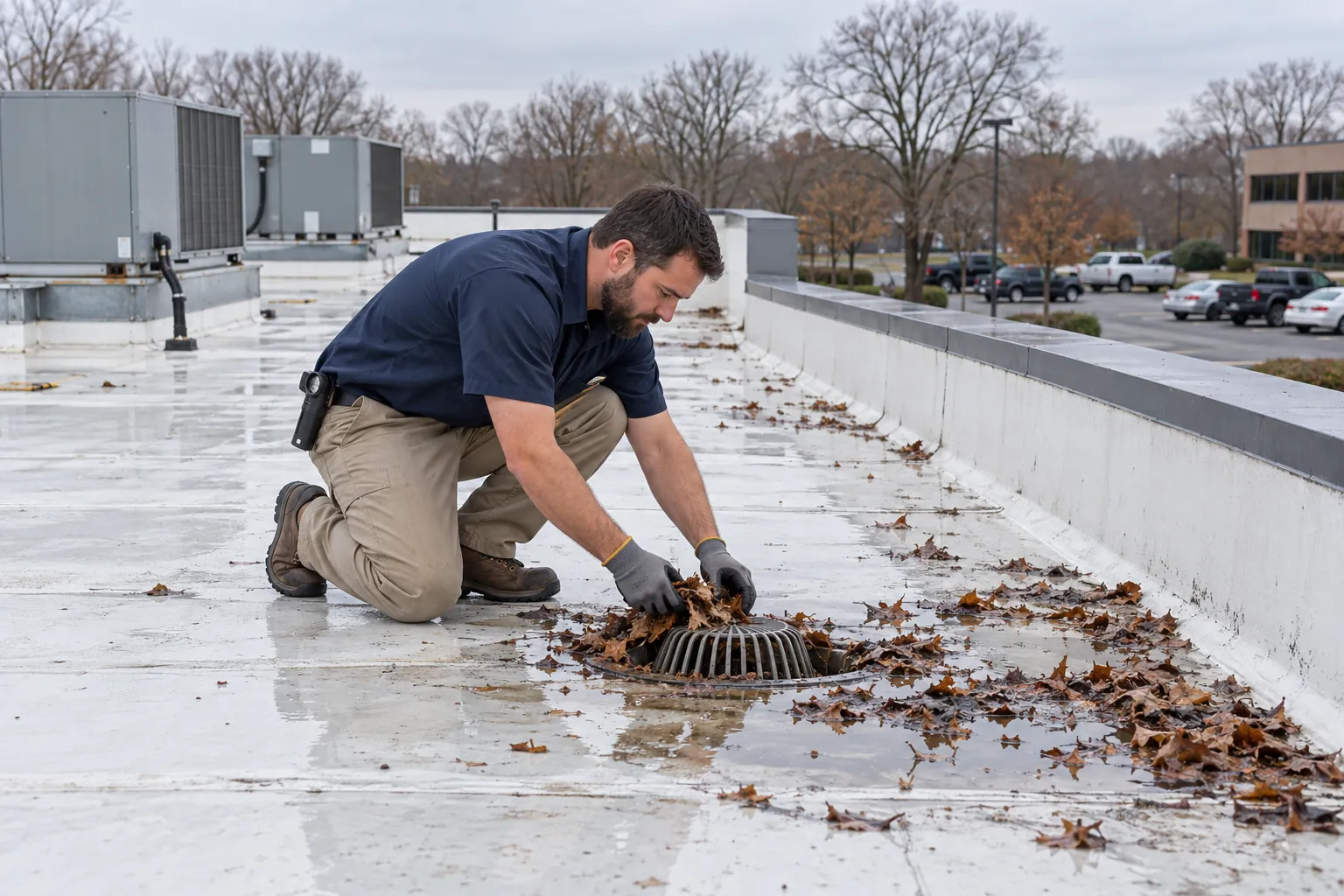
- Roof and drainage. Roof drains, scuppers, gutters and downspouts are cleared of leaves and debris so meltwater can get away, and the roof hatch closes and seals. Note where snow drifts collect, against parapets and around rooftop units, for the snow plan.
- Plumbing and water. Pipes in exterior walls, crawl spaces, attics, stairwells, vestibules, parking garages and above ceilings near outside walls are insulated or heat traced, and the heat trace is tested before it is needed. Outside hose bibbs are shut off inside and drained, or are frost-free types; backflow preventers outdoors are drained or insulated as the manufacturer and your water utility require; irrigation systems are blown out, and cooling towers and fountains that will not run are drained.
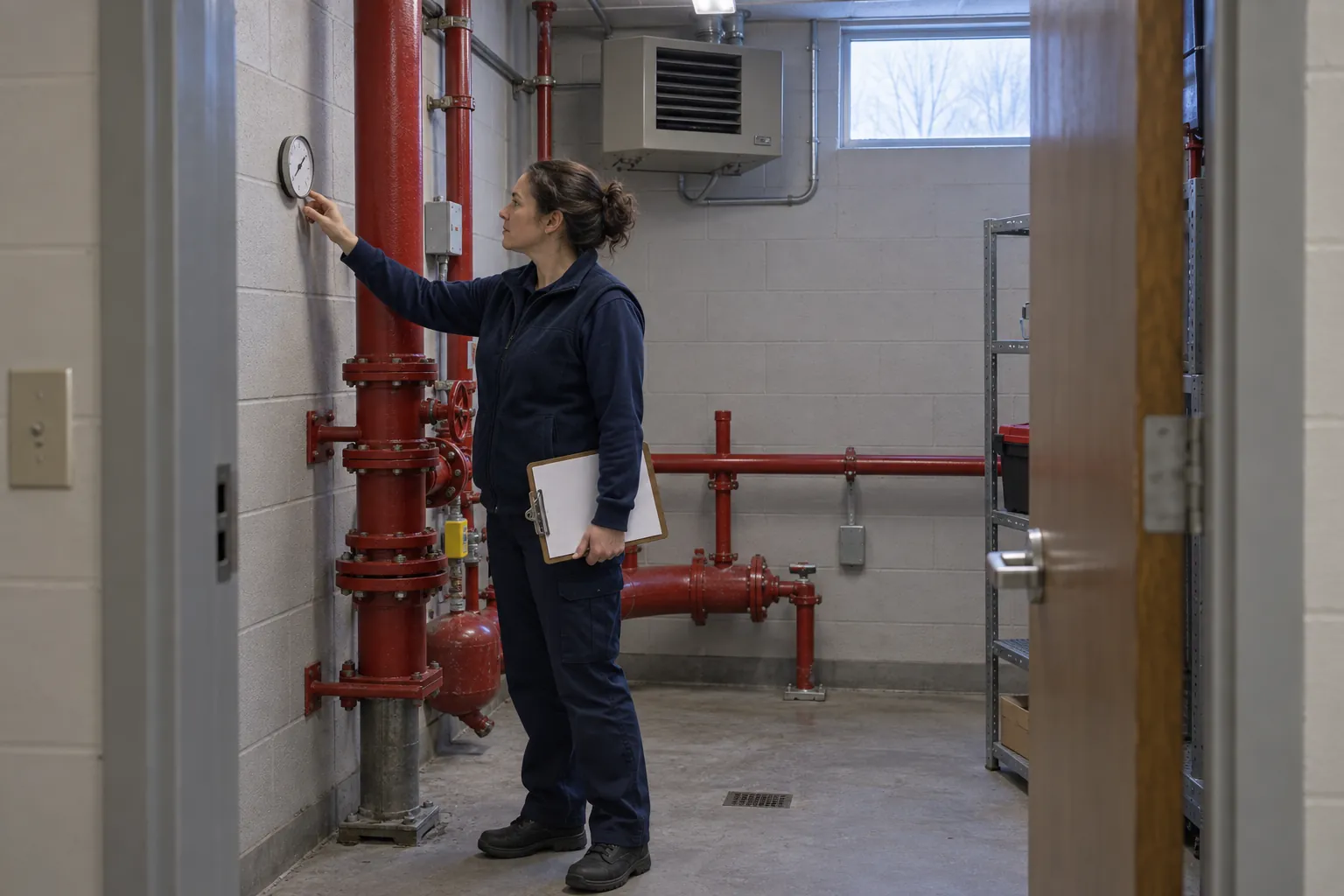
- Fire protection. Every area with water-filled sprinkler piping stays at 40°F or above. Dry pipe valve rooms and heated valve enclosures are heated and checked, low-point drains on dry systems are drained by the sprinkler contractor, and antifreeze systems are tested on the schedule the adopted edition of NFPA 25 sets. The fire department connection and hydrants are marked so they can be found and cleared after snow.
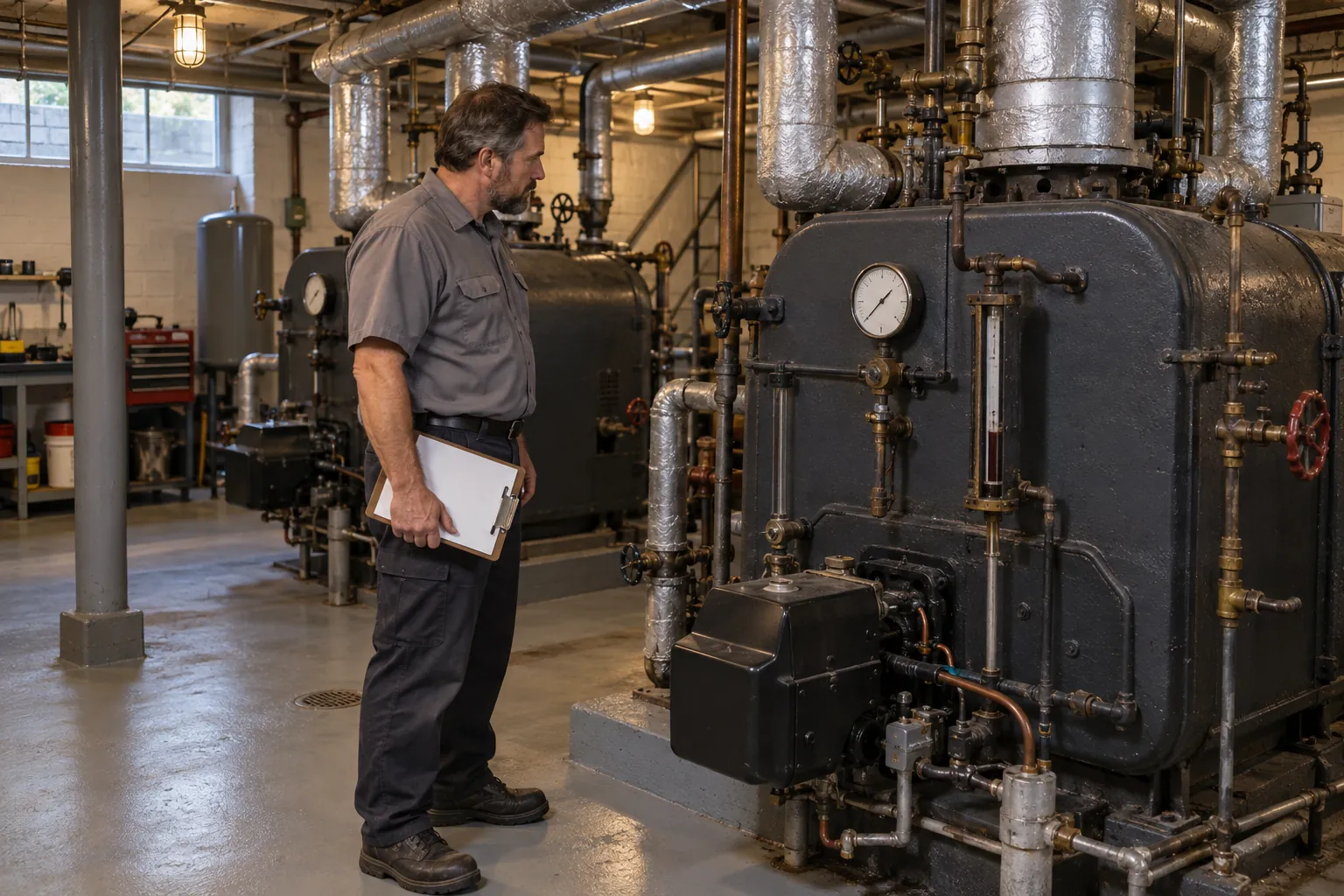
- Heating plant and HVAC system. Boilers, furnaces, unit heaters and makeup air units are serviced before the season; combustion air openings are clear; freeze stats and low-temperature alarms are tested and reach someone who will act on them. The CDC's carbon monoxide guidance advises having heating systems, water heaters and other fuel-burning appliances "serviced by a qualified technician every year." See the boiler log guide for the daily readings once the plant is running.
- Emergency power. The generator has its block heater working, fuel topped up and a load test on record before the first storm; see generator testing. Portable generators run only outdoors, well away from doors, windows and air intakes.
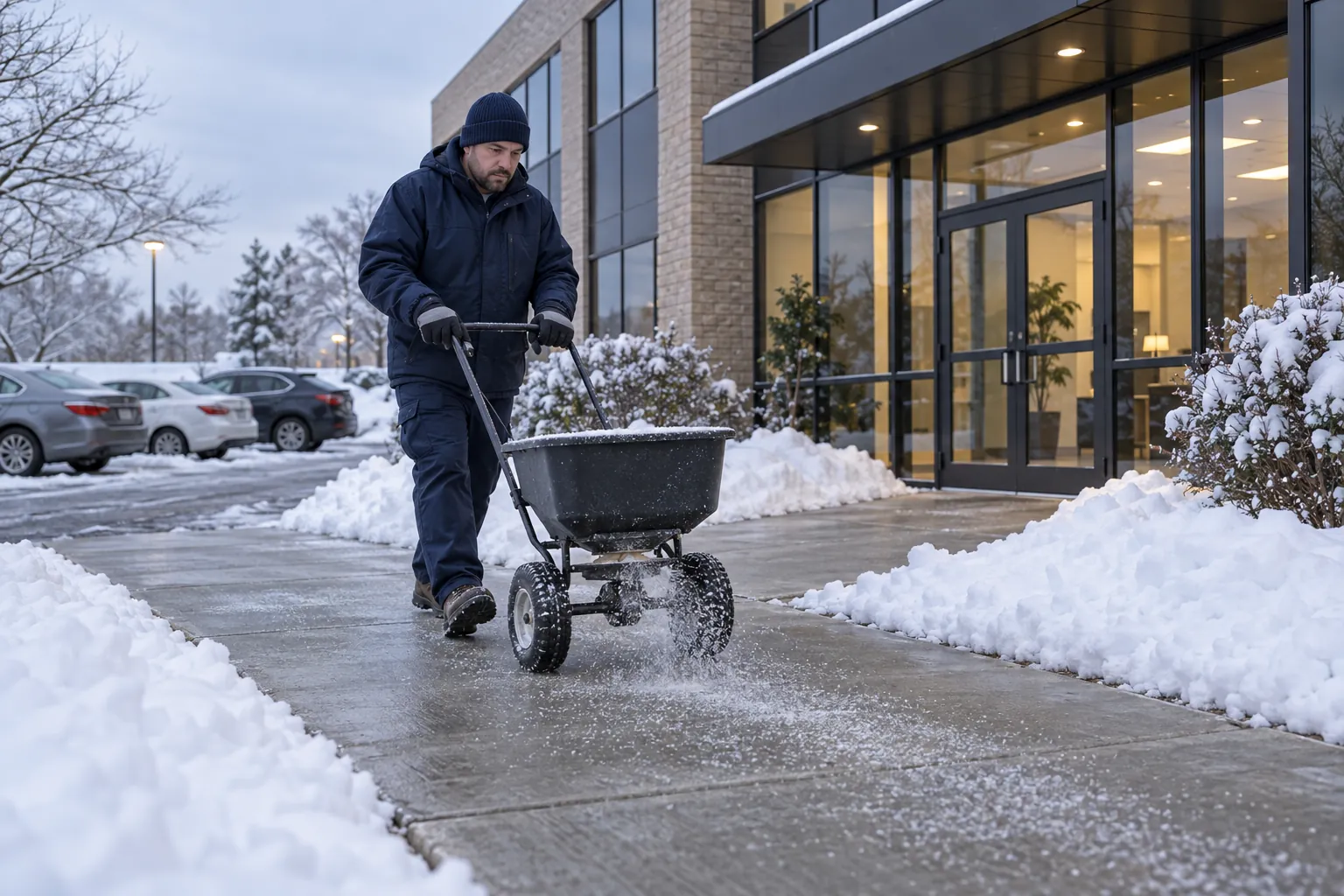
- Snow and ice. A snow and ice plan with priority routes (exit discharges, accessible routes, entrances, fire lanes, loading docks), a contract or in-house crew with trigger depths and response times, ice melt stocked and stored dry, shovels and spreaders ready, and entrance mats in place to keep meltwater off hard floors.
- Closed and low-use areas. Spaces that will be empty over the holidays or all winter, such as a vacant suite, a summer-only building or a closed school wing, are listed with the heat setting they must hold and how often someone walks them.
- People. Staff who work outside or in unheated areas are covered by a cold stress plan. NIOSH's page on cold stress names outdoor workers and those "in poorly insulated or unheated areas" among those at risk.
03
When each part is done: fall, cold snaps, storms and spring
Winterization is not a single day in October. It runs in five phases, and a good checklist says which items belong to each.
- Fall preparation, finished before the first forecast freeze. The envelope repairs, heating plant service, drain-downs, heat trace tests, sprinkler contractor visits, snow contract and supplies. OSHA's preparedness advice includes "scheduling maintenance and repair jobs for warmer months."
- Daily rounds through the cold months. A short route past the known cold spots: sprinkler risers, dry valve rooms, stairwells, vestibules, loading docks, the pipe chase that froze last year. At each one, read the thermometer, check the heater is running and the door is shut, and look for frost or condensation on pipes.
- Cold snaps and storm watches. When the National Weather Service issues a Winter Storm Watch ("conditions are favorable for a significant winter storm event"), bring the plan forward: extra rounds, especially overnight and on weekends; heat raised in marginal areas; doors to unheated spaces checked; snow crew on standby. A Winter Storm Warning means the event is expected, and the snow and ice plan starts.
- After a storm. Exit discharges and accessible routes cleared first, then entrances and parking; roof drains checked; any roof with heavy snow load assessed before anyone goes up. OSHA says "a surface that is weighed down by snow must be inspected by a competent person to determine if it is structurally safe."
- Spring de-winterization. Outside taps, irrigation and cooling equipment brought back into service, backflow preventers tested where required, and any freeze damage found and repaired.
Holiday shutdowns deserve their own line. A building on night setback over a long weekend in a cold spell has nobody to notice the unit heater that tripped on Friday night. Decide in advance who walks it, how often, and whom they call.
04
Who does what
A winterization checklist crosses several trades and at least one contract. Write down who owns each line.
- The facility manager or property manager owns the plan: the checklist, the snow contract, the budget for repairs, and the call to raise heat or bring in help before a storm.
- The building engineer or chief engineer does the technical work or supervises it: heating plant, freeze stats, heat trace, drain-downs, cooling towers, and the daily reading of temperatures at the cold spots.
- The sprinkler contractor usually does the specialist work, such as draining dry systems and testing antifreeze solutions, and leaves a report. The owner still holds the responsibility; NFPA's own summary says that while the work is often contracted to a service provider, "the ultimate responsibility for ITM falls on the building owner."
- Custodians and day porters carry the simple daily items: entrance mats down, vestibule doors closing, wet floor signs out, and any cold draft or frosted pipe reported at once.
- Security officers on nights and weekends are often the only people in the building when a pipe freezes. Put the cold spots on their tour and in their post orders, with the temperature that means "call the engineer," and the phone number.
- The snow contractor or grounds crew clears to the plan, logs when and where they plowed and salted, and reports anything they could not do.
05
What good evidence looks like, and what to do when something freezes
A winterization record has two jobs. Before the season, it shows the preparation was done. During the season, it shows the building was watched, so that when a pipe does freeze you can see when it was last checked and at what temperature. Good evidence for each round records:
- the location, named the same way every time ("north stair, level 2 landing," not "stairs");
- the reading, such as the room temperature against the 40°F line for sprinkler areas, and whether the heater was running;
- who checked, by name, and when, at the time rather than at the end of the shift;
- what was wrong, if anything, and who was told;
- a photograph where it helps, such as a thermometer, a drained hose bibb, or a door that would not close.
Keep the fall contractor reports too: heating service, sprinkler work, backflow and cooling tower shutdowns. NFPA's summary of the owner's duties notes that records must be kept for all inspection, testing and maintenance work, and made available to the AHJ on request.
Snow and ice need a record of their own: when each route was cleared, treated and rechecked. The OSHA duty to inspect walking-working surfaces "regularly and as necessary" applies to the entrance sidewalk on a freezing morning.
06
Where the record fails, and what SiteClara does about it
Winterization records fail in familiar ways. The fall checklist is checked off from memory in one sitting. The daily freeze round is initialed for the week on Monday. The night officer walks past the sprinkler riser, but nothing shows they read the thermometer. A draft or a frosted pipe is mentioned to whoever was passing and never written down, so the engineer hears about it only when the ceiling tile falls in. After a freeze, nobody can say when the room was last checked or who checked it.
SiteClara records the checks at the location. A printed QR poster, with an optional NFC tag behind it, sits at each place a check is scheduled, such as the dry valve room, the north stair landing or the loading dock. Staff scan the code or tap the tag on their own phone, with no app to install, see the checks due there, and mark each one done or say what stopped them, such as a locked door. The time and the named person are recorded as it happens, with a photo when one is asked for, for example of the thermometer. A problem, such as a heater that has tripped or a door that will not close, is reported there with a photo and goes onto the team's list of jobs until someone closes it.
The supervisor sees what is due, done and missed, and can record the reason a check was missed. A job that needs the building manager can be escalated to them to answer. Each day the supervisor reviews and approves a report that goes to nominated management or client contacts at 8 a.m. the next day, showing what was reported, completed and still open, and how the scheduled checks went, for example 6 of 6 freeze rounds completed.
07
Questions people ask
What is included in winterization?
For a commercial building, winterization means protecting water-filled pipes and sprinkler piping from freezing, servicing the heating plant, closing up the building envelope, draining outside water and planning how snow and ice will be cleared. FEMA's Ready.gov winter weather guidance advises preparing to "keep out the cold with insulation, caulking and weather stripping" and to "install and test smoke alarms and carbon monoxide detectors with battery backups."
What is the coldest you should let a building get?
Where a building has water-filled sprinkler piping with no other means of freeze protection, the floor is 40°F. NFPA's article on the building owner's responsibilities for sprinkler inspection, testing and maintenance says the owner must ensure those areas "shall be maintained at a minimum temperature of 40°F (4°C)," and that holds over a holiday shutdown or night setback too.
When should I start winterizing a building?
In the fall, early enough to finish before the first forecast freeze. OSHA's winter weather preparedness guidance lists "scheduling maintenance and repair jobs for warmer months" as a safe work practice, and FEMA's Ready.gov winter weather guidance notes that a Winter Storm Watch is usually issued only 12 to 48 hours before a storm begins, which is too late to start.
08
Further reading, and a list to take away
OSHA publishes Winter Weather guidance, including winter weather preparedness; the rules are 29 CFR 1910.22, 29 CFR 1910.36, 29 CFR 1910.37 and 29 CFR 1910.159, and a State Plan may apply instead. NFPA publishes NFPA 25, free to read online, and a short article on the building owner's responsibilities for sprinkler inspection, testing and maintenance. The CDC covers cold stress and carbon monoxide, and the National Weather Service explains its winter watches, warnings and advisories.
Before the first freeze, check that:
- you have walked the building and listed every cold spot, exposed pipe and outside tap by name;
- every area with water-filled sprinkler piping can hold 40°F, and someone checks it;
- the heating plant, freeze stats, low-temperature alarms and heat trace have been serviced and tested;
- hose bibbs, irrigation, outdoor backflow preventers and cooling equipment are drained or protected;
- the sprinkler contractor has drained dry systems and tested antifreeze systems, and you have the report;
- roof drains and gutters are clear, and the envelope is closed up;
- the snow and ice plan puts exit discharges and accessible routes first, and the contract says when crews come;
- night and weekend staff have the cold spots on their tour and know whom to call;
- holiday and low-use spaces have a heat setting and a named person who walks them;
- each check is recorded at the time, by name, and anything wrong goes onto a list until it is fixed.
Sources
Every document this guide quotes or links to, in the order it first cites them.
- 29 CFR 1910.22 osha.gov
- 29 CFR 1910.37 osha.gov
- 29 CFR 1910.36 osha.gov
- 29 CFR 1910.159 osha.gov
- NFPA 25, Standard for the Inspection, Testing, and Maintenance of Water-Based Fire Protection Systems nfpa.org
- Winter Weather osha.gov
- Winter weather hazards osha.gov
- State Plans osha.gov
- Carbon monoxide guidance cdc.gov
- Cold stress cdc.gov
- Winter Storm Watch weather.gov
- Impairment procedures nfpa.org
- Ready.gov winter weather guidance ready.gov
- The building owner's responsibilities for sprinkler inspection, testing and maintenance nfpa.org
- Winter weather preparedness osha.gov
Related guides
 Premises and facilities managementBuilding maintenance checklist: what the code expects, how often to check, and who does itA building maintenance checklist for US commercial buildings, built on the International Property Maintenance Code: daily to annual tasks, who does each, the record.
 Premises and facilities managementBoiler log: what to record, how often, and what the state expectsWhat a boiler log should record, how often to take readings and test the low-water cutoff, what state boiler rules and ASME CSD-1 expect, and where logs fail.
 Premises and facilities managementSnow removal log: what to record, and how to make it stand upWhat a snow removal log for a commercial property should record, the OSHA and local rules behind it, how often to check, and what makes the log worth having.
 Premises and facilities managementVacant property inspection: what to check, how often, and what to recordHow to inspect a vacant commercial building in the US: the fire and property maintenance codes, security, water, sprinklers, the insurer's terms and the record.