Fire and water checks
Fire safety checks in the workplace: what to check, how often, and who does it
Fire safety checks in the workplace are the routine checks that keep fire precautions working: exits and escape routes every day, the fire alarm every week, emergency lighting and fire extinguishers every month, and servicing by a competent contractor every six or twelve months.
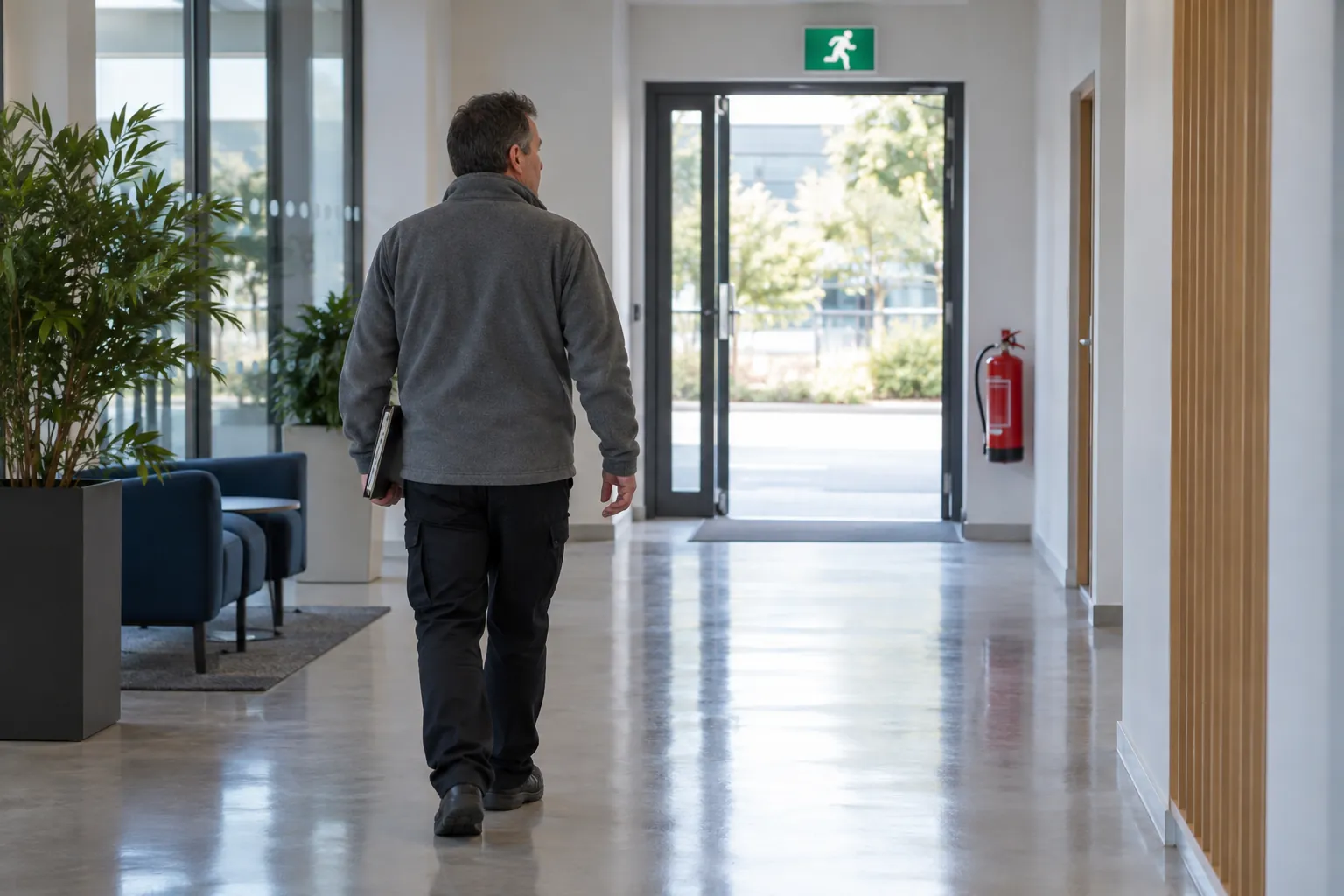
Much of fire safety at work comes down to those small checks being done on time. This guide sets out the routine checks, who should do each one and how often, and what the record should show when someone asks.
01
Who is responsible for fire safety in the workplace
In England and Wales, fire safety in almost every workplace is governed by the Regulatory Reform (Fire Safety) Order 2005, often called the Fire Safety Order. It places the duties on the responsible person: the employer, for any workplace under their control, or otherwise the person who has control of the premises, such as the owner, a landlord or a managing agent. In shared premises there can be several responsible persons, and the Order requires them to co-operate and co-ordinate their fire safety measures.
The responsible person must carry out a fire risk assessment and keep it under review, put general fire precautions in place in response to it, and make sure fire safety equipment and facilities are maintained in efficient working order and good repair. They must give staff fire safety information and training, nominate enough competent people to help, and have emergency procedures that everyone understands. In England and Wales, since 1 October 2023, every responsible person must make a record of the fire risk assessment, including its findings, under article 9, whatever the size of the business.
Scotland has its own law, the Fire (Scotland) Act 2005 and the Fire Safety (Scotland) Regulations 2006, which place the duties on a duty holder. Northern Ireland has the Fire and Rescue Services (Northern Ireland) Order 2006 and the Fire Safety Regulations (Northern Ireland) 2010. The approach is broadly the same across the UK: assess the fire risk, take precautions, maintain them, and be able to show that you have.
Enforcement of this fire safety legislation sits with local fire and rescue authorities. Their inspectors can visit, ask to see the fire risk assessment and records, and issue notices requiring improvements, and a serious failure can be prosecuted.
Nothing in the Order lists the checks line by line. The frequencies below come from the British Standards for each system and from government guidance, and your fire risk assessment should say which apply to your building, taking account of its particular risks and the people who use it.
02
The routine checks, from daily to annual
A typical workplace fire safety checklist, for an office, school, shop or warehouse with a fire alarm system, emergency lighting and portable fire extinguishers, looks like this. Your fire risk assessment may add to it or change the intervals. For small, low-risk premises in England, the Home Office's guide to making small non-domestic premises safe from fire sets out a similar daily, weekly, monthly, six-monthly and annual checklist.
- Daily: escape routes and fire exits clear and unlocked while the building is occupied, final exit doors opening easily, fire doors closed and not wedged, the fire alarm panel showing normal with no faults, and no build-up of combustible waste near ignition sources.
- Weekly: a fire alarm test from a different manual call point in turn, as recommended by BS 5839-1, with the result recorded.
- Monthly: a functional test of the emergency lighting, as recommended by BS 5266-1; a visual check of each fire extinguisher, as recommended by BS 5306-3; a walk-round check of fire doors, fire exit signs and fire action notices.
- Every six months: inspection and servicing of the fire alarm system by a competent person, as BS 5839-1 recommends.
- Annually: a full-duration test of the emergency lighting; a service of every portable extinguisher by a competent person; at least one fire drill, with the results recorded, as GOV.UK's guidance on fire safety equipment, drills and training advises; and a review of the fire risk assessment, or sooner if something changes.
Where the building has other fire safety equipment, such as sprinklers, dry risers, smoke ventilation, fire curtains, hold-open devices on fire doors or a firefighting lift, each has its own routine and its own standard, and belongs on the same schedule so nothing depends on one person remembering it.
03
Routine checks and competent person work
Every item on that list is one of two kinds of work, and many gaps in workplace fire safety come from confusing them.
- Routine user checks are done by someone on site: a premises manager, caretaker, facilities assistant, security officer or trained fire warden. They are short and frequent: operate a call point, switch the emergency lights to battery, look at each extinguisher, walk the escape routes. Their job is to find the obvious faults early and get them reported.
- Inspection, testing and servicing by a competent person is done by someone with the training, experience and equipment for that system, usually a specialist contractor. Servicing the fire alarm, the annual emergency lighting test and extinguisher servicing to BS 5306-3 belong here. Third-party certification schemes, such as those run by BAFE, are one way to show that a contractor is competent.
A routine check does not replace a service, and a service twice a year does not replace the checks in between. A fire risk assessor, an insurer or an inspector will expect to see both.
Give each routine check to a named person as a clear responsibility, with a deputy for holidays and sickness. The site team is not a name. Train them to do the check properly and to recognise a fault, and tell them who to report it to. The fire risk assessment will also designate fire wardens or fire marshals, whose job is to help evacuate the building in the event of a fire; they are often, but not always, the same people who do the checks.
Remember everyone else who works in the building. Agency staff, freelancers, contractors and cleaners working out of hours need fire safety information too: where the exits are, what the alarm sounds like, where the assembly point is, and when the alarm is tested, so they know a test from the real thing. GOV.UK's guidance says to train new staff when they start work and to tell all employees about any new fire risks. Fire safety training at induction, with refreshers, is part of the responsible person's duty, and a record of who was trained and when belongs with the other fire safety records.
04
Escape routes, exits and housekeeping
The daily walk-round is the check that matters most and is most easily skipped, because nothing has usually changed since yesterday. It is also where a fire safety inspection by the fire and rescue service usually starts. It covers:
- Escape routes: corridors and stairs clear of stored items, furniture, deliveries and bins, and well-lit.
- Fire exits: final exit doors unlocked while the building is occupied, opening easily with the escape hardware, and clear on the outside too, where vehicles, skips and bins tend to end up.
- Fire doors: closed, or held open only on devices that release when the alarm sounds; never wedged or propped.
- Signs and notices: fire exit signs visible, fire action notices displayed by call points, nothing hung over them.
- Firefighting equipment: extinguishers on their brackets or stands, call points unobstructed.
- Housekeeping: no build-up of rubbish, packaging or other combustible materials, especially near heaters, electrical equipment and other ignition sources; flammable liquids stored as the risk assessment says, in the smallest practical quantities.
Some changes to the premises alter a building's fire risk faster than any schedule: building work, a refit, a new tenant, a change of use, an event, or a temporary storage arrangement that quietly became permanent. Any of these should prompt a check of the affected escape routes and a question to whoever carries out your fire risk assessments about whether to review and update it. A new hazard, such as more stock or a new process, should go to them too. Contractors' hot work, such as welding or cutting, usually needs its own permit and a check of the area afterwards.
The fire safety measures in a building only protect people if they are all working at once, across the whole building: fire alarms that sound, a route that is clear and lit, doors that hold back smoke. A daily walk-round is how you know that is true on an ordinary day, not only on the day of the inspection.
05
What a good fire safety record shows
The fire log book is the building's record of fire safety: tests, checks, drills, training, faults and servicing. The Order does not prescribe its format, but the responsible person must be able to show that fire safety measures are maintained, and a log book is how most workplaces do it. Fire risk assessors, insurers and fire safety inspectors will all ask to see it. A good record:
- Records each check when it is done, with the date, the time and the name of the person who did it.
- Identifies what was checked: which call point, which floor's emergency lights, which extinguishers.
- Records faults and what happened next: who the fault was reported to, when it was put right, and by whom.
- Shows the gaps: a missed weekly test with a reason is more credible than a year of identical entries.
- Keeps the competent person's certificates and reports with the routine checks, including any recommendations and when they were acted on.
- Records fire drills and training: the date, how long the evacuation took, what went wrong, and who took part.
The usual failure is not a missing check but a missing record, or a record that cannot be believed: every entry in the same pen, a weekly test entered for a week the building was closed, a column of ticks with no faults in three years. A log book written up from memory at the end of the month is not evidence of anything, and an inspector can usually tell.
Review the record, not just the building. A monthly look through the log book by someone other than the person completing it will spot the missed test and the fault that was reported but never fixed, while there is still time to deal with them.
06
Where the record fails, and what SiteClara does about it
A paper log book works in one building with a conscientious site manager. It struggles when the checks are spread across a large site or many buildings, when the people doing them change, or when the person accountable for fire safety is not the person in the building. A regional manager or a client's facilities team usually finds out that the weekly alarm test was missed when the fire risk assessor finds the gap, months later.
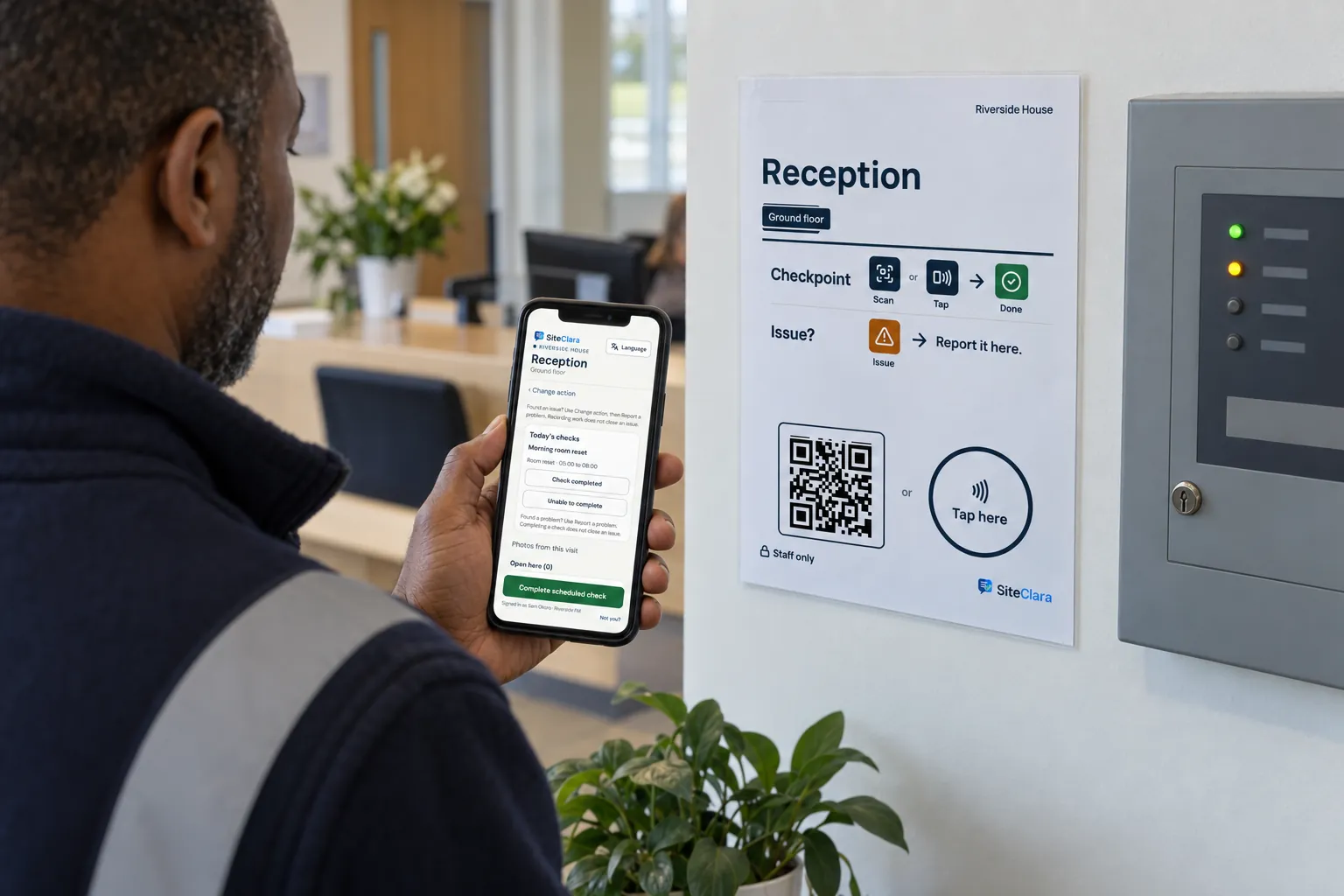
SiteClara puts a printed QR poster at each place a check happens, such as the alarm panel, a fire door or an extinguisher point, with an optional NFC tag behind it. Staff scan the code or tap the tag on their own phone, with no app to install; they are enrolled by text and sign in with a link. They see the scheduled checks due at that location, such as the weekly call point test or the monthly fire door check, and mark each one done, or explain what stopped them. If they find a problem, such as an exit blocked or a door wedged open, they report it there with a photo, and it goes onto the team's list of jobs until someone closes it.
The supervisor sees what is due, done and missed, and can record the reason a check was missed. A job that needs the building manager can be escalated to them to answer. Each day the supervisor reviews and approves a report, which goes to nominated management or client contacts at 8am the next morning, showing what was reported, what was completed, what is still open, and how the scheduled checks went, for example 12 of 12 completed. SiteClara is priced per building, with no per-person fees.
07
Further reading, and a list to take away
GOV.UK publishes Fire safety in the workplace, a short guide to who is responsible and what they must do, and a series of Fire safety risk assessment guides for different types of premises, such as offices and shops, factories and warehouses, and educational premises. The Scottish Government publishes practical fire safety guidance for premises in Scotland, and the Northern Ireland Fire and Rescue Service publishes guidance for businesses there. Your local fire and rescue service will usually answer questions about your own building. The standards referred to here are BS 5839-1 (fire detection and fire alarm systems), BS 5266-1 (emergency lighting) and BS 5306-3 (maintenance of portable fire extinguishers), all published by BSI.
Before the next fire risk assessment review, check that:
- every routine check the assessment relies on has a frequency, a named person and a deputy;
- daily escape route checks happen and are recorded, including the outside of final exits;
- the weekly alarm test rotates through every call point, and the rotation is written down;
- monthly emergency lighting and extinguisher checks are recorded, with faults and what was done;
- competent person service reports are filed, and their recommendations have been acted on;
- fire drills and fire safety training are recorded, including for agency and out-of-hours staff;
- in a shared building, everyone knows which checks are theirs and sees the results.
Sources
Every document this guide quotes or links to, in the order it first cites them.
- Regulatory Reform (Fire Safety) Order 2005 legislation.gov.uk
- Article 9 legislation.gov.uk
- Fire (Scotland) Act 2005 legislation.gov.uk
- Guide to making small non-domestic premises safe from fire gov.uk
- GOV.UK's guidance on fire safety equipment, drills and training gov.uk
- Fire safety in the workplace gov.uk
- Fire safety risk assessment gov.uk
- BS 5839-1 knowledge.bsigroup.com
Related guides
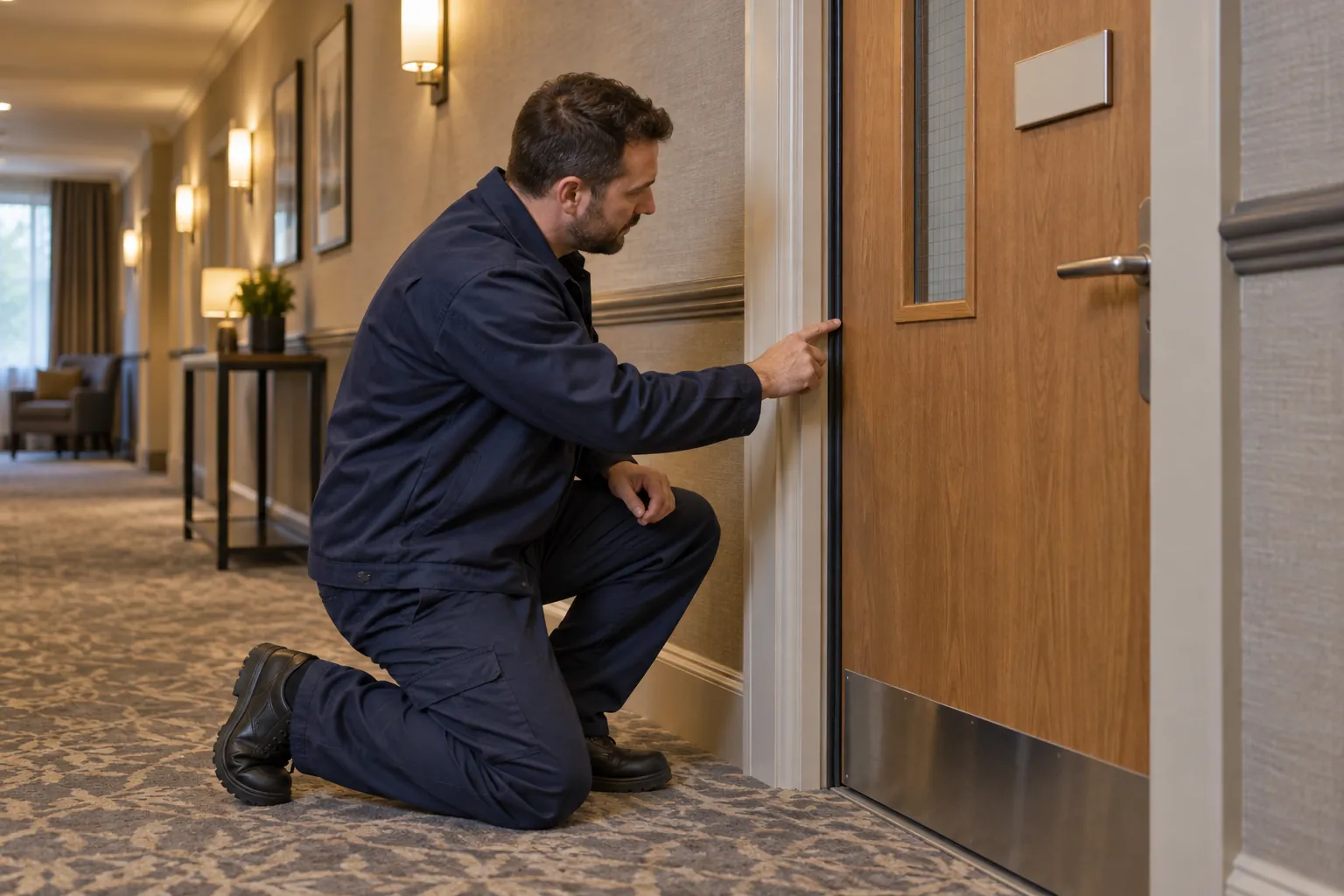 Fire and water checksFire door checks: what a routine check looks atFire door checks in any building: gaps, seals, closers, hinges, glazing and signs, how often to check, and when to call a fire door inspector.
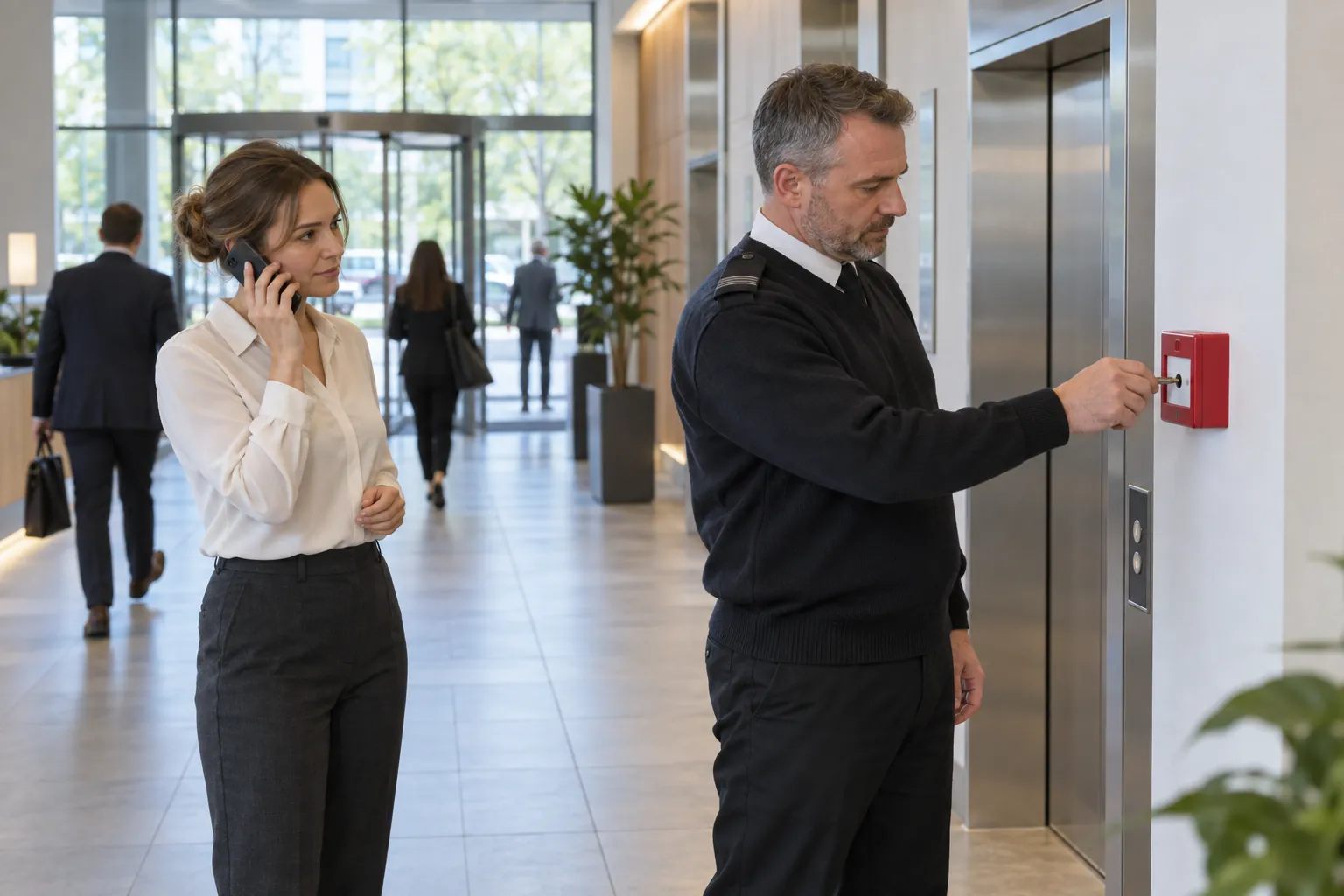 Fire and water checksWeekly fire alarm test: how to do it, and what to recordWeekly fire alarm test: how to carry out the test BS 5839-1 recommends, rotating call points, what to record, and what only a competent person can do.
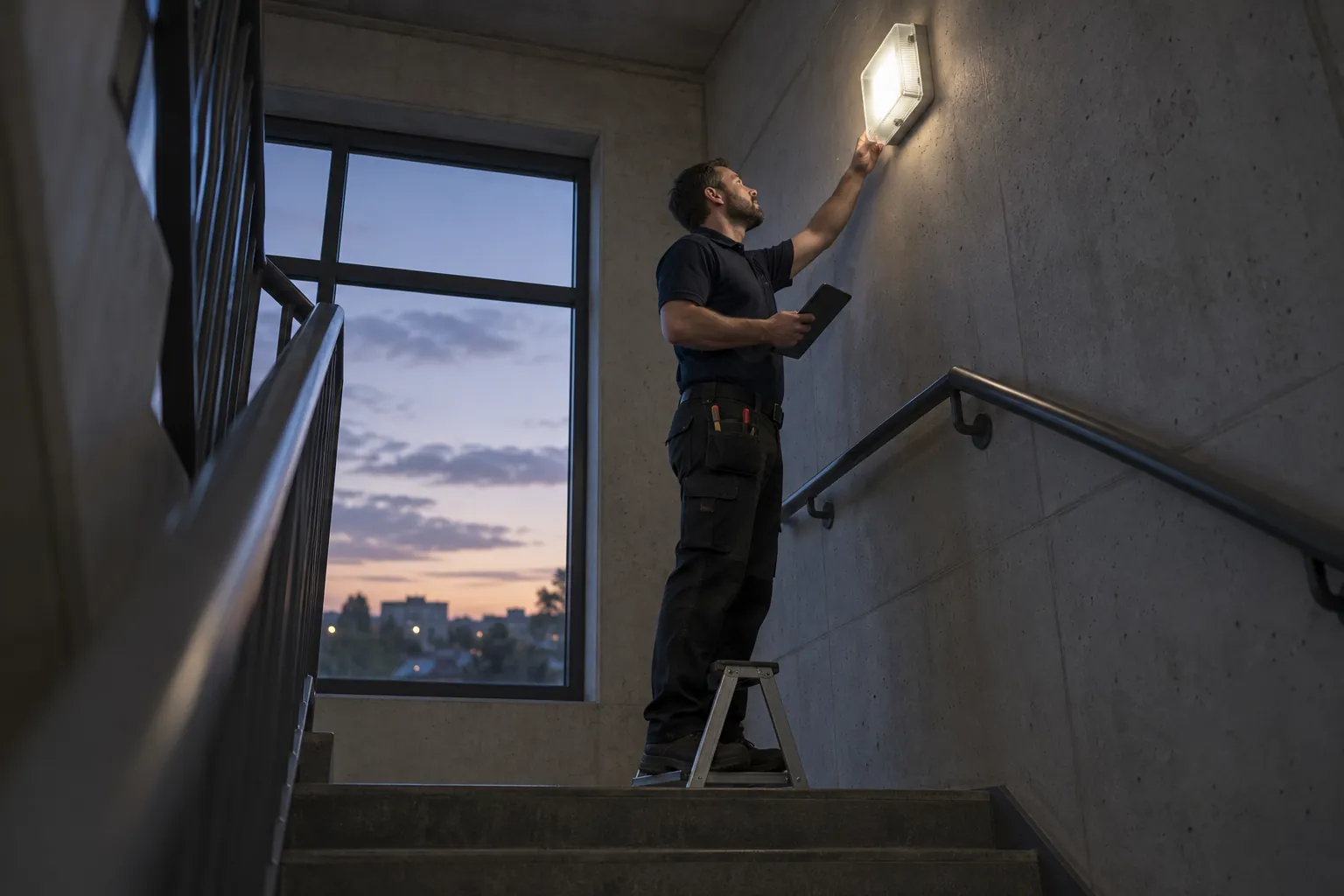 Fire and water checksEmergency lighting log book: what to record, and how oftenWhat an emergency lighting log book should record, the monthly and annual tests BS 5266-1 recommends, who does each, and how to keep the record credible.
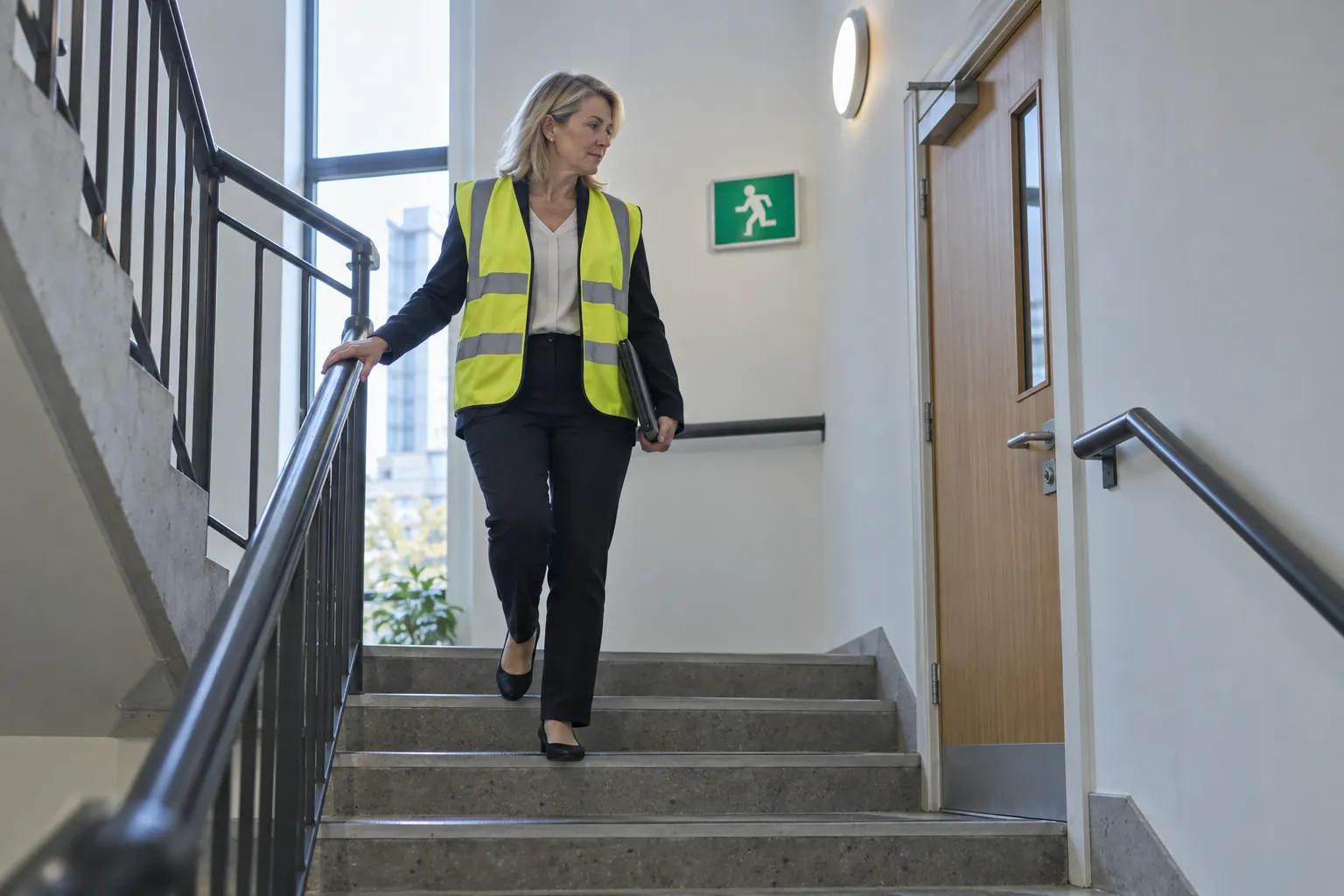 Fire and water checksFire marshal checklist: the daily and weekly checks, and the job in an evacuationWhat a fire marshal or fire warden checks each day and week, their role in an evacuation, the law behind the role, and how to keep a record that stands up.