Fire and water checks
Workplace fire safety checklist: what to check, how often, and who does it in Canada
A workplace fire safety checklist is the list of routine checks a Canadian fire code sets for a building, from exits kept clear every day to fire extinguishers inspected every month and the fire alarm tested every year, with the person who does each one.
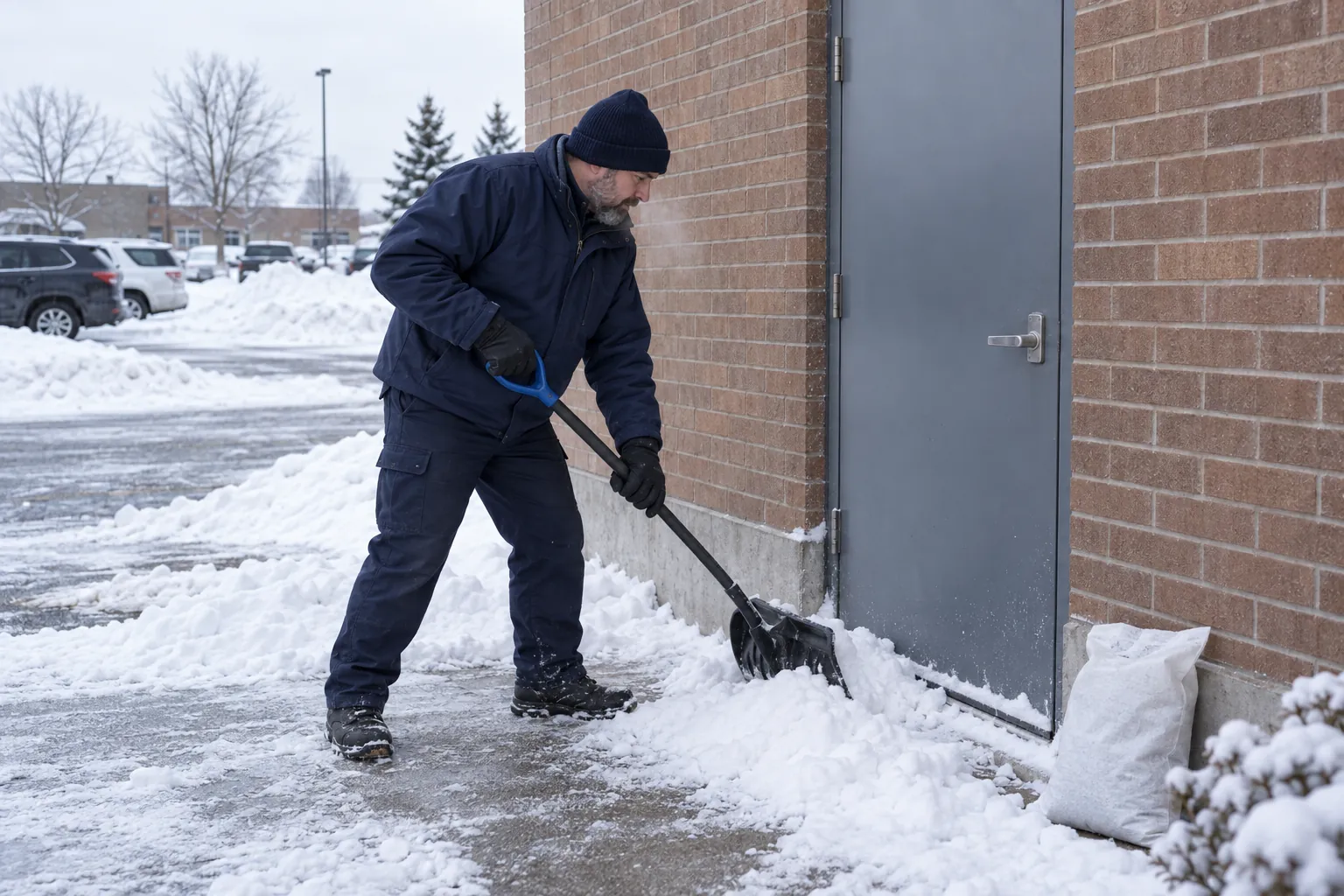
Most of it comes down to small checks done on time: exits clear and free of snow, doors in fire separations closed, emergency lights tested, the fire alarm panel showing normal. This guide sets out a fire safety checklist from daily to annual, based on the fire code, who should do each check, and what the record should show when the fire prevention officer asks.
01
Who is responsible for fire safety in a Canadian workplace
There is no single national fire law for workplaces in Canada. Fire safety in existing buildings is set by each province and territory, and most start from the same model: the National Fire Code of Canada 2025, published free as a PDF by the National Research Council, which advises asking your provincial or territorial official which codes apply in your area.
This guide quotes the Ontario Fire Code, O. Reg. 213/07. The province's page on fire safety legislation and Ontario's Fire Code puts it plainly: "The owner of the building is responsible for complying with the Fire Code, except where otherwise specified. Municipal fire departments enforce the Fire Code." The code defines the owner widely, as "any person, firm or corporation having control over any portion of the building or property under consideration", and the definition "includes the persons in the building or property", so a landlord, a condominium corporation and a tenant controlling its own floor can each answer for part of the building. Where people speak of the "responsible person" for fire safety, the nearest equivalent in Ontario is the owner as the code defines it, for each part they control.
Workplace law sits alongside the fire code. Section 25(2)(h) of Ontario's Occupational Health and Safety Act requires every employer to "take every precaution reasonable in the circumstances for the protection of a worker". For industrial establishments, which the Act defines as office buildings, factories, arenas, shops and offices, section 123 of the Industrial Establishments regulation, R.R.O. 1990, Reg. 851, applies the Fire Code's rules on extinguishers and on "keeping egress doorways, public corridors and exits free from obstruction" as workplace law too.
No code sets its duties out as one checklist. Each system has its own frequency, in the code or the standard it calls up, and a fire safety plan, where one is required, must "provide for the maintenance of building facilities provided for the safety of occupants" (Ontario, Division B, Clause 2.8.2.1.(2)(g)). The checklist below gathers the frequencies in one place.
02
The fire safety checklist, from daily to annual
For a typical office building, school, plaza, warehouse or apartment building with a fire alarm, emergency lighting and portable extinguishers, the routine checks under the Ontario Fire Code, Division B, look like this:
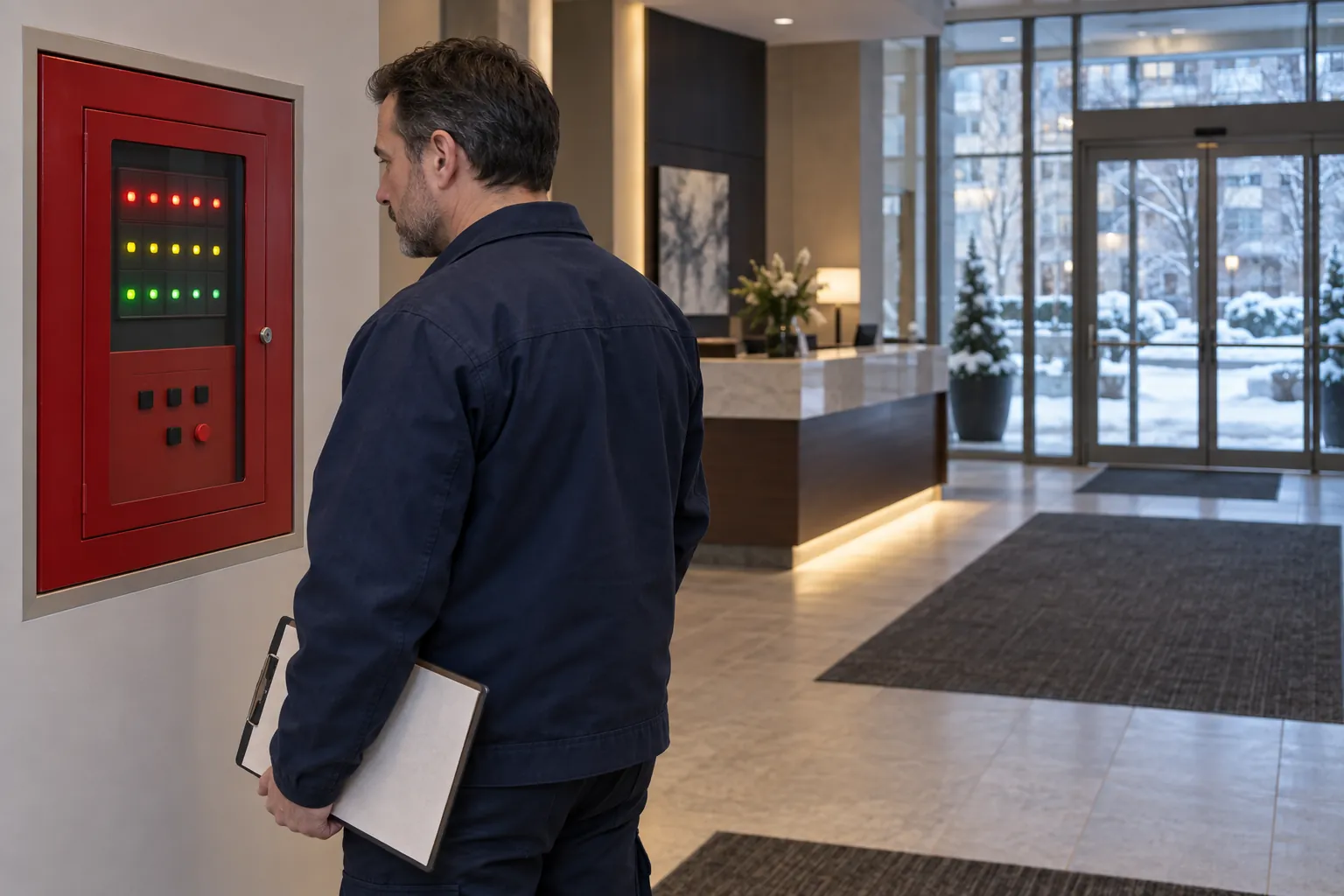
- Every day the building is occupied: means of egress "maintained in good repair and free of obstructions" (Sentence 2.7.1.7.(1)); doors in fire separations closed when not in use (Sentence 2.2.3.4.(1)); exit signs lit (Article 2.7.3.2); no combustible materials accumulated "in such quantity or such location as to create a fire hazard" (Sentence 2.4.1.1.(1)); and, as the City of Ottawa advises, a look at the fire alarm panel to confirm the system is operational.
- After every snowfall: exterior passageways, exterior stairways and fire escapes "kept free of snow and ice accumulations" (Sentence 2.7.1.8.(1)), including the outside of every exit door.
- Monthly: "Portable extinguishers shall be inspected monthly" (Article 6.2.7.2); "A door in a fire separation shall be inspected monthly" (Sentence 2.2.3.4.(4)); egress doors checked to make sure they are operable (Sentence 2.7.2.3.(1)); self-contained emergency lighting units inspected and tested (Article 6.7.1.6) and battery-backed exit signs inspected (Sentence 6.7.1.8.(2)); hose stations inspected (Article 6.4.2.1).
- At least every 12 months: the fire alarm inspected and tested in conformance with CAN/ULC-S536, Standard for Inspection and Testing of Fire Alarm Systems (Article 6.3.2.2); the full-duration emergency lighting test (Clause 6.7.1.6.(2)(b)); fire dampers and fire stop flaps inspected annually or on an approved time schedule (Article 2.2.3.5); electromagnetic locks tested (Sentence 2.7.2.3.(4)); at least one fire drill for the supervisory staff (Sentence 2.8.3.2.(1)).
Ottawa's Ontario Fire Code pre-inspection guide shows how one fire service reads this: the fire alarm tested annually "by a qualified & permitted fire alarm company", extinguishers "serviced and tagged annually" as well as inspected monthly, and emergency lights inspected monthly and tested annually.
Some occupancies need much more. Fire drills are held at least monthly in care occupancies, retirement homes and most child care premises (Sentence 2.8.3.2.(2)); see our guide to fire drill requirements. Where there are sprinklers, Ontario accepts inspection and testing to NFPA 25, and the valve checks belong on the same checklist, so nothing depends on one person remembering them.
03
Routine checks on site and work for a qualified contractor
Every item on that checklist is one of two kinds of work, and many gaps come from mixing them up.
- Routine checks are done on site by a building superintendent or building operator, a custodian, a property manager, a security guard on patrol or a trained fire warden. They are short and frequent: walk the exits, look at each extinguisher, press the test button on the emergency lighting units. The Canadian Centre for Occupational Health and Safety's page on portable fire extinguishers says portable fire extinguishers "should be inspected at least monthly": is each one "accessible" and "in good working condition"? "Is the ring pin in place? Is the seal intact?"
- Inspection, testing and maintenance by a qualified contractor: the annual fire alarm inspection to CAN/ULC-S536, extinguisher servicing, sprinkler testing and the emergency lighting duration test usually belong here. Federal workplaces are told that "All fire protection equipment shall be maintained and repaired by a qualified person" (subsection 17.3(3)).
A monthly check does not replace the annual inspection, and the annual inspection does not replace the eleven months in between. A fire prevention officer or an insurer will expect to see both.
Give each routine check to a named person, with a deputy for vacations and sick days; "maintenance" is not a name. Where there is a fire safety plan, the people with fire safety duties are its supervisory staff, who "shall be instructed in the fire emergency procedures as described in the fire safety plan before they are given any responsibility for fire safety" (Sentence 2.8.1.2.(1)). See our guide to fire warden duties. Night-shift janitorial staff, contractors and weekend security guards need to know the exits, the alarm and the procedure too.
In Ontario, a designated member of the joint health and safety committee "shall inspect the physical condition of the workplace at least once a month" (Occupational Health and Safety Act, subsection 9(26)). That walk often catches a blocked exit, and its findings are worth passing on, but it does not stand in for the fire code checks. See our guide to the JHSC workplace inspection.
04
Exits, fire separations and housekeeping
The daily walk is the check that matters most and is most easily skipped, because nothing has usually changed since yesterday. It is also where a fire prevention officer usually starts:
- Exits and corridors: stairwells and exit routes clear of furniture, deliveries, carts, recycling bins and floor-care equipment, and lit.
- Exit doors: opening easily, and clear on the outside, where snowbanks, parked vehicles and pallets end up. The national code asks for "a visible sign or a physical barrier prohibiting such obstructions" where an exit door leading directly outside is subject to being obstructed by parked vehicles or storage.
- Doors in fire separations: closed, or held open only on devices that release on alarm, and the opening "kept clear of anything that would be likely to obstruct or interfere with the free operation of the door" (Sentence 2.2.3.4.(5)). See our guide to fire door inspection.
- Exit signs, extinguishers and hose cabinets: visible, in place and unobstructed.
- Housekeeping: no combustibles in a means of egress, service room or service space not designed for them (Sentence 2.4.1.1.(2)), nothing combustible stored in ceiling spaces or crawl spaces (Sentence 2.4.1.1.(3)), and dumpsters placed so that they do not create a fire hazard to the building (Sentence 2.4.1.1.(6)); flammable liquid spills removed immediately (Article 2.4.1.6).
CCOHS's Workplace Housekeeping – Basic Guide makes the same point from the safety side: "Stored materials should not obstruct aisles, stairs, exits, fire equipment, emergency eyewash fountains, emergency showers, or first aid stations."
Some changes alter a building's fire risk faster than any schedule: renovations, a tenant fit-out, a change of use, winter storage that quietly became permanent, or a fire alarm or sprinkler shutdown for work. Each should prompt a check of the affected exits and a word with whoever keeps the fire safety plan, which must provide "alternative measures" for occupants during a shutdown of fire protection equipment (Clause 2.8.2.1.(2)(h)). Contractors' hot work, such as welding and roofing torches, has its own section: combustibles kept at least 15 m away or protected against ignition (Sentence 5.17.3.1.(2)).
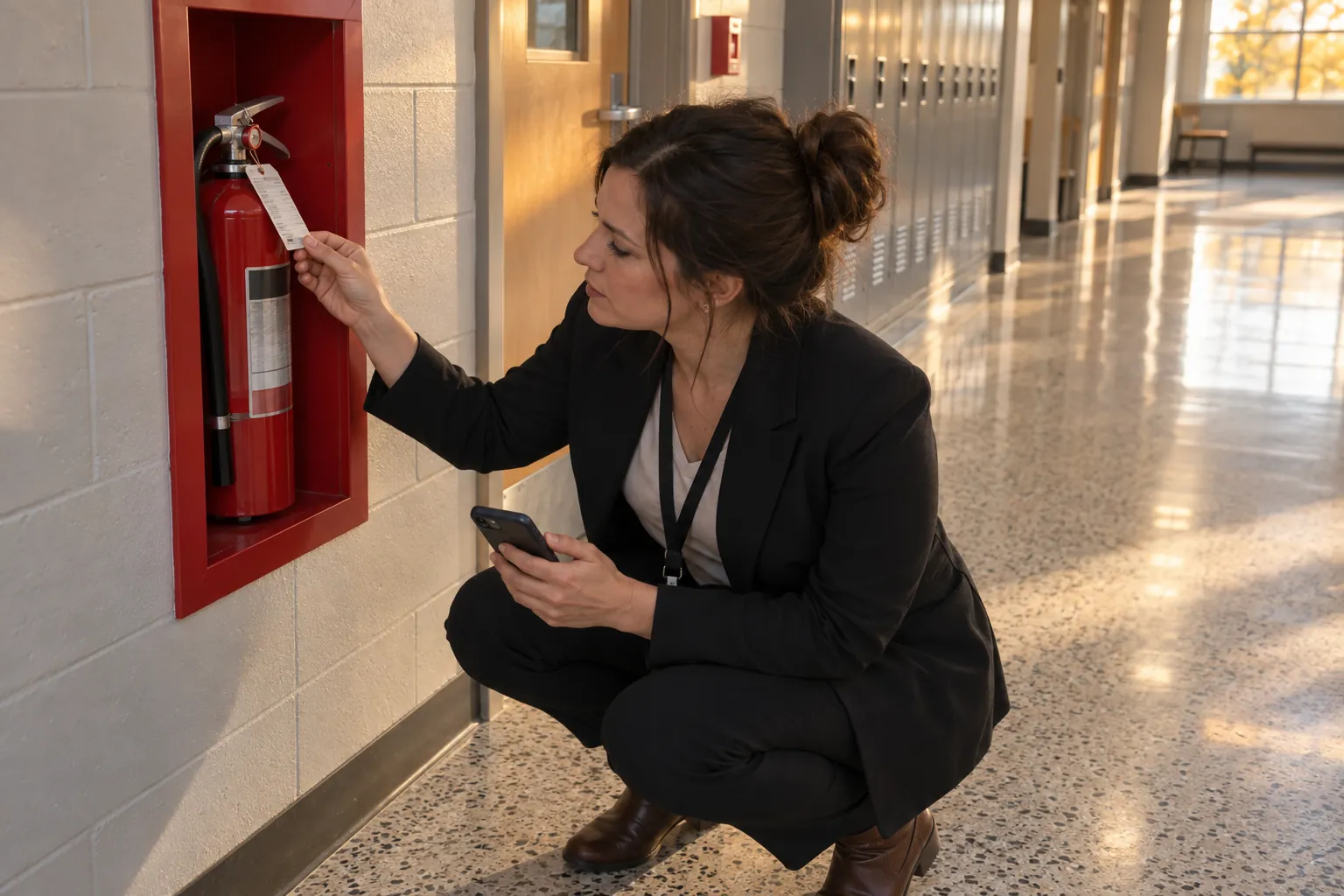
05
What a good fire safety record shows
A checklist is only as good as the record it leaves. Ontario's code says: "If this Code requires tests and corrective measures or operational procedures to be carried out, records shall be made noting what was done and the date and time it was done" (Sentence 1.1.2.1.(1)). Records stay at the building for examination by the Chief Fire Official (Sentence 1.1.2.1.(3)), and "Electronic records that can be made readily available to the Chief Fire Official upon request, are deemed to comply" (Sentence 1.1.2.1.(4)); each is kept at least two years, with at least the latest two of each test or inspection (Sentence 1.1.2.2.(1)); fire drill records at least 12 months (Article 2.8.3.4). Most buildings keep them in a fire log book. A good record:
- Is made when the check is done, with the date, the time and the name of the person.
- Says what was checked: which extinguisher, which stairwell door, which emergency lighting unit, not "all OK".
- Records faults and what happened next. Anything that fails when checked "shall be repaired or replaced" where its failure "would adversely affect fire or life safety" (Sentence 1.1.1.2.(3)), so the record shows who was told, and when it was put right.
- Shows the gaps honestly: a missed check with its reason beats two years of identical ticks.
- Keeps the contractors' reports with the routine checks, and whether their deficiencies were corrected.
- Records drills: the date, who took part, how long it took and what went wrong.
The usual failure is a record nobody can believe: twelve monthly entries in the same pen, a check recorded for a week the building was closed, no faults in three years. A monthly look through the record by someone other than the person doing the checks, such as the property manager, catches the missed inspection and the unfixed fault while there is still time.
06
Where the checklist fails, and what SiteClara does about it
A paper checklist on a clipboard works in one building with a conscientious superintendent. It struggles when checks are spread over a portfolio, when the people doing them change with every shift and contract, or when the person accountable is not in the building. A property manager with eight buildings usually learns the monthly extinguisher inspection was missed when the fire prevention officer finds the gap.
SiteClara records routine checks where they happen. A printed QR poster, with an optional NFC tag behind it, goes at a location such as the fire alarm annunciator, a stairwell door or an extinguisher cabinet. Staff scan the code or tap the tag on their own phone, with no app to install, see the checks scheduled there, such as the monthly extinguisher inspection, and mark each one done, or say what stopped them, such as a locked electrical room. The named person and the time are recorded as it happens, with a photo when the check asks for one. A problem, such as an exit blocked by a snowbank or a fire separation door wedged open, is reported there with a photo and goes onto the team's list of jobs until someone closes it.
The supervisor sees what is due, done and missed, and records the reason a check was missed; a job that needs the building manager can be escalated to them to answer. Each day the supervisor approves a report that goes to designated management or client contacts at 8 a.m. the next morning, showing what was reported, completed and still open, and how the scheduled checks went, for example 12 of 12 completed.
07
Questions people ask
What are the key things to check on a workplace fire safety checklist?
The fire alarm, the fire extinguishers, the emergency lights and the exits. Ottawa Fire Services' Ontario Fire Code pre-inspection guide asks for "a visual inspection of the fire alarm panel daily to ensure the system is operational", says "Portable extinguishers shall be inspected monthly", checking that "the gauge is showing green (fully charged), the extinguisher is mounted properly and easily accessible, is free of dust or grease and has the safety pin in place", and that emergency lights are "inspected monthly and tested annually by a certified company". Exit doors "shall open in the direction of travel, and open easily".
Can I do the fire safety checks myself?
The routine ones, yes; the annual inspection and servicing, no. Ottawa's Ontario Fire Code pre-inspection guide says "Maintenance personnel, property managers, or a representative of the owner" look at the fire alarm panel daily, but that the system is "maintained, inspected and tested annually by a qualified & permitted fire alarm company" and that fire extinguishers are "serviced and tagged annually by a certified fire extinguisher company". CCOHS's page on portable fire extinguishers draws the same line: "Visually inspect portable fire extinguishers monthly", and service them "at least once a year, or when the monthly inspection indicates servicing is necessary".
What are the basic rules of fire safety for using an extinguisher?
CCOHS's page on portable fire extinguishers gives the PASS method: "Pull the pin", "Aim the extinguisher", "Squeeze the trigger or top handle" and "Sweep the fire area". It says never to fight a fire if "You do not know what material is burning", if "The fire is spreading beyond the spot where it started" or if "Your instincts tell you not to", and to "Always stand between the escape route and the fire so you can leave safely if the fire grows."
08
Further reading, and a checklist to take away
Start with the fire code in force where your building is: the Ontario Fire Code, Division B, Parts 2 and 6 and Subsection 1.1.2; elsewhere, the National Fire Code of Canada 2025 and your province's version of it. Municipal fire services often publish a pre-inspection checklist, such as Ottawa's Ontario Fire Code pre-inspection guide, and your local fire prevention office will answer questions about your building. Federally regulated employers should read Part XVII of the Canada Occupational Health and Safety Regulations: where more than 50 employees work in a building, a qualified person inspects "all fire escapes, exits, stairways and fire protection equipment" every six months, with a signed record kept two years (section 17.9). See also our guide to Ontario Fire Code monthly inspections.
Before the next fire prevention inspection, check that:
- you know which fire code applies, and which parts of the building are whose;
- every routine check has a frequency, a named person and a deputy;
- exits are walked every day the building is occupied, and cleared outside after every snowfall;
- extinguishers, fire separation doors, egress doors and emergency lighting are checked monthly and recorded;
- contractors' annual reports are on file, and their deficiencies corrected;
- every fault found has a repair entry with a date;
- fire drills are held as often as the occupancy requires, and recorded;
- supervisory staff were instructed in the fire safety plan before taking on duties;
- records are kept at the building for at least two years and can be produced on request.
Sources
Every document this guide quotes or links to, in the order it first cites them.
- National Fire Code of Canada 2025 nrc.canada.ca
- Ontario Fire Code, O. Reg. 213/07 ontario.ca
- Fire safety legislation and Ontario's Fire Code ontario.ca
- Occupational Health and Safety Act ontario.ca
- Industrial Establishments regulation, R.R.O. 1990, Reg. 851 ontario.ca
- BC Fire Code 2024 www2.gov.bc.ca
- National Fire Code – 2023 Alberta Edition alberta.ca
- Chapitre Bâtiment du Code de sécurité du Québec incluant le CNPI 2020 rbq.gouv.qc.ca
- Canada Occupational Health and Safety Regulations laws-lois.justice.gc.ca
- Ontario Fire Code pre-inspection guide ottawa.ca
- Portable fire extinguishers ccohs.ca
- Workplace Housekeeping – Basic Guide ccohs.ca
Related guides
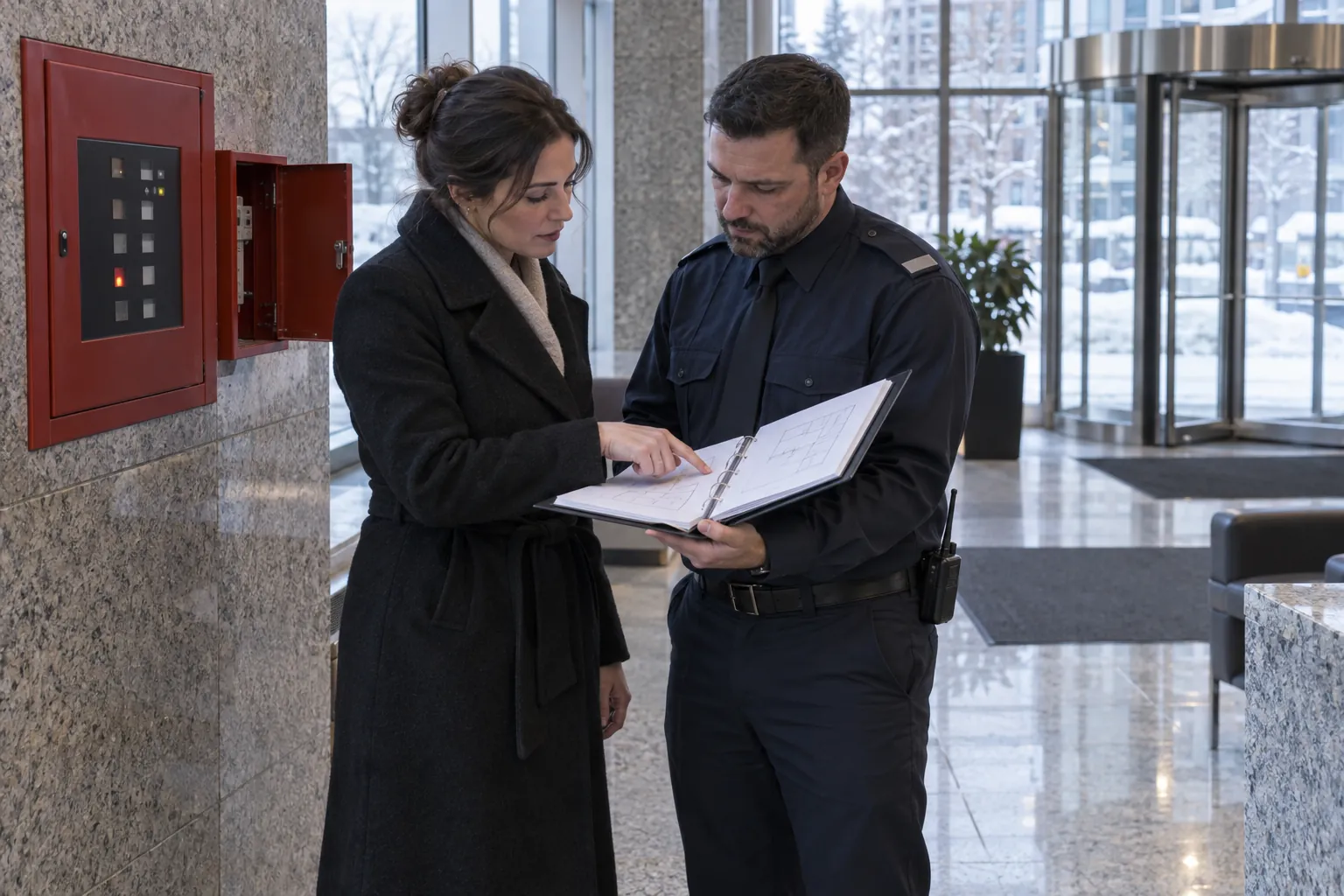 Fire and water checksFire safety plan: what it must contain, who approves it, and how to keep it trueWhat a fire safety plan must contain under the National Fire Code of Canada and the Ontario Fire Code, who approves it, how often it is reviewed, and the records.
 Fire and water checksFire log book: what to record, who keeps it and how long, under Canadian fire codesWhat a fire log book should hold under the Ontario Fire Code and the National Fire Code of Canada: the tests, who records them, how long to keep them, and the form.
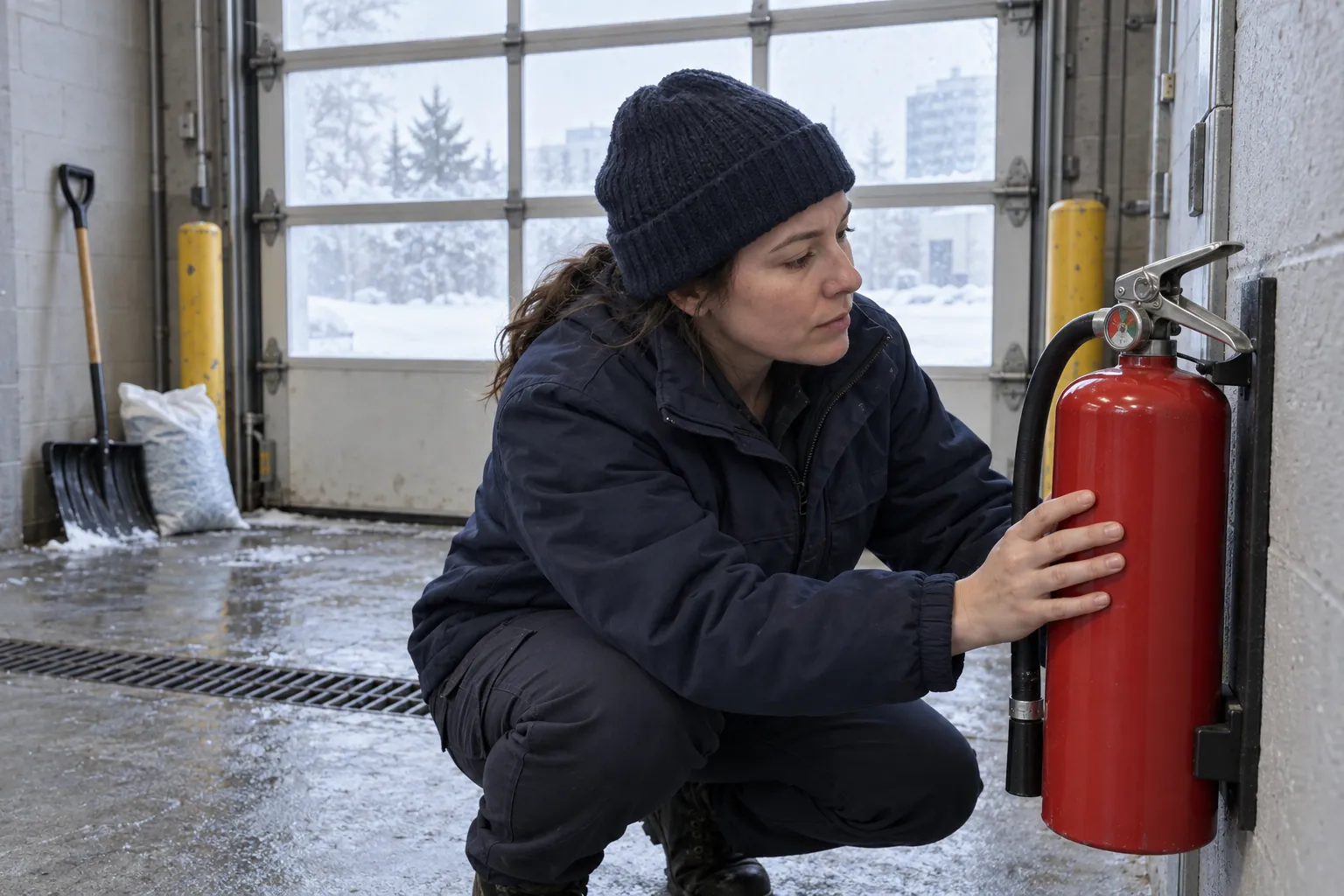 Fire and water checksFire extinguisher inspection: the monthly check, the service and the recordsWhat a monthly fire extinguisher inspection covers under the National Fire Code of Canada, the Ontario Fire Code and NFPA 10, and what the records must show.
 Fire and water checksFire alarm testing in Canada: what the owner checks, what the technician tests, and what to recordFire alarm testing in Canada: what the fire codes and CAN/ULC-S536 ask of owners daily and monthly, the annual test by a technician, and what the record must show.