Fire and water checks
Workplace fire safety checklist: what to check, how often, and who does it
A workplace fire safety checklist is a schedule of daily, weekly and monthly checks that the escape routes are clear, the final exits openable, the fire doors shut, the alarm panel normal and the fire extinguishers in place, which is how whoever has control of an Irish workplace shows that fire safety measures and procedures are applied at all times, as section 18 of the Fire Services Act 1981 requires.
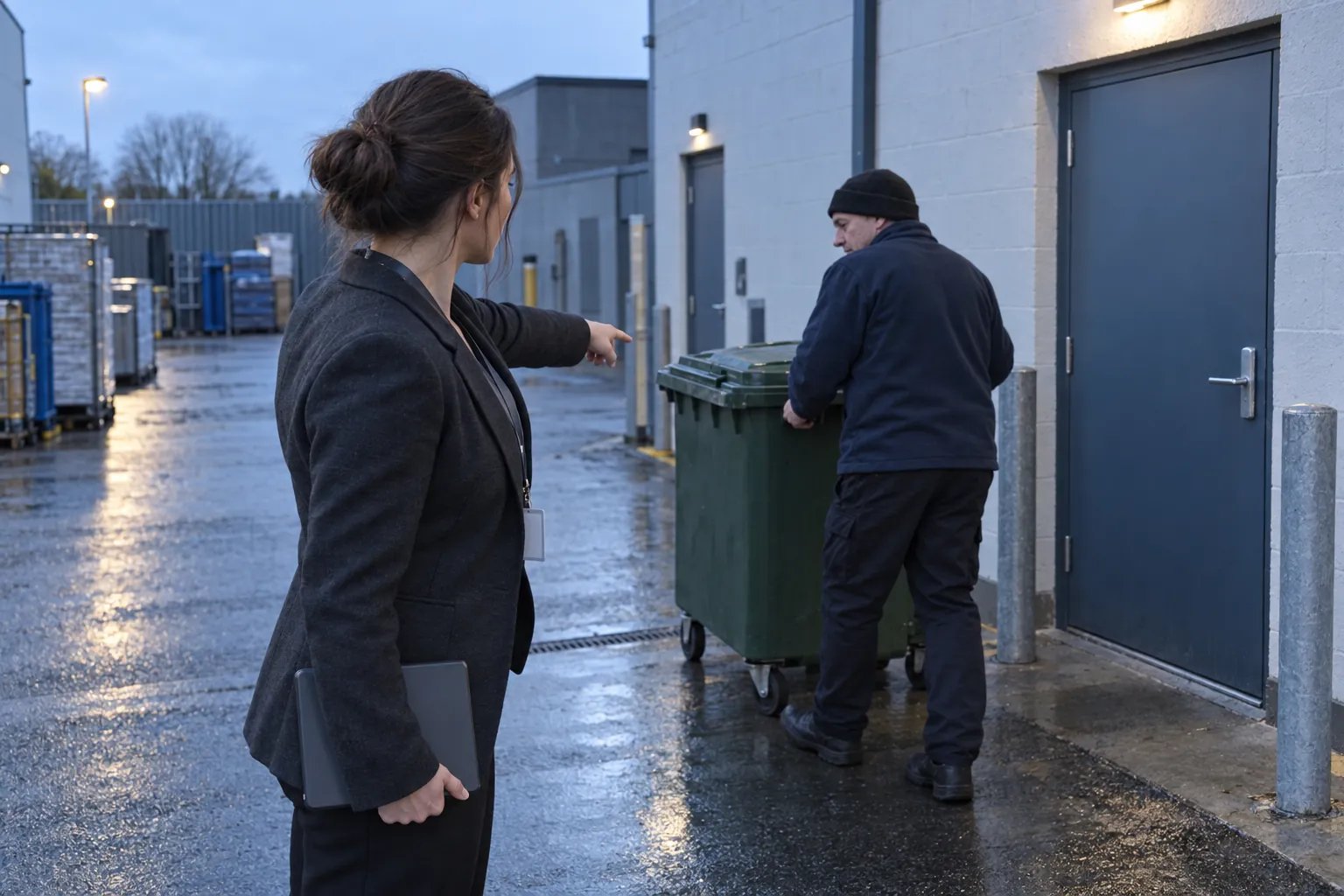
This checklist sets out those checks day by day and month by month, drawn from the Department of Housing's guide and the Health and Safety Authority, with who should do each one and what should happen when something is wrong.
01
The duty behind a workplace fire safety checklist
Two sets of law meet in every Irish workplace, and a fire safety checklist is where they become daily practice.
The first is section 18 of the Fire Services Act 1981, extended by section 29 of the Licensing of Indoor Events Act 2003, which added "any workplace" to the premises it covers and substituted a new subsection (2). Section 18(2) places the duty on every person having control over the premises: among other things, to provide reasonable fire safety measures and procedures and to "ensure that the fire safety measures and procedures referred to in paragraph (b) are applied at all times". Section 18(3) adds a duty on everyone on the premises to conduct themselves so that nobody is exposed to danger from fire through their act or omission.
The words "at all times" are what make a routine necessary: a fire door that shut on the day of the inspection and was wedged the rest of the year does not meet the duty, and the only way to know which it was is to check and write it down.
The second is workplace law. Under section 11 of the Safety, Health and Welfare at Work Act 2005, every employer must plan for emergencies, provide for fire-fighting and evacuation, and designate and train the employees who carry the plans out. The Safety, Health and Welfare at Work (General Application) Regulations 2007 go further. Regulation 12 requires emergency routes and exits to be "kept clear at all times" and emergency doors to be openable "easily and immediately". Regulation 13 requires fire detection and fire-fighting equipment to be "inspected and maintained as frequently as necessary to ensure that it is in good working order" and "serviced by a competent person as frequently as necessary".
The Health and Safety Authority's Fire topic page ties these together: a fire safety risk assessment, covering prevention, detection and warning, and escape and fire-fighting, belongs in the safety statement. The wider fire legislation, it notes, is generally enforced by local authority fire officers. Under section 18 as amended, an authorised person may enter and inspect the premises and may require a fire safety assessment of them.
02
The checklist, from daily to monthly
Neither the Acts nor the Regulations list checks line by line. The most complete Irish schedule is Table 2 of the Department of Housing, Local Government and Heritage's Fire Safety Guide for Building Owners and Operators (August 2023), written for persons having control under section 18(2). It says many of the daily, weekly and monthly checks "can be carried out without expert knowledge of the equipment or system", and marks those for a designated person. For a typical workplace it comes to this:
- Daily, escape routes: not obstructed and not used for storage; no tumble dryers or other electrical appliances in corridors, lobbies or stairways, and no batteries or battery-powered devices charging there; routes signed and adequately lit; the indicator on each emergency light fitting working; final exit doors readily openable, and doors and gates across routes easily and immediately openable; no curtains, drapes or mirrors across or beside a route; mats and rugs fixed, not tripping anyone and not propping doors; fire doors closed unless on a hold-open device that releases with the alarm; and the ground outside each final exit clear.
- Daily, fire alarm: the control and indicating panel showing normal operation, or any fault logged and acted on, and any fault recorded the previous day attended to. Doors held open on automatic release devices should be released daily.
- Weekly: a fire alarm test showing that the panel can receive a fire signal and start the evacuation procedure, "recording which trigger device has been used", in line with I.S. 3218; standby batteries in good condition, and fuel, oil and coolant levels of any standby generator correct; and emergency lighting checks on at least 25% of the system, so that all of it is checked at least every four weeks under I.S. 3217. Where there is smoke control, its actuation should be simulated weekly.
- Monthly: every point where a portable fire extinguisher or hose reel is usually located, checked, with anything missing replaced immediately; hose reels visually inspected for leaks and drums that turn freely; hold-open devices tested by simulating mains failure or an alarm, with the result recorded; panic and emergency exit devices inspected and operated; and any standby generator started by simulating mains failure and allowed to power the system for at least an hour.
Your fire safety risk assessment decides which lines apply and whether any should be more frequent; the guide itself notes a risk assessment may call for more frequent extinguisher checks.
03
The daily walk-round, area by area
The daily walk is the check most easily skipped, because nothing usually changed since yesterday. The Department's guide is plain: "All escape routes should be checked on a daily basis", and any obstruction removed at once. Walk it in the same order every day, from the inside out:
- The panel: normal, or the fault known, logged and reported. Nobody should silence a fault and walk on.
- Corridors and stairs: nothing stored, no deliveries parked "for a minute". The HSA's guidance on emergency escape and fire fighting says escape routes should generally be at least one metre wide and kept clear of all obstructions.
- Fire doors: closed and latching, not wedged with a mat, a fire extinguisher or a folded wad of paper.
- Final exits: unlocked, openable without a key, and clear on the outside. The HSA is direct: "Security should never take precedence over safety", and roller shutters or security grilles on an escape route "must be open when persons are on the premises".
- Outside: exits, the assembly point and fire service access clear. The guide warns against access routes being blocked by "waste skips or parked vehicles".
- Housekeeping: the HSA's fire prevention guidance says combustible rubbish should be removed at least daily and stored away from the building, never kept in escape routes even temporarily, and that basements, store rooms and other areas where a fire could grow unnoticed should be inspected regularly.
Some lines belong to particular rooms: in a staff kitchen, extract hoods and filters kept clean of grease and cooking never left unattended; in a laundry, lint removed and tumble dryers unloaded straight after use; wherever flammable liquids are used, only the quantity needed out, and the HSA advises that rags used with them go in a lidded metal bin removed at the end of each shift.
The same HSA guidance on preventing fire adds two lines for the wider building: smoking areas kept away from flammable materials, and electrical equipment "serviced regularly by a competent person to prevent sparks and fires".
At closing time, the guide's closing procedure applies: premises made safe, electrical equipment isolated and unplugged.
04
Who does which check, and the competent person's work
Every line of a fire safety checklist is one of two kinds of work, and gaps usually appear where the two are confused.
- Routine checks by a designated person. The Department's guide says general daily routines, "such as checking the fire alarm panels and ensuring that escape routes are available for egress", can be done by people who have received a suitable level of training. In practice that is the caretaker, a facilities assistant, the duty manager, a security officer or a trained fire warden.
- Inspection, testing and servicing by a competent person. The quarterly, six-monthly and yearly work in the guide's table "should be carried out by persons who have competency in their specific areas and can provide certification to the relevant standard": fire alarm servicing under I.S. 3218; the quarterly emergency lighting inspection and annual full-duration test under I.S. 3217; fire door inspections every six months; extinguisher maintenance under I.S. 291 at intervals not exceeding 12 months, plus or minus one; and hose reels under I.S. EN 671-3 each year.
A weekly alarm test does not replace a service, and a service twice a year does not cover the weeks in between. The HSA says an employer or nominated employee can carry out checks, but periodic servicing and repairs are "best done by using a competent person".
Give each routine check to a named person, with a deputy for leave and sickness; "the facilities team" is not a name. The guide lets the person having control delegate fire safety duties, but says they should "retain overall responsibility for ensuring delegated tasks are carried out", so someone has to look at whether the checks happened.
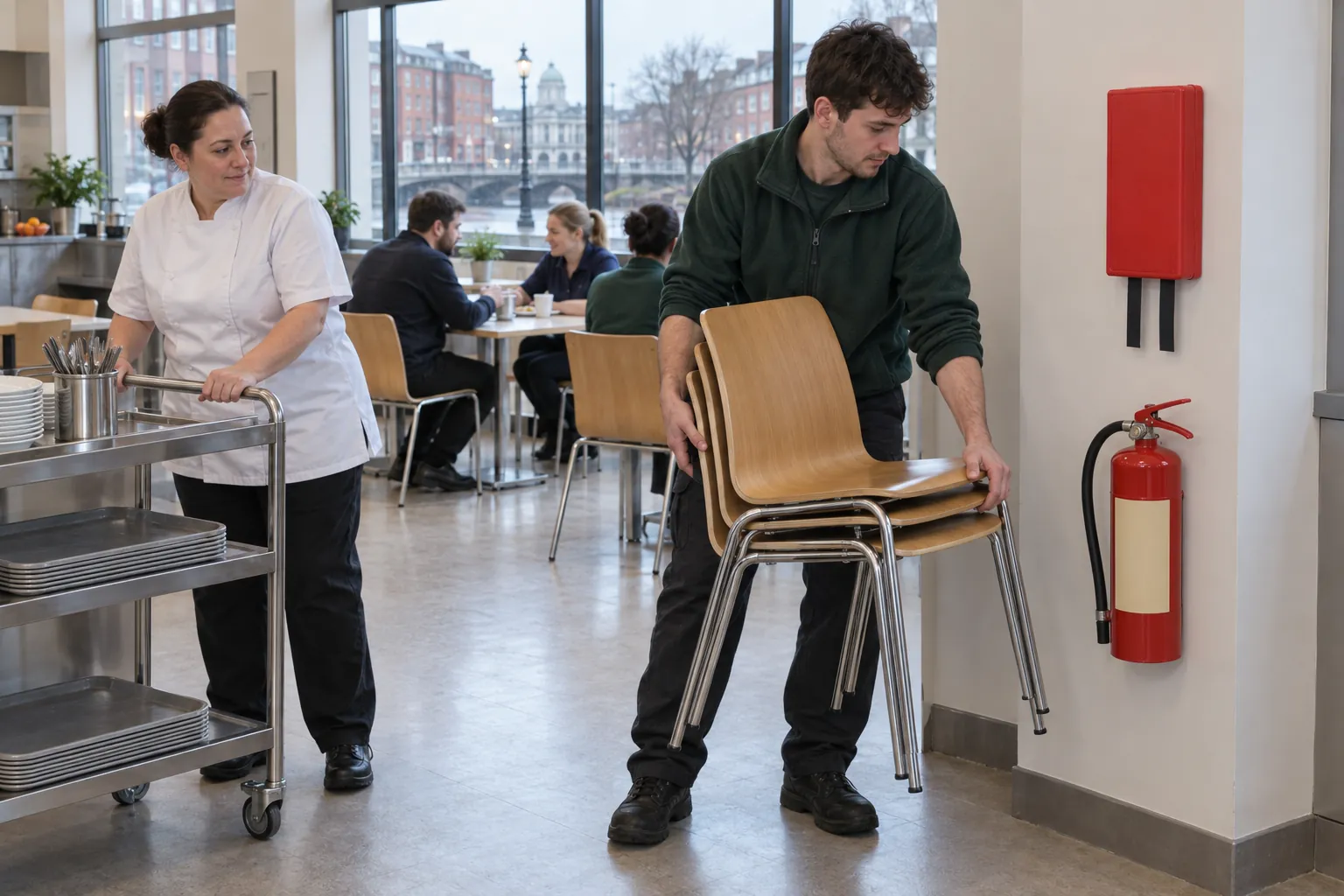
The guide also asks for training for all staff, including part-time and temporary staff: what to do on hearing the alarm or finding a fire, the escape routes, the role of fire doors, where the call points and equipment are, and what to do on noticing a fault. Early-morning contract cleaners, agency staff and night security officers are the people most often missed. Each drill should be reviewed and recorded.
05
Faults, and what the record should show
A checklist that finds a fault and stops there has done half its job. The Department's guide is unambiguous: "Faults are a life safety issue – not simply a maintenance issue to be dealt with later; faults should be entered in the fire safety register and corrected promptly." Whoever finds a fault should know who to tell, and the person told should know it is theirs to close.
The Irish home for all of this is the fire safety register, which the guide says should be kept on the premises, up to date and available to the fire authority's authorised officer, with details of routine checks, their results, and "actions taken (and by whom) to address defects". The HSA's guidance on fire detection and warning makes the same point from the employer's side: a record of the work carried out on equipment and systems "will help to demonstrate compliance with the law".
A checklist record that stands up to a fire officer, an insurer or a fire safety assessor:
- is filled in when the check is done, with the date, the actual time and the name of the person, not at the end of the week;
- says what was checked: which call point, which floor's exits, which extinguisher point, not "building OK";
- records the fault and the fix: who it was reported to, when it was put right, and by whom;
- shows the gaps honestly: a missed weekly test with a reason, such as the building being closed, is more credible than a year of identical ticks;
- keeps the competent person's certificates beside the routine checks, with any recommendations and when they were acted on;
- is read regularly by someone with the authority to get things fixed, not only the week before an inspection.
06
Where the checklist fails, and what SiteClara does about it
A checklist on a clipboard works in one building with one conscientious caretaker. It fails in familiar ways: the daily sheet on the back of the plant room door ticked for the week on Monday morning, the weekly alarm tests entered in a batch in the same pen, a chained final exit mentioned to whoever was passing, and a facilities manager with five buildings who sees none of it until a fire officer turns the pages.
SiteClara records routine checks where they are done. A printed QR poster, with an optional NFC tag behind it, goes at a location such as the fire alarm panel, a final exit or a floor's extinguisher point. The person doing the check scans the code or taps the tag with their own phone, with no app to install, sees the checks due there, such as the daily escape route walk or the monthly extinguisher round, and marks each one done or records what stopped them. The name and time are recorded as it happens, with a photo when one is asked for. A problem found there, such as a wedged fire door or a skip across an exit, goes onto the team's list of jobs until someone closes it, and the supervisor can escalate it to the building manager, who can answer it.
The supervisor sees what was due, done and missed across the building, and records the reason for anything missed. Each day they review and approve a report that goes to nominated managers or client contacts the next morning: what was reported, what was completed, what is still open, and how the scheduled checks went.
07
Questions people ask
What are the main steps of a fire risk assessment?
The HSA's Fire topic page says a fire safety risk assessment should cover fire prevention, fire detection and warning, and emergency escape and fire fighting. Its Risk Assessments Made Easy page gives three basic steps for any risk assessment: look at the hazards in your workplace, decide who might be harmed and how, and discuss with your employees and put control measures in place, recording any new controls in an action plan with who will put them in place and by when. Risk assessments go in the safety statement and, the HSA says, should be reviewed at least annually, or sooner after a change in the work or an incident, including a near miss.
Can I do a fire risk assessment myself?
The duty is the employer's own: the HSA's Risk Assessments Made Easy page says that as an employer "you are legally required to carry out risk assessments at your workplace", and under section 19 of the 2005 Act every employer must identify hazards, assess risks and have a written risk assessment. Section 8 of the Act requires you to obtain, where necessary, the services of a competent person, such as where the work needs knowledge you do not have, and the HSA's Fire topic page adds that appointing one "does not absolve the employer of his or her responsibilities under the legislation".
Is there a free fire safety checklist or risk assessment template?
The HSA's pages on fire detection and warning and emergency escape and fire fighting each include a short checklist. For the risk assessment itself, the HSA's Risk Assessments Made Easy page describes BeSMART.ie as "a free online tool that guides you through the entire risk assessment process", ending with a workplace-specific safety statement that can be printed or downloaded. Neither replaces the routine checks above, which still have to be done and recorded on the premises.
08
Further reading, and a list to take away
The Department of Housing, Local Government and Heritage keeps its fire safety responsibility and guidance documents in one collection, including the Fire Safety Guide for Building Owners and Operators (section 5 for the fire safety programme and escape routes, section 8, Table 2, for the schedule). The HSA's fire pages cover fire prevention, detection and warning and escape and fire fighting, the last two each with a short checklist. Your local authority fire service can advise on your own building. I.S. 3218, I.S. 3217 and I.S. 291 are published by the National Standards Authority of Ireland.
Before the next review of the fire safety risk assessment, check that:
- the person having control is named, with deputies, and everyone sharing section 18(2) duties knows which checks are theirs;
- every daily, weekly and monthly check has a named person, a deputy and a set route;
- the daily walk covers the panel, escape routes, fire doors, final exits inside and out, and housekeeping;
- the weekly alarm test rotates through the call points, and the device used is recorded;
- emergency lighting is checked so that every fitting is covered at least every four weeks;
- extinguisher and hose reel points, hold-open devices, panic hardware and any generator are checked monthly;
- every fault has an owner and a date it was put right, and the competent person's certificates are on file;
- training and drills are recorded, including for part-time, agency, contract and out-of-hours staff.
Sources
Every document this guide quotes or links to, in the order it first cites them.
- Section 18 of the Fire Services Act 1981 irishstatutebook.ie
- Section 29 of the Licensing of Indoor Events Act 2003 irishstatutebook.ie
- Section 11 of the Safety, Health and Welfare at Work Act 2005 irishstatutebook.ie
- Safety, Health and Welfare at Work (General Application) Regulations 2007 irishstatutebook.ie
- Fire topic page hsa.ie
- Fire Safety Guide for Building Owners and Operators gov.ie
- Emergency escape and fire fighting hsa.ie
- Fire prevention hsa.ie
- Fire detection and warning hsa.ie
- Risk Assessments Made Easy hsa.ie
- Fire safety responsibility and guidance documents gov.ie
Related guides
 Fire and water checksFire safety register: what to record, who keeps it and how to make it credibleWhat a fire safety register should hold under section 18(2) of the Fire Services Acts, the routine checks behind it, who keeps it, and what makes it credible.
 Fire and water checksFire alarm testing in Ireland: the checks, the servicing, and the recordFire alarm testing in Ireland: the legal duty, the daily and weekly checks, quarterly servicing to I.S. 3218, and what the fire safety register should show.
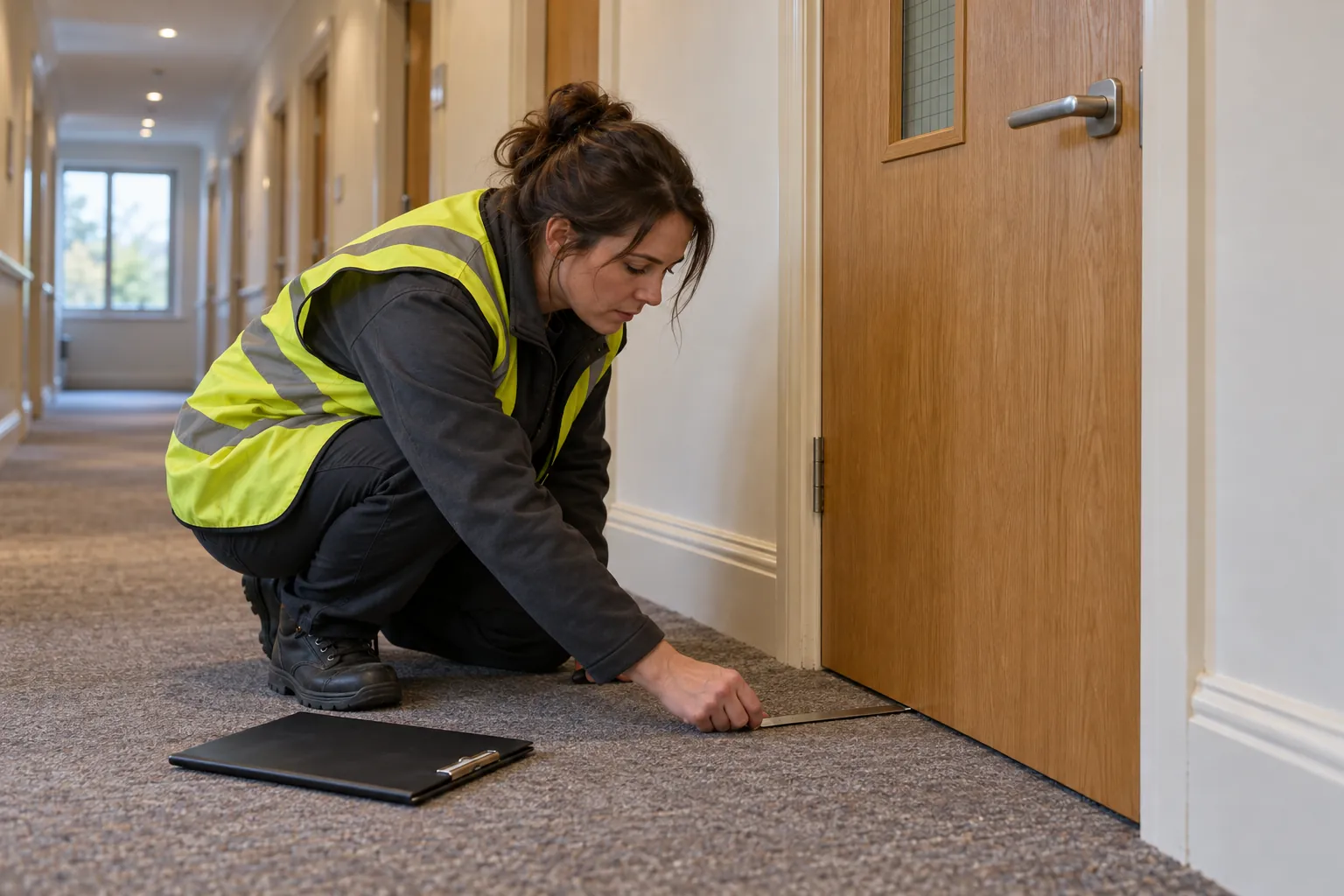 Fire and water checksFire door inspection: the duty, the checks and the recordFire door inspection in Ireland: the section 18(2) duty, the six-monthly check in the Department's guide, what a competent person looks at, and the register.
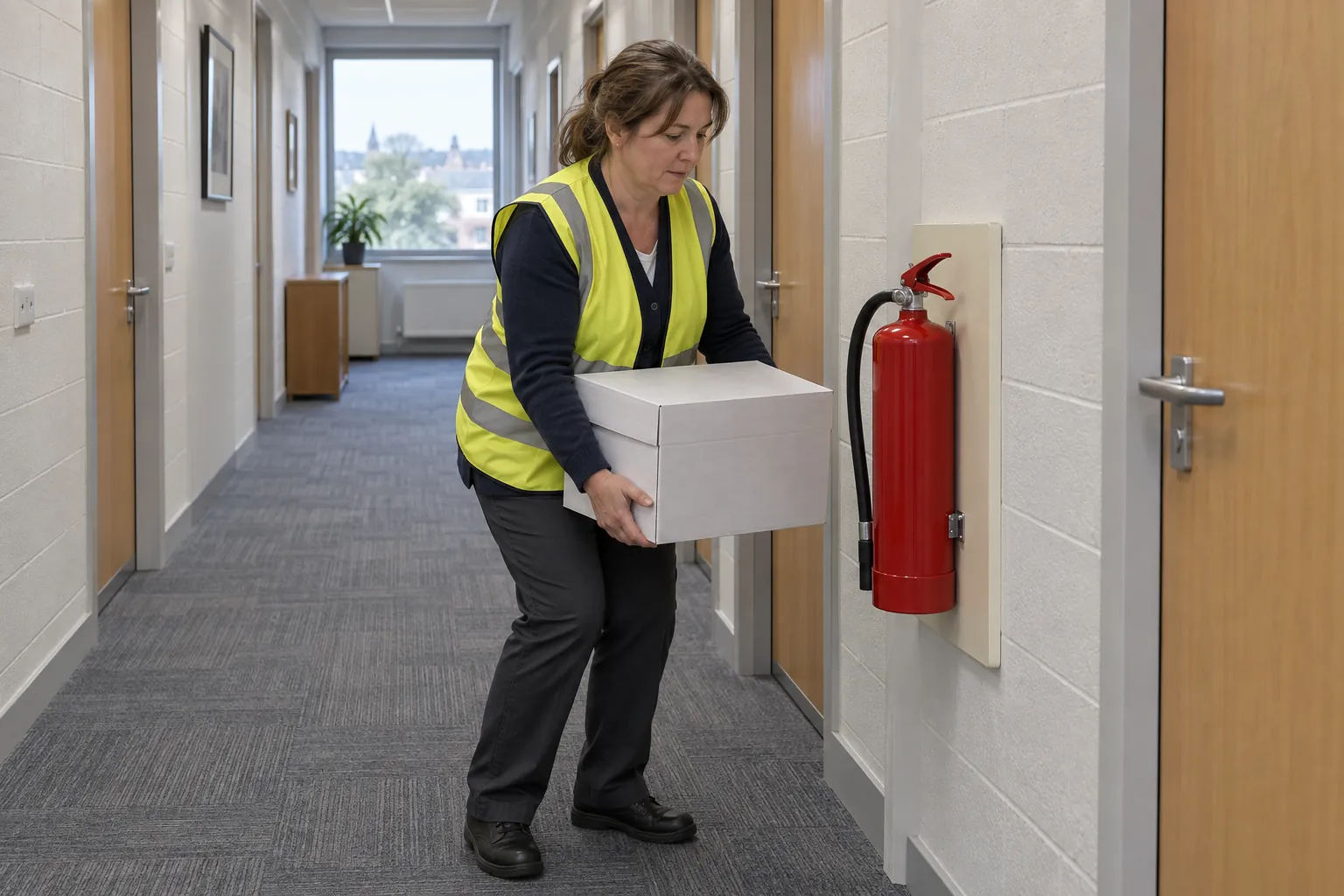 Fire and water checksFire warden duties: the daily checks, the evacuation and the recordWhat a fire warden does in an Irish workplace: the law behind the role, the daily and weekly checks, the job in an evacuation, and a record that stands up.