Premises and facilities management
Slips, trips and falls: what Irish law requires, and how to prevent them day to day
Slips, trips and falls are accidents in which someone loses their footing on a wet or contaminated floor, catches a foot on an obstacle or uneven surface, or falls on stairs or steps, and in Ireland they are the highest single cause of work injuries, hurting seven people every working day.
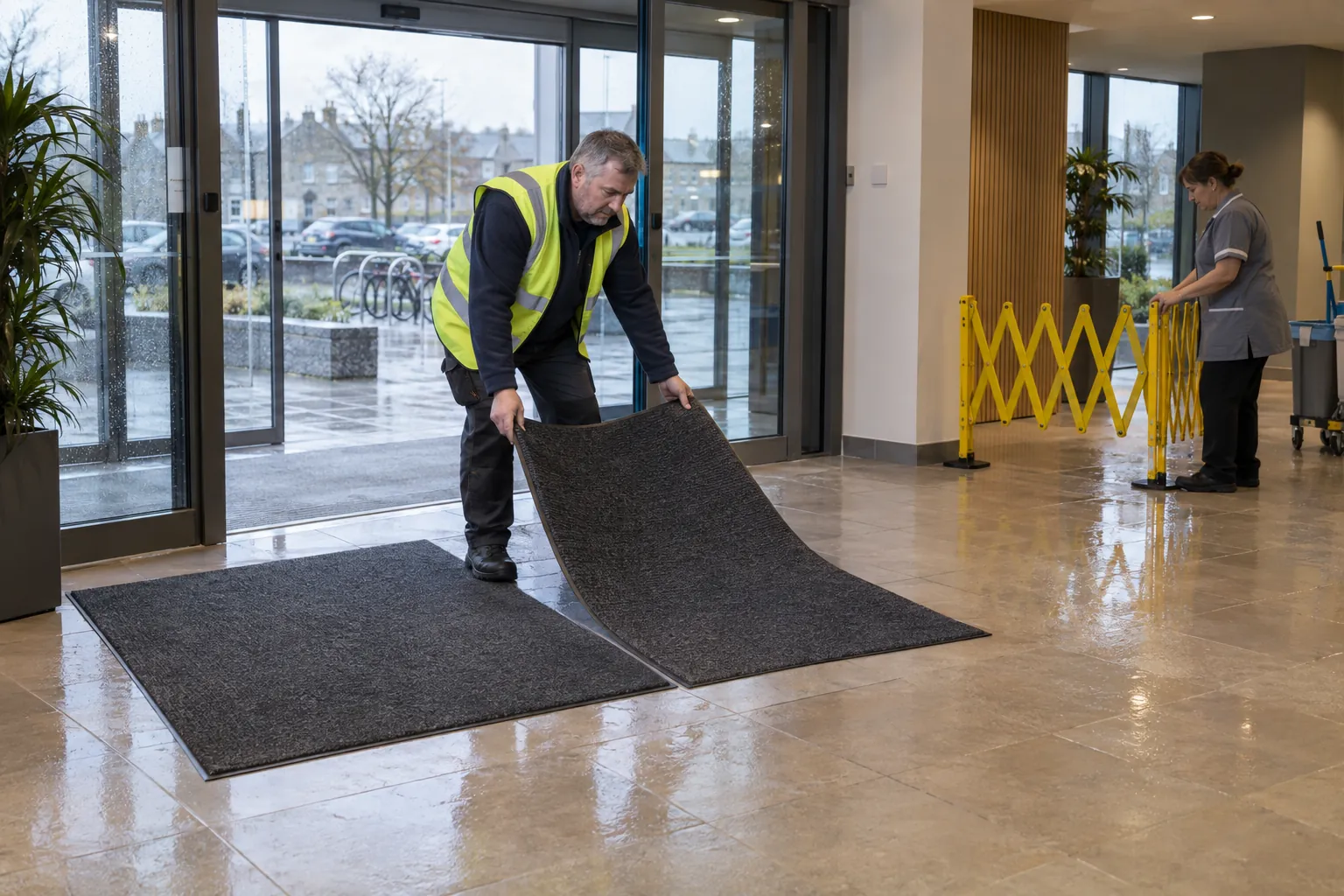
The Health and Safety Authority warns that people tend to find them funny until someone is hurt, which gets in the way of taking them seriously, yet most of what prevents them is routine: spills dealt with straight away, floors cleaned at the right time and kept off until dry, entrances watched in wet weather, stairs lit and walkways kept clear. This guide covers what the Safety, Health and Welfare at Work Act 2005 and the General Application Regulations 2007 require, where the risk sits in a typical building, what the HSA advises on cleaning, spills, entrances and stairs, and what evidence shows the precautions happen.
01
The duty: safe floors, clean premises and safe access
There is no single slips and trips regulation in Ireland. The duty comes from general law, read together. Section 8 of the Safety, Health and Welfare at Work Act 2005 requires every employer to ensure, so far as is reasonably practicable, the safety, health and welfare at work of employees, and, as regards the place of work, "the design, provision and maintenance of it in a condition that is safe and without risk to health" and "the design, provision and maintenance of safe means of access to and egress from it."
The detail is in the Safety, Health and Welfare at Work (General Application) Regulations 2007 (S.I. No. 299 of 2007), quoted here as made on the Irish Statute Book. Three regulations in Part 2, Chapter 1 do most of the work:
- Regulation 9(1)(a): the employer shall ensure that "the floors of rooms have no dangerous bumps, holes or slopes and are fixed, stable and, so far as is reasonably practicable, not slippery".
- Regulation 14: places of work are organised so that pedestrians and vehicles can circulate safely, and traffic routes, "including stairs, fixed ladders and loading bays and ramps", are designed, located and dimensioned for easy, safe and appropriate access.
- Regulation 18(a) and (b): every place of work is kept in a clean state, with accumulations of dirt, refuse and waste removed "as frequently as necessary to maintain an appropriate level of safety and health", and the floor of every workroom "is cleaned by a suitable method as frequently as necessary".
The HSA's page on the law on slips, trips and falls adds the rest of the picture: Regulation 23 on outdoor workstations, Regulations 99 and 105 on surfaces for work at height and working platforms, the duty on those who design, supply and install flooring to provide information on its safe use, maintenance and cleaning, and Regulation 160, under which safety signs may be used only where hazards cannot be avoided or adequately reduced by other means. A warning sign must also be removed once the situation it refers to has ended (Schedule 9, Part B, paragraph 2.2).
The duty reaches beyond the employer's own staff. Section 12 of the Act requires every employer to conduct the undertaking so that people at the place of work who are not its employees are not exposed to risk, so far as is reasonably practicable, which takes in visitors, customers, pupils and residents. Section 15 places duties on anyone who controls a non-domestic place of work used by others, including by contract or tenancy, so a landlord, a managing agent or an owners' management company with common areas can hold part of the duty. And section 13 puts duties on employees: to take reasonable care of themselves and others, and to report, as soon as practicable, any defect in the place of work that might endanger anyone.
Slips, trips and falls also belong in the risk assessment and the safety statement required by sections 19 and 20.
02
Where slips, trips and falls happen in a building
The HSA's slips, trips and falls topic page says that every working day seven people are hurt in work slips, trips and falls, and its page on why they matter adds that they are the highest single cause of work injuries and that 22% lead to over a month off work. They are not a joke, even if a trip looks like one until somebody is hurt.
The HSA's slips, trips and falls topic groups the causes by place and condition. In an office, school, nursing home, shopping centre or apartment block, the list to walk is usually this:
- Entrances and exits, above all in wet weather, when rain comes in on shoes, umbrellas, buggies and wheelchairs.
- Floors being cleaned or drying, where the HSA notes that the vast majority of floor cleaning slip victims are not the cleaners.
- Spills: drinks in a canteen or corridor, grease near a kitchen, leaks from a roof or radiator.
- Washrooms, showers and kitchens, where the floor is often wet and the surface hard.
- Stairs and steps, especially going down, and a single step nobody expects.
- Walkways with trailing cables, deliveries, loose mats or worn and uneven flooring.
- Car parks, yards and outside paths, with potholes, kerbs, puddles and, in winter, ice and frost.
- Plant rooms, stores and bin stores, where housekeeping slips first.
The HSA's mapping hazards tool turns that list into the building's own in four steps: draw a map, mark the high-risk areas, mark where incidents have happened, then put safeguards in place.
03
Floor cleaning and spills: where the cleaning team makes the difference
Cleaning prevents slips and causes them. The HSA's advice on segregating wet and damp floors is blunt: "mop-dry" floors are particularly hazardous because they look dry but are still slippery, and a damp floor can be more dangerous than a wet one because it removes the visual warning. The advice is to keep people off wet, damp or drying floors with a physical barrier or cordon until the floor is bone-dry, to clean large areas in sections, and never to let the cordon block an emergency route. The same page records that a review of slip, trip and fall accidents during wet cleaning found that signs did not prevent all slips on wet floors.
The HSA's floor cleaning advice sets out a sequence a cleaning contractor or in-house team can follow:
- Identify the risks: which floors are slippery when wet, and who walks on them when.
- Communicate: step-by-step instructions covering the method, the chemical and dilution, when areas will be empty, and how wet floors will be segregated.
- Replace wet cleaning with dry methods where that works.
- Reschedule: the HSA's rescheduling advice is to wet clean at low-traffic times, leaving maximum drying time, and to agree the schedule with the building's operators and users.
- Equip the team with what the method needs, kept in good condition.
- Segregate the wet area until it is dry, then take the barrier and signs away.
Spills follow a similar pattern: identify, prevent, contain, detect, cordon and remove. The HSA's advice on removing spills is to deal with them straight away and dry the floor thoroughly, because a superficial effort can leave a greater risk than the spill, to keep stocked spill kits at the high-risk areas, and to consider nominating one person each shift to be responsible for spills.
Detection is the part that most often fails in a busy building. The HSA's advice on detecting spills is to monitor "on a frequent, regular, planned basis", including the identified spill risk areas and, in wet weather, the entrances, and to "consider using a checklist if necessary. Record-keeping can help ensure monitoring takes place."
Finally, signs. The HSA's page on over-used temporary signs says warning signs alone may not be adequate and must be removed when they no longer apply. A wet floor sign left all day on a dry corridor teaches everyone to ignore the next one.
04
Entrances, stairs and the Irish weather
The entrance is where rain meets a hard floor. The HSA's advice on entrances notes that many entrance slips happen between 8am and 10am, and suggests a wet weather protocol: watch the forecast and Met Éireann warnings, provide a clearly marked safe walkway, deal with wet umbrellas and coats, fit enough mats and add more, properly placed and secured, when needed, check for wet footprints or tyre tracks beyond the matting, increase monitoring by clearly nominated people, and remove spills quickly.
The same page says the mat should start at the threshold, be secured and, where needed, recessed so it is not a trip hazard, and lie on the route people actually use. Curled edges, mats that have slid and saturated mats all belong on the check.
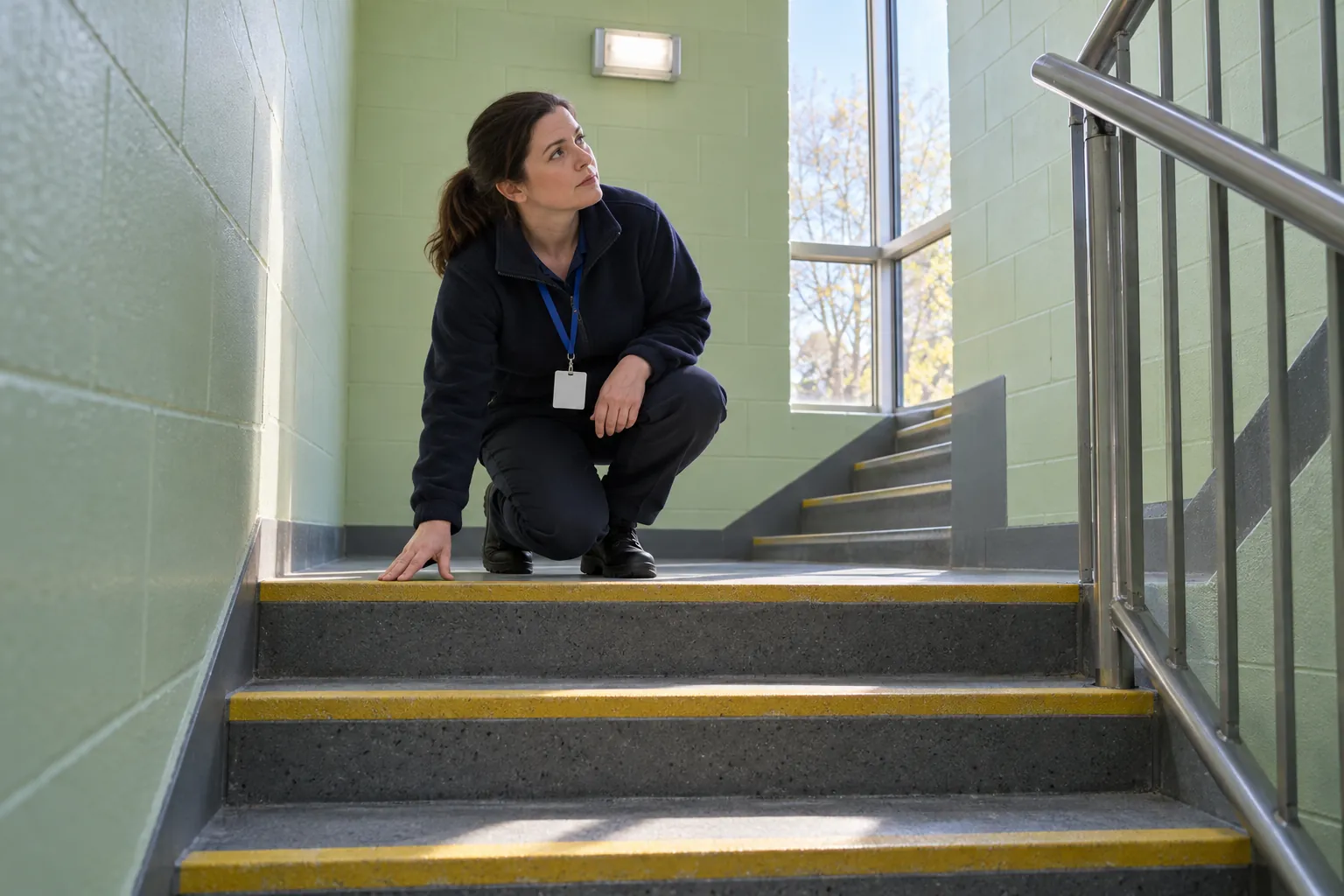
Stairs and steps are the other concentrated risk. The HSA's advice on safer work stairs and steps says that every working day one person is hurt in a slip, trip or fall on work stairs or steps, and that descending is associated with many accidents. It groups the controls into four elements that should be considered together:
- Operational controls: the rules and policies around using stairs and steps, because, in words the HSA quotes from research, "people have a low risk-perception of using the stairs".
- Environmental controls: lighting of at least 100 lux at the tread, and step edges and handrails that contrast with the surfaces beside them.
- Hazardous steps: slippery, surprise, short and irregular steps, each needing its own fix.
- Handrails, where the HSA suggests considering one on the right-hand side for descent, since most people are right-handed.
Winter adds ice. The HSA's advice on ice and snow by location calls for clearly marked safe walkways, gritting or salting the car park before people use it, and watching forecasts for freezing conditions, with care where shaded ground does not thaw. That means a named person, a trigger for gritting and a record that it was done before the first arrivals.
05
Checks, who does them, and what good evidence looks like
Prevention depends on a few routine checks done at the right place and time, and on hazards being reported to someone who will act. In most buildings the work divides like this:
- The cleaning team cleans floors to the agreed method and schedule, segregates wet areas, removes spills and signs, and checks washrooms and entrances through the day.
- The caretaker, porter or facilities team walks the routes, checks mats, lighting on stairs, handrails, flooring and outside paths, grits in frost, and deals with defects.
- Supervisors and managers make sure the checks happen, follow up what is reported, and review the risk assessment when something changes or an accident happens.
- Everyone else reports what they see. Section 13 of the Act makes that a duty for employees, and the HSA points out that people often think preventing slips is someone else's job.
Where employers share a building, section 21 of the Act, as the HSA's law page summarises it, requires them to co-operate, co-ordinate their preventive work and keep each other informed. A cleaning contractor and the client, or a tenant and a managing agent, need to agree who checks the entrance on a wet morning, or each will assume the other did.
A sensible checklist covers the entrance and its mats, corridors and stairs, washrooms, the canteen or tea point, the car park and outside paths, and back-of-house rooms. Frequency follows the risk: entrances and washrooms several times a day, more in wet weather; stairs and walkways daily; outside areas before opening in frost; back-of-house weekly.
Good evidence of that work answers four questions without anyone having to remember:
- Was the check done, at that location, on that day?
- By whom, and when, recorded at the time rather than filled in later?
- What was found, with a photograph where it helps: a curled mat edge, a pothole, a light out on the stairs?
- What happened next: who was told, when the hazard was made safe, and when it was fixed?
The HSA's slip risk assessment and prevention page points the same way: the history of incidents and near-slips may show that a surface is slippery, and employees should be asked directly whether a floor feels slippery, wet or dry. A record of checks, reports and near misses by location is what makes that history visible when the risk assessment is reviewed.
06
Where the record fails, and what SiteClara does about it
The usual failures are familiar. The toilet check sheet on the back of the door is signed for hours when nobody was in the building. The spill at the entrance was mentioned to whoever was passing and never reached anyone who could deal with it. Nobody can say whether the extra mats went down on the wet Monday when the visitor fell. When an accident is investigated or a claim arrives, the question is not whether the building had a procedure but whether it can show the procedure was followed that day.
SiteClara records the routine checks where they are done. A printed QR poster, with an NFC tag behind it if staff should tap, sits at each location that has a check: the main entrance, the stairwell, the washrooms, the canteen, the car park. Staff scan or tap with their own phone, with no app to install, and see the checks due there. They mark each one done, or explain what stopped them, with a photo when one is asked for, and the time and the named person are recorded as it happens. A hazard found on a round, such as a curled mat, a spill that needs a machine or a broken stair light, is reported at that location and stays on the team's list of jobs until someone closes it.
The supervisor sees what is due, done and missed, and records the reason a check was missed. Each day they review the checks and photos and approve a report that goes to nominated management or client contacts the next morning, showing what was reported, what was completed and what is still open. When the slip, trip and fall risk assessment is reviewed, or a claim asks what happened at the entrance on a given morning, that is a record made at the time rather than one pieced together afterwards.
07
Questions people ask
What are the main causes of slips, trips and falls?
The HSA's page on factors in slips, trips and falls on the same level lists wet surfaces, stairs and steps (especially going down), vehicles (especially getting out of them), ice and snow, walkways, uneven surfaces, floor cleaning, entrances and exits, and bathrooms. The same page notes that six sectors, transport, public administration, healthcare, industry, construction and retail, account for 55% of the workforce but 81% of slips, trips and falls, and that in retail, transport, healthcare and construction they are the highest single cause of work accidents.
What are the three main factors in a slip, and how are they controlled?
The HSA's slip risk assessment and prevention page says slips generally involve three slip risk factors: contamination, such as spills, cleaning and ice; the pedestrian, meaning access, footwear and behaviour; and the slippery surface itself. The controls follow the same three: deal with spills, cordon wet cleaning and plan for ice; restrict access to wet areas, mark safe routes, choose slip-resistant footwear and train people; and restore or replace a slippery surface by deep cleaning, treatment or resurfacing. The page adds that people generally slip on contaminated surfaces and generally do not slip on clean, dry ones.
How do you prevent slips, trips and falls at work?
The same HSA slip risk assessment and prevention page sets out three stages: identify the areas of the workplace, assess the slip risks in each, then put controls in place to reduce them, with a two-page sample tool to record and track progress. For trips, the HSA's page on housekeeping to control slips, trips and falls says to keep floors and access routes clear, keep messy operations away from pedestrian routes, and not leave tidying up until the end of the shift.
How long do slip, trip and fall injuries keep people off work?
The HSA's page on the importance of slips, trips and falls on the same level says 22% of them lead to over a month off work, compared with 17% of all other accidents. How long a particular injury takes to heal is a question for a doctor.
08
Further reading, and a list to take away
The HSA's own pages answer most practical questions well and are worth reading in full:
- HSA: Slips, trips and falls, the topic hub.
- HSA: The law on slips, trips and falls on the same level.
- HSA: Housekeeping to control slips, trips and falls.
- The Safety, Health and Welfare at Work Act 2005 and the General Application Regulations 2007 on the Irish Statute Book.
A short list to take away:
- Map the building: entrances, stairs, washrooms, kitchens, car park, and where accidents and near misses have happened.
- Put slips, trips and falls in the risk assessment and the safety statement, by area.
- Agree the floor cleaning method and times with the cleaning team, and cordon wet floors until bone-dry.
- Keep spill kits stocked at the risk areas and name who deals with spills on each shift.
- Write a wet weather protocol for the entrance and a frost plan for the car park and paths, and name who acts.
- Check stairs for lighting, contrasting nosings, handrails and any surprise step.
- Record each check at the place it is done, by name and time, and follow every report through to a fix.
- Review the risk assessment after every accident, near miss or change to the building.
Sources
Every document this guide quotes or links to, in the order it first cites them.
- Safety, Health and Welfare at Work Act 2005 irishstatutebook.ie
- Safety, Health and Welfare at Work (General Application) Regulations 2007 irishstatutebook.ie
- HSA's page on the law on slips, trips and falls hsa.ie
- HSA's slips, trips and falls topic page hsa.ie
- Page on why they matter hsa.ie
- Mapping hazards tool hsa.ie
- HSA's advice on segregating wet and damp floors hsa.ie
- The HSA's rescheduling advice hsa.ie
- HSA's advice on removing spills hsa.ie
- HSA's advice on detecting spills hsa.ie
- HSA's page on over-used temporary signs hsa.ie
- HSA's advice on entrances hsa.ie
- HSA's advice on safer work stairs and steps hsa.ie
- HSA's advice on ice and snow by location hsa.ie
- Slip risk assessment and prevention page hsa.ie
- Factors in slips, trips and falls on the same level hsa.ie
- Housekeeping to control slips, trips and falls hsa.ie
Related guides
 Premises and facilities managementSafety statement: what the 2005 Act requires, and how to show it is followedWhat a safety statement must contain under section 20 of the Safety, Health and Welfare at Work Act 2005, who needs one, when to review it and how to show it works.
 Premises and facilities managementHealth and safety inspection checklist: what to walk, what to record, and what the HSA looks forA workplace health and safety inspection in Ireland: the 2005 Act and 2007 Regulations, what to walk, how often, recording actions, and what an HSA inspector asks.
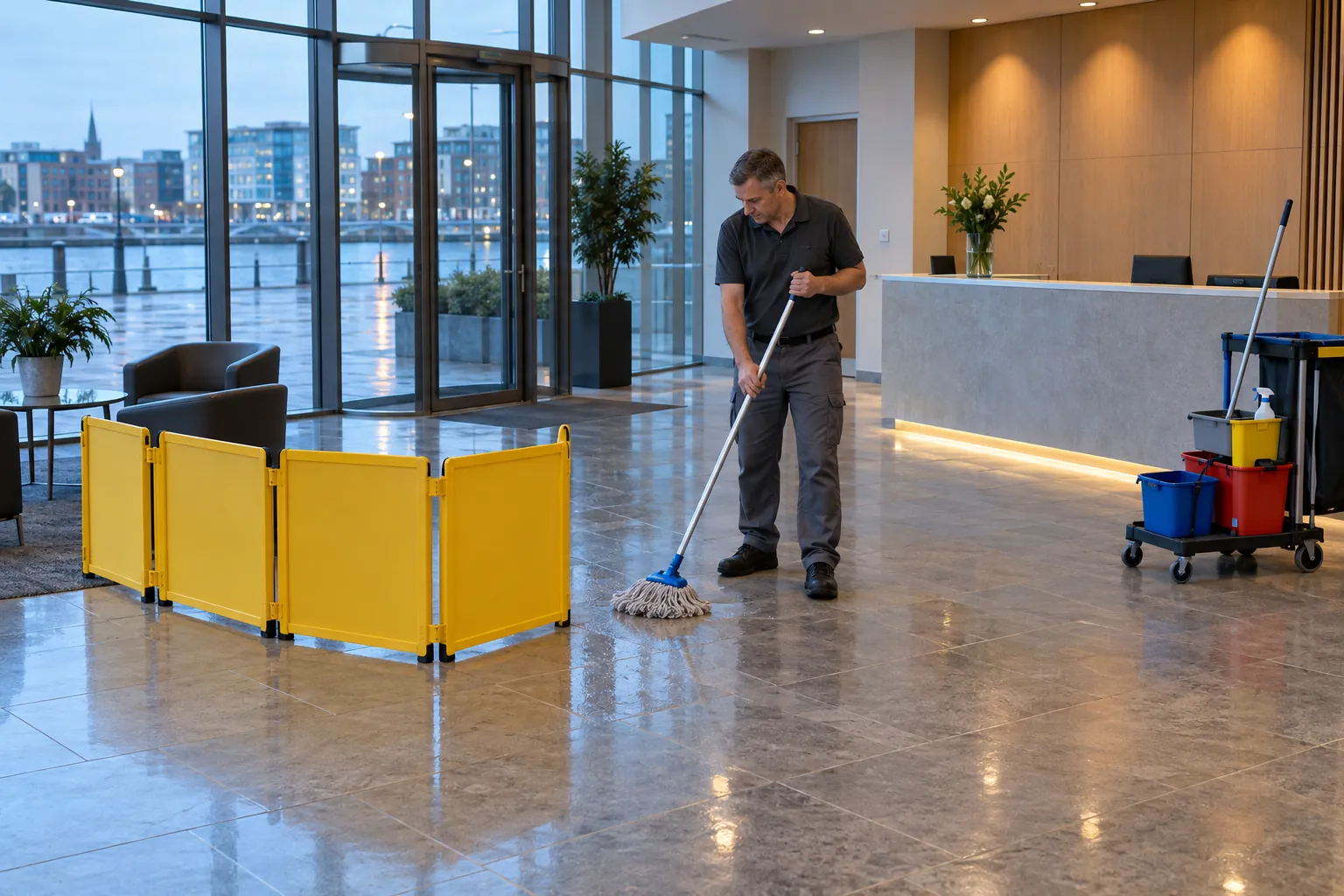 CleaningCommercial cleaning checklist: area by area, for Irish workplacesA commercial cleaning checklist for Irish offices and shared premises, area by area: the 2007 Regulations behind it, using it on shift and checking it is followed.
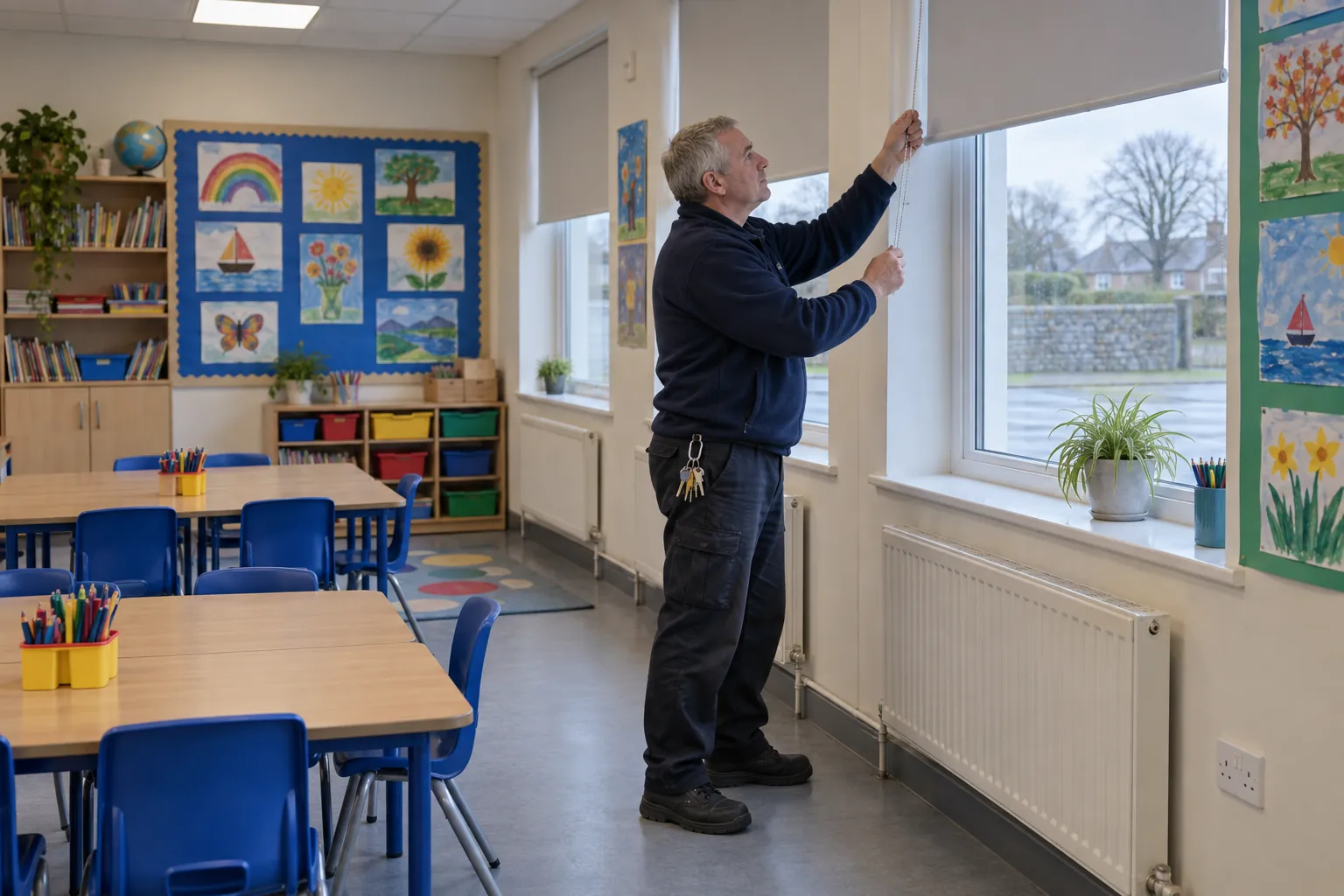 Premises and facilities managementCaretaker duties in Ireland: what the job involves, and how to show it was doneCaretaker duties in Irish schools, parish halls, offices and apartment developments: the law behind the job, the daily and weekly checks, lone working and records.