Cleaning
Slips and trips: the law, the causes, and the record that shows the floor was safe
Slips and trips are the most common cause of injury at work in Great Britain: slips, trips or falls on the same level were 30% of the non-fatal injuries to employees reported by employers under RIDDOR in 2024/25, and regulation 12 of the Workplace (Health, Safety and Welfare) Regulations 1992 requires floors and traffic routes to be kept free, so far as is reasonably practicable, of anything that may cause a person to slip, trip or fall.
Also written for Ireland · United States · Canada · New Zealand
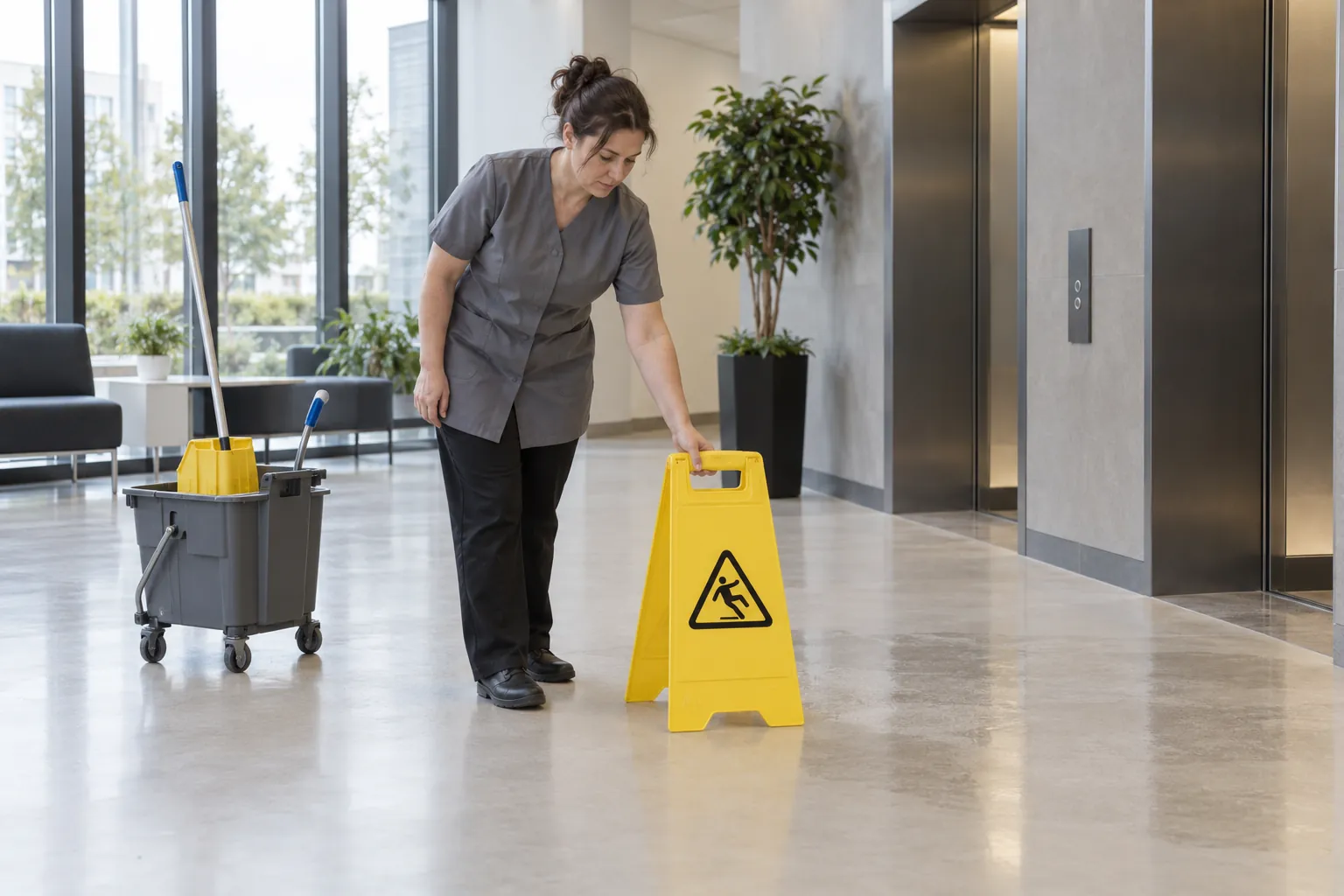
Most of them are preventable with ordinary things done reliably: spills cleaned up promptly, floors left dry after cleaning, walkways kept clear and damage repaired. This guide covers the law, what causes slips and trips, the risk assessment, spills and wet floor signs, and the record that shows the floor was looked after.
01
What the law says about slips and trips
The main rule on floors is regulation 12 of the Workplace (Health, Safety and Welfare) Regulations 1992, which apply in Great Britain. Every floor and the surface of every traffic route must be suitable for the purpose it is used for, with no hole, slope, unevenness or slipperiness that exposes anyone to a risk, and with effective drainage where necessary. Regulation 12(3) is the one that matters most day to day: "So far as is reasonably practicable, every floor in a workplace and the surface of every traffic route in a workplace shall be kept free from obstructions and from any article or substance which may cause a person to slip, trip or fall." Staircases need suitable and sufficient handrails.
Three other duties sit around it:
- Cleanliness. Regulation 9 of the Workplace Regulations requires a workplace to be kept sufficiently clean, and floor surfaces inside buildings to be capable of being kept sufficiently clean.
- Risk assessment. Regulation 3 of the Management of Health and Safety at Work Regulations 1999 requires every employer to make a suitable and sufficient assessment of the risks to its employees and to others affected by its work, to review it when it may no longer be valid, and, with five or more employees, to record the significant findings. Slip and trip risks are part of that assessment.
- People who are not employees. Section 3(1) of the Health and Safety at Work etc. Act 1974 requires every employer to conduct its undertaking so that people not in its employment, such as visitors, pupils, residents and contractors, are not exposed to risks, so far as is reasonably practicable.
Visitors are also owed a civil duty by whoever occupies the premises. Under section 2 of the Occupiers' Liability Act 1957, the occupier owes every visitor the "common duty of care": to take such care as in all the circumstances is reasonable to see that the visitor will be reasonably safe in using the premises. An occupier must be prepared for children to be less careful than adults. Scotland has the Occupiers' Liability (Scotland) Act 1960, and Northern Ireland the Occupiers' Liability Act (Northern Ireland) 1957 and the Workplace (Health, Safety and Welfare) Regulations (Northern Ireland) 1993, enforced by HSENI.
Several of these duties often apply at once: the occupier for the common parts, each employer for its own staff and work. The Health and Safety Executive's slips and trips guidance is the place to start.
02
What causes slips, trips and falls
A slip is a loss of grip between the shoe and the floor; a trip is the foot striking something, or a change in level, that the person did not expect. Slips, trips and falls on the level have a few common causes, and HSE's short guide for employers notes that the measures that prevent them are often simple and low-cost. Falls from height are a separate subject, covered by the Work at Height Regulations 2005.
HSE's guidance on contamination says that "contamination is involved in almost all slip accidents": anything that ends up on a floor, such as rainwater, oil or dust, from spills, leaks, overflows, cleaning, run-off and footwear. HSE's slip potential model looks at six things, any of which may play a part in a slip:
- Contamination: water, drinks, grease, food, dust, leaves.
- Cleaning: the wrong method or product for the floor, floors left wet, and cleaning at busy times.
- Flooring: a surface not suited to the use, worn smooth, damaged or badly laid.
- Environment: HSE's guidance on the environment notes that too much light on a shiny floor causes glare and too little hides hazards, that rainwater on a smooth surface creates a slip hazard, and that condensation can make a smooth floor slippery.
- Footwear: soles that do not grip on the floors and contaminants of that workplace.
- People: as HSE's guidance on human factors puts it, rushing, carrying something that blocks the view, or being distracted, for example by a mobile phone.
For trips, HSE's overview of causes and prevention is plain: "The majority of trips are caused by obstructions in walkways. The rest are caused by uneven surfaces." The usual culprits are trailing cables, deliveries left in corridors, curled mats, lifted tiles, potholes in the car park, a single unexpected step and poorly lit stairs. HSE's trip potential triangle is three things to get right together: walkways that are suitable and in the right places, housekeeping with a "see it, sort it" attitude, and design and maintenance.
03
A slips and trips risk assessment
A slips and trips risk assessment follows HSE's five steps to manage risk: identify the hazards, assess the risks, control them, record the findings (required with five or more employees) and review the controls to make sure they are working. Applied to floors, that means:
- Walk the floors at busy times as well as quiet ones: entrances on a wet morning, kitchens, washrooms, stairs, loading bays, car parks and paths.
- Find where contamination comes from: rain carried in, leaks, drinks machines, food areas, cleaning itself.
- Decide who could be hurt and how badly: staff, cleaners working early or late, visitors, children and anyone with impaired mobility or sight.
- Put controls in order. HSE's guidance for employers works through preventing contamination first (fix leaks, add canopies, redesign the task), then controlling it with suitable and timely cleaning, entrance matting, drip trays and bins, then dealing with lighting, condensation, ice and rainwater, then the floor itself, and finally trip hazards.
- Write down the significant findings: the hazards, who might be harmed and how, and the controls, including which employees, cleaning and contract staff among them, are responsible for which areas.
- Review after accidents and near misses, and when something changes, such as a new floor, layout or cleaning method.
Where the floor itself is in question, HSE's technical information sheet Assessing the slip resistance of flooring describes its preferred test, the pendulum coefficient of friction test to BS 7976, which gives a pendulum test value (PTV). It classes a PTV of 0 to 24 as high slip potential, 25 to 35 as moderate and 36 or more as low. The test needs a trained, competent operator. The same sheet warns that a floor classified R9 (or in some instances R10) under the German ramp test DIN 51130 will be slippery in wet or greasy conditions.
Footwear comes last, not first, even where slip-resistant shoes are issued as personal protective equipment. HSE's guidance on slip-resistant footwear says that where a slip risk remains after other controls, it "may be the only effective way" to reduce it further, and that footwear trials should involve a representative sample of the people who will wear it.
04
Spills, cleaning and wet floor signs
Cleaning prevents slips and can also cause them. HSE's guidance on cleaning asks for the right amount of the right product, a method that suits the floor, well maintained equipment, and spillages removed promptly. To keep people off wet or drying floors it suggests:
- cleaning during quiet hours, when pedestrians are not around;
- leaving smooth floors dry after cleaning, or excluding pedestrians until the floor is dry;
- cleaning in sections, so there is a dry path through the area;
- using warning signs, but removing them when the area is clean and dry.
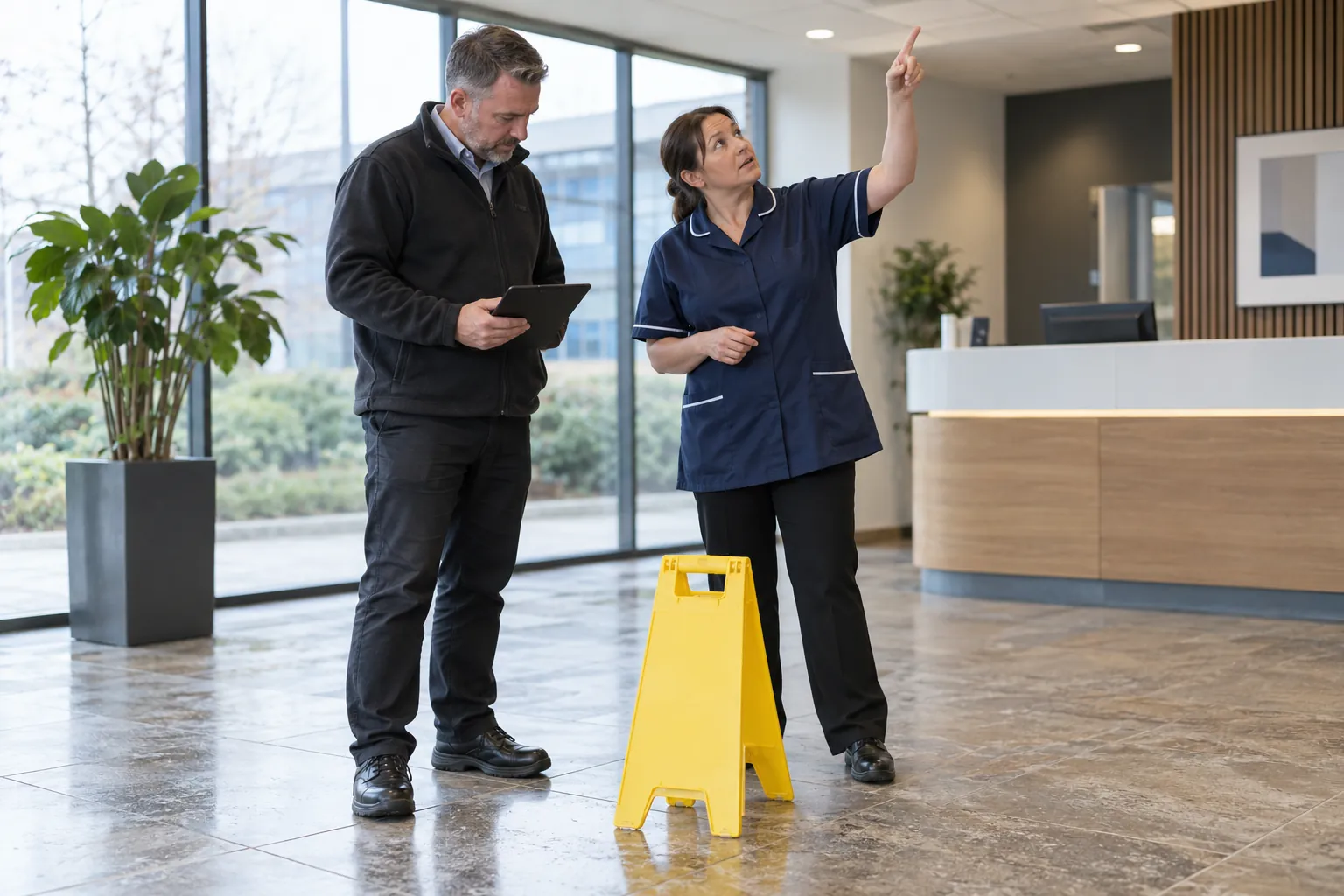
HSE also points out that a dry mop or squeegee reduces drying time, but a damp floor is still slippery. A spillage procedure can be short, so that whoever sees a spill knows what to do and someone is not left to walk through it: guard the spill, tell the cleaning team at once, clean and dry it, remove the sign when the floor is dry, and report anything that keeps leaking as a fault.
Wet floor signs are covered by the Health and Safety (Safety Signs and Signals) Regulations 1996. Regulation 4 requires an employer to provide a safety sign where the risk assessment shows a risk cannot be avoided or adequately reduced by other means. A warning sign is a yellow triangle with a black pictogram and black edging, and Schedule 1 says a signboard must be removed when the situation it refers to ceases to exist. A sign is the last control, not the first: it warns of a wet floor while the floor is being dealt with. A sign left out all day teaches people to ignore it, which is why HSE's slips and trips questions say warning cones put out for ice should be removed once the ice has gone.
A sign is not a defence by itself either. Section 2(4)(a) of the Occupiers' Liability Act 1957 says a warning is not to be treated, without more, as absolving the occupier "unless in all the circumstances it was enough to enable the visitor to be reasonably safe". A cone beside a spill cleaned within minutes is part of reasonable care; a cone under a roof leak for a fortnight is unlikely to be.
05
Routine floor checks, and what good evidence looks like
Risk assessments and procedures only work if somebody walks the floors. HSE's guidance for employers puts it in one line: ensure working practices and processes are being carried out properly "and keep a record of all cleaning and maintenance work". In practice that means a small number of routine checks, matched to the risk:
- Entrances and reception: at opening, and again through the day when it is wet, for water, mats and signs.
- Washrooms, kitchens and tea points: on a set cleaning and checking round, because water is always present.
- Stairs and corridors: spills, obstructions, damaged nosings and failed lights.
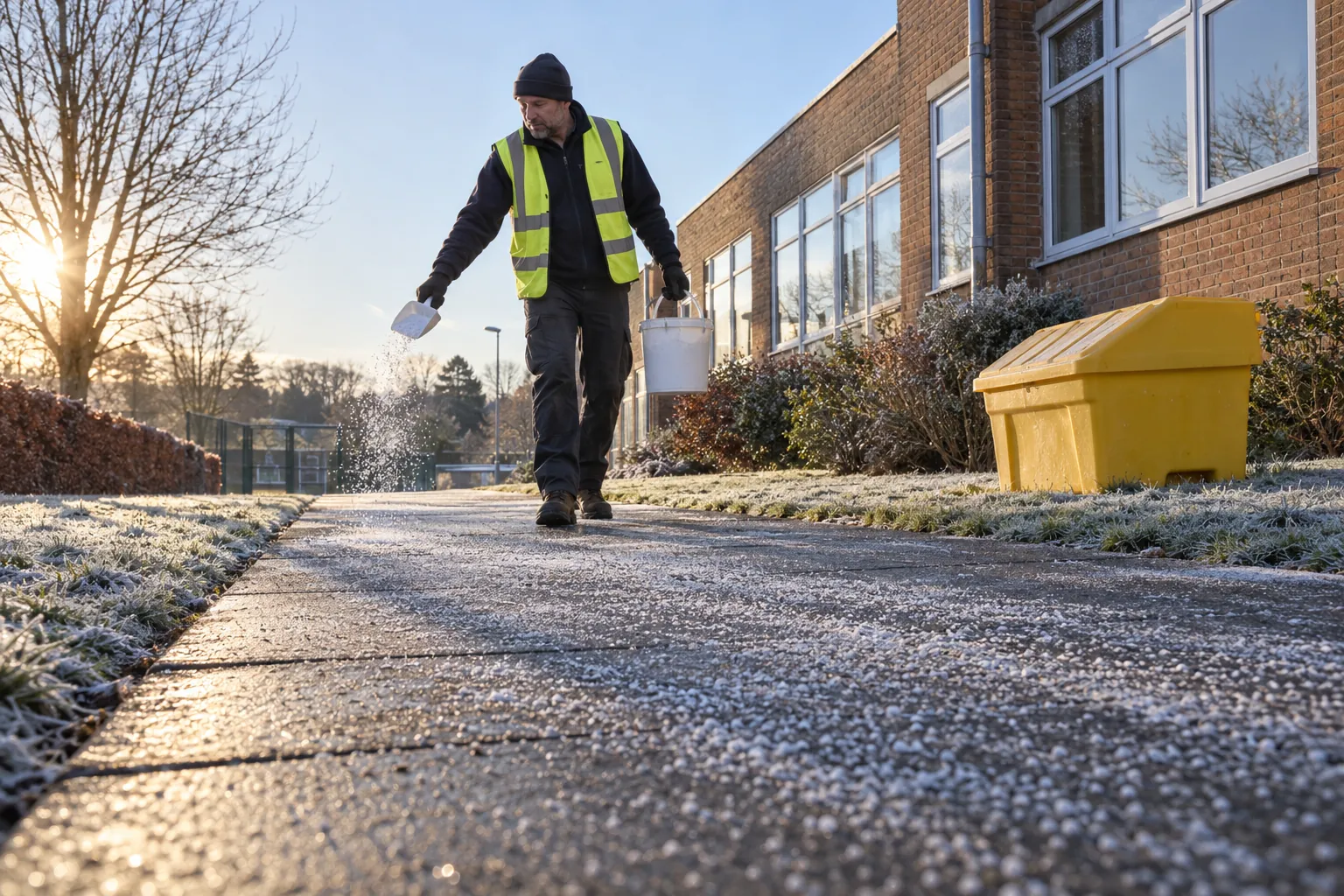
- Outside: paths, steps and car parks before people arrive in frost or snow.
- Floor condition: lifted tiles, curled mats and trailing cables, picked up on a regular health and safety inspection and reported for repair.
Good evidence answers four questions for each check or spill: what was looked at or done, where, when, and by whom. For a reported spill it adds when it was reported and when it was cleared. A sheet signed at the end of the shift rarely answers the last two honestly.
That matters because a slip or trip incident is often examined long after it happened, especially if someone was injured. A slip that injures a member of the public who is taken to hospital, or keeps an employee off routine work for more than seven consecutive days, is reportable under the Reporting of Injuries, Diseases and Dangerous Occurrences Regulations 2013 (see also regulation 5 for people not at work). A personal injury claim in England and Wales can generally be brought up to three years later under section 11 of the Limitation Act 1980. Since 1 October 2013, section 69 of the Enterprise and Regulatory Reform Act 2013 has meant that breach of health and safety regulations is generally not actionable by itself in the civil courts, so a claim turns on whether reasonable care was taken. The question months later is what the building knew about that floor, and what it did, and when.
06
Where the record fails, and what SiteClara does about it
Slip records fail in predictable ways. The washroom sheet on the back of the door is signed in advance or at the end of the shift, so it cannot show when the floor was last checked. A spill is mentioned to whoever is passing, mopped by somebody, and recorded nowhere. A leak is mopped for weeks before anyone repairs it. And the morning entrance check on a wet day is done but leaves nothing to show.
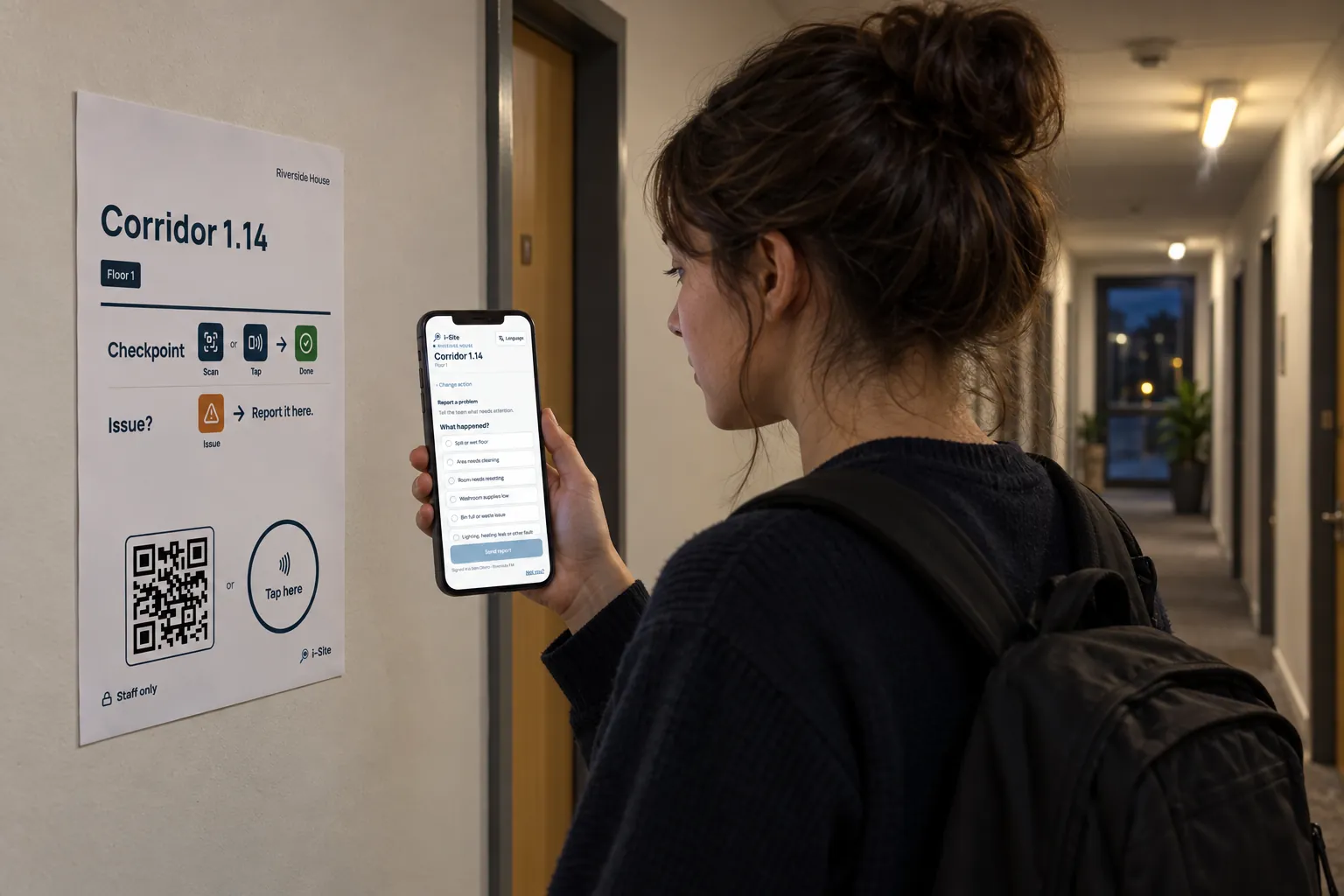
SiteClara is built for those gaps. A printed QR poster, with an optional NFC tag behind it, sits at each location such as an entrance, a washroom or a stairwell. Staff scan or tap with their own phone, with no app to install, see the checks due there, and mark each one done, with a photo when one is asked for, or say what stopped them. Where the building chooses to let visitors report, anyone can scan the poster to report a spill or a fault with a photo. The report goes onto the team's list of jobs with the time it was made, and stays open until somebody closes it at the location, so the record shows when the spill was reported, when it was cleared and by whom.
The supervisor sees what is due, done and missed, records the reason a check was missed, and each day reviews and approves a report that goes to nominated management or client contacts at 8am the next morning, showing what was reported, completed and still open.
07
Questions people ask
What are the main pieces of legislation covering slips, trips and falls?
In Great Britain the duties come mainly from three: section 2(1) of the Health and Safety at Work etc. Act 1974, the general duty to ensure the health, safety and welfare at work of employees so far as is reasonably practicable; regulation 3 of the Management of Health and Safety at Work Regulations 1999, the risk assessment; and regulation 12 of the Workplace (Health, Safety and Welfare) Regulations 1992, which requires floors and traffic routes to be kept free, so far as is reasonably practicable, of obstructions and of anything that may cause a person to slip, trip or fall.
What is the most common cause of slips and trips?
For slips, contamination: HSE's guidance on contamination says it "is involved in almost all slip accidents", meaning anything that ends up on a floor, such as rainwater, oil or dust. For trips, HSE's overview of causes and prevention says the majority are caused by obstructions in walkways and the rest by uneven surfaces.
How much do slips and trips cost employers?
HSE's page on what slip and trip accidents cost puts the cost to employers at over £500 million a year and the cost to society at over £800 million a year, with £133 million a year falling on the health service. The figures are HSE's long-standing estimates rather than a recent survey.
Are wet floor signs a legal requirement?
Not by name. Regulation 4 of the Health and Safety (Safety Signs and Signals) Regulations 1996 requires appropriate safety signs where the risk assessment shows a risk cannot be avoided or adequately reduced by other means, and Schedule 1 says a signboard must be removed when the situation it refers to ceases to exist.
A sign does not replace cleaning the spill or keeping people off the wet floor. Under section 2(4)(a) of the Occupiers' Liability Act 1957, a warning does not by itself absolve the occupier unless in all the circumstances it was enough to enable the visitor to be reasonably safe.
08
Further reading, and a list to take away
HSE publishes Preventing slips and trips at work (INDG225), a short guide for employers, employees and safety representatives, alongside its online slips and trips pages on contamination, cleaning, flooring, footwear and the environment. The Approved Code of Practice Workplace health, safety and welfare (L24, second edition, 2013) explains the Workplace Regulations, including regulation 12. HSE's statistics on non-fatal injuries at work in Great Britain compare the causes of injury, in which slips, trips or falls on the same level are the largest category. In Northern Ireland, HSENI publishes the equivalent guidance.
Before you rely on your slips and trips arrangements, check that:
- the risk assessment covers entrances, wet areas, stairs, outside routes and cleaning itself;
- leaks and other sources of contamination are fixed, not just mopped;
- cleaning methods suit each floor, and floors are left dry or closed off until dry;
- there is a spill procedure everyone knows, including visitors' reports;
- wet floor signs are used while a floor is wet and removed when it is dry;
- entrance mats, gritting and wet-day checks are planned;
- routine checks record what was checked, where, when and by whom;
- every reported spill or hazard shows when it was reported and when it was cleared;
- the risk assessment is reviewed after every slip, trip or near miss.
Sources
Every document this guide quotes or links to, in the order it first cites them.
- Workplace (Health, Safety and Welfare) Regulations 1992 legislation.gov.uk
- Regulation 9 of the Workplace Regulations legislation.gov.uk
- Management of Health and Safety at Work Regulations 1999 legislation.gov.uk
- Health and Safety at Work etc. Act 1974 legislation.gov.uk
- Occupiers' Liability Act 1957 legislation.gov.uk
- Occupiers' Liability (Scotland) Act 1960 legislation.gov.uk
- Occupiers' Liability Act (Northern Ireland) 1957 legislation.gov.uk
- Workplace (Health, Safety and Welfare) Regulations (Northern Ireland) 1993 legislation.gov.uk
- Health and Safety Executive's slips and trips guidance hse.gov.uk
- Short guide for employers hse.gov.uk
- Work at Height Regulations 2005 legislation.gov.uk
- Guidance on contamination hse.gov.uk
- Slip potential model hse.gov.uk
- HSE's guidance on the environment hse.gov.uk
- Guidance on human factors hse.gov.uk
- Five steps to manage risk hse.gov.uk
- Guidance for employers hse.gov.uk
- Assessing the slip resistance of flooring hse.gov.uk
- Guidance on slip-resistant footwear hse.gov.uk
- Guidance on cleaning hse.gov.uk
- Health and Safety (Safety Signs and Signals) Regulations 1996 legislation.gov.uk
- Schedule 1 legislation.gov.uk
- Slips and trips questions hse.gov.uk
- Reporting of Injuries, Diseases and Dangerous Occurrences Regulations 2013 legislation.gov.uk
- Regulation 5 legislation.gov.uk
- Limitation Act 1980 legislation.gov.uk
- Enterprise and Regulatory Reform Act 2013 legislation.gov.uk
- Health and Safety at Work etc. Act 1974 legislation.gov.uk
- What slip and trip accidents cost hse.gov.uk
- Workplace health, safety and welfare hse.gov.uk
- Non-fatal injuries at work in Great Britain hse.gov.uk
Related guides
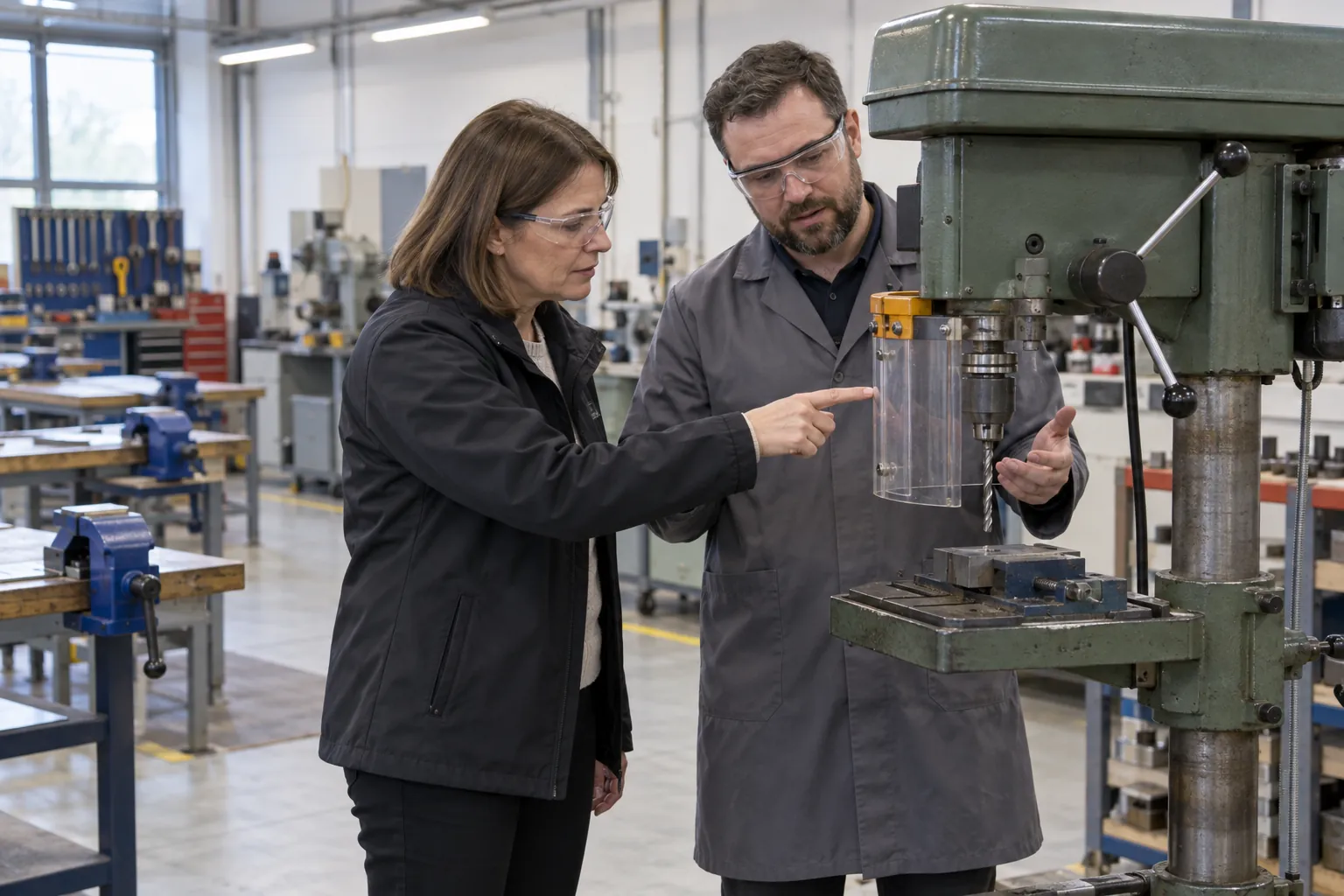 Premises and facilities managementHealth and safety inspection checklist: what to look at, and what to do nextHow to run a workplace health and safety inspection: the legal basis, what to walk and look at, how often, recording findings and actions, and involving staff.
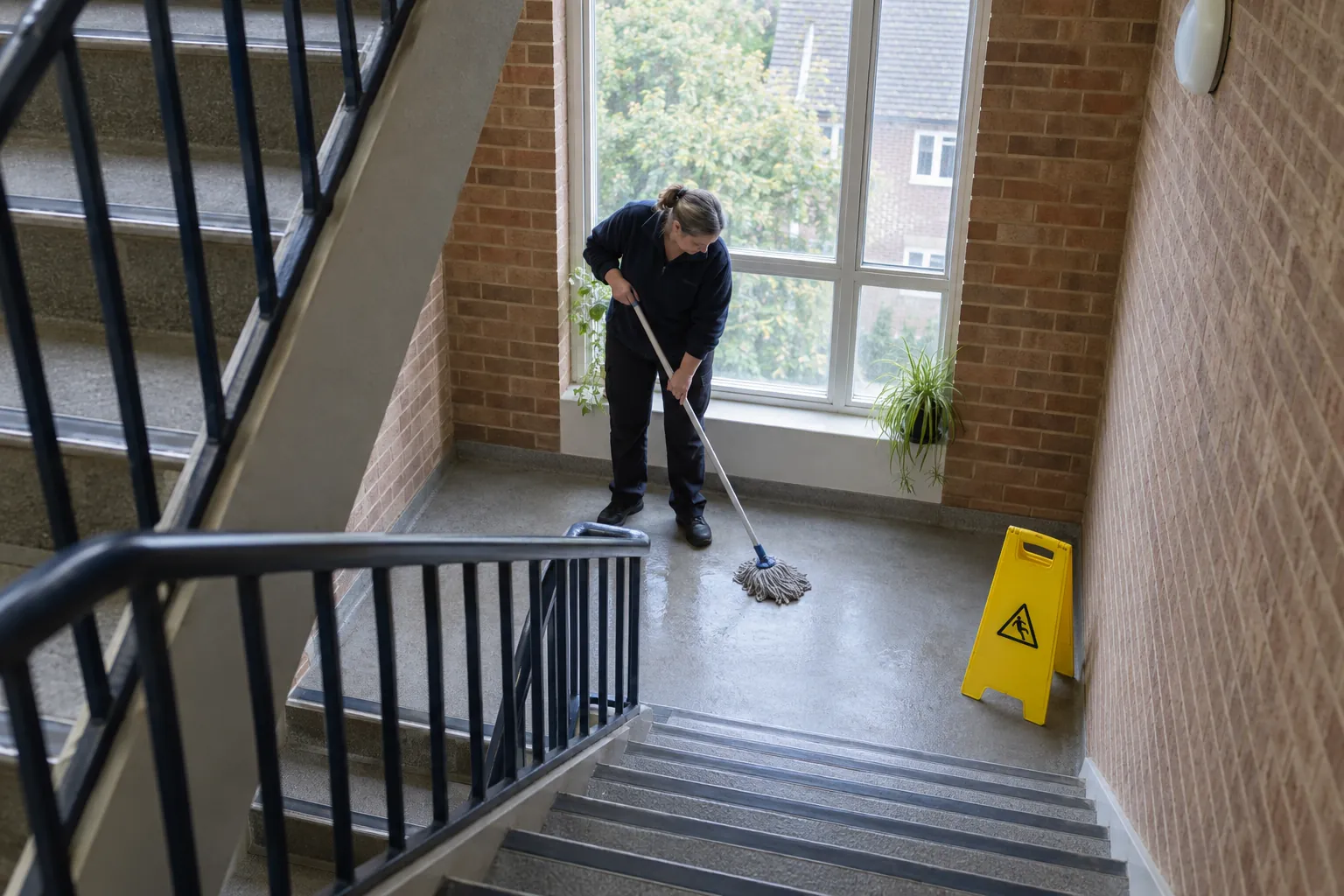 CleaningCommunal area cleaning: what it covers, how often, and how to show it was doneWhat communal area cleaning should cover in blocks of flats and shared buildings, how often, who pays through the service charge, and how to show it was done.
 Premises and facilities managementFault reporting system: how faults are reported, prioritised and closedHow a fault reporting system for a building should work: how occupants report faults, how facilities teams log and prioritise them, and how a fault is closed.
 Premises and facilities managementRIDDOR reporting: what must be reported, by when, and by whomRIDDOR reporting explained: the reportable injuries, the over-seven-day rule, the 10 and 15 day deadlines, how to report to HSE and who in a building must report.