Fire and water checks
Fire hose reel inspection in New Zealand: the owner's duty, NZS 4503 and the checks on site
A fire hose reel inspection checks that each reel is in place, unobstructed, undamaged, free of leaks and wound ready to run out, and in New Zealand it is part of the maintenance to NZS 4503:2005 that the owner of any reel installed for the occupants to use must have done.
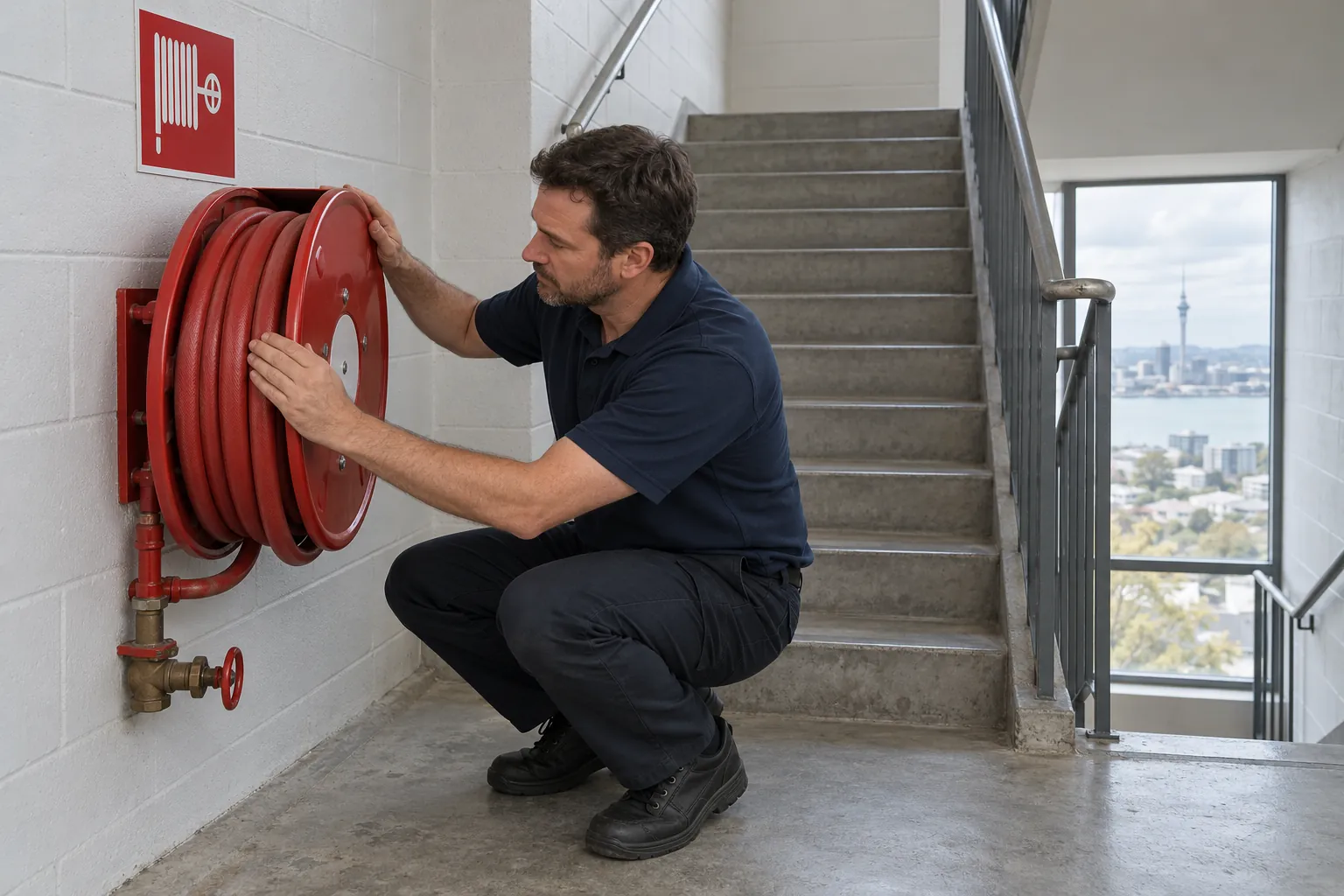
A reel only helps in the early stages of a fire if someone can reach it and it delivers its supply of water when they open it. The fire protection contractor does that maintenance; the building team is the one that sees, week to week, the reel used to hose down the bin store, the cabinet blocked by a pallet or the nozzle that walked. This guide covers where the duty comes from, how the reel fits with the BWOF and the evacuation scheme, what an on-site inspection looks at and what the record should show.
01
The duty: regulation 14 and NZS 4503:2005
The legal duty to maintain a fire hose reel sits in the Fire and Emergency New Zealand (Fire Safety, Evacuation Procedures, and Evacuation Schemes) Regulations 2018. Fire and Emergency New Zealand (FENZ) sets it out on its page of regulations for building owners: under regulation 14, building owners must maintain any hand-operated firefighting equipment installed for the occupants' use "in accordance with NZS 4503:2005", the standard for hand operated fire-fighting equipment. A hose reel is hand-operated firefighting equipment in exactly that sense, and FENZ says so directly in its Evacuation scheme application reference guide (July 2018): "Any hand-held hose reel or other similar device installed in a building must be maintained to NZS 4503:2005".
NZS 4503:2005 is the New Zealand Standard for this equipment. MBIE's Building CodeHub entry for NZS 4503:2005 Hand operated fire-fighting equipment describes it as giving "requirements for the selection, installation, distribution and maintenance of hand operated fire-fighting equipment which can be used by one person", and lists fire hose reels alongside portable and wheeled extinguishers and fire blankets, in commercial and domestic buildings. The standard is a paid Standards New Zealand document, so it is summarised here rather than quoted.
Three things follow from the wording of regulation 14:
- The duty is the owner's. In a leased building, reels on common stairs are often the landlord's and a tenant may own a reel installed in its own fit-out; the lease should say which. In a unit title development, Unit Titles Services explains that the body corporate maintains the common property and parts of the building that serve more than one unit. Put the answer in writing.
- The duty is to maintain what is installed. It does not, by itself, require hose reels. Regulation 15 lets FENZ require hand-operated firefighting equipment in a building with a single means of escape, no automatic sprinklers and activities that make a fire more likely to affect that escape route.
- Maintenance means more than a reel on the wall: inspection, testing and repair at the intervals the standard sets.
FENZ's advice goes further than the minimum. Its page on owner responsibilities says: "We strongly recommend that first aid firefighting equipment, namely fire extinguishers and/or hose reels, be provided in commercial premises", and that "all fire detection and suppression equipment is well maintained and clearly identified". Its business fire safety checklist puts it as a single line for owners to tick: "You have a working fire hose reel in the building that can be accessed and used by emergency services."
02
Where hose reels fit: the BWOF, the evacuation scheme and the emergency plan
Building owners often assume the building warrant of fitness covers everything fire-related. For hose reels it usually does not. MBIE's list of specified systems and compliance schedules includes riser mains for use by fire services (specified system 6) and automatic backflow preventers connected to a potable water supply (specified system 7), but hose reels and other hand-operated firefighting equipment are not on it. So the IQPs who inspect the systems on your compliance schedule may never look at the reels, and the building warrant of fitness does not certify them. The maintenance duty under regulation 14 applies all the same.
Hose reels do appear in the evacuation scheme. FENZ's application reference guide asks, at question 4.2, for the location of any firefighting equipment, and says that where equipment is installed throughout the building to meet NZS 4503:2005, "that should be stated". The fire action notices displayed in a building with a scheme must include "any firefighting equipment that is available for use by the occupants". If a reel is removed or relocated, tell whoever manages the fire evacuation scheme.
Training is part of the scheme too. FENZ's page on regulations for evacuation schemes says an evacuation training programme must include details of how permanent occupants are trained and assessed, at intervals of not more than 6 months, in "the use of any firefighting equipment in the building". A building other than an early childhood facility or school may instead hold trial evacuations alone; early childhood facilities and educational institutions must hold trial evacuations at intervals of not more than 6 months.
Every PCBU also needs an emergency plan. WorkSafe's page on workplace emergency plans says the plan should include "a detailed floor plan showing where emergency equipment and first aid supplies can be found", and that plans "should be tested at least yearly". The hose reels belong on that floor plan.
03
What an on-site hose reel inspection looks at
Between the contractor's visits, a short visual inspection by someone on site catches most of what goes wrong with a hose reel. It needs no tools and no running water, only a list of the reels by location and a few minutes' instruction from the contractor on what "normal" looks like. A monthly round is a sensible starting point, with more frequent checks in loading docks, car parks and anywhere with a history of misuse. Agree the interval with your contractor and keep to it.
At each reel, look that:
- The reel is there and complete: hose on the drum, nozzle on the end, nothing cut off, borrowed or taken for the garden.
- It can be seen and reached: the sign is in place, the cabinet door opens freely, and nothing is stacked in front of it, from trolleys and chairs to pallets and bikes.
- The hose is wound neatly, not tangled, kinked, crushed in the cabinet door or left partly unrolled.
- The hose and nozzle are undamaged: no splits, cracks, perishing, flattened sections or a nozzle that is broken or missing parts.
- There are no leaks: no drips at the valve, the drum joint or the nozzle, and no water stains or pooling under the cabinet.
- The valve and nozzle are in the positions the contractor has shown you, so the reel is ready to use and not left open or tied off.
- The maintenance label or tag is present and shows a service within the interval your contract sets.
- Any cabinet seal, where one is fitted, is intact, which suggests the reel has not been used or tampered with since the last check.
Do not test a reel by running water through it unless your contractor has trained you to and has said it is part of your routine; testing flow and pressure is part of the maintenance under the standard, not the walk-round.
Who walks the round depends on the building: a facility manager or property manager, a caretaker, a security officer on a lock-up patrol, a cleaning supervisor, or a fire warden for their floor. Name one person and a deputy, and build the round into something that already happens. Schools are covered too: the Ministry of Education's page on school fire evacuation and fire alarm or sprinkler system shutdowns says installed handheld firefighting equipment "must be maintained in accordance with New Zealand Standard (NZS) 4503:2005".
04
Servicing by the contractor, and what the owner should get back
Maintenance to NZS 4503:2005 is work for a competent technician, normally from a fire protection company. The NZQA unit standard for that trade, 23586 Maintain hand operated fire fighting equipment (version 3, 2024), is "for personnel employed in the fire protection industry", and includes fire hose reels in the equipment it covers. It gives the standard's definition of maintenance as "the carrying out of inspections, tests, preventative maintenance and repairs at specific intervals necessary to assure the continuing reliability of fire safety systems and equipment".
The same unit standard expects the technician to withdraw from service items not conforming to requirements, return equipment to service, and complete records for all work, naming "logs or registers, tags or labels, reports". Its companion, 9020 Demonstrate knowledge and use of hand operated fire fighting equipment (version 6, 2024), lists AS/NZS 1221:1997 Fire hose reels, the product standard for the reels themselves, among the standards relevant to the trade, and requires trainees to demonstrate the use of a fire hose reel.
The standard sets the maintenance intervals and what is done at each. Ask the contractor to state in the contract which intervals they work to and what each visit includes, rather than relying on a general promise of "servicing to NZS 4503". After every visit, the owner should have:
- a report or register listing every reel by location, what was done to each and anything withdrawn from service;
- a maintenance label or tag on each reel showing the latest service;
- a list of defects and recommendations, with who is to act and by when;
- confirmation that any reel isolated during the visit was returned to service.
NZQA's list of the "systems documentation" required by NZS 4503:2005 includes a logbook, test reports, equipment details and drawings, the contract agreement, additions and alterations and test and maintenance records. Keep those with the building's other fire safety documents. And remember that a tag shows the reel was in order on the day the technician was there, and nothing about the weeks after; that is what the on-site inspection is for.
05
Faults, use in a fire, and the record the building team keeps
A hose reel fault should reach whoever arranges the fire protection contractor the same day, not at the end of the month. Sort faults by what they mean for the building:
- Out of service: no water, a major leak, a hose that will not run out, a missing nozzle or a reel that has been removed. Until it is fixed, that area has no hose reel. Tell the contractor and the people who work in that area.
- Needs attention: a slow drip, a worn hose, a damaged cabinet door, a missing sign or an overdue tag. Book it with the contractor and follow it through.
- Fixed on the spot: an obstruction cleared or a hose rewound after misuse. Record it anyway.
If a reel has been used on a fire, however small, report it to the contractor so the reel can be checked and returned to service properly, and make sure FENZ was called. FENZ's advice on commercial use of fire extinguishers applies equally to first aid firefighting with a reel: only fight a fire when it is safe to do so, for example when it is "no larger than a waste paper basket or pot on a stove", and "Always have a safe path of escape, and ensure Fire and Emergency has been called." The same page rates water as not suitable for electrical fires or cooking oils and fats, which is why a reel is no answer to a switchboard or a fryer fire; that belongs in the training.
A useful in-house record of hose reel inspections shows, for each round:
- the date and time, and who did the inspection;
- each reel by location, not "all reels OK" for the building;
- what was found at each, and what happened about each fault;
- any reel out of service, and when it came back.
Watch for the pattern as well as the single finding: the same cabinet blocked every month, service tags out of date because the contract lapsed when the property manager changed, or a record that stops in winter and starts again the week before an audit.
06
Where the record fails
The contractor's visits are usually well documented. The weak part is everything in between. The monthly inspection is signed off for the whole building in one line, or filled in at the desk. A cleaner notices a reel dripping in the car park stairwell and mentions it to whoever is passing, and nobody can later say whether it reached the contractor. After a small fire, nobody can show whether the reel on level 2 was complete and unobstructed the week before.
SiteClara is built for that everyday part. A printed tag at each hose reel, or at a group of reels on the same landing, lets the person doing the round scan it with their own phone and confirm the inspection, with a photograph when one is asked for, so the record shows which reel was looked at, by whom and when. A round that was due and not done shows as not done, and the supervisor records why. A leak, a missing nozzle or a blocked cabinet reported at the tag goes onto the team's list of jobs and stays there until someone closes it, and a daily report tells the building manager what was checked and what is still open.
07
Questions people ask
How often do fire hose reels need to be inspected?
The regulations set no interval of their own. Regulation 14, as FENZ sets out on its page of regulations for building owners, says the owner of hand-operated firefighting equipment installed for the occupants must maintain it "in accordance with NZS 4503:2005", so the intervals for inspection, testing and servicing are the ones that standard sets. Have your contractor name them in the contract, and agree how often the reels are inspected on site in between; a monthly round is a sensible starting point.
What standard applies to fire hose reels in New Zealand?
NZS 4503:2005. MBIE's Building CodeHub entry for NZS 4503:2005 Hand operated fire-fighting equipment says it gives "requirements for the selection, installation, distribution and maintenance of hand operated fire-fighting equipment which can be used by one person", and names fire hose reels among that equipment. The product standard for the reels themselves is AS/NZS 1221:1997 Fire hose reels, which NZQA lists in unit standard 9020 Demonstrate knowledge and use of hand operated fire fighting equipment.
How do you inspect a fire hose reel?
On site, it is a visual check, reel by reel, that the reels are maintained in a state someone could use: present, signed, unobstructed, wound, undamaged and not leaking, with a current service tag. FENZ's business fire safety checklist puts the aim as "a working fire hose reel in the building that can be accessed and used by emergency services". Flow and pressure testing is the contractor's work under NZS 4503:2005, not part of the walk-round.
08
Further reading, and a list to take away
FENZ's regulations for building owners is the place to start, with its Evacuation scheme application reference guide for how equipment is described in a scheme. NZS 4503:2005 is available from Standards New Zealand, and its scope is summarised on MBIE's Building CodeHub. MBIE's page on specified systems and compliance schedules explains what the BWOF covers, and WorkSafe's guidance on workplace emergency plans covers what every PCBU needs.
Before the next service visit, check that:
- there is a list of every hose reel by location, and it matches what is on the walls;
- it is agreed in writing who owns and maintains each reel: landlord, tenant or body corporate;
- the contract names the NZS 4503 intervals and what each visit includes;
- a named person and a deputy inspect every reel between visits, reel by reel, and each round is recorded;
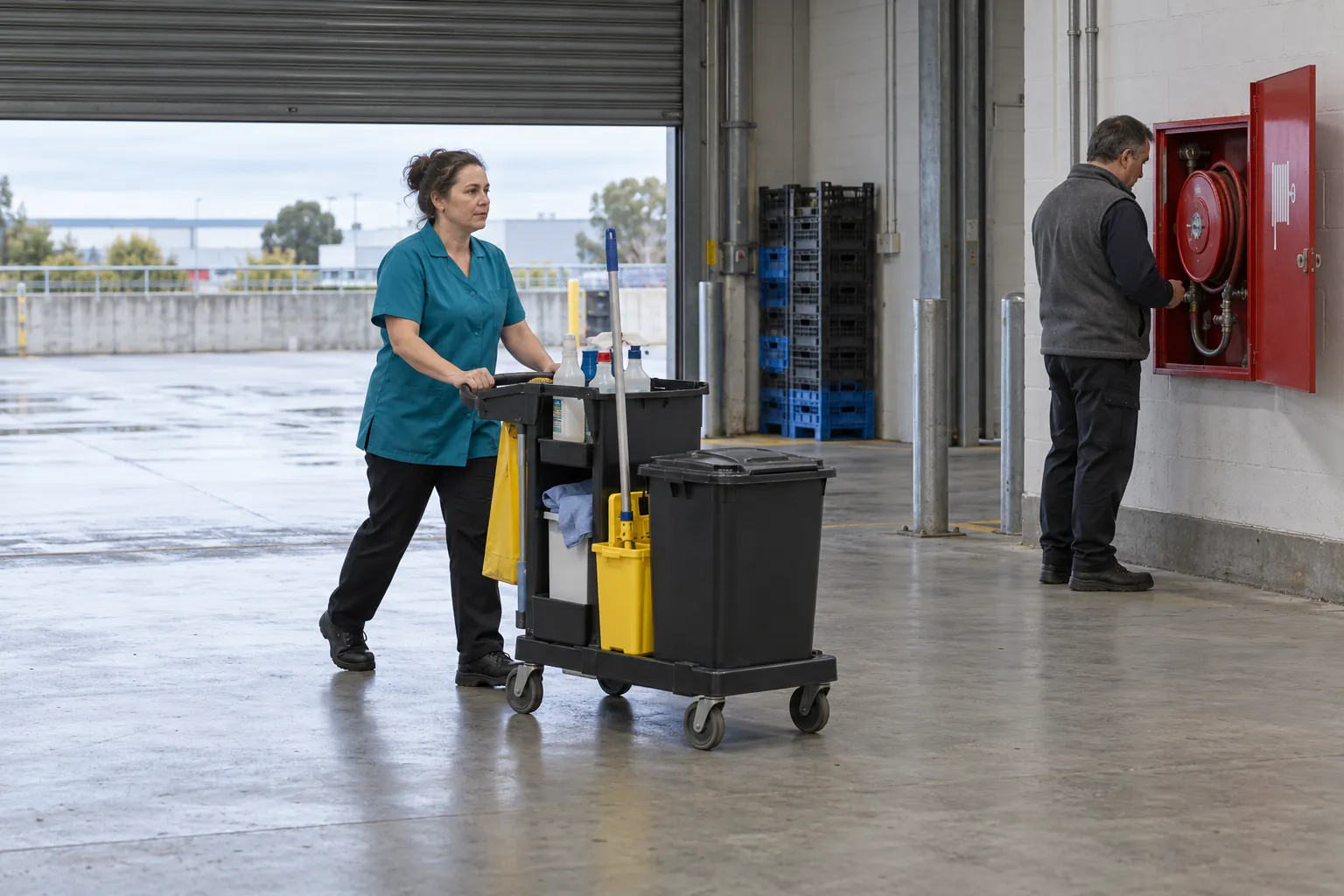
- cleaning, grounds and security teams know the reels are not for washing down, and faults are reported the same day;
- the fire action notices, the evacuation scheme and the emergency plan floor plan show the reels as they are now;
- permanent occupants are trained in the equipment as the scheme requires, and know that getting out and calling 111 come first;
- your compliance schedule has been checked for anything on the water supply side, such as a backflow preventer, that the IQP inspects.
Sources
Every document this guide quotes or links to, in the order it first cites them.
- Regulations for building owners fireandemergency.nz
- Evacuation scheme application reference guide fireandemergency.nz
- NZS 4503:2005 Hand operated fire-fighting equipment codehub.building.govt.nz
- Unit Titles Services unittitles.govt.nz
- Owner responsibilities fireandemergency.nz
- Business fire safety checklist fireandemergency.nz
- Specified systems and compliance schedules building.govt.nz
- Regulations for evacuation schemes fireandemergency.nz
- Workplace emergency plans worksafe.govt.nz
- School fire evacuation and fire alarm or sprinkler system shutdowns education.govt.nz
- 23586 Maintain hand operated fire fighting equipment nzqa.govt.nz
- 9020 Demonstrate knowledge and use of hand operated fire fighting equipment nzqa.govt.nz
- Commercial use of fire extinguishers fireandemergency.nz
Related guides
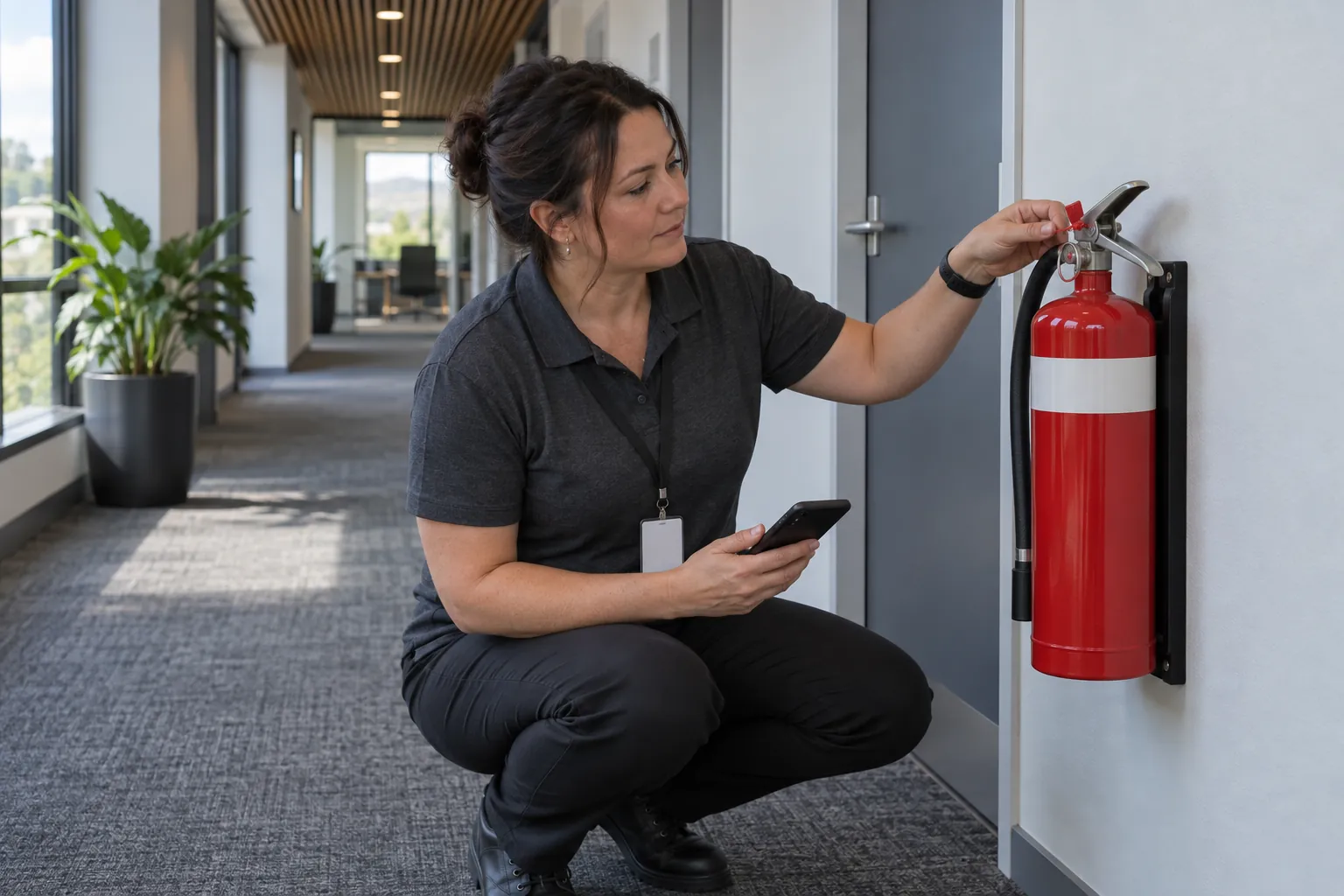 Fire and water checksFire extinguisher inspection in New Zealand: the owner's duty, NZS 4503 and the checks in betweenWhat the law asks of fire extinguishers in New Zealand, what NZS 4503:2005 maintenance means, and how the building team inspects them between service visits.
 Fire and water checksFire evacuation scheme: which buildings need one, and how to keep it workingWhich New Zealand buildings need an approved fire evacuation scheme, what it contains, how it is kept up with trial evacuations or training, and what to tell FENZ.
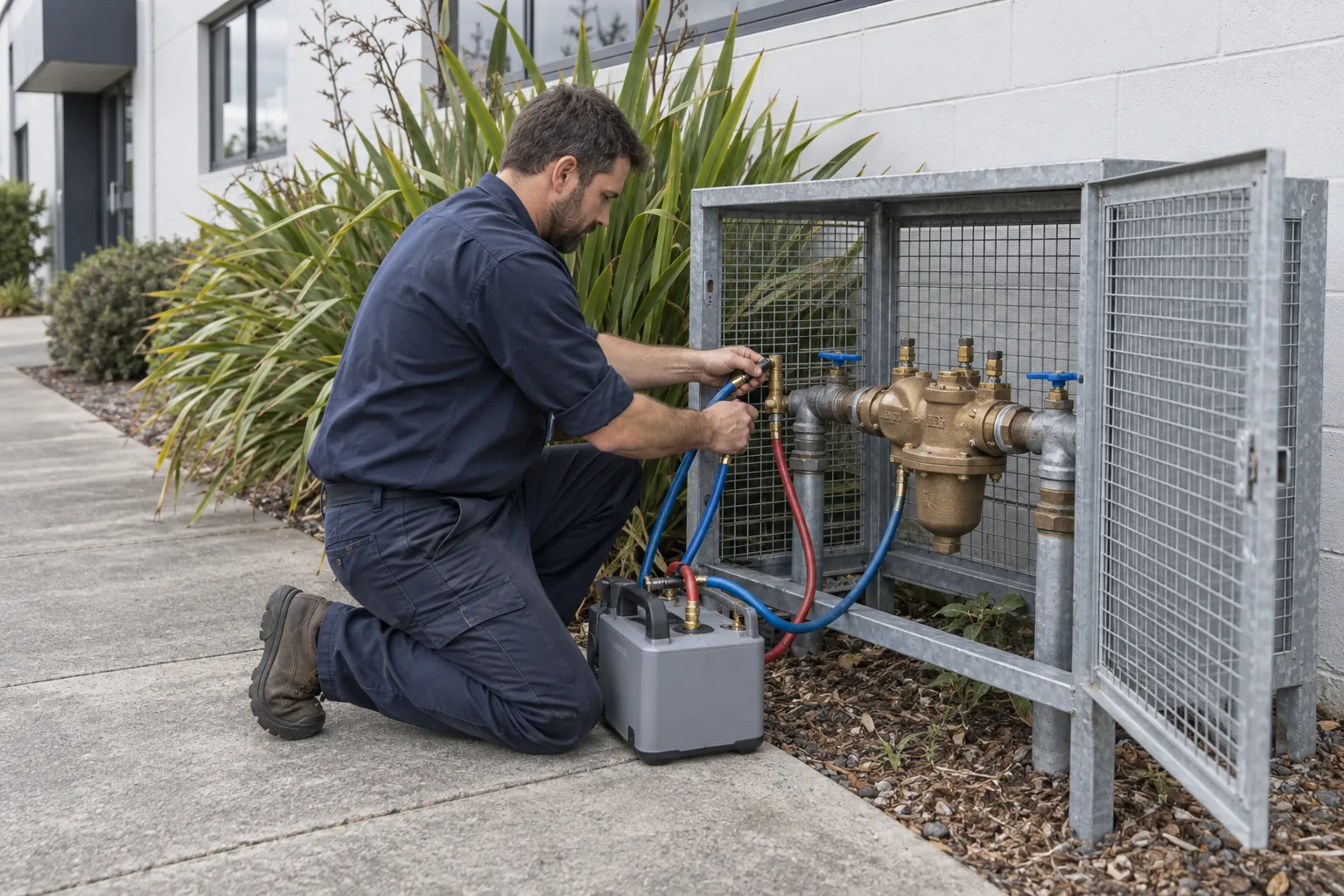 Fire and water checksBackflow testing: which devices, how often, and what the records should showBackflow testing in New Zealand: hazard ratings, boundary and internal devices, SS 7 on the compliance schedule, the annual IQP test, failed devices and the records.
 Fire and water checksIQPs and specified systems: who inspects what, and what the owner must keepWhat an IQP is, the specified systems SS 1 to SS 16, how to engage IQPs, what they inspect and what is left to the owner, and how the Form 12A works in New Zealand.