Cleaning
Hotel housekeeping checklist: a room ready for the next guest
A hotel housekeeping checklist lists the cleaning, replenishment and condition checks needed to prepare a guest room, bathroom or public area to the hotel's agreed standard.
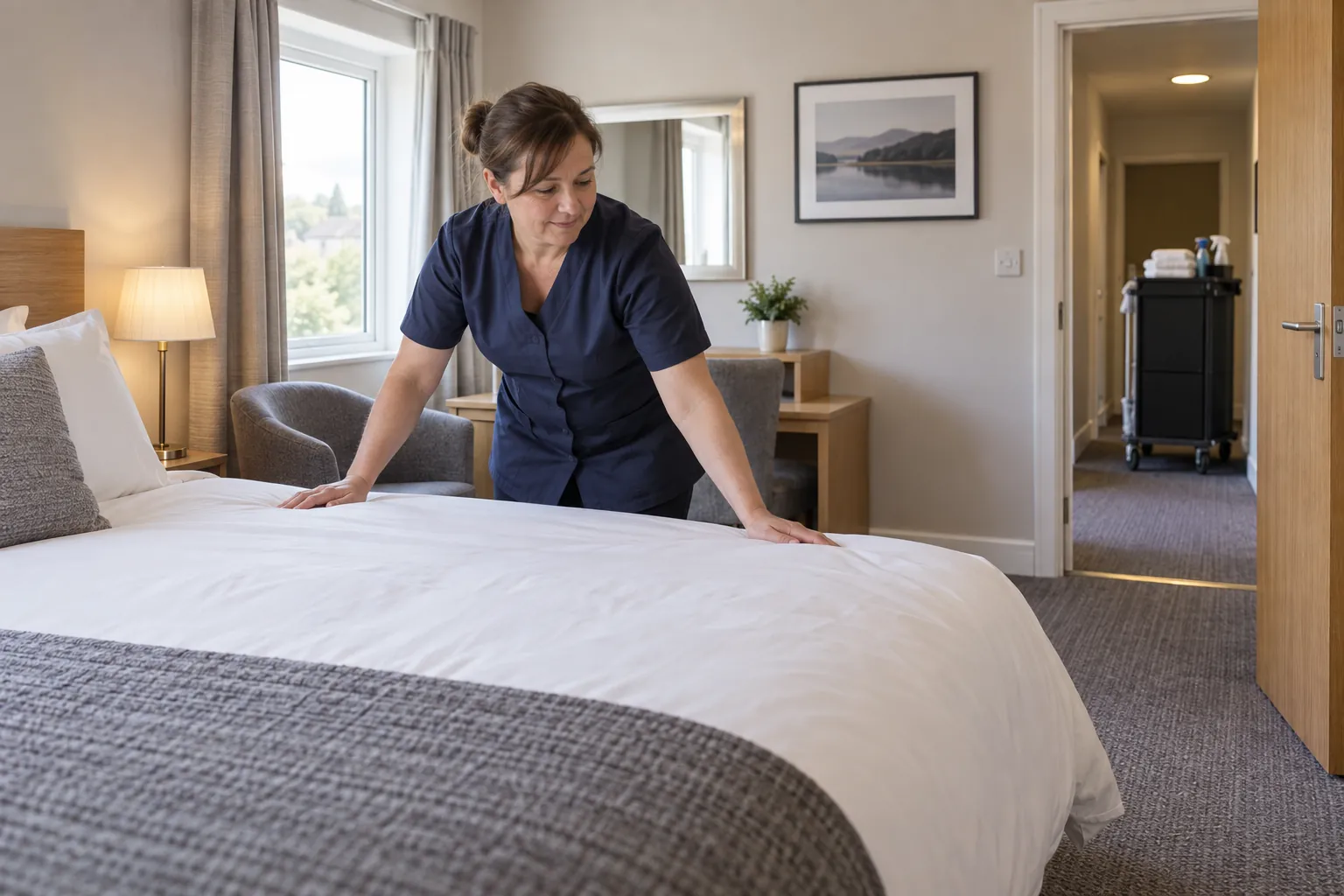
It should distinguish checkout cleaning from an occupied-room service, identify faults separately from unfinished cleaning, and leave a clear decision about whether the room is ready for the next guest. The example below is a starting point for a hotel's own procedures, rather than a legal room-cleaning formula.
01
Start with the hotel's room standard and safe method
A room attendant needs a usable definition of finished. Write down which surfaces must be clean, what linen and towels are supplied, how amenities are arranged, which fixtures are checked, and who releases the room. A checklist can then turn that standard into a consistent routine. A decorative bed photograph alone will not tell a new cleaner how to handle a leaking shower or a guest's belongings.
In Great Britain, HSE's Workplace health, safety and welfare guidance, L24, reproduces regulation 9 of the Workplace (Health, Safety and Welfare) Regulations 1992: workplaces, furniture, furnishings and fittings must be kept sufficiently clean. Its guidance connects cleaning frequency with the nature of the business. This is a workplace cleanliness duty, not a prescribed hotel checklist or a rule that every occupied room must be entered daily. Northern Ireland has its own Workplace (Health, Safety and Welfare) Regulations 1993; check the relevant local requirements when setting the hotel's procedures.
Cleaning methods must protect the people doing the work as well as the guests. For Great Britain, HSE's Safe use of cleaning substances in the hospitality industry explains the need to assess exposure to hazardous products and provide information, instruction and training. Set out the approved products, dilution, protective equipment and any contact time in the method, rather than asking staff to improvise from a trolley of bottles.
Agree the boundaries too. Room attendants report electrical faults, damaged furniture and suspicious items through the hotel's procedure. They do not become repair technicians because an item appears on the checklist. Keep specialist cleaning, pest treatment and other competent-person work in the appropriate procedures.
02
A checkout room cleaning checklist
Use this hotel housekeeping checklist in the order that fits the room layout and approved method. Cleaning from cleaner areas towards dirtier ones, keeping bathroom equipment separate, and leaving floors until the other work is finished are practical ways to avoid repeating work. Replace broad ticks such as 'bathroom done' with checks an inspector can actually see.
- Confirm access. Check the room status, follow the hotel's knock-and-entry procedure, and respect privacy signs and any access restriction. Do not assume an open door means a guest has checked out.
- Inspect before starting. Note lost property, damage, leaks, unusual contamination and maintenance issues. Follow the hotel's lost-and-found process. Stop and seek help for hazards outside the normal cleaning method.
- Remove used items. Empty rubbish bins safely, remove used linen and towels, and separate waste from clean supplies. Do not reach blindly into a bin or compress its contents by hand.
- Prepare the bed. Inspect accessible mattress and bedding condition, fit the specified clean linen, and finish to the room standard. Record stains or damage requiring specialist attention rather than covering them up.
- Clean the guest room. Dust accessible furniture and fittings; wipe the desk, bedside surfaces, door handles, light switches and remote control using suitable methods. Clean mirrors and glass without leaving streaks. Use the equipment manufacturer's instructions for screens and electronics.
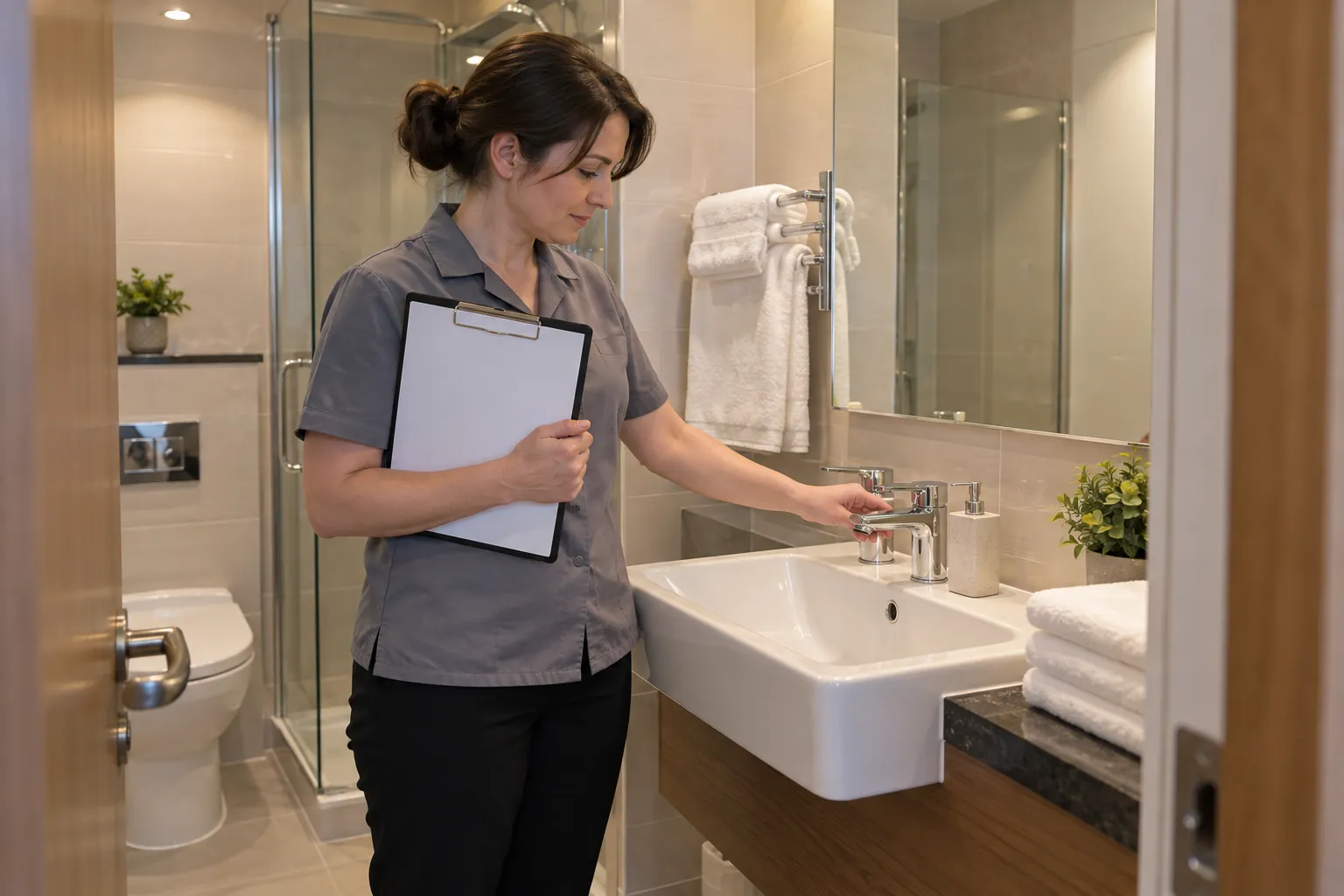
- Clean the bathroom. Clean the basin, taps, shower or bath, accessible screens and fittings, then the toilet using separate equipment. Follow the approved disinfection method where applicable. Check visible results, drainage, leaks, and supply dispensers.
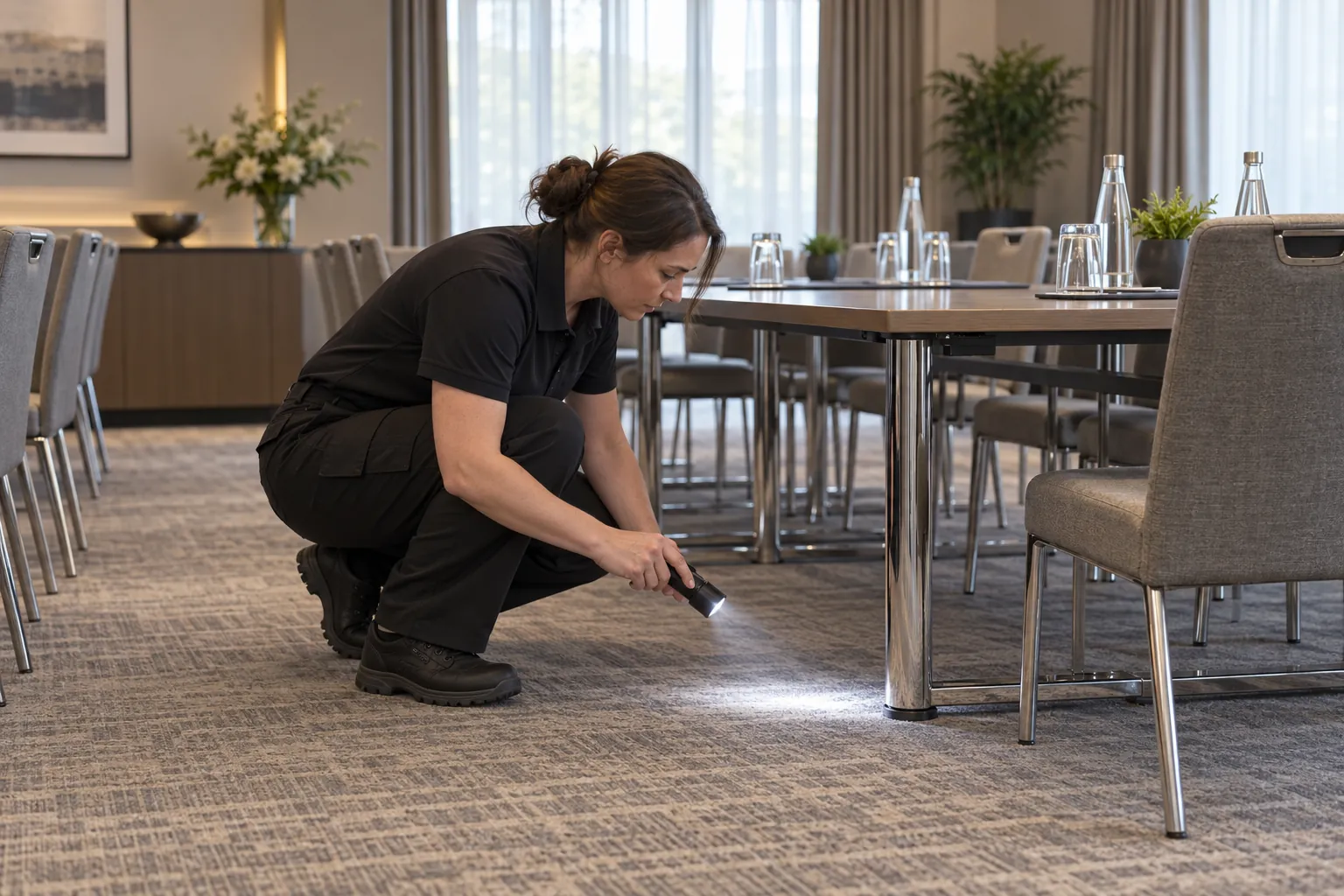
- Replenish and finish. Replace the specified towels, toiletries, toilet paper, cups and tea or coffee supplies. Vacuum or clean floors as appropriate, inspect corners and beneath safely accessible furniture, then make the final presentation and room-status check.
Add features that actually exist: a kitchenette, sofa bed, balcony or accessible bathroom needs its own relevant checks. Do not add opening windows to every room when windows are restricted, or moving heavy furniture without a safe method. The comprehensive list belongs to the hotel, with a shorter working checklist for each room type.
03
Stayover, daily and periodic housekeeping tasks
A checkout clean prepares an empty room for a new guest. A stayover service works around a current guest, their possessions and the hotel's agreed service offer. Write separate checklists so staff do not strip a bed or remove a partly used item just because the checkout sheet says to. Agree how refused service, no access and a requested return visit are recorded.
- Occupied-room service: check permitted access; empty waste and clean the agreed surfaces; service the bathroom; replace linen, towels and amenities according to the hotel's policy and the guest's request; leave belongings in accordance with the hotel's procedure.
- Daily public-area round: check reception, corridors, stairs, lifts and public toilets at the times set for the property. Clean touch points and floors, restock supplies, clear waste and report damage. A busy lobby may need several checks during service.
- Weekly planning list: consider accessible high-level dusting, upholstery edges, detailed bathroom descaling and less-used furniture surfaces. These are example planning intervals to adjust for condition, occupancy and the approved method.
- Periodic programme: put carpet extraction, curtain care, mattress rotation where the manufacturer recommends it, and other deep cleaning on the hotel's calendar. Specify safe access, room downtime and the person or contractor responsible.
There is no benefit in making every periodic item a daily tick. Separate planned deep cleaning from a fault found today. If a bathroom needs extra attention after unusual use, carry it out through the appropriate safe procedure now rather than waiting for its weekly slot. Equally, record a room kept out of service while specialist work is arranged.
For public areas, describe the result expected at each check: floors free from visible litter and slip hazards, dispensers stocked, bins usable and fixtures working. The public toilet cleaning guide explains how the initial clean and later checks serve different purposes.
04
Keep the housekeeping routine safe
Do not set a room target that can only be met by skipping safe methods. A double room after a short stay and a family room with a sofa bed do not represent the same work. Give staff a route for reporting extra time, blocked access and hazards without turning an honest exception into a failed cleaning mark.
HSE's guidance on managing cleaning risks identifies handling loads, awkward postures, repetitive movements and work organisation among the issues to assess. Use suitable trolleys and equipment, store frequent supplies where they can be reached, and plan heavy or awkward tasks rather than relying on a reminder to lift carefully.
Protect people from wet floors. HSE's cleaning slips and trips guidance explains that warning cones do not prevent someone entering a wet area. Use suitable access controls and a safe dry route where needed. Do not leave vacuum cables across a guest corridor or a trolley obstructing the route while a room is being cleaned.
Use only the approved cleaning substances for the surface and task. Keep labels intact, follow training and product instructions, and never mix cleaning chemicals. A pleasant smell is not an inspection result. Where disinfection is required, the method must state how the product is used; an immediate spray-and-wipe may not match its instructions.
An attendant should stop for hazards outside their training, such as an unidentified chemical spill, a used sharp or extensive bodily-fluid contamination. Define who makes the area safe and whom to contact. This checklist does not provide a specialist clean-up method for those situations.
05
Inspect the result and keep a usable room record
Inspection and cleaning are different actions. The attendant records that the task was completed; the authorised inspector or supervisor decides whether the room meets the release standard. If the hotel uses sample inspections, define the sample and the conditions that require a full check, rather than suggesting every signed room has been independently inspected.
A simple record can be copied into a sheet or spreadsheet. Give it fields for date, room number, service type, attendant, actual completion time, checklist result, faults, action needed, inspector where applicable, inspection time and room-release decision. Use clear outcomes such as complete, unable to complete, re-clean required and awaiting maintenance. Avoid a single tick that can mean any of those things.
For an inspection, look closely at a few observable details: hair in the shower, residue around taps, dirt on a remote control, rubbish beneath a reachable chair, incorrect linen or empty toiletries. Write the defect and the correction, then check the correction. A room number and 'not good enough' leave the attendant guessing.
Review repeated findings to improve the method, supplies or workload. Keep guest information out of routine cleaning records wherever it is unnecessary. Use room identifiers for operational work and the hotel's controlled systems for lost property or sensitive incidents.
06
Where the room record fails
A signed sheet cannot show what happened if the whole floor was signed before the first room was entered. Nor can it explain why a room remained unavailable when a repair request went verbally to whichever colleague happened to pass. The useful record joins the location, the actual action, the time and the unresolved issue without calling them the same thing.
With SiteClara, enrolled staff can scan a QR code or tap an NFC tag at a configured location, answer the task checklist and record completed work. Staff can also report an issue at that location with a note and optional photos. Scheduled checks distinguish a done result from an unable result with a reason, and a supervisor reviews the daily report before it is approved for sending.
For a hotel, that can support location checks and a clearer handover of faults in the areas the team has set up. The hotel still decides its room standard, permission to enter, inspection process and room-release decision. A photograph should show the relevant condition without guest belongings or other unnecessary personal information.
07
Sources and a short list to put into practice
Use HSE's L24 workplace guidance for the Great Britain workplace cleanliness framework, Safe use of cleaning substances in the hospitality industry for chemical controls, and Managing cleaning risks for the work itself. Apply the hotel's equipment instructions and local procedures alongside them.
- Write the room standard before the checklist.
- Separate checkout, stayover and public-area tasks.
- Give each periodic cleaning task a planned interval and responsible person.
- Record no access and hazards honestly.
- Keep maintenance faults separate from the cleaning result.
- State who may inspect and release a room.
- Review repeated defects with the people doing the work.
Try the checklist on one room type with an experienced attendant and inspector. Remove vague tasks, add the fixtures they actually encounter, and check that the record explains an exception as clearly as it records a completed clean. Then extend it to the remaining room types.
Sources
Every document this guide quotes or links to, in the order it first cites them.
- HSE's Workplace health, safety and welfare guidance, L24 hse.gov.uk
- Workplace (Health, Safety and Welfare) Regulations 1993 legislation.gov.uk
- HSE's Safe use of cleaning substances in the hospitality industry hse.gov.uk
- HSE's guidance on managing cleaning risks hse.gov.uk
- HSE's cleaning slips and trips guidance hse.gov.uk
Related guides
 CleaningCleaning quality control: how to inspect, correct and prove the standardHow quality control works in commercial cleaning: QA versus QC, setting standards, running inspections, corrective action and a record that holds up.
 CleaningCleaning specification: what it should say, and how to show it is metWhat a cleaning specification should contain, input and output standards, setting frequencies by area, and how to show the specification is being delivered.
 CleaningPublic toilet cleaning: frequencies, safety and accessibilityRunning public toilets for councils, parks, stations and venues: cleaning frequencies at peak, needles and vandalism, accessible and Changing Places toilets.
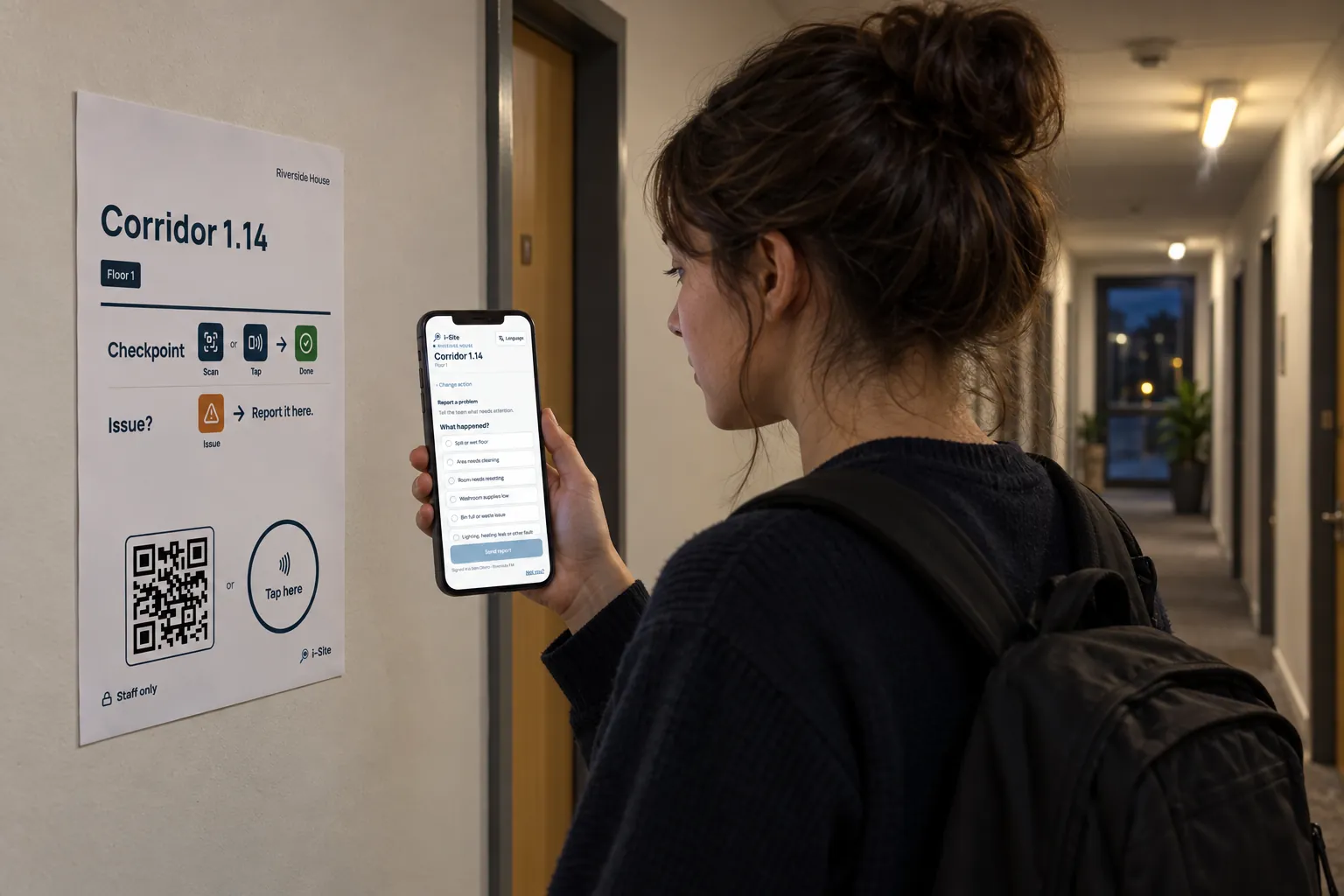 Premises and facilities managementFault reporting system: how faults are reported, prioritised and closedHow a fault reporting system for a building should work: how occupants report faults, how facilities teams log and prioritise them, and how a fault is closed.