Cleaning
Hotel housekeeping checklist: a room ready for the next guest, in New Zealand
A hotel housekeeping checklist is the room-by-room list of cleaning, restocking and condition checks a housekeeping team works through to bring a guest room, bathroom or public area back to the hotel's own standard, with a record of who cleaned it, who inspected it and whether it was released.
Also written for United Kingdom · Ireland · United States · Canada · Australia · South Africa
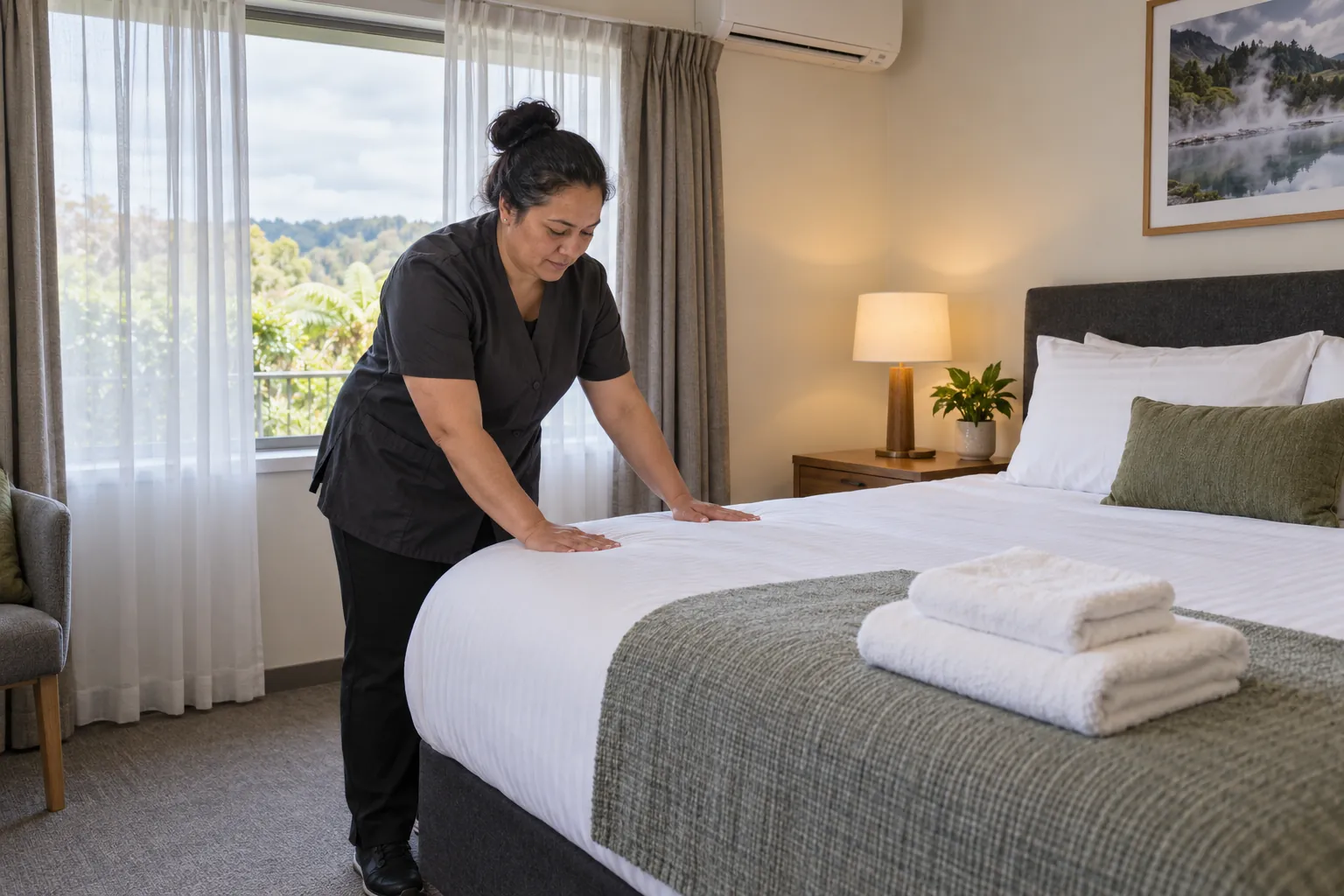
No New Zealand law sets out a hotel room checklist; the duty behind it is the Health and Safety at Work Act 2015, which requires a PCBU to keep workers safe and to make sure guests and other people are not put at risk by its work. This guide gives a checkout room checklist, separate stayover and public-area rounds, the safe methods WorkSafe expects in accommodation, and how to inspect a room and record the result.
01
The duty behind a hotel housekeeping checklist
A room attendant needs a working definition of finished: which surfaces are cleaned, what linen and amenities go in, which fittings are checked, and who decides the room can be sold again. The checklist turns that room standard into a routine a new attendant can follow and a supervisor can check. The standard belongs to the hotel, motel or serviced apartment operator; the law sets the duty underneath it.
That duty sits with the PCBU (person conducting a business or undertaking). WorkSafe's Introduction to the Health and Safety at Work Act 2015 special guide sets out the two sections that matter most:
- The primary duty of care (section 36). "A PCBU must ensure, so far as is reasonably practicable, the health and safety of workers, and that other people are not put at risk by its work." In a hotel the other people are guests, visitors and contractors. The duty includes "providing and maintaining safe systems of work" and "providing any information, training, instruction, or supervision that is necessary to protect all persons from risks".
- The duty of a PCBU who manages or controls a workplace (section 37). That PCBU must ensure, so far as is reasonably practicable, that "the workplace, the means of entering and exiting the workplace, and anything else arising from the workplace are without health and safety risks to any person."
WorkSafe's page on hotels and accommodation services names the housekeeping risk: "Soiled laundry and general housekeeping rubbish carry a risk of germs, infections and infestation." Infections can spread, it says, where "sheeting or towelling is not cleaned /sanitised properly" and where "structural facilities, furnishings and fittings of the premises are not kept clean and in good repair". That is close to a one-line description of what the checklist is for.
Back-of-house areas count too. WorkSafe's guidelines General risk and workplace management – part 1 explain that under regulation 12 of the Health and Safety at Work (General Risk and Workplace Management) Regulations 2016, staff facilities must be "maintained to be in good working order, and are clean, safe, and accessible." Cleaning chemicals fall under the Health and Safety at Work (Hazardous Substances) Regulations 2017, covered in section 04.
Where housekeeping is contracted out, the hotel and the cleaning company share duties for the same work, and under section 34 "PCBUs must, so far as is reasonably practicable, consult, co-operate and co-ordinate activities" with each other. Agree the responsibilities in writing: who sets the room standard, who supplies chemicals and equipment, and who inspects and releases rooms.
02
A checkout room cleaning checklist
These tasks bring guest rooms back to standard after checkout. Work through this hotel room cleaning checklist in the order that suits the layout: top to bottom, cleaner areas before dirtier ones, bathroom equipment kept separate, the floor last. Replace broad ticks such as "bathroom done" with checks an inspector can see.
- Confirm access. Check the room status, knock and announce, and respect a do-not-disturb sign. An open door does not mean the guest has gone.
- Look before starting. Note damage, leaks, stains, pests and anything left behind, and follow the lost property process. Stop and get help for anything outside the normal method, such as a used needle or a large bodily-fluid spill.
- Strip and clear. Bag used linen and towels away from clean supplies. Empty rubbish and recycling without reaching into the bin or pressing it down by hand. Remove trays and used crockery.
- Make the bed. Check the mattress protector, mattress and pillows for stains, damage and signs of bed bugs, then fit clean linen to the standard. Report a problem rather than covering it with fresh sheets.
- Clean the room. Dust high to low: headboard, desk, bedside tables, wardrobe, luggage rack, sills. Wipe the frequently touched points: door handles, light switches, TV remote, phone, heat pump controls, safe keypad. Clean mirrors and glass without streaks.
- The kitchenette, if there is one. Wash or replace cups and cutlery, empty and rinse the jug, wipe the bench, microwave and fridge, and clear the last guest's food. A motel unit or apartment kitchen needs its own list.
- The bathroom or ensuite. Clean the basin, taps, shower, screen, tiles, grout and fixtures, then the toilet last with separate, colour-coded cloths. Where the method says to disinfect a surface, use the approved product and contact time. Check the drain runs and nothing leaks.
- Restock. Towels, bathmat, toilet paper, toiletries, tea, coffee and milk to the room standard; check the hairdryer and iron are there.
- Floors and final check. Vacuum, including corners and under furniture where you can reach safely, and mop hard floors. Then stand at the door and look as a guest would: lights working, curtains even, nothing left behind. Set the room status.
Write a shorter list for each room type. A studio with a kitchenette, a family room with a sofa bed and an accessible room with a level-entry shower each need their own checks. Leave out what the room does not have, or attendants learn to tick items they never do.
03
Stayovers, public areas and the periodic programme
A checkout clean prepares an empty room. A stayover service works around guests who are still staying and their belongings. Give it its own checklist, so nobody strips a bed or bins a half-used product because the checkout list said so, and agree how refused service and no access are recorded.
- Stayover: empty rubbish, wipe the surfaces the hotel's offer covers, service the bathroom, replace towels and amenities to the hotel's policy or the guest's request, and leave belongings where they are.
- Public areas: lobby, lifts, corridors, stairwells, public toilets, guest laundry and gym, at set times. WorkSafe's hotels and accommodation services page suggests cleaning surfaces "at least daily" and frequently touched areas such as "elevator control panels or door knobs" more often, depending on use.
- Back of house: linen rooms, the housekeeping store, staff toilets and the staff room, to the same standard as guest areas.
- Weekly: high dusting within safe reach, skirting boards, upholstery edges, descaling showerheads and taps, inside drawers and wardrobes.
- Periodic: carpet and upholstery extraction, curtains and blinds, mattress rotation where the maker recommends it, windows and pest control (the same WorkSafe page says "Regular pest control should be carried out"). Give each a date, a named person or contractor and the room downtime it needs.
Do not make every periodic task a daily tick, and do not leave today's fault for its weekly slot: a room that needs more than routine cleaning is dealt with now and held out of service until it is. The toilet cleaning checklist covers public toilets in detail. For each public-area check, describe the result expected (floors free of litter and spills, dispensers stocked, lights working) rather than only the task.
04
Keeping the housekeeping round safe
Housekeeping is physical work done quickly, often alone, with chemicals, and a room quota that can only be met by skipping the safe method is a hazard in itself. WorkSafe's research report Risk factors in the hospitality sector found that "pain and musculoskeletal disorders appear to be more predominant in the accommodation subsector".
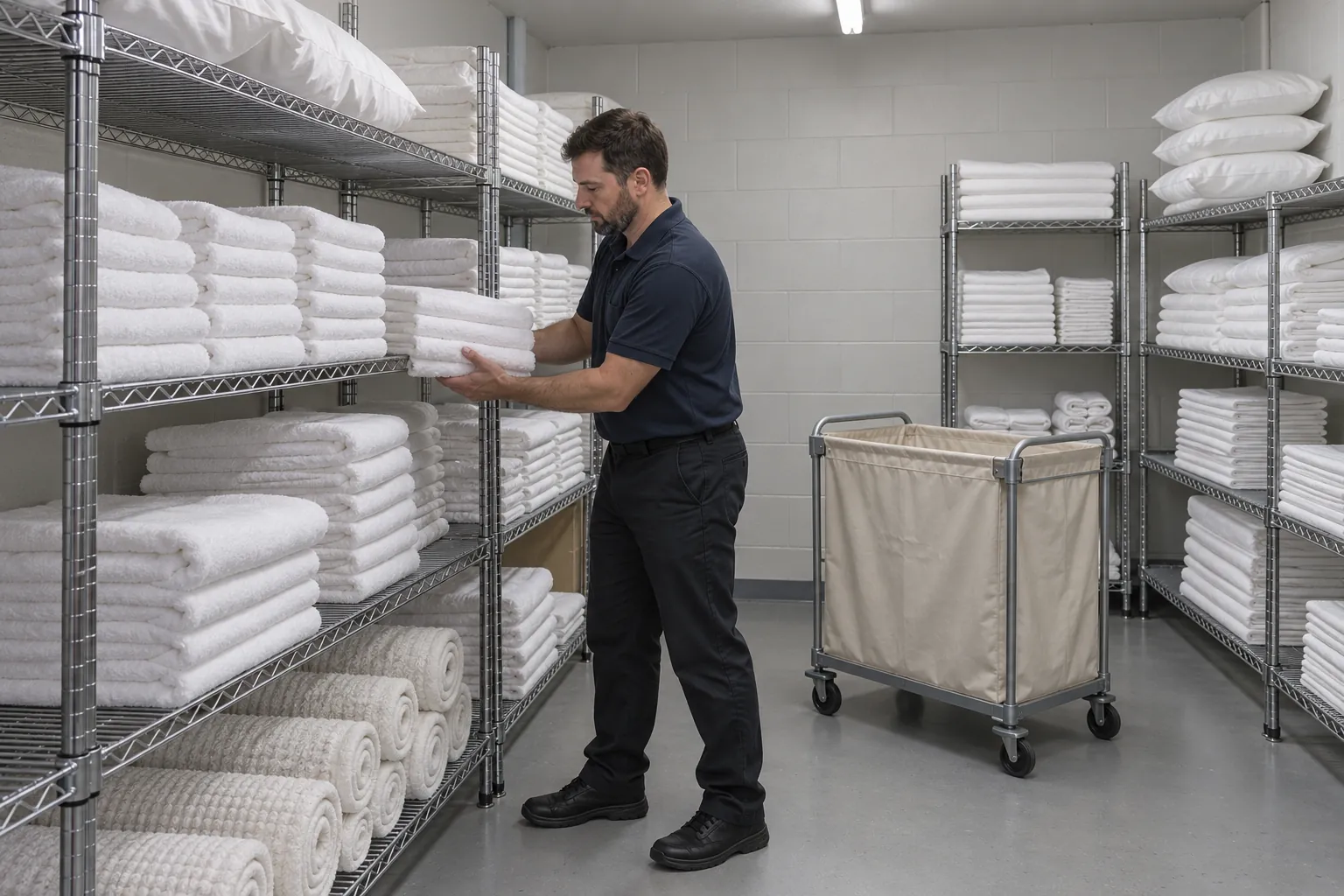
Lifting, pushing and pulling. The hotels and accommodation services page says workers are at risk when "they regularly bend, twist, reach, or hold the load away from their body" and when "they are rushing, have high work demands, or are understaffed". Bed making, linen bags and a loaded trolley on carpet are exactly that. Its suggestions include heavy loads "on the easiest access middle shelves", stock "in smaller containers that are easier to store and handle" and job rotation. Allow more time for heavy rooms.
Wet floors and trip hazards. WorkSafe's slips, trips and falls page names floors wet from "cleaning processes" and "trailing cables, boxes or bags" as causes. The accommodation page advises: "Clean floors outside common working hours. If not practical, introduce a system so people do not walk on surfaces until they are dry." Keep the vacuum cable and the trolley out of the walking route.
Cleaning chemicals. WorkSafe's page on safety data sheets says "It is mandatory to have a current safety data sheet for each of the hazardous substances in your workplace regardless of the quantity you hold", readily accessible to those who handle them. Its page on labelling says that if you decant substances into smaller containers, "the containers must be labelled": every spray bottle filled from a concentrate. Name the product and dilution on the checklist and never mix products; see the hazardous substances inventory guide.
Germs, sharps and the unexpected. Provide gloves and other protective equipment where needed, and clean hand-washing facilities, as the accommodation page suggests. Name who deals with a used needle, a bodily-fluid spill or a suspected pest problem, and tell attendants to stop and call them.
Training and working alone. Under regulation 9, as the GRWM guidelines explain, workers need "adequate knowledge and experience" or must be "adequately supervised by a person who has adequate knowledge or experience", so pair a new attendant with an experienced one first. The accommodation page notes that lone workers "can be at greater risk"; an attendant alone on a floor needs a way to call for help.
05
The room inspection and a record that explains itself
Cleaning and inspecting are different jobs. The attendant records that the room was cleaned; the housekeeping supervisor, or whoever the hotel authorises, decides whether it meets the standard and can be released. If only a sample is inspected, say how it is chosen and which rooms are always checked, such as one after a complaint. The cleaning supervisor duties guide covers the walk-round.
A housekeeping room inspection checklist looks at details an attendant can fix: hair in the plughole, residue on taps, dust on the headboard, a smeared mirror, rubbish under the bed, a missing towel, an empty toiletry bottle. Write the defect and the correction, then check the correction. "Room 112 not good enough" leaves the attendant guessing.
A simple room record, on paper or a spreadsheet, needs: date, room, checkout or stayover, attendant, time finished, faults found and who they went to, inspector, inspection time and the release decision. Use outcomes that say what happened (complete, no access, service refused, re-clean needed, held for maintenance), because one tick cannot mean all of them.
Keep faults apart from the cleaning result: a clean room with a broken light is a maintenance job, not a failed clean. Track repeated findings and review them with the attendants; the cause is often a missing supply, a worn fitting or too little time. Leave guest names out of cleaning records; room numbers do the job.
The round also protects the way out. Fire and Emergency New Zealand's page on evacuation schemes says a building is a relevant building needing a scheme "where 6 or more people sleep, unless the building is made up of three or fewer household units", with an exemption route for some sprinklered buildings. Trolleys and linen bags left in a corridor or stairwell block the routes that scheme relies on; see the fire evacuation scheme guide.
06
Where the room record fails, and what SiteClara does about it
The housekeeping sheet is often filled in at the end of the shift, or a floor is signed before the first room is entered. It cannot show when a room was finished, who inspected it, or why a room stayed off sale because a leak was mentioned to whoever was passing. When a guest complains, it says the room was done and nothing else.
SiteClara puts a printed QR poster at each location the team sets up, such as a floor's service area, a public toilet or the lobby, with an optional NFC tag behind it. A member of the team scans the code or taps the tag on their own phone, with no app to install, sees the checks due there, and marks each one done or explains what stopped them, with a photo when the check asks for one. The time and the named person are recorded as it happens. A fault found on the round, such as a leaking shower seal, can be reported there and stays on the team's list of open jobs until someone closes it.
The supervisor sees what is due, done and missed, records the reason a check was missed, and sees open jobs by building and floor. At the end of the day they review and approve the report, which goes to nominated managers or client contacts the next morning. Where a record is required by law or by a plan, SiteClara is the working record, not the statutory one; safety data sheets, the hazardous substances inventory and the evacuation scheme's records stay where they are. A photo should show the condition that matters, never a guest's belongings.
07
Questions people ask
What should I include in my hotel room checklist for housekeeping?
Every check an inspector can see, in the order the room is cleaned, and the points WorkSafe ties to infection risk in its industry guidance for hotels and accommodation services: sheets and towels cleaned and sanitised properly, soiled laundry and rubbish handled as an infection risk, furnishings and fittings kept clean and in good repair, and "Clean surfaces at least daily", with areas such as "elevator control panels or door knobs" cleaned more often. Add a place to record faults, no access and who inspected the room.
What are the top 3 skills for housekeeping?
The Tertiary Education Commission's Tahatū housekeeper job profile says housekeepers "need to be organised, responsible and work well in a team". Its list of tasks includes changing linen, towels and bathroom supplies, removing rubbish and restocking, reporting issues and damage to managers, and following health and safety rules.
08
Further reading, and a list to take away
Start with WorkSafe New Zealand's hotels and accommodation services page and its Introduction to the Health and Safety at Work Act 2015 special guide, then its pages on safety data sheets and labelling for the chemicals on the trolley.
Before you hand a hotel housekeeping checklist to the team, check that it:
- starts from a written room standard for each room type;
- keeps checkout, stayover, public-area and periodic tasks on separate lists;
- names the product, dilution and colour code for each area;
- records no access, refused service and faults apart from the cleaning result;
- says who inspects a room and who releases it for sale;
- fits the time allowed per room, with heavy rooms planned for;
- keeps trolleys and linen bags clear of corridors and stairs;
- is reviewed with the attendants when the same defect keeps coming back.
Try it on one room type with an experienced attendant and the supervisor who inspects, take out the vague tasks, then write the lists for the other room types.
Sources
Every document this guide quotes or links to, in the order it first cites them.
- Introduction to the Health and Safety at Work Act 2015 special guide worksafe.govt.nz
- Hotels and accommodation services worksafe.govt.nz
- General risk and workplace management – part 1 worksafe.govt.nz
- Risk factors in the hospitality sector worksafe.govt.nz
- Slips, trips and falls worksafe.govt.nz
- Safety data sheets worksafe.govt.nz
- Labelling worksafe.govt.nz
- Evacuation schemes fireandemergency.nz
- Tahatū housekeeper job profile tahatu.govt.nz
Related guides
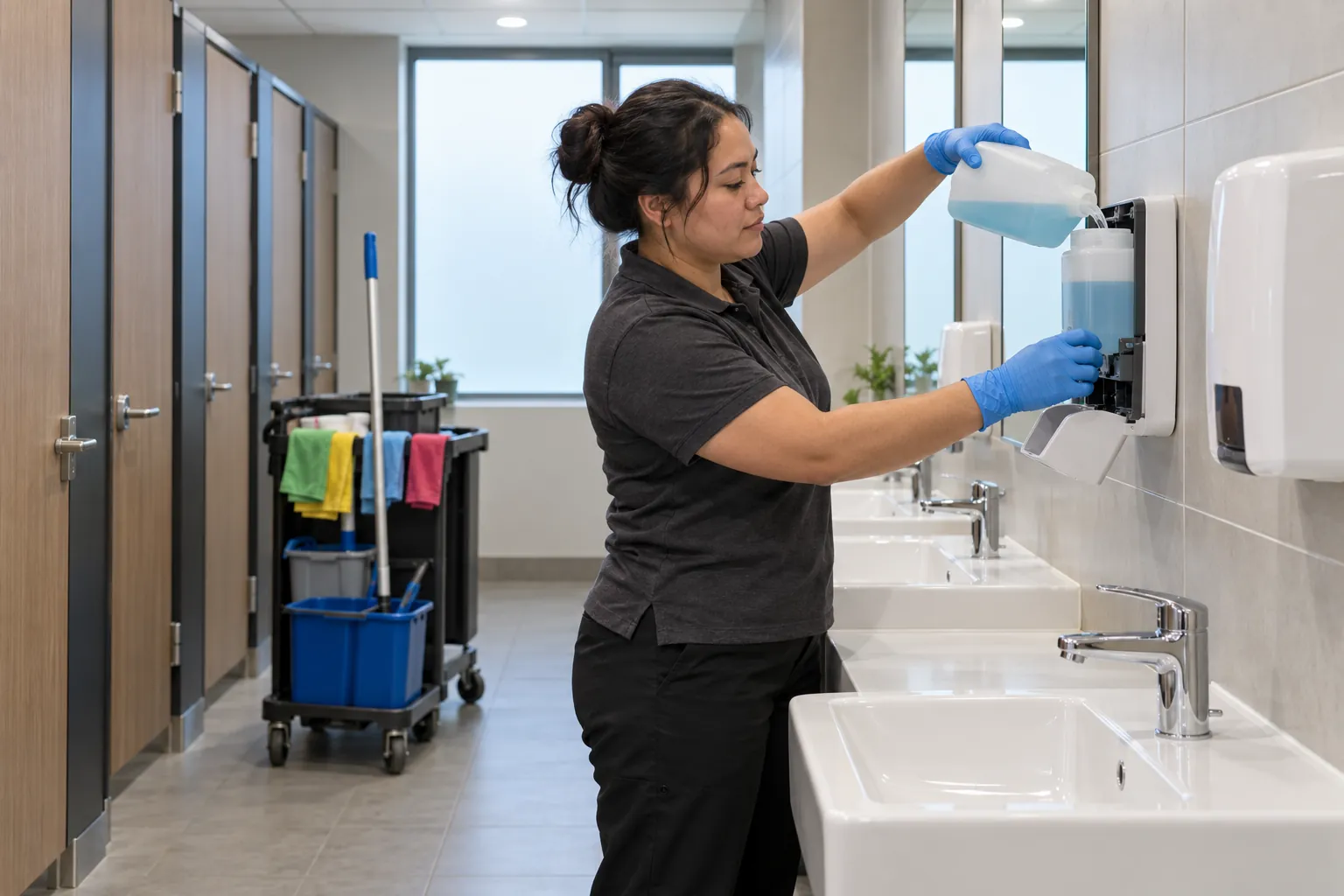 CleaningToilet cleaning checklist: what a New Zealand workplace checks, and how it shows itA toilet cleaning checklist for New Zealand workplaces: the HSWA facilities duty, what to check, how often, checks against cleans, and a record people believe.
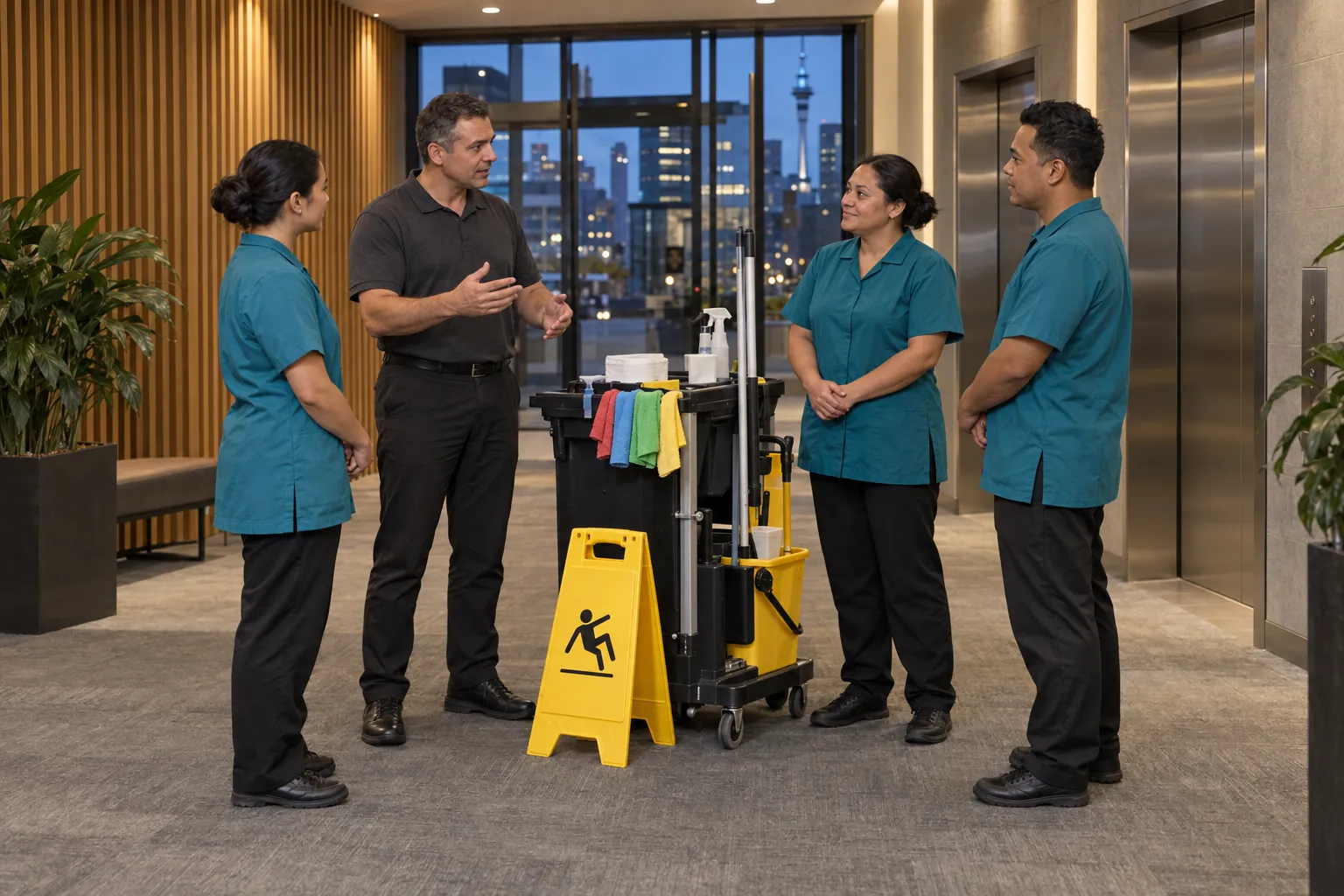 CleaningCleaning supervisor duties: what the role involves in New Zealand, and what good looks likeWhat a cleaning supervisor does in New Zealand: the main duties, a typical shift, the HSWA side, managing the team, checking the work and reporting to the client.
 CleaningCleaning log sheet: what it records, who signs it, and what it provesWhat a cleaning log sheet should record in a New Zealand workplace, who fills it in and who checks it, how long to keep it, and what a signature on it can prove.
 CleaningHazardous substances inventory: what it must hold, and how to keep it trueWhat a hazardous substances inventory must contain in New Zealand, who keeps one in a shared building, when to update it, and how it sits with SDSs and labels.