Cleaning
Cleaning log sheet: what to record, who initials it, and what it proves
A cleaning log is a written record, kept for one area, of which cleaning tasks were done, by whom and when, and, where there is a second column, that a supervisor checked them.
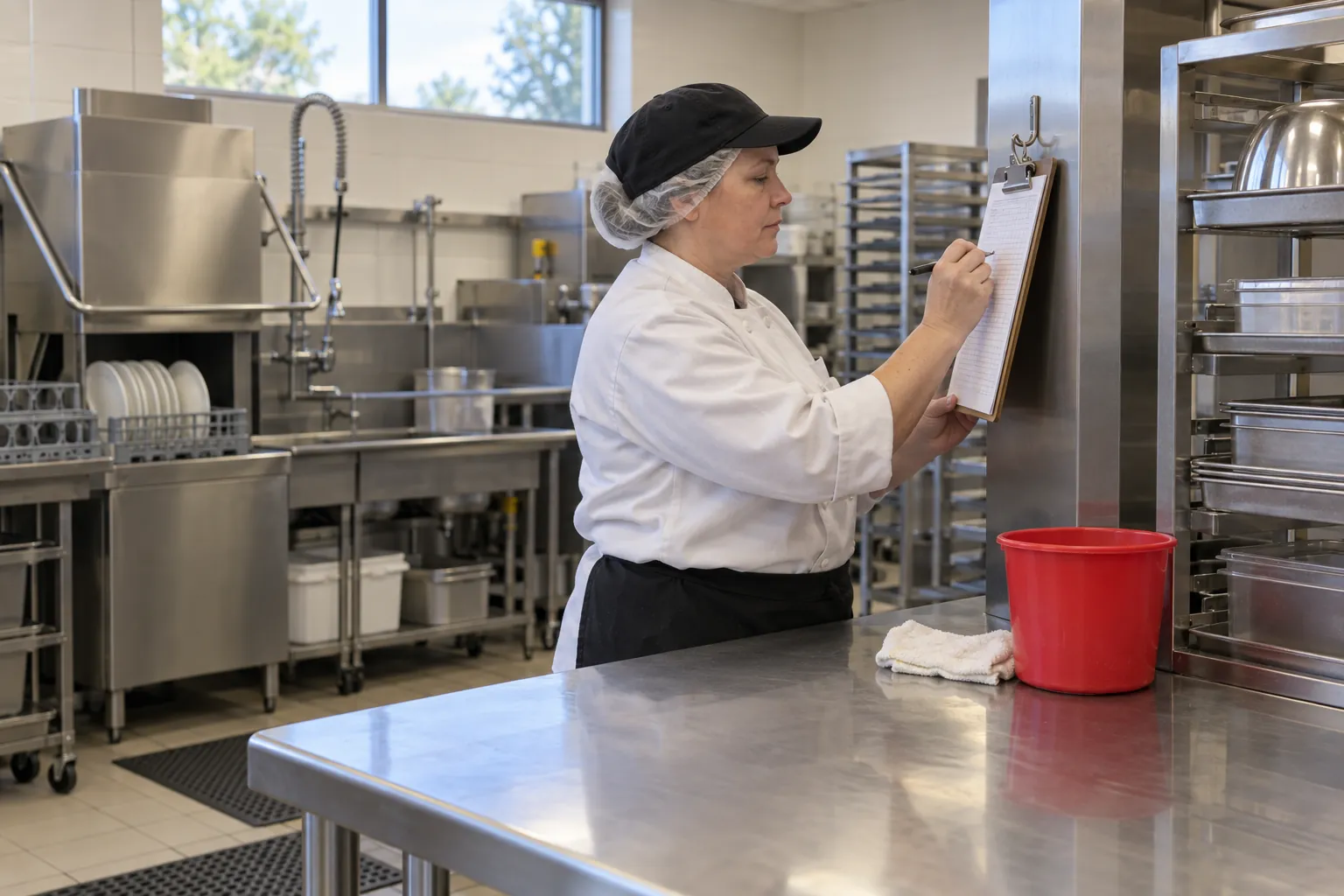
This guide covers the rules behind it, where logs are used, what a good one records, who should initial it, and what a line on one can and cannot prove.
01
The rules behind a cleaning log
A cleaning log sheet is a running record that a defined area was cleaned, by a named person, at a time. It may be a sheet on a clipboard by a break room door, a page in a binder at the janitor closet, or a column on a kitchen's daily checklist. Most carry a second column for the janitorial supervisor or manager who checked the work. Its companion, the restroom cleaning log, often called a bathroom cleaning log, deals with the repeated checks a restroom needs through the day; this guide covers the log for everything else.
No federal regulation requires a sheet called a cleaning log. What the rules require is the outcome the log is meant to show. For most private employers that duty comes from OSHA's general industry standards:
- Housekeeping, 29 CFR 1910.141(a)(3). OSHA's sanitation standard, 29 CFR 1910.141, says "All places of employment shall be kept clean to the extent that the nature of the work allows," that the floor of every workroom is to be maintained, so far as practicable, in a dry condition, and that floors, working places and passageways are kept free of protruding nails, splinters, loose boards and unnecessary holes "to facilitate cleaning."
- Waste and vermin, 1910.141(a)(4) and (a)(5). Receptacles for putrescible solid or liquid waste must be constructed so that they do not leak and "may be thoroughly cleaned and maintained in a sanitary condition," waste is removed often enough to keep the workplace sanitary, and enclosed workplaces are maintained, so far as reasonably practicable, to keep out rodents, insects and other vermin.
- Walking-working surfaces, 29 CFR 1910.22. The walking-working surfaces standard, 29 CFR 1910.22, requires that "All places of employment, passageways, storerooms, service rooms, and walking-working surfaces are kept in a clean, orderly, and sanitary condition," free of hazards such as leaks and spills, and that those surfaces are "inspected, regularly and as necessary."
- Bloodborne pathogens, 29 CFR 1910.1030(d)(4). Where employees can be exposed to blood or other potentially infectious materials, in clinics, dental offices, schools' health rooms and many other settings, the Bloodborne Pathogens standard, 29 CFR 1910.1030, goes further. The employer must determine and implement "an appropriate written schedule for cleaning and method of decontamination based upon the location within the facility, type of surface to be cleaned, type of soil present, and tasks or procedures being performed in the area." Contaminated work surfaces are decontaminated with an appropriate disinfectant after procedures are completed, immediately or as soon as feasible when they are overtly contaminated or after a spill, and at the end of the work shift if they may have become contaminated since the last cleaning.
Only the last of these asks for anything in writing, and what it asks for is a schedule, not a log. But a written schedule nobody can show was followed is a weak answer to an inspector, a client or a claim. The log is how you show it.
Kitchens, cafeterias and other food establishments have a second layer. The FDA Food Code 2022 is a model that states, counties and cities adopt, often with their own amendments, and the local health department enforces the version in force where you are. It says physical facilities "shall be cleaned as often as necessary to keep them clean" (6-501.12), and that, except for spills and other accidents, cleaning is done when the least food is exposed, such as after closing. Food-contact surfaces and utensils used with time/temperature control for safety food are cleaned "throughout the day at least every 4 hours" (4-602.11(C)), with longer intervals allowed in refrigerated rooms, where the cleaning frequency chosen for the room's temperature must be "documented in the food establishment." That is one of the few places a model code expects the cleaning frequency itself to be written down.
02
Where cleaning logs are used
Cleaning logs turn up wherever someone other than the person cleaning needs to know it was done:
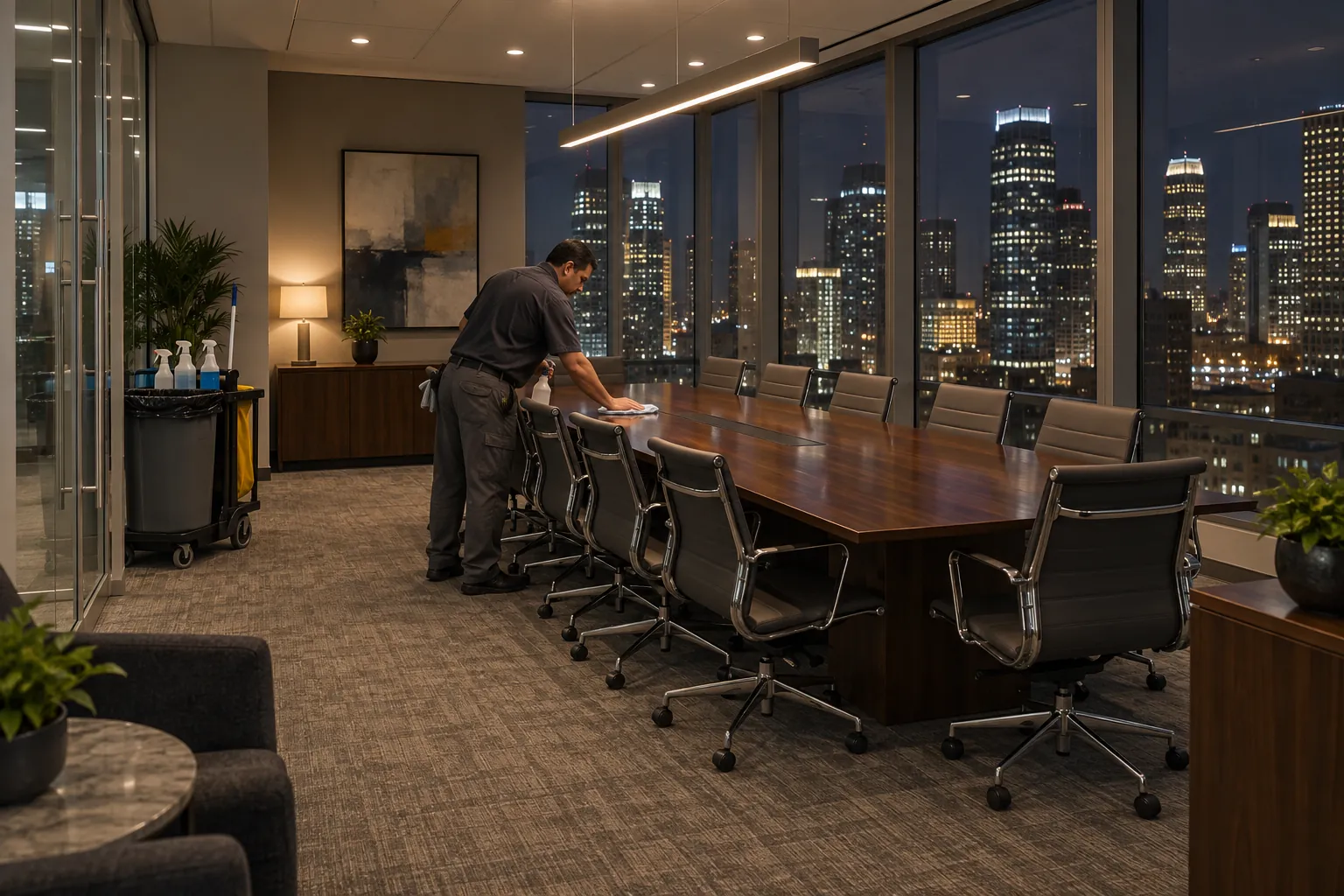
- Offices and common areas. Break rooms, kitchenettes, conference rooms, lobbies, elevators and stairwells, usually on a nightly janitorial route with a day porter covering spills and restocking during business hours.
- Commercial kitchens and cafeterias. The opening and closing cleaning tasks, food-contact surfaces through the day, hood filters, walk-in coolers and floor drains, initialed by the cook or dishwasher and reviewed by the kitchen manager.
- Clinics, dental offices and health rooms. Exam and treatment rooms between patients and at the end of the day, where the written schedule under the Bloodborne Pathogens standard sets the tasks and the log shows they were done.
- Schools and child care. Classrooms, cafeterias, gyms, nurse's offices and water fountains on the custodial route, often with extra cleaning during a stomach bug or flu season.
- Equipment. Ice machines, floor scrubbers and shared tools, with a log per item.
- Periodic and project work. Carpet extraction, strip-and-wax and deep cleans, logged so the next one can be scheduled.
In each case the log answers a question someone will ask later: was this area cleaned, by whom, when, and did anyone check?
03
What a cleaning log sheet should record
Keep each log specific to one area. A printable cleaning log template or PDF downloaded from the internet is a starting point, not a finished log; a generic sheet printed for every room is quicker to produce and slower to believe. Many buildings use a daily log for areas cleaned several times a day and a monthly log, with a column for each date, for work done once a day or less. A useful log carries:
- The area: the room, floor, kitchen station or piece of equipment, named so there is no doubt which one.
- The tasks: each listed separately, in the order they are done, taken from the sanitation schedule or the janitorial scope of work, not made up at the door.
- The product and its contact time where disinfection matters. The CDC's page on when and how to clean and disinfect a facility reminds users to read the label to make sure a product suits the surface, and to leave the disinfectant on long enough to kill the germs, "the contact/wet time." A log that names the product makes it possible to check that time was allowed.
- The date and the time finished, written when the work was finished, not when it was due.
- The initials or signature of the person who did the work, legible enough to identify one person.
- Anything not done, and why: a room occupied, a meeting running late, product out of stock, equipment down.
- Problems found: a leak, a broken fixture, pests, a spill that needs more than a mop, and who it was reported to.
- The checker's initials: a separate column for the supervisor who inspected the area, with the time of the inspection.
- Corrective action: what happened when the inspection found a problem, and who initialed it the second time.
Keep a signature list of everyone who initials the log, with their printed name, so that initials can be traced to a person months later. A cleaning log whose initials nobody can identify is a record of nothing.
04
Who initials, and what the initials mean
Most arguments about cleaning logs are really arguments about what a set of initials was meant to say. Be explicit, on the sheet or in the written procedure, about what each one means:
- The custodian or cleaner who did the work initials to say: I completed these tasks, in this area, by this time, using the method and product specified. They initial for their own work only, never for a coworker, and never before the work is done.
- The janitorial supervisor or lead initials to say: I inspected this area at this time to verify it met the standard. That is a different statement, made by someone who did not do the cleaning, after looking, not by initialing the whole week at once in the office.
- The person accepting the space, at a handover, signs to say: I have seen the area and accept it in this condition, subject to the items listed. A final clean before occupancy, a make-ready unit, a venue returned after an event or a kitchen released after a deep clean all move responsibility from one party to another, so that signature is given on a walk-through, not at a desk.
Just as important is what a line on the log does not mean. It does not mean the area is still clean an hour later. It does not mean a surface was disinfected unless the log says so, and names the product. And a supervisor's initials do not turn a clean they never saw into an inspected one.
Three habits undermine a cleaning log more than any others: initialing in advance, so the log shows work that has not happened yet; one person initialing for a whole crew, so nobody can say who did which area; and filling in the whole shift from memory at the end of it. Each makes the log look complete while removing the thing it was meant to prove.
05
How often to log, who reviews it, and how long to keep it
The log should follow the cleaning frequency, not set it. Frequencies come from the risk, the use of the space and any rule that applies:
- High-touch surfaces, such as door handles, stair rails, elevator buttons, touchpads and counters, which the CDC says to clean regularly, are cleaned more often than low-touch ones. In healthcare, the CDC's Guidelines for Environmental Infection Control in Health-Care Facilities (2003) recommend cleaning and disinfecting high-touch surfaces "on a more frequent schedule than minimal touch housekeeping surfaces" (E.I.7), keeping housekeeping surfaces visibly clean and cleaning up spills promptly (E.I.5), and using EPA-registered disinfectants in accordance with the manufacturer's instructions (E.I.1).
- Food-contact surfaces follow the Food Code as your jurisdiction has adopted it: at least every 4 hours for surfaces in use with time/temperature control for safety food, unless an exception applies.
- Surfaces exposed to blood or other potentially infectious materials follow the written schedule under 29 CFR 1910.1030, plus the immediate cleanup after a spill.
- Everything else follows the janitorial contract or the building's own standard, and the frequency is whatever keeps the space clean at the times people use it.
Review is what turns a log into evidence. The janitorial supervisor checks the logs each shift, walks a sample of areas against them, and initials only the areas actually inspected. The facility manager or the client reads a week at a time and asks about gaps, repeated "not done" entries and problems never fixed. When a log and an inspection disagree, the finding and its fix go on the log too; see janitorial quality control for how inspections are scored.
How long to keep cleaning logs depends on their purpose. There is no single federal retention period for a general cleaning log. A food establishment keeps them long enough to show the health inspector that its procedures are followed over time; a janitorial contractor usually keeps them as long as the contract or its insurer requires, and long enough to answer a slip-and-fall claim, which may arrive well after the day in question. Whatever period you choose, write it down, because a log thrown away last month cannot settle this month's dispute.
06
Where the paper log fails, and what SiteClara does about it
Paper logs fail in predictable ways. They are initialed in batches at the end of a shift, the completed sheets sit in a binder in the janitor closet that the client never sees, the supervisor's column is filled in at the office, and a missed area is noticed only when an occupant complains. When a dispute arises weeks later, nobody can show whether a set of initials was written at 4 p.m. or at 9 p.m.
SiteClara records the cleaning at the place where it was done. A printed QR code poster at each area, with an optional NFC tag behind it, lets the custodian scan or tap with their own phone, with no app to install, and mark the scheduled checks for that location done, or say what stopped them. Their name and the time are recorded as it happens, and they can add a photo of the finished area. A problem found, such as a leak or a broken fixture, goes onto the team's list of jobs until someone closes it.
The janitorial supervisor sees what is due, done and missed, and can record the reason a check was missed. At the end of the day they review the totals and photos, add a note and approve the report, which goes to the facility manager or the client contacts they nominate at 8 a.m. the next morning, showing what was completed, what is still open and how the scheduled checks went.
07
Questions people ask
Do cleaning logs really work?
A cleaning log works as a record of who says they cleaned which area and when, but on its own it does not show how well the cleaning was done. The CDC's toolkit Options for Evaluating Environmental Cleaning, written for hospitals, notes that "there is no standard method for measuring actual cleanliness of surfaces or the achievement of certain cleaning parameters (e.g., adequate contact time of disinfectant)." Its basic program asks for regular monitoring that is "performed and documented," and its advanced program for the results to be used in "ongoing educational activity and feedback to the ES staff following each cycle of evaluation." A cleaning log works best the same way: checked against the space by someone who did not do the cleaning, and read back to the team.
What is a good log book for cleaning?
A good log book lists the specific cleaning tasks or surfaces for one named area and gives each a clear outcome. The CDC's Environmental Checklist for Monitoring Terminal Cleaning is a public example from healthcare: it records the date, the unit and the room number, lists each high-touch surface from bed rails to the toilet flush handle, and marks each one "Cleaned," "Not Cleaned" or "Not Present in Room," along with the monitoring method used. A footnote says hospitals "may choose to include identifiers of individual environmental services staff for feedback purposes." The same structure suits a break room, a kitchen station or a bathroom cleaning log: one area, its tasks listed, an outcome for each, and initials that trace to one person.
08
Further reading, and a list to take away
Start with OSHA's 29 CFR 1910.141, Sanitation, and check OSHA's State Plans page to see whether your state runs its own program. For kitchens, ask your local health department which version of the FDA Food Code it enforces. The CDC's facility cleaning page and its healthcare guidelines, both linked above, cover routine cleaning, contact time and high-touch surfaces.
Before you print or revise a cleaning log sheet, check that:
- each log is for one named area or piece of equipment, with the tasks in the order they are done;
- the tasks and frequencies come from a written schedule or scope of work;
- it names the disinfectant where one is used, so the contact time can be checked;
- it records the time the work was finished, not the time it was due;
- every set of initials can be traced to one person, with a signature list kept;
- there is a separate column for a checker who did not do the work;
- tasks not done and problems found have somewhere to go, and someone follows them up;
- the written procedure says what each set of initials means;
- someone reviews the logs, and you know how long they are kept and where.
Sources
Every document this guide quotes or links to, in the order it first cites them.
- Sanitation standard, 29 CFR 1910.141 osha.gov
- Walking-working surfaces standard, 29 CFR 1910.22 osha.gov
- Bloodborne Pathogens standard, 29 CFR 1910.1030 osha.gov
- OSHA-approved State Plans osha.gov
- FDA Food Code 2022 fda.gov
- When and how to clean and disinfect a facility cdc.gov
- Guidelines for Environmental Infection Control in Health-Care Facilities (2003) cdc.gov
- Options for Evaluating Environmental Cleaning cdc.gov
- Environmental Checklist for Monitoring Terminal Cleaning cdc.gov
Related guides
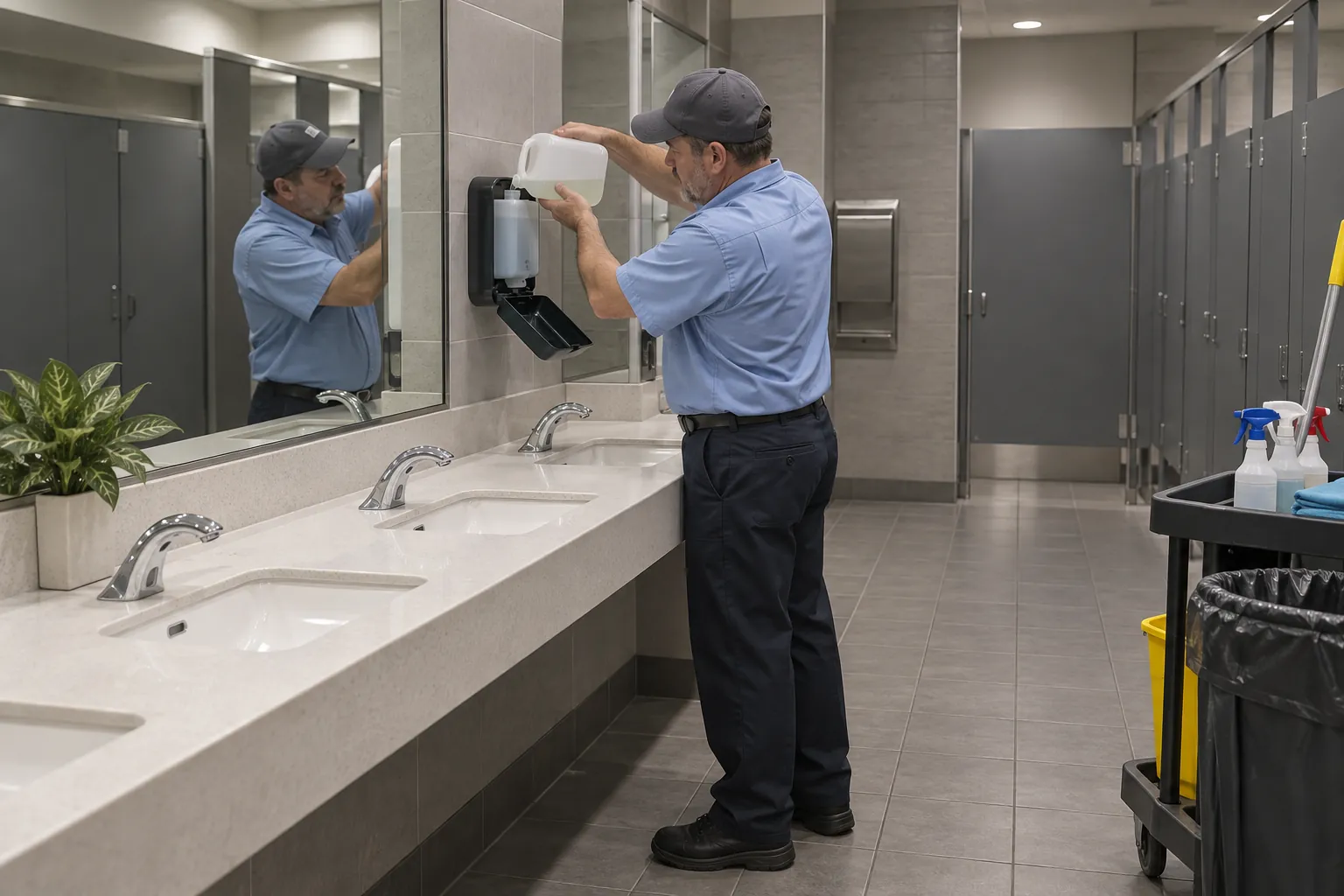 CleaningRestroom cleaning log: what to record, and how to make it believableWhat a restroom cleaning log should record, how often to check, the OSHA and Food Code rules behind it, and how to keep a log a client or inspector will believe.
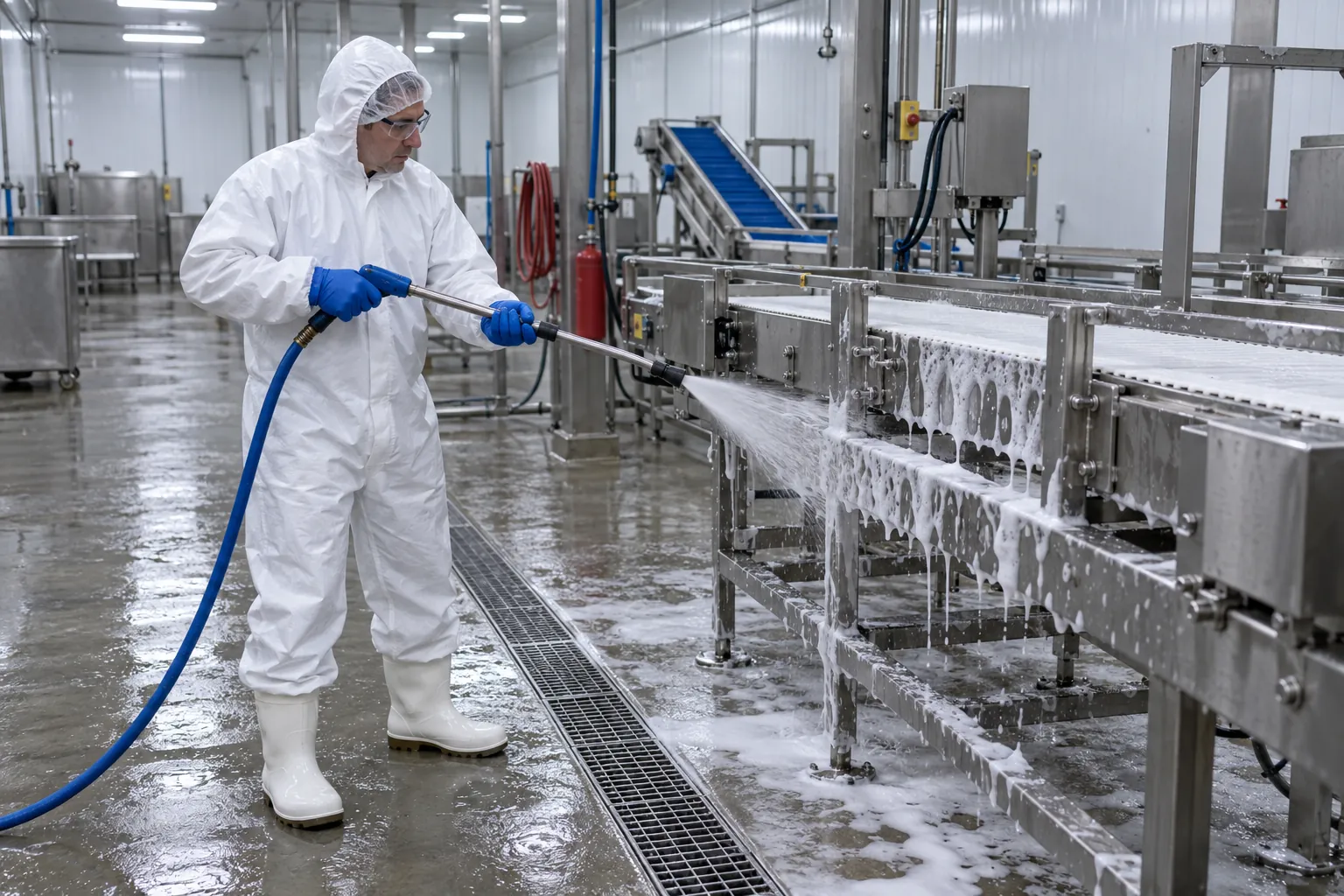 CleaningMaster sanitation schedule: building one, running it, and proving it happenedWhat a master sanitation schedule is, how it fits FDA 21 CFR 117 and USDA SSOPs, what goes on it, how often, who signs, and how to keep the record honest.
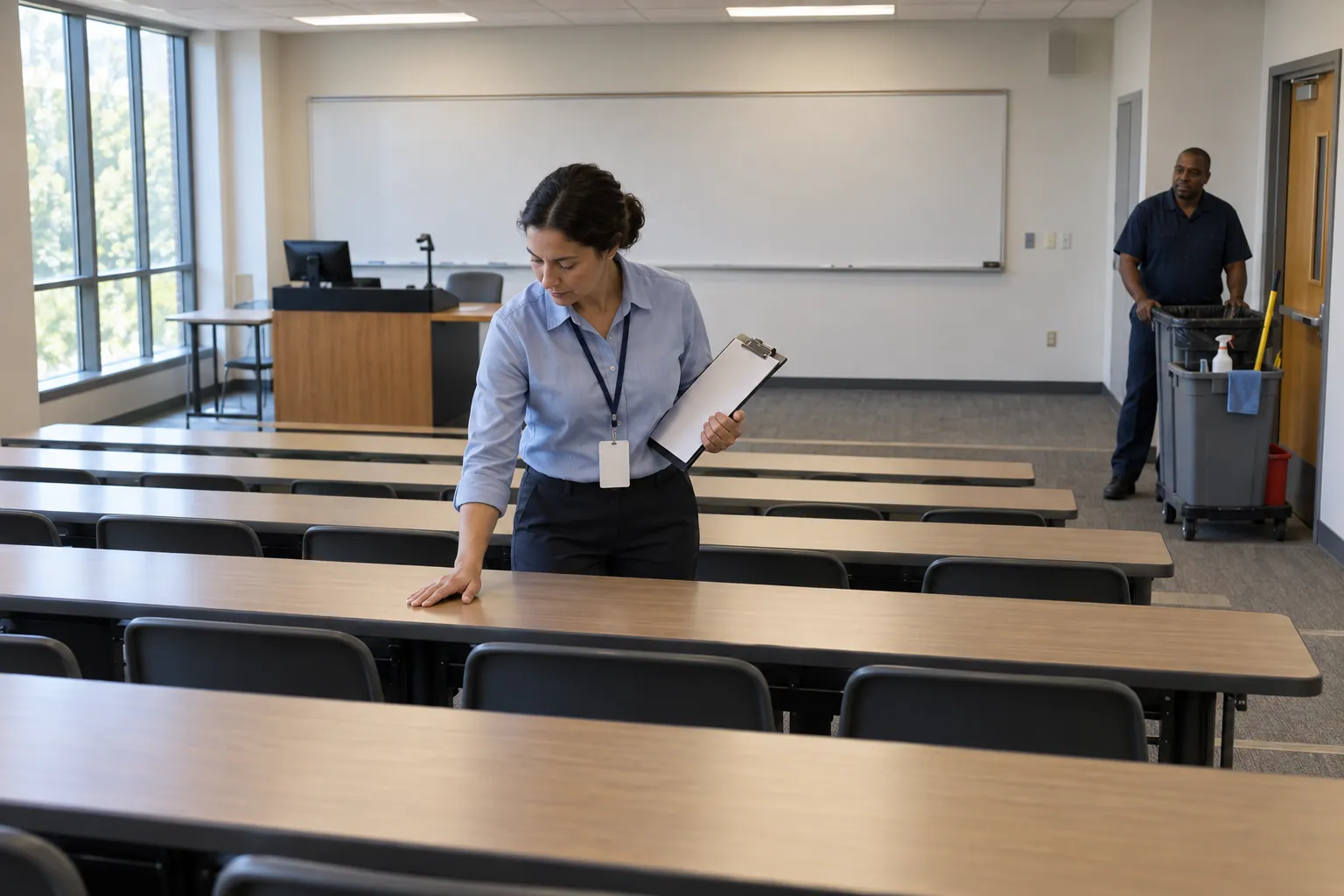 CleaningJanitorial quality control: how to inspect, score and fix the cleaningHow janitorial quality control works: QA versus QC, building a cleaning inspection checklist, APPA appearance levels, sampling, scoring and corrective action.
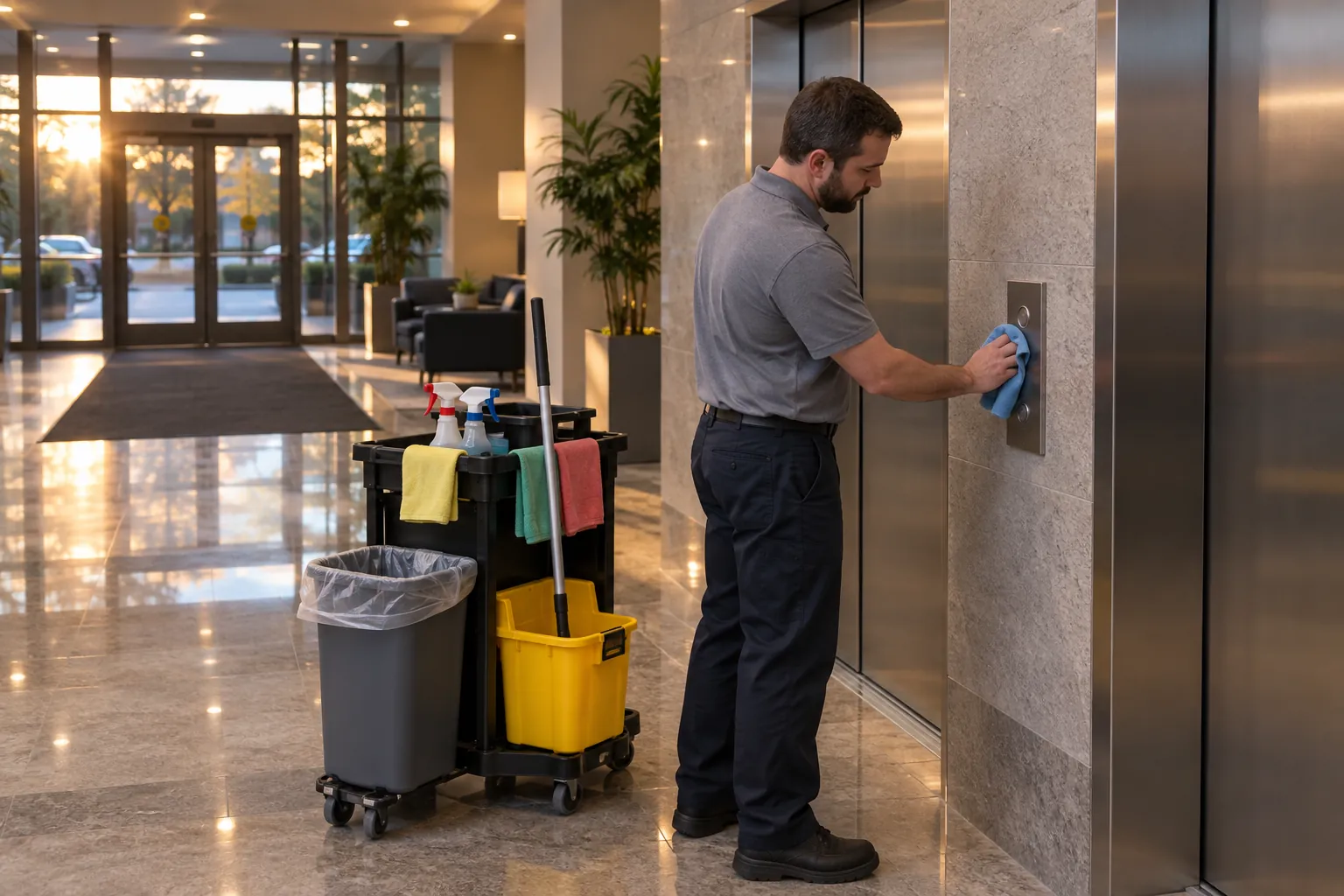 CleaningCommercial cleaning checklist: area by area, and how to use itA commercial cleaning checklist for offices, lobbies, restrooms and shared areas, area by area, with the OSHA rules behind it and how a supervisor checks the work.