Fire and water checks
Fire marshal checklist: the daily and weekly checks, and the job in an evacuation
A fire marshal checklist is the list of short checks a fire marshal, or fire warden, makes on their area each day and week, such as escape routes, fire exits, fire doors, extinguishers and call points, together with their duties when the fire alarm sounds.
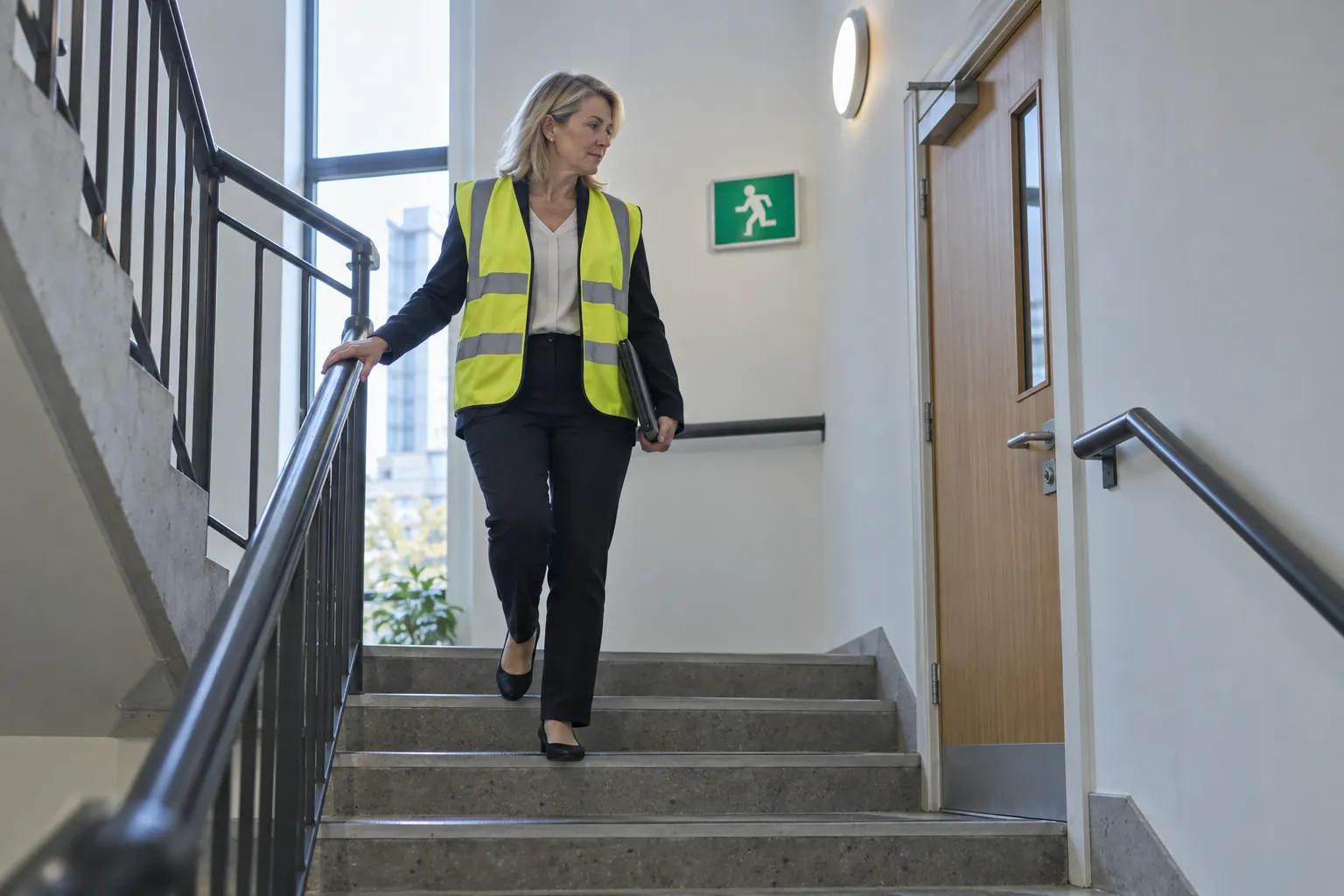
A fire marshal is typically an ordinary member of staff with a high-visibility vest in a drawer and a floor they know well, and much of the role is quiet: a walk round each morning to make sure the building could be evacuated if it had to be. This guide covers the checks a fire marshal makes, what they do when the alarm sounds, and how the record of both is kept.
01
The fire marshal role, and the law behind it
In England and Wales, article 15 of the Regulatory Reform (Fire Safety) Order 2005 requires the responsible person to nominate a sufficient number of competent persons to implement the procedures for evacuating the premises, and those nominated people are what workplaces call fire marshals or fire wardens. The Order governs fire safety in non-domestic premises and in the common parts of blocks of flats, and places the duty on the responsible person: usually the employer or business owner, or the owner or managing agent where they control the building. The responsible person must carry out a fire risk assessment, put fire safety measures in place, and have procedures for serious and imminent danger, including safety drills.
Under article 13, the responsible person must also, where necessary, take measures for fire-fighting appropriate to the premises and nominate competent persons to implement them. The Order counts a person as competent where they have sufficient training and experience or knowledge and other qualities to implement the procedures properly. Fire marshal responsibilities are part of maintaining fire safety in the building, not the whole of it. The two titles mean the same thing in practice; the Order uses neither.
Scotland and Northern Ireland have their own law with similar duties: the Fire (Scotland) Act 2005 and the Fire Safety (Scotland) Regulations 2006, and in Northern Ireland the Fire and Rescue Services (Northern Ireland) Order 2006 and the Fire Safety Regulations (Northern Ireland) 2010. The terms differ, but each expects a risk assessment, trained people, and a plan for getting everyone out.
Article 15 asks for a sufficient number of competent persons, not a ratio: the law does not set a number of fire marshals per head. The fire risk assessment should set it, taking into account the layout of the building, the number of floors, the people in it, shift patterns, and cover for holidays and sickness. A floor with one fire marshal who works part time is, for half the week, a floor with none.
02
The fire marshal checklist: what to check
A fire marshal's routine checks are short and visual, part of the fire safety management of the building rather than a formal inspection. They are not a substitute for servicing by a competent contractor, but they catch the everyday problems that make an evacuation slower or a fire worse. A typical inspection checklist for a floor or area covers the fire protection and fire safety equipment the marshal can see:
- Escape routes: corridors, stairwells and landings clear of boxes, furniture, bikes and anything that could fall, block the way or burn.
- Emergency exits: final exit doors unlocked, or fitted with the right emergency release, openable without a key, and clear on both sides, including outside.
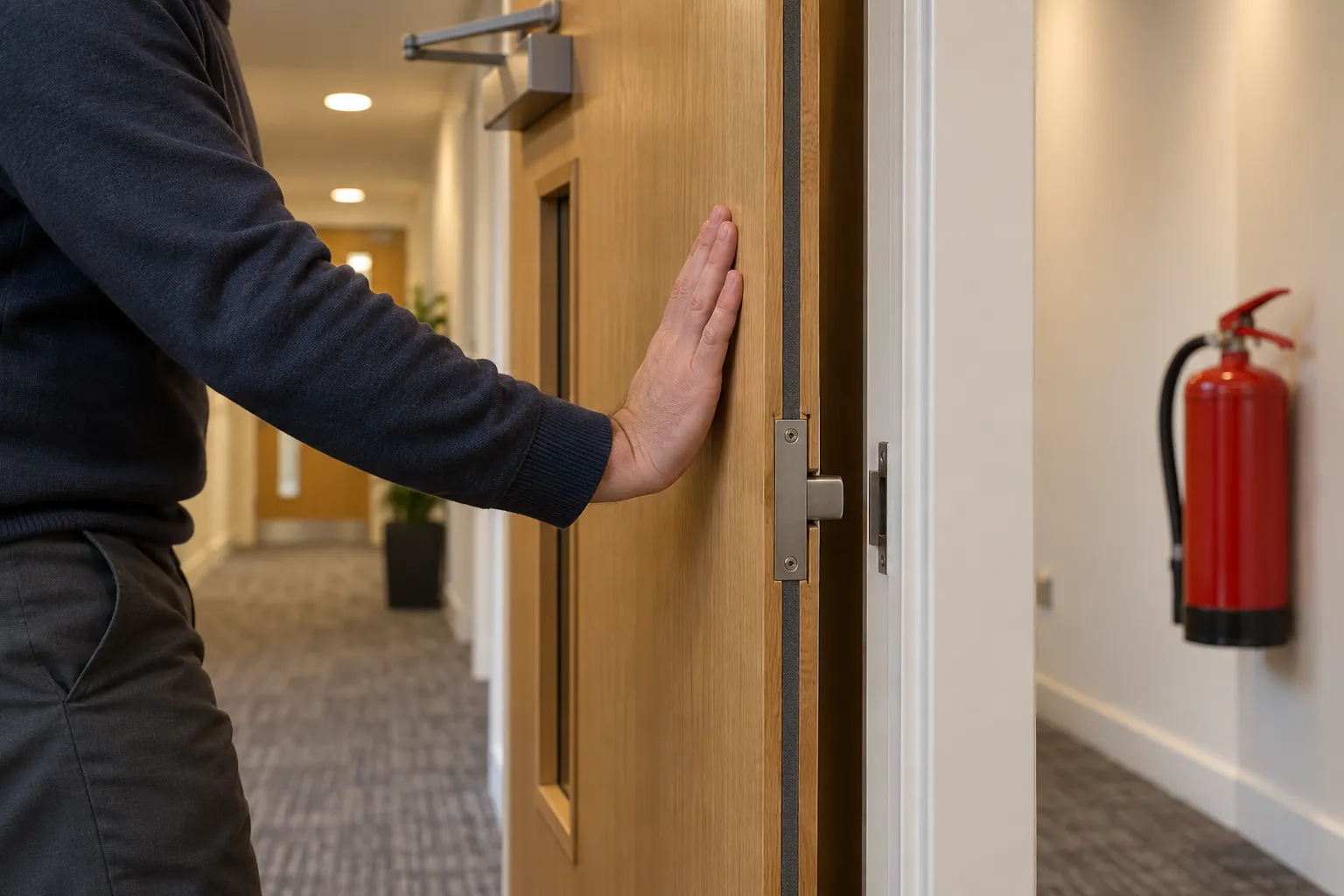
- Fire doors: closed and not wedged or propped open. Check the fire doors close fully onto the latch when released, the intumescent strips and smoke seals are intact, and the door and its glazing are undamaged.
- Exit signs: in place, clearly marked, visible and not hidden by displays or stock.
- Fire extinguishers: every extinguisher on its bracket or stand, the right type for the area, not blocked, the safety pin and tamper seal in place and the gauge, where fitted, in the green.
- Fire alarm call points on every floor: unobstructed, undamaged and not covered.
- The fire alarm panel, where the marshal is asked to check it: the alarm system showing normal operation, with no fault or disablement lights. Any fault is reported at once.
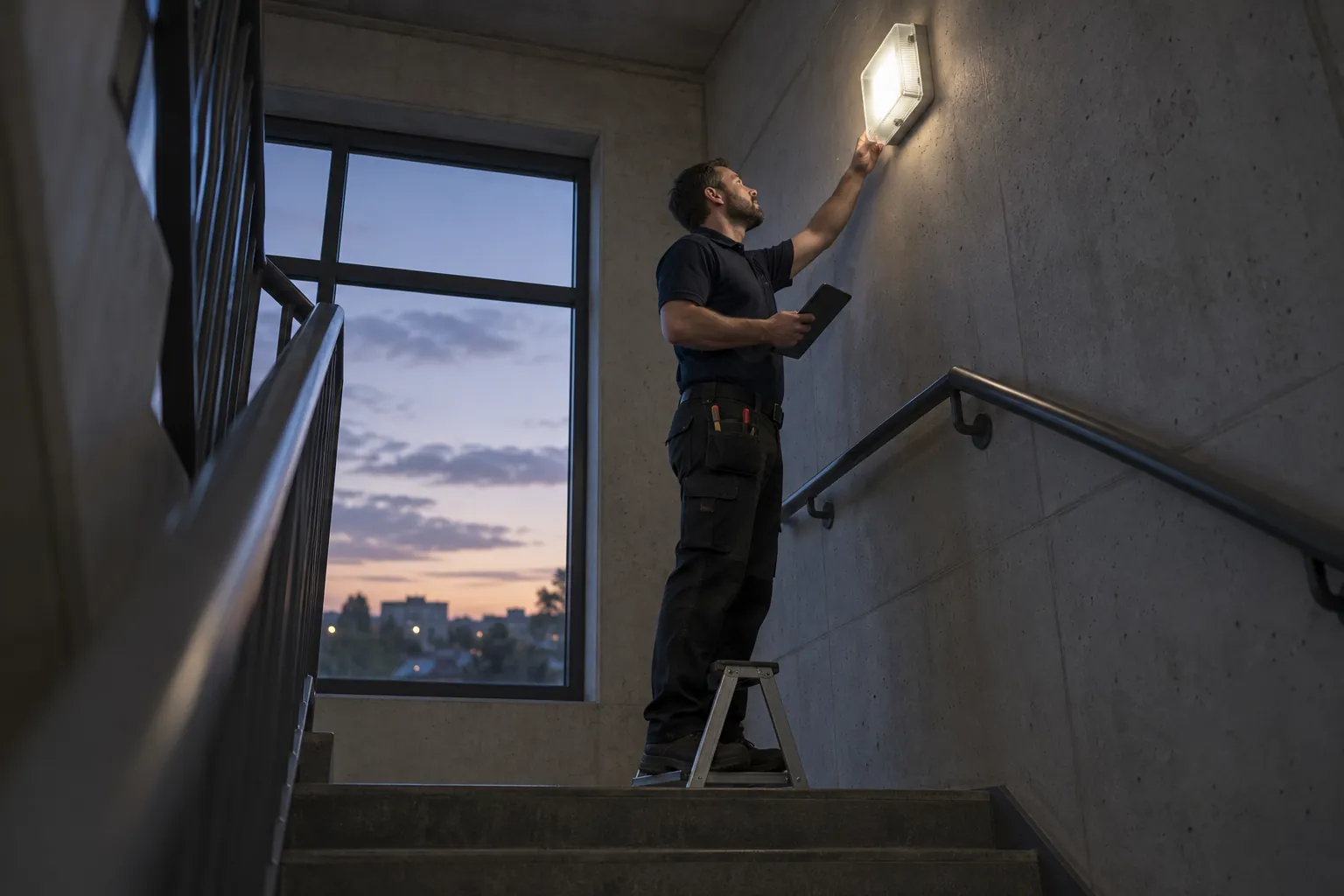
- Emergency lighting: indicator lights showing on self-contained fittings, where fitted.
- Fire hazards and potential fire sources: overloaded sockets, heaters near paper, rubbish building up, combustible storage under stairs, and hazardous materials stored where they should not be.
- Fire action notices: in place near call points, and correct for the building.
- The assembly point: accessible, and not taken over by parked vehicles or skips.
Whether it is a printable sheet or a list on a phone, keep the fire marshal inspection checklist, or fire warden checklist, to what can be seen on a walk round in ten minutes. A long checklist does not make a building safer; it makes the check slower, and a slow check is the one that stops happening.
03
Daily and weekly checks, and who does the rest
The frequency of the fire marshal's checks should come from the fire risk assessment and the building's fire safety arrangements. A common inspection frequency is:
- Daily, at the start of the working day: escape routes, emergency exits, fire doors and the obvious fire risks, because these change with every delivery and every busy afternoon.
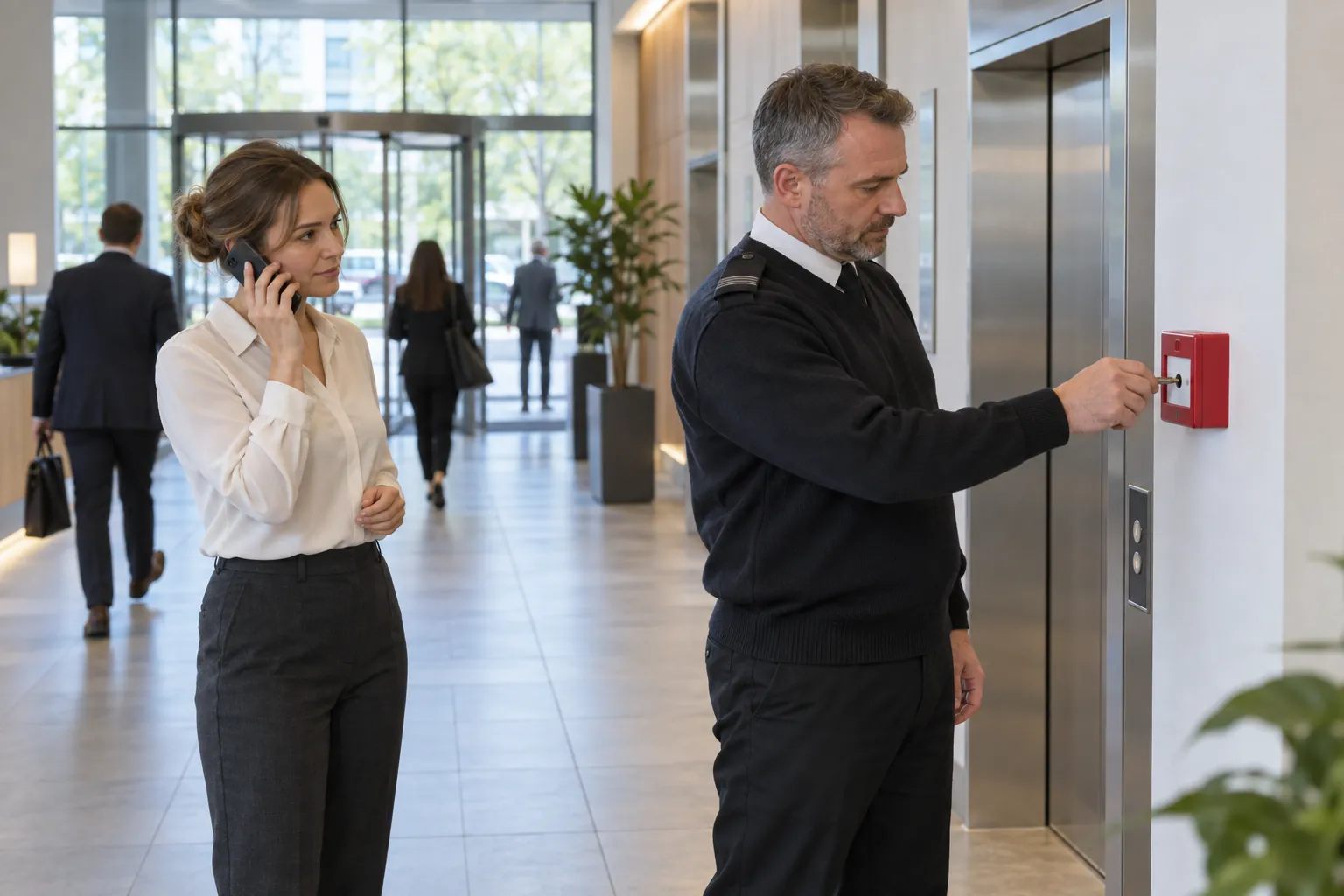
- Weekly: a fuller walk round including extinguishers, call points, signage and the assembly point, and the weekly fire alarm test if the marshal is the one who carries it out. British Standard BS 5839-1 recommends that weekly alarm tests use a different manual call point each week, at about the same time, so that people recognise it as a test.
- Monthly: a short functional test of the emergency lighting under BS 5266-1, and a visual inspection of the fire extinguishers, usually by the premises team rather than the marshal.
Other checks belong to competent contractors, not fire marshals: the servicing and testing of fire alarm equipment, the annual fire alarm service and the full-duration test of the emergency lighting, the annual service of extinguishers under BS 5306-3, and the inspection and repair of fire doors. Regular maintenance by a contractor and the marshal's walk round are two halves of the same system: the fire marshal's job is to notice when something is wrong between those visits, compare it with the previous inspection, and report it.
Whoever owns each check, the results should end up in one place, usually the fire log book, so that anyone reviewing compliance with fire safety law can see the whole picture: alarm tests, emergency lighting tests, extinguisher checks, fire drills, training, faults and any fire incident.
04
The fire marshal's role in an evacuation
In the event of a fire, the fire marshal's job is to help get people out of their area quickly and calmly, and to tell the person in charge what they found. The detail belongs in the building's fire evacuation plan, but it usually looks like this:
- Put on the vest so people can see who is leading, and tell those nearby to leave by the nearest safe exit.
- Sweep the area on the way out, including toilets, meeting rooms, kitchens and store rooms, without delaying your own escape and without opening a door where there are signs of fire behind it.
- Close doors behind you to slow the spread of fire and smoke.
- Direct people away from lifts, unless the building has evacuation lifts that the plan says to use.
- Help people who need assistance, following their personal emergency evacuation plan (PEEP), for example to a refuge in a protected stairwell, and tell the person in charge where they are.
- Report at the assembly point to the fire co-ordinator or chief fire marshal: whether the area is clear, anyone who could not be checked, and anything seen.
- Keep people at the assembly point and stop anyone going back in until the fire and rescue service, or the person in charge, says it is safe.
A trained fire marshal may use an extinguisher on a small fire only if the training covered it, the fire is small, they have a clear way out behind them, and the alarm has been raised. The Order does not expect anyone to put themselves at risk, and in many buildings the plan is simply to get out.
GOV.UK's guidance on fire safety equipment, drills and training says to carry out at least one fire drill a year and record the results, which must be kept as part of the fire safety and evacuation plan. A useful record says how long the fire evacuation took, whether every area was swept, and what went wrong. A drill that ends with nobody writing anything down has taught very little, and it is the practice for an actual fire.
05
Training, and what a good record shows
Under the Order, staff must be given adequate fire safety training when they start and when the risks change, repeated periodically where appropriate. Fire marshals need more: a fire warden training course that covers the fire marshal role in the building's own procedures, their roles and responsibilities, how fire spreads, fire prevention and the common fire risks, how to raise the alarm, the types of fire extinguisher and when not to use one, and how to sweep an area. London Fire Brigade's guidance on fire safety training advises that staff with particular fire safety responsibilities, fire marshals and wardens among them, receive detailed instruction in their own duties and refresher training every six months, and that all staff have refresher training at least once a year.
A good record of what the fire marshals check lets someone reviewing it, whether the responsible person, a fire risk assessor, an insurer or an inspecting officer, answer three questions and see whether the building is compliant: were the checks done, by whom, and what happened to the problems found? That means each entry carries:
- the date and the time the check was done, written at the time;
- the area or route checked, and the name of the fire marshal;
- what was found, including the fire door wedged open and the boxes in the stairwell, not just ticks;
- who each problem was reported to, and when it was put right;
- checks that were missed, and why, such as the marshal being on leave with no cover;
- fire drills, with the time taken and the lessons learned.
Exceptions make the record credible. A year of fire marshal inspections with nothing ever found does not suggest a perfect building; it suggests the checklist is being signed rather than walked.
06
Where the record fails, and what SiteClara does about it
On paper, the fire marshal's daily check is a line in a book at reception. It is easy to sign without walking the route, easy to miss when the marshal is on holiday, and hard to follow up: the wedged fire door noted on Tuesday is still wedged on Friday, because the book records the problem but does not send it to anyone.
SiteClara puts a printed QR poster, with an NFC tag behind it if you prefer staff to tap, at the points on the route: the stairwell landing, the final exit, the fire alarm panel. The fire marshal scans or taps with their own phone, with no app to install, sees the checks due at that point and marks each one done, or explains what stopped them. The time and the name are recorded as it happens, with a photo when one helps.
A problem found on the walk round, such as a blocked exit or a door that will not close, is reported there, with a photo, and goes onto the team's list of jobs until someone closes it. The supervisor sees which checks are due, done and missed, can record why one was missed, and can escalate a job to the building manager. Each day the supervisor approves a report that goes to nominated management or client contacts the next morning, showing how the scheduled checks went and what is still open.
07
Further reading, and a list to take away
The government publishes free guidance on GOV.UK, including Fire safety in the workplace, Making your small non-domestic premises safe from fire (written for England) and the series of fire safety risk assessment guides for different types of premises. The Scottish Government and the Northern Ireland Fire and Rescue Service publish guidance for their own law. Your local fire and rescue service can advise on fire safety requirements, and the British Standards named above, BS 5839-1, BS 5266-1 and BS 5306-3, are the reference for alarms, emergency lighting and extinguishers.
For your fire marshals, make sure that:
- the fire risk assessment, and any later risk assessments after changes to the building, say how many fire marshals are needed, and there is cover for absence and every shift;
- each marshal knows their area, their route and their role in the evacuation plan;
- the daily and weekly checklist fits a short walk round, and is walked, not signed;
- problems found on a check go to someone who will fix them, and the record shows when they were fixed;
- missed checks are recorded with a reason;
- the weekly fire alarm test rotates between call points;
- fire drills are held and recorded, with the lessons acted on;
- fire warden training is refreshed, and records are kept with the fire log book.
Sources
Every document this guide quotes or links to, in the order it first cites them.
- Article 15 of the Regulatory Reform (Fire Safety) Order 2005 legislation.gov.uk
- Article 13 legislation.gov.uk
- Fire (Scotland) Act 2005 legislation.gov.uk
- Fire Safety Regulations (Northern Ireland) 2010 legislation.gov.uk
- Fire safety equipment, drills and training gov.uk
- London Fire Brigade's guidance on fire safety training london-fire.gov.uk
- Fire safety in the workplace gov.uk
- Fire safety risk assessment guides gov.uk
Related guides
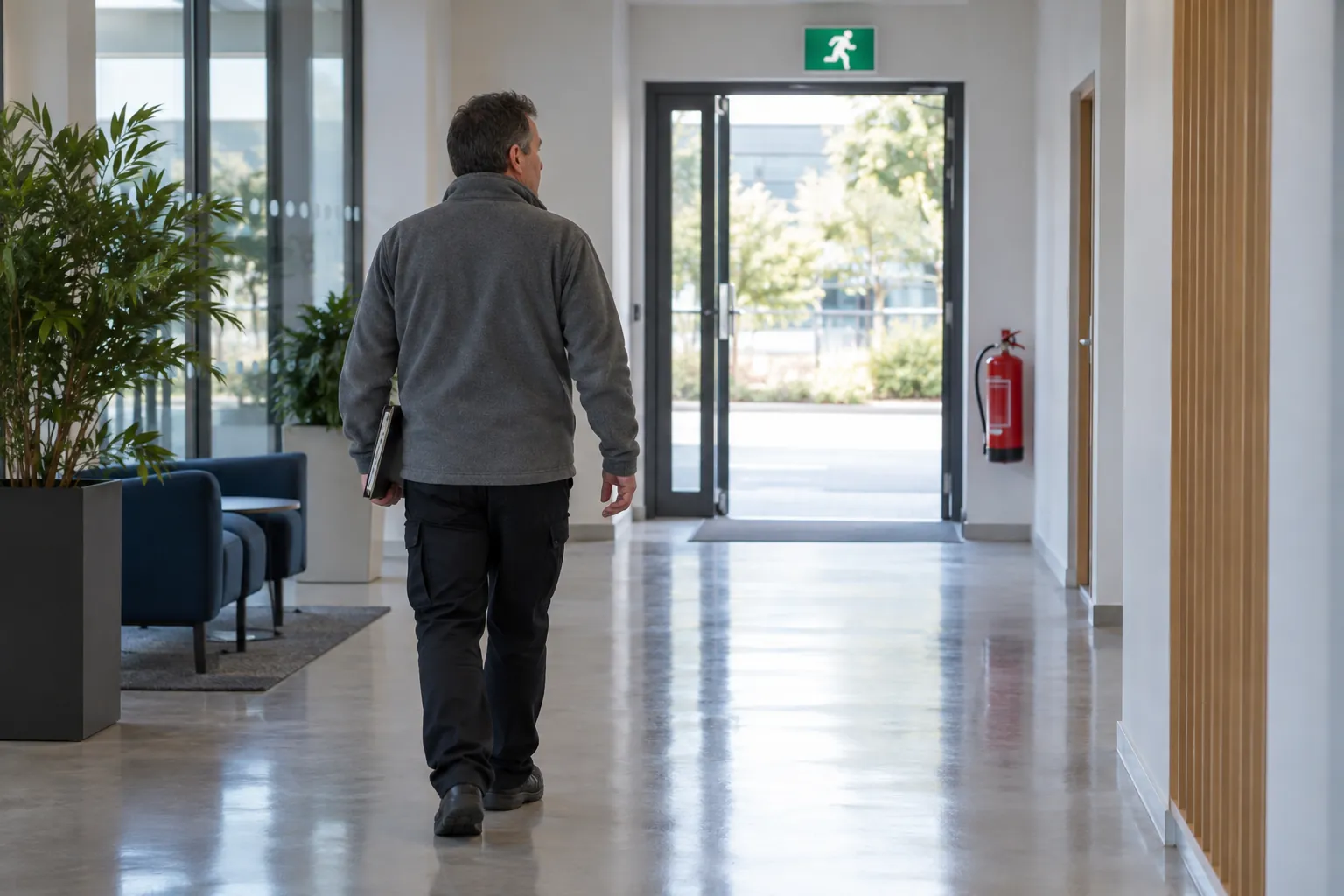 Fire and water checksFire safety checks in the workplace: what to check, how often, and who does itThe routine fire safety checks a UK workplace needs, from daily escape routes to the weekly alarm test, who does each one, and what the record should show.
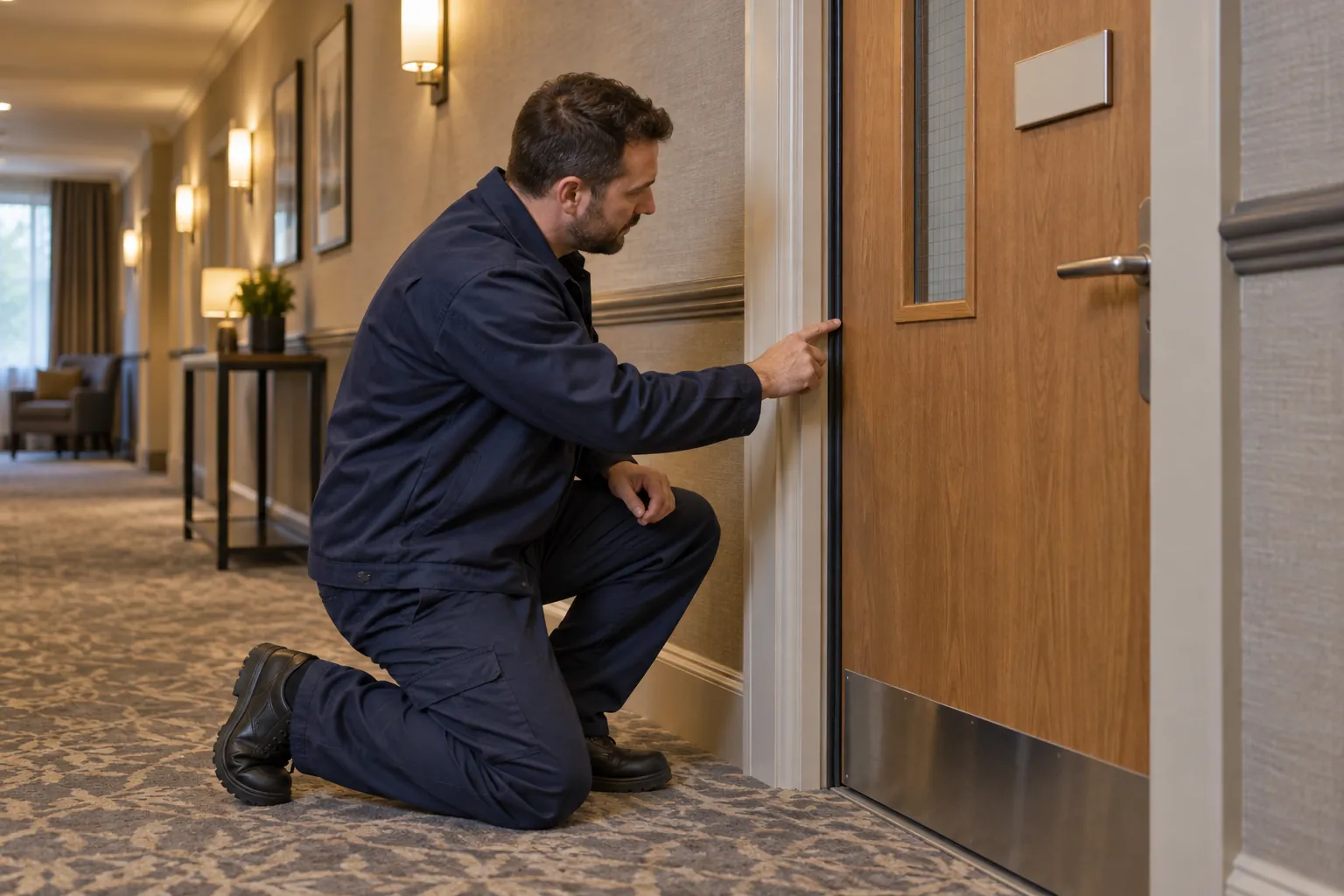 Fire and water checksFire door checks: what a routine check looks atFire door checks in any building: gaps, seals, closers, hinges, glazing and signs, how often to check, and when to call a fire door inspector.
 Fire and water checksWeekly fire alarm test: how to do it, and what to recordWeekly fire alarm test: how to carry out the test BS 5839-1 recommends, rotating call points, what to record, and what only a competent person can do.
 Fire and water checksEmergency lighting log book: what to record, and how oftenWhat an emergency lighting log book should record, the monthly and annual tests BS 5266-1 recommends, who does each, and how to keep the record credible.