Cleaning
Toilet check sheet: what to record and how to make it credible
A toilet check sheet is the record, usually pinned inside the washroom door, of each check of the toilets: the date and actual time, who checked, what they found and restocked, and any fault reported.
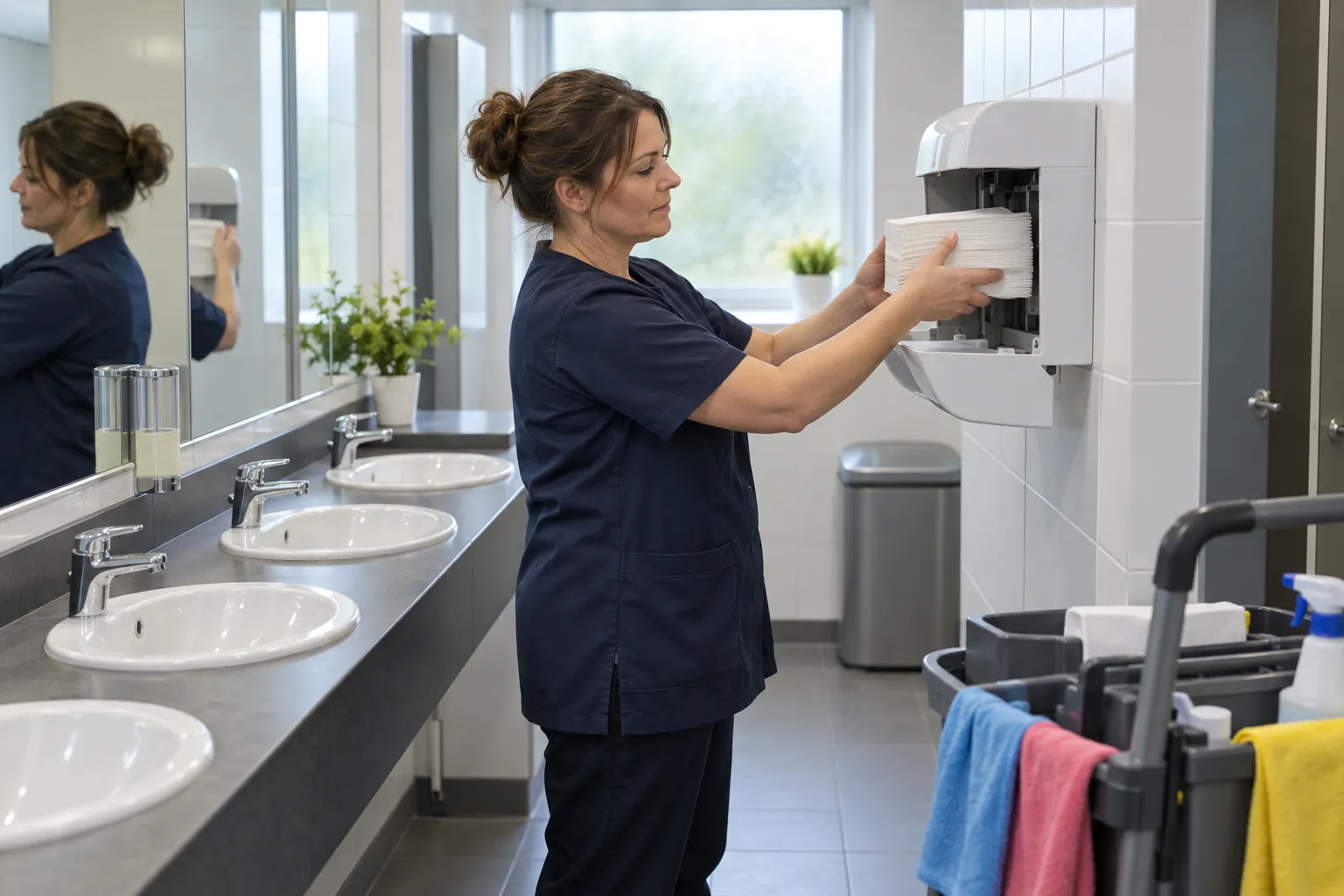
It is the most visible cleaning record in most buildings, and often the least believed. This guide covers what it should record, how often checks should happen, and what makes the record stand up when someone questions it.
01
The duty behind the sheet
No regulation says you must pin a check sheet to a toilet door. What the law requires is the outcome the sheet is meant to show. The Workplace (Health, Safety and Welfare) Regulations 1992 apply to almost every workplace in Great Britain, and two of them are about washrooms.
- Regulation 20 requires suitable and sufficient sanitary conveniences at readily accessible places, with the rooms that contain them adequately ventilated and lit, and kept in a clean and orderly condition.
- Regulation 21 requires suitable and sufficient washing facilities, with clean hot and cold, or warm, water, soap or another suitable means of cleaning, and towels or another suitable means of drying, again kept clean and orderly.
- Regulation 9 adds the general duty to keep a workplace, its furniture and fittings sufficiently clean.
The Health and Safety Executive's Approved Code of Practice, Workplace health, safety and welfare (L24), explains what those duties mean in practice, including how many toilets and washbasins are needed for the number of people who use them.
The duty sits with the employer, or with whoever controls the premises. When cleaning is contracted out, the contract is how the building owner or occupier shows the duty is being met, and the check sheet is usually the only day-to-day evidence that it was.
02
What a toilet check sheet should record
A toilet check sheet is a short checklist, one row per visit, and a useful one records two things: that someone looked, and what they found. A column of ticks records only the first. Each entry should carry:
- The date and the actual time of the check, written when it happened.
- Who checked: a name or initials that identify one person, not a team.
- Floors: dry, free of litter and paper.
- Toilets and urinals: clean, flushing, seats and locks intact.
- Washbasins, taps and mirrors: clean, water running hot and cold, or warm.
- Supplies: toilet paper, soap and hand sanitiser, paper towels or a working hand dryer, restocked if low, because hand hygiene fails first when the soap runs out.
- Bins: waste bins and sanitary bins emptied or within capacity.
- Smell and ventilation: extract fans working, no lingering odour.
- Faults found: a leak, a blocked toilet, a broken lock or light, and who it was reported to.
- Supervisor check: a separate column, completed less often, by someone who did not do the clean.
Keep the list short enough to be completed honestly in the time available. A sheet with twenty boxes an hour gets ticked in one stroke at the end of a shift.
Display it where the person checking will see it and complete it on the spot: on the wall inside the washroom door, at eye height, in a clear holder, with a pen. Customers and visitors notice it too, and in a shop, restaurant or hotel a current, honest sheet says something about cleanliness that the rest of the building has to live up to.
03
How often a washroom should be checked
There is no statutory frequency. The Health and Safety Executive's Approved Code of Practice and guidance, Workplace health, safety and welfare (L24, paragraph 206), says that rooms containing toilets or washing facilities should be kept clean, that the frequency and thoroughness of cleaning should be adequate for that purpose, and that responsibility for cleaning should be clearly established, particularly where facilities are shared by more than one workplace. The right interval follows how many people use the room and what the building is for, and it should be written into the cleaning specification rather than left to the cleaner on the day.
- Every 30 to 60 minutes: stations, shopping centres, stadiums, events and other public washrooms at peak times.
- Every one to two hours: busy offices, schools during the day, hospital waiting areas, gyms.
- Two or three times a day: lightly used offices and staff-only washrooms.
- At least once a day: every washroom that is in use, with a full clean.
Checks should follow the pattern of use, not the clock alone: straight after the morning arrival, after lunch, after a school break or the end of an event. An hourly check through a quiet afternoon and none during the lunchtime rush produces a tidy sheet and a dirty washroom.
04
A check is not a clean
Most confusion about toilet check sheets comes from recording two different jobs in the same box.
- A check is a short visit: look, pick up litter, wipe what needs wiping, restock, report faults. It takes a few minutes and happens many times a day.
- A clean is the scheduled full clean in the cleaning specification: toilets, urinals, basins, floors, surfaces, dispensers and bins, with the right colour-coded equipment. It happens once or twice a day, often outside busy hours.
- A deep clean is periodic: descaling, grout, high surfaces, vents, behind fittings. It belongs on a weekly or monthly schedule, not on the door sheet.
Record them separately, or at least mark which was done. The full clean usually has its own daily toilet cleaning checklist, kept by the supervisor, listing each task in order. A client reading "cleaned 10:00, 11:00, 12:00" assumes three full cleans; the cleaner meant three checks. When the washroom is found dirty at 12:15, that difference becomes a dispute about the contract rather than a conversation about the washroom.
A fault found on a check should go somewhere that gets it fixed. Writing "tap leaking" on the sheet records that it was seen; it does not tell the maintenance team. The sheet should say who the fault was reported to, and when.
What should a toilet cleaning checklist include?
A toilet cleaning checklist should list each task of the full clean in order – toilets and urinals, washbasins, taps and mirrors, surfaces, floors, dispensers and bins – then the restock of toilet paper, soap and paper towels or a check that the hand dryer works, with the date, time and the name of the person who did it. In Great Britain it is there to show the outcome that regulation 20 and regulation 21 of the Workplace (Health, Safety and Welfare) Regulations 1992 require: toilets and washing facilities kept in a clean and orderly condition, with clean hot and cold, or warm, water, soap or another suitable means of cleaning, and towels or another suitable means of drying.
05
What makes a check sheet credible
Anyone who has managed a cleaning contract has seen a sheet completed in advance, or every hour of the day ticked in the same pen at the same angle. Clients know it too, so an unconvincing sheet can do more harm than no sheet. The things that make a record believable are simple:
- It is written at the time. The time recorded is the time the check happened, not the time it was due.
- It names a person. Initials that identify one person carry weight; a team name does not.
- It shows exceptions. A sheet where nothing ever ran out and nothing ever broke is not believed. Notes such as "soap refilled" or "blocked toilet reported to site team 14:20" show that someone looked.
- Someone else checks it. A supervisor who walks the washroom and signs the sheet a few times a week gives it independence.
- It is kept. Old sheets thrown away each Monday cannot answer a complaint about the week before. Keep them for as long as your contract or your insurer requires; many providers keep a year.
- Gaps are explained. A missed check with a reason, such as "room closed for repair" or "covering reception", is more credible than a sheet with no gaps at all.
If a client or an inspector asks, the question will be when the washroom was last checked, by whom, and what was done about the problem they saw. A good sheet answers all three.
06
Where the paper sheet fails, and what SiteClara does about it
Paper works well enough in one building with a steady team. It struggles when a provider looks after many sites, when staff change often, or when a client wants the record rather than an assurance. The sheet stays on the door; the client sees it only if they visit. Nobody notices a missed check until the next complaint, and nobody can tell from a tick whether it was written at 10:00 or at 17:00.
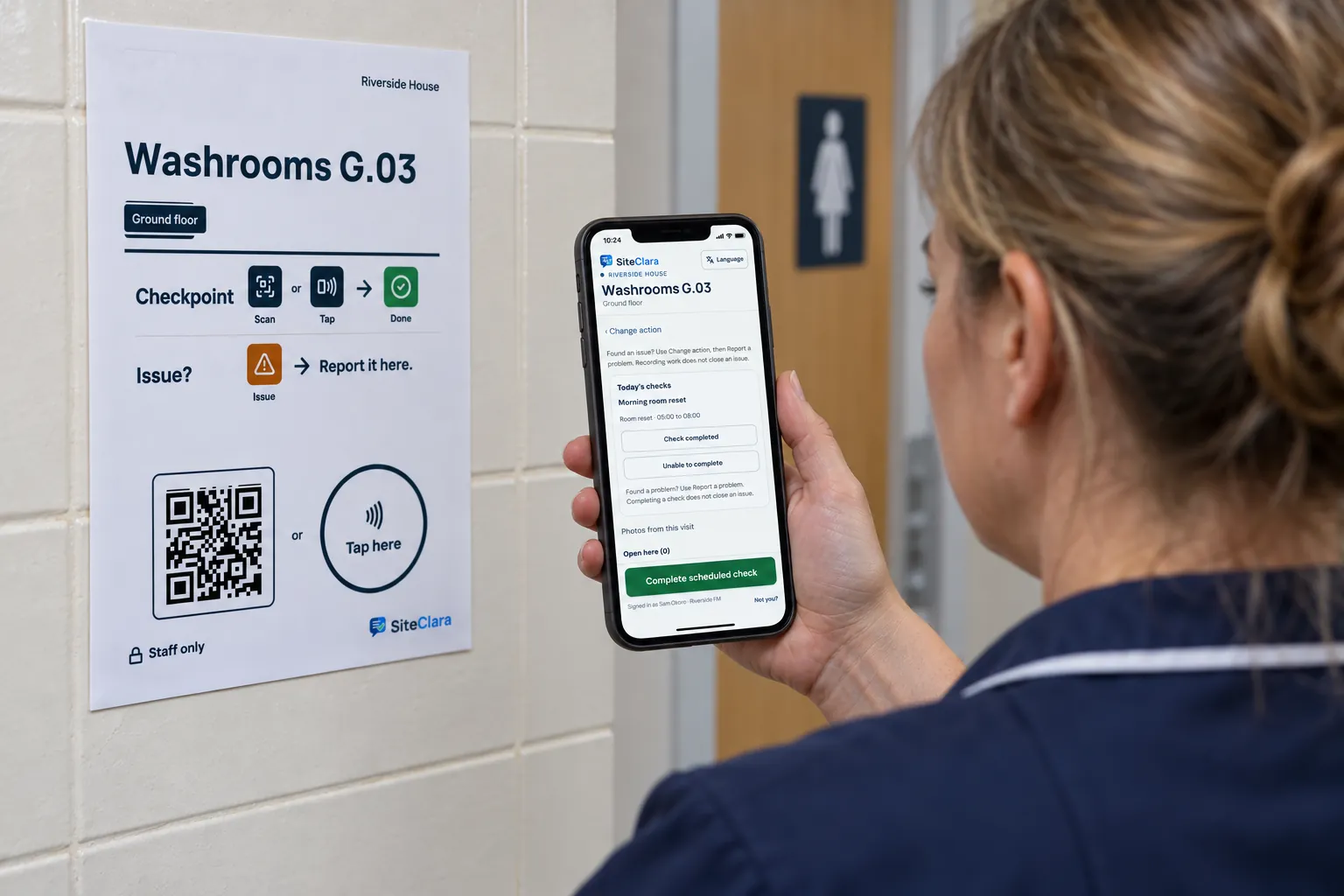
SiteClara replaces the sheet with a tag at the washroom door: a printed QR code, with an NFC tag behind it if you want staff to tap rather than scan. A member of the team scans or taps it on their own phone, with no app to install, and completes the check. The time and the person are recorded as it happens. If something is wrong they record it there, with a photo if it helps, and it goes onto the team's list of jobs until someone closes it.
Scheduled checks are set per location. Staff see what is due and mark it done, or explain what stopped them, and the supervisor sees what was done and what was missed and can record why. At the end of the day the supervisor reviews it, adds a note, and the approved report goes to management or the client at 8am the next morning, showing how many checks were completed and what is still open.
07
Further reading, and a list to take away
The Health and Safety Executive publishes the Approved Code of Practice Workplace health, safety and welfare (L24) free on its website, and a shorter leaflet for employers, Welfare at work (INDG293). The British Institute of Cleaning Science (BICSc) publishes training and standards for cleaning operatives, including washroom cleaning.
Before you print the next batch of sheets, check that:
- the check frequency for each washroom is written in the cleaning specification and follows how the room is used;
- the sheet separates checks from full cleans;
- each entry has the actual time and a name or initials that identify one person;
- there is room to record faults and who they were reported to;
- a supervisor signs it on unannounced visits;
- completed sheets are kept, and you know for how long;
- evenings and weekends are covered on the sheet if the building is used then.
Sources
Every document this guide quotes or links to, in the order it first cites them.
- Workplace (Health, Safety and Welfare) Regulations 1992 legislation.gov.uk
- Regulation 20 legislation.gov.uk
- Regulation 21 legislation.gov.uk
- Workplace health, safety and welfare hse.gov.uk
- Welfare at work hse.gov.uk