Cleaning
Toilet cleaning checklist: what a New Zealand workplace checks, and how it shows it
A toilet cleaning checklist is a record, kept at each set of toilets, of when they were checked or cleaned, who did it, and what they found: floors, pans and urinals, basins, toilet paper, soap and hand drying, bins, and any fault reported.
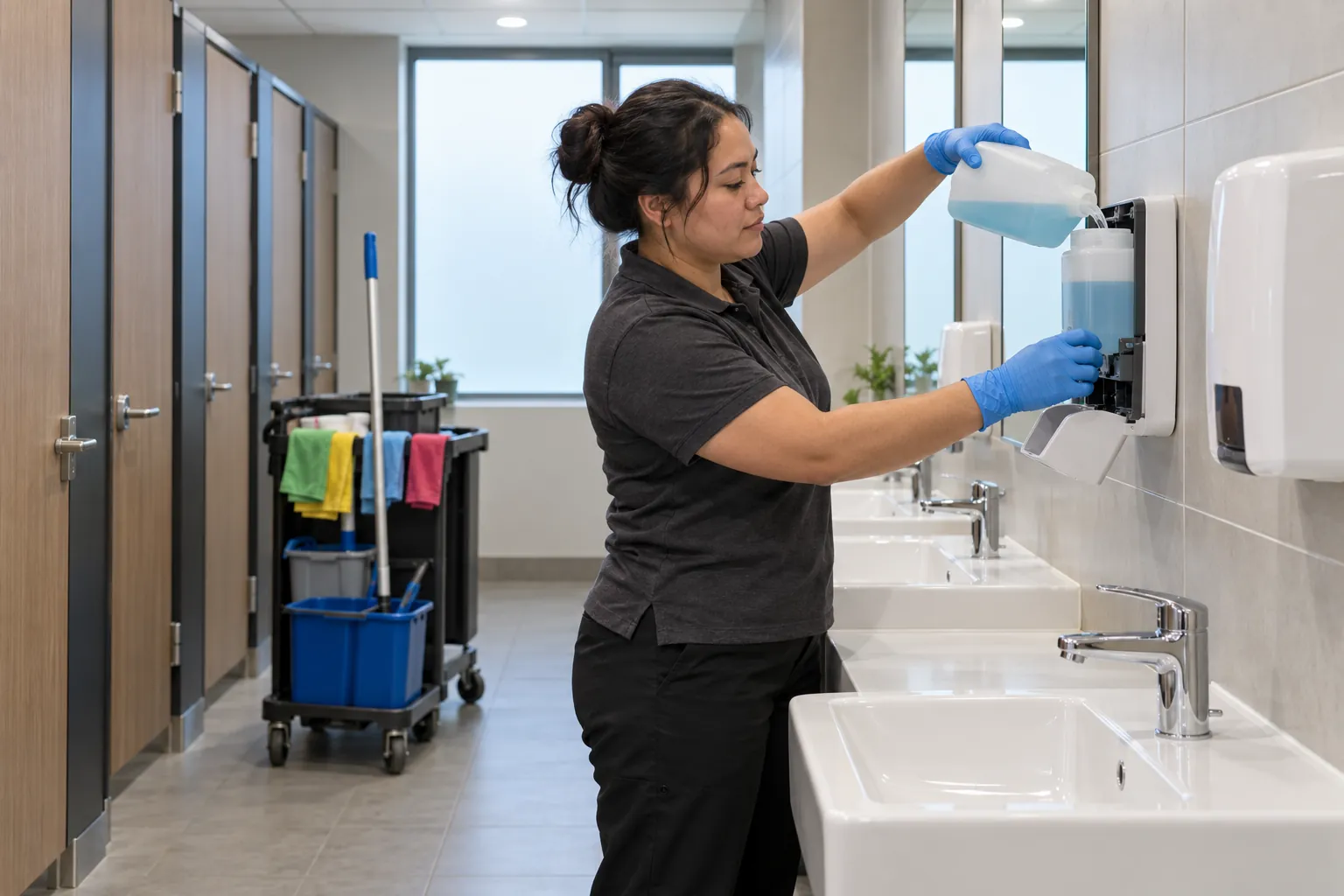
The toilets are the part of a building people judge the cleaning by, and the sheet on the back of the door is often the least believed record in the place. Under the Health and Safety at Work Act 2015, facilities have to be clean, safe, accessible and in good working order, but no law says what the checklist should look like. This guide sets out what a toilet cleaning checklist should cover, how often the toilets should be checked, the difference between a check and a clean, and what makes the record stand up when someone questions it.
01
The duty behind a toilet cleaning checklist
No New Zealand law says you must pin a checklist to the toilet door. What the law requires is the outcome the checklist is meant to show, and it sits with the PCBU (person conducting a business or undertaking) under the Health and Safety at Work Act 2015 (HSWA).
- The primary duty of care (section 36). WorkSafe's Introduction to the Health and Safety at Work Act 2015 special guide lists what it includes, among them a work environment without health and safety risks and "adequate facilities for the welfare at work of workers". Toilets are the first of those facilities.
- The duty of the PCBU who manages or controls a workplace (section 37). The same guide explains that this PCBU must ensure, so far as is reasonably practicable, that the workplace is without health and safety risks, including "the means of entering and exiting the workplace". In a shared building, that is usually the owner or the body corporate for the common toilets, and the tenant for the toilets inside its own tenancy.
The detail is in the Health and Safety at Work (General Risk and Workplace Management) Regulations 2016. WorkSafe's guidelines, General risk and workplace management – part 1, explain regulations 11 and 12. Under regulation 11, facilities include "toilets", "drinking water" and "hand-washing facilities". Under regulation 12, "PCBUs must ensure, so far as is reasonably practicable, that workplace facilities are sufficient in number and maintained to be in good working order, and are clean, safe, and accessible." In working out how, a PCBU takes into account the size, location and nature of the workplace, the number and composition of the workers, the nature of the work and its hazards, and "the views of workers".
WorkSafe's fact sheet Workplace and facilities requirements (August 2018) puts the same duty in one line: "Workplaces must be clean, healthy, safe, accessible and well maintained so work can be carried out without risks to worker health and safety." It also reminds PCBUs that they "must engage with your workers when making decisions about facilities". A toilet that is dirty, out of soap or locked for a week is a facilities problem, not only a cleaning one.
02
What a toilet cleaning checklist should cover
A useful toilet cleaning checklist records two things: that someone looked, and what they found. A column of ticks records only the first. Each entry should carry:
- The date and the actual time of the check, written when it happened, not when it was due.
- Who checked: a name or initials that identify one person, not "cleaners" or the company name.
- Floors: dry, free of paper and litter, with nothing pooling around the pans or urinals.
- Toilets and urinals: clean, flushing, seats secure, cubicle locks working.
- Basins, taps and mirrors: clean, water running, taps not dripping.
- Supplies: toilet paper, soap, and paper towels or a working hand dryer. Hand washing fails first when the soap runs out.
- Bins: general waste and sanitary bins within capacity, and a note if a sanitary or sharps service is due.
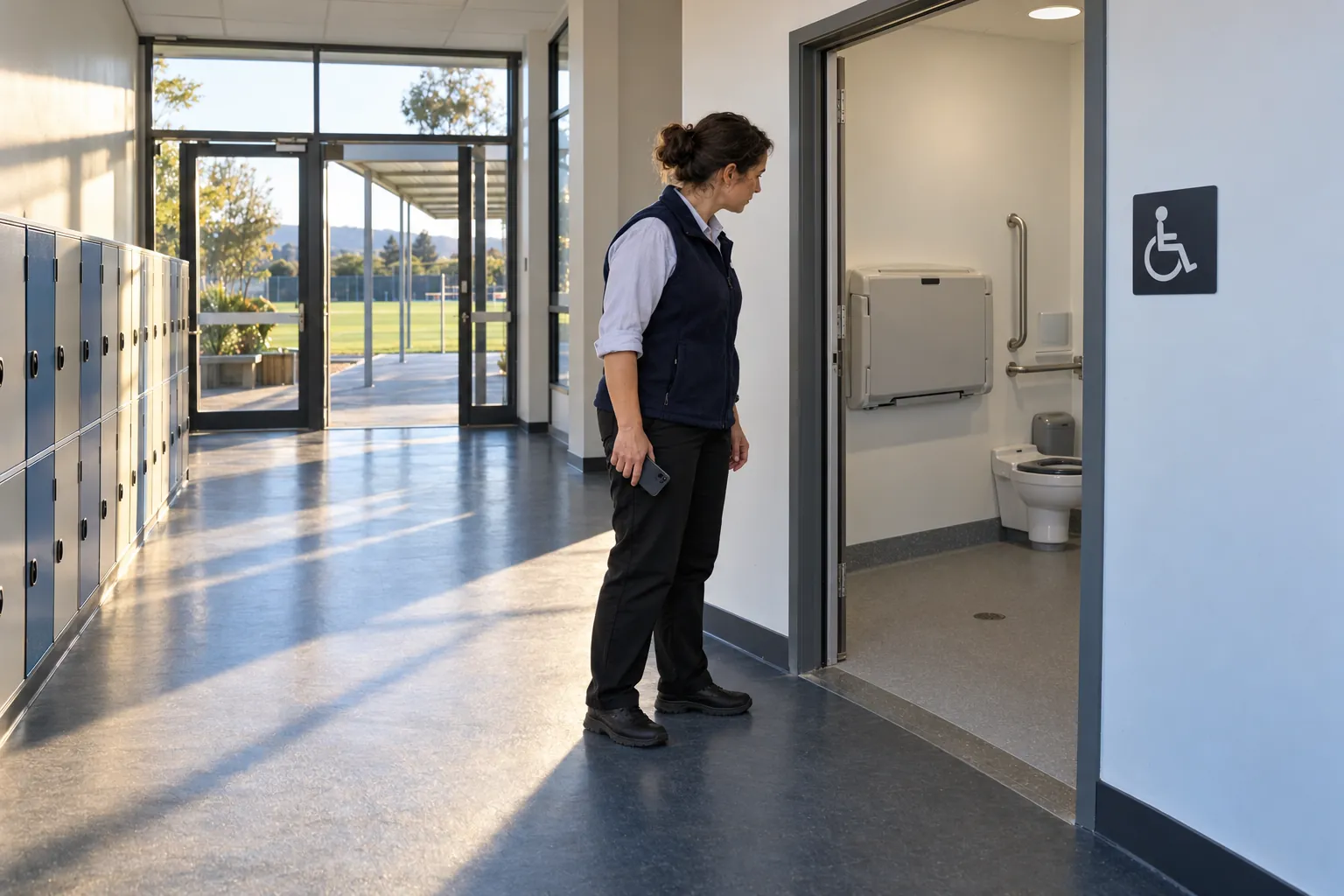
- The accessible toilet and parents' room, where there is one: the same list, plus any emergency call cord hanging free, not tied up out of reach, grab rails secure, the nappy change table clean and working.
- Smell and ventilation: extract fans running, no lingering odour, lights working.
- Faults found: a blocked pan, a leak, a broken lock or hand dryer, and who it was reported to and when.
- Supervisor check: a separate column, completed less often, by someone who did not do the clean.
Keep the list short enough to be done honestly in the time the round allows. A checklist with twenty boxes an hour gets ticked in one stroke at the end of the shift.
Put it where the person checking will see it and fill it in on the spot, and where the people using the toilets can see it too. In a café, shop, school or medical centre, a current, honest record says something about the whole building.
03
How often the toilets should be checked
There is no statutory frequency in New Zealand. Regulation 12 asks for facilities that stay clean, safe and accessible, and how often that takes depends on how many people use them and when. The interval belongs in the cleaning specification or contract, agreed with the people who use the building, not left to the cleaner on the day. As a starting point:
- Every 30 to 60 minutes: shopping centres, transport hubs, stadiums and events, and busy public toilets at peak times.
- Every one to two hours: busy offices, schools during the day, gyms and pools, medical centre waiting areas.
- Two or three times a day: lightly used offices and staff-only toilets.
- At least once a day: every toilet in use, with a full clean.
Follow the pattern of use, not the clock alone. A school's toilets need a look straight after morning tea and lunch; an office's after the morning arrival and after lunch; a sports venue's at half-time and full-time. An hourly check through a quiet afternoon and none through the lunchtime rush produces a tidy checklist and a dirty toilet.
Ask the users. The guidelines name "the views of workers" among the things a PCBU weighs, and the people who use a toilet every day know when it runs out of paper.
04
A check is not a clean
Most arguments about toilet checklists come from recording two different jobs in the same box.
- A check is a short visit: look, pick up litter, wipe what needs wiping, restock, report faults. It takes a few minutes and happens several times a day.
- A clean is the scheduled full clean in the specification: pans, urinals, basins, taps, floors, partitions, dispensers and bins, with the right colour-coded cloths and mops. It happens once or twice a day, often before opening or after close.
- A periodic clean covers descaling, grout, high surfaces, vents and behind fittings. It belongs on a weekly or monthly schedule, not on the door.
Record them separately, or at least mark which was done. A client reading "cleaned 10:00, 11:00, 12:00" assumes three full cleans; the cleaner meant three checks. When the toilet is found dirty at 12:15, that difference becomes a dispute about the contract instead of a conversation about the toilet.
Clean first, then disinfect. Health New Zealand's communicable disease control manual, Appendix 1: Infection, prevention and control guidance, says under its cleaning and disinfection instructions that "Surfaces should be cleaned prior to any disinfecting, as the cleanliness of a surface can impact how well the disinfectant works." For a disinfectant solution, such as household bleach, it says to "Saturate the area to be disinfected with the solution and leave it on the surface for as long as possible, preferably 30 minutes." A quick spray and wipe on a dirty surface does less than the checklist implies. During a tummy bug outbreak in a school, rest home or workplace, follow the public health unit's advice and put the extra cleans on the list so they are recorded.
Know the chemicals. WorkSafe's page on safety data sheets says "It is mandatory to have a current safety data sheet for each of the hazardous substances in your workplace regardless of the quantity you hold", readily accessible to the people who handle them. Toilet cleaners, descalers and bleach are the products most often decanted into unlabelled bottles in the cleaners' cupboard.
A fault found on a check should go somewhere that gets it fixed. Writing "tap leaking" on the sheet records that it was seen; it does not tell the maintenance contractor or the property manager. The checklist should say who the fault was reported to, and when.
05
Who is responsible, and what makes the record credible
In most New Zealand buildings more than one business has a hand in the toilets: the owner or body corporate, the tenant, the contract cleaning company, and the plumber or maintenance contractor who fixes what breaks. Each is a PCBU. WorkSafe's overlapping duties quick guide says businesses "must so far as is reasonably practicable consult, cooperate and coordinate activities with all other businesses they share overlapping duties with." Agreeing who does what is fine, but it "does not mean they no longer hold any responsibility": they "must still monitor the other business to ensure they follow through on what was agreed." For the building or facilities manager, that means reading the cleaning record, not only paying the invoice.
Anyone who has managed a cleaning contract has seen a checklist completed in advance, or every hour of the day ticked in the same pen. Clients know it too, so an unconvincing record can do more harm than none. The things that make it believable are simple:
- It is written at the time. The time recorded is the time of the check, not the time it was due.
- It names a person. Initials that identify one person carry weight; a team name does not.
- It shows exceptions. A record where nothing ever ran out and nothing ever broke is not believed. "Soap refilled" or "blocked pan reported to property manager 2:20pm" shows that someone looked.
- Someone else checks it. A supervisor who walks the toilets unannounced a few times a week and signs the record gives it independence. The cleaning supervisor guide covers what that walk should look for.
- Gaps are explained. A missed check with a reason, such as "closed for plumber" or "covering reception", is more credible than a record with no gaps at all.
- It is kept. Sheets thrown out every Monday cannot answer a complaint about last week. Keep them for as long as your contract or client requires, and know how long that is.
If a client, a tenant or WorkSafe asks, the questions will be when the toilets were last checked, by whom, and what was done about the problem they saw. A good record answers all three. The cleaning log sheet guide covers the same principles for the rest of the building.
06
Where the paper checklist fails, and what SiteClara does about it
Paper works well enough in one building with a steady team. It struggles when a cleaning company looks after many sites, when staff change often, or when a client wants the record and not an assurance. The checklist stays on the door and the client sees it only if they visit. Nobody notices a missed check until the next complaint, and nobody can tell from a tick whether it was written at 10am or at 5pm.
SiteClara replaces the sheet with a tag at the toilet door: a printed QR code, with an optional NFC tag behind it so staff can tap rather than scan. A member of the team scans or taps it with their own phone, with no app to install, sees the checks due there, and marks each one done or explains what stopped them. The time and the named person are recorded as it happens, with a photo when the check asks for one. A problem found on the round, such as a blocked pan or a broken lock, goes onto the team's list of open jobs until someone closes it.
The supervisor sees what was due, what was done and what was missed, and records why a check was missed. Where a building owner and a cleaning company both work at the same site, each sees its own work. Each morning, the approved report for the day before goes to nominated managers or the client, showing what was reported, completed and still open, and how the scheduled checks went.
07
Questions people ask
What should I include on a checklist for toilet cleaning?
Start from what the law asks the toilets to be. WorkSafe's guidelines, General risk and workplace management – part 1, name "toilets" and "hand-washing facilities" among workplace facilities and say PCBUs must ensure, so far as is reasonably practicable, that they are "maintained to be in good working order, and are clean, safe, and accessible." So the checklist covers the pans, urinals, basins and floors, the toilet paper, soap and hand drying, the bins, the accessible toilet, and any fault and who it was reported to, with the date, the actual time and the name of the person who checked.
How often should a toilet be cleaned?
No New Zealand rule sets a number. WorkSafe's guidelines, General risk and workplace management – part 1, ask a PCBU to weigh the "size, location and nature of the workplace", the "number and composition of the workers", the "nature of the work being carried out and the workplace hazards" and "the views of workers". A sensible starting point is a full clean of every toilet in use at least once a day, with busy toilets checked every hour or two, or more often at peak times.
What is the most hygienic way to clean a toilet?
Clean first, then disinfect. Health New Zealand's communicable disease control manual, Appendix 1: Infection, prevention and control guidance, says "Surfaces should be cleaned prior to any disinfecting, as the cleanliness of a surface can impact how well the disinfectant works." It says to follow the manufacturer's instructions on making up and applying a disinfectant solution, such as household bleach, and to leave it on the surface "for as long as possible, preferably 30 minutes".
08
Further reading, and a list to take away
WorkSafe New Zealand publishes the general risk and workplace management guidelines and the workplace and facilities fact sheet cited above, and its guidance on overlapping duties and safety data sheets. MBIE's building.govt.nz holds Building Code clause G1 and its acceptable solution for the number and layout of sanitary fixtures. Health New Zealand's communicable disease control manual covers cleaning and disinfection. For the cleaning around the toilets, see the office cleaning checklist and the commercial cleaning checklist.
Before you print the next batch of checklists, check that:
- the check frequency for each set of toilets is written in the specification and follows how they are used;
- the checklist separates checks from full cleans;
- each entry has the actual time and a name or initials that identify one person;
- the accessible toilet and parents' room are on it, including the call cord;
- there is room to record faults and who they were reported to;
- each cleaning chemical on site has a current safety data sheet;
- a supervisor walks and signs it unannounced;
- evenings, weekends and night shifts are covered if the building is used then;
- completed records are kept, and you know for how long.
Sources
Every document this guide quotes or links to, in the order it first cites them.
- Health and Safety at Work Act 2015 legislation.govt.nz
- Introduction to the Health and Safety at Work Act 2015 special guide worksafe.govt.nz
- General risk and workplace management – part 1 worksafe.govt.nz
- Workplace and facilities requirements worksafe.govt.nz
- G1 Personal hygiene building.govt.nz
- Acceptable solution, G1/AS1 building.govt.nz
- Appendix 1: Infection, prevention and control guidance healthnz.govt.nz
- Safety data sheets worksafe.govt.nz
- Overlapping duties quick guide worksafe.govt.nz
Related guides
 CleaningCleaning log sheet: what it records, who signs it, and what it provesWhat a cleaning log sheet should record in a New Zealand workplace, who fills it in and who checks it, how long to keep it, and what a signature on it can prove.
 CleaningOffice cleaning checklist: what a New Zealand office cleans, how often, and how it shows itAn office cleaning checklist for New Zealand workplaces: the HSWA duty, daily, weekly and periodic tasks, who owns each one, and how to show the work was done.
 CleaningCleaning supervisor duties: what the role involves in New Zealand, and what good looks likeWhat a cleaning supervisor does in New Zealand: the main duties, a typical shift, the HSWA side, managing the team, checking the work and reporting to the client.
 CleaningCommercial cleaning checklist: area by area, for New Zealand workplacesA commercial cleaning checklist for New Zealand offices and shared buildings, area by area, with the HSWA duties behind it, how to use it and how it is checked.