Cleaning
Office cleaning schedule: what to clean, how often, and how to show it was done
An office cleaning schedule lists every cleaning task in an office with how often it is done (daily, weekly, monthly or periodically) and who does it; no law requires one, but it is a practical way for an employer to show the office is kept sufficiently clean, as the Workplace (Health, Safety and Welfare) Regulations 1992 require.
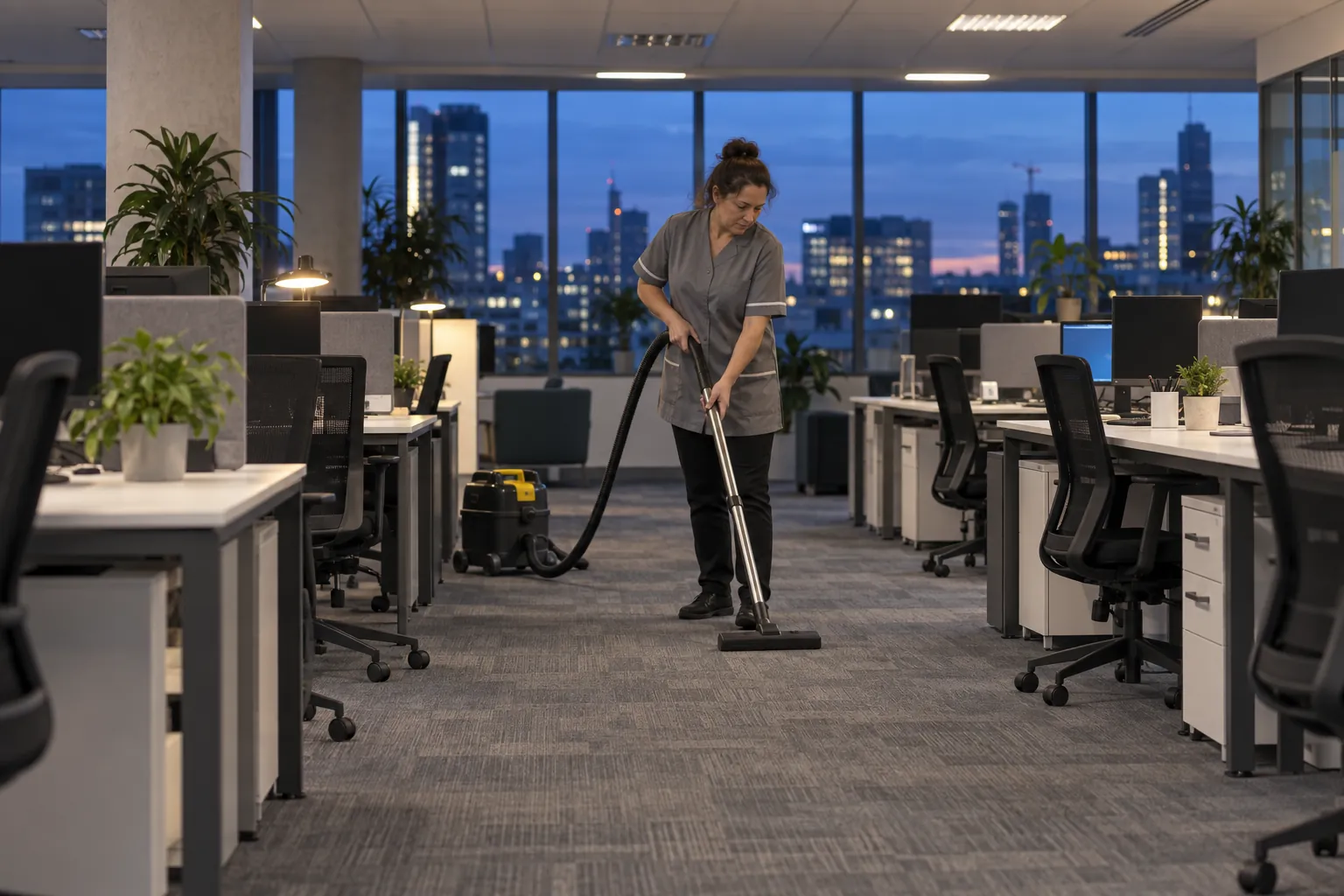
It turns "keep the office clean" into tasks a cleaner can follow and a supervisor can check. This guide sets out what belongs in one, which tasks need daily attention and which can run weekly or monthly, and how to keep a record that shows the schedule is being followed.
01
Why an office needs a cleaning schedule
Every workplace, and its furniture, furnishings and fittings, must be kept sufficiently clean under regulation 9 of the Workplace (Health, Safety and Welfare) Regulations 1992, but no law says an office must have a written cleaning schedule. The law sets the outcome, and a schedule is a practical way for employers and building managers to show they are achieving it. The same regulations, which apply to most workplaces in Great Britain, require waste not to be allowed to accumulate except in suitable receptacles, so far as is reasonably practicable. The same regulations require toilets and washing facilities to be kept in a clean and orderly condition. Northern Ireland has equivalent regulations of its own.
The Health and Safety Executive's Approved Code of Practice, Workplace health, safety and welfare (L24), explains what sufficiently clean means: workplaces cleaned regularly so that dirt and refuse do not build up and spills are cleaned up as soon as possible, with the frequency depending on the nature of the business. Cleaning itself has to be done safely, which brings in the Control of Substances Hazardous to Health Regulations 2002 (COSHH) for the cleaning products used.
The duty sits with the employer, or with whoever controls the premises in a shared or multi-let building. People notice the cleanliness of an office before almost anything else about it, and it affects their comfort and productivity at work. A healthy work environment starts with the basics done every day. When the work is done by cleaning companies under contract, the schedule is usually part of the cleaning specification, and it becomes the list against which the service is judged.
02
What an office cleaning schedule covers
A good office cleaning schedule is a structured cleaning plan, sometimes called a cleaning programme: every area of the office, the tasks in each, how often, and who does them. It is what keeps a clean office consistently clean, rather than clean on the day after a complaint. Most offices need the same areas covered, whatever their size:
- Entrance and reception: floors and matting, glass doors, the reception desk, seating. This is the first impression for employees and visitors, and where dirt is tracked into the rest of the office space.
- Open-plan areas and offices: desks, chairs, bins, floors, and the touch points people share.
- Meeting rooms: tables, chairs, whiteboards, screens and remote controls, cleared and wiped between busy days.
- Kitchens and tea points: worktops, sinks, taps, fridges, microwaves, kettles and coffee machines, and the floor beneath them.
- Washrooms: toilets, urinals, basins, mirrors, dispensers, sanitary bins and floors, with supplies restocked.
- Corridors, stairs and lifts: floors, handrails, lift buttons and door plates.
- Office equipment: phones, keyboards on shared desks, printers and photocopiers, wiped with suitable products.
- Waste and recycling: bins emptied, liners replaced, recycling separated and taken to the store.
- Low-use areas: stores, comms rooms, plant rooms and archive space, on a slower cycle.
Write each task as something a person can do and a supervisor can check: "vacuum carpets in open-plan areas" rather than "floors". A schedule written in general terms is hard to follow and impossible to audit.
03
Daily, weekly, monthly and periodic tasks
Frequencies follow foot traffic and risk, not habit. Some areas in any office require daily attention; others may not require daily attention at all and are better served by weekly or monthly cleaning. A busy office of three hundred people and a small office of eight need the same list of areas but very different frequencies. As a starting point for a typical office:
- Daily cleaning tasks, the core of any daily office cleaning checklist: empty bins and recycling; clean washrooms and restock supplies; clean kitchen worktops, sinks and appliances; wipe high-touch surfaces such as door handles, light switches, lift buttons, handrails and shared phones; vacuum or mop entrance and reception floors; spot-clean glass doors; tidy and wipe meeting room tables.
- Checks through the day: hygiene fails first where people eat and wash, so washrooms and kitchens in a busy office usually need checking and restocking once or more after the morning clean, especially after lunch.
- Weekly tasks, the weekly cleaning that daily visits skip: vacuum all carpeted areas if not done daily; mop hard floors throughout; dust desks that are cleared, window sills, partitions and furniture; clean the inside of the microwave and fridge; wipe office equipment; clean internal glass; dust the office desk surfaces people leave clear.
- Monthly tasks: high-level dusting of vents, light fittings and the tops of cupboards; skirting boards and door frames; descaling taps and showers; clean chair fabric and under desks; defrost and deep clean kitchen fridges.
- Periodic deep cleaning, the deeper cleaning an office deep clean covers: carpet deep cleaning, typically once or twice a year and more often in heavy traffic routes; hard floor stripping and sealing; external windows; washroom deep cleans; upholstery. These belong on a calendar with dates, or an office deep cleaning checklist of their own, because they are never urgent on any given day.
Air quality is part of the same picture. Dust on vents, light fittings and soft furnishings goes back into the air, which is why high-level dusting and extract grilles belong on the schedule even though nobody complains about them.
Desks are a common point of friction. Many cleaning teams clean only cleared desks, so a daily cleaning routine that says "wipe desks" should say whether that means every desk or only clear ones. The same applies to personal items, kitchen cupboards and fridges: decide who is responsible, write it down, and tell staff.
How often should an office be cleaned?
No law sets a fixed frequency: the Workplace Regulations require an office to be kept sufficiently clean, and HSE's Approved Code of Practice Workplace health, safety and welfare (L24) says that means cleaning regularly enough that dirt and refuse do not build up and spills are cleaned up as soon as possible, at a frequency that depends on the nature of the business. For toilets and washrooms, L24 says the frequency and thoroughness of cleaning should be enough to keep them clean, and that responsibility for cleaning should be clearly established, particularly where facilities are shared by more than one workplace. The schedule turns that into daily, weekly, monthly and periodic tasks for each area of the office.
04
Who does what
An office cleaning schedule only works if every task has an owner. In most offices there are four:
- The cleaning team, in-house or from a cleaning company, carries out the scheduled tasks, usually early morning or evening when the office environment is quiet.
- The cleaning supervisor plans routes, checks the work, deals with gaps and absences, and reports to the client.
- The office or facilities manager owns the schedule, agrees changes with the provider, and receives complaints and requests.
- Staff keep their own desks clear enough to be cleaned, clear the kitchen after use, and report spills and problems.
Outsourcing your office cleaning does not move the legal duty. It moves the work. The client still needs to know the schedule is being kept, which is why commercial cleaning services, whether from a large commercial cleaning company or a small local firm, include reporting and supervision in the contract rather than leaving them to trust. Good office cleaning services report without being asked.
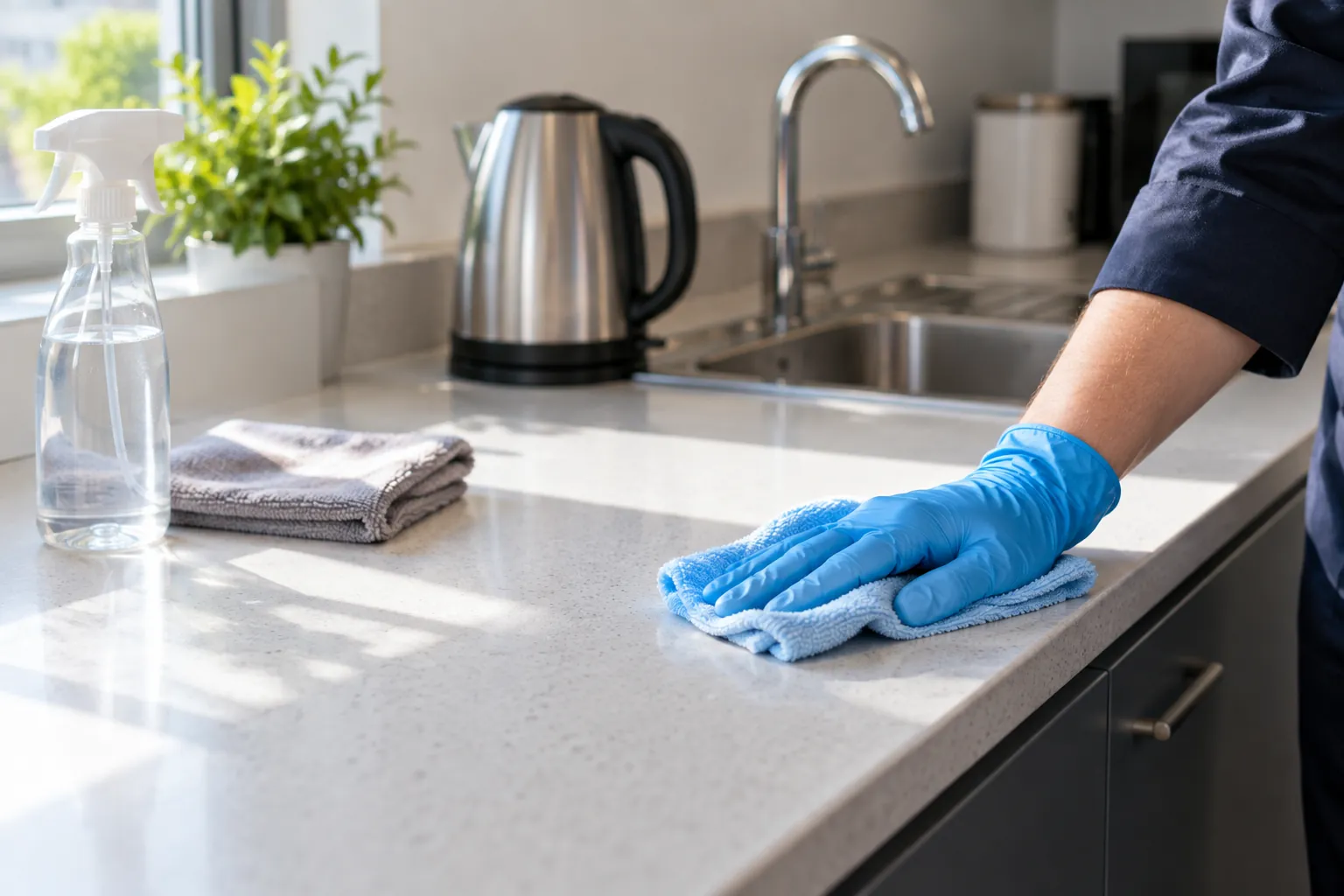
Cleaning products and equipment belong in the schedule too. Say who supplies consumables such as soap, toilet paper and paper towels, which products may be used, and where the COSHH assessments are kept. Colour-coded cloths and mops, with separate colours for washrooms and kitchens, stop cleaning spreading germs from one area to another; colour coding helps maintain hygiene across the workspace, which is most of the work of maintaining a clean office.
05
How to check the schedule is being kept
A schedule is a promise. Whether it is being kept is a separate question, and it needs its own answer. Whether the work is done in-house or by a professional cleaning company, the usual ways to keep your office cleaning routine honest are:
- Walk-rounds: the supervisor or office manager inspects a sample of areas against the schedule, ideally at different times of day and without warning.
- Joint audits: client and provider walk the building together every month or quarter and score it, which settles disagreements before they become disputes.
- Records of work done: sheets or logs showing each task or check was carried out, by whom and when.
- Complaints and requests: logged, with the time they were raised and the time they were put right.
The schedule should be reviewed when the office changes: a new floor, hybrid working that empties the building on Fridays, a kitchen refit, or a complaint that keeps coming back. A schedule written for a full office five days a week wastes money on quiet days, when rooms nobody used are still cleaned daily, and falls short on busy ones. Regular cleaning should match your cleaning needs as they are now, not as they were when the contract was signed.
How long a daily clean should take depends on the size and layout of the office, the floor coverings and the number of washrooms and kitchens. Providers usually work it out from a site survey rather than a rule of thumb, and it is worth asking to see the calculation.
06
Where the schedule record fails, and what SiteClara does about it
A clean, hygienic work environment matters to the people in it, and most offices can show a schedule. Far fewer can show it was followed. The daily tasks happen out of hours, when nobody from the client is in, and the record is usually a sheet in the cleaner's cupboard or a line in the provider's monthly report. A missed kitchen clean comes to light when someone complains about the fridge, not when it was missed.
SiteClara puts a printed QR poster at each location in the schedule, such as the kitchen, each washroom and reception, with an optional NFC tag behind it. The cleaner scans the code or taps the tag on their own phone, with no app to install, and sees the scheduled checks due there. They mark each one done, or explain what stopped them, and can add a photo. If something needs fixing, such as a leaking tap or a broken dispenser, they report it there and it goes onto the team's list of jobs until someone closes it.
The supervisor sees what is due, done and missed, and can record the reason a check was missed. At the end of the day they review the totals and photos, add a note and approve the report, which goes to the office manager or client at 8am the next morning, showing what was completed, what is still open and how scheduled checks went, for example 12 of 12 completed.
07
Further reading, and a list to take away
The Health and Safety Executive publishes the Approved Code of Practice Workplace health, safety and welfare (L24) free on its website, with guidance on COSHH for cleaning products. The British Institute of Cleaning Science (BICSc) publishes training and standards for cleaning operatives, and the Institute of Workplace and Facilities Management (IWFM) publishes guidance for facilities managers on managing cleaning contracts.
Before you agree the next version of your office cleaning schedule, check that:
- every area of the office is listed, including low-use rooms;
- each task is specific enough for a supervisor to check;
- each task has a frequency: daily, through the day, weekly, monthly or periodic;
- periodic deep cleaning tasks have dates on a calendar;
- high-touch surfaces are named, not left to judgement;
- the schedule says who cleans desks, fridges and personal areas;
- consumables, products and colour coding are covered;
- you know how completed work will be recorded and who will see the record;
- there is a date to review the schedule against how the office is actually used.
Sources
Every document this guide quotes or links to, in the order it first cites them.
- Regulation 9 legislation.gov.uk
- Workplace (Health, Safety and Welfare) Regulations 1992 legislation.gov.uk
- Workplace health, safety and welfare hse.gov.uk
- Control of Substances Hazardous to Health Regulations 2002 legislation.gov.uk
Related guides
 CleaningCleaning specification: what it should say, and how to show it is metWhat a cleaning specification should contain, input and output standards, setting frequencies by area, and how to show the specification is being delivered.
 CleaningToilet check sheet: what to record and how to make it credibleWhat a washroom check sheet should record, how often to check, the legal duty behind it, and how to keep a record a client or inspector will believe.
 CleaningCleaning quality control: how to inspect, correct and prove the standardHow quality control works in commercial cleaning: QA versus QC, setting standards, running inspections, corrective action and a record that holds up.
 CleaningCleaning KPIs: what to measure, and how to know the figures are trueThe cleaning KPIs worth measuring, how to define and target them, how to report them, and how a KPI can look green while the building is not clean.