Cleaning
Office cleaning checklist: what to clean, how often, and how to show it was done
An office cleaning checklist is a written list of the cleaning tasks in each area of an office, from reception and workstations to kitchenettes and washrooms, each with a frequency (daily, weekly, monthly or periodic) and a person responsible for it.
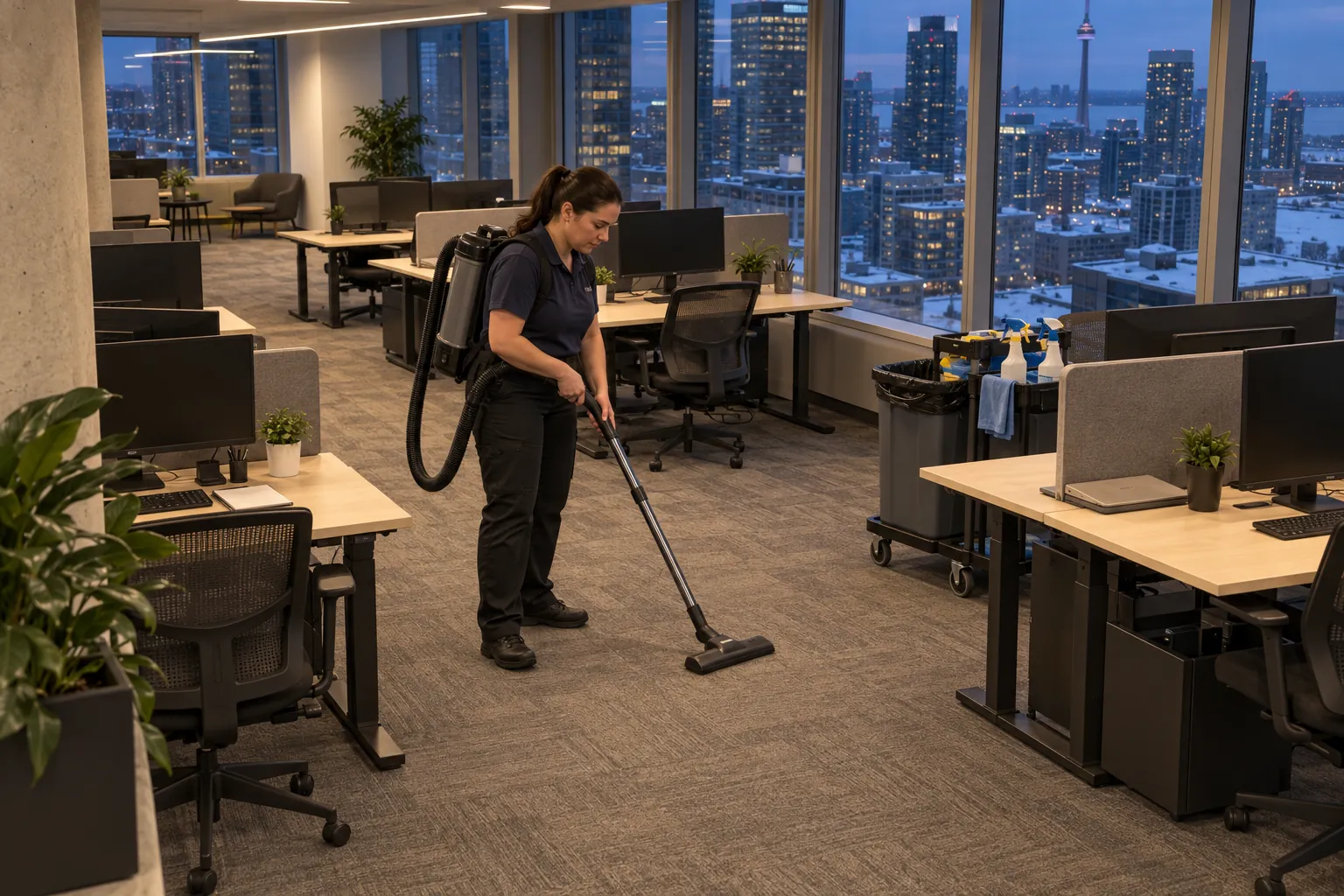
It turns "keep the office clean" into work someone can do and a supervisor can check. This guide sets out the federal and provincial rules that sit behind it, what the checklist should cover, which tasks are daily and which can wait for the weekly, monthly or periodic cycle, and how to keep a record that shows the work is actually being done.
01
What the law asks of an office, federally and provincially
No Canadian law hands you an office cleaning checklist. The law sets outcomes, and the checklist is how an employer, a property manager or a janitorial contractor shows those outcomes are being met. The first question is which law applies, because in Canada most workplace health and safety law is provincial or territorial. The federal rules in Part II of the Canada Labour Code reach federal works, undertakings and businesses, which the Code defines to include banks, aerodromes and air transportation, radio broadcasting, shipping, and railways that cross provincial borders, and also the federal public administration and federal Crown corporations. A facilities team in a Toronto office tower works under Ontario law, even when one of its tenants is a bank whose own employees fall under the federal rules.
For federally regulated offices, Part IX (Sanitation) of the Canada Occupational Health and Safety Regulations (SOR/86-304) is unusually specific about cleaning:
- "Every employer shall maintain each personal service room and food preparation area used by employees in a clean and sanitary condition" (section 9.2). A personal service room is defined as a change room, toilet room, shower room, lunch room, living space or sleeping quarters.
- "All janitorial work that may cause dusty or unsanitary conditions shall be carried out in a manner that will prevent the contamination of the air by dust or other substances injurious to health" (section 9.3).
- "Each personal service room shall be cleaned at least once every day that it is used" (section 9.4).
- Each waste container "shall be emptied at least once every day that it is used" (subsection 9.6(2)).
- In Part II, "All dust, dirt, waste and scrap material in every work place in a building shall be removed as often as is necessary to protect the health and safety of employees" (subsection 2.14(2)).
Provincial rules are usually written as outcomes. In British Columbia, Part 4 of the WorkSafeBC Occupational Health and Safety Regulation requires floors, stairs and walkways to be "kept free of slipping and tripping hazards" (section 4.39), says "Refuse, spills and waste material must not be allowed to accumulate so as to constitute a hazard" (section 4.41), and requires washroom facilities, where provided, to be "kept clean and sanitary" and "provided with the supplies necessary for their use" (subsection 4.85(3)).
Ontario has gone further on washrooms. Under sections 23.1 and 25.3 of the Occupational Health and Safety Act and Ontario Regulation 480/24, as the ministry's guidance Maintaining clean washroom facilities for workers explains, employers must keep the washroom facilities they provide for workers in a clean and sanitary condition, and "must keep, maintain, and make available records of cleaning". The guidance says an employer may meet that requirement by posting the records, either in a conspicuous place in or near the washroom or electronically with workers told where and how to find them, showing "the date and time of the two most recent cleanings". Every other province and territory has general workplace regulations of its own, and it is worth reading yours before you settle the checklist.
02
What an office cleaning checklist covers
A good office cleaning checklist is a structured cleaning program: every area of the office, the tasks in each, how often, and who does them. It is what keeps a clean office consistently clean, rather than clean the week after a complaint. Most offices need the same areas covered, whatever their size:
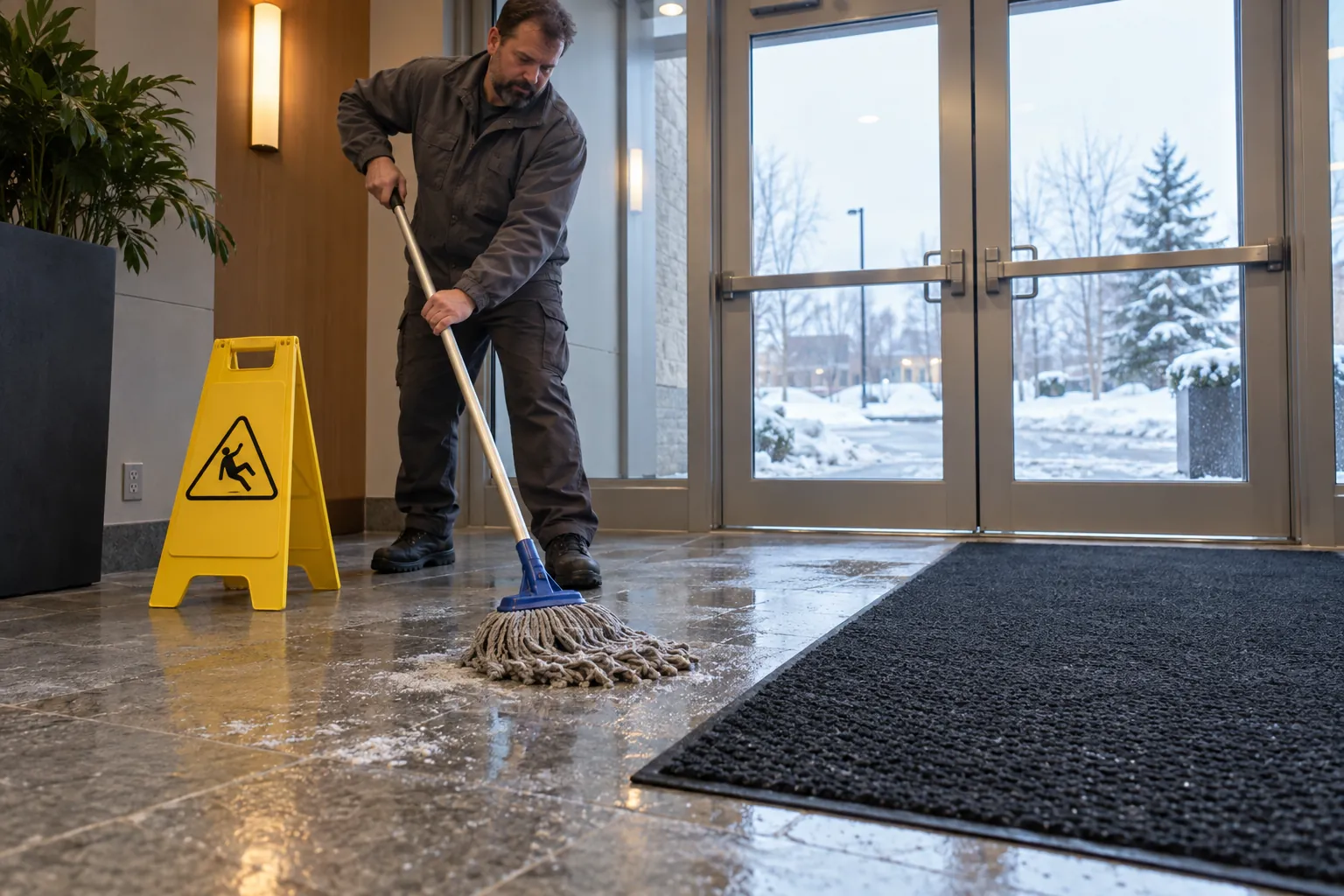
- Entrance, vestibule and reception: floors and walk-off matting, glass doors, the reception desk and seating. From November to April this is where salt, sand and slush come in, and where they are either stopped or tracked through the rest of the floor.
- Open-plan areas and private offices: desks, chairs, bins, floors, and the touch points people share.
- Boardrooms and meeting rooms: tables, chairs, whiteboards, screens and remotes, cleared and wiped between busy days.
- Kitchenettes and lunchrooms: counters, sinks, taps, fridges, microwaves, kettles and coffee machines, tables, and the floor beneath them.
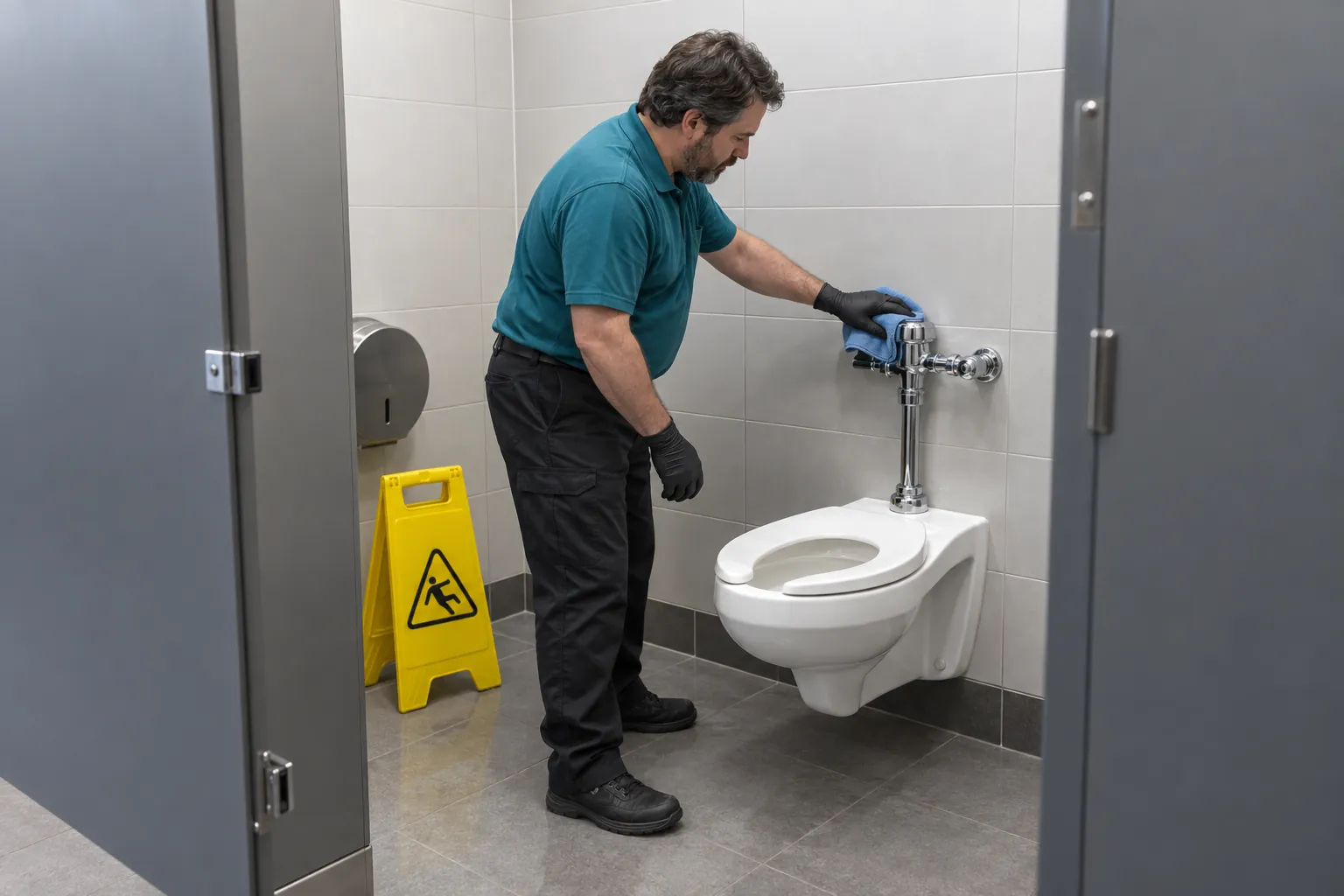
- Washrooms: toilets, urinals, sinks, mirrors, dispensers, sanitary disposal units and floors, with soap, paper towel and toilet tissue restocked. See the washroom cleaning checklist for the detail.
- Corridors, stairwells and elevators: floors, handrails, elevator buttons and door push plates.
- Office equipment: phones, keyboards on shared desks, printers and photocopiers, wiped with suitable products.
- Waste, recycling and organics: bins emptied, liners replaced, streams kept separate the way the building or municipality collects them, and taken to the garbage room.
- Low-use spaces: storage rooms, server and electrical rooms where cleaners are permitted, file rooms and the janitor's closet itself, on a slower cycle.
Write each task as something a person can do and a supervisor can check: "vacuum carpet in the open-plan area on 4" rather than "floors". A checklist written in general terms is hard to follow and impossible to audit, and it is the first thing that goes wrong when a new custodian starts on the route.
03
Daily, weekly, monthly and periodic tasks
Frequencies should follow foot traffic and risk, not habit. A busy office of three hundred people and a small office of eight need the same list of areas but very different frequencies, and a federally regulated office has the daily minimums in Part IX to meet whatever else it decides. The daily routine keeps the office usable, the weekly and monthly tasks stop the buildup of dust and grime, and periodic deep cleaning restores what daily work cannot. As a starting point for a typical office cleaning schedule:
- Daily tasks, the core of any daily office cleaning checklist: empty garbage and recycling; clean washrooms and restock supplies; clean kitchenette counters, sinks and appliance fronts; wipe high-touch surfaces such as door handles, light switches, elevator buttons, handrails and shared phones; vacuum or dust-mop the entrance and reception; spot-clean glass doors; clear and wipe boardroom tables.
- Checks through the day: washrooms and kitchenettes fail first, so in a busy office they usually need a check and restock after the evening or early-morning clean, especially around lunch. A day porter often covers this in larger buildings.
- Weekly tasks: vacuum all carpeted areas if not done daily; wet-mop hard floors throughout; dust cleared desks, window sills, partitions and furniture; clean inside microwaves and fridges; wipe office equipment; clean interior glass.
- Monthly tasks: high-level dusting of vents, diffusers, light fixtures and the tops of cabinets; baseboards and door frames; descaling taps; vacuuming chair fabric and under desks; a deep clean of the kitchenette fridges.
- Periodic work: carpet extraction, typically once or twice a year and more often on heavy traffic routes; stripping and refinishing or burnishing hard floors; exterior windows; washroom deep cleans; upholstery. These belong on a calendar with dates, because they are never urgent on any given day.
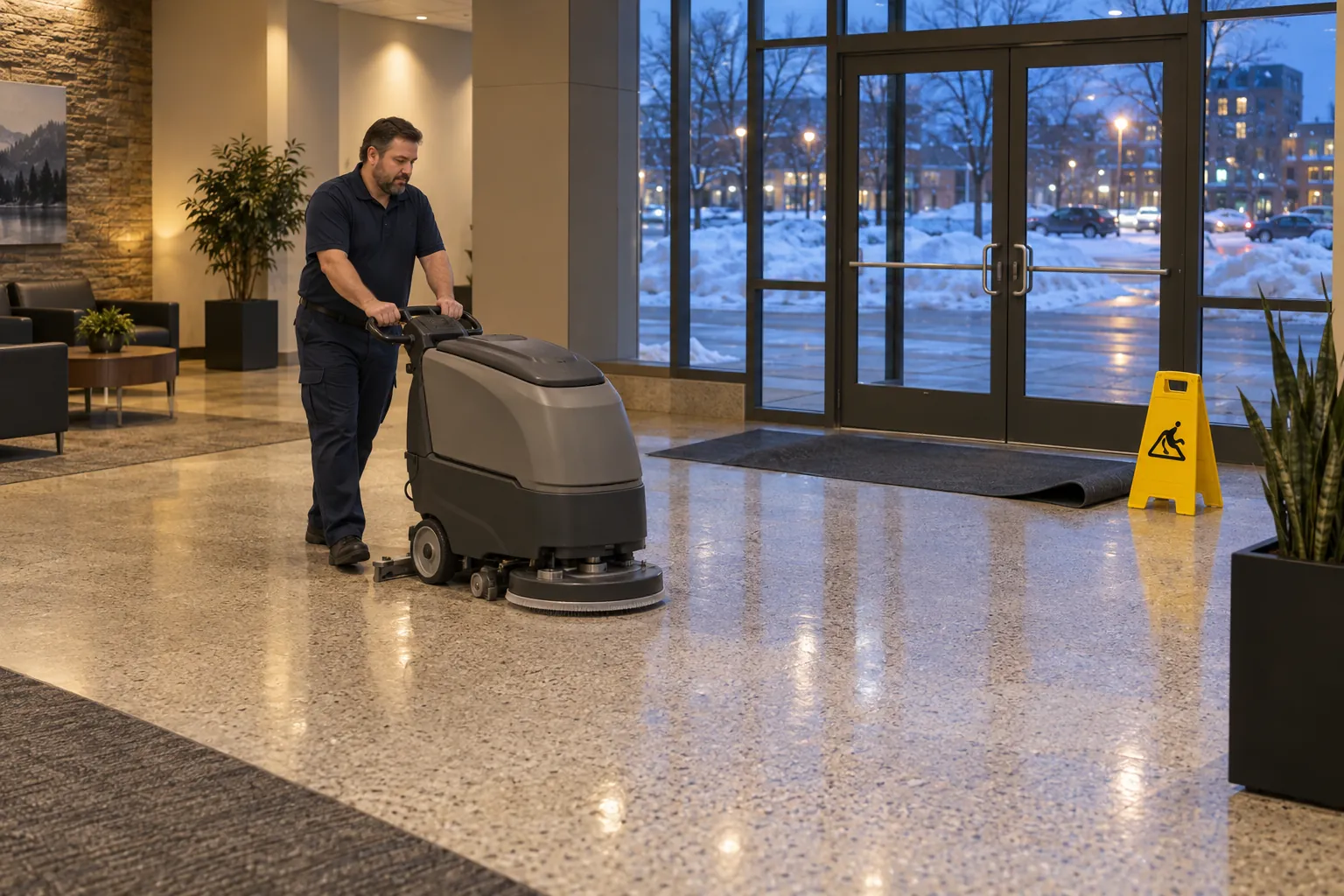
Winter changes the checklist more than anything else. Salt residue dulls hard floors, marks carpet and makes entrances slippery when it mixes with meltwater, so entrance matting, wet-mopping the lobby and auto-scrubbing hard floors often move up a frequency for the season.
Say whether "wipe desks" means every desk or only cleared ones, and who looks after personal items, cupboards and fridges; then tell staff.
04
Who does what
An office cleaning checklist only works if every task has an owner. In most offices there are five:
- The custodians, in-house or from a janitorial contractor or commercial cleaning services company, carry out the tasks, usually in the evening or early morning when the floor is quiet.
- The janitorial supervisor plans routes, checks the work, covers absences, and reports to the client.
- The property manager or facility manager owns the checklist, agrees on changes with the contractor, and receives complaints and requests. In a multi-tenant building the landlord usually cleans the common areas and the lease says who cleans each tenant's premises; the checklist should follow the lease.
- Employees keep their own desks clear enough to be cleaned, tidy the kitchenette after use, and report spills and problems.
- The joint health and safety committee or health and safety representative, where the workplace has one, sees housekeeping on its workplace inspections and is a useful second pair of eyes.
Contracting out the cleaning does not move the legal duty; it moves the work, which is why good janitorial contracts include reporting and supervision.
The products belong on the checklist too. Cleaning chemicals in Canadian workplaces come under WHMIS, which the Canadian Centre for Occupational Health and Safety describes in WHMIS – General as "a comprehensive system for providing health and safety information on hazardous products", built on labels, safety data sheets and worker education and training, and implemented through "coordinated and interlocking" federal, provincial and territorial laws. Say who supplies consumables such as soap, paper towel and tissue, which products may be used, and where the safety data sheets are kept.
Disinfectants are regulated separately, by Health Canada. Its Biocides page explains that surface disinfectants and surface sanitizers have been regulated together as biocides since May 31, 2025, with an eight-digit identification number on the label of an authorized product and a transition period for products authorized before then. For disinfecting, use only an authorized product, with that number or, during the transition, a DIN on its label, and follow all the instructions on the label. Colour-coded cloths and mops, with separate colours for washrooms and kitchenettes, stop cleaning from carrying bacteria and other germs from one area to another.
05
How to check the checklist is being followed
A checklist is a promise. Whether it is being kept is a separate question, and it needs its own answer. The CCOHS guide Workplace Housekeeping – Basic Guide puts it plainly: "The final step to any housekeeping program is inspection. It is the only way to check for deficiencies in the program so that changes can be made." It adds that housekeeping order "is 'maintained' not 'achieved.'" The usual ways to keep an office checklist honest are:
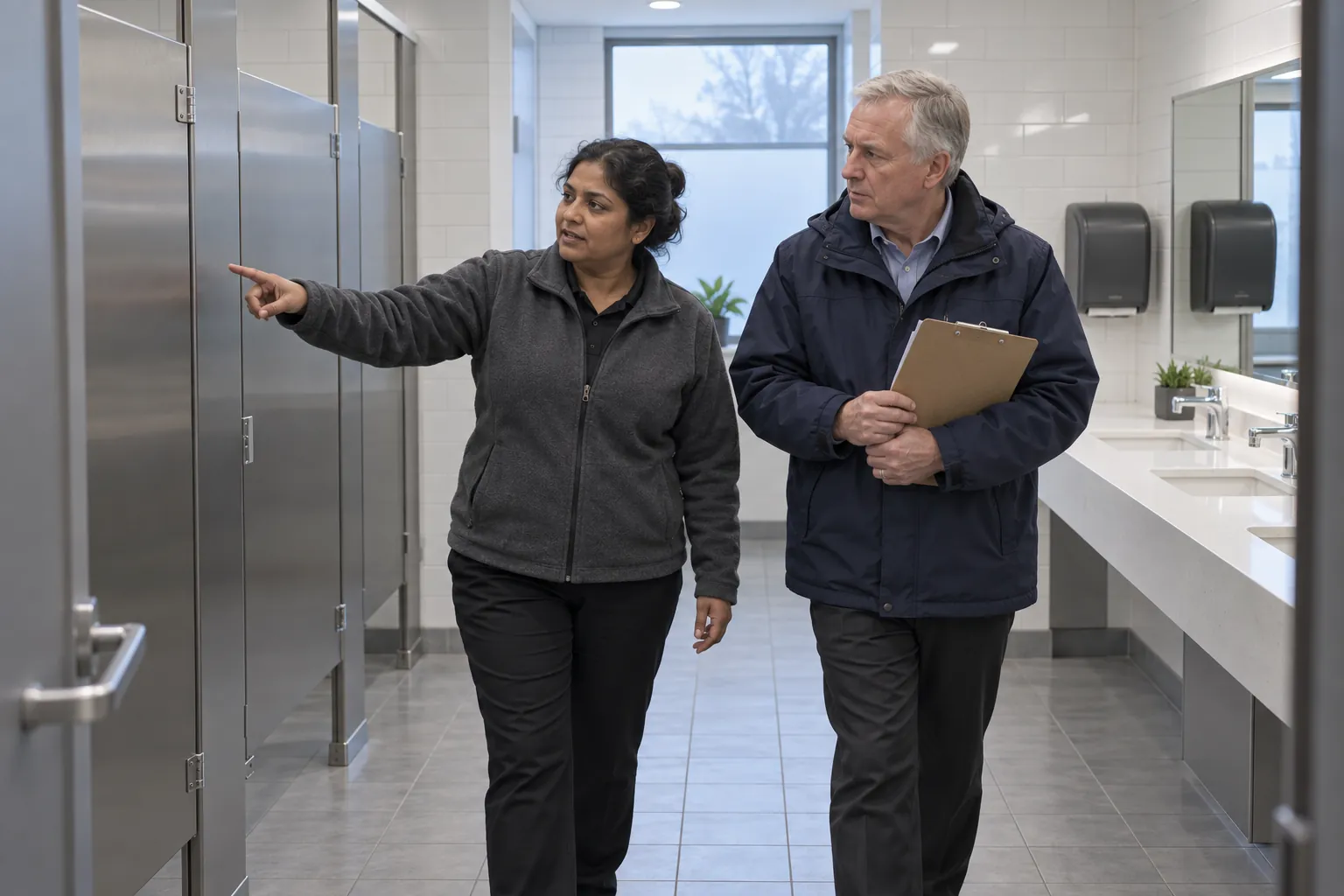
- Walk-throughs: the supervisor or property manager inspects a sample of areas against the checklist, at different times and without warning.
- Joint inspections: client and contractor walk the building together every month or quarter and score it, which settles disagreements before they become disputes (see janitorial quality control).
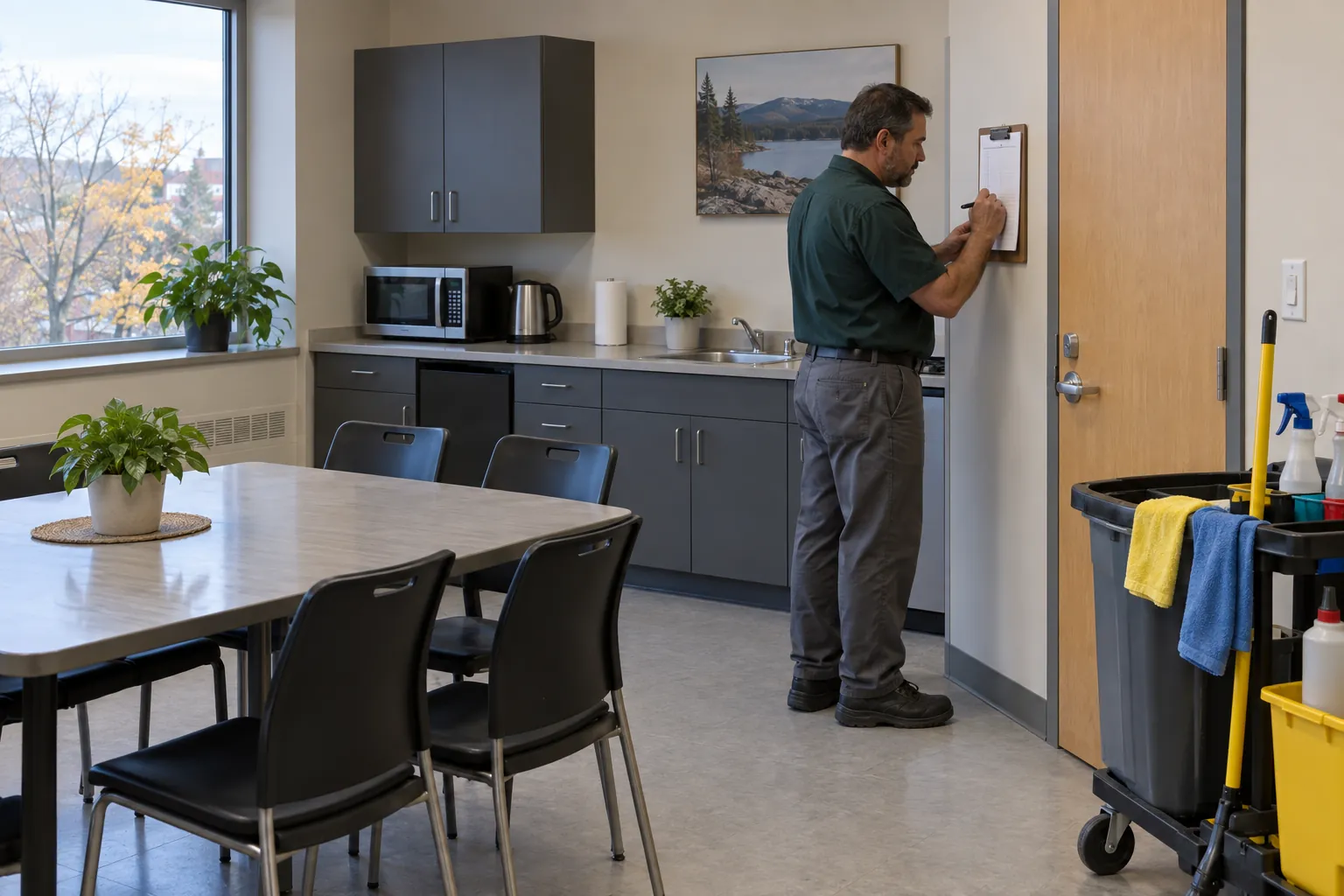
- Records of work done: a cleaning log sheet showing each task or check was carried out, by whom and when.
- Complaints and requests: logged, with the time they were raised and the time they were put right.
Good evidence has the same features whatever the building:
- each task recorded when it was done, with the date, time and person, not initialled in a batch at the end of the week;
- a missed task recorded as missed, with the reason, such as a locked boardroom or a floor still occupied;
- problems found during cleaning, such as a leaking tap, a broken dispenser or a lifted floor tile, reported and closed with a date;
- in Ontario, records of washroom cleaning kept and made available to workers, for example by posting the date and time of the two most recent cleanings, as the provincial guidance suggests.
Review the checklist when the office changes: a new floor, hybrid work that empties the building on Mondays and Fridays, a kitchenette renovation, the first week of winter, or a complaint that keeps coming back. A checklist written for a full office five days a week wastes money on quiet days and falls short on busy ones.
06
Where the checklist record fails, and what SiteClara does about it
Most offices can show a checklist. Far fewer can show it was followed. The daily tasks happen after hours, when nobody from the client is in, and the record is a sheet on the janitor's closet door, initialled in advance or at the end of the shift, or a line in the contractor's monthly report. A missed kitchenette clean comes to light when someone complains about the fridge, not on the night it was missed, and a leaking tap mentioned to whoever was passing is forgotten by morning.
SiteClara records the work at the place it happens. A printed QR poster, with an optional NFC tag behind it, sits at each location on the checklist, such as the kitchenette, each washroom and reception. The custodian scans the code or taps the tag on their own phone, with no app to install, and sees the scheduled checks due there. They mark each one done, or say what stopped them, such as a boardroom still in use, and add a photo when the check asks for one. The time and the named person are recorded as it happens. If something needs fixing, such as a leaking tap or a broken dispenser, they report it there and it goes onto the team's list of jobs until someone closes it.
The janitorial supervisor sees what is due, done and missed, and records the reason a check was missed. At the end of the day they review the totals and photos, add a note and approve the report, which goes to nominated contacts at the property manager or client at 8 a.m. the next morning, showing what was reported, what was completed, what is still open, and how scheduled checks went, for example 12 of 12 completed.
07
Questions people ask
What should I include on my office cleaning list?
Every area of the office, the tasks in each, how often they are done and who does them. The CCOHS Workplace Housekeeping – Basic Guide lists the elements a housekeeping program should cover, including dust and dirt removal, employee facilities, floors and walls, light fixtures, aisles and stairways, spill control, waste disposal and storage, and says that "cleaning and organizing must be done regularly, not just at the end of the shift." In an office that means washrooms, kitchenettes, bins and high-touch surfaces every day, with dusting, floor care and deep cleaning on weekly, monthly and periodic cycles.
What does office cleaning usually include?
Keeping work areas tidy, floors safe and waste removed. The CCOHS Workplace Housekeeping – Basic Guide says housekeeping "includes keeping work areas neat and orderly, maintaining halls and floors free of slip and trip hazards, and removing of waste materials." In a federally regulated office, Part IX of the Canada Occupational Health and Safety Regulations sets daily minimums: "Each personal service room shall be cleaned at least once every day that it is used" (section 9.4), which takes in washrooms and lunch rooms, and waste containers are emptied at least once every day they are used.
08
Further reading, and a checklist to take away
Start with the rules for your jurisdiction: Part IX of the Canada Occupational Health and Safety Regulations for federally regulated offices, and otherwise your province's or territory's general workplace regulation, with Ontario's guidance on washroom records and British Columbia's Part 4 as examples. CCOHS publishes its housekeeping and WHMIS guidance free, and Health Canada's biocides page covers disinfectants.
Before you agree on the next version of your office cleaning checklist, check that:
- you know whether the office is federally or provincially regulated, and which rules apply;
- each task is specific enough for a supervisor to check;
- each task has a frequency: daily, through the day, weekly, monthly or periodic;
- federally regulated personal service rooms are cleaned at least once every day they are used;
- there is a winter version for entrances and hard floors;
- periodic work such as carpet extraction and floor refinishing has dates on a calendar;
- the checklist says who cleans desks, fridges and personal areas;
- products, safety data sheets, disinfectant numbers and colour coding are covered;
- Ontario washroom cleaning records are kept and made available to workers, for example by posting the two most recent cleanings;
- you know how completed work will be recorded, and who will see the record;
- there is a date to review the checklist against how the office is actually used.
Sources
Every document this guide quotes or links to, in the order it first cites them.
- Canada Labour Code laws-lois.justice.gc.ca
- Canada Occupational Health and Safety Regulations laws-lois.justice.gc.ca
- WorkSafeBC Occupational Health and Safety Regulation worksafebc.com
- Occupational Health and Safety Act ontario.ca
- Ontario Regulation 480/24 ontario.ca
- Maintaining clean washroom facilities for workers ontario.ca
- WHMIS – General ccohs.ca
- Biocides canada.ca
- Workplace Housekeeping – Basic Guide ccohs.ca
Related guides
 CleaningWashroom cleaning checklist: what to check, how often, and Ontario's new cleaning recordsWhat a workplace washroom cleaning checklist should cover, how often to clean, and Ontario's posted cleaning records required since January 1, 2026.
 CleaningCommercial cleaning checklist: area by area, for Canadian buildingsA commercial cleaning checklist for Canadian offices and shared buildings, area by area, with the provincial rules behind it, what to record and how to check it.
 CleaningCleaning log sheet: what to record, who fills it in, and what the law in Canada asks forWhat a cleaning log sheet should record, where Canadian workplaces use one, what Ontario and federal rules require, and how to keep a log people believe.
 CleaningJanitorial quality control: how to inspect, correct and show the standard heldHow janitorial quality control works in Canada: QA versus QC, inspections, sampling, corrective action, CIMS, the PIDAC audit model and records that hold up.