Cleaning
Retail cleaning checklist: sales floors, fitting rooms, spills and winter entrances
A retail cleaning checklist is the list of cleaning tasks a store completes by area and by time of day, before opening, during business hours and after close, with the person responsible for each task and a record that it was done.
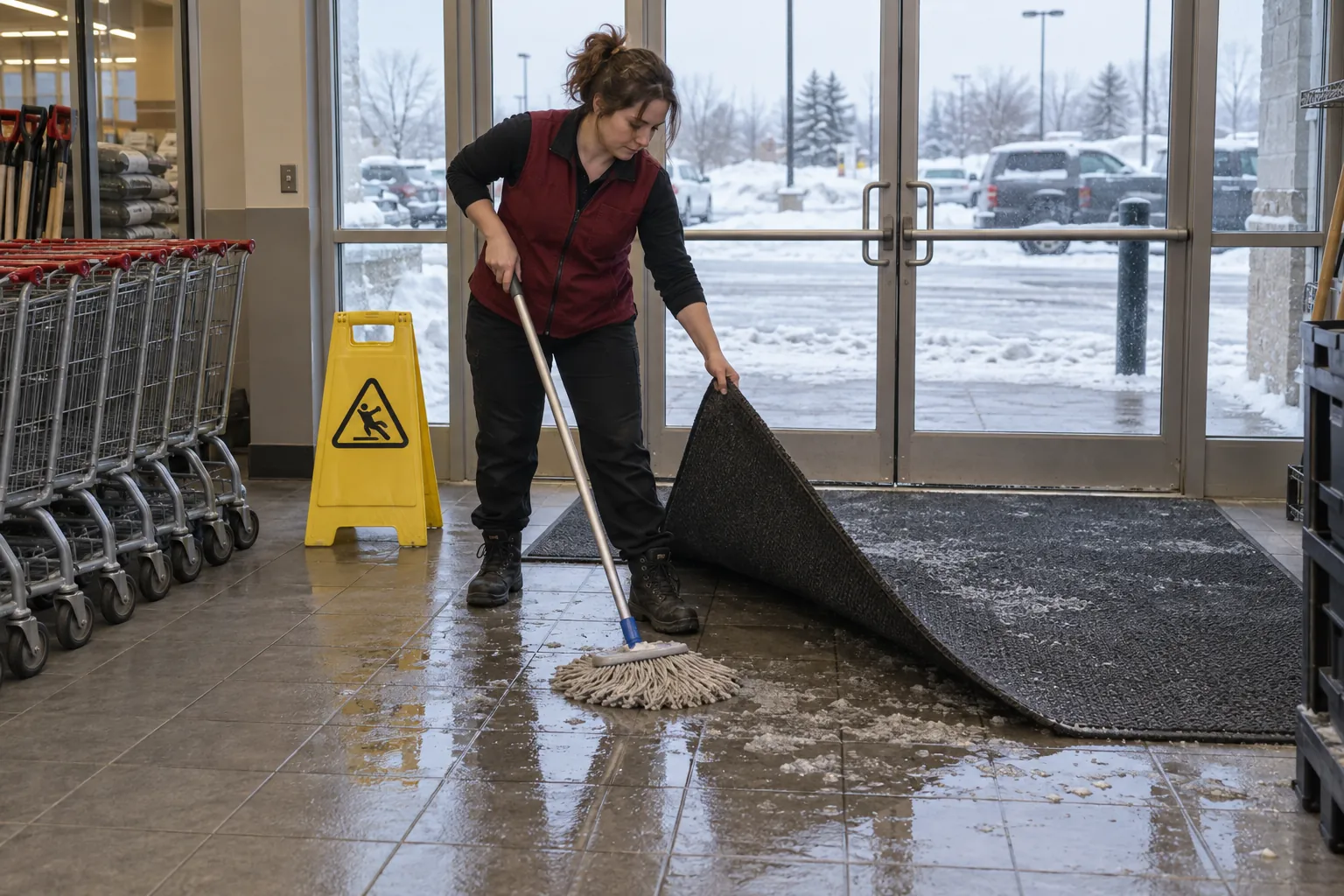
A store is cleaned around its customers. The floor is walked all day, spills happen during business hours, and a vestibule full of slush and road salt in January is a slip hazard as much as a cleaning job. This guide sets out a retail store cleaning checklist for Canadian stores, with the provincial rules behind it and the areas shoppers never see.
01
The rules behind a retail cleaning checklist in Canada
No Canadian law asks for a retail cleaning checklist by name. The law asks for a store kept safe for the people who work in it and reasonably safe for the people who shop in it; the checklist is how a store shows the cleaning behind those duties is done.
Two sets of rules apply, both mostly provincial. Workplace health and safety law protects staff; occupiers' liability law, or in Quebec the Civil Code, sets the duty owed to customers. Federal workplace law covers only federally regulated work such as banks and airports, so a store is almost always under its province's rules.
Ontario. The Occupational Health and Safety Act defines an industrial establishment as "an office building, factory, arena, shop or office", so every store is one. Section 11 of Regulation 851 (Industrial Establishments) requires a floor or other surface used by any worker to be "kept free of" obstructions, hazards and "accumulations of refuse, snow or ice", and not to have "any finish or protective material used on it that is likely to make the surface slippery". Section 123 applies the Fire Code's rules on "keeping egress doorways, public corridors and exits free from obstruction", which in a store usually means cardboard, cages and floor machines parked in the wrong place.
Ontario has also made the staff washroom a matter of record. Since 1 July 2025, section 25.3 of the Act has required an employer to keep washroom facilities provided for workers "in a clean and sanitary condition", and since 1 January 2026, under O. Reg. 480/24, to "keep, maintain and make available records of the cleaning". The regulation says the record must include "the date and time of the two most recent cleanings", posted in a conspicuous place in or near the washroom, or posted electronically with direction to workers on where and how to find it. The rule is about washroom facilities the employer provides for workers; where staff use a customer washroom, treat it as in scope, since the ministry says inspectors decide based on the facts they find in the workplace.
British Columbia. Part 4 of the WorkSafeBC Occupational Health and Safety Regulation requires floors, ramps, stairs and walkways to be "maintained in a state of good repair and kept free of slipping and tripping hazards" (section 4.39) and says "refuse, spills and waste material must not be allowed to accumulate so as to constitute a hazard" (section 4.41).
Alberta. Section 185 of the Occupational Health and Safety Code, Part 12 says an employer "must ensure that a work site is kept clean and free from materials or equipment that could cause workers to slip or trip". The other provinces and territories have their own versions, and Quebec's are administered by the CNESST; check yours.
Customers. Ontario's Occupiers' Liability Act says an occupier "owes a duty to take such care as in all the circumstances of the case is reasonable to see that persons entering on the premises ... are reasonably safe while on the premises", whether the danger comes from "the condition of the premises or by an activity carried on on the premises". British Columbia's Occupiers Liability Act is similar and adds "conduct of third parties on the premises". When a customer slips, the question is usually whether the store had a reasonable system for inspecting and cleaning the floor, and whether it can show the system was followed at the time.
Cleaning chemicals fall under WHMIS, the Workplace Hazardous Materials Information System, with its labels, safety data sheets and worker training. A grocery store, bakery, deli counter or in-store café is a food premise: in Ontario, O. Reg. 493/17 (Food Premises) requires every room where food is handled, sold or displayed to be "maintained in a sanitary condition so as to prevent contamination of food", and garbage and wastes to be removed "as often as is necessary to maintain the premise in a sanitary condition". The local public health unit inspects it.
02
What a retail cleaning checklist covers
Shoppers judge a retail store by its cleanliness, and a sticky floor or a washroom with no soap shapes their experience before they reach the checkout. From a unit in a strip plaza to a big-box store with a garden centre, a retail cleaning checklist usually covers the same areas. Divide it by area so each part can be completed and checked on its own:
- Entrance and vestibule: doors and glass, entrance matting, the vestibule floor, cart corrals and basket stands. Through the winter in most of Canada, this is where snow, slush and salt come in.
- Sales floor: aisles and walkways, shelves, fixtures and merchandise displays, mirrors and glass, and the floor under and around them.
- Checkouts: counters, card terminals and PIN pads, belts, self-checkouts and queue barriers.
- Fitting rooms (change rooms): floors, mirrors, benches, hooks, and curtains or doors.
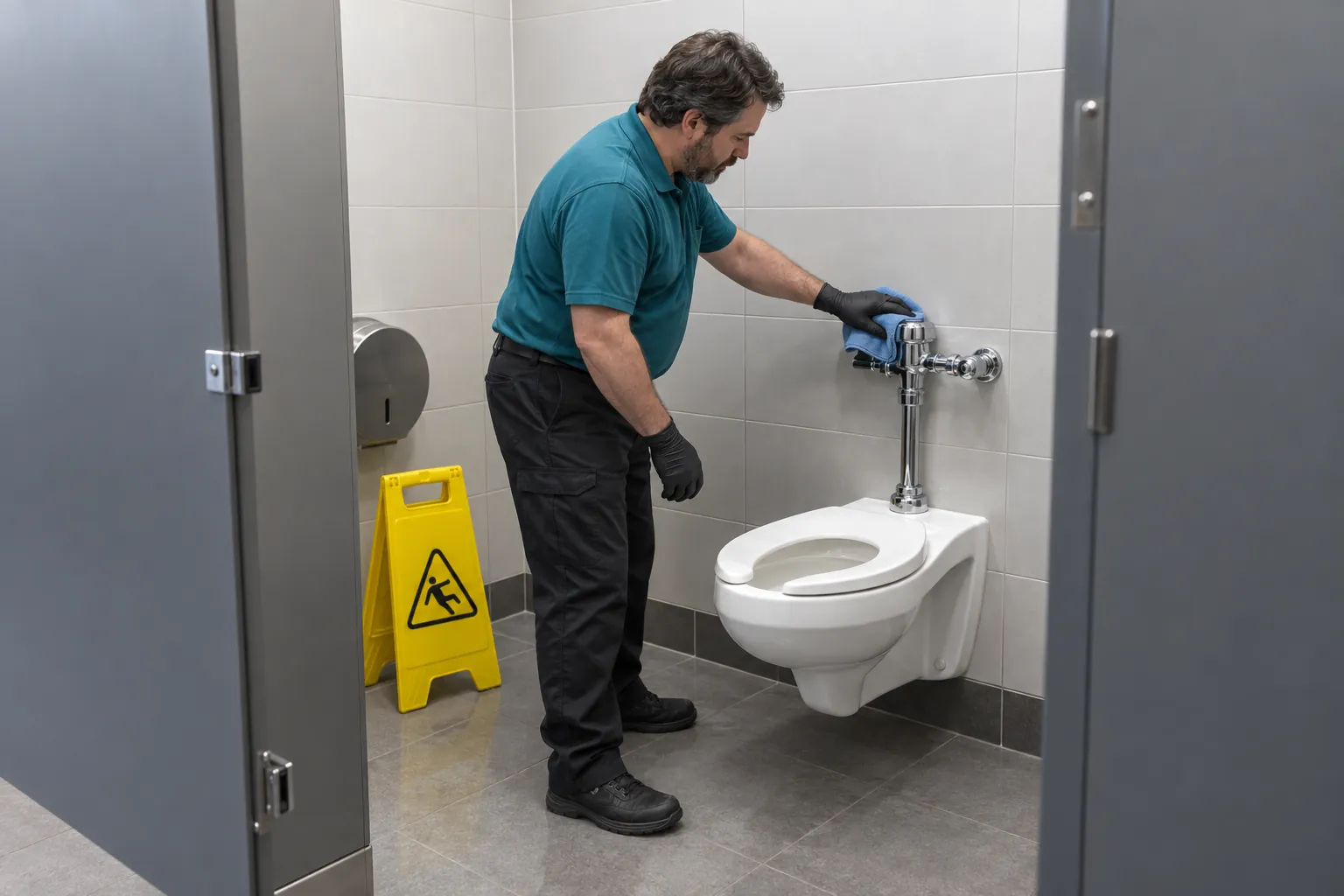
- Washrooms (restrooms): toilets, sinks, dispensers and floors in customer and staff washrooms, with soap, paper towels and toilet paper restocked, and any universal washroom with a change table. In Ontario, the posted cleaning record for any washroom workers use. See the washroom cleaning checklist.
- Food areas: bakery, deli, hot food, café seating, and the coolers and freezers, each on its own schedule.
- Staff areas: lunchroom, kitchenette, lockers and staff washrooms.
- Stockroom and receiving: floors, the racking where inventory is kept, the cardboard baler and compactor area, the janitor's closet and chemical storage, and the rear fire exits.
- Outside: the storefront exterior, glass at street level, the sidewalk in front of the door and, where the store controls it, the parking lot and cart shelters. See the snow removal log for winter.
Divide it by time of day too. One list for the whole store, initialled once, says little about the vestibule at 11 a.m. on a slushy Saturday.
03
The retail cleaning checklist: before opening, during business hours, after close
The store cleaning checklist works best as a daily list in three parts, with weekly and periodic work listed separately. Adjust it to the store's hours, floors and peak times.
Before opening
- Walk the sales floor for spills, debris and trip hazards left overnight or by a delivery.
- Clean entrance doors, door handles and glass at hand height; check entrance mats are lying flat, dry enough and in place.
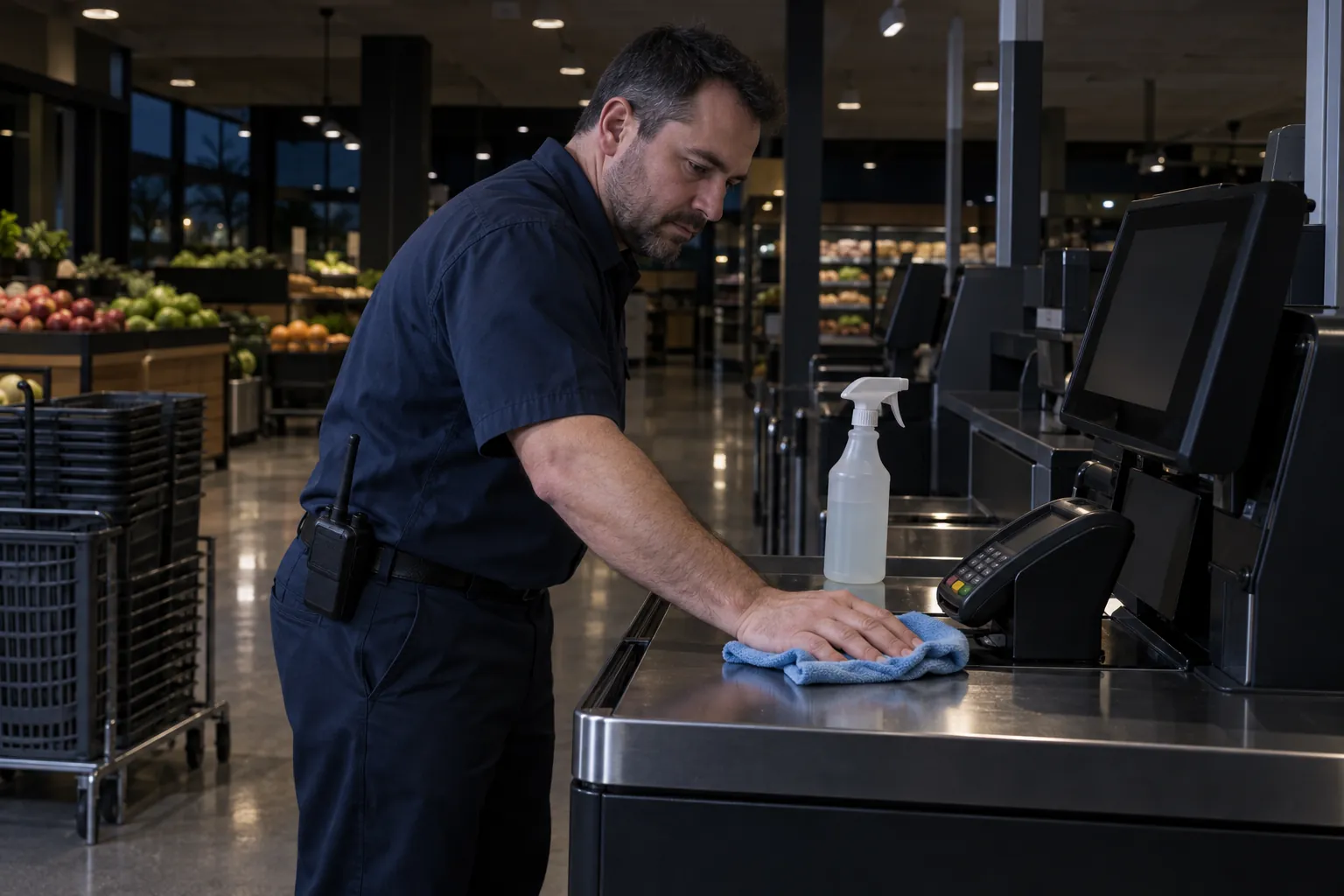
- Wipe checkout counters, PIN pads, belts, baskets and shopping cart handles.
- Check washrooms and fitting rooms are clean and stocked.
- Check that fire exits, egress doorways and corridors are clear of stock, cardboard and equipment.
During business hours
- Floor walks at set intervals for spills, broken product and packaging.
- In wet or snowy weather, check and dry the vestibule, swap saturated mats and deal with salt residue before it spreads onto hard floors.
- Clear fitting rooms between customers at busy times: remove hangers, tags and pins, and check for anything left behind.
- Check washrooms on a schedule that matches traffic, recording each cleaning.
- Wipe checkout touch points and other high-touch surfaces at intervals and empty garbage and recycling before bins overflow.
After close
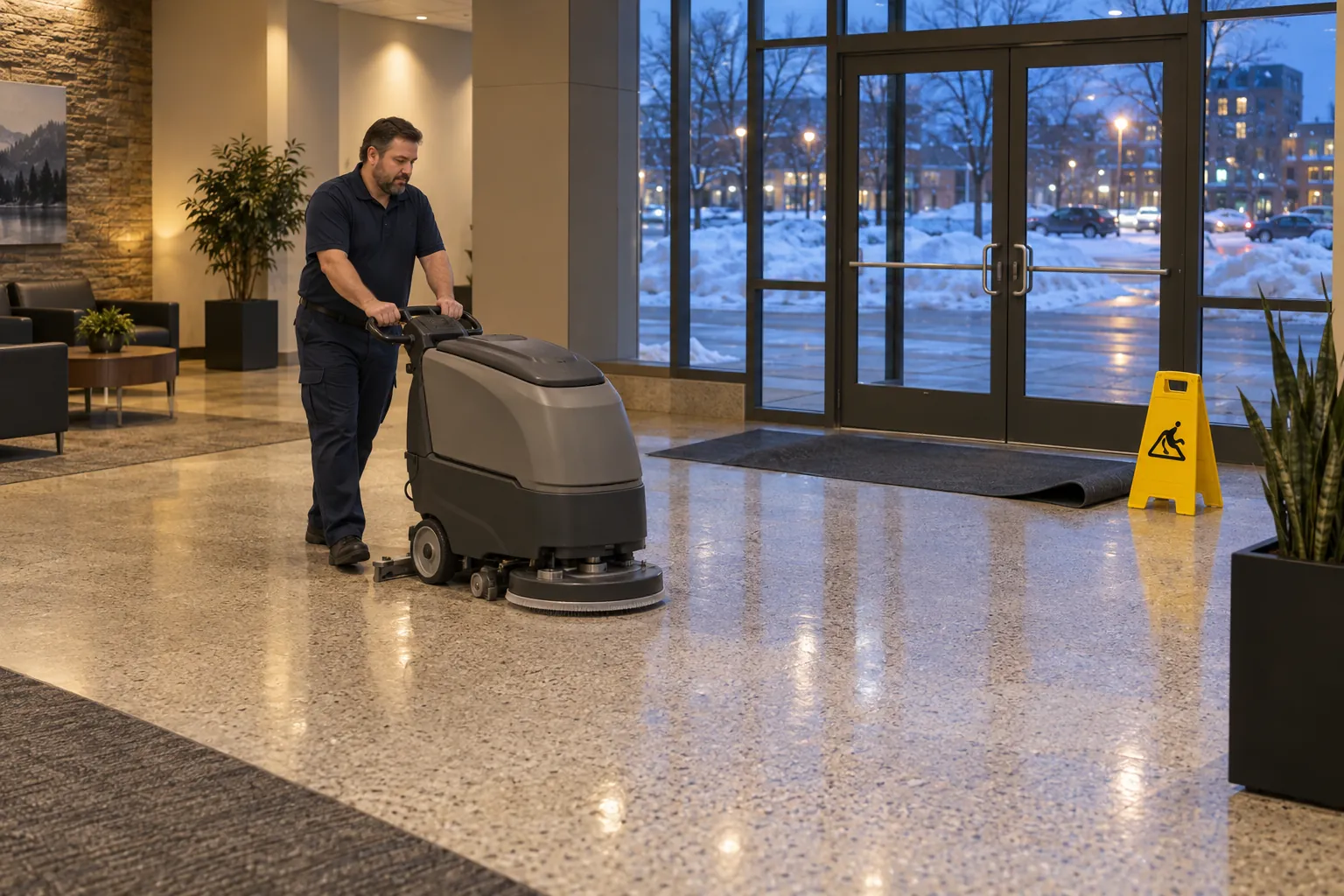
- Sweep and damp mop hard floors, or clean them with an auto scrubber; vacuum carpeted areas.
- Dust shelves, fixtures and products on display, and remove fingerprints and streaks from glass, mirrors and display cases.
- Clean fitting rooms fully, including mirrors, benches and floors.
- Full clean of customer and staff washrooms and the staff lunchroom.
- Empty all garbage, recycling and organics; take cardboard to the baler or collection point.
- Clean food areas to their own schedule.
Weekly and periodic
- Dust high shelving, sign frames and air vents, using a step ladder or extension pole for anything out of reach; clean under fixtures and along baseboards.
- Floor care: scrub and recoat, or strip and refinish, resilient floors on the schedule the floor needs, and extract carpets and treat stains.
- Clean the stockroom floor and racking, the janitor's closet and the garbage area.
- At the end of winter, deep clean entrances and floors to remove salt residue.
04
Slips, spills and winter entrances
In a store, floor cleaning is hazard control as much as appearance. CCOHS, the Canadian Centre for Occupational Health and Safety, calls good housekeeping "the first and the most important (fundamental) level of preventing falls" in its guidance on preventing slips, trips and falls, and lists "cleaning all spills immediately" and "marking spills and wet areas" among the basics. A few principles make most of the difference:
- Find spills quickly. Floor walks at a set interval, more often at peak times and in grocery aisles, and a rule that any staff member who sees a spill stays with it or guards it until it is dealt with.
- Clean them properly. Stop people walking through, clean up with the right method, and dry the floor. A mop that leaves a wet film only moves the hazard. CCOHS's workplace housekeeping guide notes that "absorbent materials are useful for wiping up greasy, oily or other liquid spills"; many stores keep a spill kit at each end of the store.
- Use wet floor signs honestly. Put the sign out while the floor is wet and take it away when the floor is dry. A sign that stands in the same place all day is ignored and shows no system at all.
- Control the entrance. Enough matting to take water and salt off footwear before it reaches hard floors, mats that lie flat, and more frequent checks during a storm. CCOHS advises "securing (tacking, taping, etc.) mats, rugs and carpets that do not lay flat".
- Match cleaning to the floor. The wrong product, or too much of it, leaves residue that makes a floor slippery when wet, which is exactly what Ontario's Regulation 851 rules out. Follow the floor manufacturer's guidance and use a neutralizer where salt residue builds up.
- Record it. Note floor walks and spills dealt with, with the time. If a customer says they slipped at 2:10 p.m., a record of the floor walk at 2:00 and the spill cleaned at 2:05 is what the insurer will ask for.
Winter adds a legal edge in Ontario. Section 6.1 of the Occupiers' Liability Act says no action for personal injury caused by snow or ice may be brought against an occupier or its snow removal contractor unless, within 60 days, written notice of the claim, "including the date, time and location of the occurrence", has been served. The notice will name a date, time and place, and the store will want to know what its record shows for that time.
Cooler and freezer aisles, produce, entrances and receiving doors are the usual problem spots.
05
Who does it, and how the checklist is checked
In many stores, employees handle daily cleaning during business hours and a professional janitorial company, or an in-house night crew, does the main clean after close. Large stores often have a porter on the floor all day. Whatever the split, the checklist should say who owns each task, because a spill that everyone assumes is someone else's job is the one that ends in a claim.
- Store managers set the standard, walk the store at opening and before peak periods, and deal with complaints.
- Store staff handle floor walks, spills, fitting rooms and tidying during business hours, and report what they cannot deal with.
- The janitorial crew, in-house or contracted, does the scheduled cleans, the overnight work and periodic floor care, to a janitorial scope of work.
- Maintenance and specialists handle lighting, fixtures, windows at height and floor restoration.
- The landlord or property manager, in a mall or plaza, handles the common areas, the parking lot and usually the snow contract.
CCOHS's workplace housekeeping guide puts it plainly: housekeeping "is an ongoing operation: it is not a one-time or hit-and-miss cleanup done occasionally", and responsibility should be assigned for cleanup during the shift, day-to-day cleanup, waste disposal and "inspection to ensure cleanup is complete". The same guide warns that stored materials "should not obstruct aisles, stairs, exits, fire equipment" or first aid stations, which is worth a line on any stockroom checklist.
For a chain, one checklist across every store gives consistent standards. Audit it like any standard: a scheduled walk by a district manager, a scored inspection against the specification (see the janitorial quality control guide), and a look at complaints and slip incidents by store.
Plan for peaks. Boxing Day, back-to-school and the first big snowfall bring more shoppers and more spills. Increase floor walks and washroom checks, and put the change on the checklist so it actually happens.
06
Where the retail cleaning record fails, and what SiteClara does about it
Most stores can show a cleaning schedule. Far fewer can show that the floor walk at 2:00 p.m. happened, who did it and what they found. The sheet in the back room is initialled at the end of the shift, the janitorial company's overnight work sits in its own binder, and the washroom record on the back of the door can be filled in ahead of time as easily as after.
SiteClara places a printed QR poster at each area on the checklist, such as the vestibule, each bank of fitting rooms, the washrooms and the stockroom, with an optional NFC tag behind it. Staff scan the code or tap the tag on their own phone, with no app to install, see the scheduled checks due there, and mark them done or explain what stopped them. The time and the person are recorded as it happens, with a photo when one is asked for. A problem found, such as a leaking cooler, stays on the team's list of jobs until closed.
The store manager sees what is due, done and missed, and can record why a check was missed. The store and its janitorial company can work from the same site. Each morning at 8 a.m. the approved report for the day before goes to nominated contacts, showing what was reported, completed and still open.
Where a statute prescribes a record, such as Ontario's washroom cleaning record under O. Reg. 480/24, SiteClara is the team's working record, not the statutory one; the employer still posts a record that meets the regulation.
07
Questions people ask
What is a standard cleaning checklist?
A standard cleaning checklist lists each cleaning task by area and by how often it is done, names who does it and has a way to check it was done. The CCOHS Workplace Housekeeping – Basic Guide says a good housekeeping program assigns responsibility for "clean up during the shift", "day-to-day cleanup", "waste disposal", "removal of unused materials" and "inspection to ensure cleanup is complete", and calls inspection "the final step to any housekeeping program".
What are the 7 rules of housekeeping?
There is no official list of seven rules. The CCOHS Workplace Housekeeping – Basic Guide sets out the elements of an effective housekeeping program instead: maintenance, dust and dirt removal, employee facilities, surfaces, light fixtures, aisles and stairways, spill control, tools and equipment, waste disposal and storage. It also says washroom facilities "require cleaning once or more each shift" and that spills should be cleaned up immediately.
08
Further reading, and a list to take away
CCOHS publishes plain-language guidance on preventing slips, trips and falls, workplace housekeeping and WHMIS. In Ontario, the province's page on maintaining clean washroom facilities for workers explains how inspectors look at "visible soiling" and "the frequency of cleaning, based on the type of washroom facility and the level of use". Your provincial regulator publishes the rules for your province, and the local public health unit answers for food areas.
Before the first snowfall, check that your retail cleaning checklist:
- is divided by area and by before opening, during business hours and after close;
- sets floor walks at an interval that matches traffic, with more during storms and at peaks;
- has a spill procedure that ends with a dry floor and the sign taken away;
- covers the vestibule and mats in winter, including salt residue;
- in Ontario, keeps a posted or electronic record of the two most recent cleanings of each washroom workers use;
- keeps exits, egress doorways and corridors clear of cardboard and equipment;
- names who owns each task, between store staff, the janitorial crew and the landlord;
- records floor walks and spills with the time;
- is audited by someone other than the person who completes it.
Sources
Every document this guide quotes or links to, in the order it first cites them.
- Occupational Health and Safety Act ontario.ca
- Regulation 851 (Industrial Establishments) ontario.ca
- O. Reg. 480/24 ontario.ca
- WorkSafeBC Occupational Health and Safety Regulation worksafebc.com
- Occupational Health and Safety Code, Part 12 search-ohs-laws.alberta.ca
- Occupiers' Liability Act ontario.ca
- Occupiers Liability Act bclaws.gov.bc.ca
- WHMIS ccohs.ca
- O. Reg. 493/17 (Food Premises) ontario.ca
- Preventing slips, trips and falls ccohs.ca
- Workplace housekeeping guide ccohs.ca
- Maintaining clean washroom facilities for workers ontario.ca
Related guides
 CleaningCommercial cleaning checklist: area by area, for Canadian buildingsA commercial cleaning checklist for Canadian offices and shared buildings, area by area, with the provincial rules behind it, what to record and how to check it.
 CleaningWashroom cleaning checklist: what to check, how often, and Ontario's new cleaning recordsWhat a workplace washroom cleaning checklist should cover, how often to clean, and Ontario's posted cleaning records required since January 1, 2026.
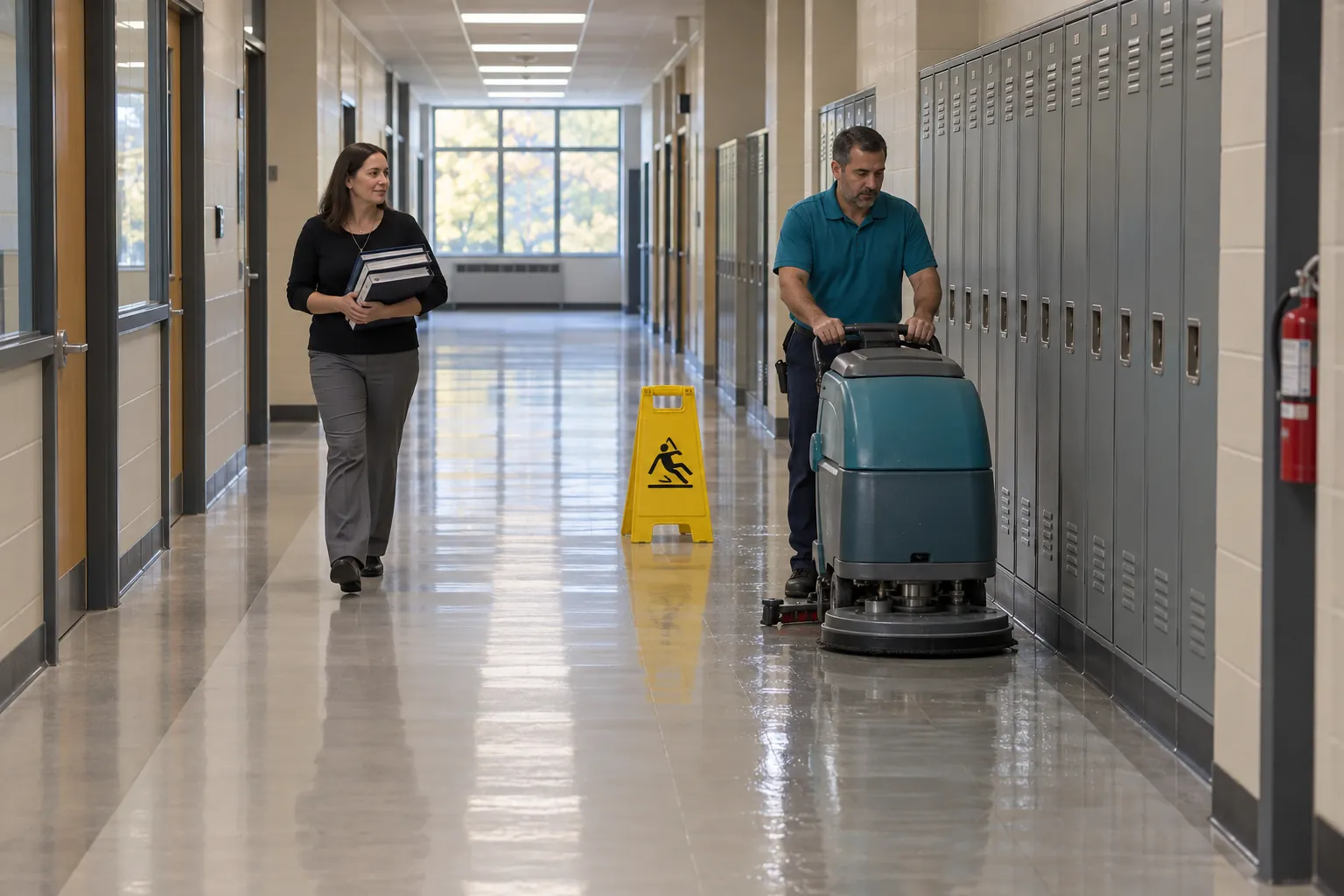 Premises and facilities managementSlips, trips and falls: how to prevent them in the buildings you look afterPreventing slips, trips and falls in Canadian buildings: Ontario, BC, Alberta and federal rules, wet floors, winter entrances, stairs and the records to keep.
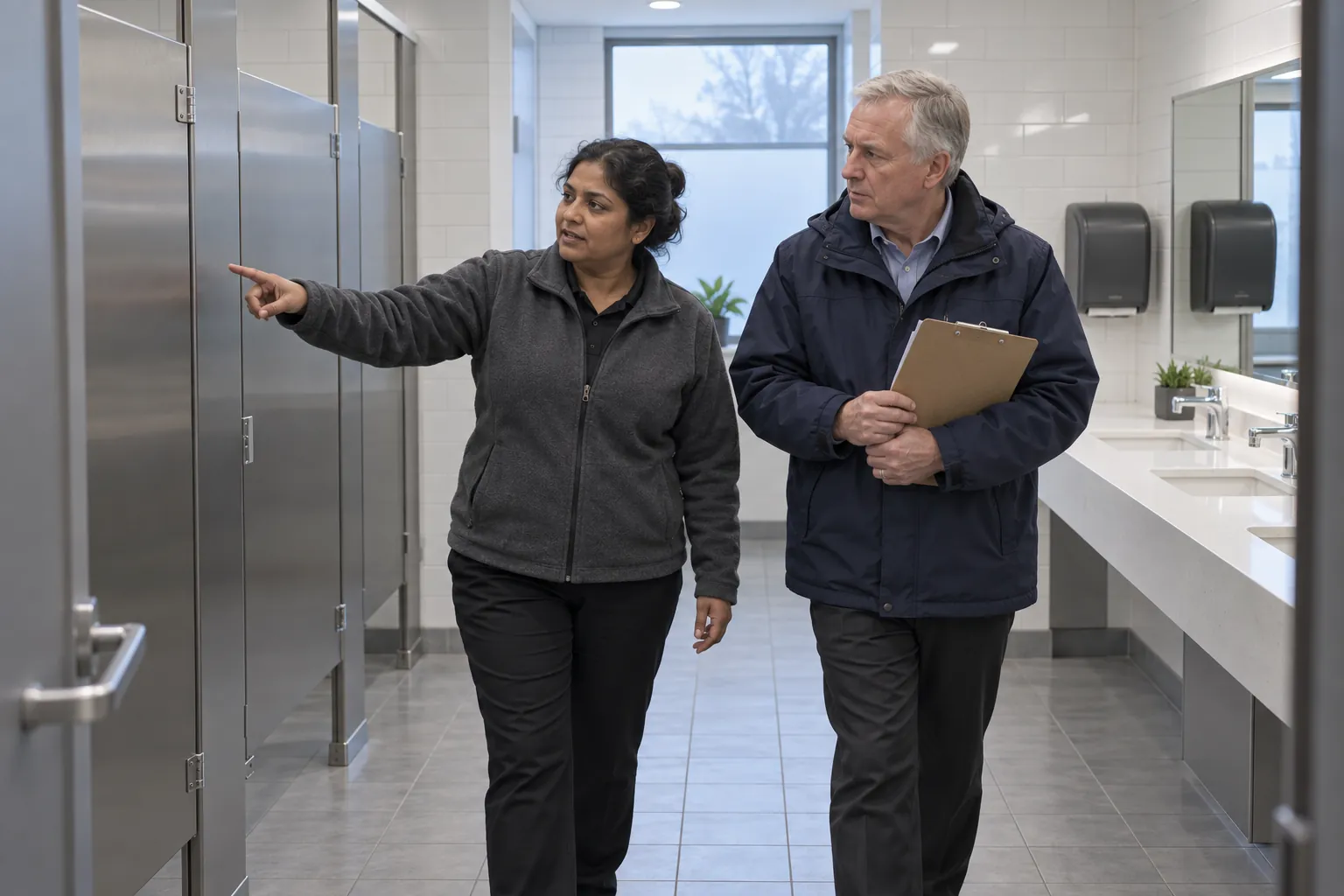 CleaningJanitorial quality control: how to inspect, correct and show the standard heldHow janitorial quality control works in Canada: QA versus QC, inspections, sampling, corrective action, CIMS, the PIDAC audit model and records that hold up.