Cleaning
Shop cleaning checklist: floors, fitting rooms, tills and spills
Shop cleaning is the routine of cleaning a shop's entrance, sales floor, tills, fitting rooms, toilets and stockroom before opening, during trading and after close, which Irish law requires to be done as often as necessary to maintain safety and health.
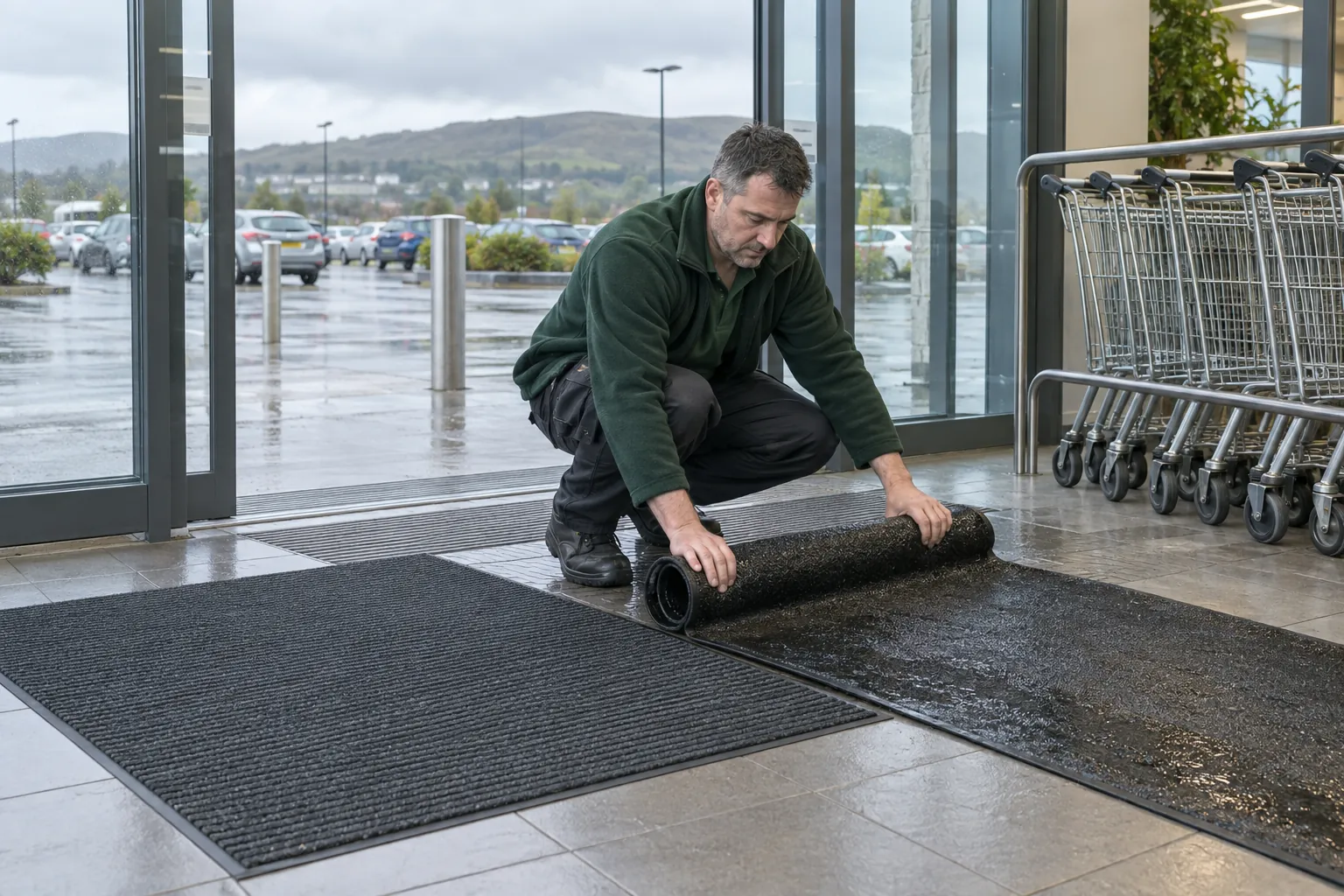
A shop is cleaned around its customers. The floor is walked all day, spills happen while the tills are busy, and a wet entrance on a rainy Saturday is a slip risk as much as a cleaning job. This guide sets out a shop cleaning checklist for Irish retail, before opening, during trading and after close, with the Irish law behind it, the Health and Safety Authority's advice on spills and entrances, and what makes the record worth keeping.
01
The duty behind a shop cleaning checklist
The Health and Safety Authority's retail sector page notes that retail hazards are often thought to be low risk while accidents remain common, and lists slips, trips and falls among them. No Irish law requires a shop to keep a cleaning checklist. The law sets the outcome, and the checklist is how a retailer shows it is being met:
- Staff. Under section 8 of the Safety, Health and Welfare at Work Act 2005, every employer must ensure, so far as is reasonably practicable, the safety, health and welfare at work of its employees, including maintaining the place of work "in a condition that is safe and without risk to health".
- Customers. Section 12 of the 2005 Act requires every employer to manage and conduct its undertaking so that people at the place of work who are not its employees are not exposed, so far as is reasonably practicable, to risks to their safety, health or welfare. In a shop, that means every shopper on the floor.
- The premises. Chapter 1 of Part 2 of the Safety, Health and Welfare at Work (General Application) Regulations 2007 (S.I. No. 299 of 2007) covers the workplace. Regulation 18 requires every place of work to be "kept in a clean state", with accumulations of dirt, refuse, trade refuse and waste removed "by a suitable method as frequently as necessary to maintain an appropriate level of safety and health", and the floor of every workroom cleaned the same way. Regulation 9 requires floors to have no dangerous bumps, holes or slopes and to be, so far as is reasonably practicable, not slippery. Regulation 12 requires emergency routes and exits, and the traffic routes and doors that lead to them, to be kept clear and free from obstruction.
Civil law adds the occupier's duty to visitors. Section 3 of the Occupiers' Liability Act 1995 sets a "common duty of care": to take such care as is reasonable in all the circumstances to ensure that a visitor does not suffer injury or damage because of a danger existing on the premises. In a shopping centre with more than one occupier, section 1 makes each one's duty depend on the degree of control it has over the premises and the particular danger. When a shopper slips, the question is usually whether the shop had a reasonable system for inspecting and cleaning the floor, and whether it can show that the system was followed at the time.
Fire safety is the other thread. Section 18 of the Fire Services Act 1981 applies to premises used for any purpose involving access by members of the public, and, as amended by section 29 of the Fire Services Act 2003, to any workplace. The person having control must provide reasonable fire safety measures and procedures and ensure that they "are applied at all times". Cardboard stacked in a corridor or a mop bucket parked against a fire exit is a cleaning problem and a fire problem at once.
Cleaning chemicals come under the Safety, Health and Welfare at Work (Chemical Agents) Regulations 2001, as amended. A shop with a deli, hot food or a coffee dock also has food hygiene law to meet, which is outside this guide.
02
What a shop cleaning checklist covers
A village shop and a supermarket in a retail park need different lists, but most shop cleaning checklists cover the same areas:
- Entrance: doors and glass, entrance matting, the lobby floor, trolley bays and basket stacks.
- Sales floor: aisles and walkways, shelving and fixtures, displays, mirrors and glass cabinets.
- Tills: counters, card terminals, screens, conveyor belts, self-checkouts, bag packing areas and queue barriers.
- Fitting rooms: floors, mirrors, seats, hooks and curtains or doors.
- Customer toilets and baby changing, where provided.
- Food areas: deli, hot food, coffee docks, chillers and freezers, each on its own food safety schedule.
- Staff areas: the staff room and kitchen, staff toilets, lockers and changing areas.
- Stockroom and goods-in: floors, racking, roll cages, cardboard and waste, the cleaning store and the fire exits.
- Outside: the shopfront and windows at street level, the footpath outside the door, the bin store and, for larger stores, the car park and trolley shelters.
Split the list by area and by time of day. A single sheet for the whole shop, signed once, tells you nothing about the entrance at 11:00 on a wet Saturday, which is the moment a claim will ask about.
Choose the cleaning method before writing the task. The HSA's Guide to the General Application Regulations 2007, Chapter 1 of Part 2: Workplace warns that "an inappropriate method can destroy a floor surface, including destruction of its anti-slip properties", so the wrong product used every night can create the slip hazard the checklist is meant to prevent.
03
The shop cleaning checklist: before opening, during trading, after close
The checklist works best in three daily parts, with weekly and periodic tasks listed separately. Adjust it to the shop's hours, floors and busy times.
Before opening
- Walk the sales floor for spills, debris, dropped stock and trip hazards left overnight or by an early delivery.
- Clean the entrance doors and glass at hand height, and lay out clean, dry entrance mats that lie flat.
- Wipe tills, card terminals, belts, self-checkout screens and baskets.
- Check that customer toilets and fitting rooms are clean and stocked.
- Check that fire exits and the routes to them are clear, inside and out.
During trading
- Walk the floor at a set interval to find spills, dropped goods and packaging, more often at busy times and in food, drinks and chiller aisles.
- In wet weather, check the entrance more often, dry it, and swap saturated mats.
- Clear fitting rooms between customers at busy times: hangers, tags, pins and anything left behind.
- Check customer toilets on a frequency that follows footfall; see the toilet cleaning checklist guide.
- Wipe till touch points, empty bins before they overflow, and clear cardboard as stock is filled.
After close
- Clean hard floors by sweeping and mopping or with a scrubber-dryer, and vacuum carpets.
- Dust shelving and fixtures, and clean glass, mirrors and display cabinets.
- Clean fitting rooms fully, including floors, seats and mirrors.
- Fully clean customer and staff toilets and the staff kitchen.
- Empty all bins and take cardboard and waste to the baler, compactor or bin store.
- Clean food areas to their own schedule, and return cleaning equipment and chemicals to the cleaning store.
Weekly and periodic
- Dust high shelving and light fittings, and clean under fixtures, behind tills and along skirting.
- Deep clean floors to the flooring manufacturer's guidance: machine scrub, strip and reseal where the floor needs it, and shampoo or spot-treat carpets, or book carpet cleaners for a deep clean.
- Clean the stockroom floor and racking, the cleaning store and the bin store.
- Clean shop windows inside and out, using specialist window cleaners for any work at height.
04
Spills, wet entrances and wet floors
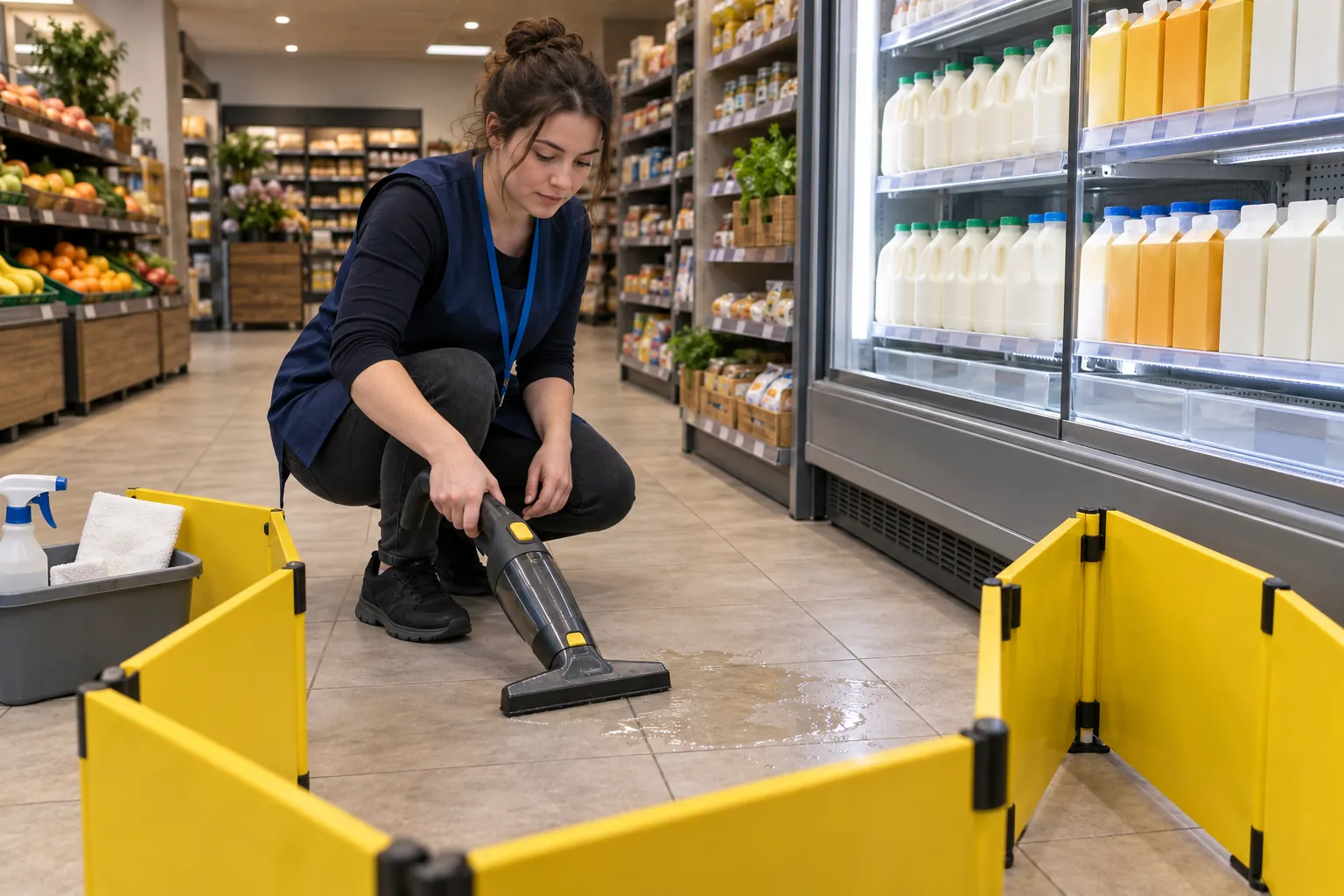
Floor cleaning in a shop is as much about hazard control as about keeping the shop looking clean. The HSA's slips pages set out a sequence for spills: identify the risks, prevent, contain, detect, cordon and remove. Three parts of it matter most for a cleaning checklist.
Detect. The HSA's page on how to detect spills to control slips advises monitoring "on a frequent, regular, planned basis", including the areas where spills are most likely, increasing monitoring at entrances during wet weather, and considering a checklist. It adds that "record-keeping can help ensure monitoring takes place", and reminds employers that under section 13 of the 2005 Act employees must report dangers, including any defect in the place of work, as soon as practicable.
Remove. The HSA's page on how to remove spills to control slips says to deal with spills straight away and to clean and dry them thoroughly, warning that "a superficial effort that does not clean or dry the surface may create a greater risk than the original spill" and that mop-dry floors can be very slippery. It suggests spill kits, kept fully stocked, at the high-risk areas. The same page reports that in 2012 a procedure to remove spills straight away by dry cleaning was found in 73% of the wholesale and retail workplaces the HSA visited.
Cordon. On segregating wet and damp floors, the HSA points out that a damp floor can be more dangerous than a wet one because it looks dry, advises keeping people off a wet, damp or drying floor with a physical barrier or cordon "until bone-dry", and says that a review of slips on wet-cleaned floors found signs ineffective in preventing all of them. Its page on over-used temporary signs adds that warning signs alone may not be adequate and must be removed when they no longer apply, under Schedule 9 of the 2007 Regulations. A sign left in one aisle all day is ignored.
Entrances need their own plan. The HSA's page on entrance safeguards notes that many entrance slips happen between 08:00 and 10:00, and describes a wet weather protocol: watch for Met Éireann warnings, use enough mats, secured and replaced as needed, look for wet footprints or trolley tracks beyond the matting, and increase monitoring by clearly nominated people. In an Irish winter that protocol is needed more often than not, so write it into the checklist.
05
Who does it, and how the checklist is checked
In most shops the staff handle spills, floor walks and fitting rooms during trading, and a contract cleaning company or an in-house team does the main clean before opening or after close. Whatever the split, the checklist should say who owns each task, because a spill that everyone assumes is someone else's is the one that ends in a claim.
- The store manager sets the standard, walks the shop at opening and before the busy periods, and deals with complaints.
- Shop staff do floor walks, spills, fitting rooms and cardboard during trading, and report what they cannot fix.
- The cleaning contractor or in-house team does the scheduled cleans, the out-of-hours work and periodic floor care.
- Centre management, in a shopping centre or retail park, usually cleans the mall, the car park and the shared toilets under the service charge.
Where the shop and a cleaning contractor, or the retailer and the centre, share a place of work, section 21 of the 2005 Act requires them to co-operate, to co-ordinate their actions on risks, and to inform each other of risks, including by exchanging their safety statements or the relevant extracts. In practice, agree in writing who cleans the mall outside the unit and where the contractor stores its chemicals. The shop's own safety statement is where the cleaning and spill arrangements should be written down.
A retailer with several stores should use one checklist everywhere and audit it the same way: a cleaning supervisor's unannounced walk-round, and complaints and slip incidents compared store by store.
Plan for the peaks. Christmas, the January sales, back to school, Black Friday and a week of heavy rain all bring more shoppers, more stock on the floor and more spills. Increase floor walks and toilet checks, add a midday entrance clean, and put the change on the checklist so that it happens rather than being assumed.
06
Where the shop cleaning record fails, and what SiteClara does about it
Most shops can produce a cleaning rota. Far fewer can show that the floor walk at 14:00 happened, who did it and what they found. The sheet in the stockroom is filled in at the end of the day, and the contract cleaner's night work is recorded in the contractor's own folder. If a shopper slipped by the chillers at 14:10, a record written at 17:30 is worth little.
SiteClara places a printed QR poster at each area on the checklist, such as the entrance, the fitting rooms, the customer toilets and the stockroom, with an optional NFC tag behind it. Staff scan the code or tap the tag on their own phone, with no app to install, see the scheduled checks due there, and mark them done or explain what stopped them. The time and the person are recorded as it happens, with a photo when one is asked for. A problem found, such as a broken fitting or a leaking chiller, goes onto the team's list of jobs until someone closes it.
The supervisor or store manager sees what is due, done and missed, and can record why a check was missed. The shop and its cleaning contractor can work from the same site. Each morning, the approved report for the day before goes to nominated management or client contacts, showing what was completed, what was reported and what is still open.
07
Questions people ask
How often should a shop be cleaned?
Irish law sets no fixed interval. Regulation 18 of the Safety, Health and Welfare at Work (General Application) Regulations 2007 requires dirt, refuse and waste to be removed, and the floor of every workroom cleaned, "as frequently as necessary to maintain an appropriate level of safety and health". In practice that means a full clean every day and floor walks during trading: the HSA's page on how to detect spills to control slips advises monitoring "on a frequent, regular, planned basis", with more checks at entrances in wet weather.
How do I clean my shop?
Deal with spills straight away and clean as you go, then do the full floor clean after close. The HSA's housekeeping page says not to leave tidying until the end of the shift and to keep floors and access routes clear. Its advice on rescheduling floor wet-cleaning is to wet-clean when few people are about, for example as the last job before leaving so that the floor can dry overnight.
How often should shop toilets be cleaned?
As often as footfall needs. Regulation 20 of the General Application Regulations 2007 requires an employer to provide, maintain and "keep in a clean state" adequate and suitable sanitary and washing facilities for employees, but sets no interval. Customer toilets need checks during trading as well as a full clean each day; see the toilet cleaning checklist guide.
08
Further reading, and a list to take away
The law is sections 8, 12, 13 and 21 of the Safety, Health and Welfare at Work Act 2005 and Regulations 9, 12 and 18 of the Safety, Health and Welfare at Work (General Application) Regulations 2007, with the Occupiers' Liability Act 1995 and section 18 of the Fire Services Act 1981 as amended, all on the Irish Statute Book. The HSA's Guide to Chapter 1 of Part 2 of the General Application Regulations 2007, published in December 2007, explains each workplace regulation. Its housekeeping page advises not leaving tidying until the end of the shift. For retailers with up to 50 employees, the HSA points to BeSMART.ie, a free tool for risk assessments and a safety statement, and to its Simple Safety toolkit. See also our guide to slips, trips and falls.
Before the next busy season, check that your shop cleaning checklist:
- is split by area and by before opening, during trading and after close;
- sets floor walks at an interval that follows footfall, with more at peaks and in wet weather;
- has a spill procedure that ends with a bone-dry floor, the cordon lifted and the sign removed;
- has a wet weather protocol for the entrance, with enough mats and a nominated person;
- covers fitting rooms, toilets and the stockroom, not only the sales floor;
- keeps fire exits and the routes to them clear of cardboard, cages and cleaning equipment;
- names who owns each task between shop staff, the cleaning contractor and centre management;
- records floor walks and spills with the actual time and a name;
- is checked by someone other than the person who completes it.
Sources
Every document this guide quotes or links to, in the order it first cites them.
- Retail sector page hsa.ie
- Section 8 of the Safety, Health and Welfare at Work Act 2005 irishstatutebook.ie
- Section 12 of the 2005 Act irishstatutebook.ie
- Safety, Health and Welfare at Work (General Application) Regulations 2007 irishstatutebook.ie
- Occupiers' Liability Act 1995 irishstatutebook.ie
- Section 18 of the Fire Services Act 1981 irishstatutebook.ie
- Section 29 of the Fire Services Act 2003 irishstatutebook.ie
- Guide to the General Application Regulations 2007, Chapter 1 of Part 2: Workplace hsa.ie
- Detect spills to control slips hsa.ie
- Section 13 of the 2005 Act irishstatutebook.ie
- Remove spills to control slips hsa.ie
- Segregating wet and damp floors hsa.ie
- Over-used temporary signs hsa.ie
- Entrance safeguards hsa.ie
- Rescheduling floor wet-cleaning hsa.ie
- Section 21 of the 2005 Act irishstatutebook.ie
- Housekeeping page hsa.ie
Related guides
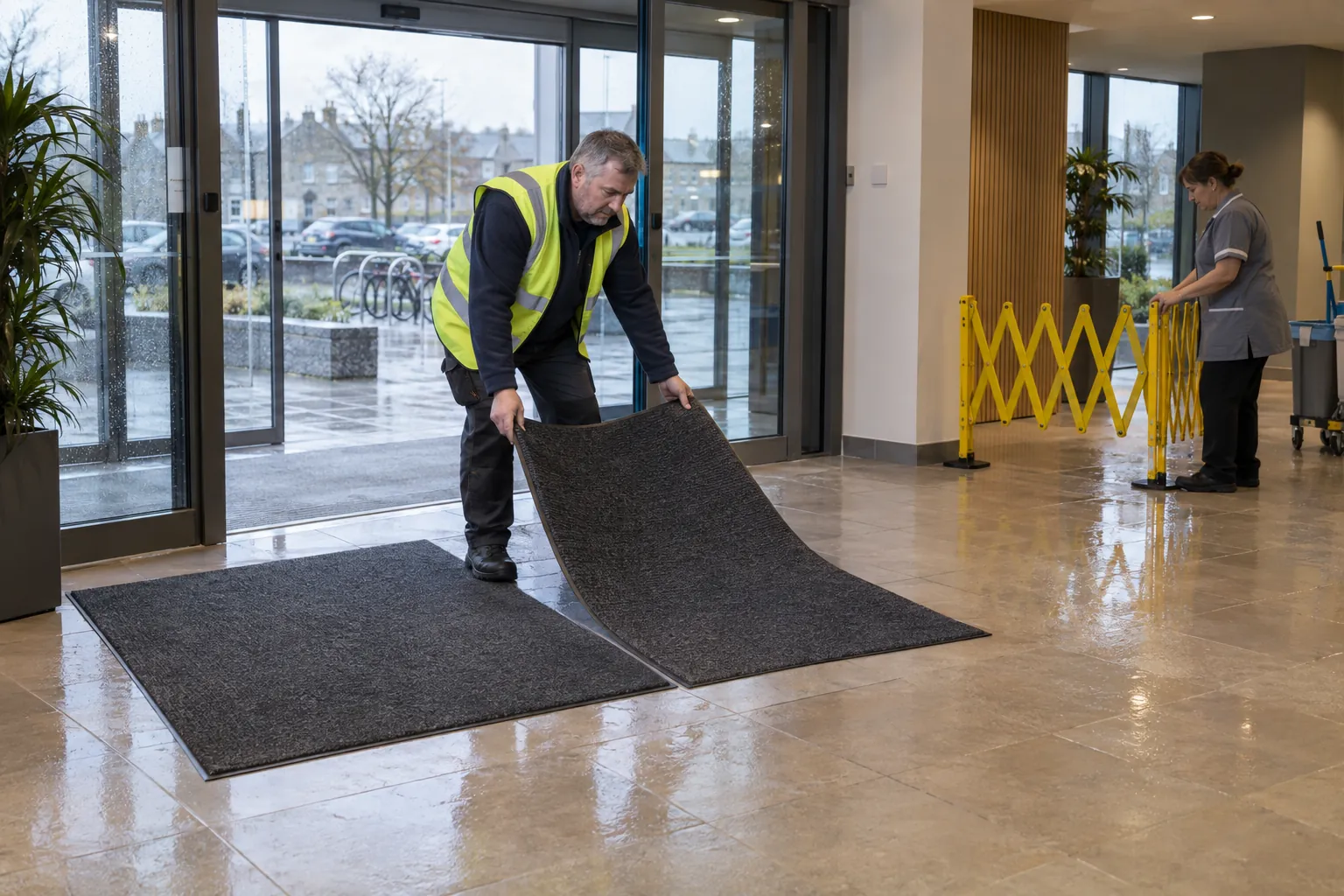 Premises and facilities managementSlips, trips and falls: what Irish law requires, and how to prevent them day to dayPreventing slips, trips and falls in Irish workplaces: the 2005 Act and 2007 Regulations, spills, floor cleaning, entrances, stairs and the checks that show it.
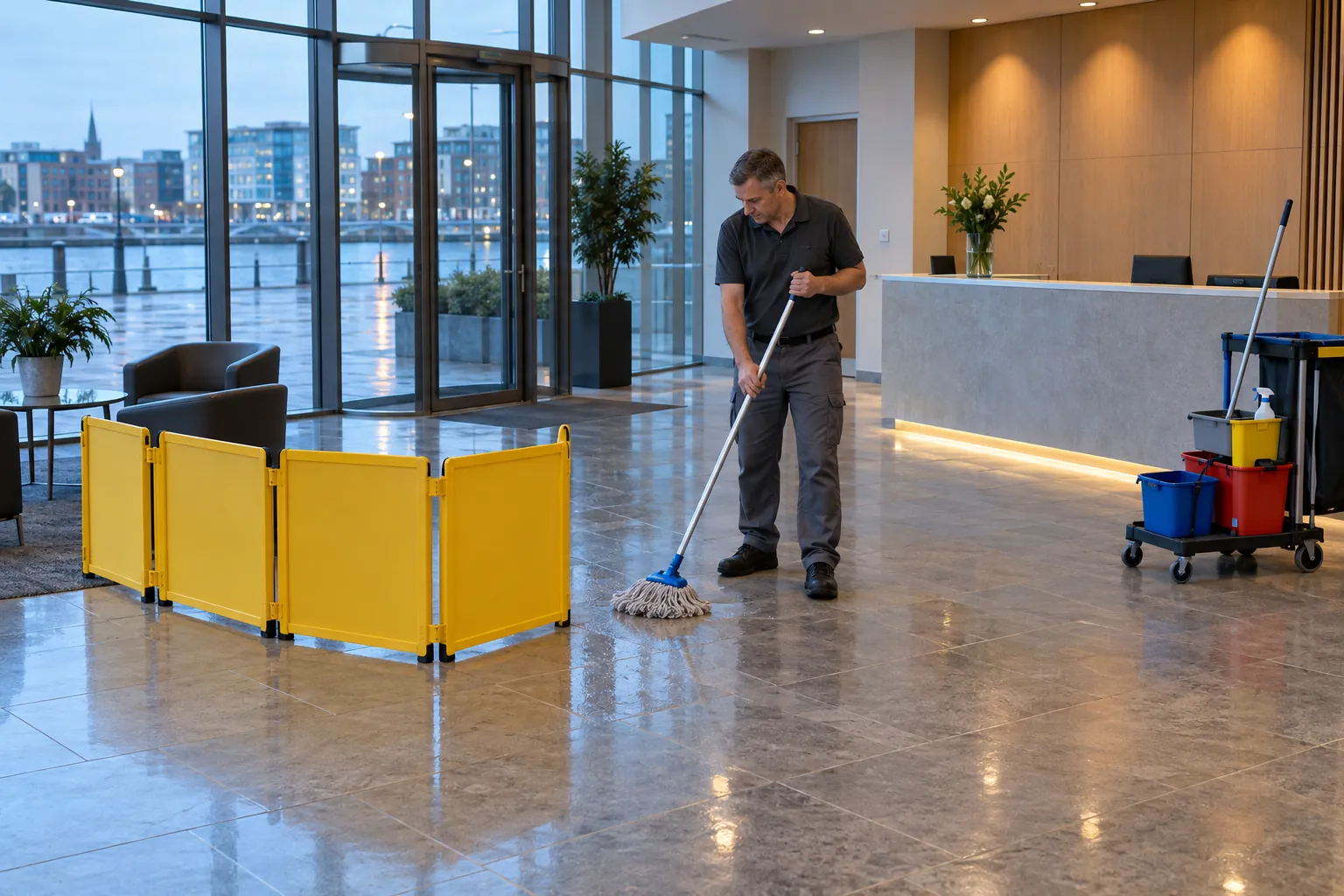 CleaningCommercial cleaning checklist: area by area, for Irish workplacesA commercial cleaning checklist for Irish offices and shared premises, area by area: the 2007 Regulations behind it, using it on shift and checking it is followed.
 CleaningToilet cleaning checklist: what to check, how often, and a record that stands upWhat a toilet cleaning checklist should cover in an Irish workplace, how often to check, the duty in Regulation 20 of the 2007 Regulations, and a credible record.
 CleaningCleaning supervisor duties: what the role involves in Ireland, and what good looks likeWhat a cleaning supervisor does in Ireland: the duties, a typical shift, the 2005 Act and 2007 Regulations, the contract cleaning ERO, checking work and reporting.