Premises and facilities management
Health and safety inspection checklist: what to look at, and what to do next
A health and safety inspection checklist is the list of what to look at on a planned walk round the workplace – housekeeping, fire safety, electrical safety, work equipment, hazardous substances, welfare and first aid among them – so that hazards are found and put right before they hurt someone.
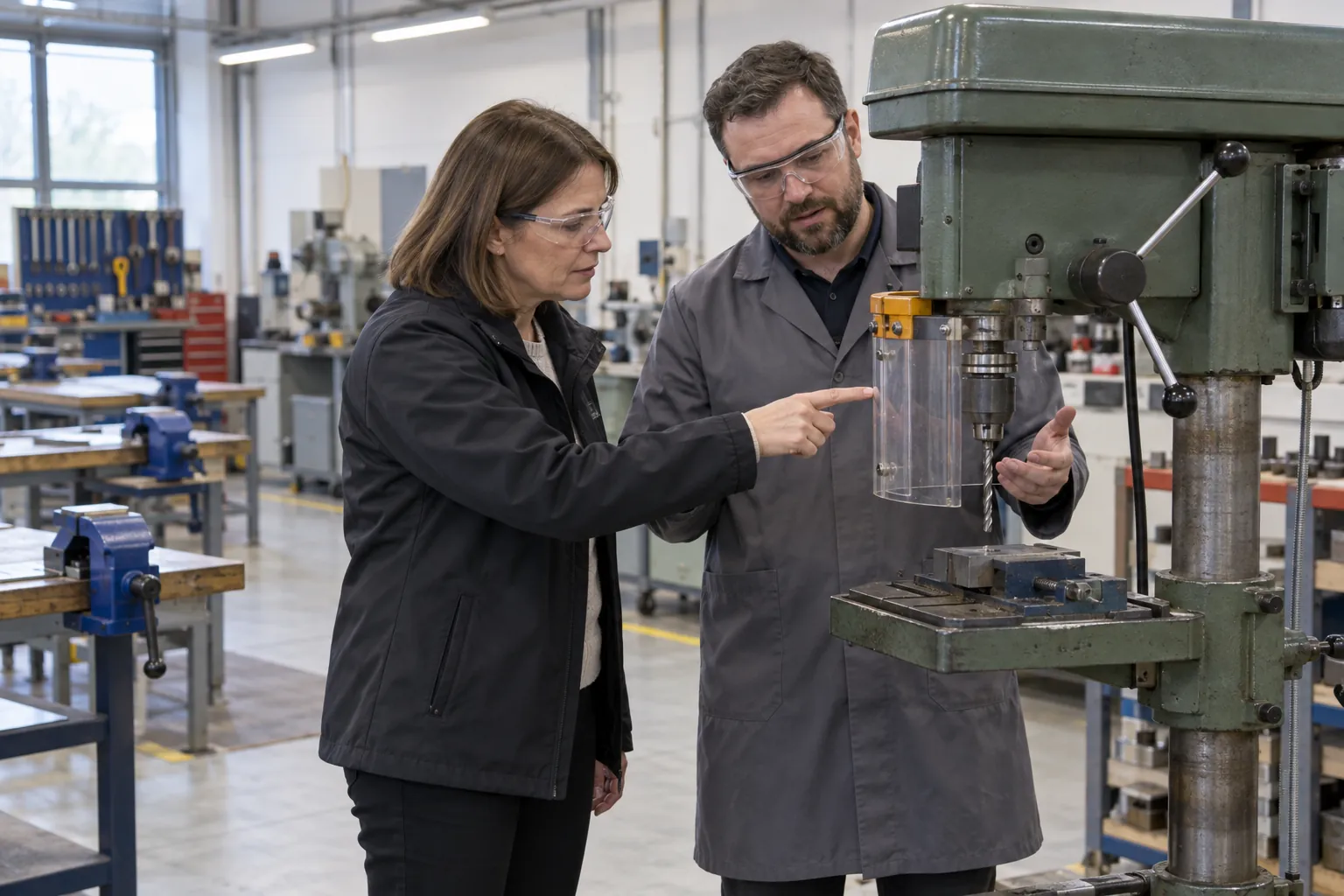
This guide covers the law behind it, a checklist of what to look at, how often to inspect, how to record findings and actions, and how to involve staff and safety representatives.
01
The legal basis for workplace inspections
The Health and Safety at Work etc. Act 1974 requires every employer to ensure, so far as is reasonably practicable, the health, safety and welfare of employees, and the safety of others affected by the work. The Management of Health and Safety at Work Regulations 1999 turn that into a management process. They require employers to:
- carry out a suitable and sufficient risk assessment, and record the significant findings if they employ five or more people;
- put in place arrangements for the effective planning, organisation, control, monitoring and review of the measures that control those risks, again recorded if five or more are employed;
- appoint one or more competent persons to help them meet their duties;
- give employees understandable information about the risks and the measures in place.
Regular health and safety inspections are the most common form of that monitoring. No regulation says how often a general workplace inspection must happen, but an employer who never checks that its controls are working will struggle to show it is monitoring them. The Health and Safety Executive's guidance Managing for health and safety (HSG65) describes the approach as Plan, Do, Check, Act, and inspections are a central part of Check.
Some equipment has its own statutory inspection regime, such as lifting equipment under LOLER or scaffolds used in construction. Those are separate from the general inspection described here, which is about the workplace as a whole. In Northern Ireland, equivalent regulations apply, enforced by HSENI.
02
What a health and safety inspection checklist covers
A general health and safety inspection checklist for a workplace, whether an office, school, shop, warehouse or care setting, usually covers these areas. Tailor it to the activity: a warehouse needs more on vehicles and racking, an office more on display screens and housekeeping.
- Housekeeping, slips and trips: floors clean, dry and in good repair; trailing cables; storage tidy and stable; walkways and stairs clear.
- Fire safety: escape routes and fire exits clear, fire doors closing and not wedged, extinguishers in place, signs visible, alarm call points unobstructed.
- Electrical safety: damaged plugs, cables or sockets; overloaded adaptors; equipment that looks unsafe; access to distribution boards kept clear.
- Work equipment and machinery: guards in place, maintenance up to date, faulty equipment taken out of use, under the Provision and Use of Work Equipment Regulations 1998.
- Hazardous substances: chemicals stored and labelled correctly, COSHH assessments and safety data sheets available, personal protective equipment provided and used.
- Work at height: ladders and steps in good condition, and used only for short, low-risk tasks.
- Manual handling: heavy or awkward loads, trolleys and aids available, storage at sensible heights.
- Vehicles and pedestrians: separate routes where vehicles operate, clear markings, safe loading areas.
- Display screen equipment: workstations set up properly, and workstation assessments done.
- Environment: lighting, temperature, ventilation and noise suitable for the work.
- Welfare facilities: toilets clean and working, washing facilities, drinking water, somewhere to rest and eat.
- First aid and emergencies: a stocked first aid kit, first aiders known, emergency procedures displayed and understood.
- Information: the health and safety law poster or leaflet provided, the accident book in use, and accidents reportable under RIDDOR reported.
- Contractors and visitors: signed in, inducted, and working under the right controls.
The HSE publishes topic guidance for each of these areas, and checklists for some topics, such as its workplace transport inspection checklist. Use them as a starting point, then identify and add the hazards specific to your premises from your risk assessments.
03
How often to inspect, and who should do it
How often health and safety inspections should be carried out depends on the risk. As a guide:
- Higher-risk areas and activities, such as workshops, kitchens, warehouses, plant rooms and construction work, benefit from frequent inspection, often weekly or even at the start of each shift for specific equipment.
- Lower-risk workplaces, such as offices, often inspect monthly or quarterly, with a fuller annual review.
- After a change: new equipment, a new process, a refurbishment or a change in how a space is used.
- After an incident: an accident, a near miss or a complaint, to find the cause and check other areas for the same hazard.
Whatever the frequency, write it down and keep to it, so inspections are consistent and ongoing rather than occasional. An inspection programme that slips quietly from monthly to whenever there is time is common, and it tends to be noticed only after an accident.
The person inspecting should know the workplace and what good looks like, and have enough training to recognise hazards. Relevant experience of the work matters more than a title. That might be the premises or site manager, a supervisor, a health and safety adviser or a trained member of staff. For specialist areas, such as electrical installations, gas or lifting equipment, the general inspection notes visible problems and the competent person inspects in detail.
It helps to vary who inspects. A manager walking their own area every month stops seeing the cable across the doorway; a colleague from another department sees it straight away.
04
Recording findings and following up actions
An inspection is only useful if what it finds gets done. A good inspection record, on paper or in a digital form, captures:
- The inspection itself: the date, the area covered and who inspected.
- Each finding: what the hazard is, exactly where, and a photo where it helps.
- How serious it is: a simple rating, such as high, medium or low, so the most serious issues are dealt with first. Anything posing an immediate danger should be made safe during the inspection, not written down and left.
- The action: what will be done to remove or reduce the risk.
- An owner and a date: a named person responsible and a target date for completion.
- Close-out: when the action was completed and who checked it.
Before each inspection, prepare by reading the previous record and the open actions, so the walk checks that earlier safety measures are still in place. Record the good as well as the bad. An inspection that notes what was found in order shows the area was actually looked at.
Review the findings together from time to time. The same hazard appearing month after month, such as blocked fire exits in one area or recurring slips at an entrance, points to a cause that the inspection alone will not fix: a storage shortage, a poor floor surface or a process that needs changing. That is the review half of the monitoring duty, and it may mean updating the risk assessment.

05
Involving staff and safety representatives
Employers must consult employees on health and safety. Where a recognised trade union has appointed safety representatives, the Safety Representatives and Safety Committees Regulations 1977 apply: representatives are entitled to inspect the workplace at least every three months, after giving reasonable notice, and more often by agreement, and also after a reportable accident or a substantial change in conditions. If two or more representatives ask in writing, the employer must set up a safety committee.
Where there is no recognised union, the Health and Safety (Consultation with Employees) Regulations 1996 require employers to consult employees directly or through elected representatives of employee safety.
Beyond the legal minimum, involving staff makes inspections better:
- invite a safety representative or a member of staff from the area to join each inspection;
- ask the people who work in the area what worries them: they know about the near misses that were never reported;
- share the findings and the actions taken, so people can see that raising a hazard leads to something;
- make it easy to report a hazard between inspections, so problems are not saved up for the next walk round.
06
Where the record fails, and what SiteClara does about it
Most inspection records fail in the same two ways. The inspection itself happens, but its findings sit in a spreadsheet or a filed form where no one is chased to close them. And the hazards noticed between inspections, by cleaners, security officers and caretakers who walk the building every day, are mentioned in passing and never written down.
SiteClara helps with the second, and with the routine checks that sit alongside inspections. A printed QR poster at each location, with an NFC tag behind it if you want staff to tap, lets staff scan or tap on their own phone, with no app to install, to complete the scheduled checks due there, such as a daily walk of the escape routes, or report an issue with a photo. A reported issue goes onto the team's list of jobs until someone closes it, and the supervisor's queue groups open jobs by building and floor. Each day the supervisor approves a report that goes to nominated management or client contacts at 8am the next morning, showing what was reported, completed and still open.
07
Further reading, and a list to take away
The Health and Safety Executive publishes Managing for health and safety (HSG65), guidance on risk assessment, an inspection checklist for workplace transport, and guidance on consulting employees, including the rights of safety representatives. HSENI publishes the equivalent guidance for Northern Ireland. Trade unions and professional bodies such as the Institution of Occupational Safety and Health (IOSH) also publish practical material on workplace inspections.
Before your next health and safety inspection, check that:
- the checklist reflects your risk assessments and the activities in each area;
- the inspection frequency for each area is written down and followed;
- inspectors are trained and vary from time to time;
- immediate dangers are made safe on the spot;
- every finding has an action, an owner and a date;
- actions are tracked to close-out and checked;
- safety representatives and staff are invited to take part;
- repeat findings are reviewed and fed back into the risk assessment.
Sources
Every document this guide quotes or links to, in the order it first cites them.
- Health and Safety at Work etc. Act 1974 legislation.gov.uk
- Management of Health and Safety at Work Regulations 1999 legislation.gov.uk
- Managing for health and safety hse.gov.uk
- Provision and Use of Work Equipment Regulations 1998 legislation.gov.uk
- Workplace transport inspection checklist hse.gov.uk
- Safety Representatives and Safety Committees Regulations 1977 legislation.gov.uk
- Health and Safety (Consultation with Employees) Regulations 1996 legislation.gov.uk
Related guides
 Premises and facilities managementBuilding compliance checklist: the statutory picture for a UK buildingBuilding compliance checklist for UK non-domestic buildings: fire, electrical, gas, water, asbestos, lifts, access and energy, who is responsible, how often.
 Fire and water checksFire safety checks in the workplace: what to check, how often, and who does itThe routine fire safety checks a UK workplace needs, from daily escape routes to the weekly alarm test, who does each one, and what the record should show.
 Premises and facilities managementBuilding maintenance checklist: what to check, how often, and who byA building maintenance checklist for UK non-domestic buildings: daily to annual tasks for fabric, services, safety systems and grounds, and who does each.
 Premises and facilities managementPremises manager: what the job involves, and how to run it wellWhat a premises manager does in a college, charity, housing provider or trust: the compliance calendar, contractors, security, budgets and reporting.