Cleaning
Housekeeping in the workplace: what the law requires, and how to keep it up
Housekeeping in the workplace means keeping every work area clean, orderly and free of anything not needed for the work, with floors, walkways, stairs and passages in good repair, skid-free and clear of obstructions and waste.

In South Africa it is a legal duty on every employer under regulation 13H of the General Safety Regulations, made under the Occupational Health and Safety Act 85 of 1993. Good housekeeping is the cheapest safety measure a building has: many slips, trips and blocked escape routes start as a box left in a passage, a spill nobody reported or a light that stayed broken. This guide covers what the regulations say, what housekeeping covers in an office, school, shopping centre or warehouse, who is responsible for what, how often to check, and what makes the record of those checks worth reading.
01
What the law says about housekeeping at work
The general duty is in section 8(1) of the Occupational Health and Safety Act 85 of 1993 (the OHS Act): every employer must provide and maintain, as far as is reasonably practicable, a working environment that is safe and without risk to the health of its employees. Section 9 extends the same care to people who are not employees, such as visitors, learners, shoppers and contractors, who may be directly affected by the employer's activities.
The specific housekeeping duties are in regulation 13H of the General Safety Regulations, inserted by the General Safety Regulations amendment of 2025 (Government Notice 5954, Government Gazette 52226 of 6 March 2025). Under regulation 13H(2), an employer must:
- (a) make at least 2.25 square metres of effective open floor area available for every employee working in an indoor workplace, except where building work is performed;
- (b) make available and maintain an unimpeded work space for every employee;
- (c) keep every indoor workplace "clean, orderly and free of materials, tools and similar things which are not necessary for the work done" there;
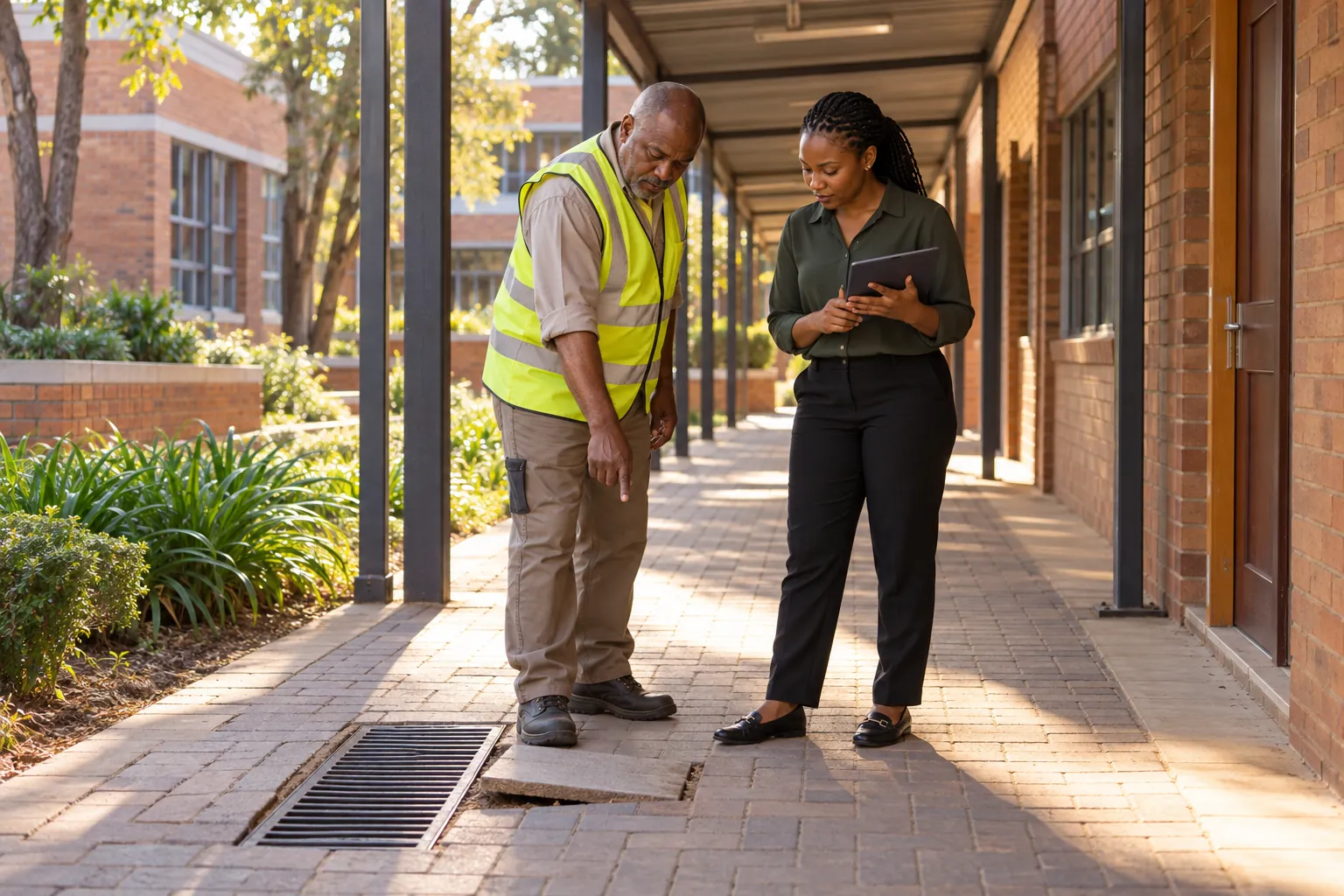
- (d) keep all floors, walkways, stairs, passages and gangways in a good state of repair, skid-free and free of obstructions, waste or materials;
- (e) keep the roof and walls of every indoor workplace sound and leak-free;
- (f) guard openings in floors, hatchways, stairways and open sides of floors or buildings from which people could fall; and
- (g) put up a catch platform or net, or fence off the area, where overhead work could drop objects on people below.
The same amendment added regulation 13J, on fire precautions and means of egress: every door of a room where people may be, and of a passage or staircase serving as an exit, must be kept clear and easy to open quickly from the inside, and staircases intended as fire escapes must be kept clear of any material or other obstruction. A blocked escape door is a housekeeping failure as much as a fire safety one.
Under regulation 14 of the General Safety Regulations, as amended, failing to comply with regulation 13H, 13I or 13J is an offence, with a fine or imprisonment of up to six months, and more for each day a continuing offence goes on.
02
What housekeeping covers in practice
Housekeeping is wider than cleaning. Cleaning removes dirt; housekeeping keeps the whole workplace in the state the regulations describe, and that takes everyone who works there, not only the cleaners. In an ordinary office block, school, clinic, shopping centre or warehouse it covers:
- Floors: dry, skid-free and in good repair, with spills cleaned up at once, wet areas signed and no lifted tiles or loose mats.
- Walkways, passages, stairs and gangways: clear of boxes, trolleys, deliveries and cables, with handrails fixed.
- Escape routes and doors: nothing stored in stairwells or against exit doors, fire doors closing on their own, and escape doors that open from the inside without a key.
- Storage: materials and equipment kept in a place meant for them, heavy items low, nothing stacked so it can fall, and nothing kept that the work does not need.
- Waste: bins emptied before they overflow, cardboard and packaging taken away rather than piled up, and refuse areas kept tidy. The City of Cape Town's Community Fire Safety By-law, 2002, for example, has a chapter headed Housekeeping that forbids letting combustible waste, refuse or dust accumulate so as to create a fire hazard.
- Cleaning products and chemicals: stored in labelled containers in the cleaners' store, not in unmarked bottles under a basin. The Regulations for Hazardous Chemical Agents, 2021 require employees who may be exposed to be trained in the procedures for use, handling, storage, spillage and disposal, and for good housekeeping and personal hygiene (regulation 3(2)(f)).
- Lighting and windows: regulation 11(10) of the Physical Agents Regulations requires luminaires and lamps to be kept clean, in good working order and replaced or repaired when defective, and windows and other sources of natural light to be kept clean and fit for purpose. A blown light over a stairwell is a housekeeping item.
- Roofs and walls: leaks reported and fixed, as regulation 13H(2)(e) requires.
- Welfare rooms: ablutions, change rooms and dining rooms kept "in a clean, hygienic, safe, whole and leak-free condition" under regulation 9 of the Facilities Regulations, 2004; see ablution facilities.
- Outside areas: yards, loading bays, bin areas and parking, kept clear, drained and lit.
Many sites use the 5S method (sort, set in order, shine, standardise, sustain) to keep this up. It is not a legal requirement, but it fits regulation 13H(2)(c) closely.
03
Slips, trips and falls: the part of housekeeping that hurts people
Poor housekeeping hurts people mainly through slips, trips and falls: a wet floor at the entrance, a cable across a passage, a box on the stairs. Regulation 13H(2)(d) names the answer, floors and passages skid-free and clear. In practice:
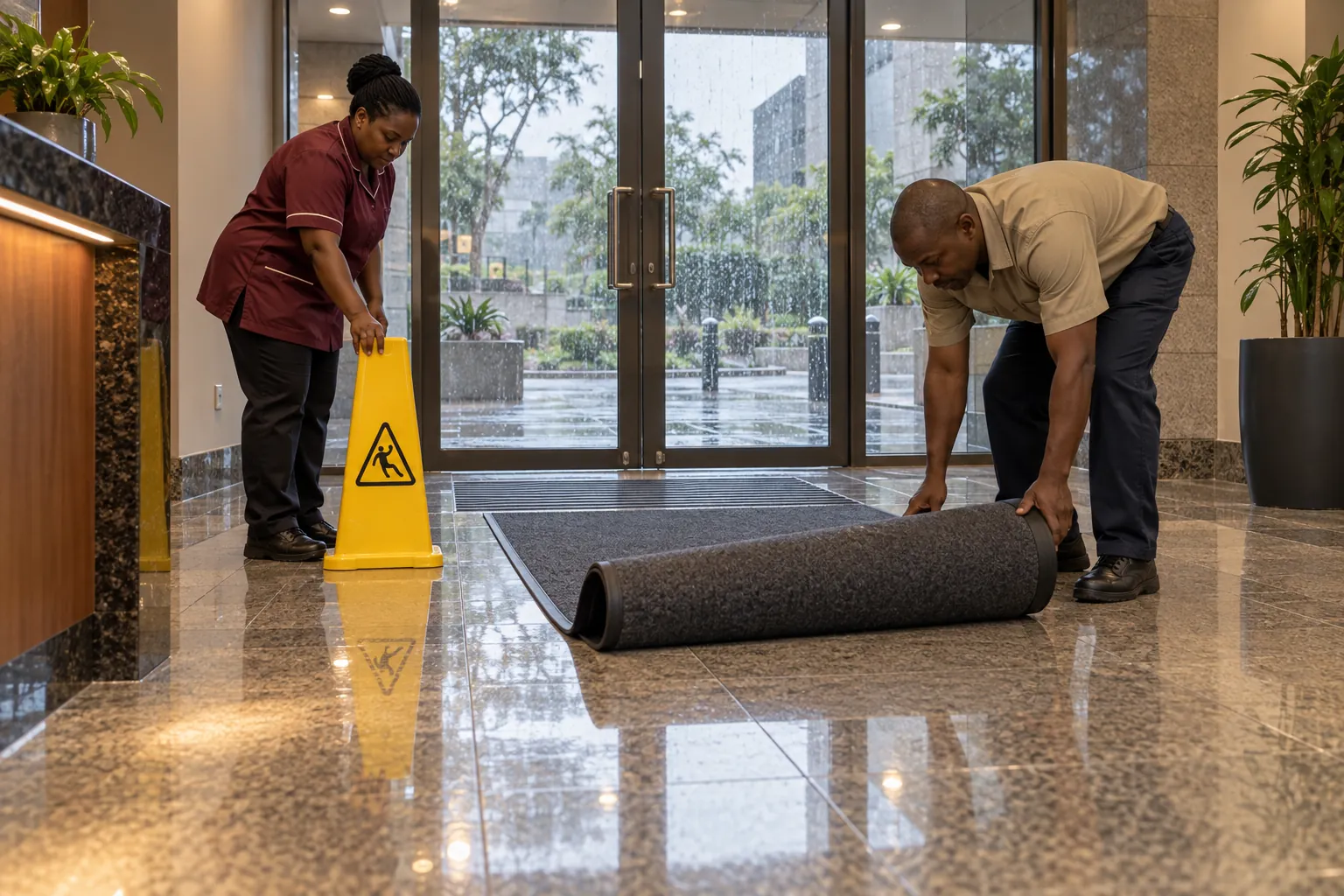
- Entrances in the rain. Summer thunderstorms on the Highveld and winter rain in the Western Cape bring water in on every shoe. Put down matting long enough to dry a few steps, put out wet floor signs, and check the foyer more often while it rains.
- Wet cleaning. Mop passages when they are quiet, one half at a time so people have a dry route, and remove the signs once the floor is dry, because a sign left out all day is soon ignored.
- Spills. Whoever sees a spill stays with it or marks it and reports it; the person who cleans it up makes sure it is dry, not only wiped.
- Cables and trolleys. No trailing leads across walkways; trolleys, cages and ladders parked against a wall, not mid-passage.
- Stairs. Nothing stored on stairs or landings, handrails firm and every step lit.
- Load shedding and power failures. A stairwell or basement that is safe in daylight can be dark when the power goes. The Physical Agents Regulations require emergency lighting on escape routes to be kept clean, in good working order and tested at intervals of not more than three months (regulation 11(6)(e)), so include it in the checks.
When someone does fall, the OHS Act sets the reporting clock. Section 14(d) requires every employee who notices an unsafe or unhealthy situation to report it to the employer or the health and safety representative as soon as practicable, and section 14(e) requires an employee involved in an incident that injured them to report it by the end of the shift in which it happened, unless that was not possible. Section 24 requires the employer to report certain incidents to an inspector, including one in which a person is likely to be unable to work for at least 14 days. See the guides to incident reporting and investigation and injury on duty for what follows.
A slip that injures nobody is still worth recording as a near miss: the same wet patch by the same door, reported three times in a month, shows the matting is too short or the gutter blocked.
04
Who is responsible for housekeeping
The duty in regulation 13H sits with the employer, and in a company the chief executive officer must ensure under section 16(1) that those duties are properly discharged, usually assigning them to a section 16(2) appointee for the site. The work itself is shared:
- Every employee keeps their own work space tidy, keeps passages and exits clear and reports hazards, as section 14 of the OHS Act requires.
- Cleaners, employed directly or through contract cleaning, clean to the cleaning schedule, deal with spills, empty bins and report what they cannot fix.
- Maintenance fixes what is reported: lights, leaks, floor finishes, handrails and door closers.
- Supervisors and managers check that it happens and deal with repeat problems, including in stores and plant rooms nobody else walks through.
- Health and safety representatives may inspect the workplace at intervals agreed with the employer, identify potential hazards and make representations to the employer under section 18(1) of the Act. See the guide to the health and safety representative.
Where a cleaning company works on the client's premises it is usually a mandatary, and the two agree in writing the arrangements and procedures for complying with the Act in a section 37(2) agreement. That agreement or the contract should say who clears what.
In a multi-tenant office block or shopping centre, the landlord or managing agent usually looks after common areas such as entrances, lifts, stairs, parking and refuse areas, and each tenant its own premises. The lines are in the lease and the building rules, so write them down: the most common failure in a shared building is the item in the passage that each party thinks belongs to the other.
05
How often to check, and what a useful check records
No regulation sets how often housekeeping must be inspected. The OHS Act requires the employer to establish what hazards are attached to the work and what precautions are needed (section 8(2)(d)), and to provide the supervision needed to keep people safe (section 8(2)(e)), so the frequency follows the risk, which the hazard identification and risk assessment should show. A pattern that works in most buildings:
- At opening and during the day: a walk of the entrances, passages, ablutions and stairs, and again after a busy period or a downpour.
- At the end of each shift: work areas cleared, waste out, exits clear, chemicals back in the store.
- Weekly: stores, plant rooms, yards, bin areas and anywhere people seldom go.
- Monthly or at the interval agreed: a formal inspection with the health and safety representative, using a workplace safety inspection checklist, with actions given to named people.
A useful check records, for each location, what was looked at, when, by whom, what was wrong and what was done, with a photo when a picture says it faster. A fault the checker cannot fix, such as a broken tile or a leaking roof, goes to someone who can and stays open until it is closed.
Look for patterns, not only faults. Boxes in the same passage every Monday point to deliveries with nowhere to go. Fix the cause and the housekeeping follows; the health and safety committee, where there is one, is the place to review those patterns.
06
Where the housekeeping record fails, and what SiteClara does about it
Most workplaces have a housekeeping checklist. The trouble is what it shows: a sheet on a clipboard in the cleaners' store, ticked at the end of the week, cannot show when each area was checked or by whom, and a hazard reported to whoever was passing gets lost between shifts.
SiteClara puts a printed QR poster at each place that needs checking, such as the main entrance, each stairwell, the ablutions and the loading bay, with an optional NFC tag behind it. Staff scan the code or tap the tag on their own phone, with no app to install, and see the checks due there. They mark each one done, or say what stopped them, and can add a photo. A fault they cannot fix, such as a leak, a blown light or a blocked exit, is reported there and goes onto the team's list of open jobs until someone closes it.
The supervisor sees what is due, done and missed, and records the reason when a check was missed. At the end of the day they review the checks and photos, add a note and approve the report, which goes to the facilities manager or the client's nominated contacts the next morning, showing what was completed, what was reported and what is still open.
07
Questions people ask
What is housekeeping at the workplace?
In South African law it is the set of duties in regulation 13H of the General Safety Regulations, inserted by the General Safety Regulations amendment of 2025: keeping every indoor workplace clean, orderly and free of materials, tools and similar things not needed for the work, keeping floors, walkways, stairs, passages and gangways in good repair, skid-free and free of obstructions, waste or materials, keeping roofs and walls sound and leak-free, and giving every employee an unimpeded work space.
Is housekeeping a legal requirement in South Africa?
Yes. Regulation 13H(2) of the General Safety Regulations, inserted by the General Safety Regulations amendment of 2025, puts the housekeeping duties on every employer, and under regulation 14 failing to comply is an offence punishable by a fine or imprisonment of up to six months, with more for each day a continuing offence goes on.
Are the Environmental Regulations for Workplaces still in force?
No. Regulation 21 of the Physical Agents Regulations, 2024 (Government Gazette 52226 of 6 March 2025) repeals the Environmental Regulations for Workplaces, 1987, 18 months after the Physical Agents Regulations were promulgated, which fell in September 2026. Their housekeeping regulation 6 now appears in the same words as regulation 13H of the General Safety Regulations.
How much floor space must each employee have?
At least 2.25 square metres of effective open floor area for every employee working in an indoor workplace, under regulation 13H(2)(a) of the General Safety Regulations, inserted by the General Safety Regulations amendment of 2025. Workplaces where building work is performed are excluded.
Who is responsible for housekeeping in the workplace?
The employer carries the legal duty under regulation 13H, but under section 14 of the Occupational Health and Safety Act 85 of 1993 every employee must take reasonable care for their own and others' health and safety, co-operate with the employer and report any unsafe or unhealthy situation as soon as practicable. Where a contractor cleans, section 37(2) of the Act presumes the employer answerable for the contractor's acts or omissions unless the two have agreed in writing the arrangements and procedures to ensure the contractor complies with the Act.
08
Where to read the official guidance, and a list to take away
The Occupational Health and Safety Act 85 of 1993, the General Safety Regulations amendment of 2025 (housekeeping, flooding and fire precautions), the Physical Agents Regulations, 2024 (lighting and emergency lighting) and the Facilities Regulations, 2004 (ablutions and welfare rooms) are the primary sources. The Department of Employment and Labour's booklet What every worker and employer should know about health and safety in the workplace explains the Act in plain language. For waste and escape routes, read your own municipality's fire safety by-law; Cape Town's is one example, and others differ.
Before you rely on your housekeeping arrangements, check that:
- your forms and training cite regulation 13H of the General Safety Regulations, not regulation 6 of the repealed Environmental Regulations for Workplaces;
- every passage, stairwell and escape door is clear, and fire doors close on their own;
- spills are signed, cleaned and dried, and entrances have matting for wet weather;
- each area has a named person and a check frequency set by the risk assessment;
- who clears what is written down between employer, tenants, managing agent and cleaning contractor;
- faults go to someone who can fix them and stay open until they are closed;
- repeat problems are reviewed with the health and safety representative, not only ticked off.
Sources
Every document this guide quotes or links to, in the order it first cites them.
- Occupational Health and Safety Act 85 of 1993 gov.za
- General Safety Regulations amendment of 2025 gov.za
- Environmental Regulations for Workplaces, 1987 labour.gov.za
- Physical Agents Regulations, 2024 gov.za
- Community Fire Safety By-law, 2002 openbylaws.org.za
- Regulations for Hazardous Chemical Agents, 2021 labour.gov.za
- Facilities Regulations, 2004 gov.za
- Occupational Health and Safety Act 85 of 1993 gov.za
- What every worker and employer should know about health and safety in the workplace labour.gov.za
Related guides
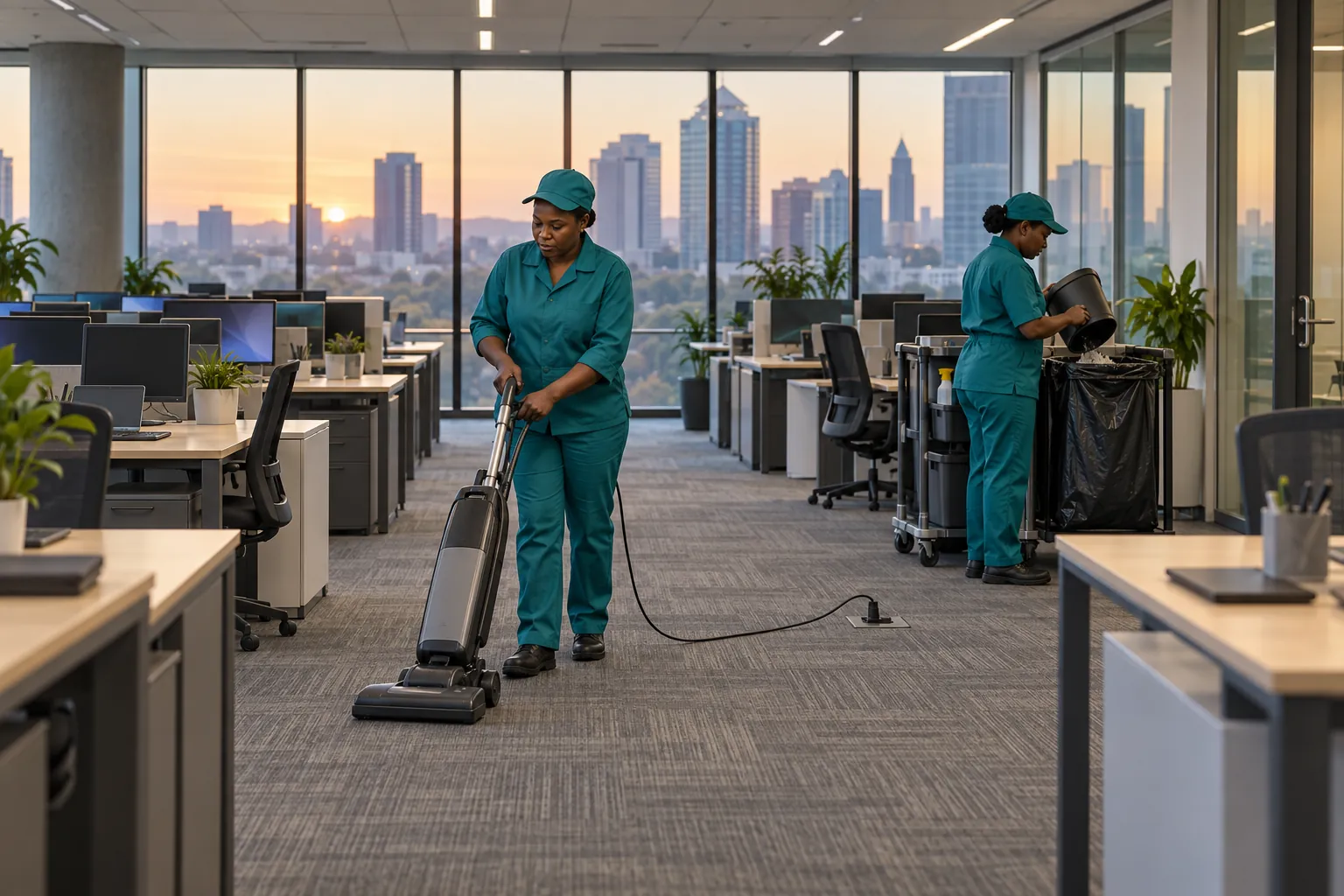 CleaningCleaning schedule: what to clean at work, how often, and how to show it was doneWhat a workplace cleaning schedule should cover in South Africa, which tasks are daily, weekly or monthly, who does what, and how to show the schedule was kept.
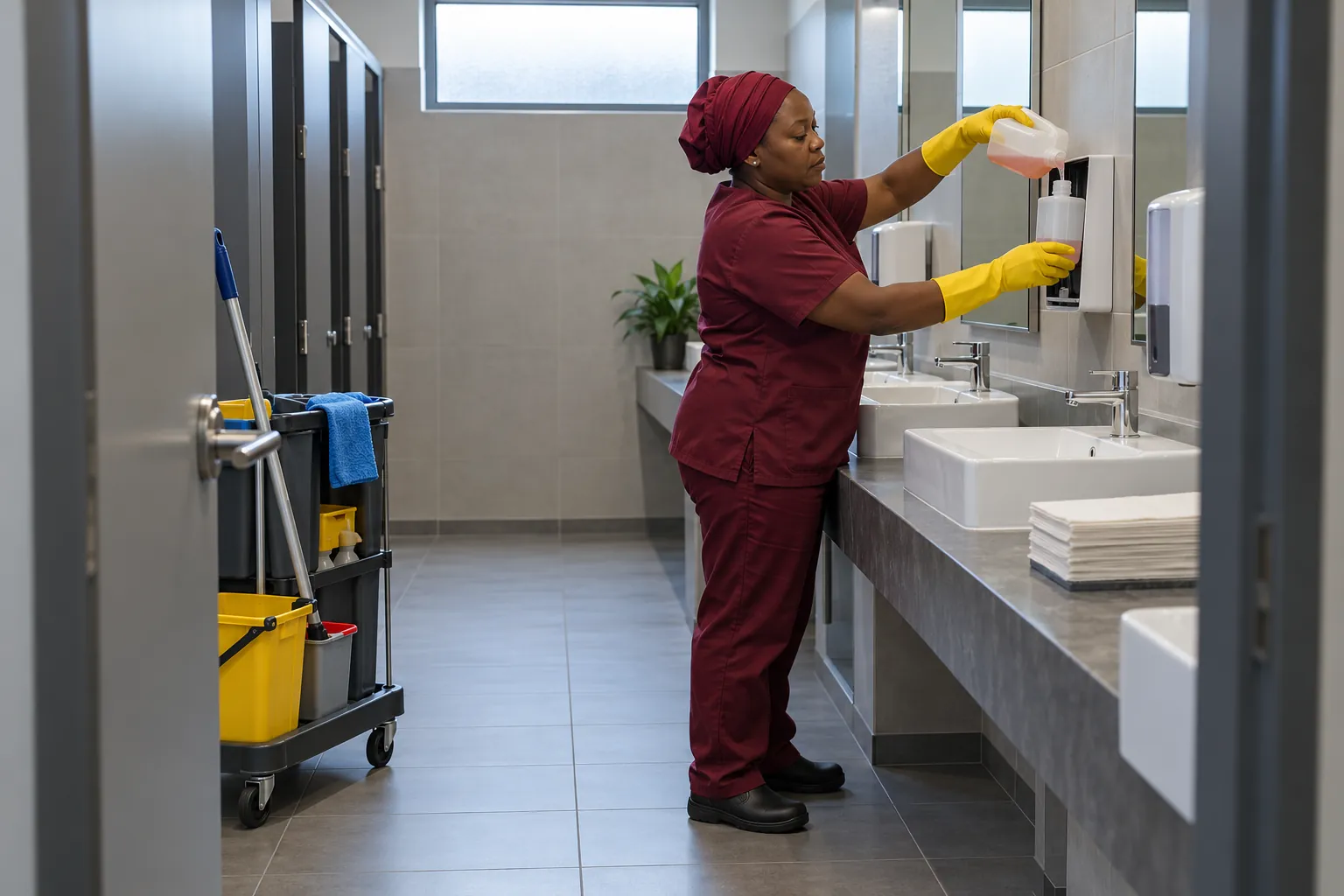 CleaningAblution facilities: the legal requirements, and how to keep them cleanWhat the Facilities Regulations, 2004 require of workplace ablution facilities, where the toilet numbers come from, and how to check and record them properly.
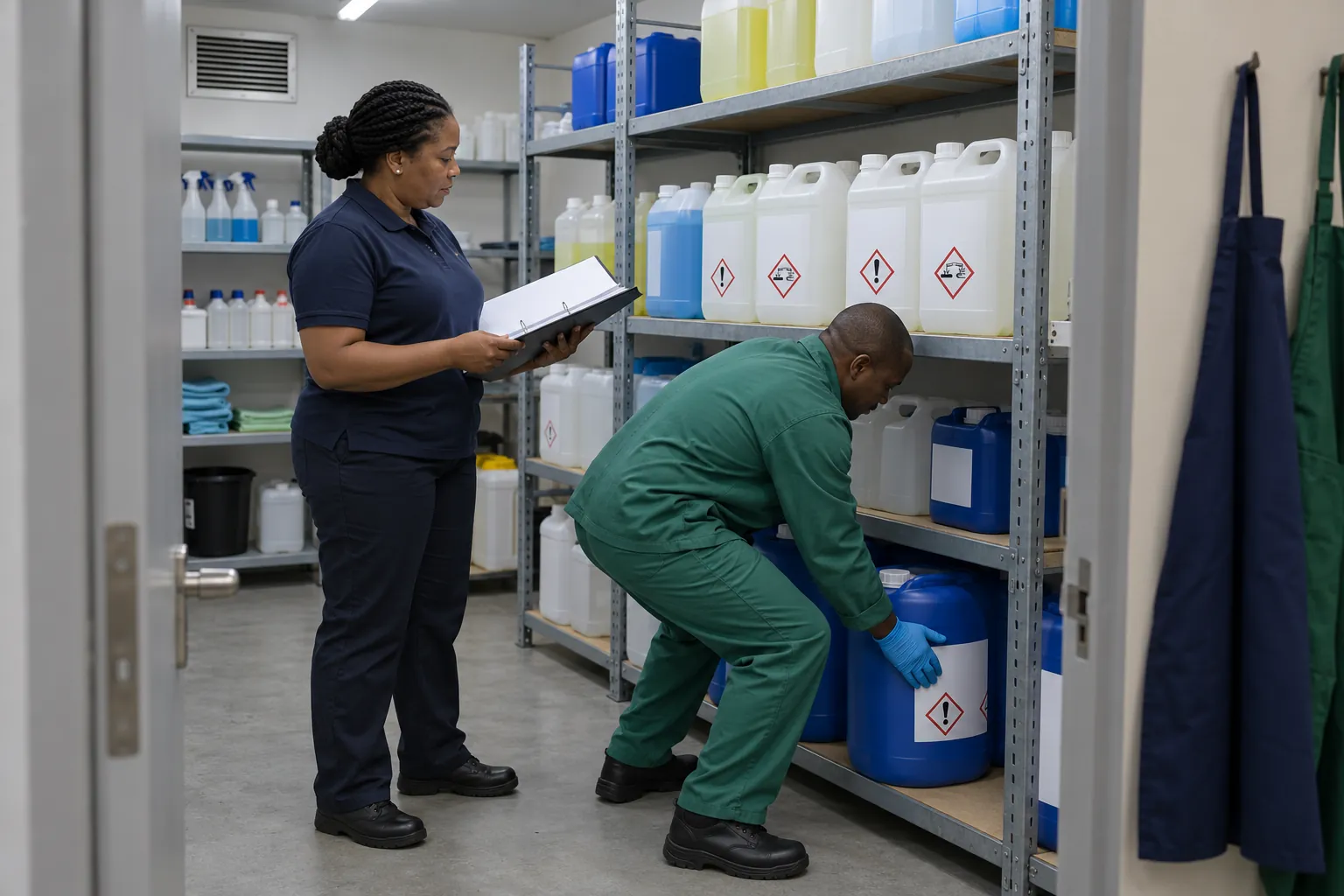 CleaningHazardous chemical agents: what the 2021 regulations mean for cleaning chemicalsWhat the Regulations for Hazardous Chemical Agents, 2021 require of cleaning chemicals: the assessment, the SDS file, labels, the store, training and records.
 Premises and facilities managementHealth and safety inspection checklist: what to look at, and what to do nextWhat a workplace health and safety inspection should cover in South Africa, how often, who inspects, and how to record and close findings under the OHS Act.