Cleaning
Cleaning supervisor duties: what the role involves in New Zealand, and what good looks like
A cleaning supervisor's duties are to organise and supervise a team of cleaners, inspect the work against the cleanliness standards in the contract, keep the team safe, manage chemicals, equipment and supplies, and report to the client.
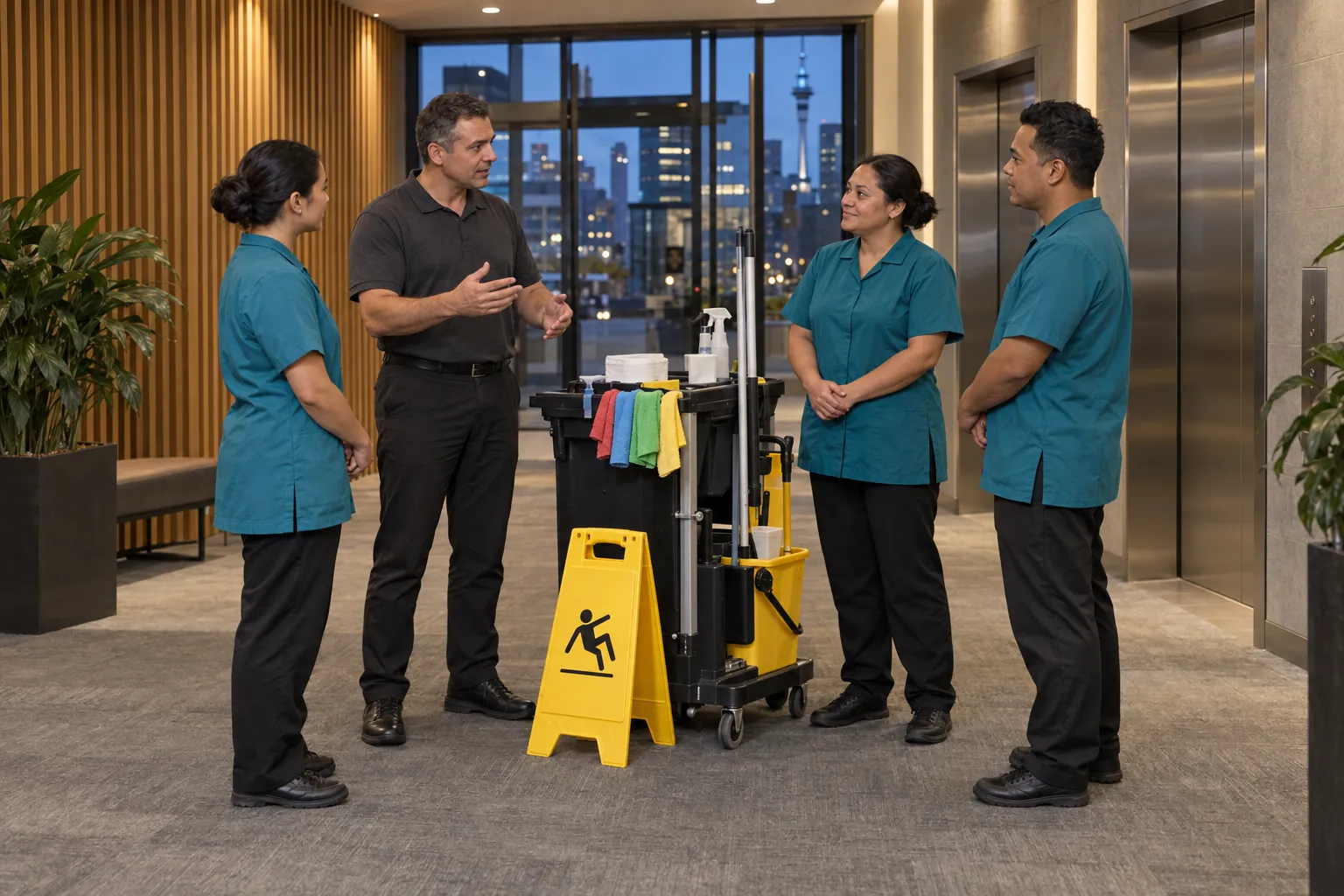
In practice it is the job of turning a cleaning specification into a clean building, night after night. In New Zealand it sits under the Health and Safety at Work Act 2015, where the cleaning company, the client and the building owner are all PCBUs with duties of their own. This guide covers the main duties, a typical shift, the health and safety side, and the records a good supervisor keeps.
01
What a cleaning supervisor is, and the duties behind the role
A cleaning supervisor is responsible for a team of cleaners on one or more sites: they manage the day-to-day cleaning operations, check the standard, and make sure the cleaning is done as the contract says, safely and on time. The role turns up in contract cleaning companies, in in-house facilities teams, and under other names elsewhere: team leader, site supervisor, area supervisor, housekeeping supervisor in hotels and motels, and cleaning services supervisor in hospitals.
On a small site the supervisor usually cleans alongside the team for part of the shift; on a hospital, campus or multi-tenant tower, supervising is the whole job. Either way the supervisor sits between the cleaners and the area manager, and is usually the person the client sees most.
The legal duties behind the role belong to the business, not to the supervisor personally. Under the Health and Safety at Work Act 2015 (HSWA) that business is a PCBU, a person conducting a business or undertaking. WorkSafe's Introduction to the Health and Safety at Work Act 2015 special guide sets out the primary duty of care in section 36: a PCBU must ensure, so far as is reasonably practicable, the health and safety of its workers, and that other people are not put at risk by its work. Among the things that duty includes are "providing and maintaining safe systems of work", "ensuring the safe use, handling and storage of plant, structures and substances" and "providing any information, training, instruction, or supervision that is necessary". A supervisor is how much of that is actually carried out on site.
WorkSafe's guide adds that team leaders, line managers and supervisors are not officers unless they exercise significant influence over the management of the business, so the officer's due diligence duty sits higher up. Workers have duties too under section 45, including to "comply, so far as reasonably able, with any reasonable instruction", and the supervisor gives most of those instructions.
The Health and Safety at Work (General Risk and Workplace Management) Regulations 2016 add the detail. WorkSafe's guidelines General risk and workplace management – part 1 summarise regulation 9, the duty to provide information, supervision, training and instruction: "Workers should only do the tasks they have the adequate knowledge or experience to do, or they should be adequately supervised. PCBUs must ensure workers have adequate training or supervision so they can work safely." That sentence is close to a job description for a cleaning supervisor.
02
The main duties and responsibilities
Job descriptions vary by employer and by sector, but the main responsibilities of a cleaning supervisor usually include:
- Organising the work: allocating areas and cleaning duties so the whole specification is covered in the hours on site.
- Running the team: briefing staff, covering absence, dealing with lateness and performance, and inducting new starters.
- Training: showing new cleaners the methods, equipment, chemicals and site, and spotting when someone needs a refresher.
- Inspecting work: walking the building to check the work against the standard, and getting anything missed put right.
- Periodic work: planning carpet cleaning, hard floor care, strip and seal and deep cleans around the building's use.
- Health and safety: making sure the risk controls are followed, PPE is worn, wet floors are signed, and incidents and near misses are reported.
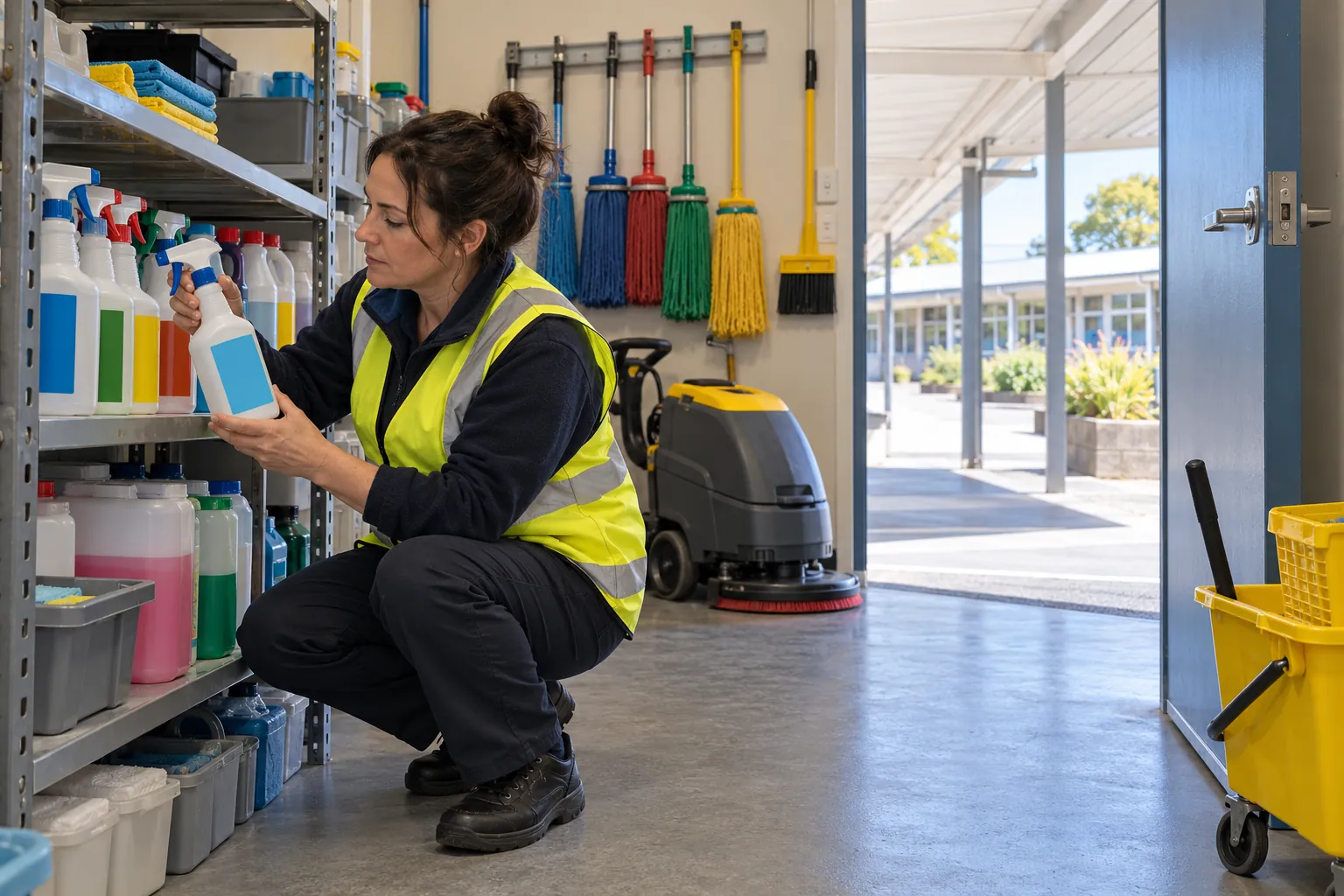
- Chemicals, equipment and consumables: keeping machines safe, ordering chemicals, paper, soap and bin liners, and keeping the cleaners' cupboard locked.
- Client liaison: being the first point of contact for the facilities manager, property manager or body corporate manager, and reporting back.
- Records: check sheets, inspection records, training records and incident records.
- Security and access: swipe cards, keys, alarm codes, locking up, and reporting anything wrong with the building.
The building shapes the job. In a hospital or aged care facility, where hygiene matters most, the supervisor also works within the facility's infection prevention and control procedures. In a hotel the role overlaps with housekeeping and room turnover. In an office it is mostly an evening or early-morning job, with the office cleaning checklist as the working list. In a school it means fitting around the school day and the holiday deep clean, and working with the caretaker on what the cleaning team finds.
03
What a typical shift looks like
Every site is different, but a supervisor's shift on a contract cleaning site often follows a pattern like this:
- Before the shift: check who is in, who is off and how the gap will be covered, and read any messages or requests from the client.
- Briefing: a few minutes with the team at the start, covering changes, events in the building, faults already reported and the areas that need extra attention tonight.
- During the shift: walk the building, check work in progress, help where the team is stretched, deal with spills and urgent requests, and answer questions from people still in the building.
- Checks: carry out planned inspections and confirm the scheduled tasks, such as toilet checks through the day, have happened.
- Problems: report faults such as leaking taps, broken dispensers or blocked toilets to the maintenance team or whoever fixes them, and follow up the ones still open.
- End of shift: confirm everything scheduled was done or record why not, lock up, secure equipment and chemicals, and hand over anything outstanding to the next shift or the client.
Evening and early-morning shifts are common, because offices and schools are easiest to clean when empty. Day supervisors in busy buildings, such as hospitals, shopping centres, airports and transport hubs, spend more of their time on reactive cleaning and toilet checks.
04
Managing people and keeping them safe
Most of what makes a good cleaning supervisor is people management. The team is often part-time, working unsocial hours across several sites, and often includes people for whom English is not a first language. Clear instructions, a fair share of the work and being visible during the shift matter more than any paperwork.
The health and safety side is where supervisors carry most responsibility in practice:
- Cleaning chemicals: commercial products are often hazardous substances under the Health and Safety at Work (Hazardous Substances) Regulations 2017. WorkSafe's page on safety data sheets says "It is mandatory to have a current safety data sheet for each of the hazardous substances in your workplace regardless of the quantity you hold", readily accessible to the people who handle them, and the business keeps a hazardous substances inventory. The supervisor makes sure only approved products are used, at the right dilution, in labelled containers, and that workers are trained when a product or its data sheet changes.
- PPE: under regulation 15 of the General Risk and Workplace Management Regulations the PCBU directing the work provides it, and under regulation 18 workers wear or use it as instructed. The supervisor checks gloves, eye protection and footwear are there and in use.
- Slips, trips and falls: WorkSafe's slips, trips and falls guidance names floors wet "because of weather conditions or cleaning processes" and says to signpost slippery areas. Wet-floor signs out, spills dealt with at once, and mopping planned around foot traffic.
- Incidents: every injury, incident and near miss is recorded and passed on promptly. WorkSafe's page What events need to be notified? says the PCBU must notify the regulator "as soon as possible" after a notifiable event, keep the site undisturbed until an inspector allows, apart from limited exceptions, and keep the record for at least five years. The supervisor's job is to make sure their manager knows at once; the notifiable event guide has the detail.
- Schools: the Ministry of Education's page Who needs to be safety checked at school says contractors likely to have unsupervised access to students during normal school hours need "a Police vet and risk assessment". Nobody starts on site before the school's requirements are met.
The client is a PCBU too, and so is the building owner or body corporate. WorkSafe's Overlapping duties – quick guide says businesses that share duties "must so far as is reasonably practicable consult, cooperate and coordinate activities" with each other. For a supervisor that means knowing the client's site rules and emergency procedures, telling the client about hazards the team finds, and agreeing who reports what; the overlapping duties guide explains how.
Pay, employment agreements and disciplinary decisions usually sit with the area manager or HR, and a good supervisor knows when to pass something up.
05
Checking the work and reporting to the client
Keeping the building clean is the point of the job, so a cleaning supervisor should know, at any point, whether the building is clean and whether the scheduled work was done. That takes two kinds of checking:
- Inspecting quality: regular walk-rounds against the standard in the specification, sampling different areas and times, with anything below standard put right and recorded. Some contracts add formal audits with the client, scored against an agreed method.
- Confirming delivery: that each scheduled clean and check actually happened, when and by whom, and that anything missed is known and explained rather than discovered by the client.
The two are different questions. A room can be cleaned on time and still fail an inspection; a room can pass an inspection on Thursday although nobody cleaned it on Tuesday. A supervisor needs both. The cleaning log sheet guide covers the delivery record in more detail, and the commercial cleaning checklist sets out the tasks area by area.
Reporting to the client is where a supervisor earns trust. A short, honest report of what was done, what was missed and why, and what is still open is worth more than a long one that says everything went well. Clients rarely mind an explained gap; they mind finding it themselves.
A useful report covers the scheduled work done and anything not done with the reason, faults found and which are still open, incidents or hazards the client needs to know about, and anything coming up, such as a strip and seal or a holiday deep clean. In a body corporate building the committee or the body corporate manager is often the client, and the report goes to them.
06
Where the supervisor's record fails, and what SiteClara does about it
Much of a supervisor's shift is spent finding out what has happened: whether the toilet checks were done, whether the leaking tap was reported, whether the evening cleaner reached level four. On paper that means reading sheets on the backs of doors, some signed in advance, and writing the report from memory.
SiteClara is a product built for this record. Each location has a printed QR poster, with an optional NFC tag behind it. Staff scan the code or tap the tag on their own phone, with no app to install, see the checks due at that location, and mark each one done or explain what stopped them, with a photo when the check asks for one. The time and the named person are recorded as it happens. A fault found on the round can be reported there and then, and it goes onto the team's list of open jobs until someone closes it.
The supervisor sees what is due, done and missed across the site, can record the reason a check was missed, and works from a list of open jobs grouped by building and floor, escalating a job to the building manager when it needs them. At the end of the day they review what was done, with the photos, add a note and approve the daily report, which goes to nominated managers or client contacts the next morning, showing what was completed, what is still open and how the scheduled checks went.
Where a record is required by law, SiteClara is the working record the team fills in during the shift, not the statutory one. Safety data sheets, the hazardous substances inventory and the record of notifiable events stay where they are.
07
Questions people ask
What are the responsibilities of a cleaning supervisor?
A cleaning supervisor organises the team's work, checks the cleaning against the standard, keeps the team safe and reports to the client. The health and safety part comes from the business's duty to train and supervise: WorkSafe's guidelines General risk and workplace management – part 1 say PCBUs must ensure, so far as is reasonably practicable, that workers "are adequately trained in the safe use of all plant, objects, substances, or equipment" they use, and that the information and training given are "readily understandable to workers." On a cleaning site the supervisor is usually the person who does that.
What skills does a cleaning supervisor need?
NZQA's listing for the New Zealand Certificate in Cleaning (Level 3) with optional strands in Specialised Cleaning, and Supervision gives a fair outline. Its core outcomes are to "Apply knowledge of cleaning products, equipment and current methodologies to carry out cleaning duties autonomously", to apply knowledge of health and safety legislative requirements when responding to risks, and to "Communicate clearly within own organisation and with clients"; the Supervision strand adds supervising a team of cleaners to the organisation's policies and procedures.
08
Skills, training and further reading
Most cleaning supervisors come up through the role of cleaner, and what employers look for is practical: experience of cleaning methods and equipment, the ability to organise a team and a shift, clear communication with staff and clients, problem-solving and reliability. Pay varies with region, sector, hours and the size of the employer, so current supervisor roles advertised in your area are the best guide to it.
The formal qualification is the New Zealand Certificate in Cleaning (Level 3) with optional strands in Specialised Cleaning, and Supervision, listed by NZQA; the Supervision strand's graduates can "Apply knowledge of organisational policies and procedures to supervise a team of cleaners." A workplace first aid certificate and a short health and safety course are common additions. For the law, start with WorkSafe's special guide to HSWA and its General risk and workplace management guidelines, and the PCBU duties guide.
A good cleaning supervisor, at the end of each shift, can say:
- who was on site, and how any absence was covered;
- that every area in the specification was allocated to someone;
- that anyone working alone could raise a problem, and was checked on;
- which scheduled tasks were done, and why any were not;
- what was inspected, and what was put right;
- which faults were reported, to whom, and which are still open;
- that any injury, incident or near miss was recorded and passed on;
- that chemicals, equipment, keys and swipe cards are secure;
- what the client has been told.
Sources
Every document this guide quotes or links to, in the order it first cites them.
- Introduction to the Health and Safety at Work Act 2015 special guide worksafe.govt.nz
- General risk and workplace management – part 1 worksafe.govt.nz
- General risk and workplace management – part 2 worksafe.govt.nz
- Lone working – what's the problem? worksafe.govt.nz
- Safety data sheets worksafe.govt.nz
- Slips, trips and falls worksafe.govt.nz
- What events need to be notified? worksafe.govt.nz
- Who needs to be safety checked at school education.govt.nz
- Overlapping duties – quick guide worksafe.govt.nz
- Restructuring when a business is sold or transferred employment.govt.nz
- New Zealand Certificate in Cleaning (Level 3) with optional strands in Specialised Cleaning, and Supervision nzqa.govt.nz
Related guides
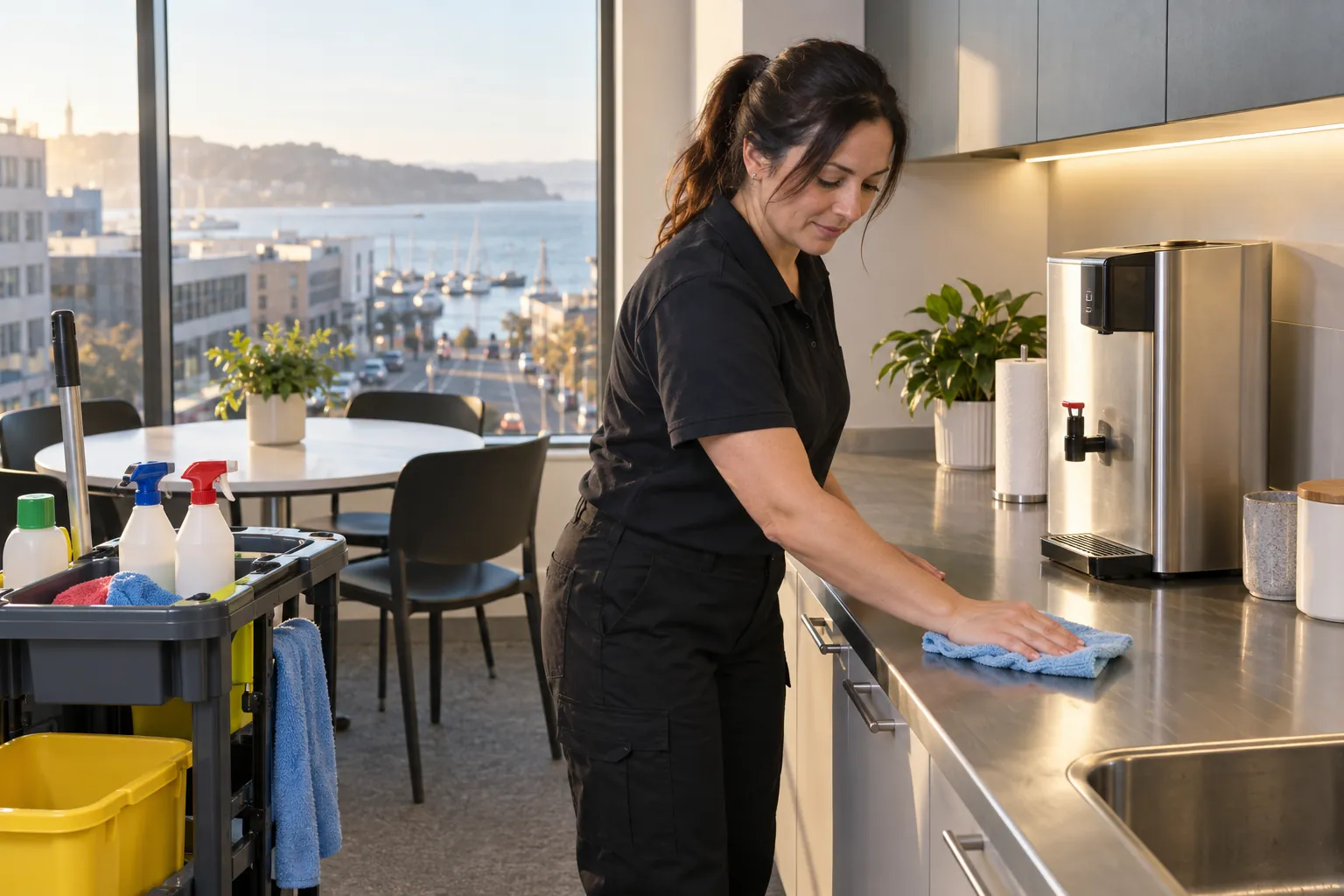 CleaningCommercial cleaning checklist: area by area, for New Zealand workplacesA commercial cleaning checklist for New Zealand offices and shared buildings, area by area, with the HSWA duties behind it, how to use it and how it is checked.
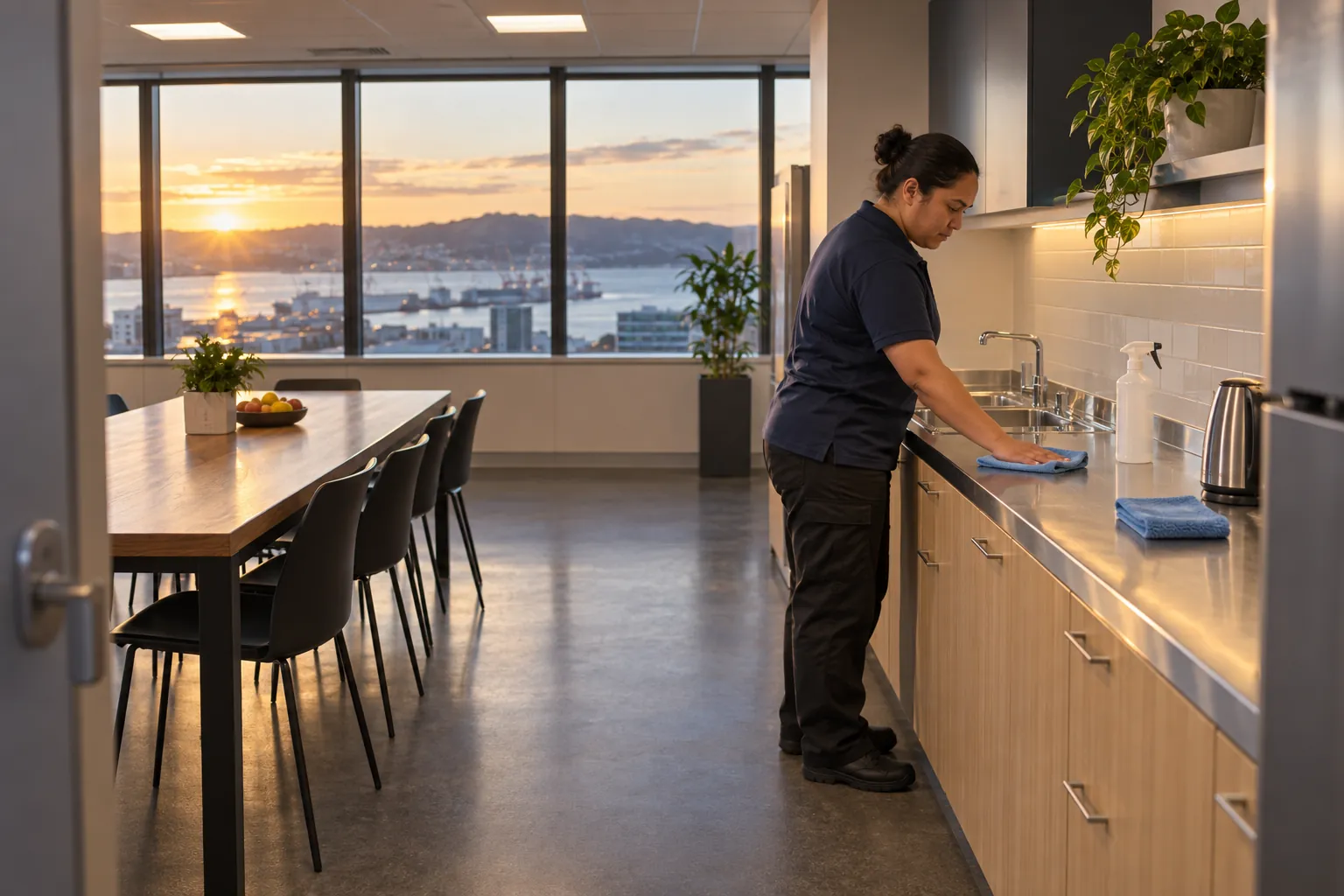 CleaningCleaning log sheet: what it records, who signs it, and what it provesWhat a cleaning log sheet should record in a New Zealand workplace, who fills it in and who checks it, how long to keep it, and what a signature on it can prove.
 CleaningToilet cleaning checklist: what a New Zealand workplace checks, and how it shows itA toilet cleaning checklist for New Zealand workplaces: the HSWA facilities duty, what to check, how often, checks against cleans, and a record people believe.
 CleaningOffice cleaning checklist: what a New Zealand office cleans, how often, and how it shows itAn office cleaning checklist for New Zealand workplaces: the HSWA duty, daily, weekly and periodic tasks, who owns each one, and how to show the work was done.