Cleaning
Cleaning supervisor duties: what the role involves, and what good looks like
A cleaning supervisor's duties are to run a team of cleaners on one or more sites: allocating the work, training and briefing staff, inspecting the cleaning against the agreed cleaning standards, keeping equipment and supplies in order, keeping the team safe and reporting to the client.
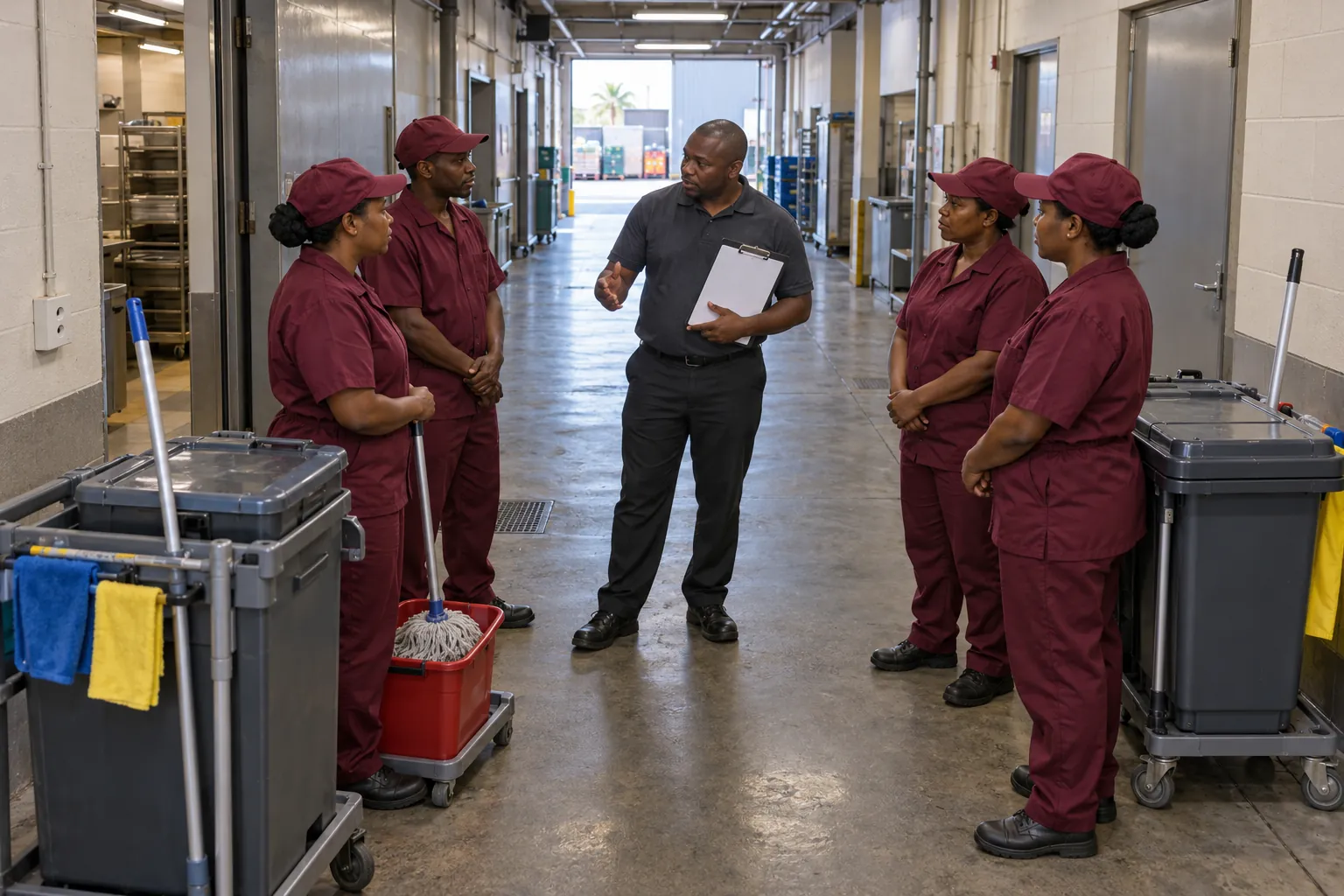
In South Africa the supervisor is often also the person who gives the general supervision that section 8(2)(i) of the Occupational Health and Safety Act 85 of 1993 requires: someone trained to understand the hazards, with the authority to make sure the employer's precautions are followed. The supervisor is the person who turns a cleaning specification into a clean building, shift after shift, and the client's first point of contact on site. This guide covers the main duties and responsibilities, what a typical shift looks like, the health and safety side under South African law, and the records a good supervisor keeps.
01
What a cleaning supervisor is
A cleaning supervisor is responsible for a team of cleaning staff on one or more sites: they oversee the work, monitor the standard, and make sure the cleaning is done to the agreed standard, safely and on time. The role exists in contract cleaning and hygiene services companies, in in-house facilities teams, and under other names in hospitals, hotels, universities, schools and shopping centres: site supervisor, team leader, housekeeping supervisor or hygiene supervisor.
On a smaller site the supervisor is often a working supervisor, cleaning alongside the team for part of the shift; on a larger one, such as an office park or a hospital, the role is full time. Either way, the supervisor sits between the cleaners and the contract manager, and is the client's day-to-day contact on site.
The legal duties behind the role belong to the employer, but the supervisor is how they are carried out on site. Section 8(1) of the Occupational Health and Safety Act 85 of 1993 (the OHS Act) requires every employer to provide and maintain, as far as is reasonably practicable, a working environment that is safe and without risk to the health of its employees. Section 8(2) spells out what that includes, and three of its paragraphs describe a supervisor's job almost word for word:
- Section 8(2)(a): the provision and maintenance of systems of work, plant and machinery that, as far as is reasonably practicable, are safe and without risks to health.
- Section 8(2)(e): providing such information, instructions, training and supervision as may be necessary to ensure, as far as is reasonably practicable, the health and safety at work of employees.
- Section 8(2)(i): ensuring that work is performed under the general supervision of a person trained to understand the hazards associated with it and who has the authority to ensure that the precautionary measures taken by the employer are implemented.
Two more parts of the Act shape the role. Under section 16(2) a chief executive officer may assign duties to any person under their control, without giving up their own responsibility; a cleaning company may name its site supervisors in such an appointment, but the CEO and the employer still carry the duty. And where the cleaning is contracted out, the contractor is the client's mandatary: under section 37(2) the client can be presumed responsible for the contractor's acts or omissions unless the two have agreed in writing the arrangements and procedures between them to ensure the contractor complies with the Act. That 37.2 agreement is signed by managers, but it is the supervisor who makes it true on site.
02
The main duties and responsibilities
Every job description is different, and the tasks depend on the sector and the environment, but the main responsibilities of a cleaning supervisor usually include:
- Organising the work: allocating areas and tasks to each cleaner so that everything in the cleaning schedule is covered in the hours available.
- Managing the team: briefing staff, covering absence, dealing with lateness and performance, and helping to recruit and induct new starters.
- Training: showing new cleaners the methods, the equipment, the chemicals and the site, and spotting when refresher training is needed.
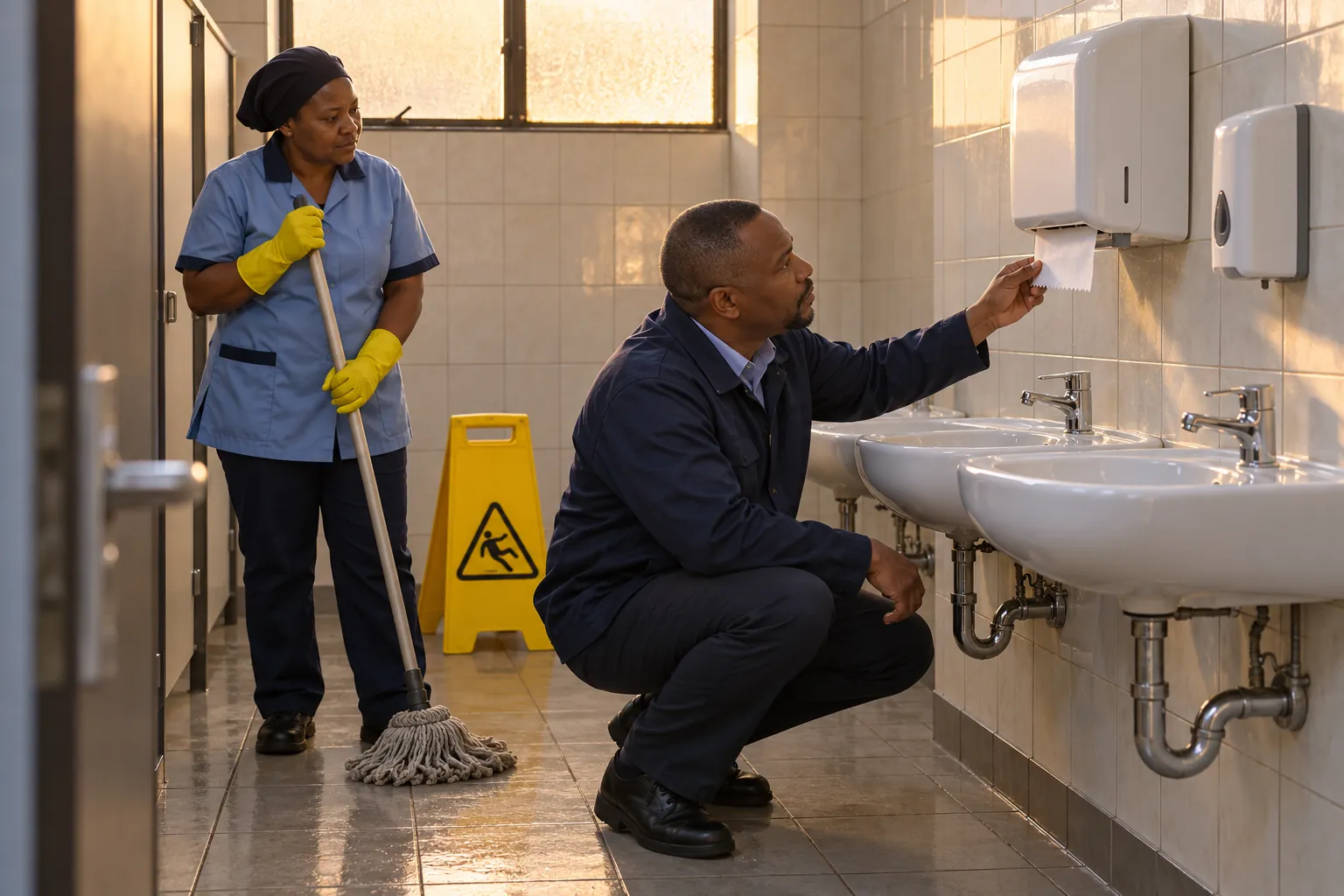
- Inspecting the work: walking the building to check cleanliness against the cleaning standards in the specification, and making sure anything missed is put right.
- The ablutions: making sure the ablution facilities are cleaned and checked through the day, and that toilet paper, soap and hand-drying (paper towels or whatever the site uses) are stocked, since regulation 2(3) of the Facilities Regulations, 2004 requires the employer to provide toilet paper and soap free of charge, and a towel, paper towels, hot air blowers or clean cloth towels at washbasins.
- Periodic and specialist work: planning carpet shampooing, floor stripping and sealing, deep cleans and window cleaning around the building's use, whether done by the team or by a specialist contractor.
- Health and safety: making sure the risk assessment and the chemical assessment are followed, personal protective equipment (PPE) is worn, wet floors are signed, and incidents are reported.
- Equipment and supplies: keeping machines working and safe, ordering chemicals, consumables and other cleaning supplies, and keeping the cleaners' store secure and tidy.
- Client service: being the first point of contact for the customer, whether that is the client, the facilities manager or the building manager, taking requests and complaints, and reporting back.
- Records and reporting: keeping check sheets, inspection records, training records and incident records, and reporting to their own manager.
- Keys and security: keys, alarm codes, locking up, and reporting anything found wrong with the building to security or maintenance.
The outcome the client pays for is set in law as well as in the contract. Regulation 13H(2) of the General Safety Regulations, inserted by the General Safety Regulations, 2025 (Government Notice 5954, Government Gazette 52226 of 6 March 2025), requires every employer to keep every indoor workplace "clean, orderly and free of materials, tools and similar things which are not necessary for the work done", and to keep all floors, walkways, stairs, passages and gangways in a good state of repair, skid-free and free of obstructions, waste or materials. Regulation 9 of the Facilities Regulations requires the rooms and facilities they provide for, such as ablutions, change rooms and dining rooms, to be kept "in a clean, hygienic, safe, whole and leak-free condition, and in a good state of repair".
03
What a typical shift looks like
Every site is different, but a supervisor's shift on a contract cleaning site often follows a pattern like this:
- Before the shift: check who has signed in, who is absent and how the gap will be covered; read any messages or requests from the client or the building manager.
- Briefing: a few minutes with the team at the start, covering changes, events in the building, faults reported, and the areas that need extra attention today.
- During the shift: walk the building, check work in progress, help where the team is stretched, deal with spills and urgent requests, and answer questions from the people who use the building.
- Checks: carry out planned inspections and make sure scheduled tasks, such as the ablution checks after lunch and at shift changes, have actually happened.
- Problems: report faults such as leaks, broken dispensers or blocked toilets to whoever fixes them, and follow up those still open.
- End of shift: confirm everything scheduled was done or record why not, lock up, secure machines and chemicals, and hand over anything outstanding to the next shift or the client.
04
Managing people and keeping them safe
Most of what makes a good cleaning supervisor is people management. The team often works early or late, across several sites and in several home languages. Clear instructions, fair allocation of work and being visible during the shift matter more than any paperwork.
The health and safety side is where supervisors carry most responsibility in practice:
- Cleaning chemicals: many are hazardous chemical agents under the Regulations for Hazardous Chemical Agents, 2021 (the safety data sheet says whether a product is classified as hazardous). Regulation 3 requires information, instruction and training before anyone is exposed, including how to read the safety data sheet and the label and what to do about spills; regulation 4 requires everyone exposed to obey lawful instructions on PPE and housekeeping; and regulation 5 requires an assessment of exposure at intervals of no more than two years, with a record kept. See the guide to hazardous chemical agents.
- PPE last, not first: section 8(2)(b) of the OHS Act requires the employer to eliminate or mitigate a hazard, as far as is reasonably practicable, before resorting to personal protective equipment. Gloves and goggles are the last line, after the right product at the right dilution.
- Slips and trips: wet floors are signed, cables are managed and spills are dealt with at once, because regulation 13H(2)(d) requires floors, stairs and passages to be kept skid-free and free of obstructions.
- Unsafe situations: under section 14(d) of the Act every employee must report an unsafe or unhealthy situation to the employer or the health and safety representative as soon as practicable. The supervisor is usually who the cleaners tell.
- Incidents: under section 14(e), an employee involved in an incident that injures them or may affect their health must report it as soon as practicable, and no later than the end of the shift in which it happened, unless that was not possible.
- The health and safety representative: section 17(1) requires an employer with more than 20 employees at a workplace to designate health and safety representatives in writing. The supervisor works with the SHE rep, not around them.
When someone is hurt, the supervisor starts a chain the employer must finish. Under regulation 8 of the General Administrative Regulations, 2003 (Government Notice R. 929 of 25 June 2003), an incident covered by section 24(1)(a) of the Act must be notified to the provincial director within seven days. Regulation 9 requires an Annexure 1 record, kept for at least three years, of every reportable incident and any other needing medical treatment beyond first aid, each investigated within seven days. For compensation, the Compensation Fund's injury on duty reporting procedures say the employer must report the accident to the Compensation Commissioner on the Employer's Report of an Accident (W.Cl.2) within seven days. A supervisor who writes down what happened and who saw it, on the day, makes that possible; see the guide to injury on duty.
Supervisors also need to know the limits of the role. Pay, contracts, disciplinary decisions and recruitment usually sit with the area manager or HR. In the contract cleaning sector, minimum wages and conditions are set by Sectoral Determination 1: Contract Cleaning Sector, whose minimum hourly rates were last replaced, with effect from 1 March 2026, by Government Notice R. 7083 of 3 February 2026 under the National Minimum Wage Act; in KwaZulu-Natal the collective agreement of the Bargaining Council for the Contract Cleaning Service Industry applies instead. A supervisor who is asked about pay should pass the question up rather than answer it from memory.
05
Checking the work and reporting to the client
Maintaining cleanliness is the purpose of the job, so a cleaning supervisor is responsible for knowing, at any point, whether the building is clean and whether the scheduled work was done. That takes two kinds of checking:
- Inspecting quality: regular inspections against the standard in the specification, sampling different areas and times of day, with failures put right and recorded. Many contracts add a monthly joint inspection with the client against an agreed cleaning checklist.
- Confirming delivery: that each scheduled clean and check actually happened, when and by whom, and that missed tasks are known and explained rather than discovered by the client.
A short, honest report of what was done, what was missed and why, and what is still open is worth more than a long one that says everything went well. In practice, a gap the supervisor has explained is easier for a client to accept than one they find for themselves.
The client has its own reason to care. The 2026 wage notice warns that "any provider that contracts with a contract cleaning company at levels that makes it impossible for the contract cleaning company to meet its obligations in terms of the National Minimum Wage or the Basic Conditions of Employment Acts can be held liable in terms of section 200B of the Labour Relations Act 66 of 1995"; that includes a client that buys cleaning on those terms. A schedule that cannot be done in the hours paid for will not be done, and a good supervisor says so early, with the record to show it.
06
Where the supervisor's record fails, and what SiteClara does about it
Much of a supervisor's day is spent finding out what has happened: whether the ablution checks were done, whether a leak was reported, whether the evening cleaner reached the fourth floor. On paper that means reading sheets on the back of doors, some signed in advance, and writing the day's report from memory.
SiteClara gives the supervisor that picture without the walk. Each location has a printed QR poster, with an optional NFC tag behind it. Enrolled staff scan the code or tap the tag on their own phone, with no app to install, see the checks due there, and mark each one done or say what stopped them, with a photo when one helps. A fault, such as a broken dispenser or a leaking cistern, is reported on the spot and goes onto the team's list of open jobs until someone closes it.
The supervisor sees what is due, done and missed, can record the reason a check was missed, and works from a queue of open jobs grouped by building and floor, escalating a job to the building manager when it needs them. At the end of the day they review the checks and photos, add a note and approve the daily report, which goes to nominated management or client contacts at 08:00 the next morning, showing what was completed, what is still open and how the scheduled checks went, for example 12 of 12 completed.
07
Questions people ask
What are the duties and responsibilities of a supervisor under the OHS Act?
The Occupational Health and Safety Act 85 of 1993 does not list duties by job title; a supervisor's come from the employer's duties in section 8(2), which the supervisor carries out on site. They include providing the information, instructions, training and supervision necessary to ensure, as far as is reasonably practicable, employees' health and safety (section 8(2)(e)), enforcing the measures needed in the interest of health and safety (section 8(2)(h)), making sure work is performed under the general supervision of a person trained to understand its hazards and with the authority to see that the employer's precautionary measures are implemented (section 8(2)(i)), and making sure employees are told the scope of their authority (section 8(2)(j)). As an employee, the supervisor also has the duties in section 14, such as taking reasonable care for their own health and safety and that of others.
How much do cleaning supervisors get paid?
The law sets no separate rate for a supervisor, only a floor for every contract cleaning employee. From 1 March 2026, Government Notice R. 7083 of 3 February 2026 sets the minimum at R33,27 an hour in Area A (the City of Cape Town, the Greater East Rand Metro, the City of Johannesburg, Tshwane and Nelson Mandela metros, and the Emfuleni, Merafong, Mogale City, Metsimaholo, Randfontein, Stellenbosch and Westonaria local councils) and R30,33 an hour in the rest of the country, except KwaZulu-Natal, where the rates of the Bargaining Council for the Contract Cleaning Service Industry apply. A supervisor's actual pay is agreed with the employer, at or above that floor.
08
Where to read the official text, and a list to take away
The Occupational Health and Safety Act 85 of 1993, the Facilities Regulations, 2004 and the 2025 General Safety Regulations are on gov.za; the chemical, administrative and Compensation Fund texts are on labour.gov.za. Regulations and wage notices change, so check the current text before relying on an old copy.
Many cleaning supervisors come up through the role of cleaner, and what employers look for is practical experience, knowledge of methods, chemicals and machines, the skills to organise a team and a shift, and good communication with staff and clients. First aid training and a short health and safety course for supervisors are useful additions.
A good cleaning supervisor, at the end of each shift, can say:
- who was on site, and how any absence was covered;
- that every area in the specification was allocated to someone;
- which scheduled tasks and checks were done, and why any were not;
- what was inspected, what failed and what was put right;
- that ablutions were stocked with toilet paper, soap and paper towels or whatever the site uses for drying hands;
- that the team used only approved chemicals, with the PPE the assessment requires;
- which faults were reported, to whom, and which are still open;
- that any incident was recorded on the day and passed to the employer;
- that machines, chemicals and keys are secure;
- what the client has been told.
Sources
Every document this guide quotes or links to, in the order it first cites them.
- Occupational Health and Safety Act 85 of 1993 gov.za
- Facilities Regulations, 2004 gov.za
- General Safety Regulations, 2025 gov.za
- Regulations for Hazardous Chemical Agents, 2021 labour.gov.za
- General Administrative Regulations, 2003 labour.gov.za
- Compensation Fund's injury on duty reporting procedures labour.gov.za
- Government Notice R. 7083 of 3 February 2026 gov.za
- Occupational Health and Safety Act 85 of 1993 gov.za
Related guides
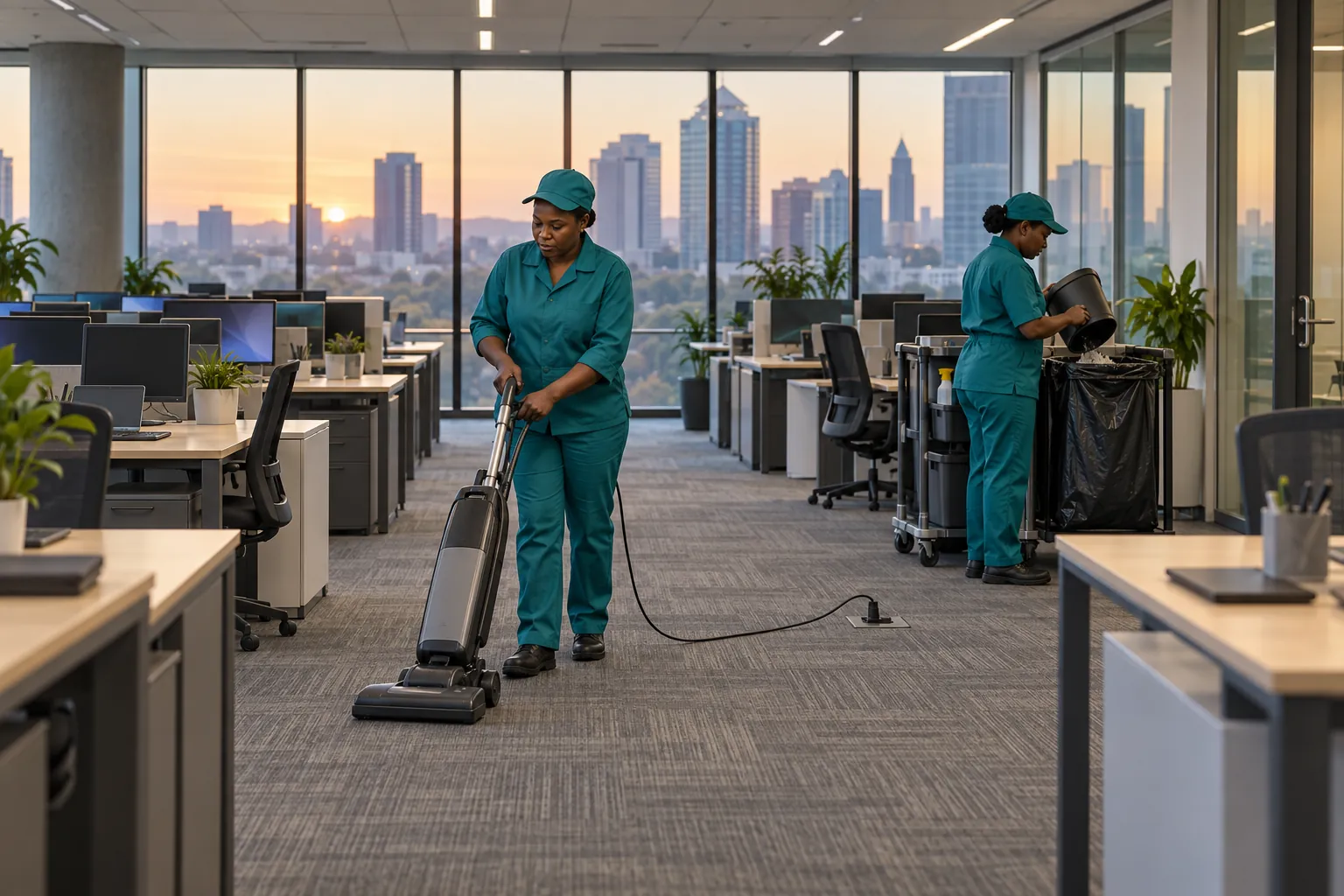 CleaningCleaning schedule: what to clean at work, how often, and how to show it was doneWhat a workplace cleaning schedule should cover in South Africa, which tasks are daily, weekly or monthly, who does what, and how to show the schedule was kept.
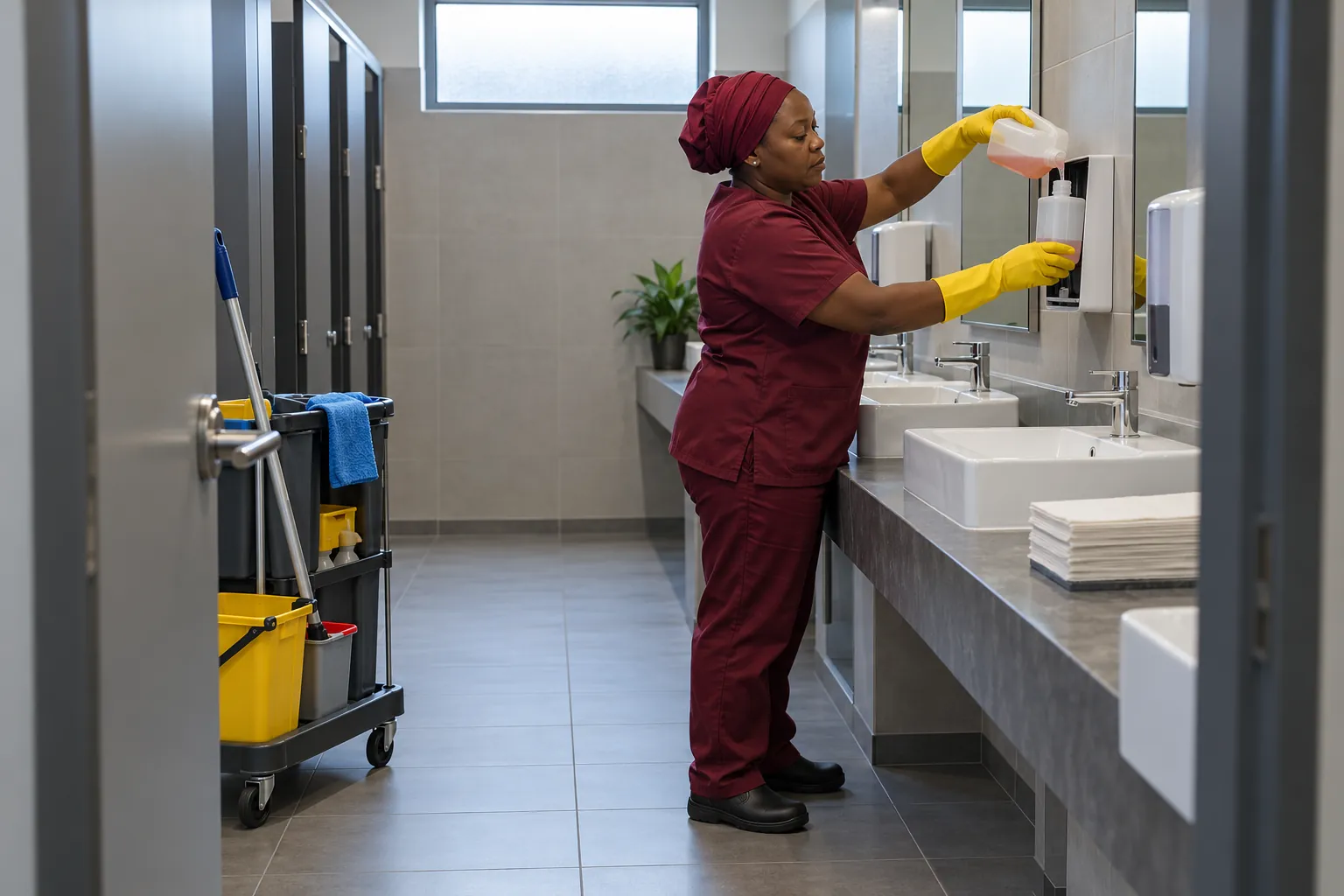 CleaningAblution facilities: the legal requirements, and how to keep them cleanWhat the Facilities Regulations, 2004 require of workplace ablution facilities, where the toilet numbers come from, and how to check and record them properly.
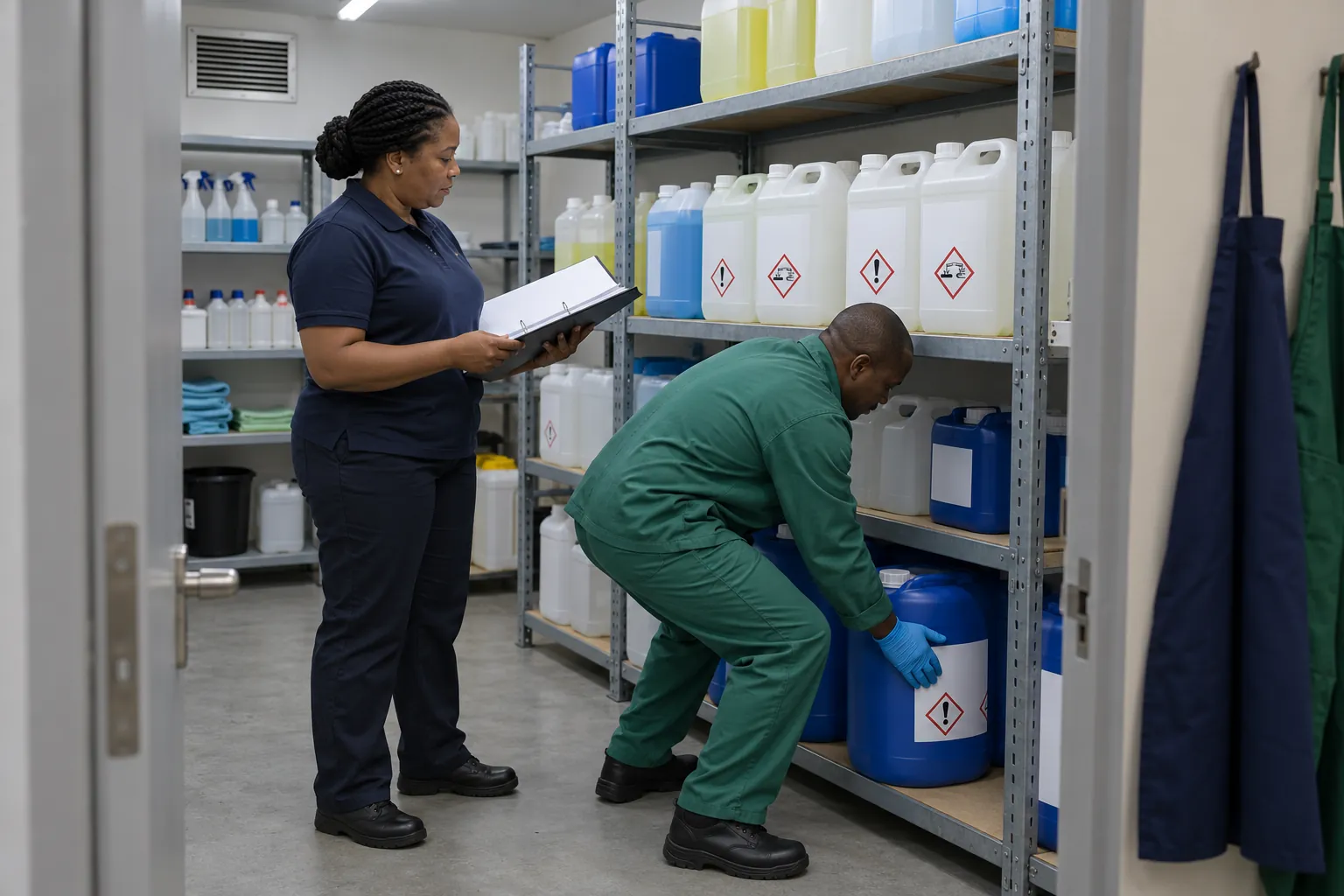 CleaningHazardous chemical agents: what the 2021 regulations mean for cleaning chemicalsWhat the Regulations for Hazardous Chemical Agents, 2021 require of cleaning chemicals: the assessment, the SDS file, labels, the store, training and records.
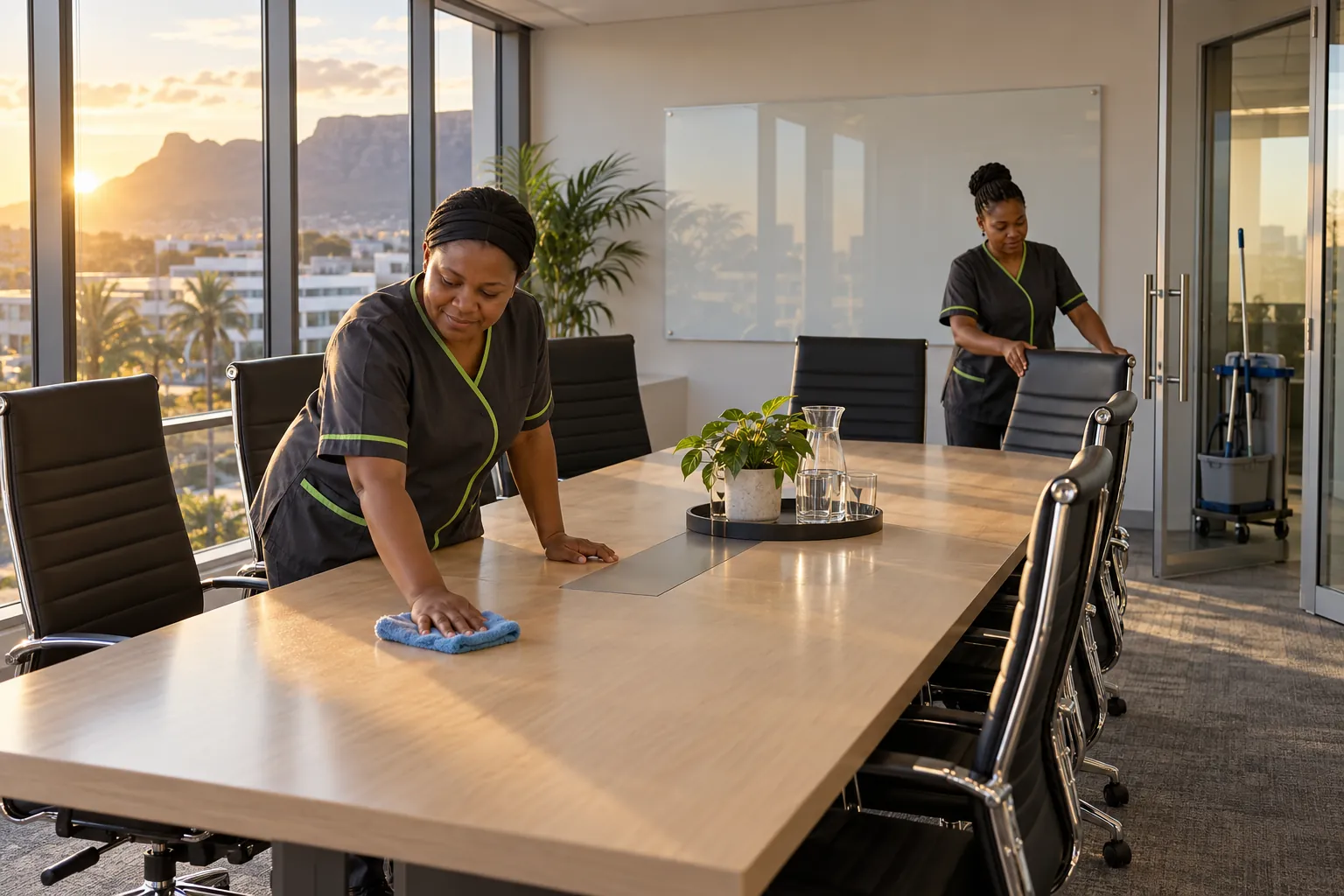 CleaningCommercial cleaning checklist: area by area, and how to use it on shiftA cleaning checklist for offices and other workplaces in South Africa, area by area, with the OHS Act duties behind it, how to use it on shift and how to check it.