Premises and facilities management
Health and safety inspection checklist: what to look at, and what happens next
A health and safety inspection checklist is the list of things to look at on a planned walk round a workplace: exits and walkways, floors, housekeeping and storage, lighting, toilets and kitchens, first aid, emergency arrangements, hazardous substances, equipment and the way the work is being done.
Also written for United Kingdom · Ireland · United States · Canada · Australia · South Africa
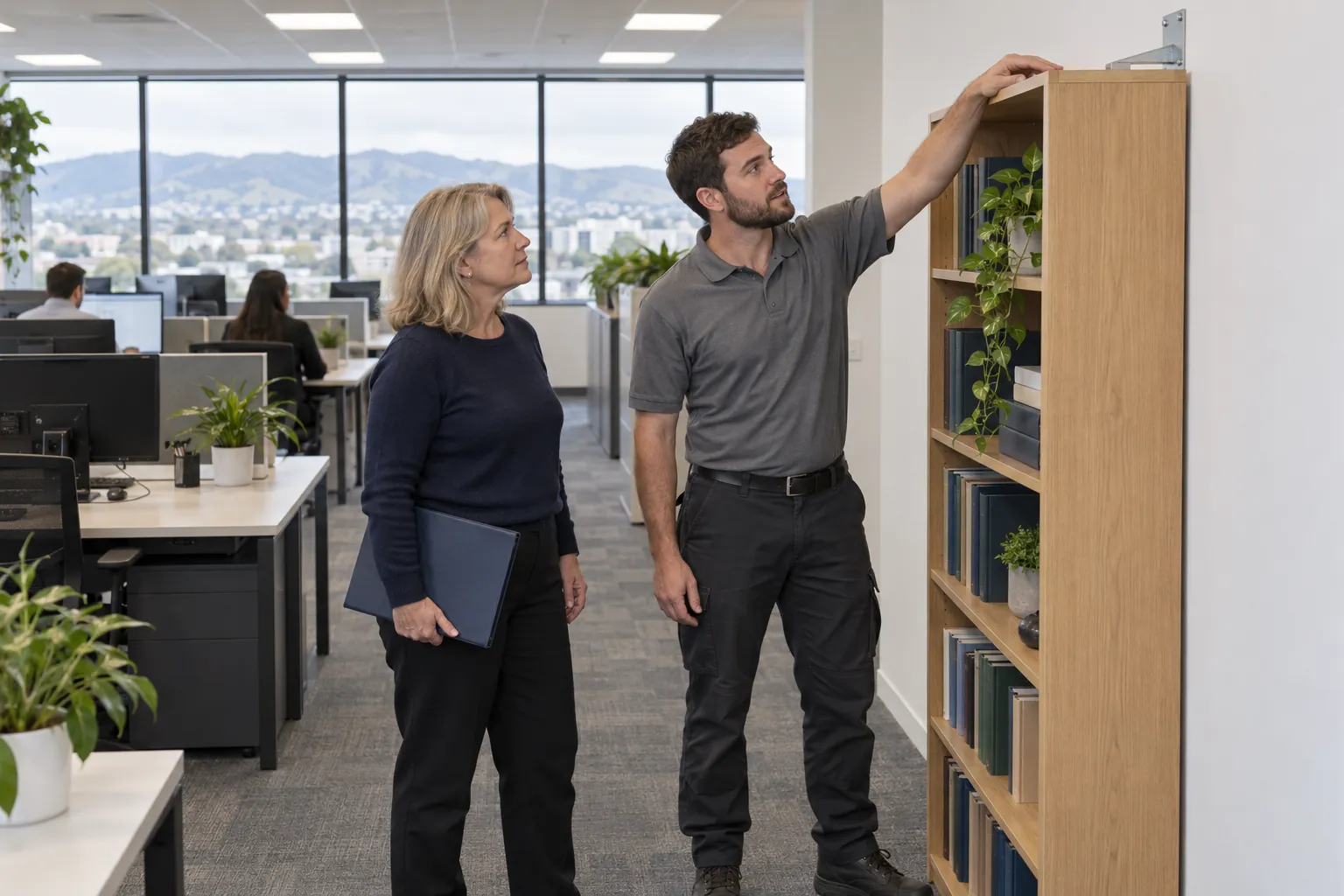
In New Zealand it is the usual way a PCBU checks that its controls are still working, and part of how it meets its duty under the Health and Safety at Work Act 2015 to monitor the conditions at the workplace. No law sets out a standard checklist or a fixed frequency. What the law does ask is that risks are managed, that controls are kept effective and that someone is checking. This guide covers the duty behind a workplace inspection, what a checklist for a non-domestic building should cover, how often to walk it and who should, how to record findings and close them out, and how to involve workers, health and safety representatives and the other businesses in the building.
01
The duty behind a workplace inspection
The Health and Safety at Work Act 2015 (HSWA) gives every person conducting a business or undertaking (PCBU) a primary duty of care in section 36: to ensure, so far as is reasonably practicable, the health and safety of its workers, and that other people are not put at risk by its work. WorkSafe New Zealand's Introduction to the Health and Safety at Work Act 2015 special guide lists what that includes, among them "providing and maintaining a work environment that is without risks to health and safety" and "monitoring the health of workers and the conditions at the workplace for the purpose of preventing injury or illness of workers".
Section 30 sets the standard: in the special guide's words, "Risks must be eliminated so far as is reasonably practicable. If a risk cannot be eliminated, it must be minimised so far as is reasonably practicable." The Health and Safety at Work (General Risk and Workplace Management) Regulations 2016 turn that into a process, explained in WorkSafe's interpretive guidelines General risk and workplace management – part 2: identify the hazards (regulation 5), control the risks in the order of the hierarchy of control measures (regulation 6), keep the controls effective (regulation 7) and review them (regulation 8).
Regulation 7 is where the inspection lives. A control must be effective and "maintained so that it remains effective", and the guidelines go on: "This means that control measures must be regularly monitored and checked to ensure that they are still managing the risk effectively. This should occur on an ongoing basis – not just when the control measure is first put in place."
So a workplace inspection is not a separate legal requirement with its own form. It is the usual way of doing what the law already asks: monitoring workplace conditions and checking that controls still work. WorkSafe's quick guide Identifying, assessing and managing work risks (July 2017) names it when it suggests how to find hazards: "have a look around your workplace, and observe workers while they work (eg carry out safety observations, workplace inspections)".
02
What a health and safety inspection checklist covers
A general workplace inspection checklist for an office, school, shop, warehouse or other non-domestic building usually covers the areas below. Several follow the General Risk and Workplace Management Regulations as WorkSafe explains them in General risk and workplace management – part 1. Tailor the list to the work and to your hazard register: a warehouse needs more on vehicles and racking, workshops more on machine guarding and noise, offices more on cables and kitchens. A free template downloaded from the internet is a starting point at most; maintain your own list as the hazard register changes.
- Layout, access, exits and walkways: under regulation 10, people must be able to enter, leave and move about "without risks to health and safety, both under normal working conditions and in an emergency". Look for blocked corridors, exits and stairs.
- Floors and surfaces: damaged flooring, loose mats, wet entrances, worn stair nosings, trailing cables (see slips, trips and falls).
- Housekeeping, storage and handling: rubbish cleared, nothing stored in corridors, stairwells, exits or plant rooms, heavy items on low shelves, and trolleys or lifting aids where loads are heavy or awkward. WorkSafe's quick guide lists manual handling among the ergonomic risks to health.
- Lighting, ventilation and temperature: lighting suitable for the work and for "safe evacuation in an emergency"; enough fresh air; protection from extremes of heat or cold.
- Welfare facilities: toilets, drinking water, hand-washing, eating and break areas, and somewhere for an unwell worker to rest. Under regulation 12 they must be "sufficient in number and maintained to be in good working order, and are clean, safe, and accessible".
- First aid: regulation 13 requires adequate first aid equipment that all workers can reach, and access to first aiders. Check that kits are stocked and in date; see our first aid kit checklist.
- Emergencies: regulation 14 requires an emergency plan maintained so it remains effective. Check that routes and assembly points are clear and signed, extinguishers and call points unobstructed, fire doors closing, and the fire evacuation scheme and BWoF where they should be. Part 1 lists emergencies including "fire, gas leak, electricity or water outage, natural disasters"; in an earthquake-prone country, tall shelving fixed and heavy items stored low belong on the list.
- Hazardous substances: chemical cleaning products and other substances stored, labelled and segregated, safety data sheets to hand, nothing decanted into unmarked bottles, and the hazardous substances inventory current where the Health and Safety at Work (Hazardous Substances) Regulations 2017 require one.
- Plant, machinery and tools: guards in place on machinery, faulty tools and equipment tagged out and reported, ladders and steps sound, leads, plugs and sockets undamaged, switchboards and plant rooms clear and locked where they should be.
- Personal protective equipment, such as gloves, safety glasses, hearing protection and respirators: part 1 says PCBUs must ensure PPE "is clean and hygienic and in good working order", and "Often this will mean creating an inspection, repair and destruction schedule for the PPE."
- Vehicles and pedestrians: car parks, loading docks and service lanes, with separate walking routes where vehicles move.
- Remote or isolated work: regulation 21, which WorkSafe explains in General risk and workplace management – part 2, covers work such as "working alone or separated from colleagues" and "working outside normal business hours or shift/night work", like the after-hours cleaner or the security officer on lock-up. Check that the agreed way of keeping in touch is actually used.
- People: contractors and visitors signed in and inducted, and workers trained or supervised for what they are doing (regulation 9). Under HSWA a worker includes employees, contractors and volunteer workers, so the training and supervision check covers all of them.
WorkSafe's page What to expect from a WorkSafe assessment is a good test of a checklist. On the walkaround its inspectors look at, among other things, "how workers and visitors are kept healthy and safe in the workplace", "how you make sure those processes are effective" and "how you make sure equipment is safe to use".
03
How often to inspect, and who should walk it
No New Zealand law sets a frequency for a general workplace inspection. It follows the risk, and the checks usually come in layers:
- Daily or each shift: short checks that a control is in place, done by the people who work there, such as mats down on a wet morning and fire exits clear at opening. The café owner in WorkSafe's quick guide recorded "Morning checks for kitchen cleanliness" as the monitoring for slippery floors.
- Weekly or monthly: a walk round each area with the checklist, by a supervisor or manager. The same café table has "Inspect floor condition during weekly tidy-up".
- Annually: a comprehensive inspection of the whole building, with the health and safety representative, the owner or property manager and the main contractors, and a look at the records of the checks in between.
- After a change: the quick guide says to review work activities when there is "new equipment", "new or changed work processes" or "increased workload, extended working hours or additional/changed shifts". A refit, a new tenant or a new cleaning contract is a reason to walk again.
- After an incident or near miss: regulation 8 requires the controls to be reviewed when a control does not manage the risk it was put in place for, or a new hazard or risk is identified. See our guides to near-miss reporting and notifiable events.
Each layer needs its own checklist: a daily safety inspection checklist of a few items that take a minute, and longer inspection checklists, on paper forms or a phone, for the planned walk. Whatever the rhythm, write it down and keep to it. An inspection programme that drifts from monthly to whenever there is time usually comes to light only after someone is hurt.
The inspector should know the area and what good looks like, and be trained to recognise hazards: a facilities or property manager, a supervisor, a health and safety adviser or a trained worker. Specialist systems, such as electrical installations, gas, lifts and the specified systems on a compliance schedule, need their competent people or IQPs; the general inspection notes what it can see and reports it. Change who inspects now and then: the manager who walks the same floor every month stops seeing the cable across the doorway.
Walk the building as it is used, not only in office hours. The quick guide asks PCBUs to look at work processes "during different shifts". The stairwell light that is out matters most to the cleaner at 10pm, and the dark car park to the security officer opening up alone.
04
Recording findings and closing them out
WorkSafe's quick guide says "It is good practice to keep written records of how you are managing your risks", because they make it easier to review how risks are being dealt with when something changes. For low-risk work "records can be simple"; "More risky work will require more complex records." An inspection record, on paper or digital, should capture:
- The inspection: the date, the area covered and who inspected.
- Each finding: the hazard, exactly where, and a photo where it helps.
- How serious it is, so the worst is dealt with first. An immediate danger is made safe on the spot, not written down and left.
- The corrective action, following the hierarchy of controls, with PPE and "take care" never the first answer.
- Who is responsible, and by when, and who else needs to know, such as the building owner when the fault is in the building and not the work.
- Close-out: when it was done, and who checked it.
Read the last record and its open corrective actions before each walk, so the inspection checks that earlier fixes held. Record what was in order as well as what was not: a note that the exits were clear shows they were looked at.
Then look across the records. The same finding month after month, such as a wet entrance every time it rains or a fire exit blocked on one floor, points to a cause the inspection will not fix on its own: the wrong matting, too little storage, a door propped for deliveries. That is the review regulation 8 asks for, and it may change the controls on the hazard register.
Expect the record to be read. WorkSafe's assessment page says an inspector "might ask for documents about health and safety processes. Their focus is on whether the systems and records support good health and safety practice." The inspector also "will check that the information they've learned during their conversations matches what's actually happening day to day".

05
Involving workers, health and safety representatives and the other businesses
WorkSafe's special guide says PCBUs must, so far as is reasonably practicable, engage with workers on health and safety matters that may directly affect them, and its quick guide says workers "will have operational day-to-day knowledge that will be invaluable when identifying hazards". Ask the people who work in an area what worries them before you walk it: they know the near misses that were never reported.
Where workers have elected a health and safety representative (HSR), WorkSafe's page HSR functions and powers says: "An HSR may, at any reasonable time, enter and inspect any area of a workplace." The HSR must give notice first, unless the inspection follows an incident or a situation involving serious risk to a worker's health, and the HSR's functions include "monitoring health and safety measures taken by the PCBU". Invite the HSR on the planned inspection; our guide to worker engagement covers HSRs and committees.
In a shared building, the owner or property manager, each tenant, the body corporate and the cleaning and security contractors all have duties about the same floors, exits and car parks. The special guide says PCBUs with overlapping duties must, so far as is reasonably practicable, work together to manage work risks. For inspections, that means:
- agreeing who inspects what: each tenant its own space, the owner or property manager the common areas, roof and plant rooms;
- passing on findings that belong to someone else, such as a cleaner's note of a broken stair nosing to whoever maintains the stairs;
- walking the building together at least once a year, and after a change that affects everyone;
- agreeing how a hazard spotted between inspections reaches someone who can fix it.
Our guide to overlapping duties covers the duty itself. Finally, share what the inspection found and what was done: people keep reporting hazards when they can see it leads somewhere.
06
Where the record fails, and what SiteClara does about it
Most inspection records fail in the same places. The checklist is ticked in the office after a quick look. The findings sit in a spreadsheet where nobody is chased to close them. And the hazards noticed between inspections, by the cleaners, security officers and caretakers who walk the building every day, are mentioned to whoever is passing and never written down. Regulation 7 asks that controls stay effective; the monthly checklist says what should happen, but rarely shows that the daily checks the controls depend on were done, by whom and when.
SiteClara records those checks at the location. A printed QR poster, with an optional NFC tag behind it, sits at each place where a check is scheduled, such as an entrance, a fire exit, a bathroom, a stairwell or a car park level. Staff scan or tap with their own phone, with no app to install, see the checks due there, and mark each one done or say what stopped them. The time and the named person are recorded as it happens, with a photo when one is asked for, and a hazard reported there goes onto the team's list of open jobs until someone closes it.
A supervisor sees what is due, done and missed, gives the reason when a check was missed, and each day reviews and approves a short report that goes to nominated managers or the client the next morning. When the inspection comes round, there is a record of the routine checks in between, not an assumption that they happened.
07
Questions people ask
Are workplace health and safety inspections a legal requirement in New Zealand?
Not as a document by that name, but the duties behind them are law. Section 36 of the Health and Safety at Work Act 2015 includes "monitoring the health of workers and the conditions at the workplace", as WorkSafe's Introduction to the Health and Safety at Work Act 2015 special guide puts it, and WorkSafe's General risk and workplace management – part 2 says regulation 7 means controls "must be regularly monitored and checked". A planned inspection is the usual way to show both are done.
What does a health and safety checklist include?
Exits and walkways, floors, housekeeping and storage, lighting, ventilation and temperature, toilets and other facilities, first aid, emergency arrangements, hazardous substances, plant and equipment, PPE, vehicles and people working alone, plus anything on the workplace's own hazard register. WorkSafe's General risk and workplace management – part 1 sets out the workplace, facilities, first aid, emergency plan and PPE requirements that many of the items come from.
What are some examples of safety checklists?
WorkSafe's quick guide Identifying, assessing and managing work risks works through a café whose owner records the checks against each hazard: "Morning checks for kitchen cleanliness" and "Morning checks for tidiness" each day, "Inspect floor condition during weekly tidy-up", and "PPE to be checked weekly". Daily opening checks, weekly area checks, first aid kit checks and the planned workplace inspection are all safety checklists of this kind.
How often should a workplace safety inspection be done?
As often as the risk needs; no New Zealand law sets an interval for a general inspection. Many workplaces combine daily checks by the people who work there with a monthly walk round each area and a comprehensive annual inspection, and inspect again after a change or an incident. WorkSafe's General risk and workplace management – part 2 explains when regulation 8 requires the controls to be reviewed, including when a control does not manage the risk it was put in place for.
08
Further reading, and a list to take away
WorkSafe's quick guide Identifying, assessing and managing work risks sets out the Plan, Do, Check, Act approach an inspection belongs to. The regulations are explained in WorkSafe's General risk and workplace management guidelines, part 1 (workplaces, facilities, PPE, first aid and emergency plans) and part 2 (the risk management process), and the fact sheet Workplace and facilities requirements puts the workplace requirements in one table.
HSWA changes from 1 April 2027. WorkSafe's page Understanding the changes to the health and safety law explains that critical risks, those likely to result in death or a notifiable injury, illness or incident among others, will come first, and small businesses (fewer than 20 workers) will have to manage critical risks ahead of other risks. A checklist that marks the critical risks in each area will carry across.
Before your next health and safety inspection, check that:
- the checklist follows your hazard register and the work in each area, after hours included;
- each area's frequency is written down and kept to;
- inspectors are trained, and change from time to time;
- immediate dangers are made safe on the spot;
- every finding has an action, an owner and a date, and is checked when closed;
- workers are asked before the walk, and the HSR is invited on it;
- findings for the owner, a tenant or a contractor reach them;
- repeat findings lead to a review of the controls;
- IQP inspections, the BWoF and emergency plan tests are tracked separately, not assumed from the walk-round.
Sources
Every document this guide quotes or links to, in the order it first cites them.
- Health and Safety at Work Act 2015 legislation.govt.nz
- Introduction to the Health and Safety at Work Act 2015 special guide worksafe.govt.nz
- General risk and workplace management – part 2 worksafe.govt.nz
- Identifying, assessing and managing work risks worksafe.govt.nz
- Managing your BWoF building.govt.nz
- General risk and workplace management – part 1 worksafe.govt.nz
- What to expect from a WorkSafe assessment worksafe.govt.nz
- HSR functions and powers worksafe.govt.nz
- Workplace and facilities requirements worksafe.govt.nz
- Understanding the changes to the health and safety law worksafe.govt.nz
Related guides
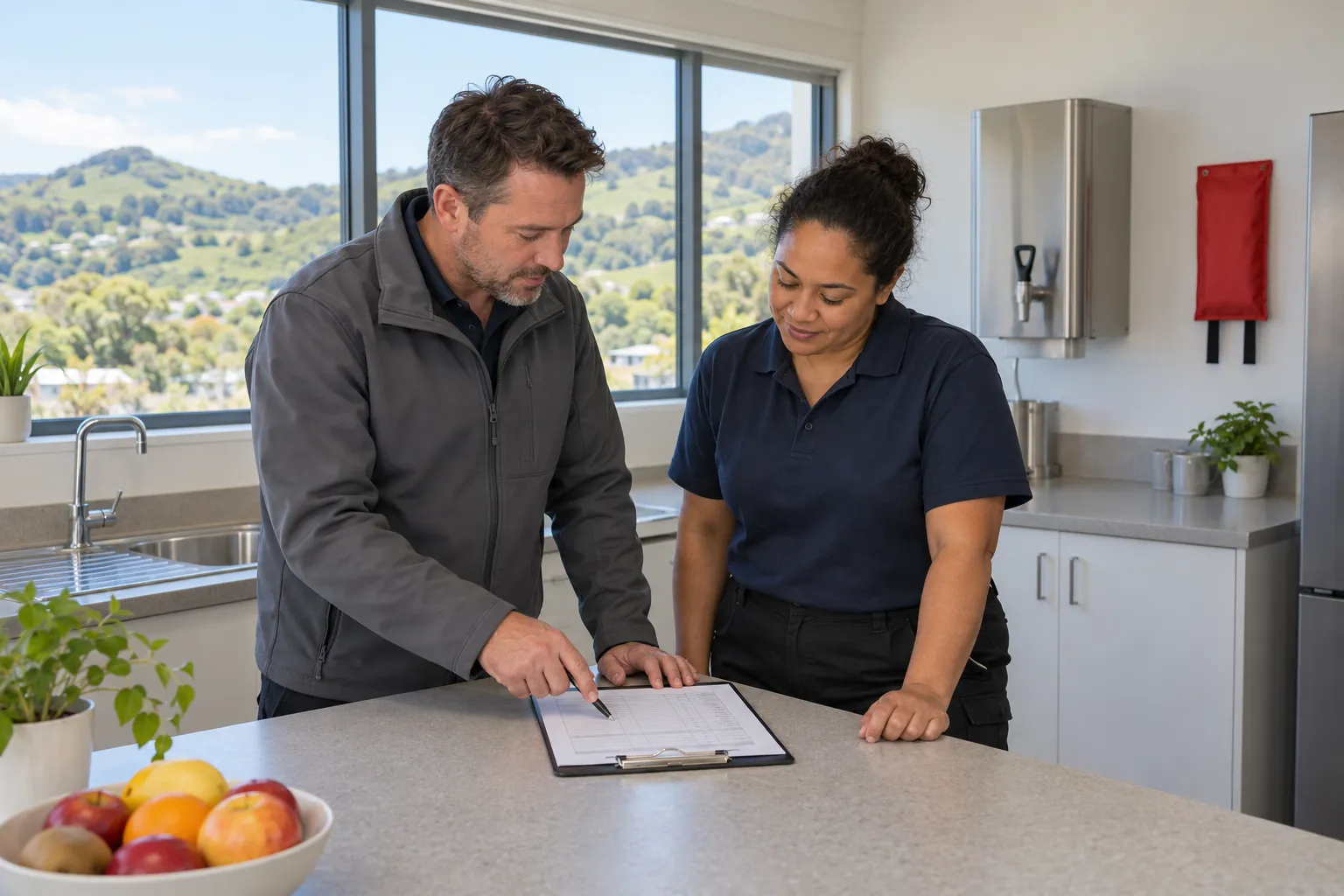 Premises and facilities managementHazard register: what HSWA expects, and how to keep one that is usedWhat a hazard register is under New Zealand's HSWA, what goes in it, how to assess and control risks, when to review it, and what changes on 1 April 2027.
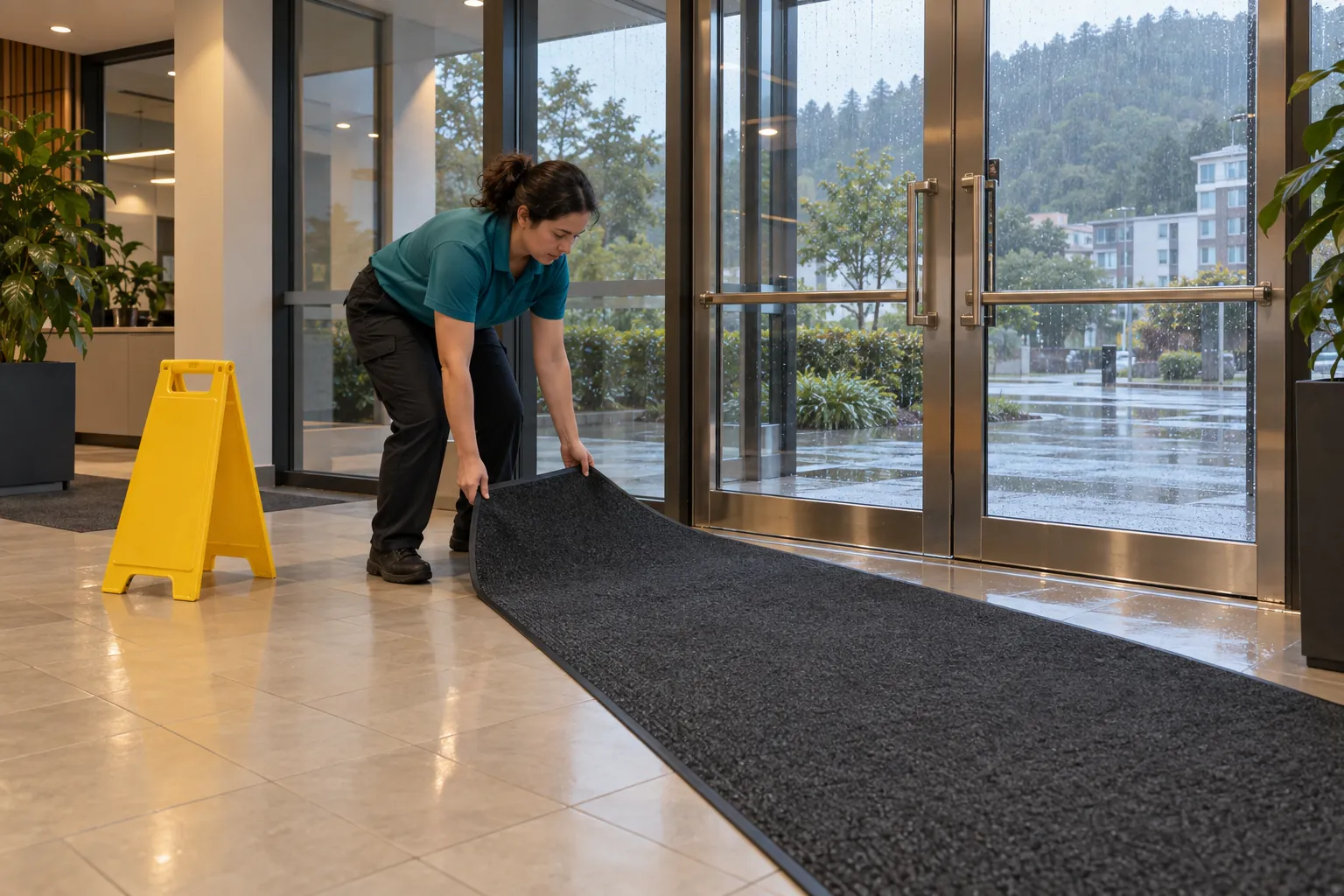 Premises and facilities managementSlips, trips and falls: what HSWA expects in a building, and the checks that prevent themSlips, trips and falls in New Zealand buildings: the HSWA duty for floors and access, where they happen, the controls that work, who does what, and the checks.
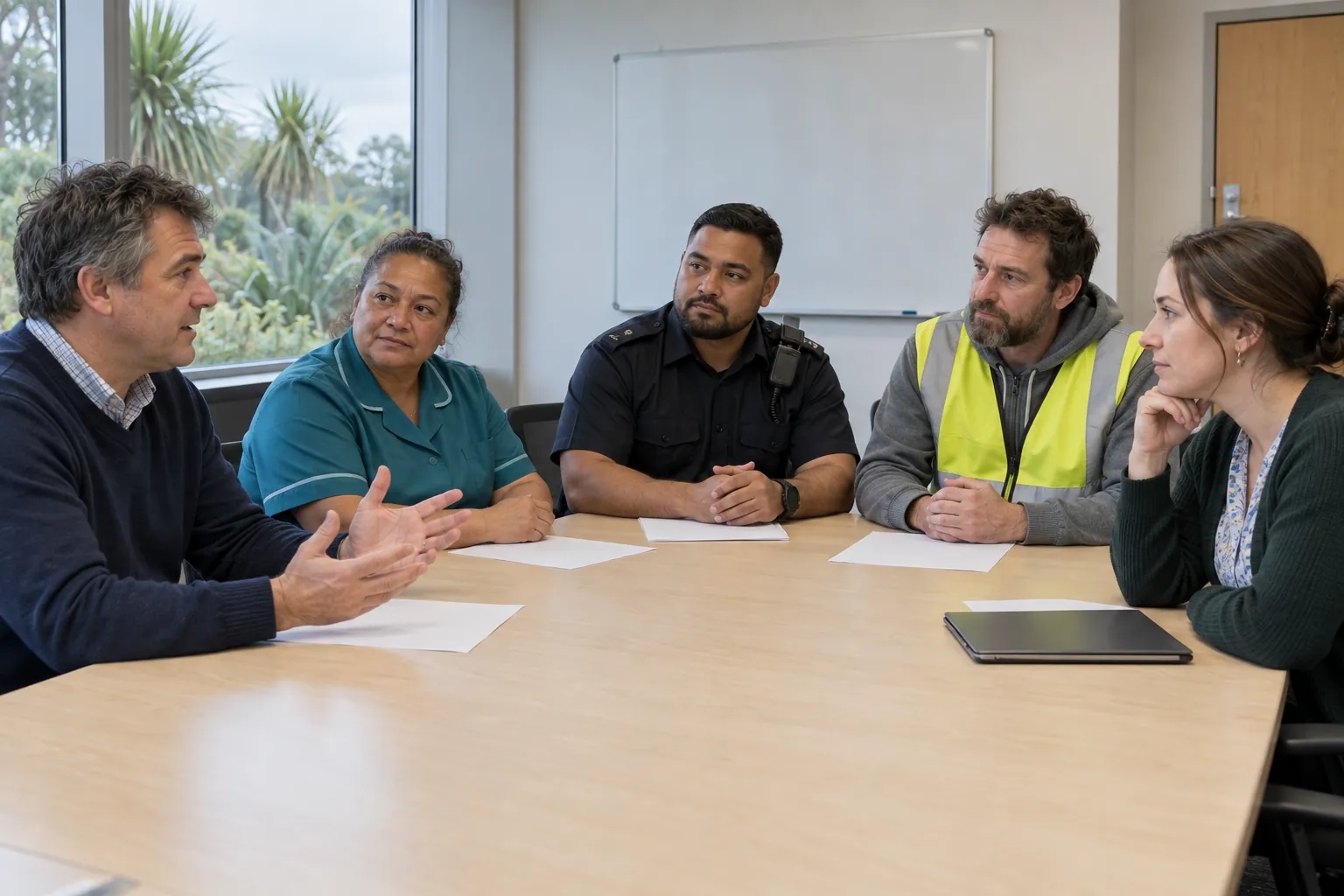 Premises and facilities managementHealth and safety representatives: electing an HSR, and engaging workers in a buildingWhat a PCBU must do under Part 3 of HSWA: engaging workers, electing a health and safety representative, the HSR's powers, and health and safety committees.
 Premises and facilities managementBuilding compliance checklist: what a New Zealand building owner and PCBU must keep in orderA building compliance checklist for New Zealand non-residential buildings: the compliance schedule and BWoF, evacuation schemes, HSWA duties, asbestos and records.