Fire and water checks
Fire drill procedure: planning, running and recording a fire drill
A fire drill procedure is the planned way a building rehearses its fire evacuation: the alarm is sounded, everyone leaves by the escape routes to the assembly point, fire marshals sweep their areas, a roll call confirms everyone is out, and the results are recorded, which GOV.UK says should happen at least once a year.
Also written for Ireland · United States · Canada · Australia · New Zealand · South Africa

In England and Wales the duty to have procedures that include safety drills sits with the responsible person under the Regulatory Reform (Fire Safety) Order 2005, and Scotland and Northern Ireland have the same duty in their own regulations. This guide covers the law, how often to hold a drill, how to plan and run one, and what the fire drill record should show.
01
The legal requirements for fire drills, and who they fall on
In England and Wales, article 15 of the Regulatory Reform (Fire Safety) Order 2005 requires the responsible person to "establish and, where necessary, give effect to appropriate procedures, including safety drills, to be followed in the event of serious and imminent danger", and to nominate a sufficient number of competent persons to implement those procedures so far as they relate to evacuating the premises. The responsible person is usually the employer, or the owner or managing agent where they control the building. The competent persons are the people workplaces call fire marshals or fire wardens.
Drills sit alongside training. Under article 21 of the Order, employees must be given adequate safety training when they are first employed and when they are exposed to new or increased risks, repeated periodically where appropriate and during working hours. The government's risk assessment guides say that training should "be tested by fire drills". Article 11 requires the responsible person to make and record arrangements for monitoring and reviewing the fire safety measures, and a drill is one of the ways they are monitored.
The Order itself does not say how often a drill must be held. GOV.UK's page on fire safety equipment, drills and training says: "You should carry out at least one fire drill per year and record the results", and "You must keep the results as part of your fire safety and evacuation plan."
Scotland and Northern Ireland use the words "fire safety drills": regulation 14 of the Fire Safety (Scotland) Regulations 2006 and regulation 14 of the Fire Safety Regulations (Northern Ireland) 2010 each require appropriate procedures, including fire safety drills, for serious and imminent danger from fire.
02
How often fire drills should be carried out
The starting point everywhere in the UK is at least one drill a year, then more where the fire risk assessment says so. The official guidance adds detail by type of premises:
- Offices and shops in England and Wales. Fire safety risk assessment: offices and shops says a drill "should be carried out at least annually or as determined by your fire risk assessment", and more often where staff turnover is high.
- Schools, colleges and universities. Fire safety risk assessment: educational premises says there should be a drill at least once a year and preferably one a term or semester, to account for the turnover of pupils and students.
- Scotland. The Scottish Government's Fire safety: existing non-residential premises, practical guidance (2022) says the minimum is once a year, but six-monthly may be more appropriate for many premises, and in schools preferably once a term.
- Small premises. Making your small non-domestic premises safe from fire says a full evacuation drill each year is not considered essential in many small premises with few staff and simple layouts, though periodic drills are a good way of testing the procedures.
Shift work changes the count. A drill at ten in the morning tests the day staff only, and the Scottish guidance says occasional and shift workers should be considered when planning the timing of drills. A night shift, a weekend team or early-morning cleaners need to rehearse the procedure too. Change is the other trigger: the government guides list testing the procedure after alterations or changes to working practices as an objective of a drill.
In a multi-occupied building, article 22 of the Order requires responsible persons who share premises to co-operate and co-ordinate, and the small premises guide says a tenant will be required to take part in fire drills organised by the landlord or managing agent.
03
Planning the drill: objectives, scenario and who takes part
The offices and shops guide suggests the responsible person sets objectives for each drill, such as identifying weaknesses in the evacuation strategy, testing the procedure after recent changes, familiarising new staff with it, and testing the arrangements for disabled people.
Choose a scenario. Where there is more than one escape route, the guide says the plan should assume one exit or stairway is unavailable because of the fire, simulated by a designated person standing on that route. Choosing a different route at each drill encourages people to use escape routes they may not normally use.
Decide who takes part. Everyone evacuates except those who must keep the premises secure, or who, on a risk-assessed basis, must stay with equipment or processes that cannot be shut down. A site with several buildings is drilled one building at a time unless the emergency procedure says otherwise.
Announced or unannounced. The guide suggests telling all staff about the drill and their duty to take part, and says surprise drills may not be beneficial because the risks they introduce may outweigh the benefits. Some premises tell staff the week but not the day.
Before the day, make sure that:
- the alarm receiving centre is told, if the alarm is monitored, and the fire and rescue service will not be called;
- equipment can be left safely, and anyone who must stay is named;
- observers are nominated, for example at the stairs, the final exits and the assembly point;
- visitors, contractors and any members of the public present will be told;
- people with a personal emergency evacuation plan (PEEP) and the people who assist them are part of the drill, not left out of it;
- the fire marshals know their areas, every floor has someone to sweep it, and there is a register or list of employees, visitors and contractors for the roll call.
04
The fire drill procedure, step by step
A typical fire drill procedure in the workplace runs in this order; the building's own fire evacuation plan always takes precedence:
- Start the drill. The offices and shops guide suggests asking a member of staff at random to operate the nearest call point with the test key, which shows whether people know where their nearest call point is.
- Employees and visitors stop work immediately and evacuate by the nearest available escape route, closing doors behind them, without collecting belongings and without using lifts unless the plan names evacuation lifts.
- Fire marshals sweep their areas, including toilets, meeting rooms and store rooms, then leave. The simulated blocked route stays blocked.
- People who need assistance are helped as their PEEP sets out, for example to a refuge in a protected stairwell, and the person in charge is told where they are.
- The roll call. A roll call is carried out at the assembly point as soon as possible, or reports are received from the wardens who swept the premises, and anyone unaccounted for is noted. In a real evacuation that goes to the fire and rescue service on arrival.
- Time it: when the alarm sounded, when the last person reached the assembly point, and when the roll call was complete.
- End the drill. Once the roll call is complete or every report is in, reset the fire alarm system, let people return, tell the alarm receiving centre the drill is over if the alarm is monitored, and record the outcome.
The guide lists what the observers should watch for: problems with the roll call, people using their usual routes instead of the nearest escape route, final exit doors that are difficult to open, difficulties experienced by disabled people, how fire wardens carry out their roles, people stopping for belongings or trying the lifts, and windows and doors left open.
Finish with a short debrief that encourages feedback from everybody. The guide says the wardens' reports and observations should then be collated and reviewed, and any conclusions and remedial actions recorded and implemented.

05
The fire drill record: what to write down
GOV.UK says to record the results of every drill and keep them as part of the fire safety and evacuation plan, and the small premises guide says the record of training and drills can be a logbook or an electronic record. Most buildings keep it in the fire safety log book beside the alarm and emergency lighting tests. A useful fire drill record shows:
- the date, the start time and the building or part of it evacuated;
- the scenario, such as which stair was treated as unavailable, and which call point was used;
- whether the alarm receiving centre was told before and after;
- the time from the alarm to the last person out, and to the roll call being complete;
- roughly how many people left, including visitors and contractors;
- each fire marshal's report, and anyone unaccounted for;
- how the PEEPs and any assisted evacuation worked;
- what went wrong: a stiff final exit door, a sounder nobody heard in a plant room, people who went back for coats;
- the actions agreed, who owns each one, and when each was done;
- the name of the person who ran the drill.
The last two lines matter most. A record that lists the same problem drill after drill shows the drill is held but nothing is learned. The next record should be able to show the stiff door was eased or the sounder added.
06
Where the record fails, and what SiteClara does about it
A fire drill usually ends with a line in the log book: the date, a time, "all clear". The problems found on the day, the final exit door that needed a shoulder, the call point behind a stack of chairs, are said at the debrief and then left to whoever remembers. The next drill finds the same door.
SiteClara is built for the checks and jobs around the drill. A printed QR poster, with an NFC tag behind it if staff prefer to tap, sits at each point the premises team checks: the final exits, the stair landings, the fire alarm panel, the assembly point. Staff scan or tap with their own phone, with no app to install, see the checks due there and mark each one done, or explain what stopped them. The time and the named person are recorded as it happens, with a photo when one helps.
A problem found during the drill, such as an exit door that is hard to open, is reported at that point with a photo and goes onto the team's list of jobs until someone closes it. The supervisor sees which checks are due, done and missed, records why one was missed, and can escalate a job to the building manager. Each day the supervisor approves a report that goes to nominated management or client contacts the next morning, showing what was completed and what is still open.
07
Questions people ask
What are the requirements for conducting fire drills in the UK?
In England and Wales, article 15 of the Regulatory Reform (Fire Safety) Order 2005 requires the responsible person to establish appropriate procedures, including safety drills, and to nominate enough competent persons to carry out an evacuation. The Order sets no frequency; GOV.UK's page on fire safety equipment, drills and training says to carry out at least one fire drill a year, record the results and keep them as part of the fire safety and evacuation plan.
What is the purpose of a fire drill?
The government guide Fire safety risk assessment: offices and shops says that once the emergency plan is in place and training has been given, a drill is the best way to evaluate how effective it is, and suggests objectives such as identifying weaknesses in the evacuation strategy, testing the procedure after alterations or changes to working practices, familiarising new staff with the procedures and testing the arrangements for disabled people.
What are the 5 steps of fire safety?
They are the five steps of a fire risk assessment set out in Fire safety risk assessment: offices and shops: identify fire hazards; identify people at risk; evaluate, remove, reduce and protect from risk; record, plan, inform, instruct and train; and review. Fire drills belong to the fourth step, where the guide says training should be tested by fire drills.
Should fire drills be unannounced?
Not necessarily. Fire safety risk assessment: offices and shops suggests telling all staff about the drill and their duty to take part, and says it may not be beneficial to have surprise drills because the health and safety risks they introduce may outweigh the benefits.
Do you need to tell the fire brigade about a fire drill?
Fire safety risk assessment: offices and shops says to inform the alarm receiving centre if the fire-warning system is monitored, and, where the fire and rescue service is normally called directly from the premises, to make sure that does not happen during the drill.
08
Further reading, and a fire drill checklist to take away
GOV.UK's Fire safety in the workplace sets out the responsible person's duties, and the fire safety risk assessment guides are written by type of premises. The offices and shops guide points to BS 5588-12 for more on drills; BSI lists BS 5588-12:2004 as withdrawn on 1 April 2009, and its current code of practice on managing fire safety through a building's life is BS 9999:2017, Fire safety in the design, management and use of buildings. The fire marshal checklist covers the marshals' part.
Before your next drill, check that:
- the fire risk assessment says how often drills are needed, including for night, weekend and early shifts;
- the drill has objectives and a scenario, with a different escape route treated as unavailable each time;
- the alarm receiving centre will be told before and after;
- observers are nominated, and fire marshals know their areas;
- PEEPs and assisted evacuation are part of the drill;
- the times to last person out and to roll call complete are written down;
- the debrief's problems become actions with an owner and a date;
- the record is kept with the fire safety and evacuation plan, and the next drill checks the last one's actions were done.
Sources
Every document this guide quotes or links to, in the order it first cites them.
- Article 15 of the Regulatory Reform (Fire Safety) Order 2005 legislation.gov.uk
- Article 21 of the Order legislation.gov.uk
- Article 11 legislation.gov.uk
- Fire safety equipment, drills and training gov.uk
- Regulation 14 of the Fire Safety (Scotland) Regulations 2006 legislation.gov.uk
- Regulation 14 of the Fire Safety Regulations (Northern Ireland) 2010 legislation.gov.uk
- Fire safety risk assessment: offices and shops gov.uk
- Fire safety risk assessment: educational premises gov.uk
- Fire safety: existing non-residential premises, practical guidance gov.scot
- Making your small non-domestic premises safe from fire gov.uk
- Article 22 of the Order legislation.gov.uk
- Fire safety in the workplace gov.uk
- Fire safety risk assessment guides gov.uk
- BS 5588-12:2004 knowledge.bsigroup.com
- BS 9999:2017 knowledge.bsigroup.com
Related guides
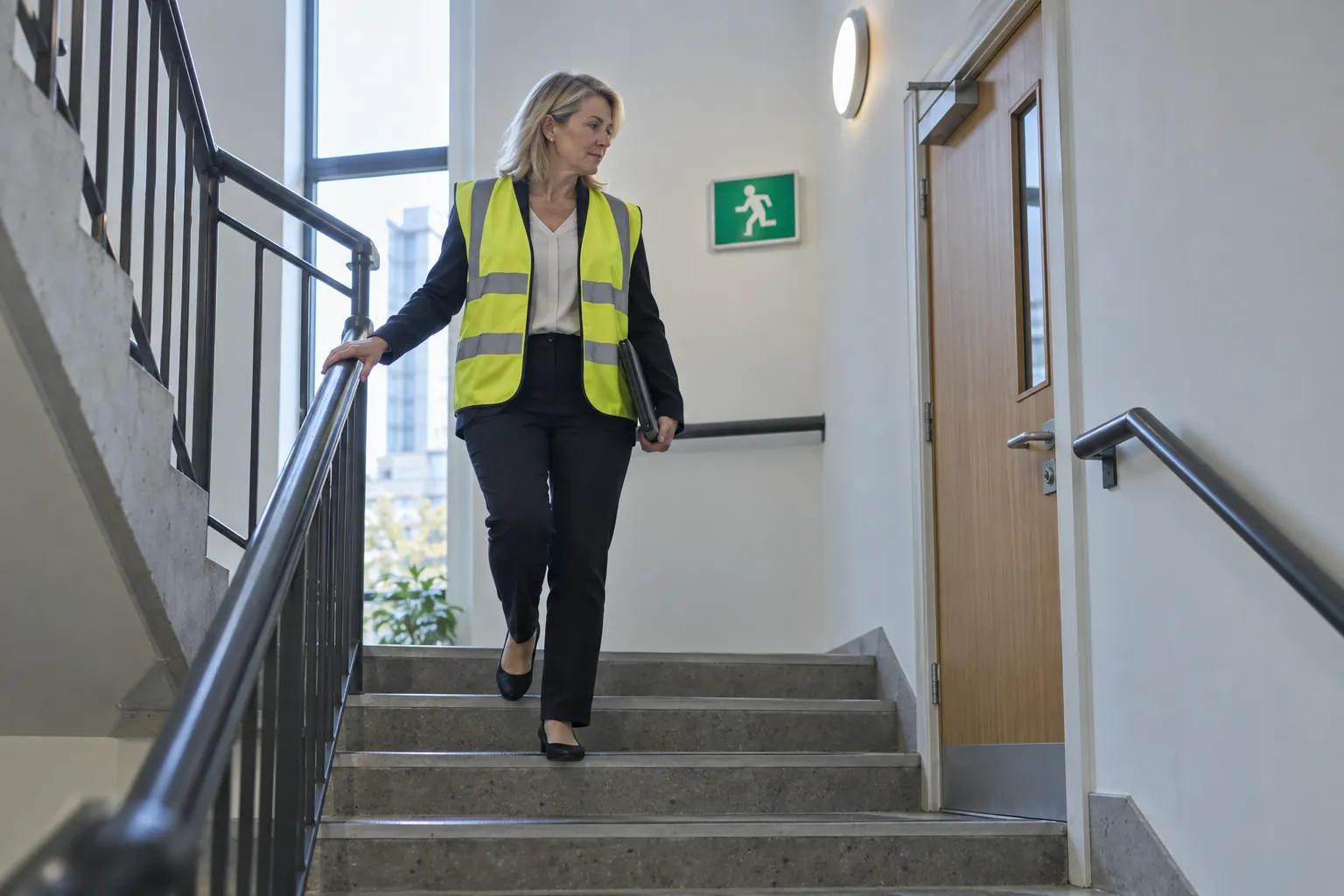 Fire and water checksFire marshal checklist: the daily and weekly checks, and the job in an evacuationWhat a fire marshal or fire warden checks each day and week, their role in an evacuation, the law behind the role, and how to keep a record that stands up.
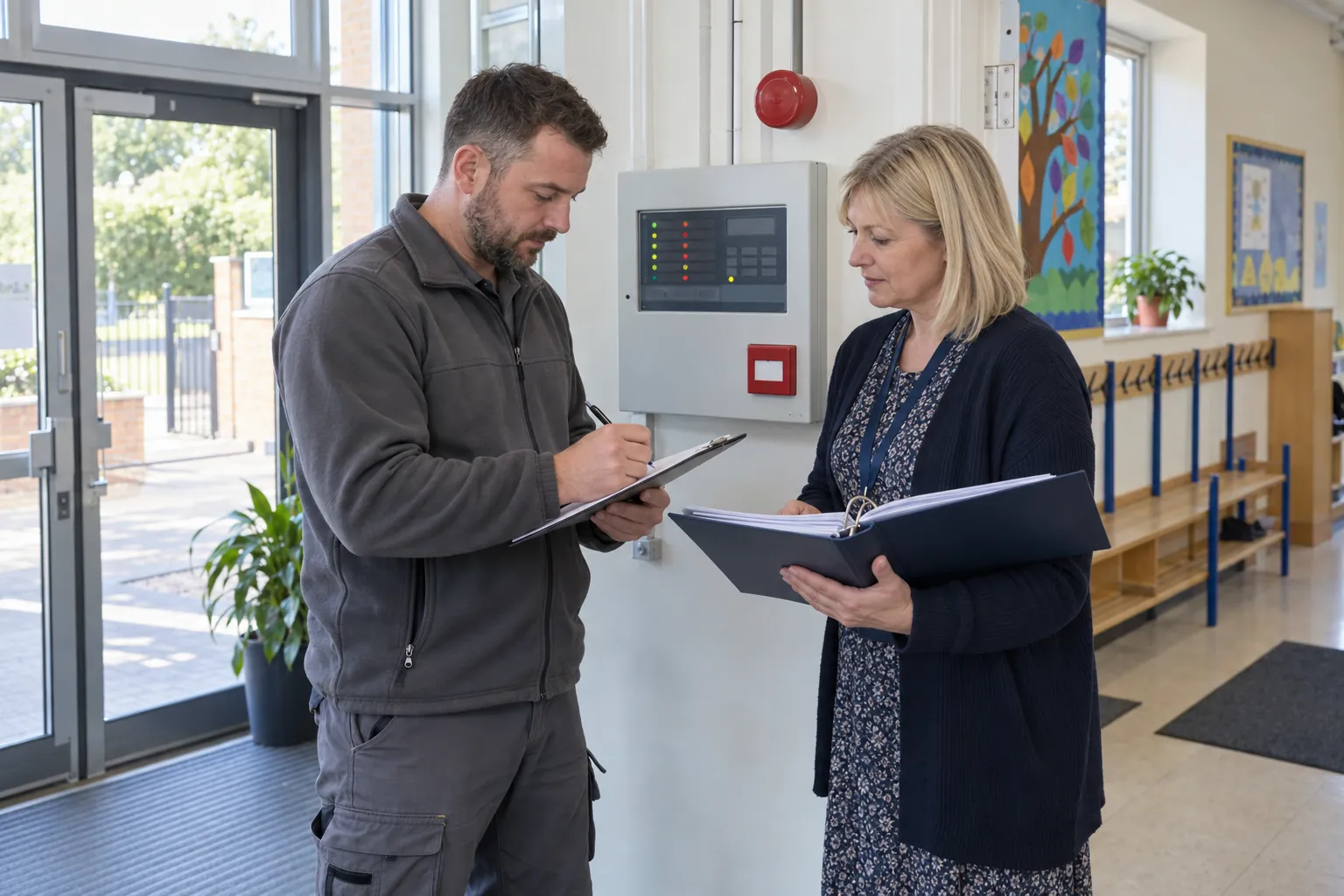 Fire and water checksFire safety log book: what to record, who keeps it and for how longWhat a fire safety log book should contain, from alarm tests to drills and servicing, who keeps it, how long for, and whether paper or digital is better.
 Fire and water checksPersonal emergency evacuation plans: who needs one, what goes in it, and keeping it trueWhat a PEEP is, when the law requires one at work and in high-rise flats, how to write and review it, and the checks the plan depends on.
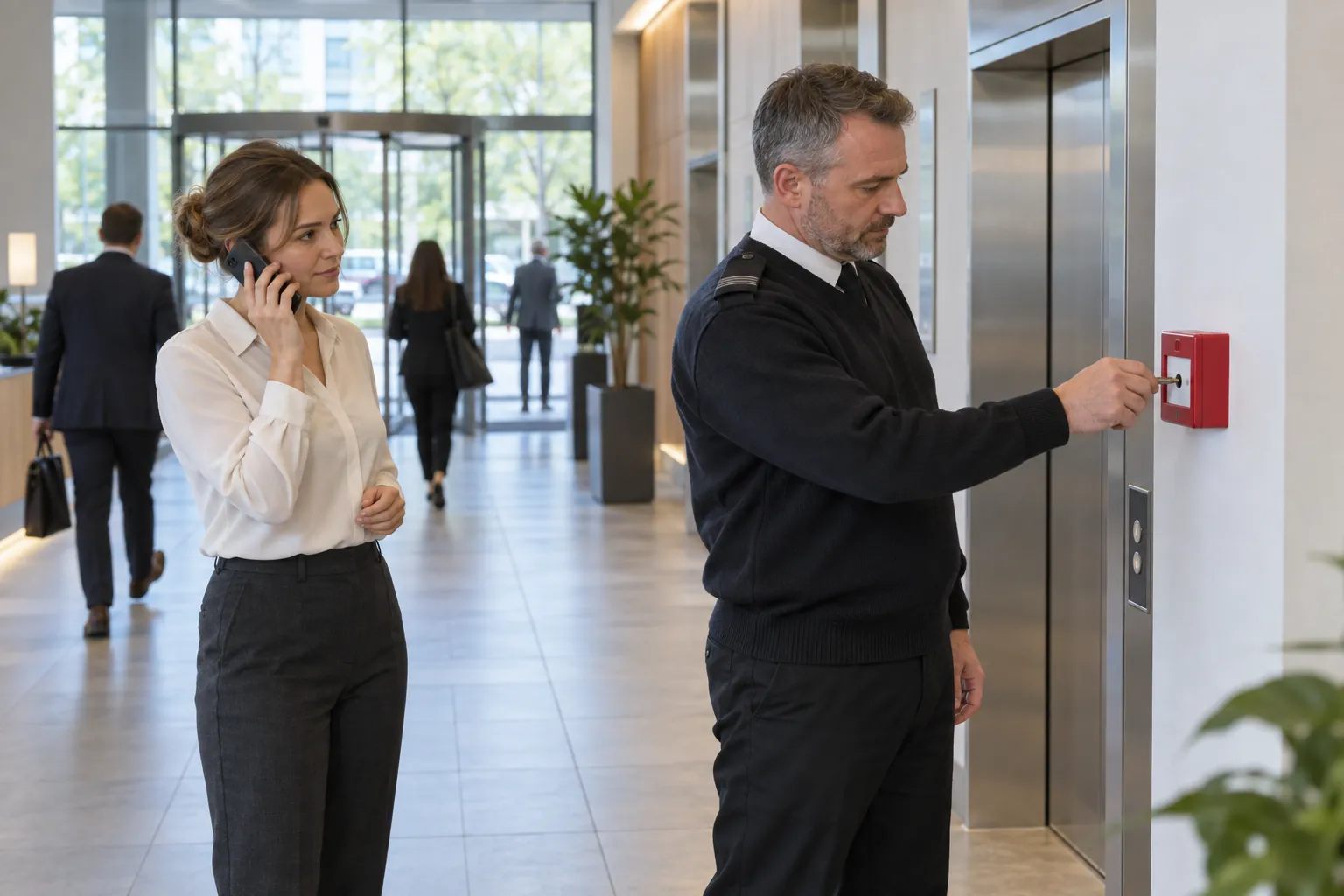 Fire and water checksWeekly fire alarm test: how to do it, and what to recordWeekly fire alarm test: how to carry out the test BS 5839-1 recommends, rotating call points, what to record, and what only a competent person can do.