Premises and facilities management
Planned preventative maintenance: how to plan it in an Irish building and prove it was done
Planned preventative maintenance (PPM) is a proactive maintenance strategy in which regular inspections, servicing and repairs are scheduled in advance to keep a building's fabric, plant and equipment safe and working, and to reduce failures before they happen.
Also written for United Kingdom · United States · Canada · Australia · New Zealand · South Africa
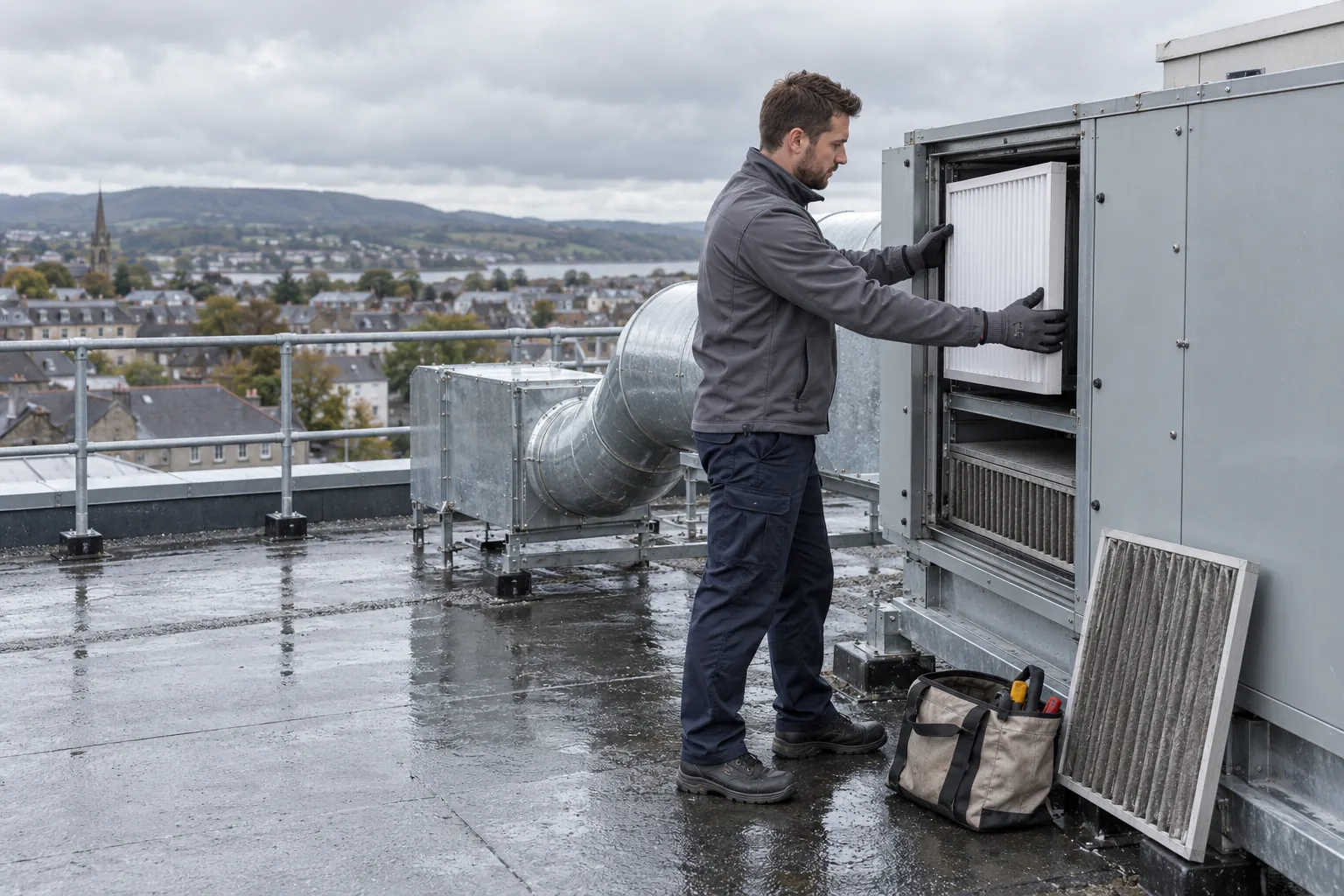
In Ireland it is the practical way to meet the duty in section 8 of the Safety, Health and Welfare at Work Act 2005 to maintain the place of work, and its plant and machinery, so far as is reasonably practicable, in a condition that is safe and without risk to health. No Irish law uses the phrase, but the General Application Regulations 2007 require work equipment to be kept in good order by adequate maintenance, inspected where it deteriorates, and recorded. This guide explains what PPM covers, how to build an asset register and a PPM schedule, which tasks Irish law requires and which are a choice, and what a good record of the work looks like.
01
What planned preventative maintenance is, and the duty behind it
Planned preventative maintenance (PPM) is proactive work done on a regular schedule to stop a failure happening, rather than after it has. A boiler serviced every year, filters changed every quarter and a fire alarm tested every week are all PPM. Its opposite is reactive maintenance, also called corrective maintenance: the call-out after the boiler has stopped.
The benefits are practical: fewer failures and less unplanned downtime, lower costs than emergency call-outs and the damage a breakdown causes, a longer lifespan and better performance from the assets, and a clear record that the legal requirements were met. Reactive maintenance still suits assets whose failure is cheap and harmless, such as a light in a store room, but for anything that keeps a business or a property running safely, waiting for it to fail is the expensive choice.
The trade says preventative; the standards say preventive. The European maintenance vocabulary, published in Ireland by NSAI as I.S. EN 13306:2017 Maintenance – Maintenance terminology, separates preventive maintenance, done to assess or slow deterioration and make a failure less likely, from corrective maintenance, done once a fault has been found. Preventive work done at fixed intervals is predetermined maintenance, which is what most PPM schedules hold; work that follows an assessment of the asset's condition is condition-based maintenance, and condition-based work carried out on a forecast from repeated analysis of that condition is predictive maintenance. A planned visit to repair a fault already found is corrective, however well it was planned.
In Irish facilities management the phrase is used in two related senses:
- Services PPM: the routine servicing, inspection and testing of building services such as heating, ventilation and air conditioning (HVAC), water systems, electrics, fire alarms, emergency lighting and lifts, delivered by engineers and contractors to a schedule of tasks and frequencies.
- A planned maintenance programme: a longer plan, usually five to ten years or more, for the fabric and major components, such as the roof, windows, lifts and boilers, built from a condition survey and used to set budgets. In an apartment block this is what the sinking fund pays for: section 19 of the Multi-Unit Developments Act 2011 requires every owners' management company (OMC) to establish a building investment fund for refurbishment, improvement and "maintenance of a non-recurring nature".
Is planned preventative maintenance a legal requirement in Ireland? The phrase is not in the legislation, but the duty to maintain is. Under section 8 of the Safety, Health and Welfare at Work Act 2005, an employer must ensure, so far as is reasonably practicable, "the design, provision and maintenance" of the place of work "in a condition that is safe and without risk to health", of safe access and egress, and of plant and machinery. The Safety, Health and Welfare at Work (General Application) Regulations 2007 (S.I. No. 299 of 2007) make it specific. Regulation 31 requires that "throughout its working life work equipment is kept, by means of adequate maintenance, at a level such that it complies with the provisions of this Chapter", that maintenance is done with the equipment shut down where possible, and that "a maintenance log for any machine is kept up to date". Regulation 13 requires fire detection and fire-fighting equipment to be "inspected and maintained as frequently as necessary" and "serviced by a competent person as frequently as necessary". A PPM programme is how a building shows it does this on purpose.
02
What a PPM programme covers
A PPM programme for an office, school, health centre, hotel, shop or the common areas of an apartment block usually covers:
- Heating and hot water: boilers, calorifiers, pumps, valves and controls.
- Ventilation and air conditioning: air handling units, filters, fans and belts, split units and kitchen extraction.
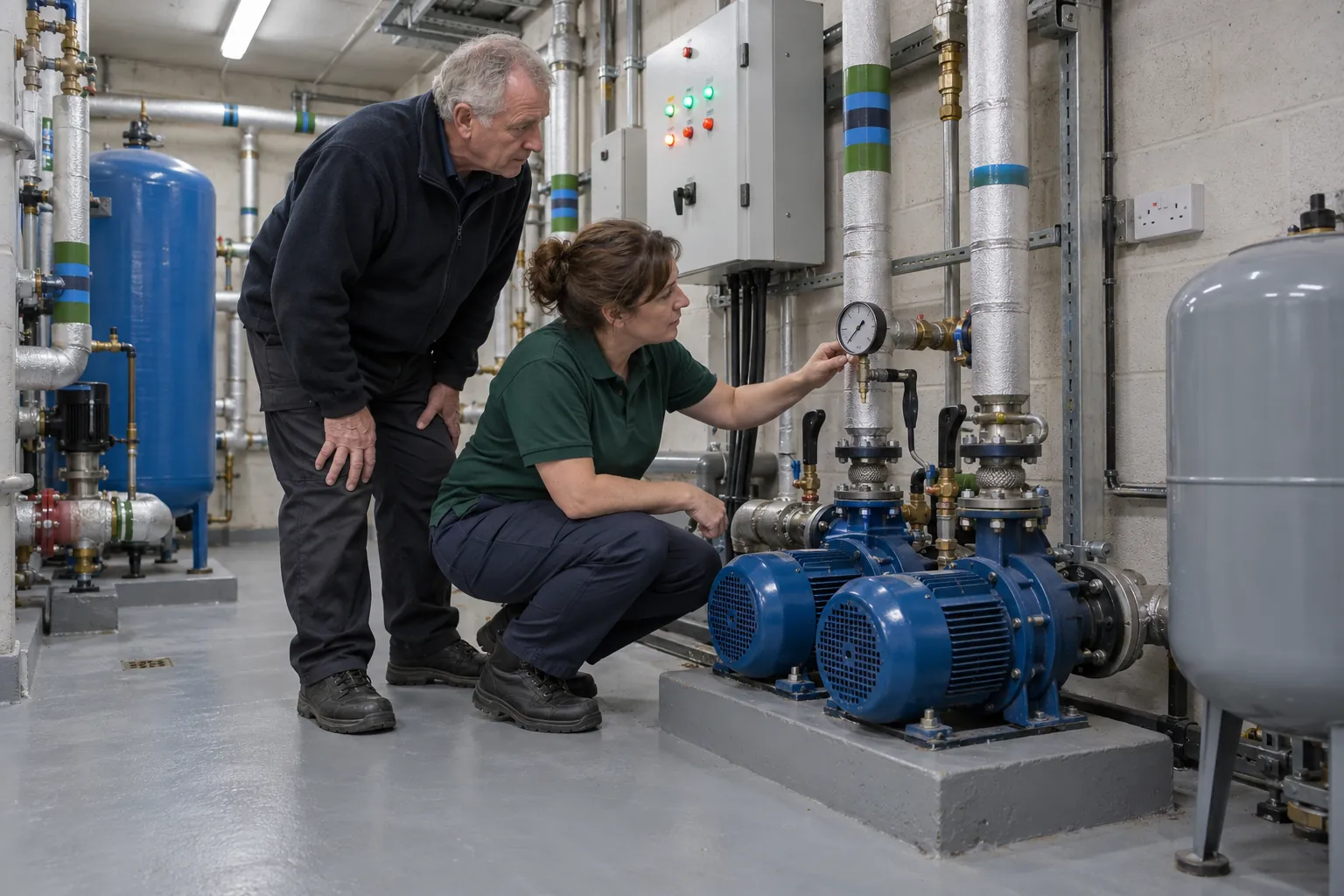
- Water systems: the temperature checks, flushing and tank inspections the legionella risk assessment sets.
- Electrical: the fixed installation, distribution boards, lighting and portable equipment.
- Fire and life safety systems: fire detection and alarm, emergency lighting, fire doors, extinguishers and hose reels, and, where fitted, sprinklers, dry risers, smoke control and a standby generator.
- Lifts: the contractor's routine maintenance and, separately, the statutory thorough examination.
- Building fabric and grounds: roofs, gutters, drains, windows, external walls, floors, paths, car parks and external lighting.
- Security and access: gates, barriers, door entry, intruder alarms and CCTV.
The list for any one building comes from what is actually in it, which is why every PPM programme starts with an asset register.
03
Building an asset register and a PPM schedule
A PPM schedule answers four questions for every asset: what is it, where is it, what does it need and how often. Building one involves careful, methodical work:
- Survey the building. Walk every floor, plant room, riser and roof, and list each asset with its type, make and model, location, age, condition and an identifying number. A list inherited from the last contractor is a starting point, not a register.
- Mark the statutory tasks. For each asset, note the inspections the law requires and where the frequency comes from: a regulation, an Irish Standard, the fire safety guidance or the competent person's advice.
- Add the manufacturer's instructions. Service intervals, consumables and warranty conditions.
- Choose the discretionary tasks. Let how critical each asset is to the running of the building determine which optional tasks you will do, and how often.
- Name who does each task. The caretaker, the in-house team or a contractor, competent for it: regulation 28 of the 2007 Regulations requires employees doing repairs, maintenance or servicing on work equipment with a specific risk to be competent.
- Put it in a calendar. Group tasks by building, trade and season, and plan disruptive work for quiet times: a school's boiler work in the summer, an office's shutdowns at a weekend.
- Decide how completion is recorded. Agree what each task leaves behind: a certificate, a report, a log entry or a dated record of a check.
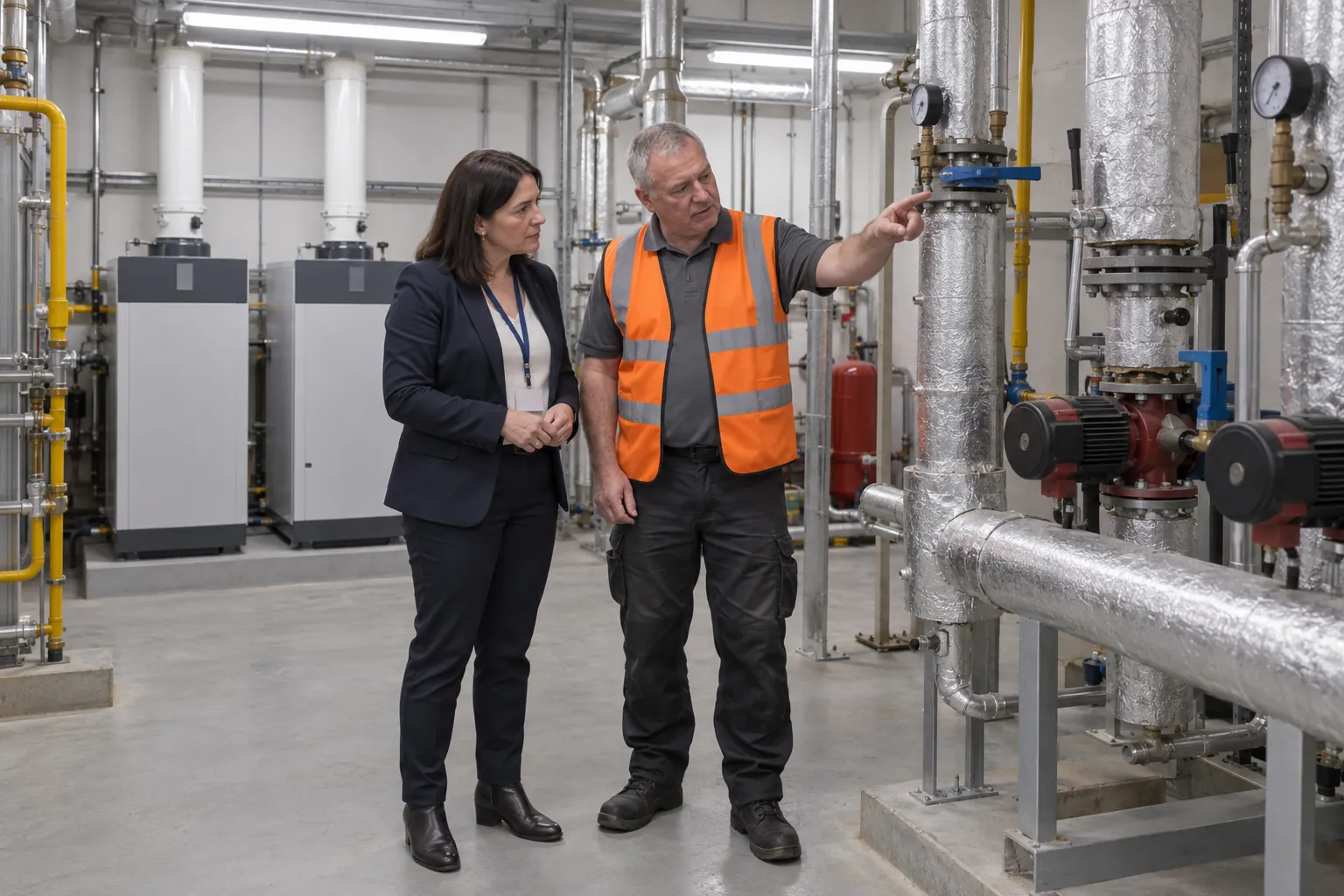
Who runs the programme depends on the building. A single occupier usually gives it to its facilities or premises manager. In a multi-let office, the landlord or its managing agent usually maintains the common parts and central plant and recovers the cost through the service charge, while each tenant looks after its own space as the lease sets out. In an apartment block the OMC is responsible for the common areas and usually appoints a managing agent to run the contracts; the agent acts for the OMC and does not take its place.
Larger estates hold the asset register and schedule in maintenance management software, such as a CAFM system, which handles the scheduling, issues the jobs and tracks their completion. A small building can manage with a well-kept spreadsheet, provided one named person owns it and keeps it current.
04
Statutory and discretionary tasks in an Irish building
The most useful line in any PPM schedule is the one between tasks the law requires and tasks you choose to do. Statutory tasks are not negotiable when budgets are tight, and they are where compliance is judged; discretionary tasks are where judgement comes in. Typical statutory or legally driven tasks in a non-domestic building in Ireland include:
- Lifts: under regulation 52 and Part B of Schedule 1 to the 2007 Regulations, a hoist or lift must be thoroughly examined by a competent person at least every 6 months, and a register of lifting equipment kept under regulation 54. The HSA's safety alert on passenger and goods lifts adds that "All repairs required to lifts must also be carried out by a competent person".
- Work equipment that deteriorates: under regulation 30, periodic inspections and, where appropriate, testing by a competent person, with deterioration "detected and remedied in good time".
- Fire safety systems: regulation 13 of the 2007 Regulations and the duty in section 18(2) of the Fire Services Acts 1981 and 2003. The Department of Housing, Local Government and Heritage's Fire Safety Guide for Building Owners and Operators (August 2023) sets out a Maintenance Programme Schedule from daily to yearly, pointing to I.S. 3218 for fire detection and alarm systems, I.S. 3217 for emergency lighting and I.S. 291 for portable fire extinguishers.
- Electrical installation: regulation 89(b), as substituted by the General Application (Amendment) Regulations 2007 (S.I. No. 732 of 2007), requires an existing installation to be tested by a competent person "from time to time where required having regard to the nature, location and use of the installation", or when an inspector requires, with a report. Regulation 89(d) requires defects found to be "rectified promptly so as to prevent danger". Portable equipment must be "maintained in a manner fit for safe use" under regulation 81.
- Gas: periodic inspection and testing by a competent person, which the fire safety guide ties to I.S. 820 for non-domestic gas installations.
- Water hygiene: the monitoring, flushing and cleaning that a legionella risk assessment sets, following the HPSC's National Guidelines for the Control of Legionellosis in Ireland, 2009; see the legionella checks guide.
- Asbestos: the HSA's asbestos FAQs say any workplace built before 2004 needs an asbestos risk assessment, a management survey and an asbestos management plan, and that the condition of asbestos in place "should be checked by a competent person on an annual basis".
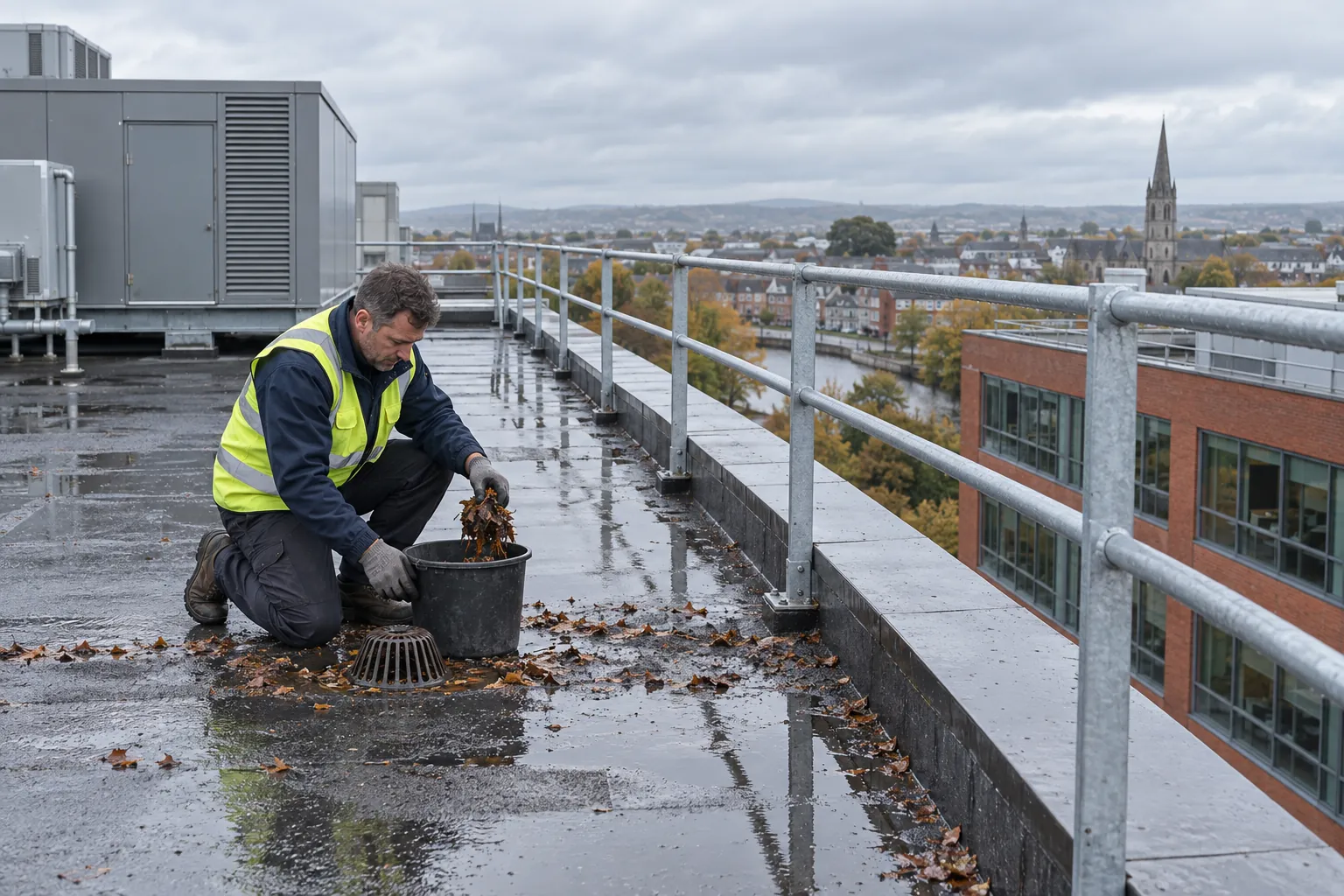
Discretionary tasks are most of the rest: filter changes, cleaning coils, adjusting controls, clearing gutters before leaf fall. None is required by name, but skipping them is how wear and tear becomes a leak, a breakdown and an emergency repair.
Northern Ireland has its own regulations and fire safety law, so an estate with buildings on both sides of the border needs two lists of statutory tasks.
05
How completion is evidenced
A PPM programme is only as credible as its records. When an HSA inspector, a fire authority officer or an insurer asks whether a task was done, a tick on a planner is not enough. The 2007 Regulations set some of the record themselves: under regulation 30(d), the results of inspections of work equipment must be "recorded and kept available for 5 years from the date of inspection", and regulation 31(d) requires an up-to-date maintenance log for any machine. Good evidence usually includes:
- The job record: the asset, the task, the date, who did it, what they found and what they did about it.
- Certificates and reports: the competent person's document for statutory work, such as a lift's report of thorough examination or an electrical test report, filed against the asset.
- Defects and follow-up: faults found on PPM visits, the remedial work raised and when it was closed.
- The fire safety register: the fire safety guide calls the register "a living document" holding "details of routine checks, planned inspections and maintenance carried out on fire protection equipment and systems", with the results and the action taken, and by whom, to put defects right. See the fire safety register guide.
- Completion against plan: a monthly PPM report showing tasks due, completed and overdue, by building, with statutory tasks shown separately.
Treat a fault found on a fire system as urgent, not as a line for next month's report. The fire safety guide says: "Faults are a life safety issue – not simply a maintenance issue to be dealt with later; faults should be entered in the fire safety register and corrected promptly."
A PPM completion percentage on its own tells you little. The questions worth asking are which tasks were missed, whether any were statutory, and what happened to the defects found. Review the schedule at least once a year, and whenever the building changes use or plant is replaced.
06
Where the record fails, and where SiteClara fits
PPM records are usually strongest for the engineer's visit, because the contractor leaves a certificate, and weakest for the small, frequent checks in between: the caretaker's weekly walk through the plant room, the flushing of little-used outlets, the look at the gutters after a storm. Those end up on a clipboard sheet ticked in a batch on a Friday, and a problem found on one is mentioned to whoever is passing.
SiteClara records those routine checks where they happen. A printed QR poster at each location, such as a plant room or a roof access point, with an optional NFC tag behind it, lets the caretaker or maintenance operative scan or tap with their own phone, with no app to install. They see the checks due there and mark each one done, or say what stopped them, with a photo when one is asked for. A fault found on the round goes onto the team's list of jobs until someone closes it.
The supervisor sees what was due, done and missed, and gives the reason for anything missed. Each day they approve a report that goes the next morning to nominated contacts, such as the facilities manager, the managing agent or the OMC's directors.
07
Questions people ask
What is a PPM schedule?
A PPM schedule is the calendar of planned maintenance tasks for a building: every asset on the register, the tasks it needs, how often, who does them and when each is next due. In Ireland it should show separately the tasks set by law, such as a lift's thorough examination at least every 6 months under regulation 52 and Schedule 1 to the General Application Regulations 2007, and the tasks chosen on the manufacturer's advice or the building's own judgement.
Is there an official planned preventative maintenance checklist in Ireland?
Not for a whole building, but there is one for fire and life safety systems. Table 2 of the Department of Housing, Local Government and Heritage's Fire Safety Guide for Building Owners and Operators (August 2023), its Maintenance Programme Schedule, sets out the checks for each system daily, weekly, monthly, quarterly, six-monthly and yearly, and separates the checks a designated person carries out from the planned inspection and maintenance a competent person carries out.
How long must maintenance and inspection records be kept in Ireland?
For work equipment exposed to conditions causing deterioration, five years: regulation 30(d) of the General Application Regulations 2007 requires the results of inspections to be recorded and kept available for 5 years from the date of inspection, for an inspector and for users of the equipment who ask. Reports of thorough examination of lifting equipment must be kept at the place of work where the equipment is permanently located, under regulation 54.
08
Further reading, and a list to take away
The Health and Safety Authority publishes guidance on the 2005 Act and the General Application Regulations 2007. The Department of Housing, Local Government and Heritage publishes the Fire Safety Guide for Building Owners and Operators, whose Table 2 is a maintenance schedule for fire and life safety systems. NSAI publishes the standards named here, including I.S. EN 13306, I.S. 3218, I.S. 3217, I.S. 291 and I.S. 820, and EN 15331, a European Standard on maintenance services for buildings. For the routine checks in detail, see the building maintenance checklist.
To check your planned preventative maintenance is in order:
- every asset is on a register, verified on site, with its location and an identifying number;
- every statutory task is identified, with its frequency and the regulation, standard or guidance it comes from;
- each task has a named owner who is competent to do it, including where an OMC and its managing agent share the work;
- certificates, reports and inspection records are filed against the asset and kept for at least the period the law sets;
- defects found on PPM visits are raised, tracked and closed, and fire system faults go into the fire safety register at once;
- overdue statutory tasks are reported by name, not buried in a percentage;
- the schedule is reviewed at least once a year and whenever the building or its plant changes.
Sources
Every document this guide quotes or links to, in the order it first cites them.
- I.S. EN 13306:2017 Maintenance – Maintenance terminology shop.standards.ie
- Section 19 of the Multi-Unit Developments Act 2011 irishstatutebook.ie
- Section 8 of the Safety, Health and Welfare at Work Act 2005 irishstatutebook.ie
- Safety, Health and Welfare at Work (General Application) Regulations 2007 (S.I. No. 299 of 2007) irishstatutebook.ie
- Safety alert on passenger and goods lifts hsa.ie
- Fire Safety Guide for Building Owners and Operators (August 2023) assets.gov.ie
- General Application (Amendment) Regulations 2007 (S.I. No. 732 of 2007) irishstatutebook.ie
- National Guidelines for the Control of Legionellosis in Ireland, 2009 hpsc.ie
- Asbestos FAQs hsa.ie
Related guides
 Premises and facilities managementBuilding maintenance checklist: what to check in an Irish building, how often, and who byA building maintenance checklist for non-domestic buildings in Ireland: daily to annual checks under the 2005 Act, the 2007 Regulations and the Fire Services Acts.
 Premises and facilities managementCAFM system: what it does, the Irish records it holds, and how to choose oneWhat a CAFM system does, the Irish maintenance and fire safety records it is asked to hold, and how to choose, implement and keep one honest on the ground.
 Premises and facilities managementBuilding compliance checklist: the statutory picture for a building in IrelandBuilding compliance checklist for non-domestic buildings in Ireland: fire, electrical, gas, water, asbestos, lifts, energy and access, who holds each duty and when.
 Premises and facilities managementFacilities manager responsibilities in Ireland: what the role covers, and how to show it is doneWhat a facilities manager in Ireland is responsible for: 2005 Act and Fire Services Acts duties, maintenance, contractors, budgets, the compliance year and records.