Fire and water checks
Fire extinguisher inspection: the monthly check, the service and the records
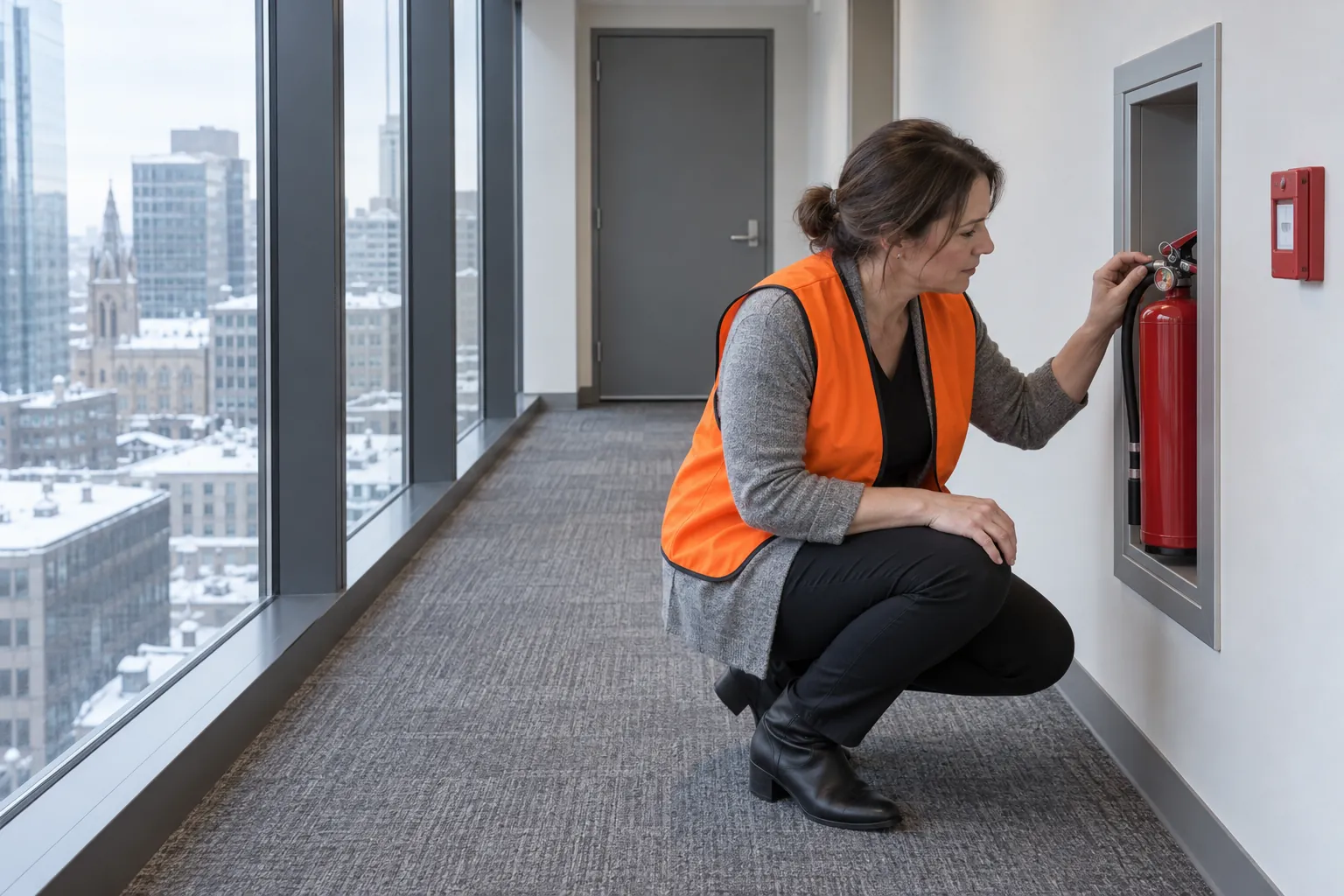
A fire extinguisher inspection in Canada is a visual check of every portable extinguisher, done monthly by someone on site, and it sits alongside the extinguisher maintenance and testing that a trained service technician carries out at least once a year.
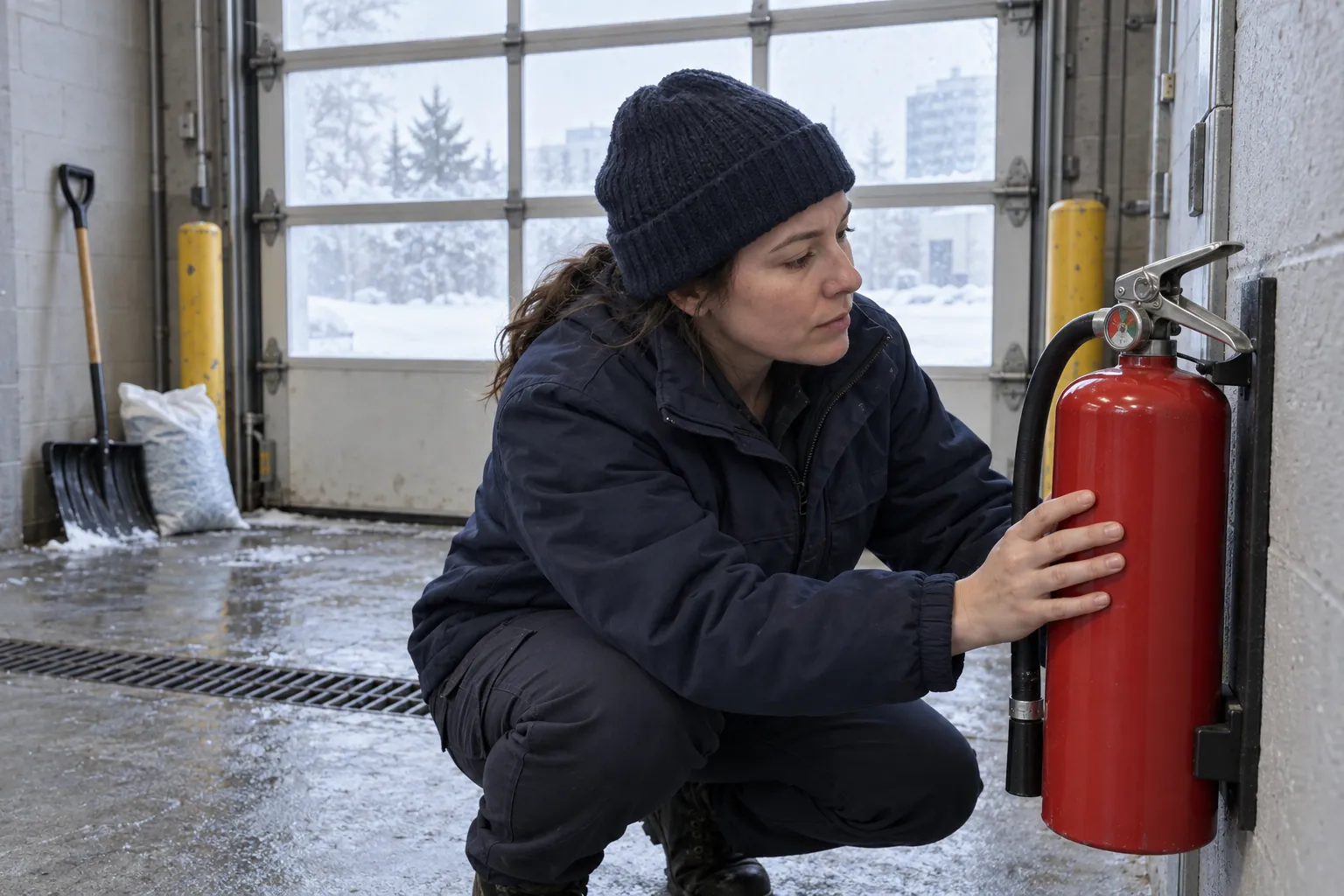
This guide covers where the duty comes from in the National Fire Code and the provincial fire codes, what the monthly walk looks at, what the service company does, and what the records must show when the fire inspector asks.
01
The duty: the fire code, NFPA 10 and the owner
In Canada, fire codes are provincial and territorial law. Most are built on the National Fire Code of Canada 2020, a model code developed by the Canadian Commission on Building and Fire Codes and published by the National Research Council. The NRC's own advice is to check with the municipal, provincial or territorial official to find the edition that applies to your building.
The National Fire Code 2020 says two things about portable extinguishers. Article 2.1.5.1 requires that they be installed in all buildings (dwelling units are excepted, unless the dwelling unit is a home-type care occupancy) and, unless the Code says otherwise, be selected and installed in accordance with NFPA 10, Standard for Portable Fire Extinguishers. Article 6.2.1.1 then states: "Portable extinguishers shall be inspected, tested and maintained in conformance with NFPA 10." The edition it references is NFPA 10-2013. Division C makes the owner, or the owner's authorized agent, responsible for carrying out the Code unless it says otherwise.
Ontario has its own Ontario Fire Code, O. Reg. 213/07, made under the Fire Protection and Prevention Act, 1997. Its Section 6.2 is more explicit than the national model:
- 6.2.7.1: maintenance and testing must conform with NFPA 10 (the 2013 edition), and extinguishers inspected in conformance with NFPA 10 are deemed to satisfy the inspection requirements;
- 6.2.7.2: "Portable extinguishers shall be inspected monthly.";
- 6.2.1.2: portable extinguishers "shall be kept operable and fully charged."
Under Article 1.2.1.1 of Division A, "Unless otherwise specified, the owner is responsible for carrying out the provisions of this Code." The definition of owner is wide: anyone having control over any portion of the building, including the persons in it. A landlord, a tenant and a property manager may each hold part of the duty, so the lease or management contract should say who does the monthly inspection.
British Columbia is typical of the other provinces: the BC Fire Code is the adopted National Fire Code with a few amendments, and the Office of the Fire Commissioner administers and enforces it. Elsewhere, ask your provincial fire marshal or fire commissioner, or the local fire department, which edition and amendments apply.
Workplace law points back to the fire code. In Ontario, section 123 of the Industrial Establishments regulation, R.R.O. 1990, Reg. 851 says the requirements of the Fire Code respecting fire extinguishers apply at industrial establishments, so they are workplace duties as well as fire code duties. For federally regulated workplaces under the Canada Labour Code, section 17.3 of the Canada Occupational Health and Safety Regulations, SOR/86-304 requires fire protection equipment to be installed, inspected and maintained in accordance with Parts 6 and 7 of the National Fire Code, and maintained and repaired by a qualified person.
02
What the monthly inspection looks at
The Ontario Fire Code draws a useful line between three words. A check is "visual observation to ensure the device or system is in place and is not obviously damaged or obstructed". An inspection is "physical examination to determine that the device or system will apparently perform in accordance with its intended function". A test is operating the device to make sure it performs. The monthly extinguisher visit is an inspection: more than walking past, less than discharging anything.
The Canadian Centre for Occupational Health and Safety publishes a monthly list in its OSH Answers on portable fire extinguishers, and asks you to customize it for your workplace. For each extinguisher, look at:
- Mounting: is it well supported, with the hanger or bracket fastened solidly?
- Access: can it be easily reached, with no obstructions, and are the location signs, class markings and operating instructions clear?
- Condition: is the discharge opening clear, is it fully charged, and has it not been damaged or tampered with?
- Hydrostatic testing: has it been done?
- Ring pin and seal: is the pin in place and the tamper seal intact?
Look at the hose and nozzle too, on units that have them. CCOHS says to have an extinguisher serviced when the monthly inspection shows servicing is needed, so a cracked hose or a blocked nozzle is a reason to call the service company rather than leave the extinguisher on its bracket.
The Ontario Fire Code adds the placement rules the inspector will hold you to, and the monthly walk is the obvious time to notice when something has drifted:
- extinguishers must be easily seen and accessible at all times (6.2.1.3), and located in or next to corridors or aisles that lead to exits (6.2.1.4);
- in large floor areas, or where obstructions cannot be avoided, the location must be shown by signs or markings (6.2.1.5);
- operating instructions must face outward in cabinets, wall recesses and on shelves (6.2.4.4);
- an extinguisher of 18 kg gross or less is mounted with its top no more than 1.5 m above the floor, and a heavier one without wheels no more than 1.1 m (6.2.4.2 and 6.2.4.3).
One rule matters more in Canada than almost anywhere else. Article 6.2.1.8 says an extinguisher in an area where temperatures go outside 4°C to 49°C must be in a heated enclosure or be of a type labelled for those temperatures. Unheated vestibules, loading docks, parking garages, sheds and rooftop mechanical rooms are where a winter check should ask whether the extinguisher belongs there at all.
03
Classes of fire, ratings and the right extinguisher in the right place
Whoever does the monthly inspection should know which type of extinguisher is meant to be where, because the wrong one in the wrong place is a finding in its own right. CCOHS groups fires into five classes:
- Class A: ordinary combustibles such as paper, wood, cloth, rubber or plastics;
- Class B: flammable liquids, gases, oil, paints or lacquer;
- Class C: energized (live) electrical equipment such as motors, appliances or power tools;
- Class D: combustible metals such as magnesium, titanium, sodium and potassium;
- Class K: combustible cooking oils or fats in cooking appliances.
CCOHS calls dry chemical extinguishers the most common type; they are marked for the classes they cover, so an ABC unit is rated for Class A, B and C fires. CCOHS warns that the residue can damage motors, computers and other electrical equipment. Carbon dioxide units are for Class B and C fires, are not for Class A fires, and should not be used in confined spaces without respiratory protection. Water extinguishers are for Class A only, never electrical or flammable liquid fires. Wet chemical units cover Class K in commercial kitchens.
In Canada, extinguishers are rated and identified under CAN/ULC-S508, the standard for the rating and fire testing of fire extinguishers, which both the National Fire Code (2.1.5.1) and the Ontario Fire Code (6.2.2.1) name. Where an extinguisher is rated for more than one class, each class must be designated on it (Ontario 6.2.3.1). When extinguishers are replaced or added, Ontario requires listed units (6.2.1.1).
Which types go where is decided when the building is designed or its use changes, following NFPA 10 and the fire code. The monthly inspector does not change that; their job is to notice when it has changed, such as a CO2 unit moved from the server room to a lunchroom, or a kitchen that gained a deep fryer without a Class K extinguisher.
04
Servicing, recharging and hydrostatic testing
Fire extinguisher maintenance and testing are the job of a trained service technician, not the monthly inspector's. CCOHS tells employers and contractors to have portable extinguishers serviced at least once a year, or when the monthly inspection shows servicing is needed, and to allow service only by trained persons with suitable testing equipment and facilities. NFPA 10 sets out what that maintenance involves and the longer intervals for internal maintenance and hydrostatic testing, which depend on the type of extinguisher; the service company works to them, and the dates show on each unit's tag and label.
The Ontario Fire Code spells out what follows from a service visit:
- Defects: an extinguisher with defects must be repaired and, if necessary, recharged so that it will operate effectively and safely (6.2.7.3).
- Tags: each extinguisher must have a tag securely attached showing the maintenance or recharge date, the servicing agency and the signature of the person who did the service, unless other approved records show the same (6.2.7.4).
- After use: an extinguisher must be replaced or recharged after use in line with the instructions on its nameplate (6.2.7.6). A unit that was fired for two seconds at a smouldering waste bin is a used unit.
- Damage: shells, cartridges or cylinders that leak, show permanent distortion beyond the specified limits, or rupture must be removed from service (6.2.7.7).
- Hydrostatic tests: these are done at the original test pressure on the nameplate (6.2.7.8), and afterwards a label shows the month and year of the test, the pressure used and who did it, unless a permanent record is kept and available to the fire department (6.2.7.9).
CCOHS also lists conditions that take an extinguisher out of service: damaged cylinder or shell threads, corrosion that has caused pitting, and any extinguisher that has been burned in a fire.
05
Records, retention and who does the monthly walk
The Ontario Fire Code asks for two kinds of record. Article 6.2.7.5 requires "a permanent record containing the maintenance date, the examiner's name and a description of any maintenance work or hydrostatic testing carried out" for each portable extinguisher. And Subsection 1.1.2 of Division B sets rules for the Code's records:
- where the Code requires tests, corrective measures or operational procedures, records must note what was done and the date and time it was done (1.1.2.1(1));
- those records must be kept at the building premises for examination by the Chief Fire Official, and electronic records that can be made readily available on request are deemed to comply (1.1.2.1(3) and (4));
- the original or a copy of any record the Code requires must be kept at the building for at least two years after it was prepared, and so that at least the most recent and the immediately preceding record of a given test or inspection are kept (1.1.2.2).
The National Fire Code's Division C (2.2.1.2) sets the same pattern for provinces that follow it: records of tests, inspections and maintenance kept at the premises for the authority having jurisdiction, the current and the immediately preceding record available, and none destroyed within two years. Federally regulated workplaces with more than 50 employees in a building also need a visual inspection by a qualified person at least every six months that includes the fire protection equipment, recorded, dated and signed (COHSR 17.9).
CCOHS suggests a written record that shows the serial number and type of each extinguisher, its location, the inspection date, a description of tests, the date of the next inspection, the date of annual servicing, comments and the inspector's signature. Keep the monthly inspections, the technician's reports and the hydrostatic test records together, in the building's fire safety log book or wherever it keeps its fire code records.
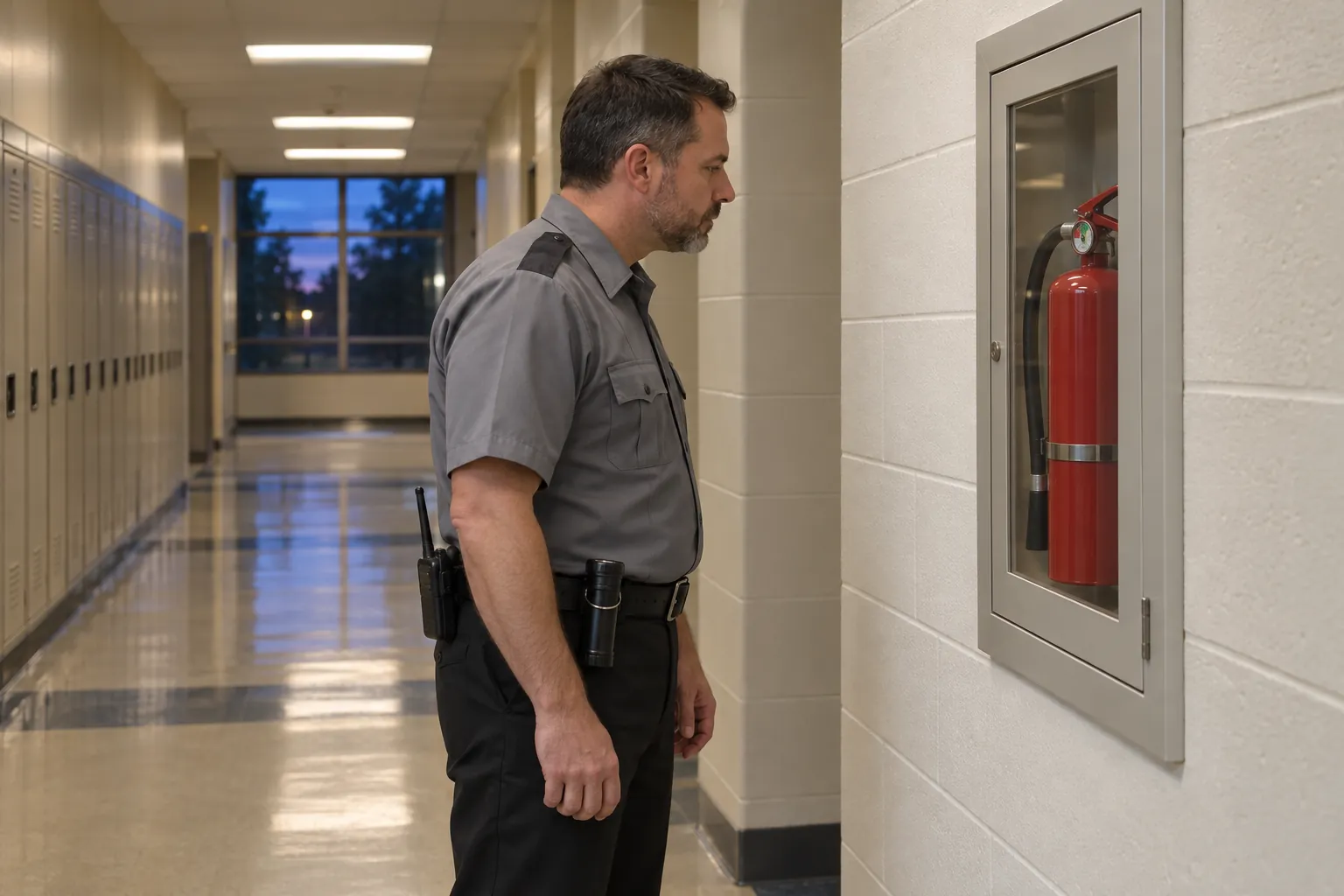
Who does the monthly walk depends on the building: the building operator or superintendent, a security guard on a night patrol, the janitorial supervisor, or a fire warden for their floor. Whoever it is, name them and a backup in the fire safety plan or the post orders, give them the list of every extinguisher by location, and make the inspection part of a routine rather than something done when someone remembers.
Common findings include:
- an extinguisher used as a door stop, which usually means a fire door propped open as well;
- extinguishers hidden behind snow-clearing equipment, pallets or seasonal stock;
- a tag with a year-old service date, or a monthly record that stops in the spring;
- a discharged extinguisher put back on its bracket after a small incident.
06
Where the record fails, and what SiteClara does about it
Monthly extinguisher inspections are the kind of routine that fades. They start well after the service visit, get skipped in a busy month, and end as a row of tags all initialled on the same afternoon. Nobody can then say whether the unit by the loading dock was on its bracket in January, and a missing extinguisher is found at the next annual service, or not at all.
SiteClara puts a printed QR poster at each extinguisher point or group of points, with an optional NFC tag behind it. Staff scan the code or tap the tag on their own phone, with no app to install, and sign in with a link. They see the checks due at that location, such as the monthly extinguisher inspection, and mark each one done, or say what stopped them, such as a locked electrical room. A problem, such as a missing extinguisher, a broken seal or a gauge out of the green, is reported there with a photo and goes onto the team's list of jobs until someone closes it.
The supervisor sees what is due, done and missed, and can record why a check was missed; a job that needs the building manager can be escalated to them to answer. Each day the supervisor reviews and approves a report that goes to nominated management or client contacts at 8 a.m. the next morning, showing what was reported, completed and still open, and how the scheduled checks went, for example 12 of 12 completed.
07
Questions people ask
How often is a fire extinguisher required to be inspected?
Monthly. The Canadian Centre for Occupational Health and Safety's OSH Answers on portable fire extinguishers say to visually inspect portable fire extinguishers monthly, and to have them serviced at least once a year, or sooner when the monthly inspection shows servicing is needed.
What are the inspection requirements for fire extinguishers in Canada?
They are set by the fire code of your province or territory, most of which build on the National Fire Code of Canada 2020; the NRC advises checking with the municipal, provincial or territorial official to find the edition that applies. In federally regulated workplaces, section 17.3 of the Canada Occupational Health and Safety Regulations, SOR/86-304 requires fire protection equipment to be installed, inspected and maintained in accordance with Parts 6 and 7 of the National Fire Code.
Can anyone do a fire extinguisher inspection?
The monthly visual inspection is not reserved for a technician: CCOHS's OSH Answers on portable fire extinguishers name no particular person for it, so someone on site who knows what to look for can do it. Servicing is different: CCOHS says to allow service only by trained persons with suitable testing equipment and facilities, and section 17.3 of the Canada Occupational Health and Safety Regulations, SOR/86-304 requires all fire protection equipment in federally regulated workplaces to be maintained and repaired by a qualified person, meaning one qualified by knowledge, training and experience to do it safely and properly.
Do fire extinguishers need to be serviced every year?
Yes. CCOHS's OSH Answers on portable fire extinguishers say to service portable fire extinguishers at least once a year, or when the monthly inspection indicates servicing is necessary, and to allow service only by trained persons with suitable testing equipment and facilities.
08
Where to read more, and a list to take away
The National Fire Code of Canada 2020 is a free PDF through the NRC Publications Archive; Division B, Section 6.2 and Division C, Section 2.2 are the parts that matter here. Ontario's Fire Code is on e-Laws, with portable extinguishers in Division B, Section 6.2 and records in Subsection 1.1.2. The CCOHS OSH Answers page is the plain-language version. Your local fire department's fire prevention office can tell you what it expects to see.
Before the next service visit, check that:
- there is a list of every extinguisher, by location, type and rating;
- each one is inspected monthly by a named person, with a backup, and the inspection is recorded with the date and time;
- missing, discharged or damaged extinguishers are reported and dealt with the same day, not just noted;
- units in unheated areas are either in a heated enclosure or labelled for the cold;
- the annual fire extinguisher service is booked with a trained service company, and each extinguisher has a current tag;
- the permanent maintenance and hydrostatic test records are kept at the building for at least two years;
- recommendations from the last service have been acted on;
- anyone expected to use an extinguisher has been trained first, knows the classes of fire and the PASS method, and knows to pull the fire alarm and evacuate when they cannot safely put the fire out.
Sources
Every document this guide quotes or links to, in the order it first cites them.
- National Fire Code of Canada 2020 nrc.canada.ca
- Ontario Fire Code, O. Reg. 213/07 ontario.ca
- BC Fire Code www2.gov.bc.ca
- Industrial Establishments regulation, R.R.O. 1990, Reg. 851 ontario.ca
- Canada Occupational Health and Safety Regulations, SOR/86-304 laws-lois.justice.gc.ca
- OSH Answers on portable fire extinguishers ccohs.ca
- Canada Occupational Health and Safety Regulations, SOR/86-304 laws-lois.justice.gc.ca
Related guides
 Fire and water checksFire log book: what to record, who keeps it and how long, under Canadian fire codesWhat a fire log book should hold under the Ontario Fire Code and the National Fire Code of Canada: the tests, who records them, how long to keep them, and the form.
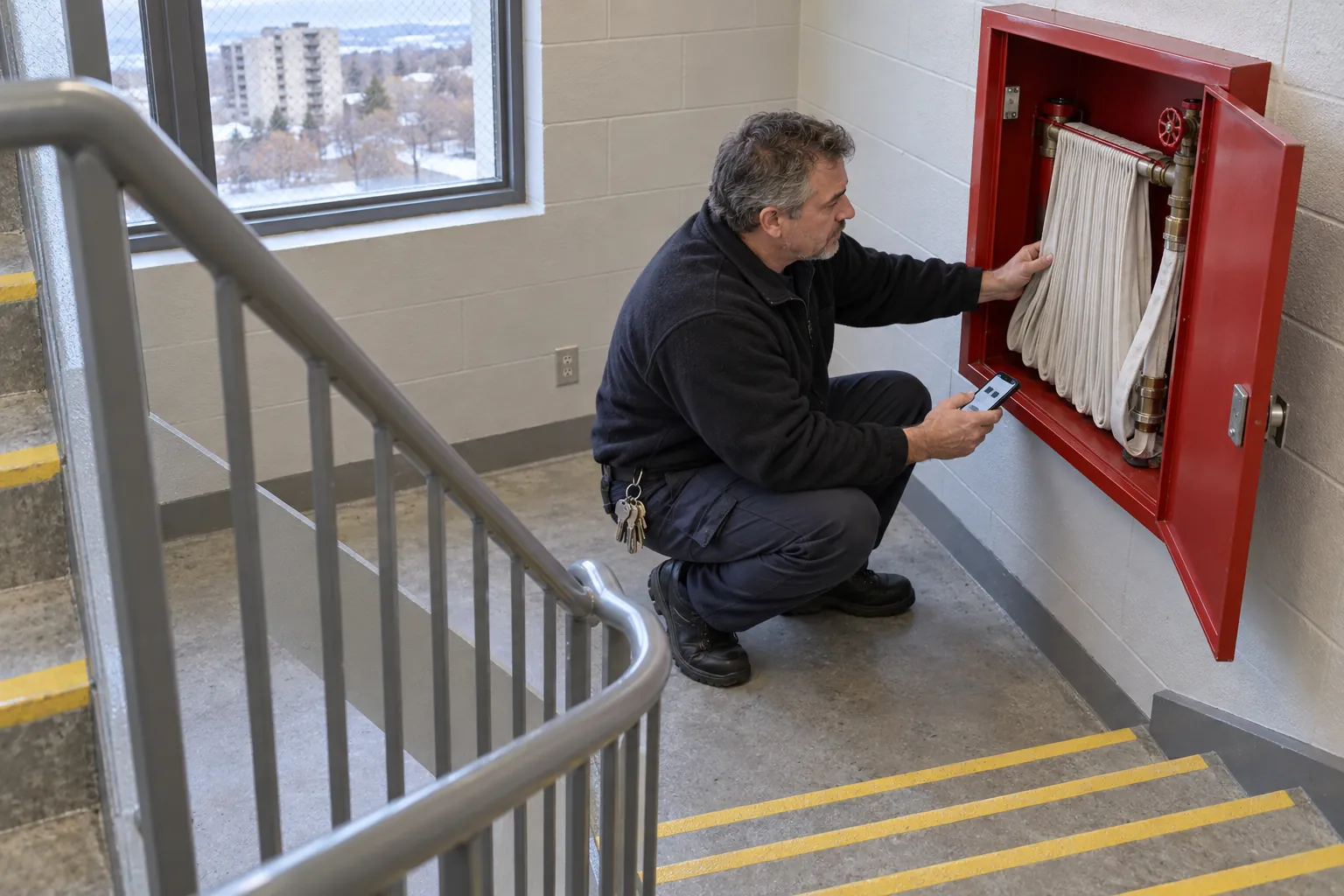 Fire and water checksOntario Fire Code monthly inspections: what is due, who does it, and the recordEvery monthly fire protection and egress inspection the Ontario Fire Code sets, article by article, the checks around them, and what a fire inspector can ask to see.
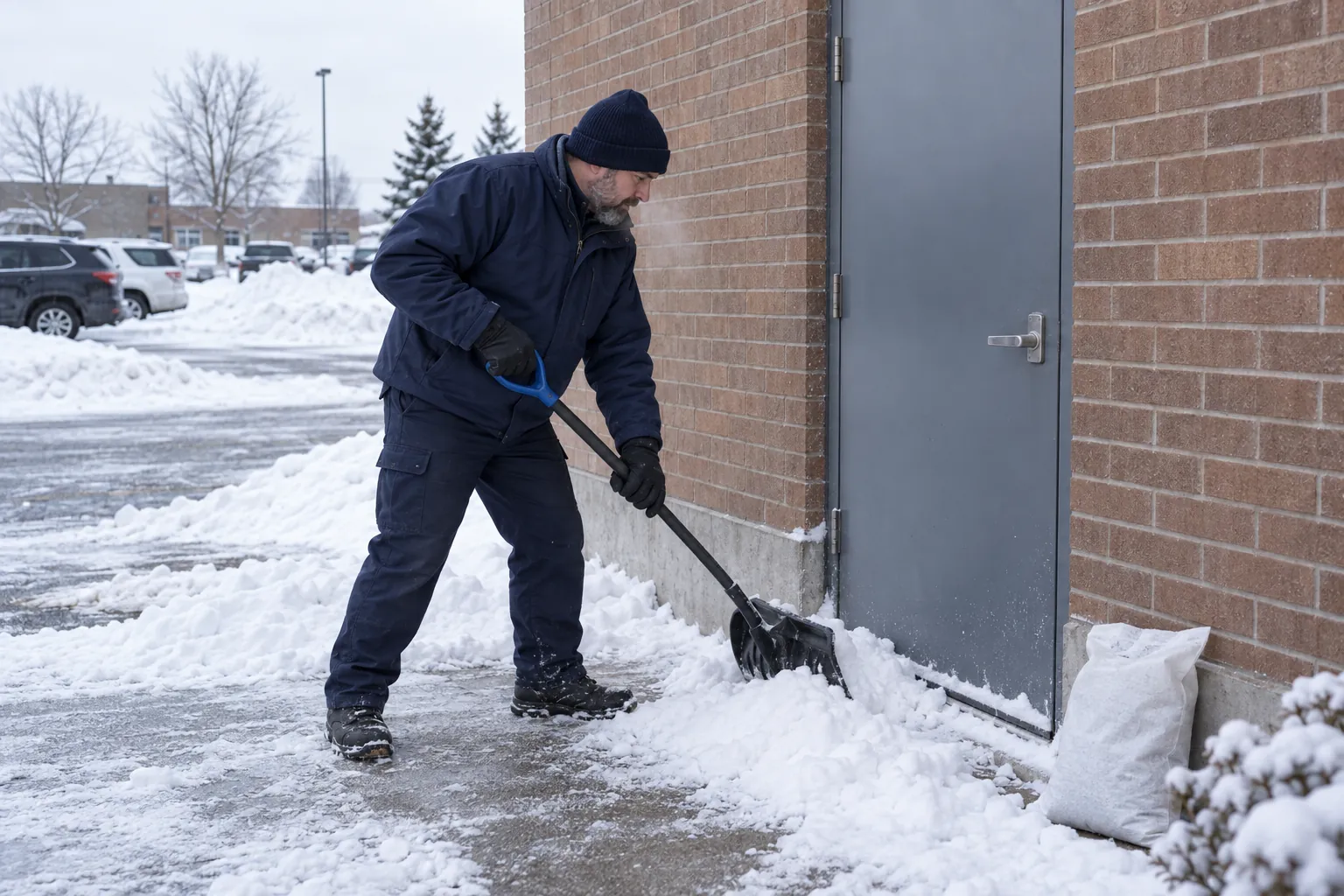 Fire and water checksWorkplace fire safety checklist: what to check, how often, and who does it in CanadaA workplace fire safety checklist for Canadian buildings: the daily, monthly and annual checks the fire code sets, who does each one, and what the record shows.
 Fire and water checksFire warden duties: the routine checks, the evacuation, and the law behind the roleWhat a fire warden does in a Canadian building: the fire code's supervisory staff, federal emergency wardens, the routine checks, the evacuation and the records.