Cleaning
Janitorial scope of work: what it should say, and how to show it is met
A janitorial scope of work is the document that defines the cleaning a building needs: the areas to be cleaned, the tasks in each, how often each is done, the standard the result must meet and how performance will be checked.

It is the document every cleaning contract rests on. This guide covers what to put in one for a Canadian building, the provincial and federal rules that sit behind it, how to set frequencies, and how to turn it into evidence rather than a promise.
01
What a janitorial scope of work is, and the rules behind it
A janitorial scope of work (SOW, sometimes called the specifications) sets out the cleaning service a building needs, area by area: the tasks, how often each is done, the standard the result must meet, and how performance will be checked. It is the part of a janitorial contract that turns "keep the building clean" into requirements a contractor can price and a property manager can hold them to.
Behind it sit legal duties that apply whoever does the cleaning, and in Canada most of them are provincial. Workplace health and safety law is made by each province and territory; federal law covers only federally regulated work such as banks, airports, telecoms and interprovincial transport. Name the province in the document and check its own act and regulations.
Ontario is the most detailed example. Ontario's Ministry of Labour, Immigration, Training and Skills Development publishes a Guide to the Occupational Health and Safety Act, Part III (Duties of employers and other persons), which explains that an owner must ensure workplace facilities are provided and maintained as prescribed and that the workplace complies with the regulations (clause 29(1)(a)), and that an employer must instruct, inform and supervise workers to protect their health and safety (clause 25(2)(a)).
Federally regulated workplaces follow the Canada Occupational Health and Safety Regulations (SOR/86-304). Part IX (Sanitation) requires every employer to maintain each personal service room (a change room, toilet room, shower room or lunch room, among others) and food preparation area "in a clean and sanitary condition" (section 9.2), and requires each personal service room to be cleaned "at least once every day that it is used" (section 9.4). Section 9.3 requires janitorial work that may cause dusty or unsanitary conditions to be done without contaminating the air.
Health care has its own standard. Public Health Ontario's Provincial Infectious Diseases Advisory Committee (PIDAC) publishes Best Practices for Environmental Cleaning for Prevention and Control of Infections in All Health Care Settings (3rd edition, 2018; 1st revision, November 2025). It says its recommendations apply whether cleaning is done in-house or contracted out, and are designed to be used "as the basis for specifications if cleaning services are contracted out". Outside health care, most scopes of work follow the same logic on a smaller scale.
02
What a janitorial scope of work should include
A scope of work that a contractor can price and a property manager can check usually covers:
- The premises: the buildings, floors and areas included, and those excluded, ideally as a room schedule by area type with floor areas and floor finishes (carpet, VCT, sealed concrete, terrazzo, ceramic tile).
- Tasks by area type: washrooms, lunch rooms and kitchenettes, entrances, vestibules and lobbies, offices, boardrooms, corridors and stairwells, elevators, garbage and recycling rooms, and anything specialist such as fitness rooms, labs or daycare space.
- Frequency for each task: several times a day, daily, weekly, monthly, quarterly or annually.
- The standard: what "clean" means for each area, in words a supervisor could check on a walk-through.
- Hours and access: evening, overnight or day cleaning, the day porter's hours if there is one, when rooms are free, and who holds keys, access cards and alarm codes.
- Periodic work: floor care (strip and wax, scrub and recoat, burnishing, carpet extraction), high dusting, interior glass, and deep cleans of washrooms and lunch rooms. See our floor care program guide.
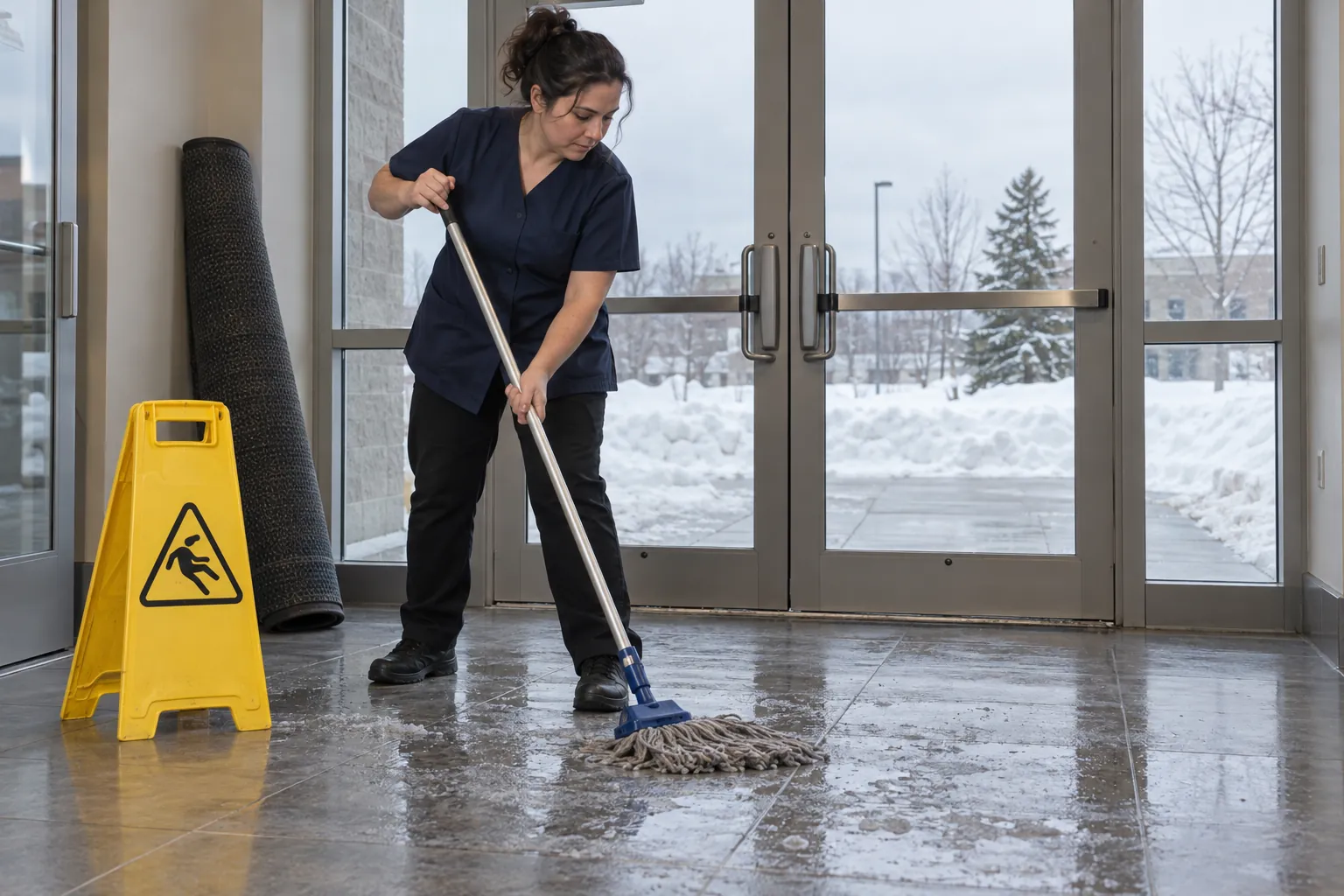
- Winter: entrance matting, salt and slush in vestibules and lobbies, more frequent wet mopping at doors, and who deals with snow and ice outside, which is often a separate contract.
- Consumables and equipment: who supplies paper towel, toilet tissue, hand soap, liners and sanitizer, who owns the machines, and whether the contractor's price includes restocking.
- Products and safety: which cleaners and disinfectants may be used, WHMIS labels and safety data sheets, colour-coded cloths and mops to prevent cross-contamination, and the contractor's safety program.
- Reactive cleaning: spills, washroom floods, vomit and one-off requests, how they are raised and how quickly they must be dealt with.
- Quality control: how the work is inspected, the key performance indicators, and how deficiencies are put right.
- Reporting and review: what the contractor reports, how often, and how the scope changes when the building's use changes.
Leave out anything nobody will check. A scope of work that lists two hundred tasks but is inspected on ten is really a scope of ten tasks. Response times and credits usually sit in a separate janitorial service level agreement.
03
Setting frequencies area by area
Frequencies should follow risk and traffic, not habit or last year's contract. Start by grouping every area into a handful of types and ask two questions of each: how many people use it, and what happens if it is dirty. A typical building ends up with something like this:
- Washrooms: a full clean at least daily, with checks and restocking through the day in busy or public buildings. In an Ontario workplace, each clean should also update the posted or electronic record of the two most recent cleanings.
- Lunch rooms and kitchenettes: daily, with counters, sinks, tables and appliance handles cleaned after the lunch rush where the building has day cover.
- Entrances, vestibules and lobbies: daily, and several times a day in winter, because salt, sand and slush tracked in at the door spread through the building and make floors slippery.
- Offices and boardrooms: daily for garbage, recycling and touch points; vacuuming and dusting on a set cycle, often daily in open areas and weekly in private offices.
- Corridors, stairwells and elevators: daily or on a cycle, with handrails, push plates, elevator buttons and door hardware treated as high-touch surfaces.
- Garbage rooms, storage rooms and mechanical rooms: weekly or monthly, with garbage rooms more often in residential and food service buildings.
The result is a frequency schedule for each area type, which the contractor turns into routes and crew assignments. Periodic tasks go on their own calendar. High surfaces, baseboards and vents are where scopes quietly fail, because none is ever urgent tonight.
If cleaning is done at night, say who deals with a washroom that runs out of paper at 11 a.m.: a day porter, or someone in the building.
04
Writing the standard: input, output or both
There are two ways to write the standard, and most good scopes of work use a mix.
- An input (frequency-based) scope says what the contractor must do and how often: "vacuum carpeted areas daily", "clean and disinfect washroom fixtures twice daily". It is easy to price and check, but rewards doing the task rather than the result.
- An output (performance-based) scope says what the result must be: "carpets free of visible soil and debris", "washroom fixtures clean, with no residue, scale or smears, at all times the building is open". It needs regular inspection to mean anything.
- A hybrid sets the outcome and a minimum frequency. It is the most common shape, protecting the owner against cut visits and the contractor against a standard nobody can measure.
Whichever you choose, each standard should be written so that two people inspecting the same room would reach the same answer. "Clean" is not a standard; "no visible dust on horizontal surfaces up to 2 metres, no marks on glass at door handles, garbage containers empty with a fresh liner" is.
Chemicals belong in the standard too. WHMIS (Workplace Hazardous Materials Information System) applies across Canada through coordinated federal, provincial and territorial law: suppliers classify hazardous products and provide labels and safety data sheets, and employers must educate workers, keep labels in place and keep safety data sheets current. The scope of work should say that the contractor meets those duties for its own products and crew. The Canadian Centre for Occupational Health and Safety's guidance on working safely with cleaning products says to "always use the appropriate product for the task, and one that is the least hazardous"; a scope that names approved products, or the criteria for them, makes that easier to hold to.
Where the scope asks for disinfection rather than cleaning, name it. Health Canada's page on biocides explains that an authorized surface disinfectant carries an 8-digit number on its label, and that since 31 May 2025 biocides need a market authorization before they can be imported, sold or advertised in Canada. A surface disinfectant that already has a drug identification number (DIN) has until 31 May 2029 to move to the new framework, and keeps the same 8-digit number. Our guide to the disinfectant DIN covers how to check a product.
05
How performance is checked
A scope of work is only as good as the way it is checked. The usual tools are:
- Quality control inspections: the janitorial supervisor or the property manager inspects a sample of rooms against the standards in the scope and scores them. Joint inspections settle disagreements before they become disputes.
- Key performance indicators: inspection scores, the time taken to correct a deficiency, complaints, and scheduled tasks or checks completed against those planned.
- Records of work done: cleaning logs, check sheets and sign-offs that show each scheduled task was carried out, by whom and when. In an Ontario workplace, the washroom record is one of these, required by law.
- Correction times: how quickly a reported problem must be fixed, by type. A spill in a lobby needs minutes; a stained carpet can wait for the next extraction.
The Canadian Centre for Occupational Health and Safety's guidance on effective workplace inspections fits a cleaning inspection well: the report names the area and the date, lists what was found with the specific location, sets a priority, and assigns each corrective action to a person with a due date.
Inspections measure quality; records measure delivery. Property managers often have plenty of the first and very little of the second, which is why a missed clean usually comes to light through a tenant's complaint.
A janitorial inspection can report a hazard it sees, such as a wet floor with no sign or a damaged step, but it is not a health and safety inspection; CCOHS names health and safety committee members and representatives as the obvious choices for formal inspections, and a cleaning walk-through does not replace theirs. Our JHSC workplace inspection guide covers that.
06
Where the record fails, and how SiteClara helps
Most scopes of work promise more checks than anyone can show happened. "Washrooms checked hourly" becomes a sheet on the back of the door, initialled in advance or all at once at the end of the shift. When a property manager asks whether the scope is being met, the contractor can describe it but cannot show it, and a problem found at 9 a.m. goes to whoever happened to be passing.
SiteClara turns each scheduled check in the scope of work into a check at a location. A tag at each place, a printed QR code with an optional NFC tag behind it, lets the crew confirm the check with a scan or a tap on their own phone, with no app to install. The time and the person are recorded as it happens, with a photo when one is asked for. Anything found wrong can be reported there and goes onto the team's list of jobs.
The crew sees what is due, and the supervisor sees what was done and what was missed, with a reason where one was recorded. Each morning the approved report goes to the property manager or the client, showing checks completed against checks scheduled and what is still open. That is the delivery half of the scope of work, recorded as it happens rather than reconstructed at the end of the month.
07
Questions people ask
What are the job duties of a janitor?
The NOC 2021 profile for unit group 65312, Janitors, caretakers and heavy-duty cleaners describes workers who "clean and maintain the interior and exterior of commercial, institutional and residential buildings and their surrounding grounds". Its main duties include emptying trash cans and other waste containers, sweeping, mopping, scrubbing and waxing hallways, floors and stairs, washing windows, interior walls and ceilings, cleaning and disinfecting washrooms and fixtures, and clearing snow and ice from walkways and parking areas. A scope of work turns duties like these into tasks, frequencies and standards for one building.
What sector of work is cleaning?
Statistics Canada's North American Industry Classification System (NAICS) Canada 2022 Version 1.0 places contract cleaning in sector 56, Administrative and support, waste management and remediation services. Canadian industry 561722, Janitorial services (except window cleaning), covers establishments "primarily engaged in cleaning building interiors, and/or transportation equipment (aircraft, ships, rail cars) interiors". Window cleaning is 561721, and a contractor that supplies janitorial work together with maintenance, security and reception inside a client's building is classed under facilities support services (561210).
What goes in a scope of work for industrial cleaning?
The same parts as any janitorial scope of work, with the heavier tasks and hazards of a plant written in. The NOC 2021 profile for unit group 65312, Janitors, caretakers and heavy-duty cleaners lists industrial cleaner, factory cleaner and plant cleaner among its example titles, and its main duties include operating "industrial vacuum cleaners to remove scraps, dirt, heavy debris and other refuse". In a federally regulated workplace, section 9.3 of the Canada Occupational Health and Safety Regulations (SOR/86-304) requires "all janitorial work that may cause dusty or unsanitary conditions" to be carried out in a way that prevents contamination of the air, so the scope should say how dust is controlled, as well as which products are approved and how WHMIS labels and safety data sheets are handled.
08
Who writes it, where to read more, and a list to take away
The owner, or the property or facility manager acting for them, owns the scope of work: it describes the service they are buying. The best ones are written with a contractor's input. When the scope goes out to tender, it becomes the core of the request for proposal; our cleaning RFP guide covers the rest of that document. Review the scope when the building's use changes, at contract renewal, and whenever the same complaint keeps coming back.
For the rules and guidance behind it, read your own province's occupational health and safety act and regulations, starting in Ontario with the Guide to the Occupational Health and Safety Act and the page on maintaining clean washroom facilities for workers; the Canada Occupational Health and Safety Regulations for federally regulated workplaces; PIDAC's Best Practices for Environmental Cleaning for health care; and the Canadian Centre for Occupational Health and Safety's pages on workplace housekeeping and health and safety for cleaning staff.
Before a scope of work goes into a tender or a renewal, check that it:
- names the province and the building, and lists every area, grouped by type, with anything excluded named;
- gives each task a frequency and each area a standard someone could inspect;
- separates daily tasks, checks through the day and periodic work, including winter care and floor refinishing;
- says who supplies consumables, equipment and products, and how WHMIS labels and safety data sheets are handled;
- sets correction times for reported problems and says how they are reported;
- says who keeps any record the law requires, such as Ontario's washroom cleaning record, and where it is posted or how workers can see it;
- defines how quality is inspected and which KPIs are reported;
- says how completed work will be evidenced, not only how it will be scored;
- has a date for its next review.
Sources
Every document this guide quotes or links to, in the order it first cites them.
- Guide to the Occupational Health and Safety Act, Part III (Duties of employers and other persons) ontario.ca
- Maintaining clean washroom facilities for workers ontario.ca
- Canada Occupational Health and Safety Regulations (SOR/86-304) laws-lois.justice.gc.ca
- Best Practices for Environmental Cleaning for Prevention and Control of Infections in All Health Care Settings publichealthontario.ca
- WHMIS (Workplace Hazardous Materials Information System) ccohs.ca
- Working safely with cleaning products ccohs.ca
- Biocides canada.ca
- Effective workplace inspections ccohs.ca
- NOC 2021 profile for unit group 65312, Janitors, caretakers and heavy-duty cleaners noc.esdc.gc.ca
- North American Industry Classification System (NAICS) Canada 2022 Version 1.0 www150.statcan.gc.ca
- Workplace housekeeping ccohs.ca
- Health and safety for cleaning staff ccohs.ca
Related guides
 CleaningJanitorial service level agreement: what to include, and how to show it is metWhat a janitorial or cleaning service level agreement should contain in Canada: service levels, response times, holdbacks, escalation and proof of delivery.
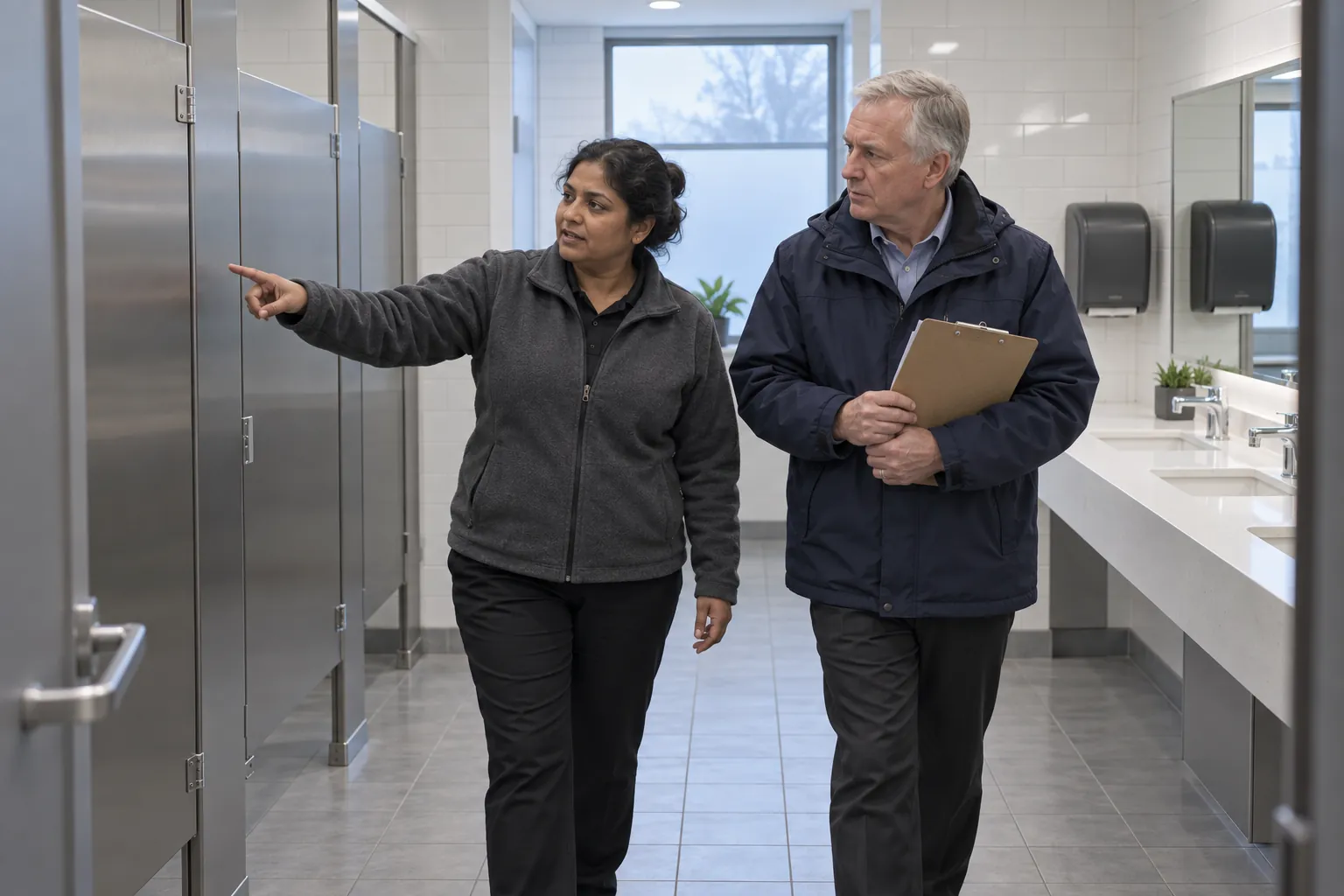 CleaningJanitorial quality control: how to inspect, correct and show the standard heldHow janitorial quality control works in Canada: QA versus QC, inspections, sampling, corrective action, CIMS, the PIDAC audit model and records that hold up.
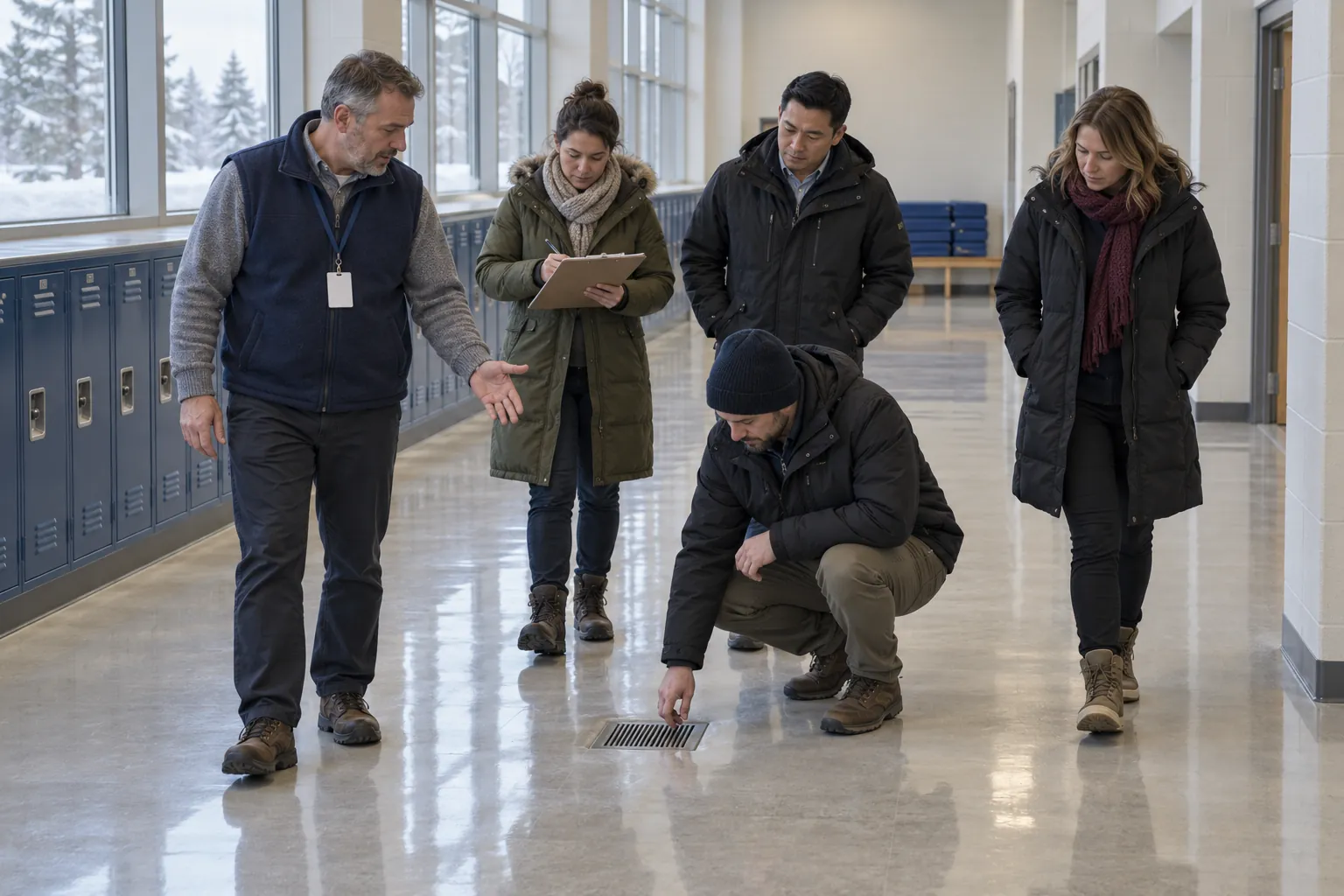 CleaningCleaning RFP: how to run a janitorial tender as the buyerA buyer's guide to a cleaning RFP or tender in Canada: trade agreement rules, the bid package, site visits, successor rules, evaluation and the first months.
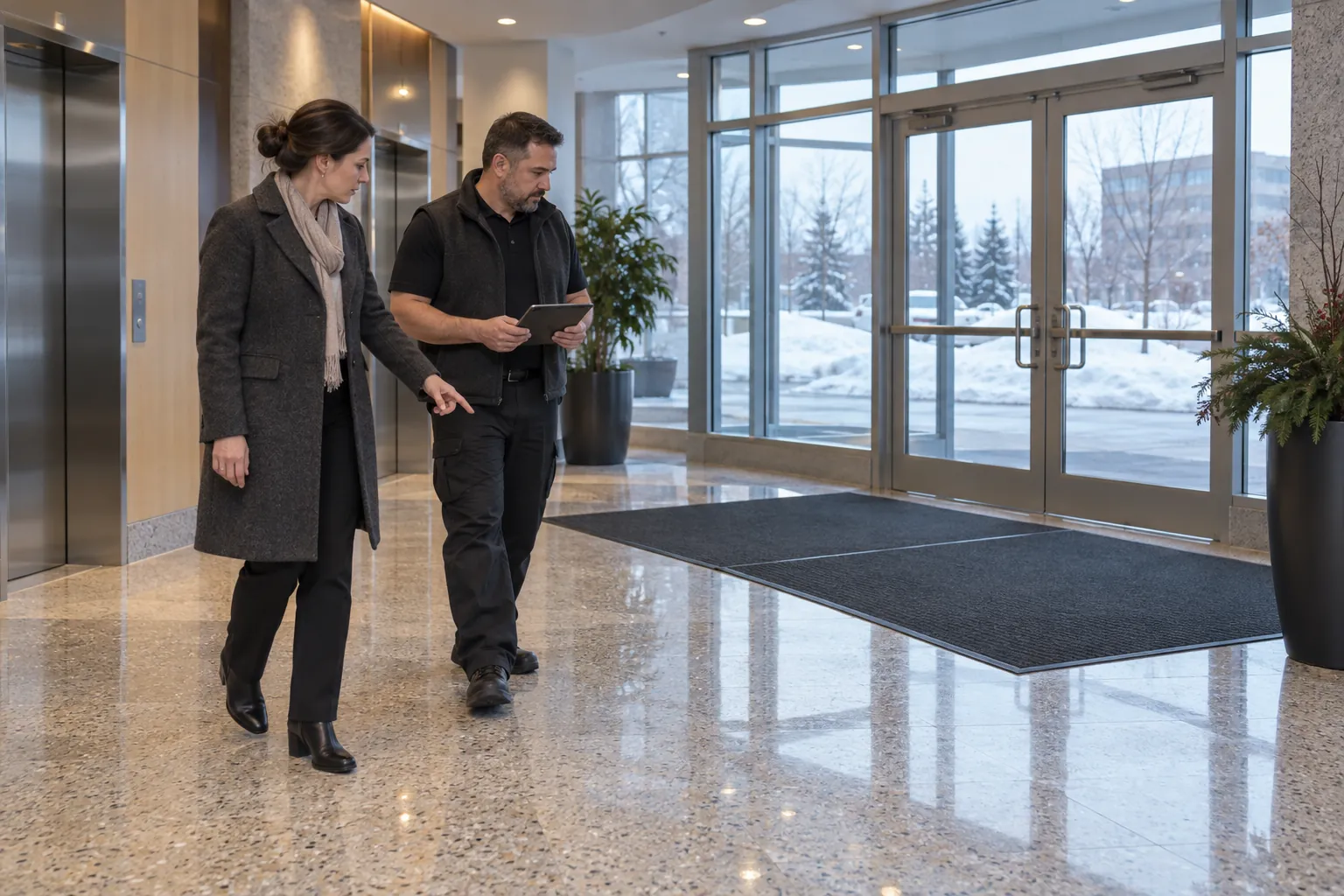 CleaningCleaning KPIs: what to measure in a janitorial contract, and how to know the figures are trueThe cleaning KPIs worth measuring in a Canadian janitorial contract, how to define and target them, how to report them, and how a green dashboard can mislead.