Cleaning
Commercial cleaning checklist: area by area, and how to use it on shift
A commercial cleaning checklist is the list a cleaning team works from in an office or other workplace: the tasks for each area, in the order they are done, with room to record that each task was done and what was found.
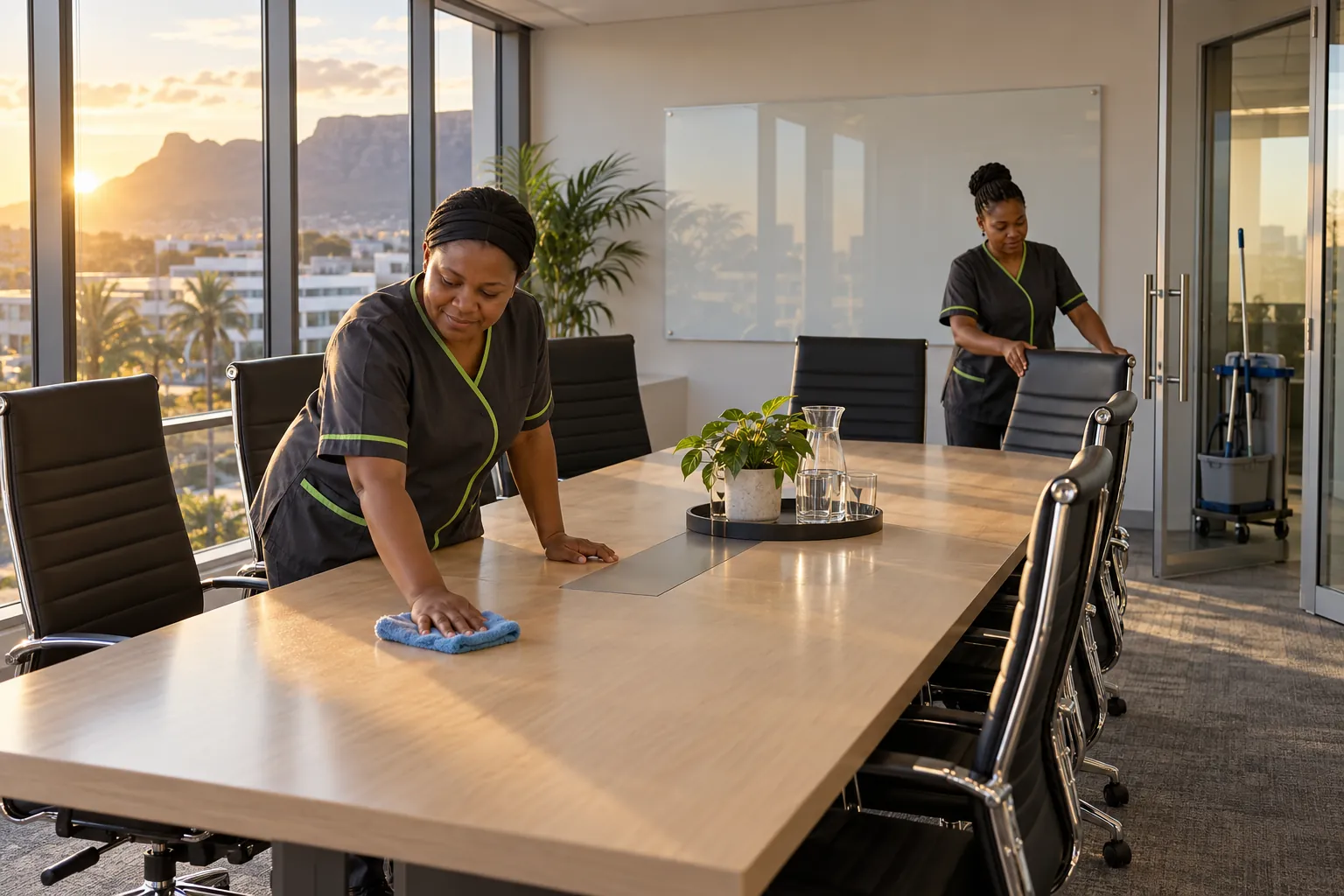
It runs from reception and the open-plan floor to the boardrooms, tea kitchens, ablutions and passages. No South African law asks for a checklist by name, but it is the everyday way to show that the workplace is being kept clean, orderly and free of waste, as regulation 13H of the General Safety Regulations requires. This guide sets out a checklist area by area, then covers how to write one, how to use it on shift and how a supervisor or client can tell whether it is being followed.
01
The duty behind a cleaning checklist
Section 8(1) of the Occupational Health and Safety Act 85 of 1993 requires every employer to provide and maintain, as far as is reasonably practicable, a working environment that is safe and without risk to the health of its employees. Section 8(2) includes safe systems of work, training and supervision. Section 9 requires every employer to conduct its undertaking so that, as far as is reasonably practicable, people other than its employees who may be directly affected by its activities, such as visitors, tenants and the public, are not exposed to hazards to their health or safety.
The regulations made under the Act turn that into specific duties that a cleaning checklist serves directly:
- Housekeeping. Regulation 13H of the General Safety Regulations, 2025 (Government Notice R. 5954 of 6 March 2025) requires an employer to keep every indoor workplace clean, orderly and free of materials, tools and similar things not needed for the work, and to keep all floors, walkways, stairs, passages and gangways in a good state of repair, skid-free and free of obstructions, waste or materials.
- Escape routes. Regulation 13J of the same Regulations requires exit doors to be kept clear and capable of being opened easily and rapidly from inside, and staircases intended as fire escapes to be kept clear of any material or other obstruction. A cleaner's trolley or a bag of refuse should never be parked there.
- Ablutions and other facilities. Regulation 9 of the Facilities Regulations, 2004 requires every employer to maintain the rooms and facilities those Regulations cover, including toilets, washbasins, showers, changing rooms and dining rooms, in a clean, hygienic, safe, whole and leak-free condition and in a good state of repair. Regulation 2(3) requires toilet paper and toilet soap free of charge, a seat on every pan designed for one, and towels, paper towels or hand dryers at the washbasins.
- Cleaning chemicals. The Regulations for Hazardous Chemical Agents, 2021 (Government Notice R. 280 of 29 March 2021) cover the products the team uses: the employer must obtain the safety data sheet from the supplier and give it to anyone who uses the product, and must, as far as is reasonably practicable, make sure a product decanted into another container is correctly labelled for it.
Where a canteen, coffee shop or kitchen in the building prepares food, the Regulations governing general hygiene requirements for food premises, the transport of food and related matters (R638 of 22 June 2018, under the Foodstuffs, Cosmetics and Disinfectants Act 54 of 1972) add their own cleaning duties, set out below. The certificate of acceptability guide covers when they apply.
Three documents are often confused, and each does a different job:
- The cleaning contract and its specification say what the contract cleaning company is paid to clean, to what standard. See the cleaning contract guide.
- The cleaning schedule sets out every area and how often each task is done: daily, weekly, monthly or periodic. See the cleaning schedule guide.
- The checklist is the list a cleaner works from on a shift or in an area, in the order the work is done, with space to record that each task was done and anything found.
This guide is about the third.
02
What a commercial cleaning checklist covers
Workplaces differ, but the same kinds of area turn up in almost all of them. Divide the checklist by area, not as one long list for the whole building, so that each part can be completed and checked on its own:
- Entrance, foyer and reception: where most dirt, sand and rainwater come in.
- Open-plan offices and workstations: bins, clear desk surfaces, touch points and floors.
- Boardrooms and meeting rooms: tables, chairs, screens and whiteboards, reset for the next meeting.
- Tea kitchens and canteens: sinks, counters, appliances, fridges and refuse.
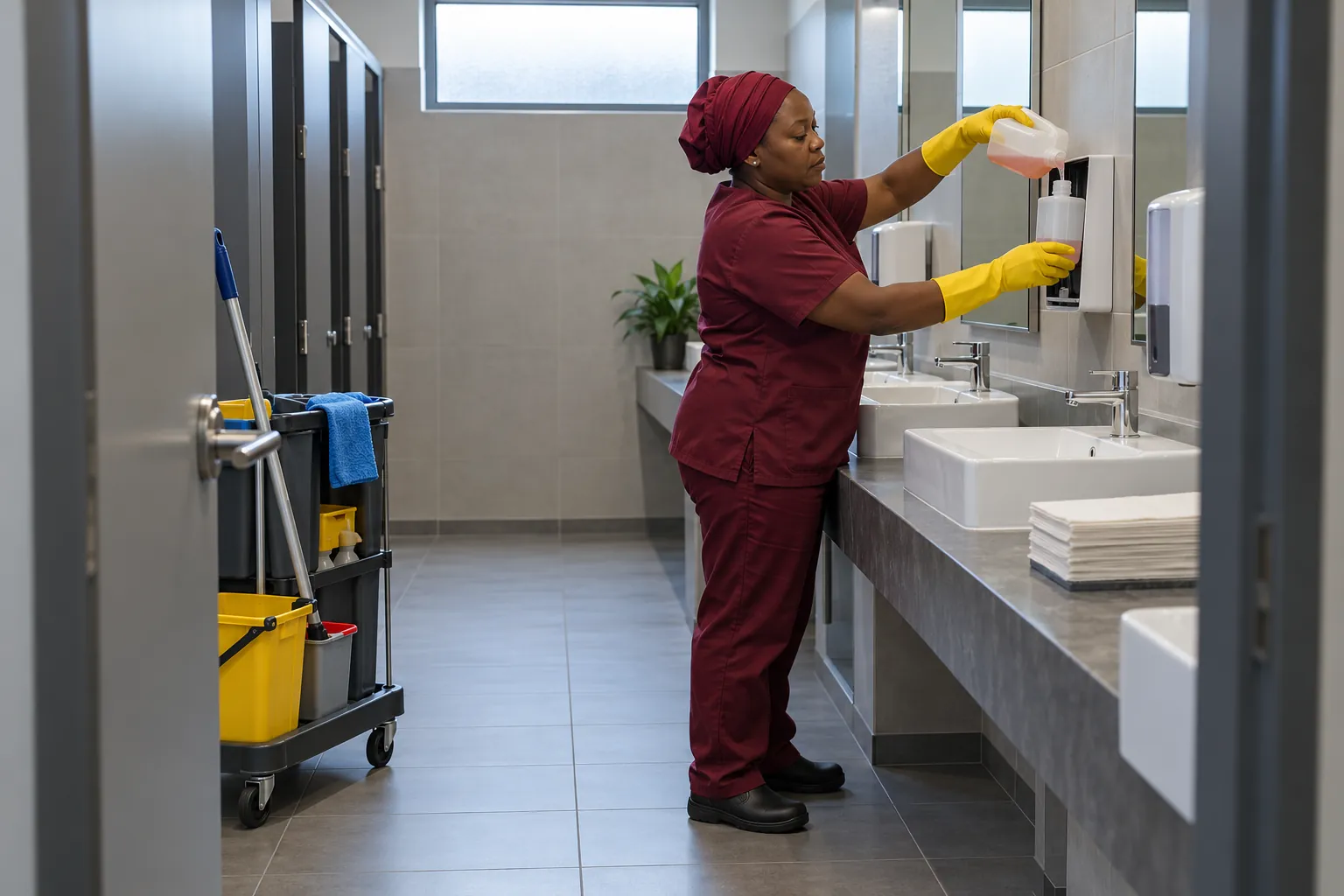
- Ablutions: toilets, urinals, basins, showers, dispensers, sanitary bins, floors and consumables. The ablution facilities guide covers the law and the check in detail.
- Passages, stairs and lifts: handrails, door handles, push plates, lift buttons and floors where foot traffic is heaviest.
- High-touch surfaces throughout: door handles, light switches, access control readers, lift buttons, shared phones and printers.
- Refuse and recycling: internal bins, the central refuse room or bin area, and the route between them.
- Anything specialist, such as a clinic room, gym or server room, with its own list.
Leave out anything the contract does not cover. A checklist that lists external windows when a rope-access contractor cleans them twice a year invites a tick against work the team never does.
03
The checklist, area by area
The tasks below are a starting point for a typical office or mixed commercial building. Adjust them to the building, and take the frequencies from the cleaning schedule guide rather than writing them twice. Daily tasks come first, area by area; weekly and periodic tasks follow.
Entrance, foyer and reception
- Vacuum or shake out entrance mats; replace a saturated mat on a wet day.
- Sweep and mop hard floors, and put out a wet floor sign while they dry; mop again during the day in the rainy season.
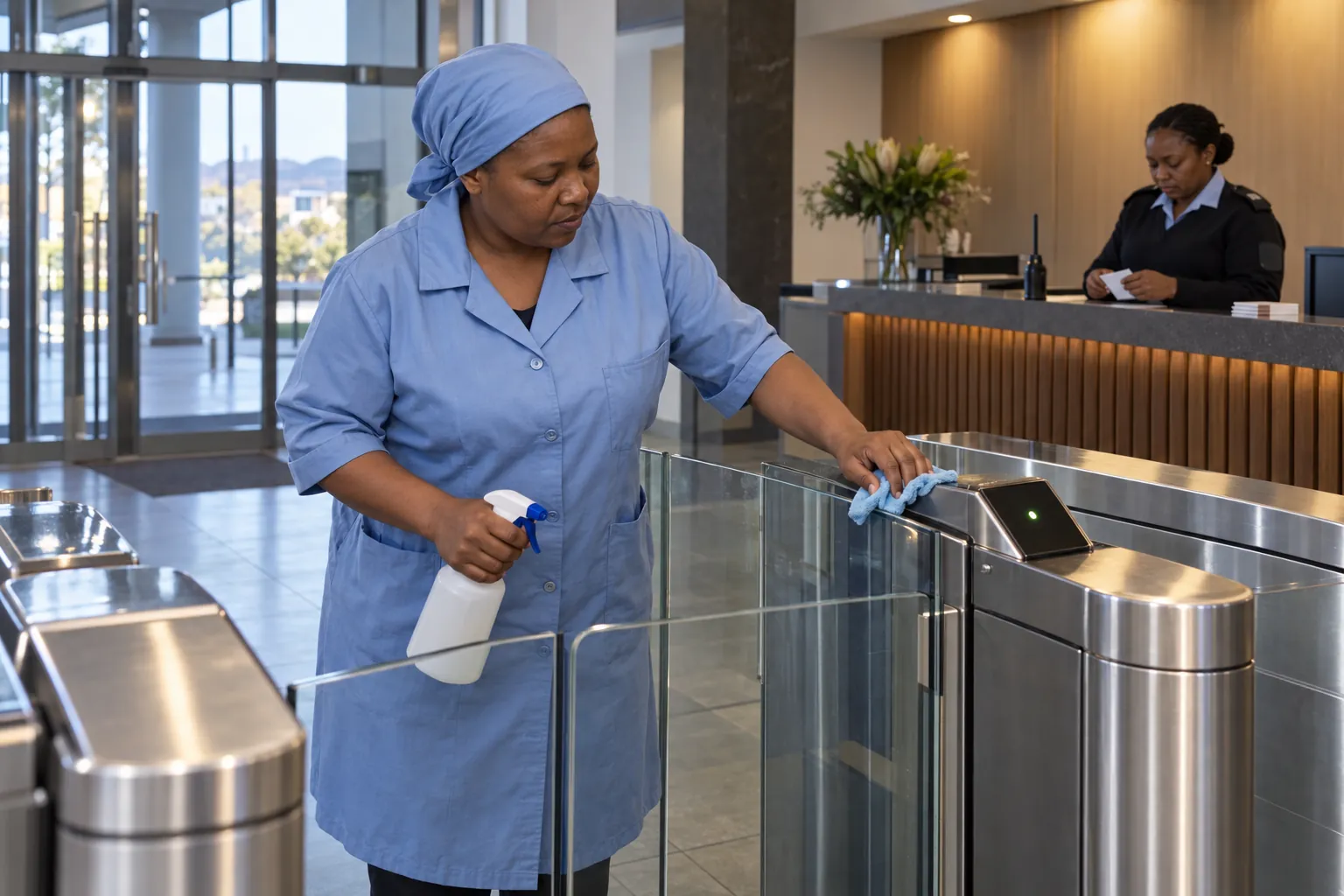
- Clean the glass of entrance doors at hand height and wipe the push plates.
- Wipe the reception counter, visitor seating, the sign-in tablet or register and the turnstile or access reader faces.
- Empty bins and check the foyer is clear of anything that could trip someone.
Open-plan offices and workstations
- Empty waste and recycling bins and replace liners.
- Wipe clear desk surfaces; do not move papers or equipment unless the specification says so.
- Wipe shared phones, keyboards and printer controls where agreed.
- Vacuum carpets and walkways, spot-clean spills, and mop hard floors.
- Dust window sills, ledges and partition tops within reach.
Boardrooms and meeting rooms
- Clear cups, bottles and litter; wipe tables and chairs.
- Clean the whiteboard if it has been left for cleaning, and wipe screen and conferencing controls.
- Vacuum or mop, and reset the furniture to the standard layout.
Tea kitchens
- Clean and wipe down counters, sinks and taps with the product named for food-contact surfaces.
- Wipe the fronts, handles and controls of the fridge, microwave, kettle, urn or boiling-water unit and coffee machine.
- Load or empty the dishwasher, or wash up, if the contract includes it.
- Empty food waste, general waste and recycling, and wash out bins that smell.
- Mop the floor, and restock dishwashing liquid, hand soap and paper towels.
Canteens and food areas
- Follow the food business's own cleaning programme first: under regulation 10 of R638 the person in charge of food premises must keep the premises and all facilities clean, remove refuse as often as necessary, and have refuse bins cleaned regularly and disinfected whenever necessary.
- Keep cleaning chemicals away from food, and never use a hand washbasin to clean facilities: regulation 11(3)(h) of R638 says a person may not use a hand washbasin for the cleaning of facilities.
Ablutions
- Clean and disinfect toilets, urinals, seats and flush handles or buttons.
- Clean basins, taps, mirrors, cubicle doors, locks and partitions.
- Restock toilet paper, soap and paper towels, and check hand dryers work.
- Empty waste bins and check sanitary bins are within capacity and due for the hygiene service.
- Mop the floor, working towards the door, and report any leak, blockage, running cistern or broken fitting.
Passages, stairs and lifts
- Vacuum or mop floors and stair treads; clean the lift car floor and wipe the lift buttons inside and out.
- Wipe handrails, door handles and push plates.
- Check that fire escape stairs, exit doors and passages are clear of cleaning equipment, boxes and refuse.
Refuse room and bin area
- Take bagged refuse to the central area and keep it in the bins, not beside them; report a missed collection.
- Sweep the area and hose down or mop spills; keep lids closed to keep out pests.
Weekly, monthly and periodic
- Weekly: dust high ledges, skirtings and picture frames; wipe doors and door frames; clean inside microwaves and fridges, with the occupants' agreement about food left in them; polish internal glass; clean bin exteriors.
- Monthly: dust air-conditioning vents and grilles within reach, wipe light switches and plug points thoroughly, wash internal bins.
- Periodic, often quarterly or annually: deep-clean carpets, strip and reseal vinyl floors, deep-clean ablutions and kitchens, clean behind and under fixed equipment, and external windows by a specialist.
04
How to write a cleaning checklist, and use it on shift
Six habits make the difference between a list that guides the shift and one ticked at the end of it:
- Write it in route order. Follow the path the cleaner actually walks, floor by floor, so the list is read as the work progresses. Keep it to one page per area or route.
- Clean from top to bottom and from clean to dirty. High surfaces before low ones, dry dusting before wet cleaning, and ablutions last or with their own equipment, so that dirt and germs are not carried from one area to the next.
- Keep ablution equipment separate. Many contract cleaning companies colour-code cloths, mops and buckets, one colour for ablutions and another for kitchens and general areas, so that a cloth used on a toilet never reaches a tea kitchen counter. Whatever system the company uses, put the colour for each area on the checklist.
- Name the product, not only the task. The right product, its dilution and how long a disinfectant must stay wet come from the product label and its safety data sheet. The checklist can point to them rather than repeat them, and should start with a check that the trolley is stocked and every decanted bottle is labelled, as the Hazardous Chemical Agents Regulations require.
- Record exceptions, not only ticks. A task that could not be done, because a boardroom was locked or the water was off, should say so and why. So should a fault found. Section 14(d) of the OHS Act requires every employee who notices an unsafe or unhealthy situation to report it as soon as practicable to the employer or the health and safety representative, and a leaking pipe, a loose stair nosing or a broken light is exactly that.
- Fit it to the hours. If the list takes longer than the hours on site, it will be completed on paper and not in the building. Time each area once, done properly, and set the list, or the hours, to match.
Train each cleaner on the list for their area, including where the safety data sheets are kept. Section 8(2)(e) of the Act requires the information, instructions, training and supervision needed for health and safety, and explaining the checklist is part of that.
05
How to check the checklist is being followed
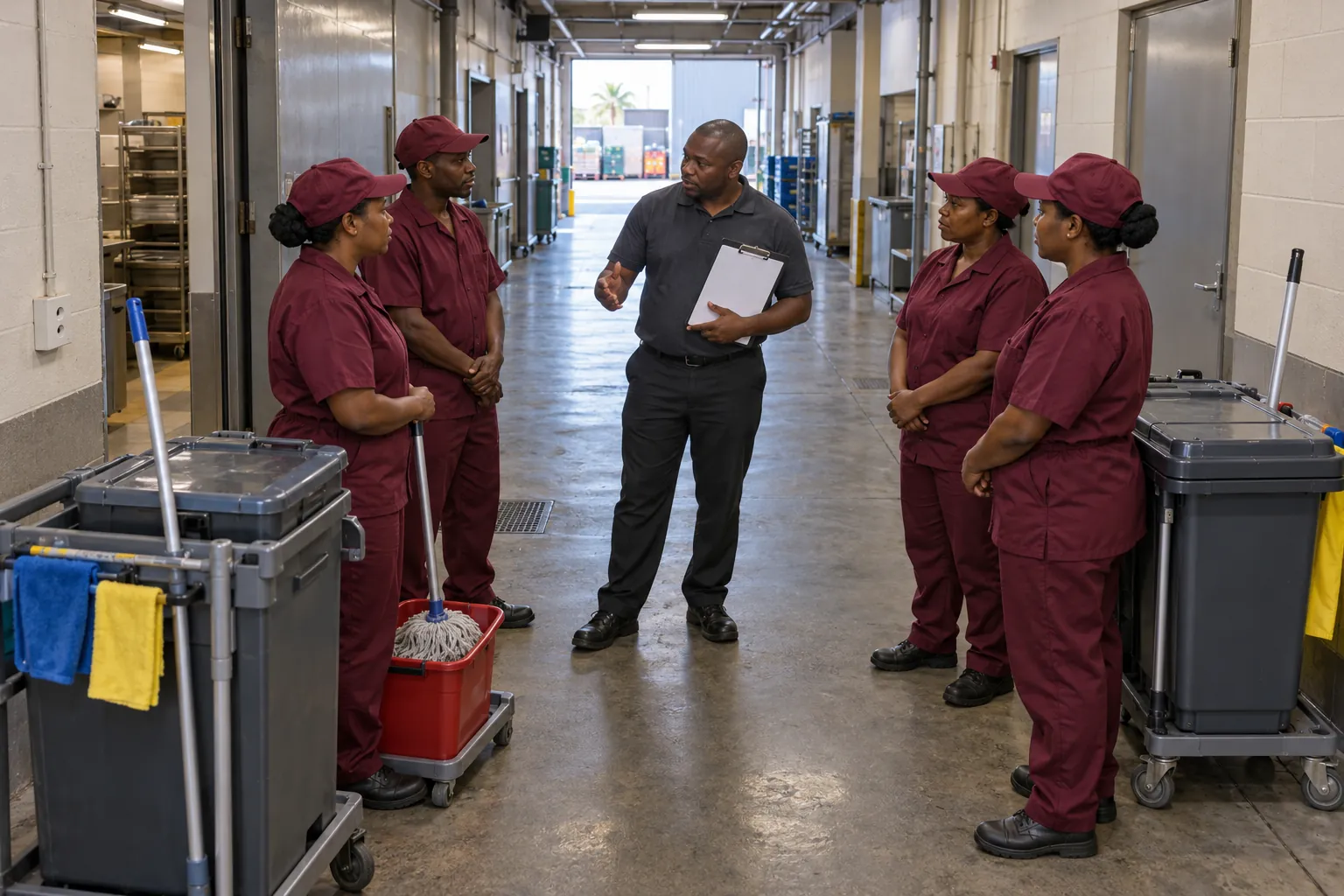
A completed checklist shows that the work was recorded; whether it was done, and done well, needs someone else to look. The cleaning supervisor is usually the person who gives the general supervision section 8(2)(i) of the Act asks for (the cleaning supervisor duties guide covers the role), and the usual layers of checking are:
- The supervisor's walk-round. A short, regular inspection of a sample of areas against the checklist, at varied times, including first thing in the morning when the night's work is fresh.
- A joint inspection with the client. A scored walk-round against the standard in the contract, often monthly, with the facilities manager or the building's managing agent.
- Complaints. Compare each with what the checklist for that area showed.
- Completion against the schedule. How many of the scheduled tasks were completed, and why the rest were not. A record of 100% every day with no exceptions usually means nobody is looking.
Review the checklist when the building's use changes: a new tenant, different working hours, a canteen that opens or closes. Where people come in two or three days a week, a checklist written for five full days spends effort in the wrong places.
A recurring fault raised by the health and safety representative (see the health and safety representative guide), such as a wet foyer floor with no sign out, should change the checklist, not only the next shift.
06
Where the checklist record fails, and what SiteClara does about it
The paper checklist has the same weakness in every building. It is completed by the person whose work it records, often at the end of the shift, and it lives in a file in the cleaners' store room or on the back of the ablution door. A facilities manager who wants to know whether the fourth-floor tea kitchen was cleaned last night has to take someone's word for it.
SiteClara puts a printed QR poster at each area on the checklist, with an optional NFC tag behind it. A member of the team scans the code or taps the tag on their own phone, with no app to install, and sees the scheduled checks due at that location. They mark each one done, or say what stopped them, and can add a photo. The time and the person are recorded as it happens. A fault found on the round, such as a leaking tap or a broken dispenser, can be reported there and goes onto the team's list of open jobs until someone closes it.
The supervisor sees what is due, done and missed across the building, can record the reason a check was missed, and sees open jobs grouped by building and floor. At the end of the day they review the checks and photos, add a note and approve the report, which goes to the nominated managers or client contacts the next morning, showing what was completed, what is still open and how the scheduled checks went.
07
Questions people ask
How do you write a cleaning checklist?
Start from what the list has to achieve. Regulation 13H(2)(c) and (d) of the General Safety Regulations, 2025 require every employer to keep every indoor workplace clean, orderly and free of materials, tools and similar things not necessary for the work, and to keep all floors, walkways, stairs, passages and gangways in a good state of repair, skid-free and free of obstructions, waste or materials. Divide the checklist by area, write each task specifically enough to check, list the tasks in the order the cleaner walks the route, and leave room to record what was not done and why.
What are the 6 basic cleaning steps?
No South African regulation sets out cleaning steps. The nearest published method is the general surface cleaning process in Best Practices for Environmental Cleaning in Healthcare Facilities in Resource-limited Settings, written by the US Centers for Disease Control and Prevention with the Infection Control Africa Network for healthcare facilities, in six steps: soak a fresh cloth in the cleaning solution; fold it to about the size of your hand; wipe from clean to dirty and from high to low in a systematic pattern; turn and unfold the cloth regularly to use every side; dispose of it or store it for reprocessing once every side is used or it is no longer soaked with solution; and start again with a fresh cloth.
08
Where to read the official text, and a list to take away
The Occupational Health and Safety Act 85 of 1993 is published on gov.za, together with the Facilities Regulations, 2004. The housekeeping and escape-route duties are in the General Safety Regulations, 2025, and the rules on safety data sheets and labels in the Regulations for Hazardous Chemical Agents, 2021; the hazardous chemical agents guide explains what they mean for a cleaning contract. Where food is prepared, the Department of Health publishes R638 of 2018, and the municipality's environmental health practitioners enforce it.
Before you hand a commercial cleaning checklist to the team, check that it:
- is divided by area and written in the order the work is done;
- matches the contract and specification, with nothing on it the team is not paid to do;
- takes its frequencies from the cleaning schedule, not a separate list;
- names the colour and the product for each area, and starts with a stocked, labelled trolley;
- includes a check that exits, fire escape stairs and passages are clear;
- has room to record tasks not done, and why, and faults found and reported;
- fits the hours on site when done properly;
- has been explained to each cleaner who uses it;
- is checked by someone other than the person who completed it;
- is reviewed when the building's use changes.
Sources
Every document this guide quotes or links to, in the order it first cites them.
- Occupational Health and Safety Act 85 of 1993 gov.za
- General Safety Regulations, 2025 gov.za
- Facilities Regulations, 2004 gov.za
- Regulations for Hazardous Chemical Agents, 2021 gov.za
- Regulations governing general hygiene requirements for food premises, the transport of food and related matters health.gov.za
- Best Practices for Environmental Cleaning in Healthcare Facilities in Resource-limited Settings cdc.gov
Related guides
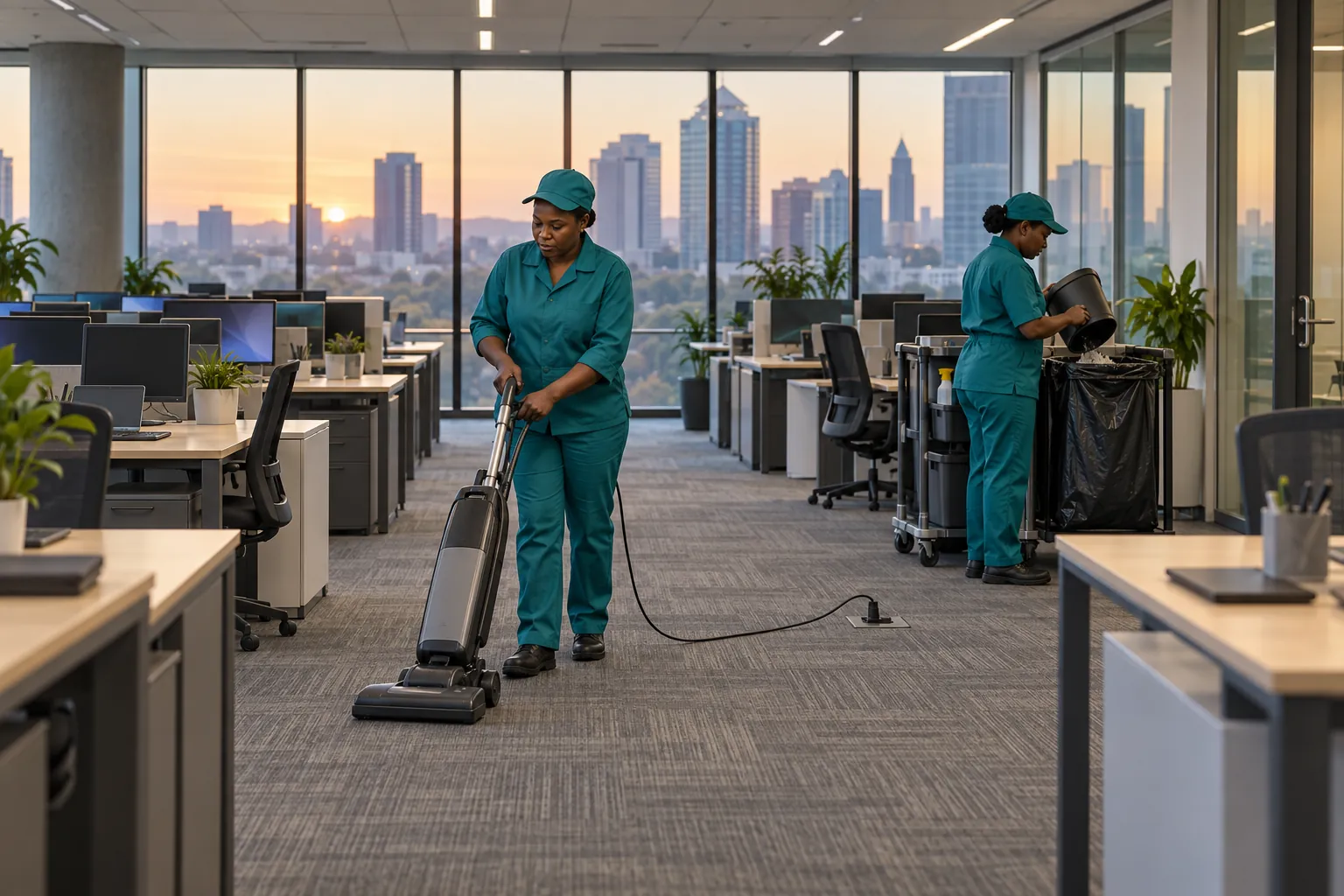 CleaningCleaning schedule: what to clean at work, how often, and how to show it was doneWhat a workplace cleaning schedule should cover in South Africa, which tasks are daily, weekly or monthly, who does what, and how to show the schedule was kept.
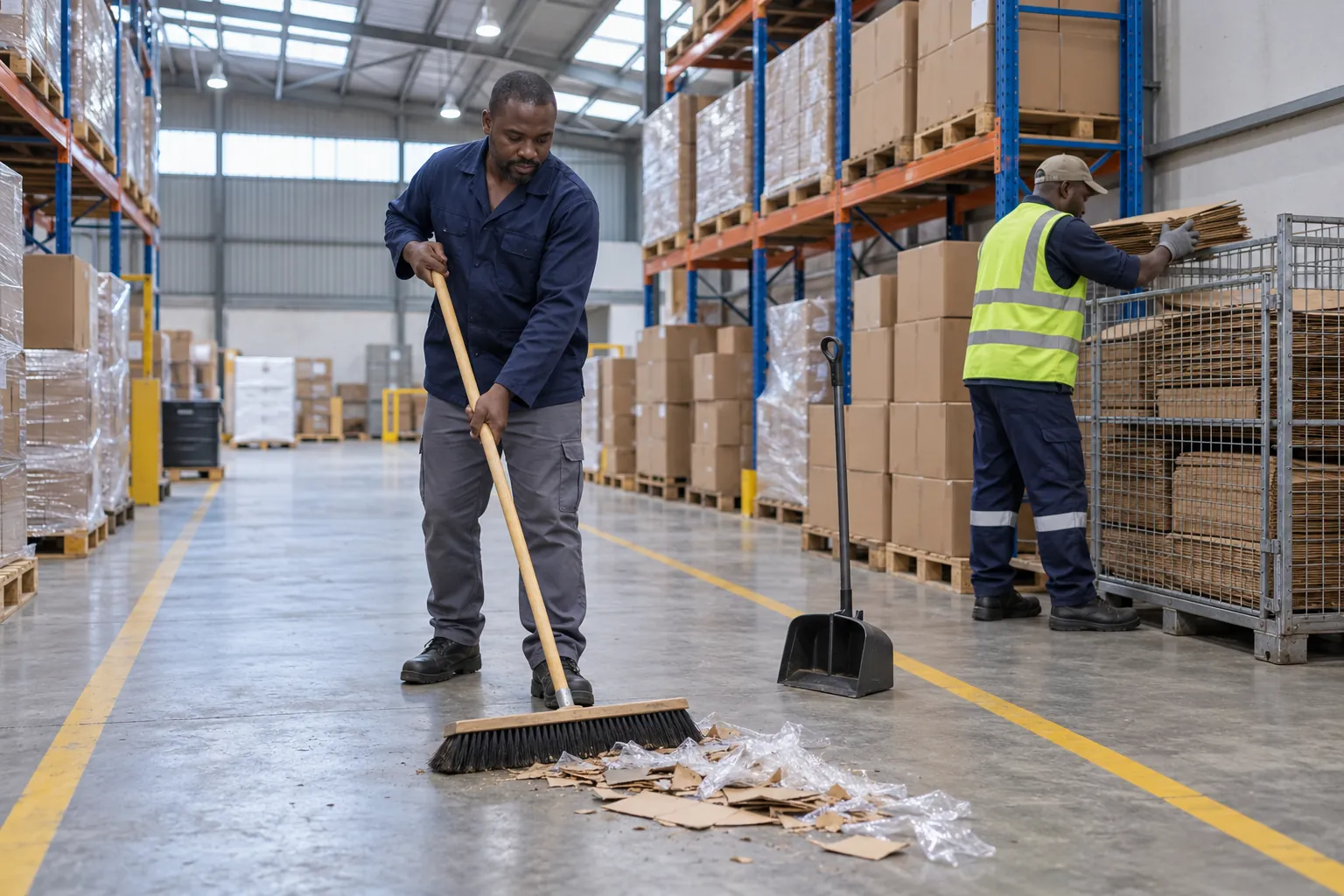 CleaningHousekeeping in the workplace: what the law requires, and how to keep it upWhat regulation 13H of the General Safety Regulations requires of housekeeping at work in South Africa, how to prevent slips and trips, and how to check it daily.
 CleaningAblution facilities: the legal requirements, and how to keep them cleanWhat the Facilities Regulations, 2004 require of workplace ablution facilities, where the toilet numbers come from, and how to check and record them properly.
 CleaningCleaning supervisor duties: what the role involves, and what good looks likeWhat a cleaning supervisor does in South Africa: the main duties, a typical shift, the OHS Act, managing the team, checking the work and reporting to the client.