Premises and facilities management
Facilities manager duties: what the job covers under South African law, and how to show it is done
A facilities manager's duties are overseeing the maintenance, cleaning, security, contractors, budgets and space of an organisation's buildings, and running the health and safety duties that the Occupational Health and Safety Act 85 of 1993 places on the employer, so that every workplace in them stays safe, working and compliant.
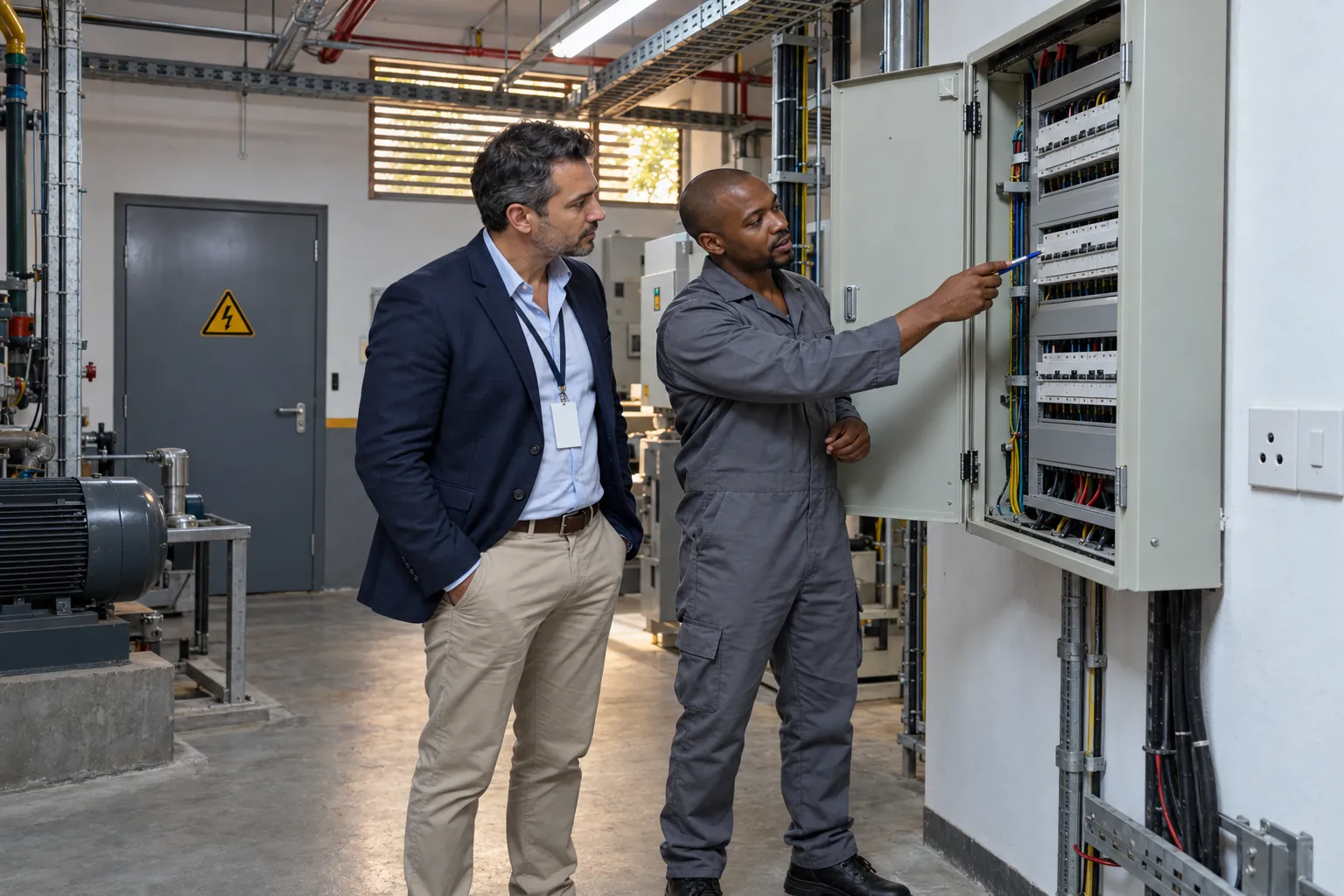
The chief executive officer can assign those health and safety duties to a person under their control, such as the facilities manager, under section 16(2) of the Act. Most of the work is done through other people's hands, often across several buildings, and the law holds the employer to it whether the work is in-house or contracted out. This guide sets out the duties most facilities manager job descriptions share, the South African law behind them, and what a good record of them looks like.
01
What a facilities manager is, and whose duties they carry
A facilities manager, sometimes called a facility manager, head of facilities or property and facilities manager, keeps an organisation's buildings and the services in them fit for purpose. Where a building or centre manager usually answers for one property, a facilities manager typically looks after a set of services across several buildings, a campus or an office park: maintenance, cleaning, security, reception, waste, gardens, space, and the compliance under all of them.
South Africa has two national standards for the discipline, both from the SABS committee for facilities management, SABS/TC 267: SANS 41001:2025, Facility management – Management systems – Requirements with guidance for use, the national adoption of ISO 41001, approved on 24 March 2025; and SANS 1752:2017, Strategic Facilities Management System – Requirements, reaffirmed in November 2022. Both describe how facilities management is planned, delivered and reviewed rather than listing tasks. The professional body is the South African Facilities Management Association (SAFMA).
Most of the legal duties a facilities manager carries out belong in law to the employer. Section 8(1) of the Occupational Health and Safety Act 85 of 1993 (the OHS Act) says every employer "shall provide and maintain, as far as is reasonably practicable, a working environment that is safe and without risk to the health of his employees", and section 8(2) spells out safe plant and systems of work, hazards identified and controlled, and information, training and supervision. Section 9 extends the duty to people who are not employees but may be affected: visitors, tenants' staff, contractors and the public.
Section 16(1) makes every chief executive officer responsible for ensuring that the employer's duties are properly discharged, and section 16(2) lets the CEO assign any of them to a person under their control, "without derogating from his responsibility or liability". That is the 16.2 appointment, and in many organisations the facilities manager holds it for the buildings. Its wording defines which of the employer's duties are now the facilities manager's to run.
02
The duties of a facilities manager
Job descriptions vary with the organisation, but the same facilities manager duties and responsibilities appear in nearly all of them:
- Statutory compliance: knowing which inspections, tests, certificates and risk assessments each building needs, making sure they happen on time, and holding the records.
- Health and safety: hazard identification and risk assessment, contractor control, incident reporting and investigation, and supporting the health and safety representatives.
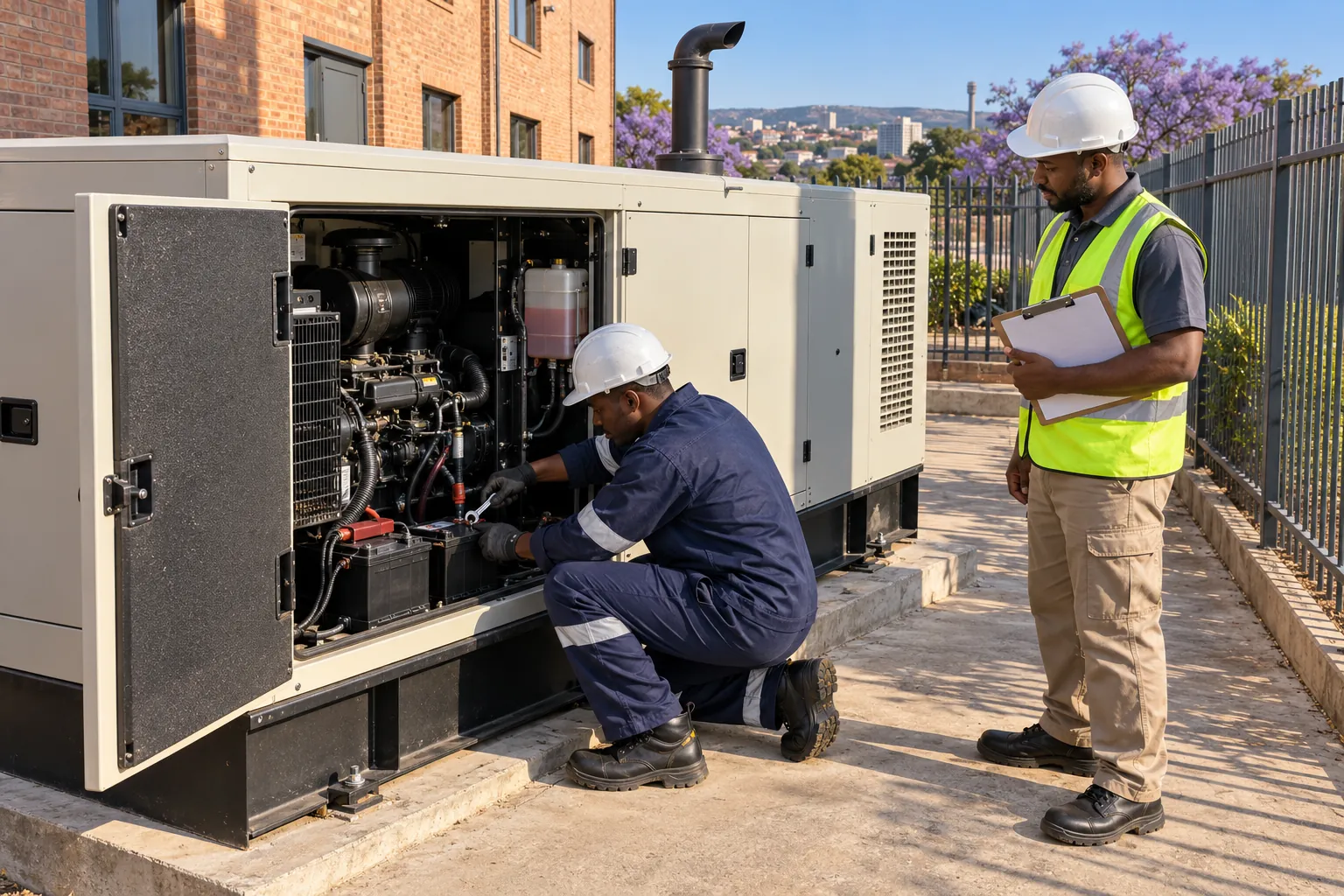
- Building maintenance: preventative maintenance of HVAC, electrical installations, plumbing, lifts, fire systems and the building management system, and reactive repairs, often called hard services.
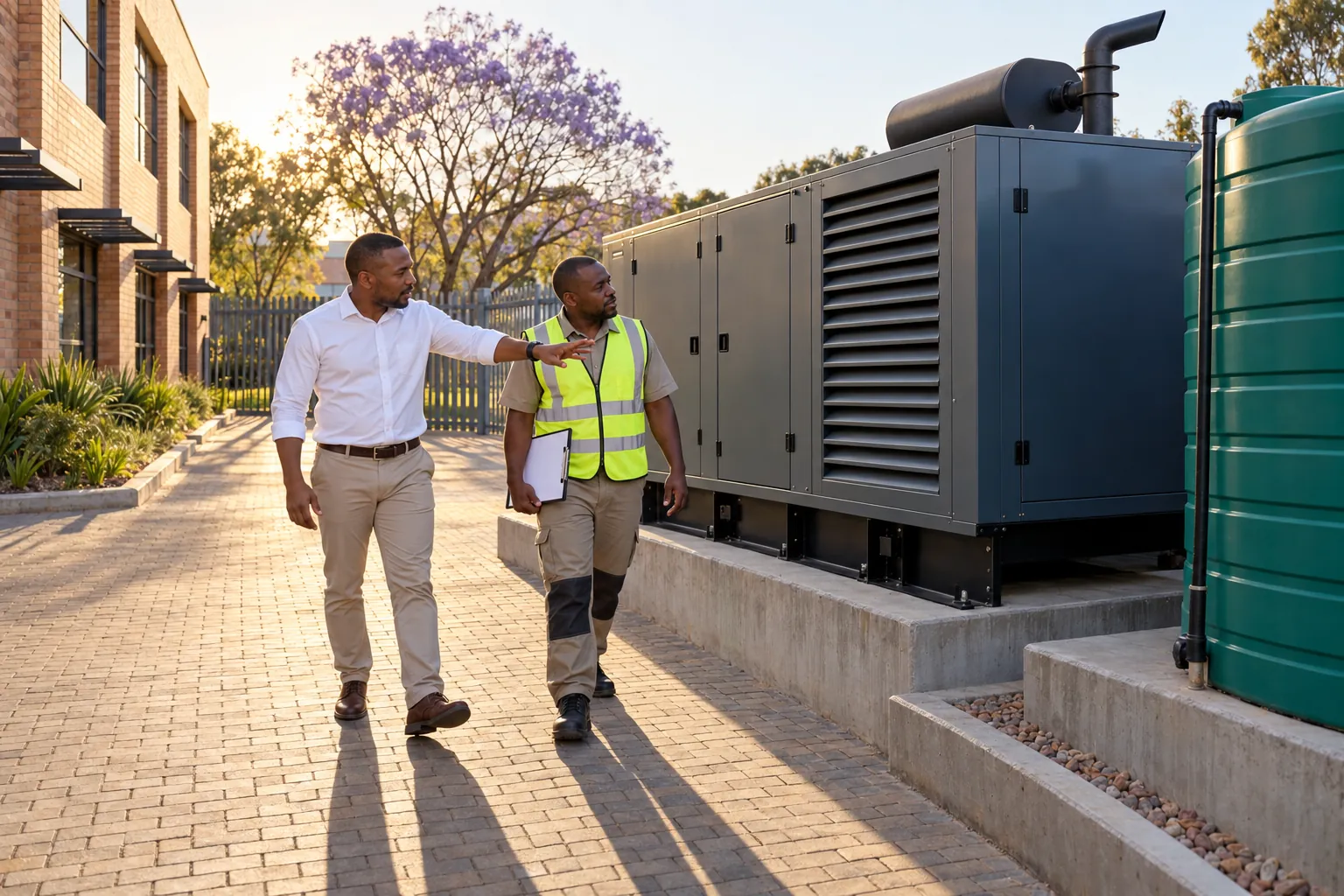
- Power and water: standby generators, UPS units, boreholes and storage tanks, and what happens during load shedding or a municipal water outage.
- Soft services: contract cleaning and hygiene services, guarding and armed response, reception, waste, pest control and gardens.
- Contractors: specifications, tenders, contracts, registration checks and service levels, and coordinating contractors who work in the same building.
- Budgets: operating budgets, the running cost of energy, water and contracts, capital spend on plant and the building fabric, and variances.
- Space: allocating space, planning moves and alterations.
- Emergencies: escape routes, fire equipment, the evacuation plan and fire drills, and who is called out of hours.
- Reporting: telling senior management whether the property is safe, compliant and on budget, and what it needs next to support the business.
In a small organisation one person does all of this with a caretaker and a handful of contractors; in a large one, the facilities manager leads building supervisors and a helpdesk and spends more of the week on planning and contracts. In government the work sits inside a wider duty: the Government Immovable Asset Management Act 19 of 2007 requires each user department to prepare a user immovable asset management plan, with at least a strategic needs assessment, an acquisition plan, an operations plan and a surrender plan (section 8).
03
In-house, outsourced, and who carries the duty
The work may be done by the organisation's own caretakers, cleaners and artisans; by separate contractors for contract cleaning, guarding, lifts, fire equipment and electrical and mechanical maintenance; by one integrated FM provider, with the facilities manager as an informed client; or, in let buildings and sectional title schemes, by a managing agent running the common property.
Contracting out moves the work, not the duty. Under section 37(1) of the OHS Act, when an employee does something that would be an offence for the employer, the employer is presumed to have done it unless it proves, among other things, that it took all reasonable steps to prevent it. Section 37(2) applies the same rule to a mandatary, which the Act defines to include "an agent, a contractor or a subcontractor for work", "except if the parties have agreed in writing to the arrangements and procedures between them to ensure compliance by the mandatary with the provisions of this Act". That written agreement is the 37.2 agreement, and having one signed with every contractor on site is one of the most practical things a facilities manager does. It sets out the arrangements; the facilities manager still has to see that they are followed.
Security has its own rule. Section 20(1) of the Private Security Industry Regulation Act 56 of 2001 says no person may render a security service for reward unless registered as a security service provider, and section 38(3)(g) makes it an offence to contract for security services contrary to the Act "knowingly or without the exercise of reasonable care". Before a guarding contract starts, check PSIRA registration and keep a note that you did.
It helps to write down, for each building and service, who does the work, who checks it, where the record is kept and who is told when it goes wrong. Compliance failures usually start in the gaps, most often between two contractors or between a contractor and the in-house team.
04
The working week and the compliance year
The week is mostly service delivery: walking the sites, faults and complaints, contractors, quotes and invoices. Behind it sits a compliance calendar, drawn from regulations under the OHS Act, the municipality's fire safety by-law and the SANS standards those call up. A typical one includes:
- Escape routes and housekeeping, daily. Regulation 13J of the General Safety Regulations, 2025 (Government Notice 5954 of 6 March 2025) requires escape doors to be kept clear and easily and rapidly opened from inside, and fire-escape staircases to be kept clear of any obstruction. Regulation 13H requires floors, stairs and passages to be kept in good repair, skid-free and unobstructed, and roofs and walls sound and leak-free.
- Ablutions, daily. Regulation 9 of the Facilities Regulations, 2004 requires the rooms and facilities they cover to be kept "in a clean, hygienic, safe, whole and leak-free condition, and in a good state of repair". See ablution facilities.
- Lifts, monthly and two-yearly. The Lift, Escalator and Passenger Conveyor Regulations, 2009 require a competent lift service provider to examine and maintain each lift at least once a month unless the manufacturer prescribes a longer interval (regulation 7), an inspection service provider to inspect and test it at intervals not exceeding 24 months (regulation 6), and the records to be kept in the machine room for at least 10 years (regulation 8).
- Electrical installations, whenever they change. Under the Electrical Installation Regulations, 2009 the user or lessor is responsible for the installation's safety and maintenance (regulation 2) and must have a valid certificate of compliance, with a new one for at least any addition or alteration (regulation 7).
- Fire equipment, on the servicer's cycle. Regulation 13J(2) requires suitable fire-fighting equipment at strategic locations, "maintained in good working order". The detail is in the municipal by-law: the City of Cape Town's Community Fire Safety By-law, 2002, for example, requires fire protection systems to be tested and maintained regularly with a detailed record kept (section 18(1)), and extinguishers to be maintained to the SABS 1475 Part 1 and related standards (section 17(2)). Other municipalities differ. Servicing follows SANS 1475-1:2025 for extinguishers and SANS 10139:2021 for fire detection and alarm systems.
- Evacuation drills, at least six-monthly where required. Cape Town's by-law requires an evacuation plan for schools, hospitals, hotels, hostels and similar occupancies of more than 25 people, tested in full at a maximum of six-monthly intervals and recorded in a register (section 23).
- Incidents, within days. Regulation 9 of the General Administrative Regulations, 2003 requires an Annexure 1 record, kept for at least three years, of every incident reportable under section 24 of the Act and every other incident needing medical treatment beyond first aid, each investigated within 7 days.
- Alterations, before they start. Section 4(1) of the National Building Regulations and Building Standards Act 103 of 1977 requires the local authority's prior written approval to erect a building for which plans must be submitted, and fire protection follows SANS 10400-T.
Whether the calendar lives in CAFM software or a spreadsheet, the facilities manager rarely does these checks personally. The job is to make sure each one has an owner, happens on time and leaves a record someone else can find and trust.
05
Health and safety people, skills, and what good evidence looks like
Section 17 of the OHS Act requires an employer with more than 20 employees at a workplace to designate health and safety representatives in writing, at least one for every 100 employees in shops and offices and one for every 50 elsewhere, and section 19 requires a health and safety committee wherever there are two or more. The facilities manager often answers the representatives' inspection findings and brings the incident record to the committee, which regulation 9(4) of the General Administrative Regulations requires it to examine.
Facilities managers often come into the role from building services and the trades, property management, hospitality and the security industry. SAFMA offers members professional designations based on study and experience. The skills that matter most are organisation, contract and budget management, a working knowledge of building services, and explaining risk plainly to people who are not specialists.
Good evidence is not a thick safety file on a shelf. It is being able to answer, with a record behind each answer:
- Which inspections, services and certificates are due in the next three months, and which are overdue?
- Were last week's routine checks done, in every building, and by whom?
- Which faults are open, how old are they, and who owns each one?
- Does every contractor have a signed 37.2 agreement, and is every security provider registered with PSIRA?
- Are contractors delivering what the contract says, measured the same way each month?
06
Where the record fails, and what SiteClara does about it
A facilities manager usually has good records of what contractors certify and weak records of what happens every day. The lift contractor signs the machine-room record, but the check that the escape doors open is ticked in advance on a sheet behind the guardhouse door, the cleaners' ablution sheets stay in their storeroom, the generator run after load shedding is written on a scrap of paper, and a leak mentioned at reception never reaches anyone. Asked whether last month's routine checks were done at every site, the honest answer is often an assurance rather than a record.
SiteClara records that routine work where it happens. A printed QR poster at each location, such as an ablution block, a plant room, a fire escape or a generator enclosure, with an optional NFC tag behind it, lets cleaning, security or maintenance staff scan or tap with their own phone, with no app to install. They see the checks due there and mark each one done or explain what stopped them, with a photo when one is asked for. A problem reported there goes onto the team's list of jobs until someone closes it.
Each day the supervisor reviews what was done, gives the reason where a check was missed, and approves a report that reaches the facilities manager the next morning: what was reported, completed and still open, and how the scheduled checks went. Where a cleaning company and a security company share a building, each runs its own staff, forms and approval.
07
Questions people ask
Is the facilities manager the 16.2 appointee?
Only if the chief executive officer assigns the duties to them. Section 16(2) of the Occupational Health and Safety Act 85 of 1993 lets the CEO assign any of the employer's duties to a person under their control, who then acts subject to the CEO's control and directions, without derogating from the CEO's own responsibility or liability. The job title alone does not make the assignment.
What are the 11 core competencies of a facility manager?
They are the International Facility Management Association's, listed on its core competencies page: finance and business; operations and maintenance; leadership and strategy; project management; real estate; sustainability; facility information management and technology management; communications; risk management; occupancy and human factors; and performance and quality. IFMA says it established them through a Global Job Task Analysis, a survey of the facilities management industry.
08
Where to read the official guidance, and a list to take away
The OHS Act, the General Safety Regulations, 2025, the Facilities Regulations and the Government Immovable Asset Management Act are on gov.za; the Department of Employment and Labour publishes the General Administrative, Electrical Installation and Lift, Escalator and Passenger Conveyor Regulations on labour.gov.za. Fire safety in use is in your municipality's by-law. The SANS standards are sold by the SABS, and SAFMA sets out its professional designations and code of conduct for the profession.
Starting in the role, or writing the job description, check that you know:
- every building and service you are responsible for, and those you are not;
- whether you hold a 16.2 appointment, and exactly which duties it gives you;
- the compliance calendar for each building, and who owns each line;
- which services are contracted, whether each contractor has a signed 37.2 agreement, and whether each security provider is registered with PSIRA;
- which municipal fire safety by-law applies, and what it asks you to record;
- where each routine check is recorded, and how you would see that it was missed;
- how faults are reported, and how you know each one is closed.
Sources
Every document this guide quotes or links to, in the order it first cites them.
- SANS 41001:2025, Facility management – Management systems – Requirements with guidance for use store.sabs.co.za
- SANS 1752:2017, Strategic Facilities Management System – Requirements store.sabs.co.za
- South African Facilities Management Association (SAFMA) safma.co.za
- Occupational Health and Safety Act 85 of 1993 gov.za
- Government Immovable Asset Management Act 19 of 2007 gov.za
- Private Security Industry Regulation Act 56 of 2001 gov.za
- General Safety Regulations, 2025 (Government Notice 5954 of 6 March 2025) gov.za
- Facilities Regulations, 2004 gov.za
- Lift, Escalator and Passenger Conveyor Regulations, 2009 labour.gov.za
- Electrical Installation Regulations, 2009 labour.gov.za
- Community Fire Safety By-law, 2002 openbylaws.org.za
- SANS 1475-1:2025 store.sabs.co.za
- SANS 10139:2021 store.sabs.co.za
- General Administrative Regulations, 2003 labour.gov.za
- National Building Regulations and Building Standards Act 103 of 1977 thedtic.gov.za
- SANS 10400-T store.sabs.co.za
- Core competencies page ifma.org
Related guides
 Premises and facilities managementThe 16.2 appointment: what the CEO hands over under the OHS Act, and what they keepWhat a 16.2 appointment under the OHS Act 85 of 1993 is, who can hold one, what goes in the letter, and the records that show the duties are being carried out.
 Premises and facilities managementPreventative maintenance for buildings: how to plan it and show it was donePreventative maintenance for South African buildings: the OHS Act duty, the asset register and schedule, lift, electrical and fire tasks, and records that hold up.
 Premises and facilities managementSection 37(2) agreement: what the mandatary agreement does, and what it cannot doWhat a section 37(2) mandatary agreement under the OHS Act does and does not do, what goes in one for cleaning and security contracts, and how to show it is kept.
 Premises and facilities managementManaging agent duties in a sectional title schemeWhat a sectional title managing agent does under the Prescribed Management Rules and the Property Practitioners Act: the agreement, funds, records and maintenance.