Fire and water checks
Hot work permits in South Africa: the permit, the checklist and the fire watch
A hot work permit is a written authorisation, signed by a person the employer has nominated before any welding, flame cutting, brazing, soldering, grinding or torch-on work begins outside a designated workshop, that sets where and when the work may happen, the fire precautions to take and the fire watch to keep once it stops.
Also written for United Kingdom · Ireland · United States · Canada · Australia · New Zealand
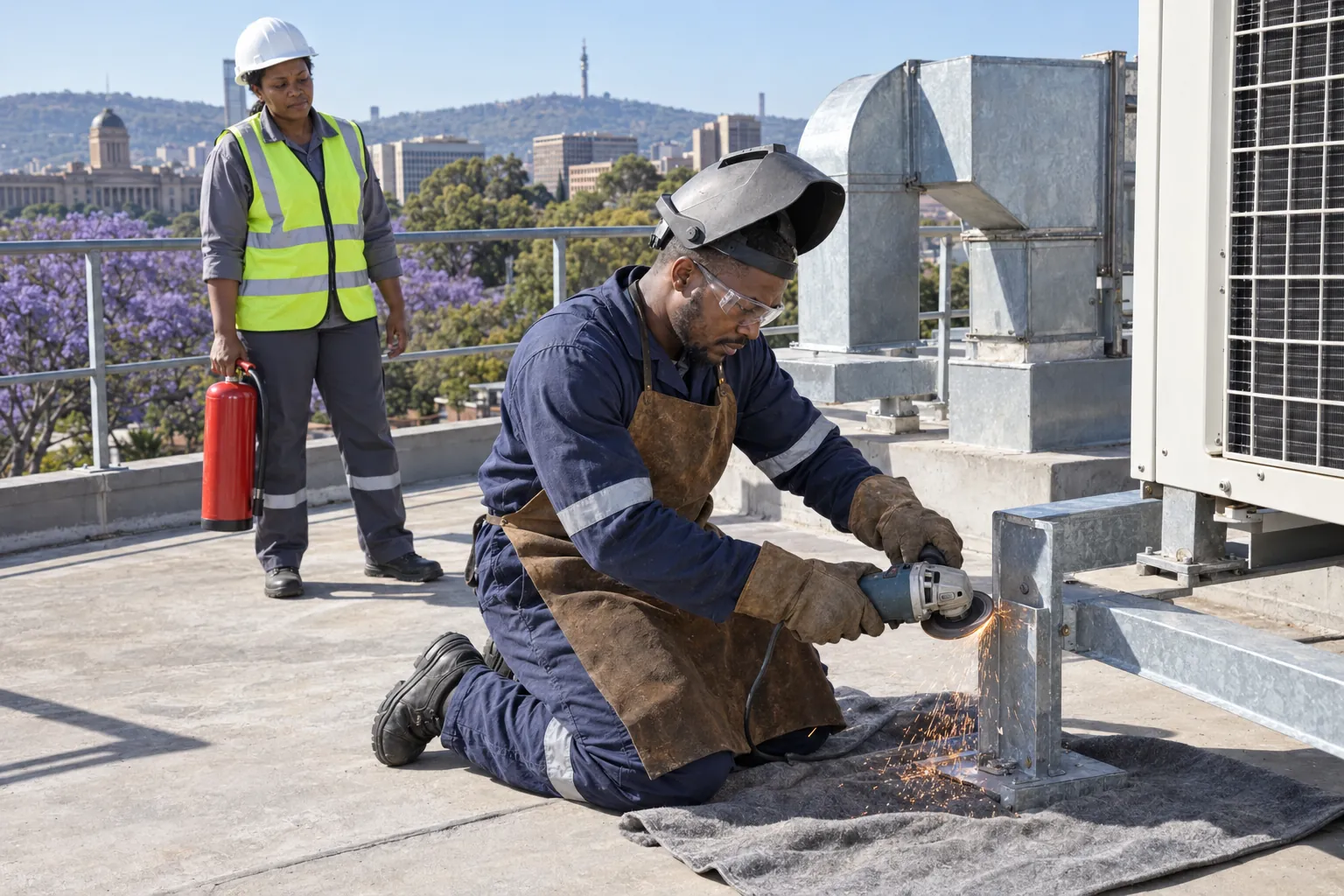
In South Africa no statute names the permit, but regulation 9(5) of the General Safety Regulations under the Occupational Health and Safety Act 85 of 1993 requires the employer to ensure that "proper and adequate fire precautions are taken" wherever such hot work is done away from a designated area, and regulation 29(f) of the Construction Regulations, 2014 says much the same of construction work. This guide covers what counts as hot work, what the permit and its checklist contain, how long the fire watch lasts, who does what, and how a building shows the watch was kept.
01
What a hot work permit is, and the South African law behind it
Hot work is any work that produces flames, sparks or enough heat to start a fire. A hot work permit is the written control for one such job outside a workshop built for it: the place, the work, the times it is valid, the precautions, the fire watch, and who authorises, does and closes it, signed before the first spark. No South African statute uses the phrase; the duty comes from several places:
- The General Safety Regulations. Regulation 9 of the General Safety Regulations (Government Notice R. 1031 of 30 May 1986) deals with "welding, flame cutting, soldering and similar operations". Regulation 9(5) is the heart of it: "Where hot work involving welding, cutting, brazing or soldering operations is carried out at places, other than workplaces which have been specifically designated and equipped for such work, the employer shall take steps to ensure that proper and adequate fire precautions are taken." Regulation 14, as amended by Government Notice 5954 of 6 March 2025, still makes a failure to comply with regulation 9 an offence, punishable by a fine or imprisonment of up to six months.
- The employer's general duty. Section 8(1) of the Occupational Health and Safety Act 85 of 1993 requires every employer to provide and maintain, as far as is reasonably practicable, a working environment that is safe and without risk to the health of employees. Section 9 extends the duty to people who are not employees, such as the tenant on the floor below.
- Construction work. Regulation 29(f) of the Construction Regulations, 2014 requires a contractor to ensure that "welding, flame cutting and other hot work are done only after appropriate precautions have been taken to reduce the risk of fire". Construction work, as regulation 1 defines it, includes the alteration, renovation and repair of a building, so a contractor refitting a floor or repairing a roof is covered.
- Contractors. Section 37 of the Act can hold an employer answerable for a contractor's (mandatary's) act or omission that would be an offence under the Act, "except if the parties have agreed in writing to the arrangements and procedures between them to ensure compliance by the mandatary with the provisions of this Act". That section 37(2) agreement is where the site's hot work procedure belongs.
Insurers add their own conditions. Santam's guidance, Hot work permit system: a crucial part of commercial fire safety management, says each contractor, sub-contractor or maintenance employee performing hot work in an occupied building or in the open will need a hot work permit. Your own policy wording may be stricter than the law.
02
What counts as hot work: examples, and avoiding it first
Regulation 9 names welding, flame cutting, brazing, soldering and grinding; Santam's guidance adds any similar activity using portable gas and welding equipment that can produce open sparks, flame and heat. In an office block, school, shopping centre or sectional title scheme the jobs are often small:
- a boilermaker welding a broken balustrade, burglar bar or steel bracket;
- oxy-acetylene or plasma cutting to remove old steelwork;
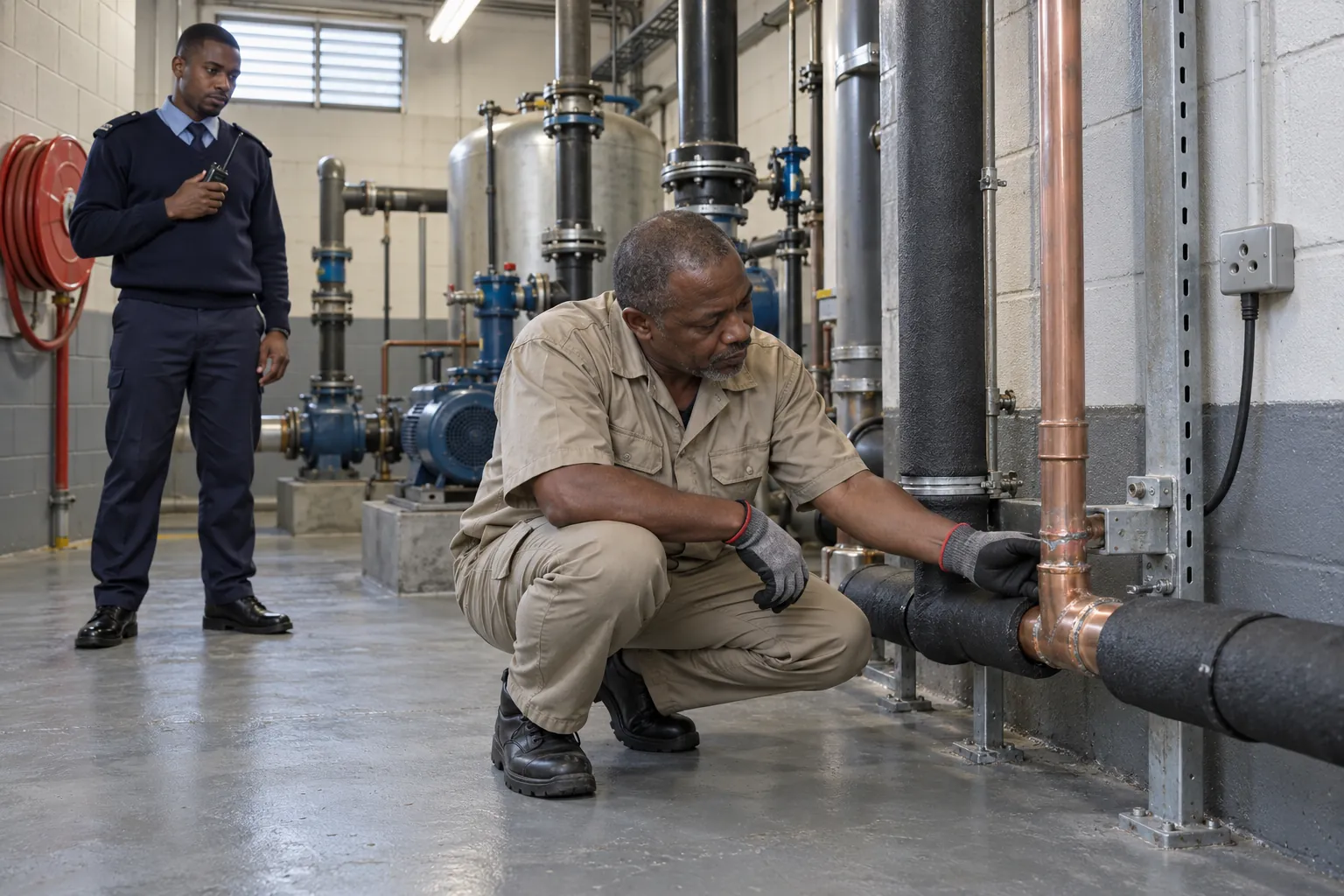
- a plumber brazing or soldering copper pipe at a geyser, in a plant room or in a riser;
- torch-on waterproofing on a flat roof or balcony;
- angle grinders and disc cutters, such as cutting off rusted bolts;
- a hot air gun stripping paint.
The most dangerous job is work on a container. Regulation 9(4) forbids welding, flame cutting, grinding, soldering or similar work on a tube, tank, drum or vessel that is completely closed, unless a rise in internal pressure cannot make it dangerous, or that holds anything which under heat may ignite, explode or react to form dangerous or poisonous substances, until a competent person has examined it and certified in writing that the danger has been removed "by opening, ventilating or purging with water or steam, or by any other effective means". In Cape Town, section 50(4) of the Community Fire Safety By-law, 2002 also requires flammable substance containers to be declared gas or vapour-free by a competent person before any modification or repairs.
The first question on any permit is whether hot work is needed at all. Section 8(2)(b) of the Act asks employers to eliminate or mitigate a hazard before resorting to personal protective equipment, and the US National Fire Protection Association's Hot Work Safety fact sheet puts finding an alternative first: screwed, flanged or clamped pipe, mechanical bolting or pipe cutting. Compression fittings, a bolted bracket or taking the item to a workshop all remove the need for a permit.
03
What goes on a hot work permit: a template and checklist
No regulation prescribes a form, so the permit is the employer's own, built from the duties above. A workable hot work permit template has four parts:
- The request, by whoever will do the work: the exact location ("Level 4, east riser"), the job, method and equipment, the company and operators, and the start and finish times.
- The precautions checklist, completed at the work site by the issuer and the operator together.
- The authority: the issuer's signature, the times of issue and expiry, any extra conditions, and the fire watcher's name.
- The close-out: work stopped, the fire watch times and findings, fire detection back in service, and the issuer's final sign-off. Santam's guidance says the permit should be with the welder during the work and, immediately on completion, returned to the person who authorised it and signed off.
The checklist turns regulation 9 into questions with a yes or no answer:
- the operator has been "fully instructed in the safe operation and use" of the equipment and its hazards (regulation 9(1)(a));
- effective protection for the eyes, the respiratory system and, where necessary, the rest of the body is provided and used (9(1)(b));
- welding leads and electrode holders are effectively insulated (9(1)(c));
- the work is partitioned off where practicable, and where not, other people exposed are warned and given protective equipment (9(1)(d));
- in a confined space, effective ventilation or masks supplying safe air (9(2)); for electric welding in a wet or damp place, inside a metal vessel or in contact with large masses of metal, sound leads, an insulated electrode holder, an insulated welder and a second person instructed to assist in an emergency in attendance throughout, unless the voltage to earth is no more than 50 volts (9(3));
- any container to be worked on has a competent person's written certificate (9(4));
- combustibles are cleared, or covered with welding pads, blankets or curtains, for 11 metres around the work, the radius in NFPA's fact sheet, and openings that sparks could pass through are covered;
- the far side of walls, floors and ceilings has been checked for combustibles that heat conducted through metal could reach, the indirect ignition NFPA's fact sheet warns of;
- extinguishers suitable for the job are at the work itself, not only on the wall down the passage;
- any fire detection to be isolated is limited to the zone being worked in, with a named person to reinstate it;
- everyone involved knows how to raise the alarm and where the escape routes are.
If a line cannot be ticked, the work waits.
04
The hot work fire watch, and how long to keep it
Fires from hot work often start after the work has stopped, when a spark has lodged in a ceiling void or heat has travelled along a pipe to something nobody can see. NFPA's fact sheet says that under NFPA 51B, Standard for Fire Prevention During Welding, Cutting, and Other Hot Work (2019 edition), the fire watch must remain on site for a minimum of 60 minutes to monitor for smouldering fires, longer where the person authorising the permit requires it.
No South African regulation sets a length for the fire watch. Regulation 9(5) asks for "proper and adequate fire precautions", and regulation 2(1), as amended in 2025, requires every employer to evaluate the risk of its activities and take the steps needed to make the situation safe. So the period is the employer's decision, written on the permit, subject to any insurer's or client's minimum. A sensible starting point:
- a fire watcher who is not doing the work, trained to use the extinguishers at hand, watching throughout the work and through tea and lunch breaks;
- a continuous watch for at least an hour after the last hot work, at the work area and on the far side of any wall, floor or ceiling it touched;
- further checks after that, for as long as the permit says, where hot work was near timber, insulation, roofing membranes or concealed voids;
- hot work finishing early enough in the day for the watch to be completed before the trained people leave;
- a final check of the area at the end of the shift by security or the building's own staff, recorded.
Regulation 13J(2) of the General Safety Regulations, as amended in 2025, requires suitable fire-fighting equipment at strategic locations, "maintained in good working order"; the permit decides which extinguishers come to the job, and the fire extinguisher checklist shows whether they are fit to use.
05
Who issues, watches and closes a hot work permit
- The issuer authorises the work for the employer. Section 8(2)(i) of the Act requires work to be supervised by a person trained to understand its hazards and with the authority to ensure the employer's precautions are implemented: usually the facilities manager or technical manager, senior enough to stop the job.
- The contractor and operators complete the request and checklist, follow the conditions and stop when told.
- The fire watcher watches, does not weld or grind, and has the authority to stop the work if conditions change.
- Security is told which areas had hot work that day, so the patrol checks them and records it in the occurrence book.
- The person closing the permit, normally the issuer, confirms that the area and the spaces around it are free of smouldering material, that equipment and hot waste are removed, and that fire detection is back on.
Isolating detectors is where hot work meets the municipal fire by-law. Sections 31(6) and 31(7) of the eThekwini Fire By-law, 2022 require the owner or person in charge to notify the Municipality immediately when a fire protection system, or a component of it, is rendered inoperable or taken out of service, and again when it is restored, and to take all practicable steps to provide alternative equipment or measures in the meantime. Cape Town's section 18(6) says much the same, and its section 19 forbids anyone to render a fire protection system less effective or inoperative "except as may be necessary during emergencies, maintenance, drills or prescribed testing". Ask your fire department how it treats a short local isolation, isolate only the zone being worked in, and name the person who puts it back; your fire alarm maintenance contractor can say which zones cover the work area.
Some by-laws also limit where hot work can happen. Section 45(2)(c) and (d) of the City of Johannesburg Emergency Services By-laws prohibit any open flame within 5 metres of a place where a flammable substance is stored, and, in a basement, any device used with a flammable substance other than a gas welding or cutting device used solely for maintaining the building.
Keep completed permits: after an incident or in an insurer's survey, a permit with its fire watch times is what shows regulation 9(5) was met.
06
Where the fire watch record fails, and what SiteClara does about it
The permit is usually filled in carefully at the start. The weak point is what follows: the fire watch times written up together when the contractor wants to leave, the floor below assumed rather than checked, the detector zone left isolated overnight, the signed copy still in a bakkie. The permit shows a signature and a time, not the checks.
SiteClara records checks at the place they are done. A printed QR poster, with an optional NFC tag behind it, goes at each location where checks happen, such as a plant room, a roof access or a riser. Staff scan the code or tap the tag on their own phone, with no app to install, see the checks due there, and mark each one done or explain what stopped them. Each records the named person and the time, with a photo when one is asked for, so a fire watcher checking the work area, the floor below and the far side of a wall leaves timed, photographed entries rather than one signature at the end. A problem found, such as a scorched ceiling board or a zone still isolated, is reported there with a photo and stays on the team's list of open jobs until someone closes it.
The supervisor sees what is due, done and missed, and gives the reason when a check was missed. Each day they approve a report that goes to the client's facilities manager and other nominated contacts at 08:00 the next morning, showing what was reported, completed and still open, and how the scheduled checks went.
07
Questions people ask
What is a hot work permit in South Africa?
A hot work permit is a written authorisation for one job involving flame, sparks or heat outside a designated workshop, setting out the fire precautions and the fire watch. It is how employers show they have met regulation 9(5) of the General Safety Regulations, which requires "proper and adequate fire precautions" for such work.
When would I need a hot work permit?
Whenever hot work is done anywhere other than a place specifically designated and equipped for it, the test in regulation 9(5) of the General Safety Regulations; Santam's Hot work permit system guidance expects one for any hot work in an occupied building or in the open.
What are examples of hot work?
The National Fire Protection Association's Hot Work Safety fact sheet defines hot work as any activity involving flame, spark production or heat, and names as welding and allied processes arc welding, oxy-fuel gas welding, open-flame soldering, brazing, thermal spraying, oxygen cutting and arc cutting. Santam's Hot work permit system guidance adds grinding and any similar activity that can produce open sparks, flame and heat.
How long should a fire watch last after hot work?
At least 60 minutes after the work ends is the minimum under NFPA 51B, as the National Fire Protection Association's Hot Work Safety fact sheet explains, and longer where the person authorising the permit requires it. No South African regulation sets a period, so the employer sets it on the permit from its risk assessment and any insurer's or client's conditions.
Is a hot work permit a legal requirement in South Africa?
Not by name: the law requires the precautions, not the form. Regulation 9(5) of the General Safety Regulations requires the employer, wherever welding, cutting, brazing or soldering is done away from a place designated and equipped for it, to ensure that "proper and adequate fire precautions are taken". A written permit is the usual way to show that was done, and an insurer or a client's contract may require the permit itself.
08
Where to read the official text, and a hot work permit checklist to take away
Read regulation 9 of the General Safety Regulations with the 2025 amendments in Government Notice 5954 of 6 March 2025, sections 8, 9 and 37 of the Occupational Health and Safety Act 85 of 1993, and regulation 29 of the Construction Regulations, 2014. Then your municipality's fire by-law: the three quoted here are the eThekwini Fire By-law, 2022, Cape Town's Community Fire Safety By-law, 2002 (as amended to 2015) and the City of Johannesburg Emergency Services By-laws (as amended to 31 August 2011); others differ, so confirm your own. A building's fire protection is designed under SANS 10400-T:2024, The application of the National Building Regulations Part T: Fire protection, sold by the SABS; its fire drawings show the sprinklers, detection zones and fire walls a permit should allow for.
Before any hot work in your building, check that:
- someone has asked whether a cold method would do the job;
- the issuer is named, trained and senior enough to stop the work;
- the permit covers one task, one location and one work period, with an expiry time;
- the checklist was completed at the work site, including the far side of walls, floors and ceilings;
- suitable extinguishers are at the work, and the fire watcher is trained and not doing the work;
- only the zone being worked in is isolated, the fire department's requirements are known, and someone is named to reinstate it;
- the fire watch runs through breaks and for at least an hour after the work, with checks after that for as long as the permit says;
- completed permits come back to the issuer, signed off, and are kept.
Sources
Every document this guide quotes or links to, in the order it first cites them.
- General Safety Regulations labour.gov.za
- Government Notice 5954 of 6 March 2025 gov.za
- Occupational Health and Safety Act 85 of 1993 gov.za
- Construction Regulations, 2014 labour.gov.za
- Hot work permit system: a crucial part of commercial fire safety management santam.co.za
- Community Fire Safety By-law, 2002 openbylaws.org.za
- Hot Work Safety fact sheet content.nfpa.org
- EThekwini Fire By-law, 2022 openbylaws.org.za
- City of Johannesburg Emergency Services By-laws openbylaws.org.za
- SANS 10400-T:2024, The application of the National Building Regulations Part T: Fire protection store.sabs.co.za
Related guides
 Premises and facilities managementSection 37(2) agreement: what the mandatary agreement does, and what it cannot doWhat a section 37(2) mandatary agreement under the OHS Act does and does not do, what goes in one for cleaning and security contracts, and how to show it is kept.
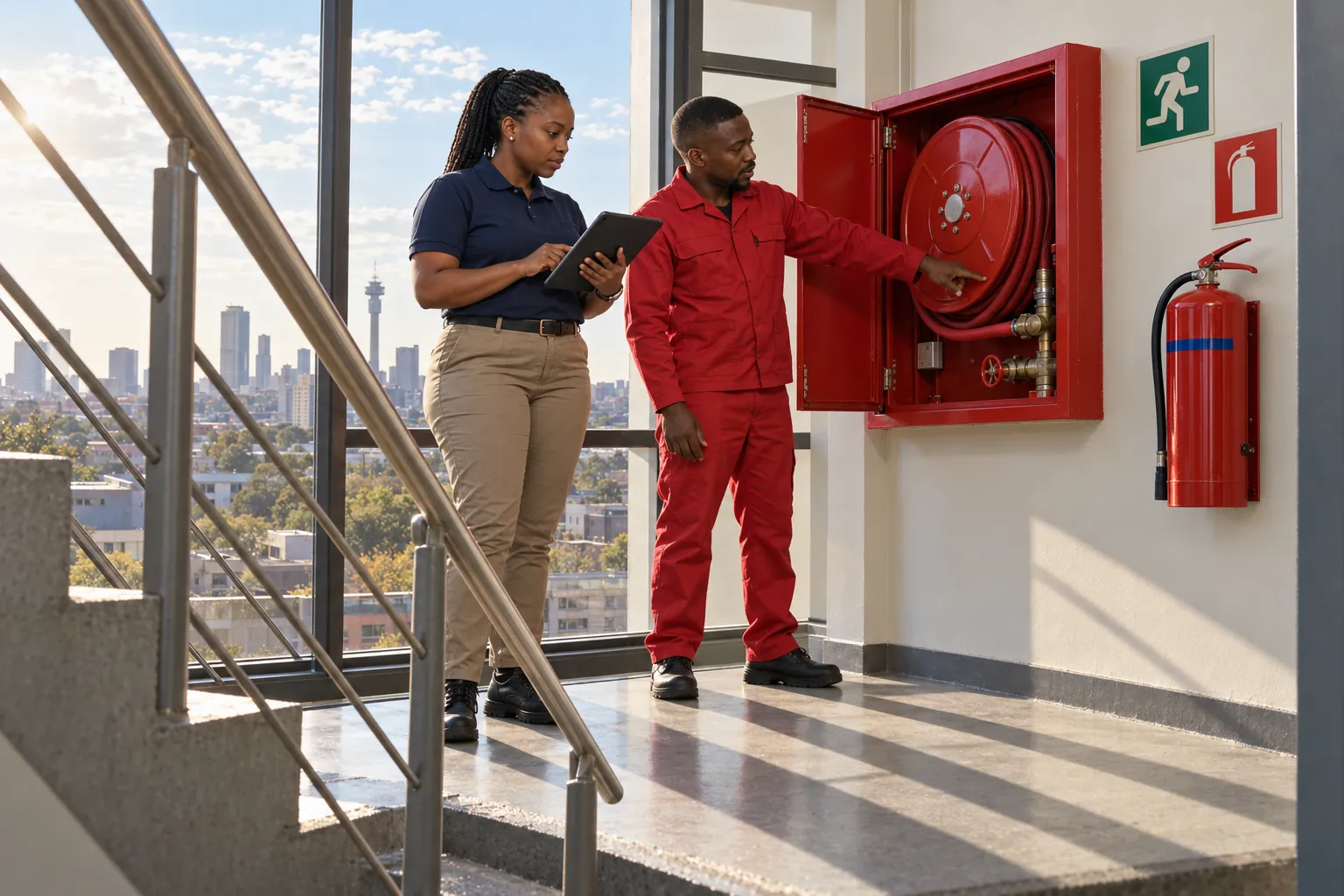 Fire and water checksFire equipment checklist: the register of everything, and when each item is dueA fire equipment checklist for South Africa: the register of every extinguisher, hose reel, hydrant and installation, service intervals and the record by-laws want.
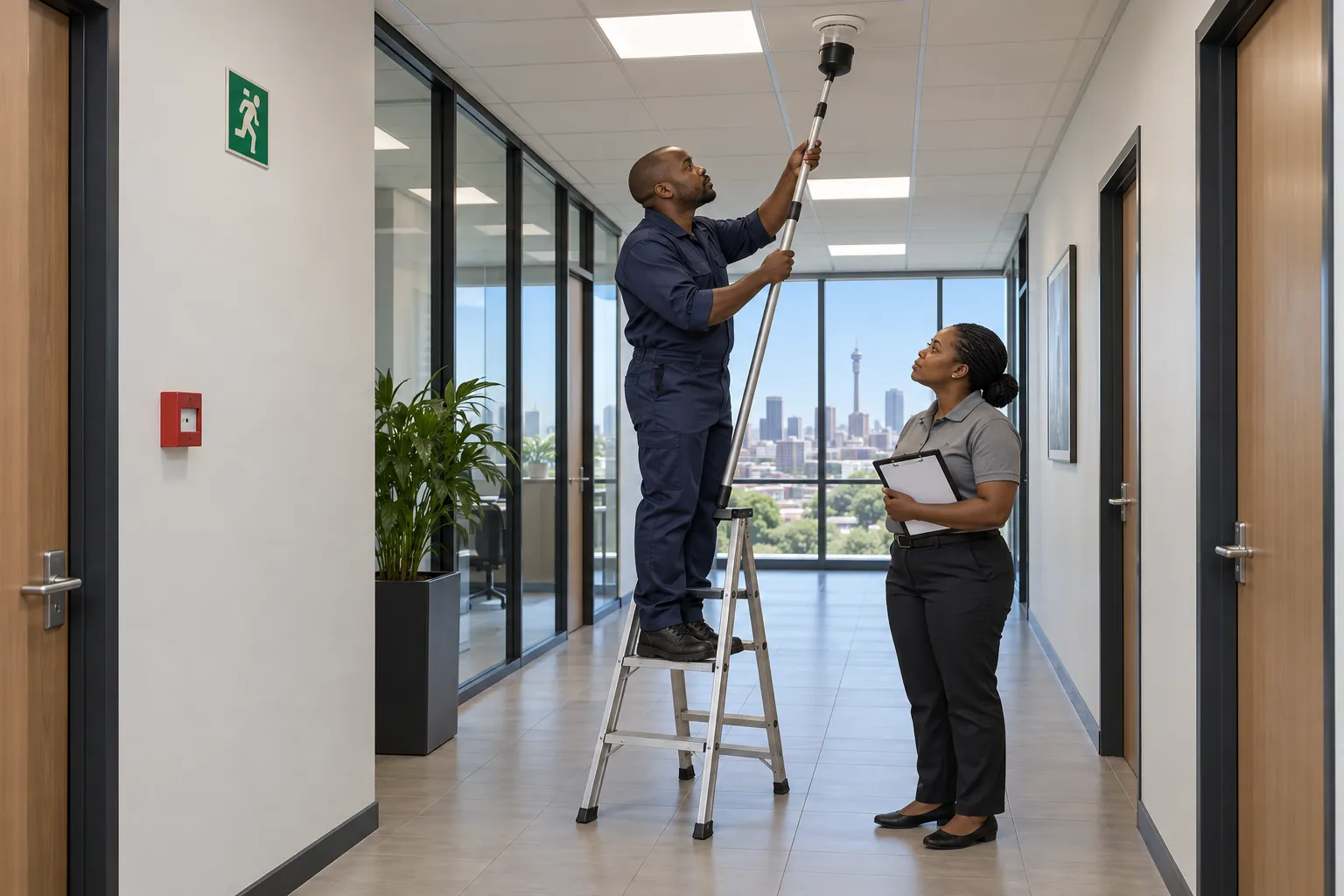 Fire and water checksSANS 10139: maintaining, testing and recording a fire alarm systemSANS 10139 explained: when the fire detection code applies, how by-laws call it up, the routine tests on site, servicing by a registered person, and the log book.
 Fire and water checksFire extinguisher checklist: the routine check between annual servicesA fire extinguisher checklist for South African buildings: what to look at between SANS 1475 services, who checks, how often, and what the record should show.