Premises and facilities management
Safety toolbox talk topics for cleaning, security and facilities teams
Safety toolbox talk topics are the subjects of the short safety meetings a supervisor holds with workers before a shift, one hazard at a time, such as slips, trips and falls on wet floors, cleaning chemicals, ladders and scaffolding, electrical leads, escape routes, safe lifting or a night patrol.
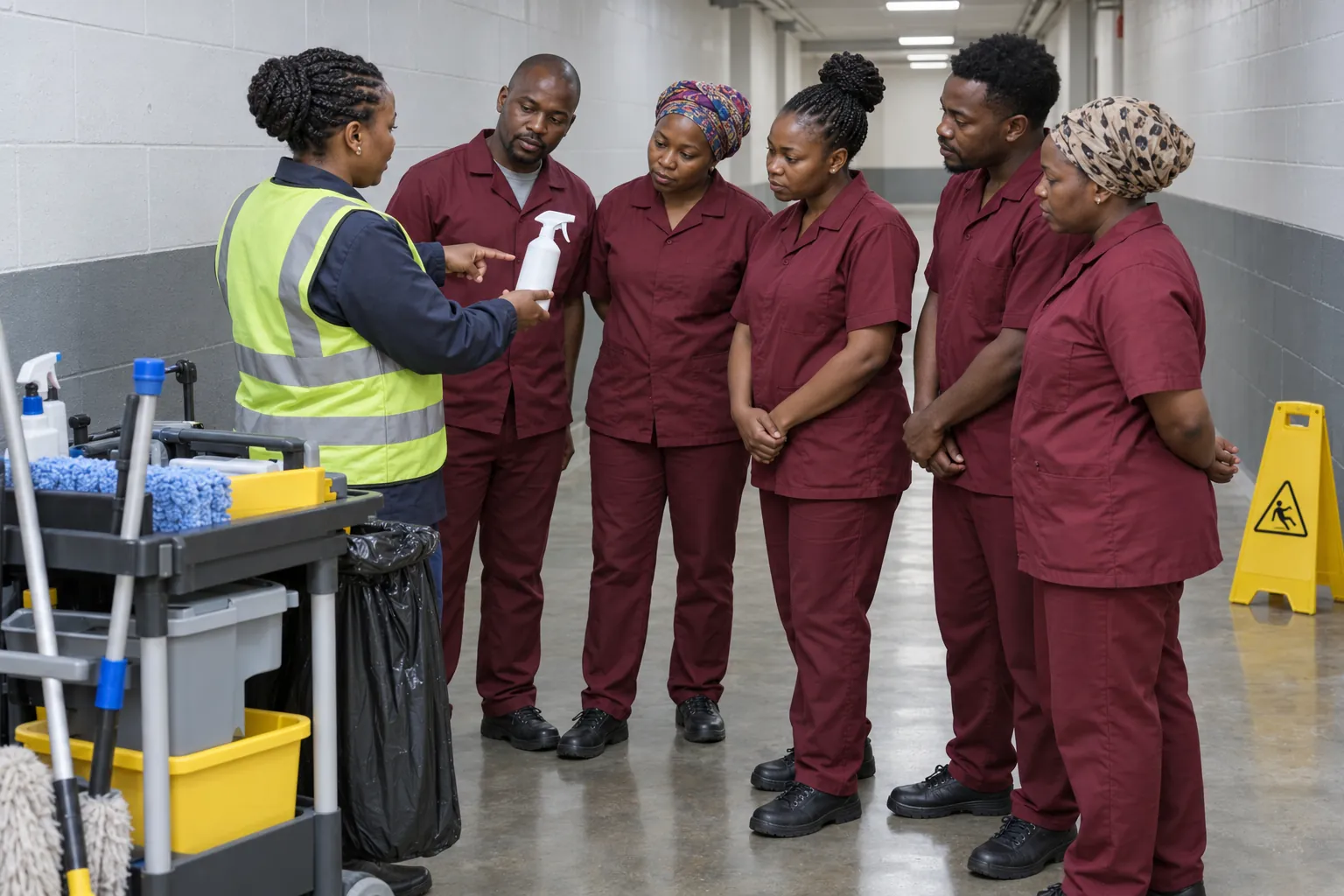
In South Africa they are one way an employer meets section 8(2)(e) of the Occupational Health and Safety Act 85 of 1993, which requires the information, instructions, training and supervision necessary for employees' health and safety at work. The Act never uses the words toolbox talk, so nothing fixes the length, the frequency or the list of topics. This guide gives topics that fit cleaning, security and facilities teams in South African buildings, a year's programme, how to give a talk people listen to, and what the attendance register should show.
01
What South African law says about toolbox talks
No South African law requires a "toolbox talk" by that name. The duty behind it is in the Occupational Health and Safety Act 85 of 1993 (the OHS Act), enforced by the Department of Employment and Labour. Section 8(2)(e) lists among the employer's duties "providing such information, instructions, training and supervision as may be necessary to ensure, as far as is reasonably practicable, the health and safety at work of his employees".
Section 13(a), the duty to inform, requires every employer to make each employee "conversant with the hazards to his health and safety attached to any work which he has to perform", the substances they handle and the machinery they use, "as well as with the precautionary measures which should be taken and observed with respect to those hazards". A toolbox talk, also called a safety talk, a SHE talk or the safety topic of the day, does that one hazard at a time, close to where the work happens. It does not replace formal safety training, but it keeps that training alive between courses.
The talk works in both directions. Section 14 requires every employee to obey the employer's health and safety rules, to report an unsafe situation to the employer or the health and safety representative, and to report an incident that injured them by the end of the shift in which it happened. Each of those is a topic in its own right.
Some regulations make the training specific. Regulation 3 of the Regulations for Hazardous Chemical Agents, 2021 requires "suitable and sufficient information, instruction and training" before anyone is exposed to a hazardous chemical agent, repeated at intervals the health and safety committee recommends, including how to find the safety data sheets and read the labels. Regulation 3 of the Ergonomics Regulations, 2019 requires training on ergonomic risks before an employee is placed in the workplace, with refresher training at recommended intervals.
On a construction site the rule is explicit. Regulation 7(5) of the Construction Regulations, 2014 says no contractor may let anyone enter a site "unless that employee or person has undergone health and safety induction training pertaining to the hazards prevalent on the site at the time of entry"; regulation 7(6) extends that to visitors, and 7(7) requires records of the induction training to be kept on site. That applies whenever a refurbishment or roof repair turns part of a building into a construction site. In March 2025 the Department published draft Construction Regulations, 2025 to replace them (see the Department's statement of 12 March 2025 inviting comment on the draft Construction Regulations, 2025), so check which are in force.
02
Toolbox talk topics for cleaning, security and facilities teams
The best topic is the hazard your workers will meet on this site this week, and the procedures that keep them safe from it. These lists are starting points for daily or weekly safety meetings; each makes a talk of ten minutes or so when it is tied to a real place in the building.
Cleaning teams
- Slips, trips and falls: when the wet floor sign goes out, and working so nobody crosses a wet floor.
- Cleaning chemicals: the label and safety data sheet, dilution, labelled bottles only, and never mixing products the label does not allow (see hazardous chemical agents).
- Personal protective equipment (PPE): gloves and goggles for each product, and reporting damaged PPE (see the PPE register).
- Needles in ablutions and bins: never pressing bags down by hand.
- Manual handling and safe lifting: bins, buckets and furniture moves.
- Machines: checking a scrubber drier's or vacuum's plug and cable before use.
- Working alone early or late: who knows you are in the building.
Security officers
- Patrol routes at night: lighting, uneven ground, stairs and anything changed since the last shift.
- Electric fences: never touching or repairing one, and reporting a fault (see electric fence checks).
- Gates and vehicles: standing clear of gate motors and booms.
- Long shifts: breaks, water and fatigue at a fixed post; sun, heat, cold and rain outside.
- Reporting: the occurrence book entry, and an injury reported before the shift ends.
- What the site instructions say about an intruder or a suspicious vehicle, and when to call armed response or the SAPS.
- Load shedding: gates, alarms and lights changing over to backup power.
Facilities and maintenance teams
- Ladders, scaffolding, roofs and working at height: fall prevention, and fall protection where a fall cannot be prevented (see ladder inspection).
- Lockout tagout: isolating and locking off before work on electricity or machinery, and who may work on the installation.
- Dust and fumes from drilling, sanding and cutting: masks and extraction.
- Driving: the site vehicle or bakkie, reversing near pedestrians, and securing a load.
- Standby generators: fuel, exhaust fumes and hot surfaces (see standby generator checks).
- Hot work and its hot work permit.
- Contractors on site: their induction and the section 37(2) agreement.
Everyone on the site
- Escape routes: regulation 13J(1)(b) of the General Safety Regulations, 2025 (Government Notice 5954 of 6 March 2025) requires exit doors to be "kept clear and capable of being easily and rapidly opened from inside". Walk the route before the fire drill.
- Housekeeping: regulation 13H(2)(d) requires floors, stairs and passages to be kept "skid-free and free of obstructions, waste or materials" (see workplace housekeeping).
- Reporting a hazard or a near miss, and what happens to the report.
- First aid and injury on duty: where the box is, and who the first aider is.
- Fire safety and emergencies: where the extinguishers are, which to use, and where to assemble.
- Mental health, stress, fatigue, violence and harassment at work: who to speak to.
03
Planning the topics: a year's programme
A programme stops the talk becoming the same three subjects on rotation. One way to plan a year:
- January: back after the festive season; the site's hazards and escape routes for returning staff and new starters.
- February: chemicals, labels and safety data sheets.
- March: manual handling and ergonomics.
- April: electrical safety and load shedding.
- May: fire, the alarm and the evacuation plan, ahead of a drill.
- June: winter: wet entrances, cold early shifts and, with the Western Cape's winter rains, flooding.
- July: ladders and working at height.
- August: PPE: fit, care and replacement.
- September: reporting hazards, near misses and injuries on duty.
- October: housekeeping, stores and plant rooms.
- November: heat stress and drinking water at outside posts, and flooding before the summer rains; where a workplace is at substantial risk of flooding, regulation 13I of the General Safety Regulations, 2025 requires the employer to take measures to be told at once of imminent flooding.
- December: fewer staff, shutdowns, working alone and contractors in a quiet building.
Leave room each month for the topic the site hands you: last week's near miss, the representative's findings, a new machine. Regulation 9 of the General Administrative Regulations, 2003 requires a recordable incident to be investigated within 7 days and examined by the health and safety committee so that action follows to prevent a recurrence; telling the team what was found is part of that action. Where a regulation calls for refresher training, put the topic in at the interval the committee recommends.
04
How to give a toolbox talk people listen to
The talk is best given by someone the team works with: the supervisor or site manager. Section 8(2)(i) of the OHS Act expects work to be done under the supervision of a person trained to understand its hazards. Invite the health and safety representative to bring what their inspections found.
- One topic, one hazard. Ten minutes on wet floors is remembered; ten minutes on "safety" is not.
- Give it where the hazard is: the ablutions, the gate, the generator room.
- Use the team's language. The guideline published with the Ergonomics Regulations says an employer "should provide a suitable training programme that is understandable to all their employees".
- Check that it landed. Ask someone to show you what they would do.
- Ask what they have seen. Their near misses, injuries and the accidents they have seen are the next talks.
- Write down what was raised, who will deal with it, and report back next time.
- Catch the people who missed it: night shift workers, relief officers, part-time cleaners.
Contract cleaning and security companies employ their own staff, so the talks are theirs to give, but a client can ask in the section 37(2) agreement which topics are covered and to see the registers. For hazardous chemical agents, regulation 3(4) of the Regulations for Hazardous Chemical Agents, 2021 requires the employer and the mandatary to agree in writing the arrangements that ensure the mandatary meets the information, instruction and training requirements.
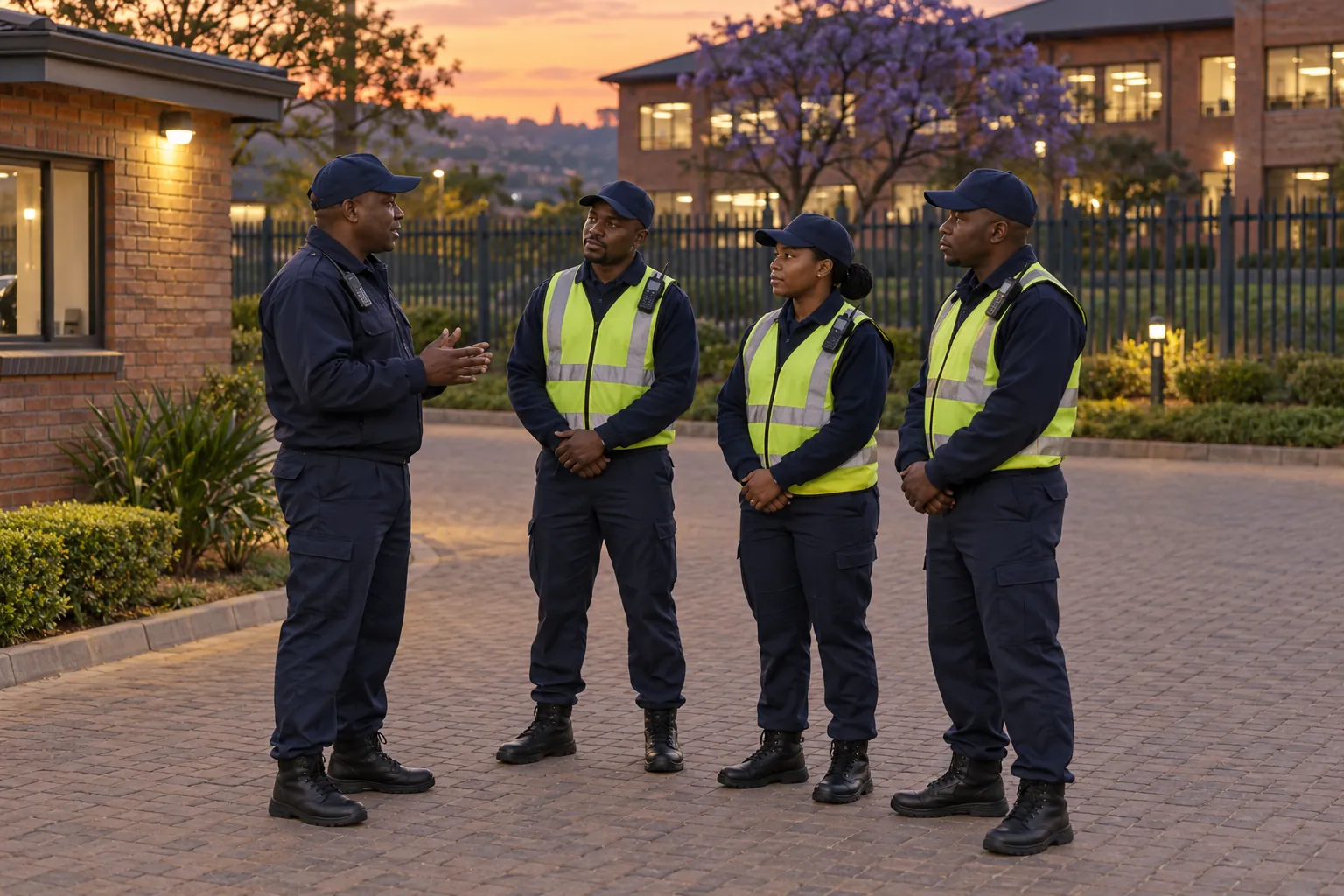
05
The toolbox talk register: what good evidence shows
No regulation prescribes a toolbox talk register for an ordinary building, but an employer that may have to show it met sections 8(2)(e) and 13 needs a record. A register that stands up shows:
- the date, start time and site;
- the topic, and the place or task it was about;
- who gave it, and in what language;
- each person present, with name, signature and employer;
- what was raised, and who will act on it by when; and
- who was absent, and when they were given the talk.
Keep the registers with the site's other health and safety records, such as the safety file. The Act sets no period; a sensible minimum is the three years regulation 9 of the General Administrative Regulations sets for the incident record, since a register is most often asked for after an incident.
A reviewer reads the pattern as much as the page. The same topic every week, signatures in one hand, a night shift that never appears and actions never closed all say the talks happen on paper. A register shows a talk was given; supervision and the workplace safety inspection checklist show whether people work that way.
06
Where the record fails
The register is where toolbox talks most often fail. The sheet goes round at the next shift change and collects signatures from people who were not there. The night shift never appears. The broken step raised in the talk goes into the actions column and is never seen again. On a contract site the client sees a tidy file and cannot tell which talks happened.
SiteClara is built for the part of that which happens in the building. A printed QR poster, with an optional NFC tag behind it, is placed at each location where work is checked: the cleaners' room, the guardhouse, the generator room, the ablutions. Staff scan it with their own phone, with no app to install, see the checks due there, and mark each one done or say what stopped them, with a photo when one is asked for. A supervisor can schedule the week's talk as a check where the team gathers and mark it done there, with a photo of the signed register if the site wants one; a talk that was due and not given shows as missed, with the supervisor's reason. A hazard raised in the talk can be reported at the tag where it is, and stays on the team's list of open jobs until someone closes it. Each day the supervisor approves a report that goes to nominated managers or client contacts the next morning.
07
Questions people ask
Are toolbox talks a legal requirement in South Africa?
Not by that name. The Occupational Health and Safety Act 85 of 1993 requires the information, instructions, training and supervision employees need (section 8(2)(e)) and that they are made conversant with the hazards of their work (section 13(a)); toolbox talks are a common way to meet part of that. On a construction site, regulation 7(5) of the Construction Regulations, 2014 requires induction before entry.
How often should toolbox talks be held?
The OHS Act fixes no frequency or length. A weekly talk of ten to fifteen minutes, with a short daily one where the work changes day to day, is a workable rhythm. Where regulations require refresher training, as regulation 3 of the Regulations for Hazardous Chemical Agents, 2021 does, the interval is the one the health and safety committee recommends.
What are the general safety rules that should be followed in the workplace?
In South Africa the starting point is section 14 of the Occupational Health and Safety Act 85 of 1993: every employee must take reasonable care for their own health and safety and that of anyone affected by what they do or fail to do, cooperate with the employer on its duties, carry out lawful orders and obey the health and safety rules and procedures the employer lays down, report an unsafe or unhealthy situation as soon as practicable, and report an incident that injured them or may affect their health by the end of the shift. Section 15 forbids anyone to interfere intentionally or recklessly with, damage or misuse anything provided in the interest of health or safety. Each site's own rules then come from its risk assessment.
What is the proper procedure for handling an accident in the workplace?
Under section 14(e) of the Occupational Health and Safety Act 85 of 1993, an employee injured in an incident reports it to the employer, someone the employer has authorised or the health and safety representative by the end of the shift. Under section 24(1), the employer reports a serious incident to an inspector: one in which someone dies, becomes unconscious, loses a limb or part of one, or is injured badly enough to be likely to be off work for at least 14 days, a major incident, or one that endangered someone through a dangerous spill, an uncontrolled release of a substance under pressure or machinery failing. Regulation 8 of the General Administrative Regulations, 2003 gives seven days to send the provincial director notice of a death or injury of that first kind on form WCL 1 or WCL 2, and requires the gravest, including a death, to be reported to the provincial director at once by telephone or similar means as well. Regulation 9 requires those incidents, and any injury needing medical treatment beyond first aid, to be recorded in the Annexure 1 record for at least three years and investigated.
What is the theme for Safety Day 2026?
World Day for Safety and Health at Work falls on 28 April each year. In 2026 the International Labour Organization gave the day to the psychosocial working environment; the Director-General's statement, Safe work, healthy workplaces: Tackling psychosocial risks at work, says job design, management practices and workplace culture have a direct impact on workers' health, dignity and well-being. Stress, fatigue, harassment and mental health make a toolbox talk for the day.
What is the difference between a toolbox talk and an induction?
An induction is given once, before someone starts on a site, and covers its hazards, rules and emergency arrangements; a toolbox talk is a short, repeated talk on one topic. On a construction site the induction and its records are required by regulation 7(5) to 7(7) of the Construction Regulations, 2014, and a toolbox talk does not replace it.
08
Where to read the official guidance, and a list to take away
The Department of Employment and Labour publishes the Occupational Health and Safety Act 85 of 1993, the Construction Regulations, 2014 (Government Notice R. 84 of 7 February 2014) and the Regulations for Hazardous Chemical Agents, 2021; the General Safety Regulations, 2025 and the Ergonomics Regulations, 2019, with its guideline, are on gov.za. The Department's booklet What every worker and employer should know about health and safety in the workplace explains the right to be informed, and makes a talk in itself. Regulation 4 of the General Administrative Regulations, 2003 requires an employer with five or more employees to keep a copy of the Act and relevant regulations readily available at the workplace.
To check that your toolbox talks are doing their job:
- plan a year of topics, with room for what the site raises;
- tie each talk to one hazard and one place;
- give it in the team's language and check it was understood;
- include the night shift and anyone who missed it;
- keep a register with date, topic, presenter, names, signatures and actions;
- follow each action until it is closed;
- ask each contractor which topics they cover and to see their registers; and
- on a construction site, keep the induction records regulation 7(7) requires.
Sources
Every document this guide quotes or links to, in the order it first cites them.
- Occupational Health and Safety Act 85 of 1993 labour.gov.za
- Regulations for Hazardous Chemical Agents, 2021 labour.gov.za
- Ergonomics Regulations, 2019 gov.za
- Construction Regulations, 2014 labour.gov.za
- The Department's statement of 12 March 2025 inviting comment on the draft Construction Regulations, 2025 gov.za
- General Safety Regulations, 2025 gov.za
- General Administrative Regulations, 2003 gov.za
- Safe work, healthy workplaces: Tackling psychosocial risks at work ilo.org
- What every worker and employer should know about health and safety in the workplace labour.gov.za
Related guides
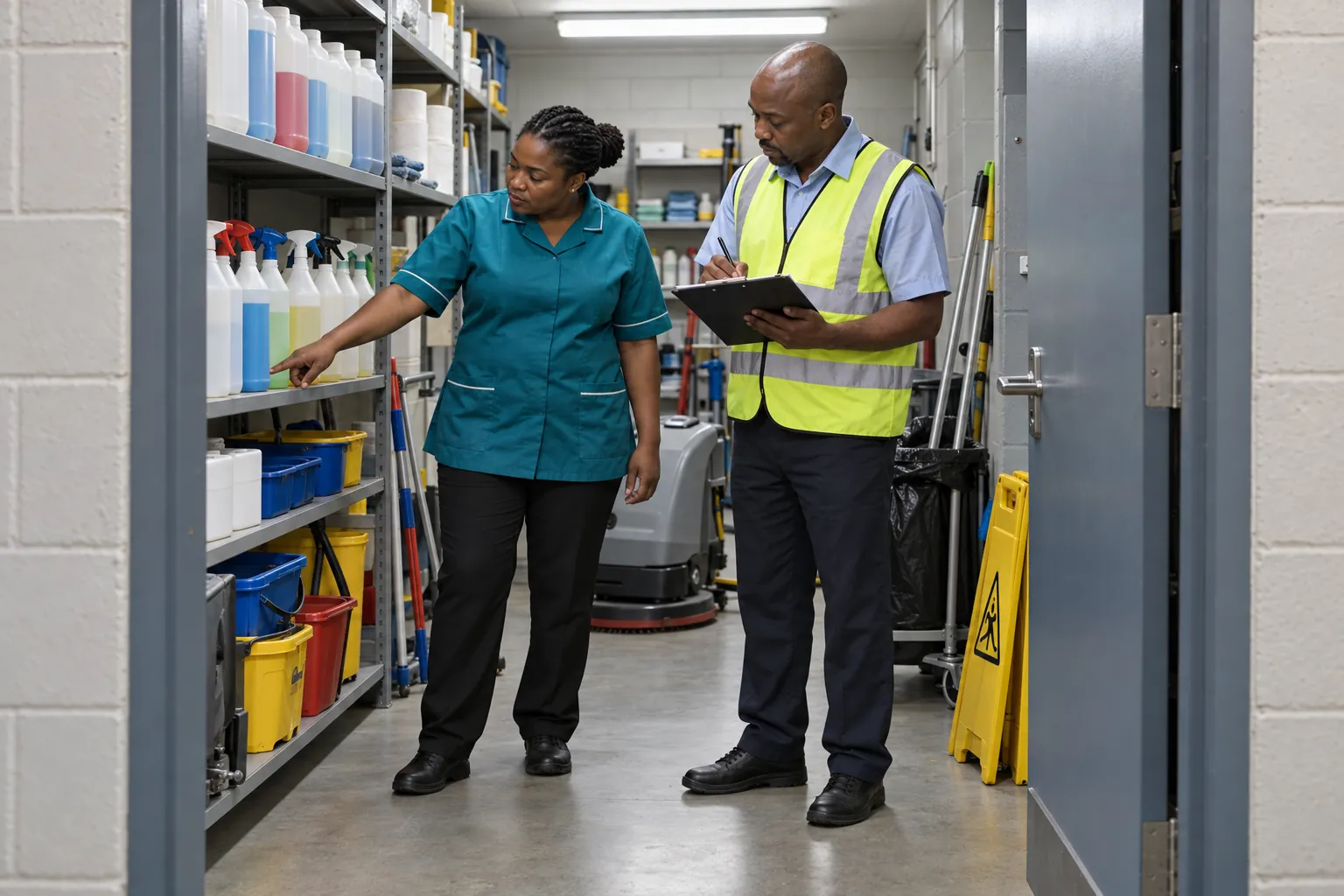 Premises and facilities managementHazard identification and risk assessment: how a HIRA is done, and how it stays trueWhat a HIRA is under the OHS Act and its regulations, how to identify hazards and rate risks, who takes part, when to review it, and how rounds keep it honest.
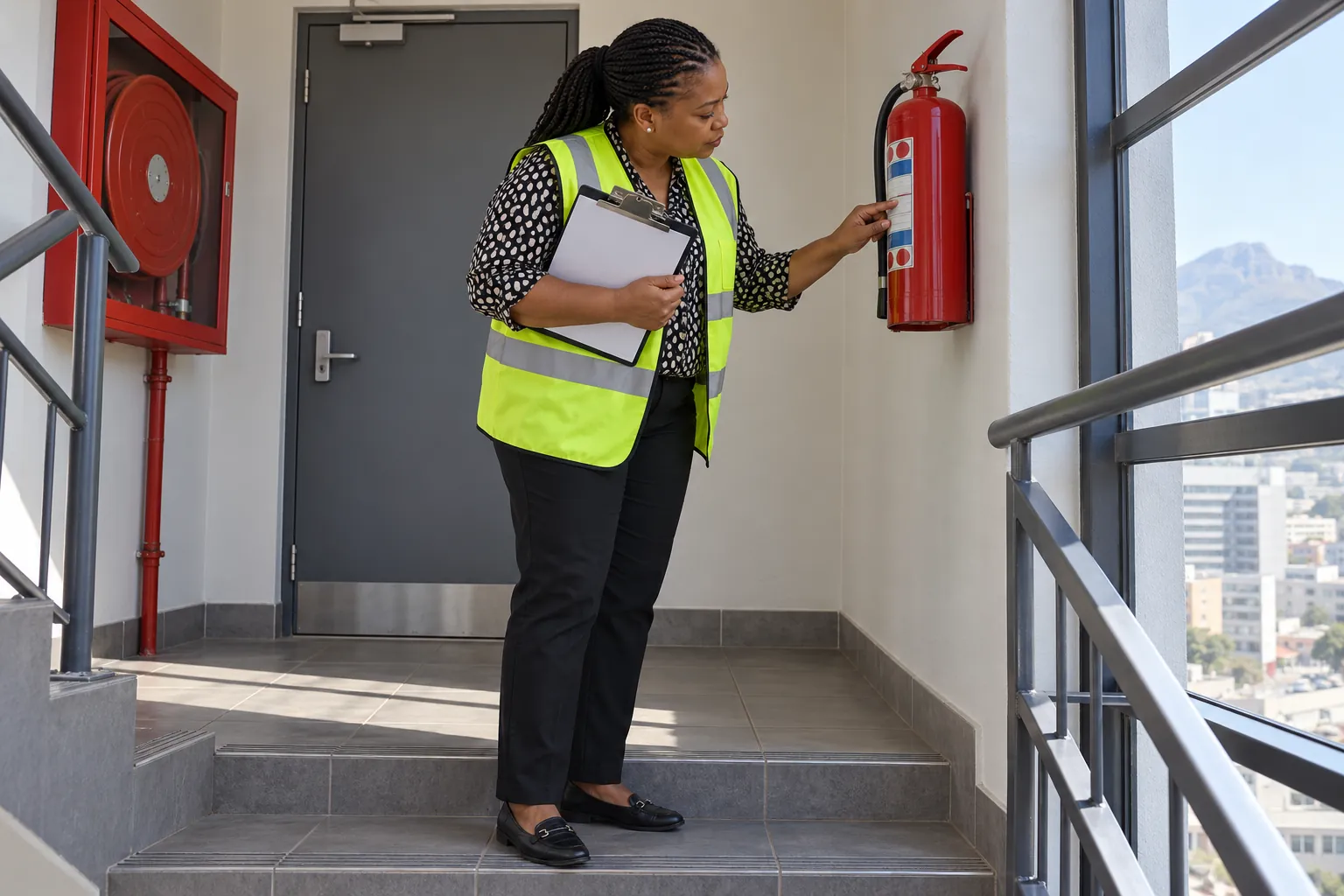 Premises and facilities managementHealth and safety representatives: who needs them, and what they doWhen a workplace needs a health and safety representative under section 17 of the OHS Act, how many, how they are designated, and what a SHE rep may do.
 Premises and facilities managementSafety file: what goes in it, who keeps it, and how to keep it currentWhat a health and safety file is under the Construction Regulations, 2014, who must keep one, what goes in it, and why clients ask service contractors for one.
 Premises and facilities managementNear miss reports: recording the close calls before someone is hurtWhat a near miss is under the OHS Act, what to put in a near miss report, who reports it to whom, and how cleaning, security and FM teams turn reports into fixes.