Guides · United Kingdom · 34 guides
Guides for cleaning contractors
A cleaning contract is judged on what can be shown: the schedule was kept, the audit was done, the problem was put right. These guides cover the checks, records and client reports a cleaning contractor is asked for, and the health and safety duties set by the Health and Safety Executive.
Other countries: Ireland · United States · Canada · Australia · New Zealand · South Africa
Cleaning 29 guides
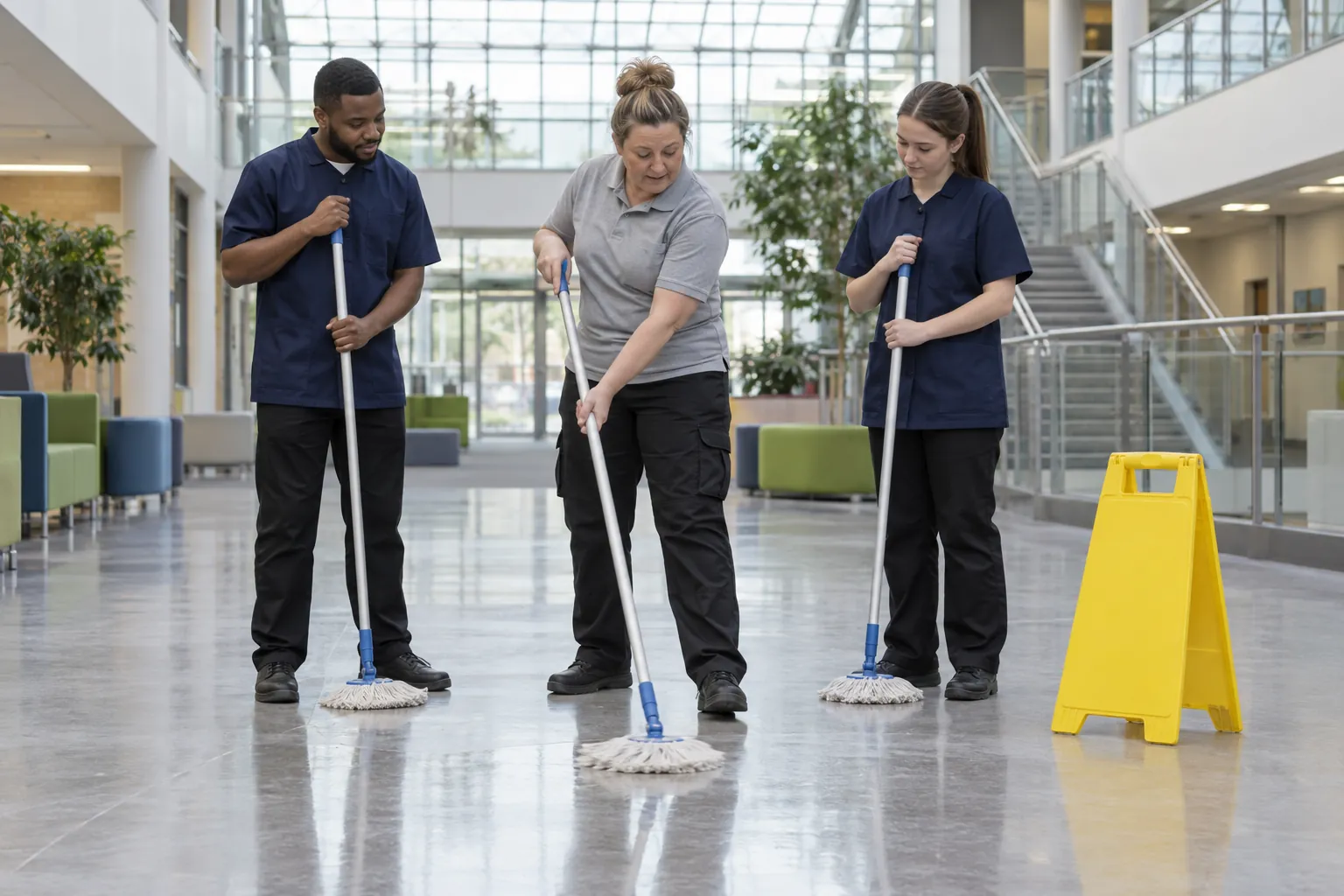 CleaningBICS cleaning: what BICSc training is, and what it showsWhat the British Institute of Cleaning Science is, how its Licence to Practice and skills units work, and what employers and clients use BICSc training for.
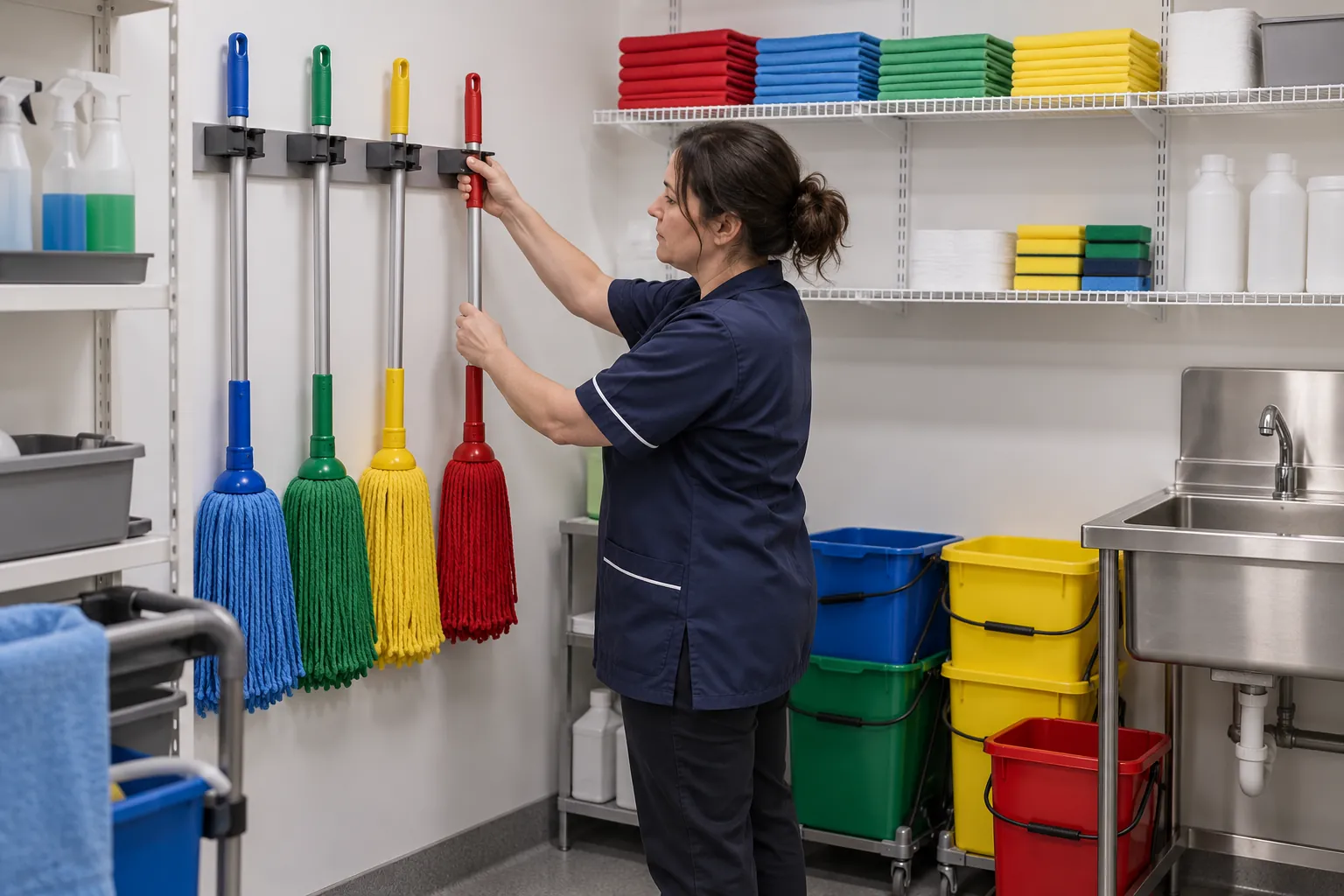 CleaningCleaning colour coding: the four colours, whose scheme they are, and how to keep to themThe UK cleaning colour code explained: red, blue, green and yellow, whose scheme it is, what COSHH does not say, and how to check colour coding is kept on site.
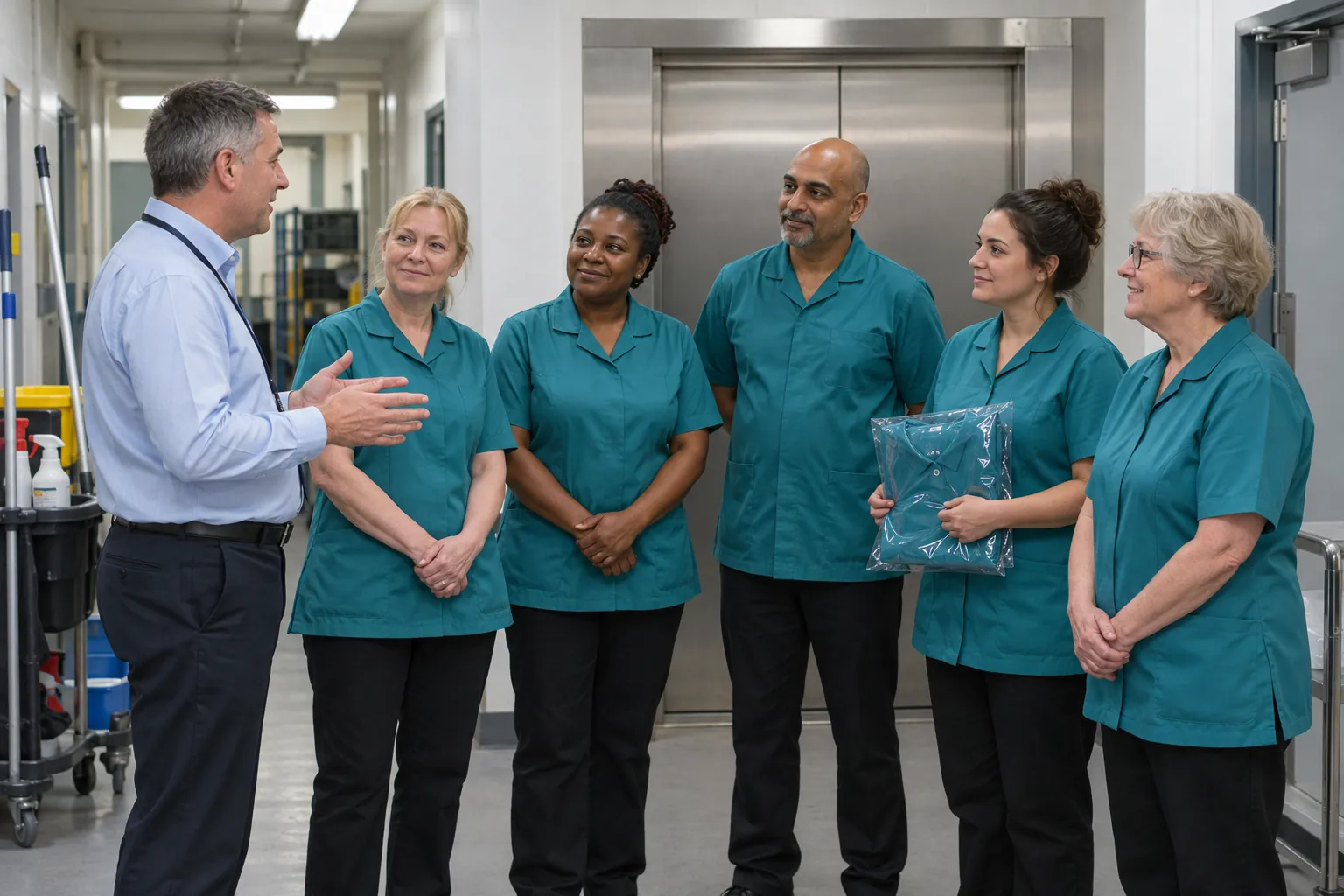 CleaningCleaning contract mobilisation: from contract award to a settled serviceHow to mobilise a new cleaning contract: the mobilisation plan, TUPE, site assessment, COSHH and induction, day one, and the first weeks of audits.
 CleaningCleaning KPIs: what to measure, and how to know the figures are trueThe cleaning KPIs worth measuring, how to define and target them, how to report them, and how a KPI can look green while the building is not clean.
 CleaningCleaning management software: what it covers, and how to chooseWhat cleaning management software covers, from scheduling and rostering to audits, task proof and client reporting, and how to choose the right mix.
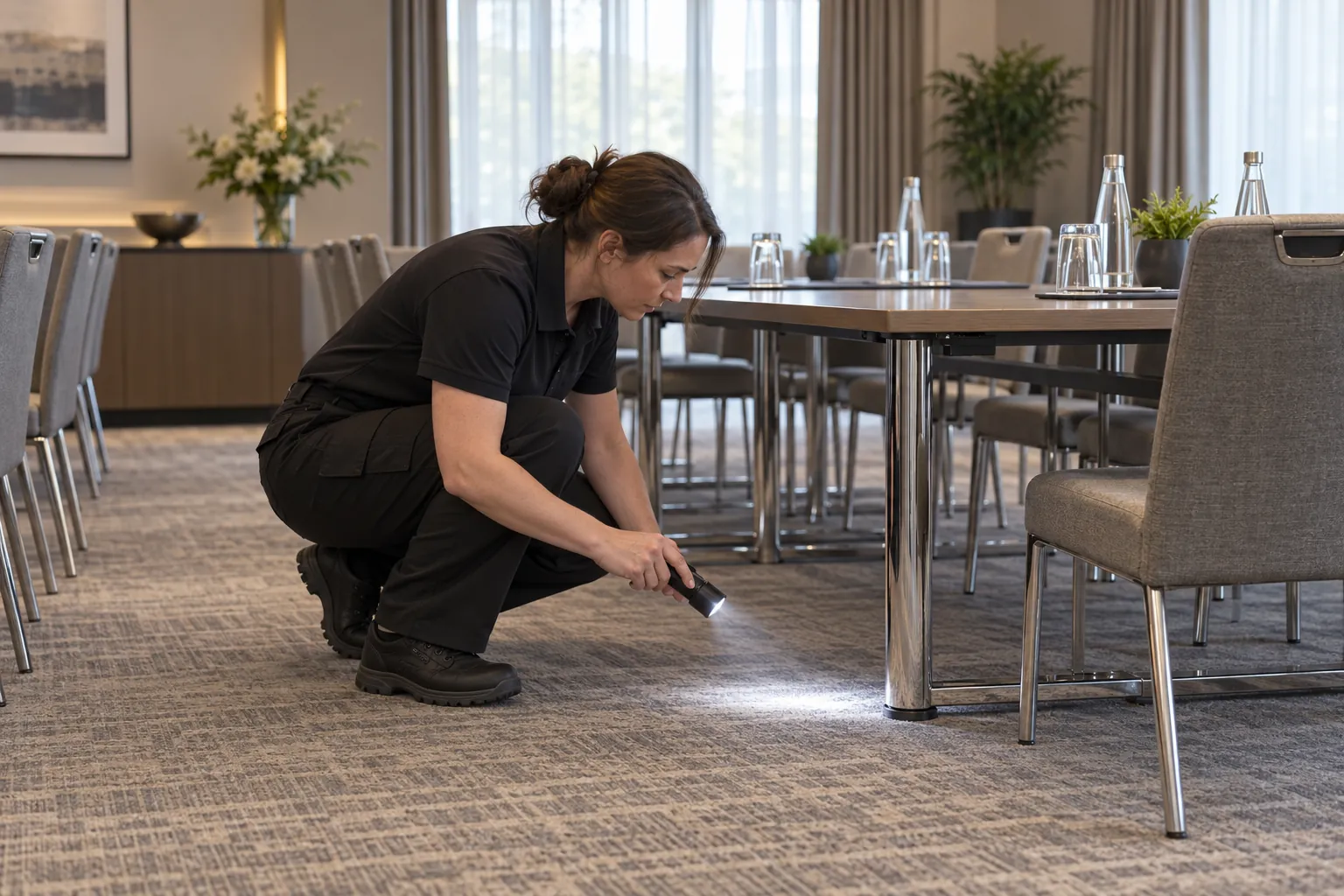 CleaningCleaning quality control: how to inspect, correct and prove the standardHow quality control works in commercial cleaning: QA versus QC, setting standards, running inspections, corrective action and a record that holds up.
 CleaningCleaning service level agreement: what to include, and how to show it is metWhat a cleaning SLA should contain, how to set service levels and response times, service credits and escalation, and how to show the service was delivered.
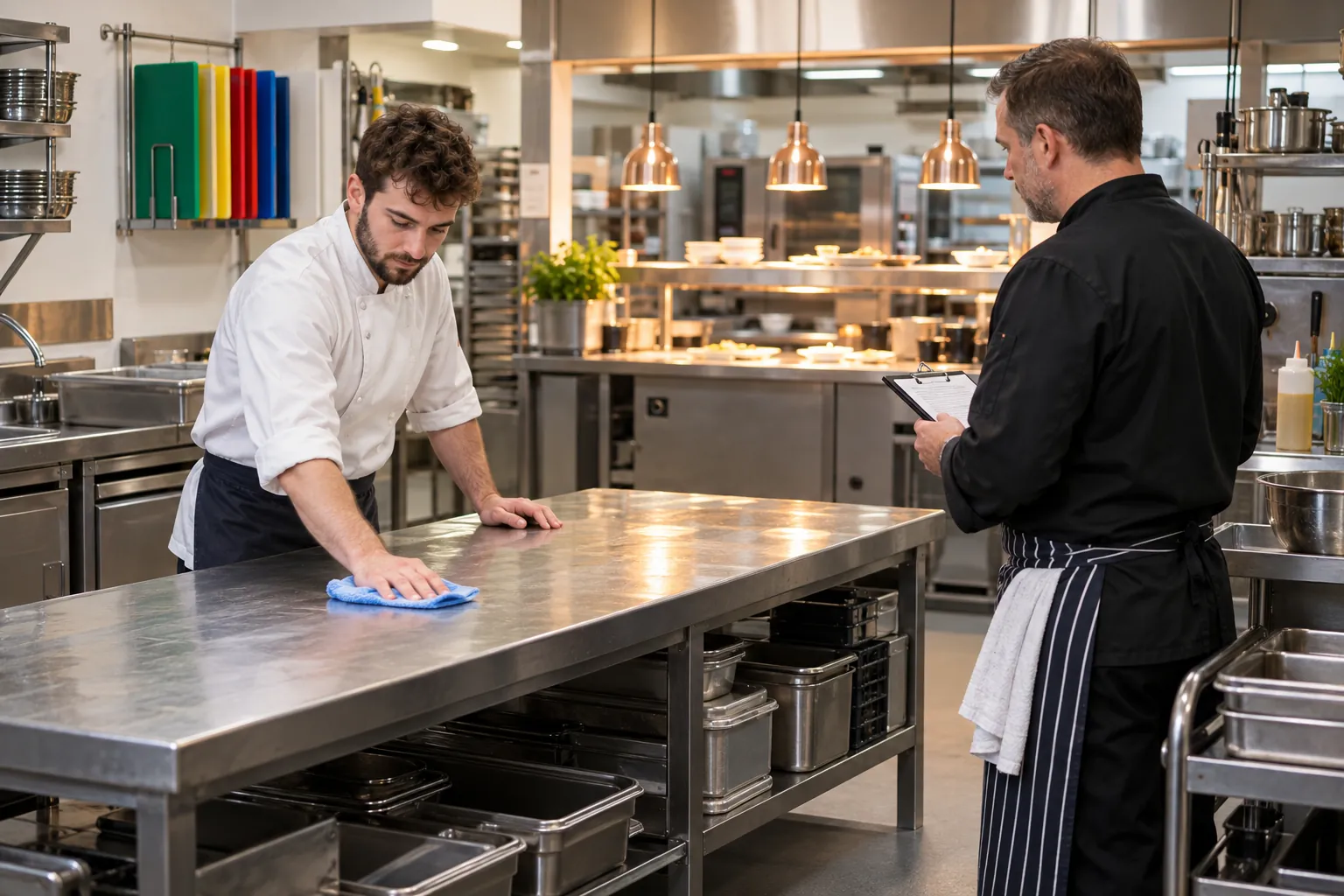 CleaningCleaning sign-off sheet: who signs it, and what a signature meansWhat a cleaning sign-off sheet should record in kitchens, food areas, rooms and end-of-clean handovers, who should sign it, and what each signature proves.
 CleaningCleaning specification: what it should say, and how to show it is metWhat a cleaning specification should contain, input and output standards, setting frequencies by area, and how to show the specification is being delivered.
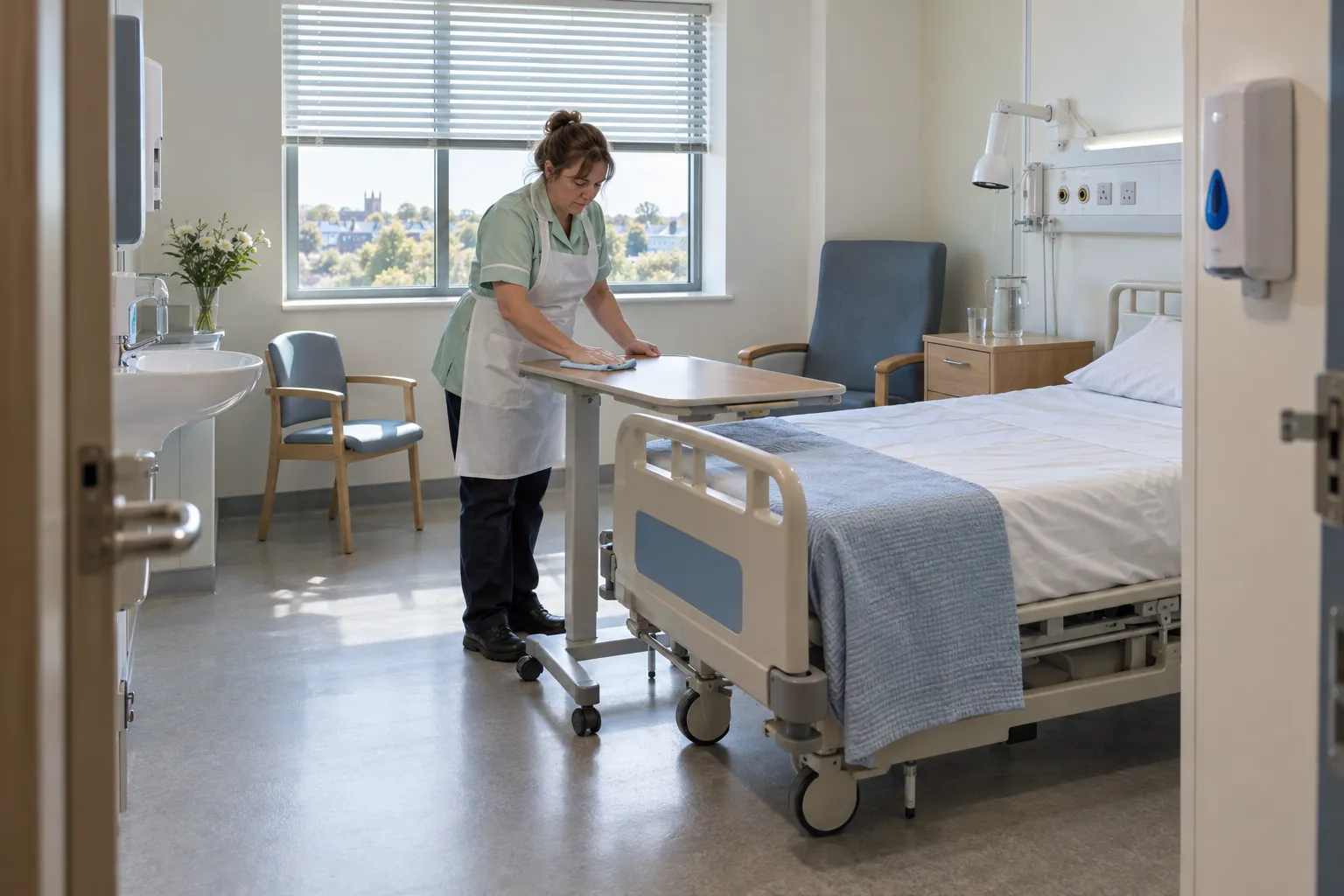 CleaningCleaning standards in the UK: a map, and how to chooseA map of UK cleaning standards: NHS cleanliness standards, the NHSScotland specification, BS EN 13549, BICSc, CQC and food hygiene law, and how to choose.
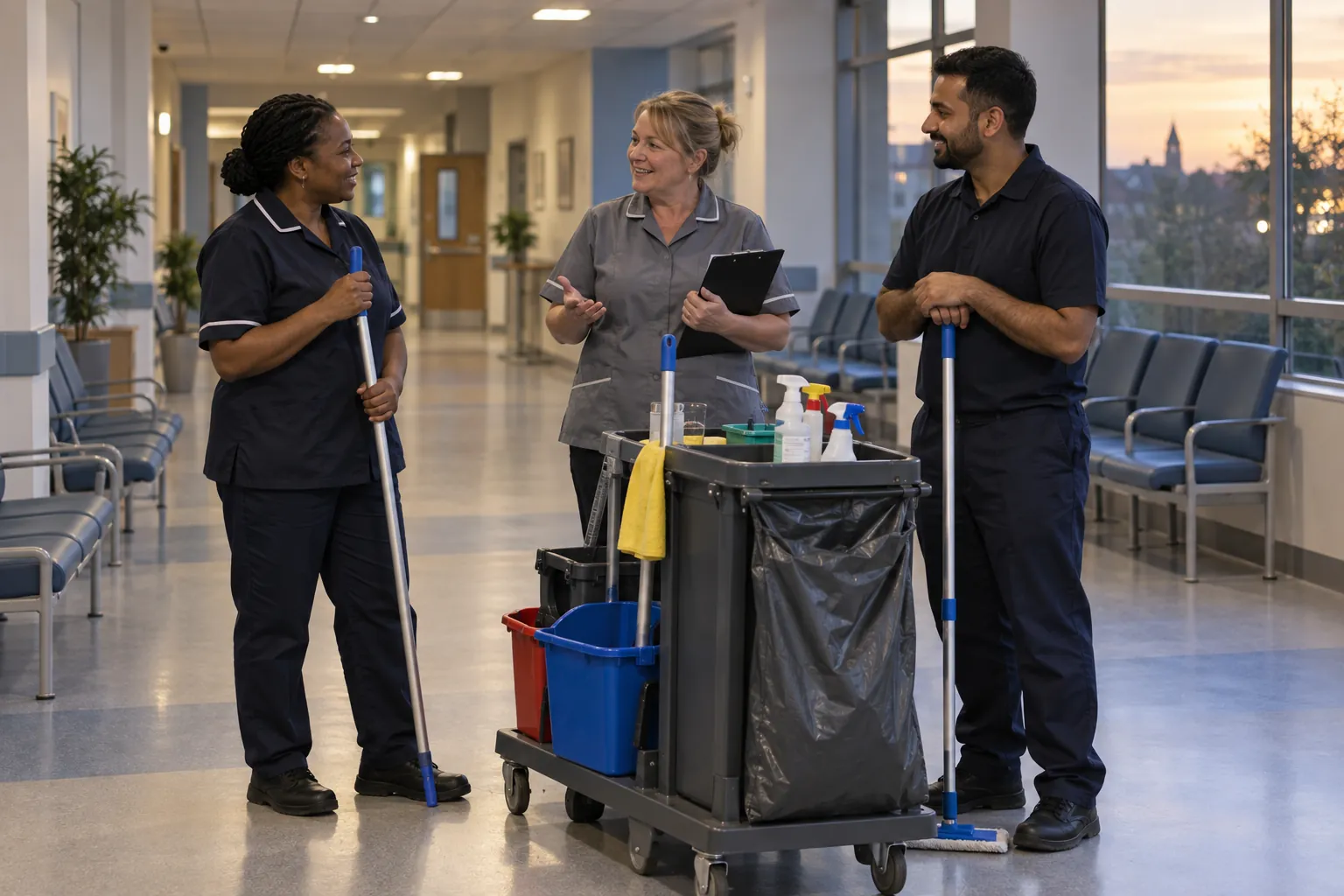 CleaningCleaning supervisor duties: what the role involves, and what good looks likeWhat a cleaning supervisor does: the main duties, a typical shift, health and safety, managing the team, checking the work and reporting to the client.
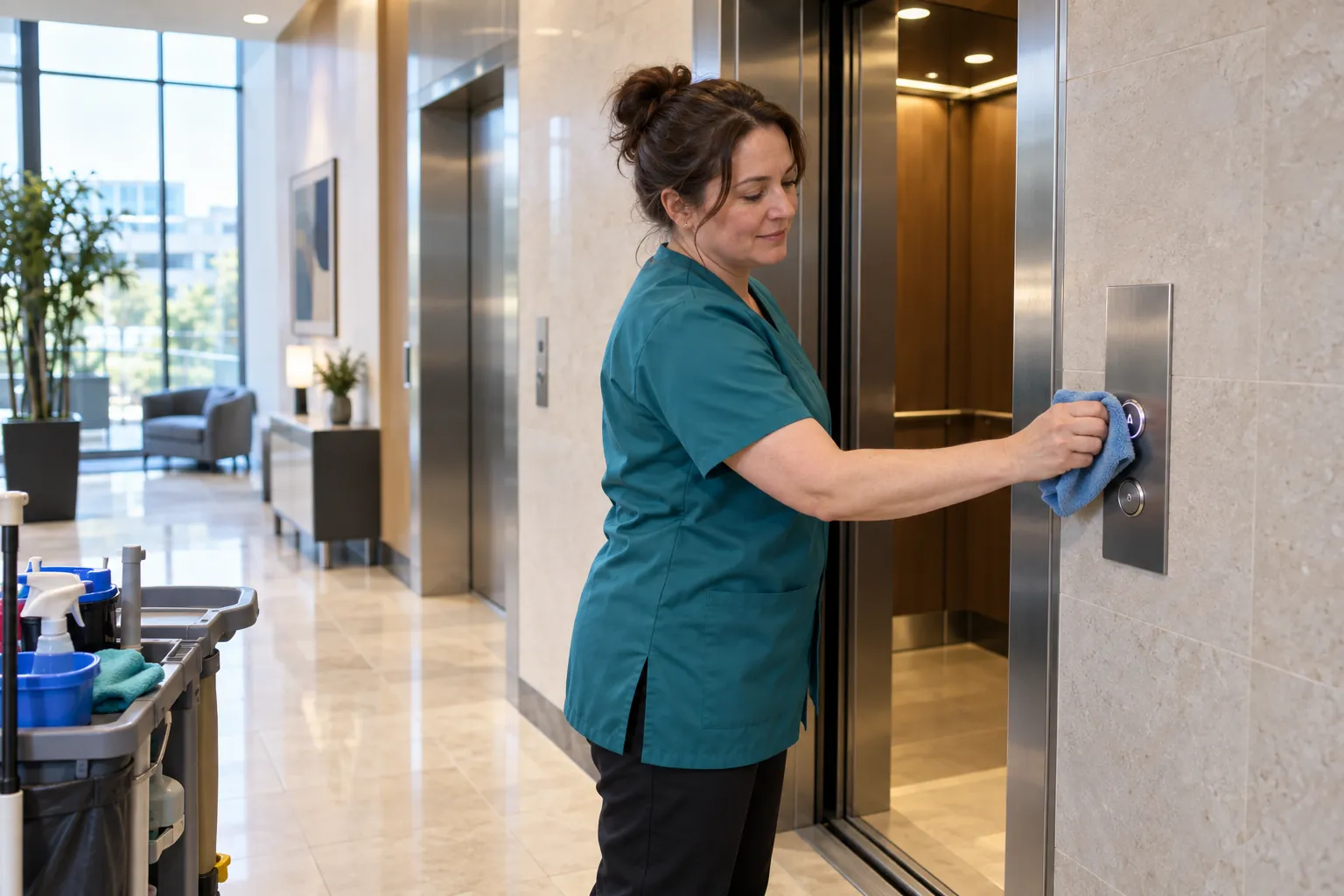 CleaningCommercial cleaning checklist: area by area, and how to use itA commercial cleaning checklist for offices and shared premises, area by area, with how to use it on shift, what to record and how a supervisor checks it.
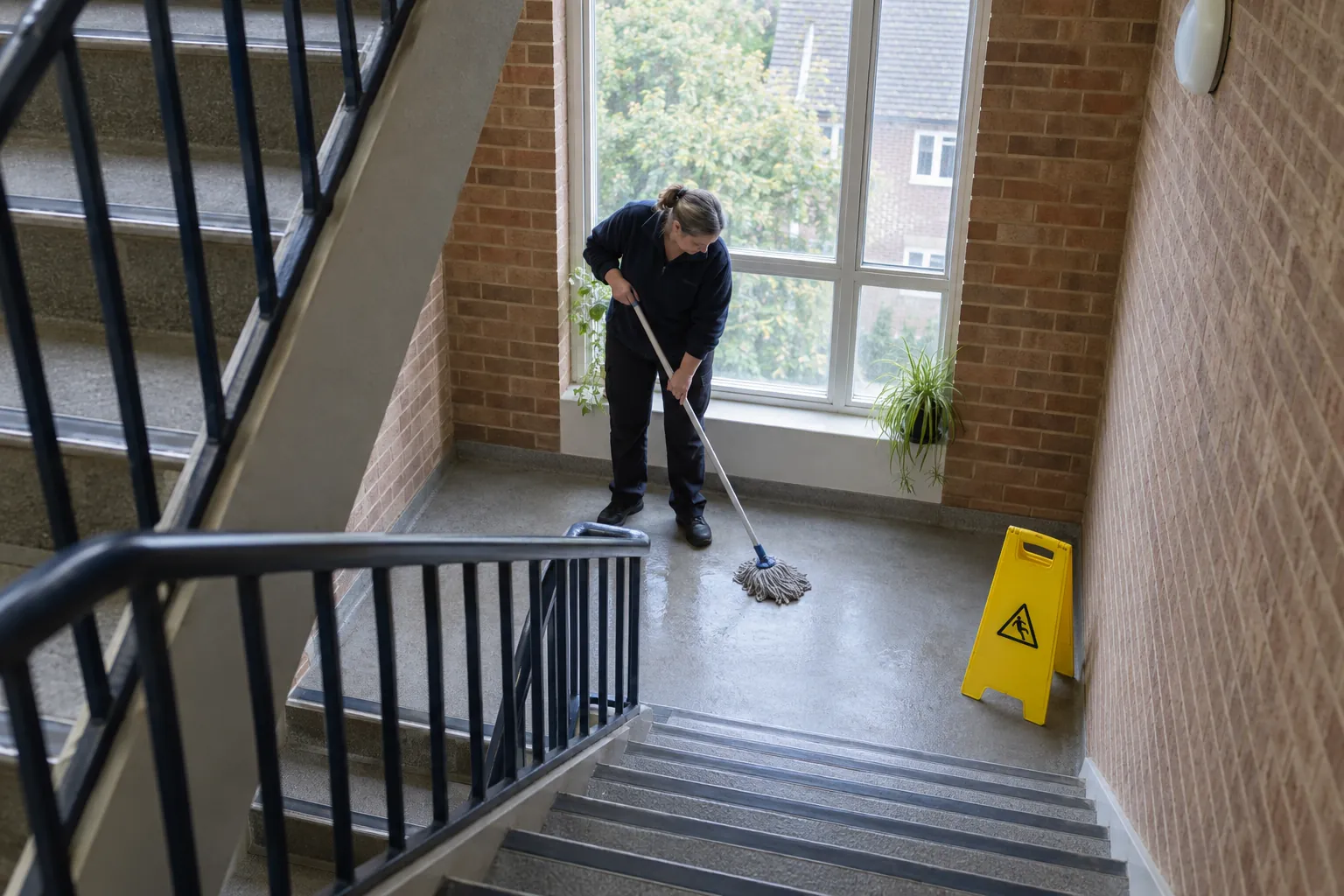 CleaningCommunal area cleaning: what it covers, how often, and how to show it was doneWhat communal area cleaning should cover in blocks of flats and shared buildings, how often, who pays through the service charge, and how to show it was done.
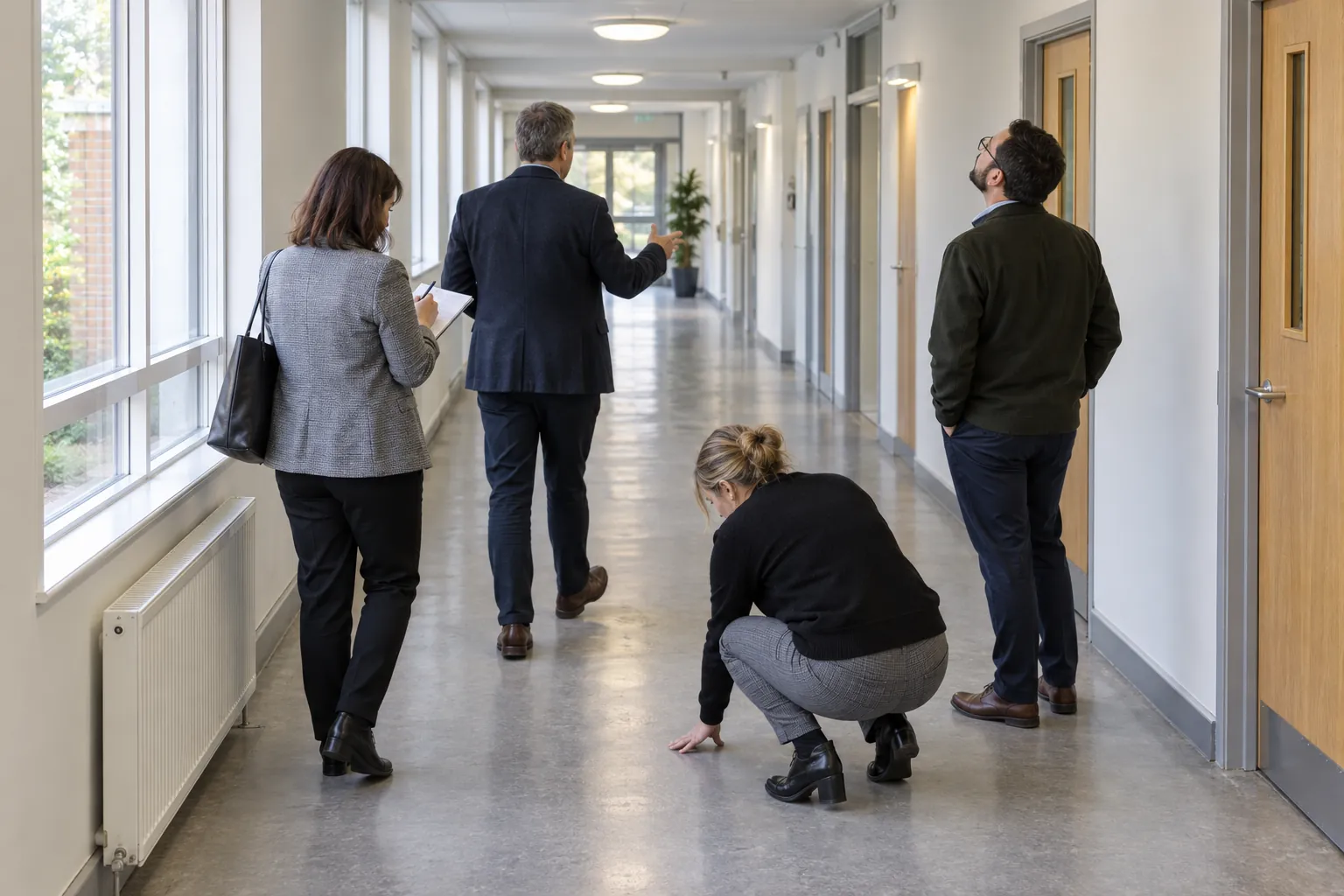 CleaningContract cleaning tender: how to run one as the buyerRunning a contract cleaning tender as the buyer: the tender pack, site visits, TUPE, evaluating quality and price, the Procurement Act 2023 and mobilisation.
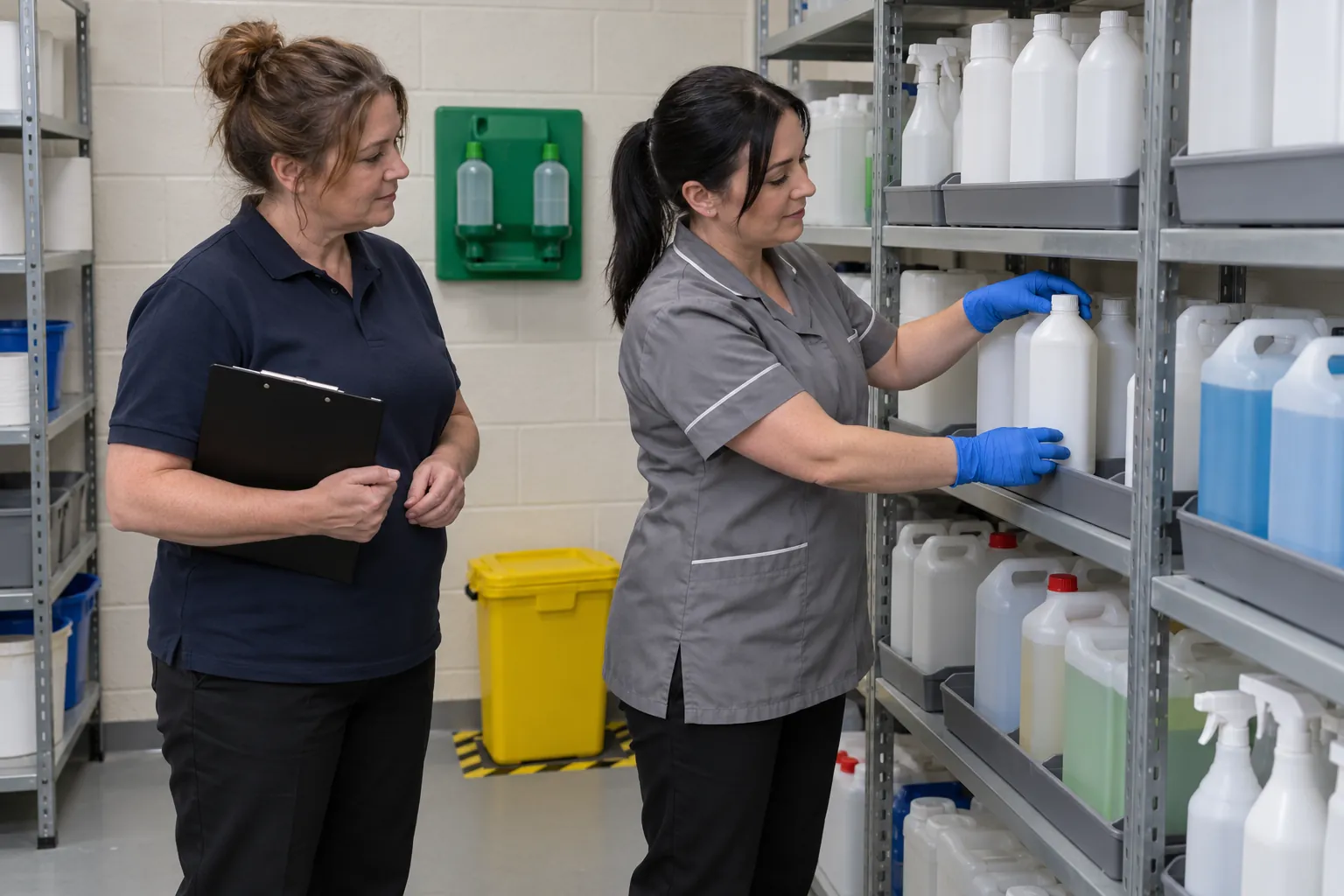 CleaningCOSHH assessment: the five steps, and the checks that keep it trueWhat a COSHH assessment is, the five steps, what to record for cleaning products, how to keep a COSHH register, and the checks that keep the controls working.
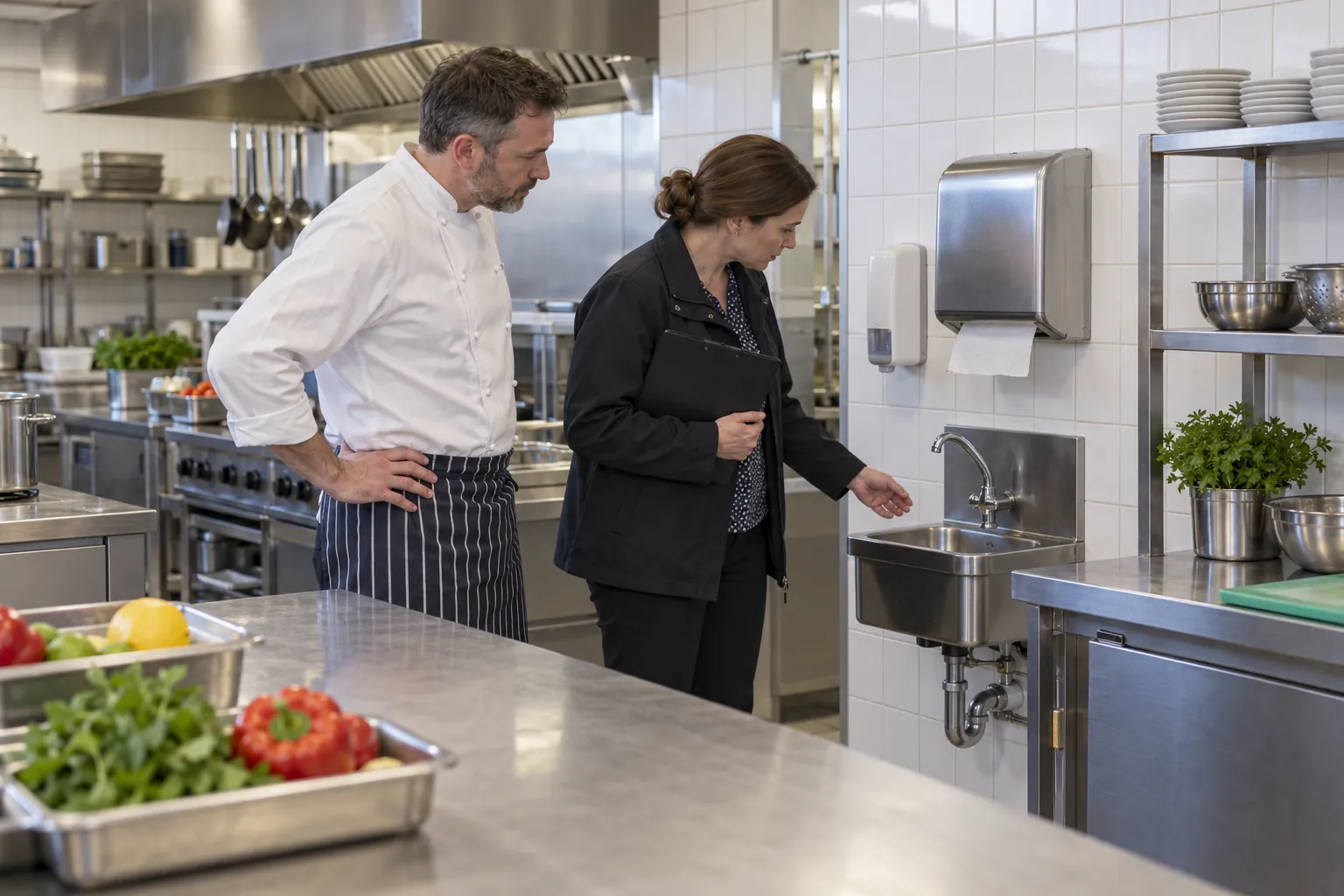 CleaningEHO inspection checklist: what the food safety officer checks, and the records behind itWhat an EHO checks on a UK food hygiene inspection, the records to have ready, how the 0 to 5 rating is worked out, and what happens after the visit.
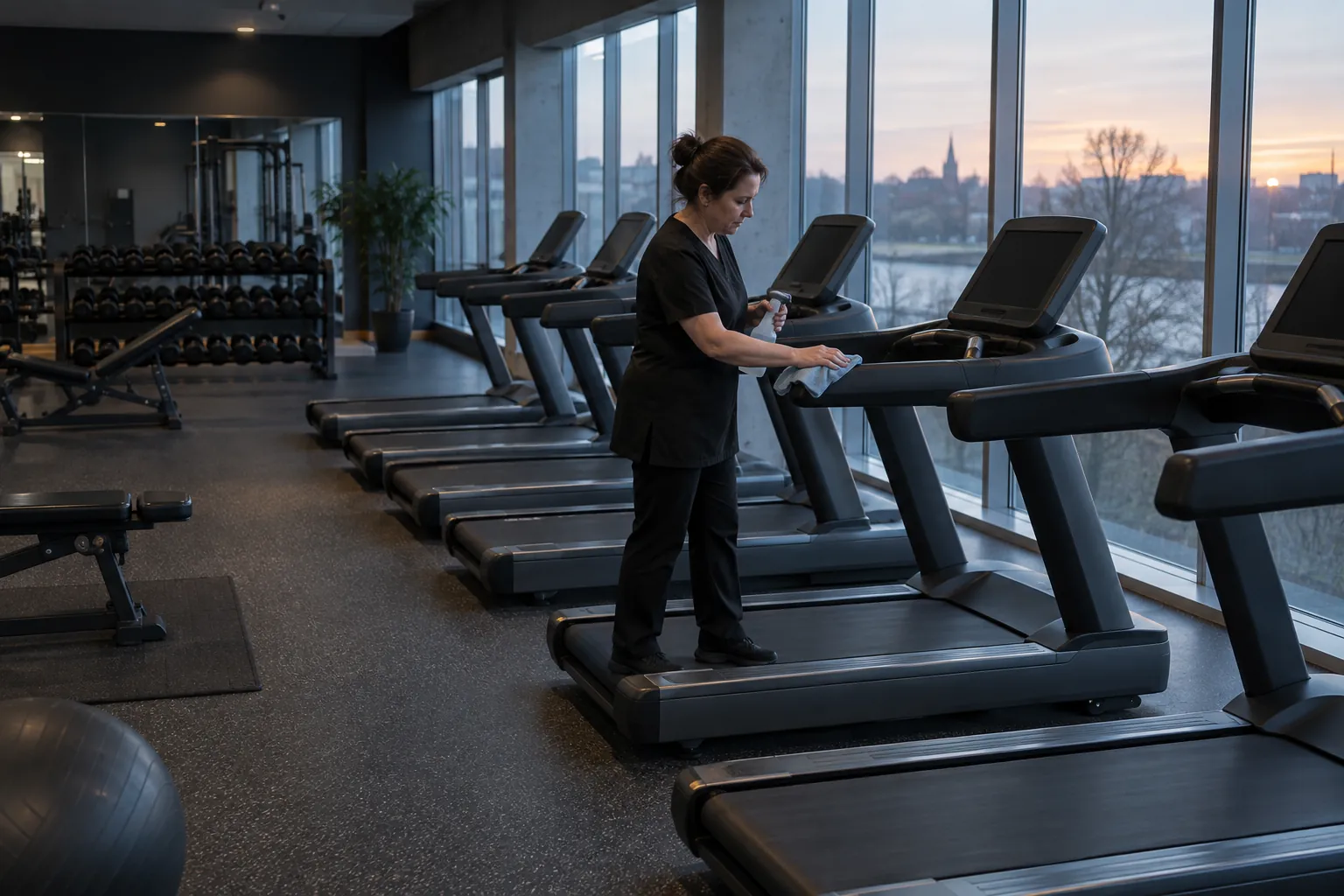 CleaningGym cleaning checklist: equipment, changing rooms and wet areasA gym cleaning checklist for gyms and leisure centres: equipment, studios, touch points, changing rooms and poolside areas, with frequencies and who does what.
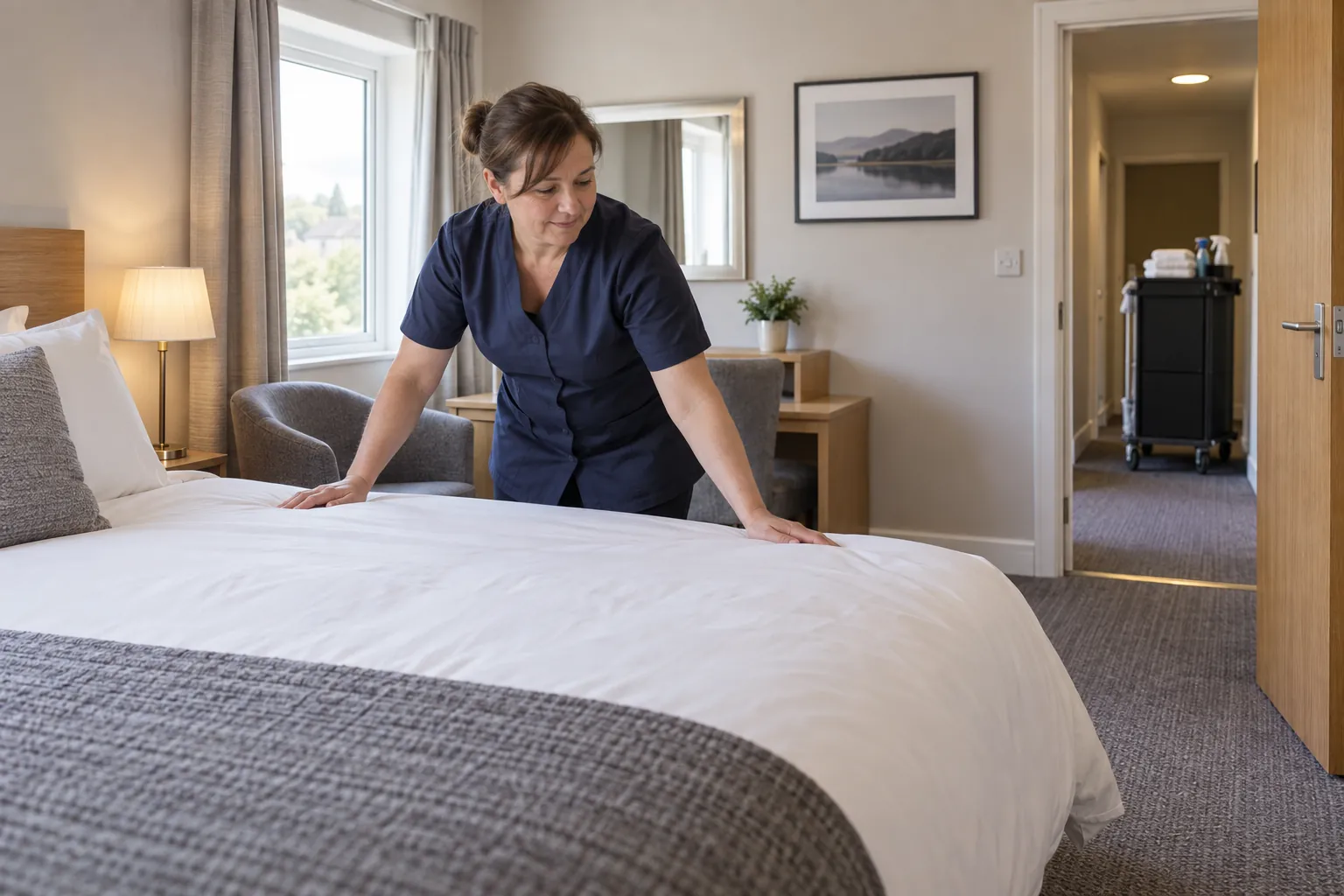 CleaningHotel housekeeping checklist: a room ready for the next guestA practical UK hotel housekeeping checklist for checkout rooms, stayovers and public areas, with safe methods, inspection points and a usable room record.
 CleaningHow to win cleaning contracts, and keep themHow UK cleaning contracts are bought, what buyers look for, how to write a tender response that scores, how to price it, and how to keep the contract.
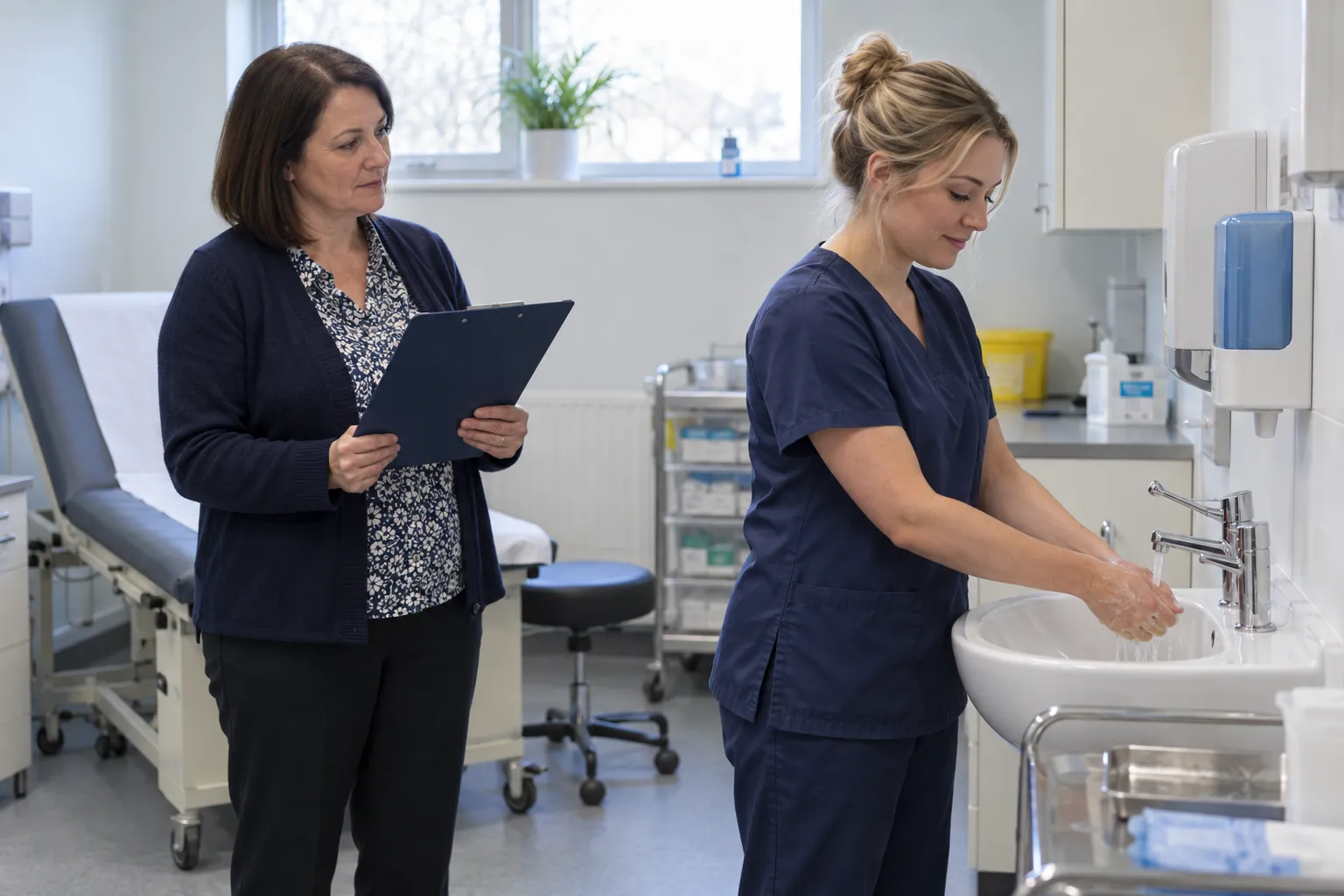 CleaningHygiene audit: what is checked, who does it, and what happens nextHow hygiene and infection prevention audits work in care, healthcare, schools and food areas: what is audited, by whom, how it is scored and what follows.
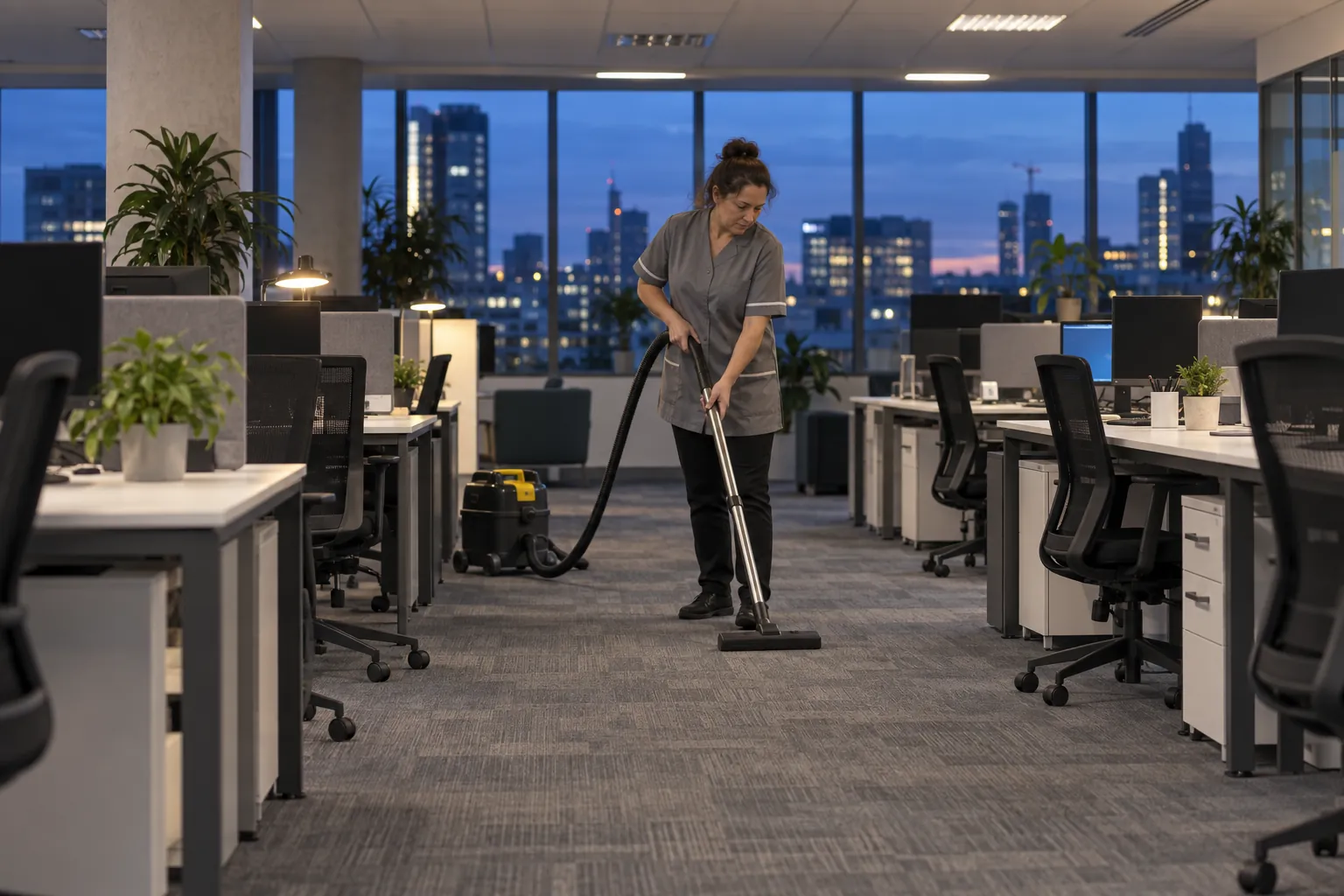 CleaningOffice cleaning schedule: what to clean, how often, and how to show it was doneWhat an office cleaning schedule should cover, which tasks are daily, weekly, monthly or periodic, who does what, and how to show the schedule is being kept.
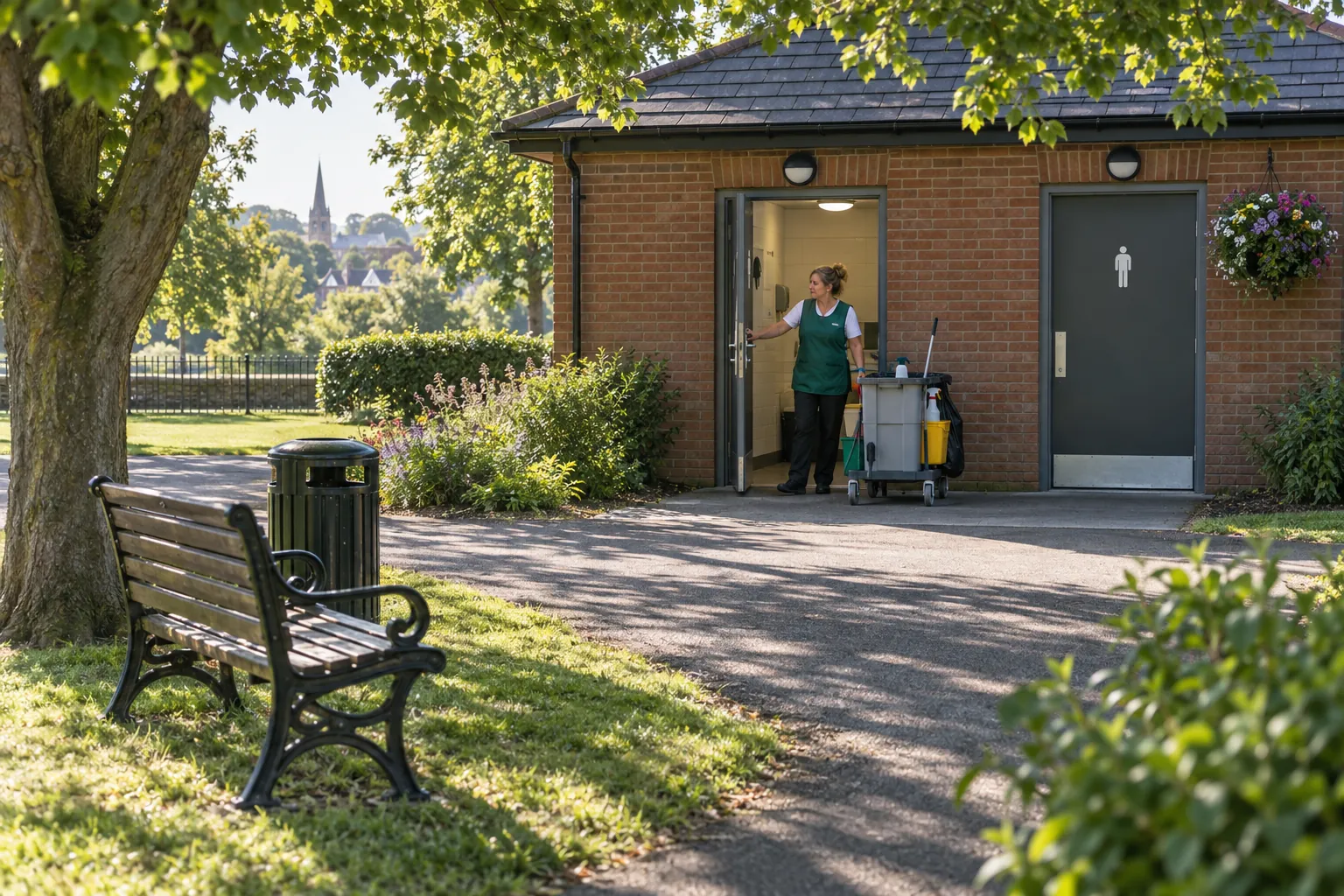 CleaningPublic toilet cleaning: frequencies, safety and accessibilityRunning public toilets for councils, parks, stations and venues: cleaning frequencies at peak, needles and vandalism, accessible and Changing Places toilets.
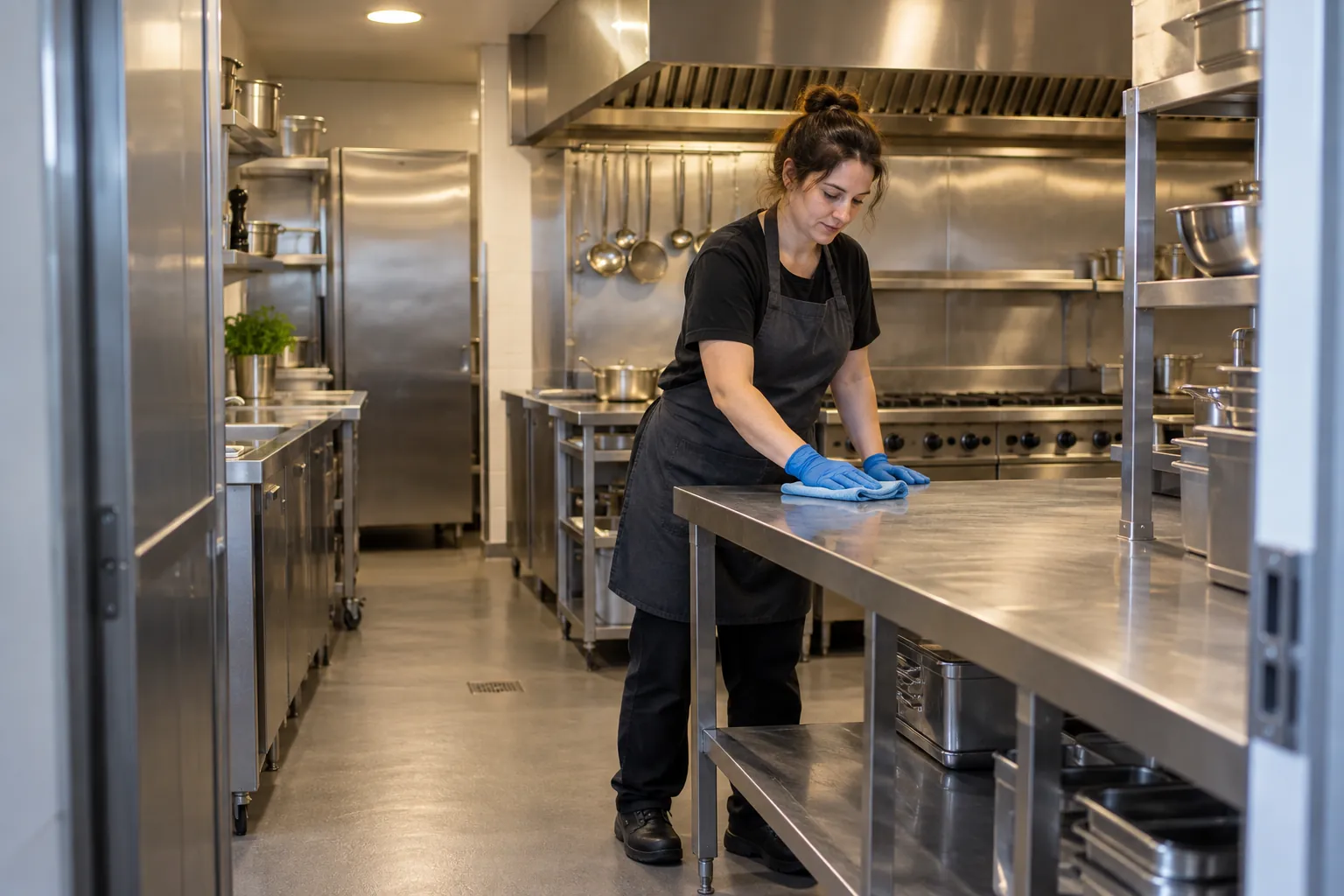 CleaningRestaurant cleaning checklist: daily work and a useful recordA UK restaurant cleaning checklist for kitchen and front of house, with daily, weekly and periodic tasks, safe cleaning methods and a worked cleaning record.
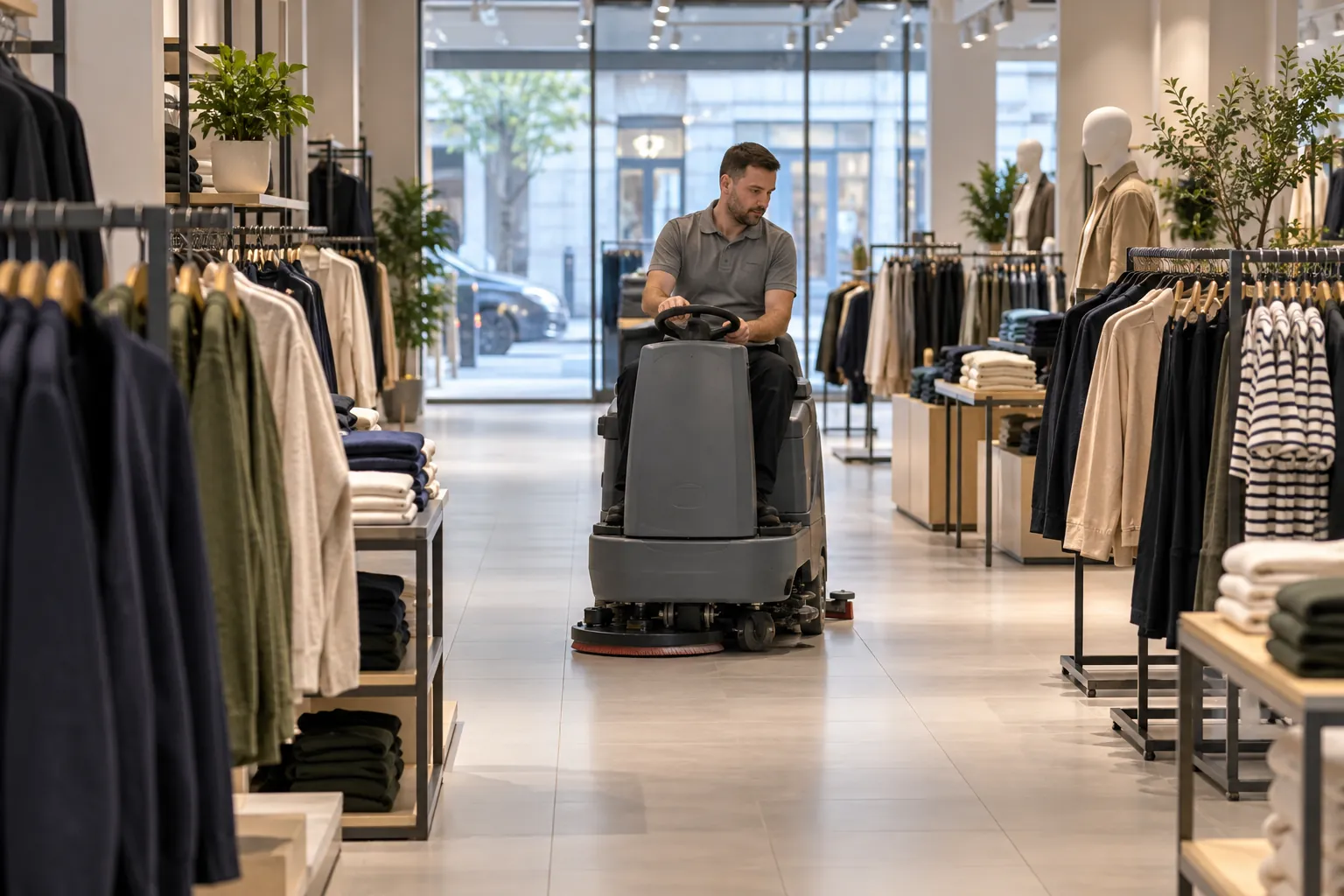 CleaningRetail cleaning checklist: shop floors, fitting rooms and spillsA retail cleaning checklist for shops: entrances, sales floors, fitting rooms, customer toilets and stockrooms, with slips, spill response and who checks it.
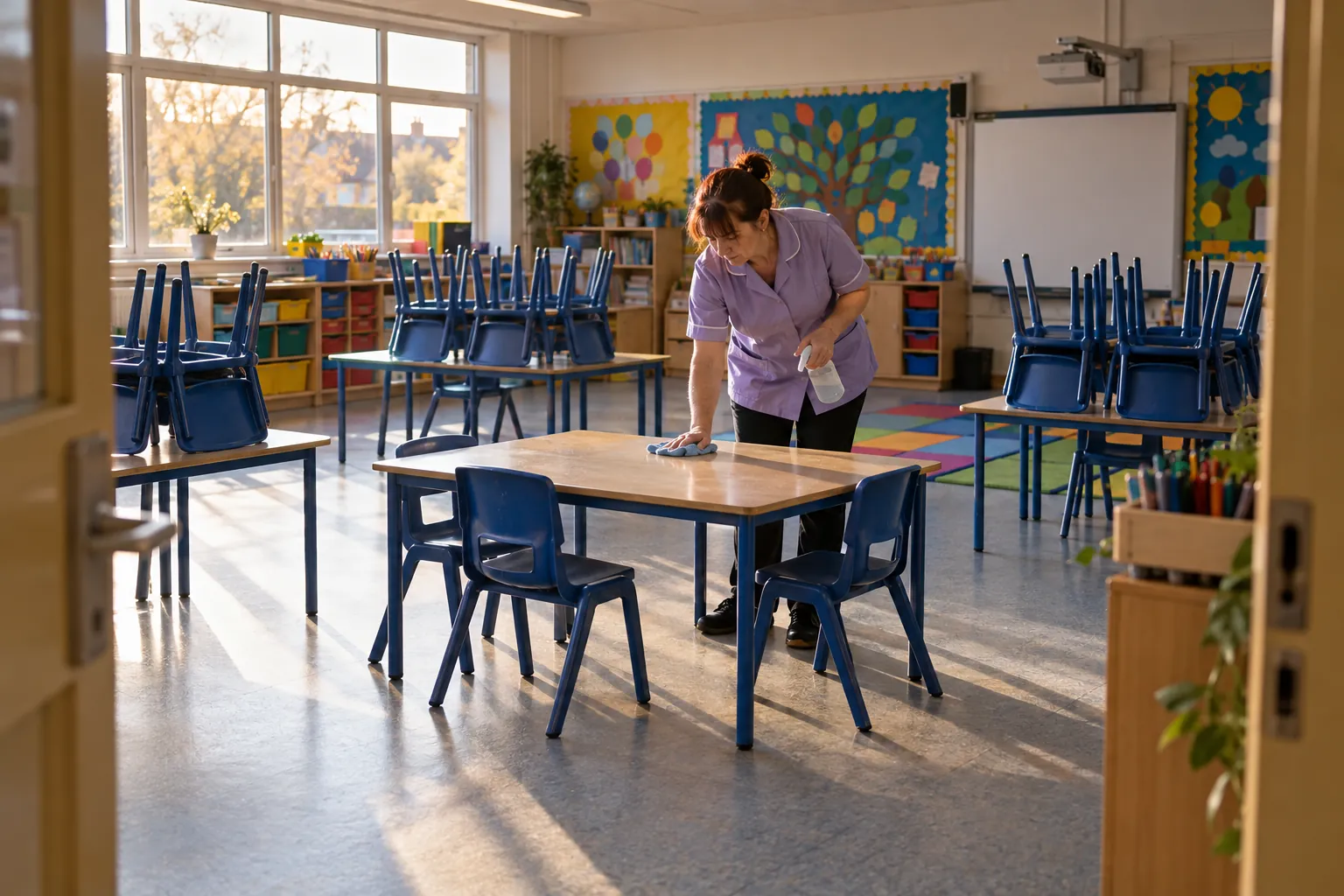 CleaningSchool cleaning checklist: what to clean, how often, and how to show it was doneA school cleaning checklist for classrooms, toilets, corridors, dining hall and changing rooms, with daily, weekly and holiday tasks and how to record them.
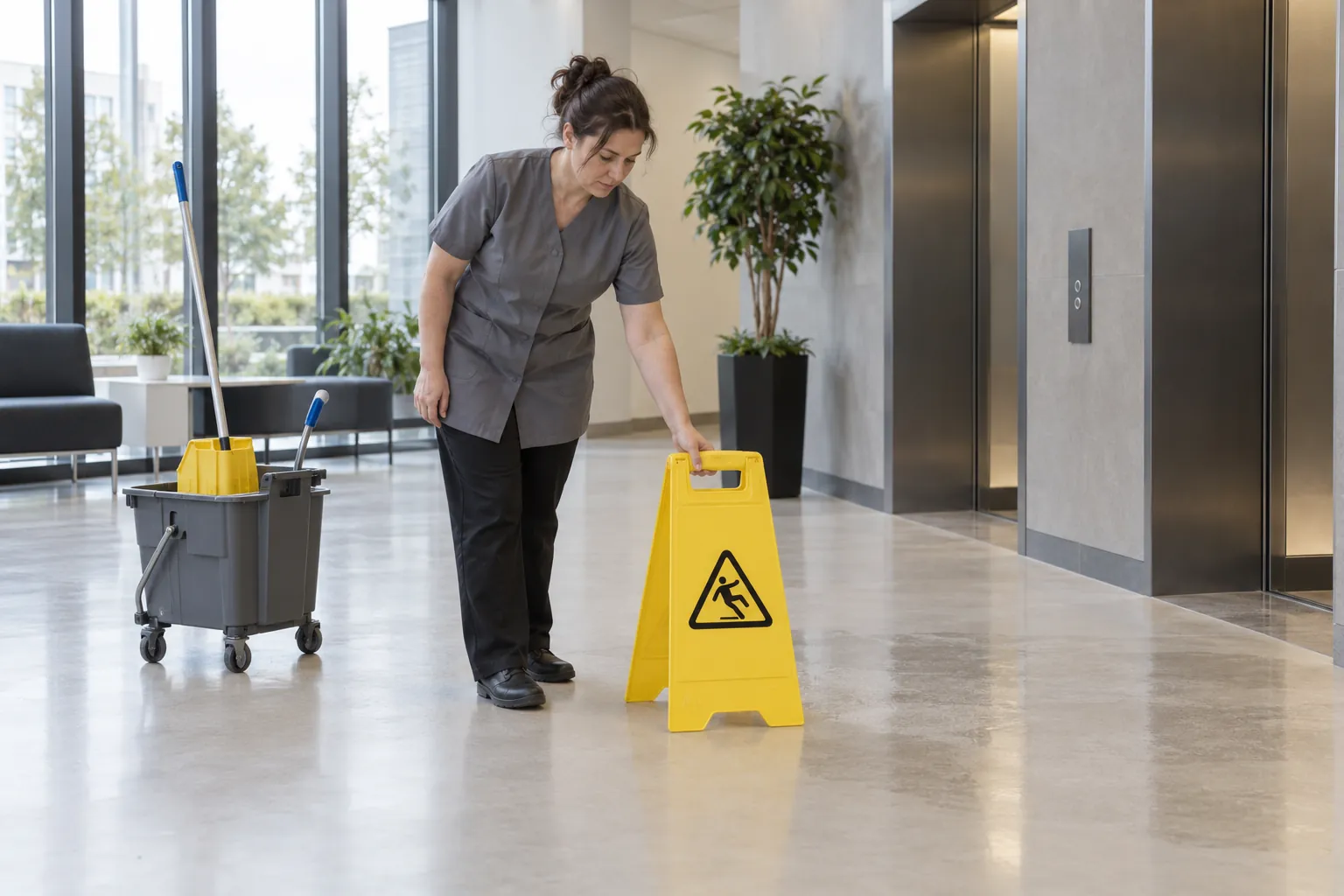 CleaningSlips and trips: the law, the causes, and the record that shows the floor was safeSlips and trips at work in the UK: the law on floors and spills, the causes, the risk assessment, wet floor signs, and the cleaning record a slip claim turns on.
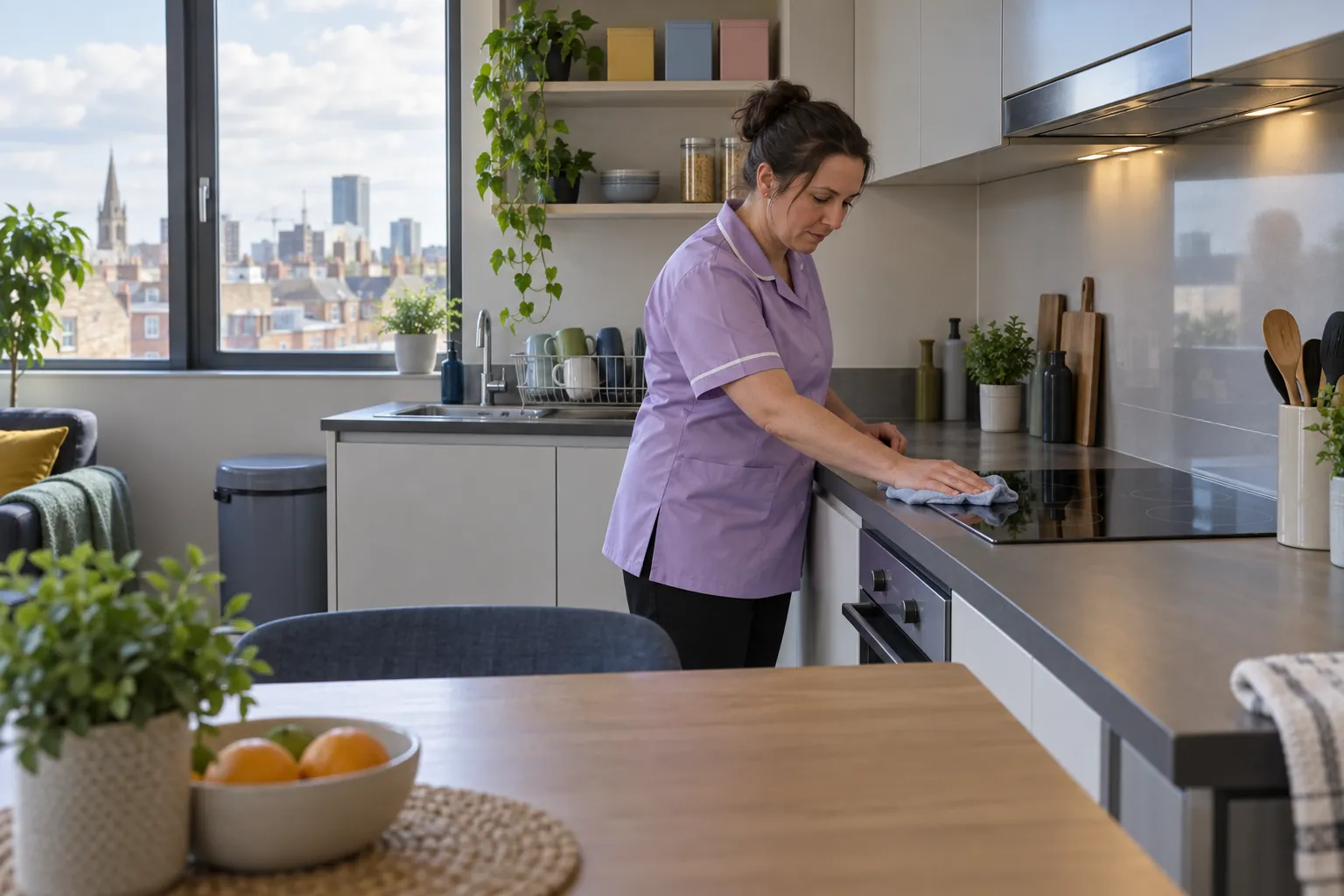 CleaningStudent accommodation cleaning: halls, flats and the summer turnaroundCleaning halls of residence and purpose-built student accommodation: shared kitchens, bathrooms, corridors, room inspections and the end-of-term turnaround.
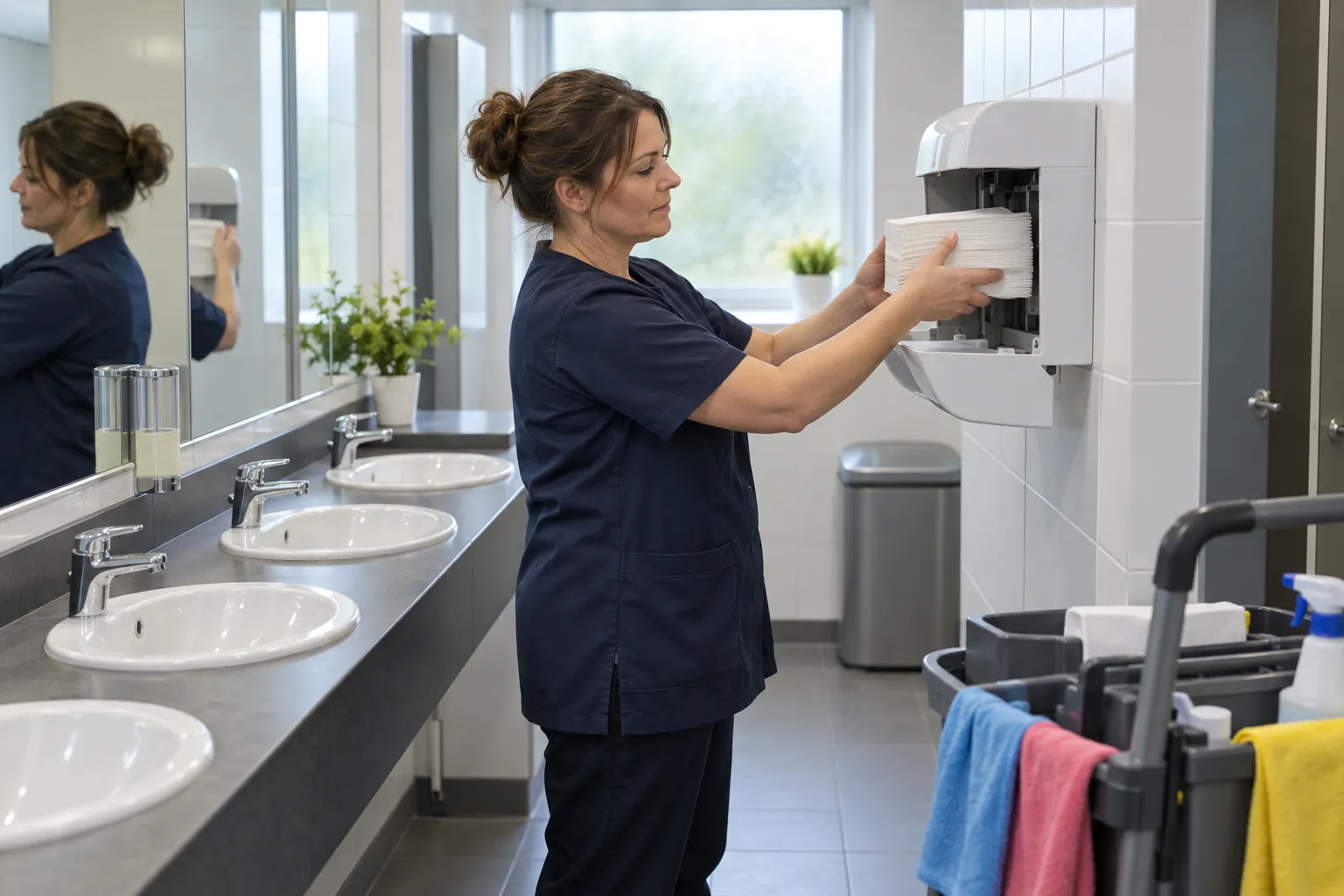 CleaningToilet check sheet: what to record and how to make it credibleWhat a washroom check sheet should record, how often to check, the legal duty behind it, and how to keep a record a client or inspector will believe.
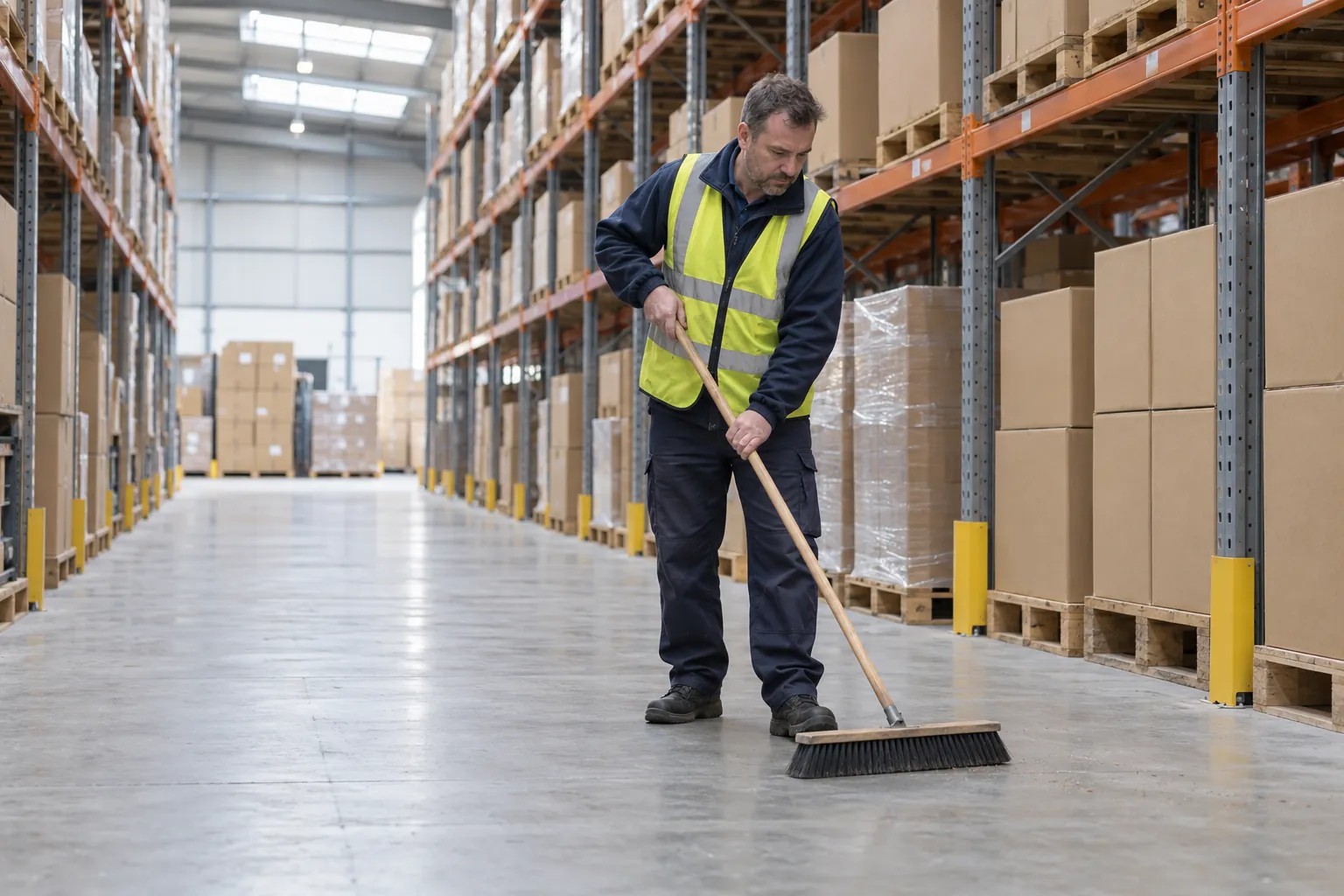 CleaningWarehouse cleaning checklist: clear routes and recorded workA warehouse cleaning checklist for UK sites: immediate, daily and periodic tasks, safe work around vehicles, welfare areas and a usable completed-work record.
Fire and water checks 1 guide
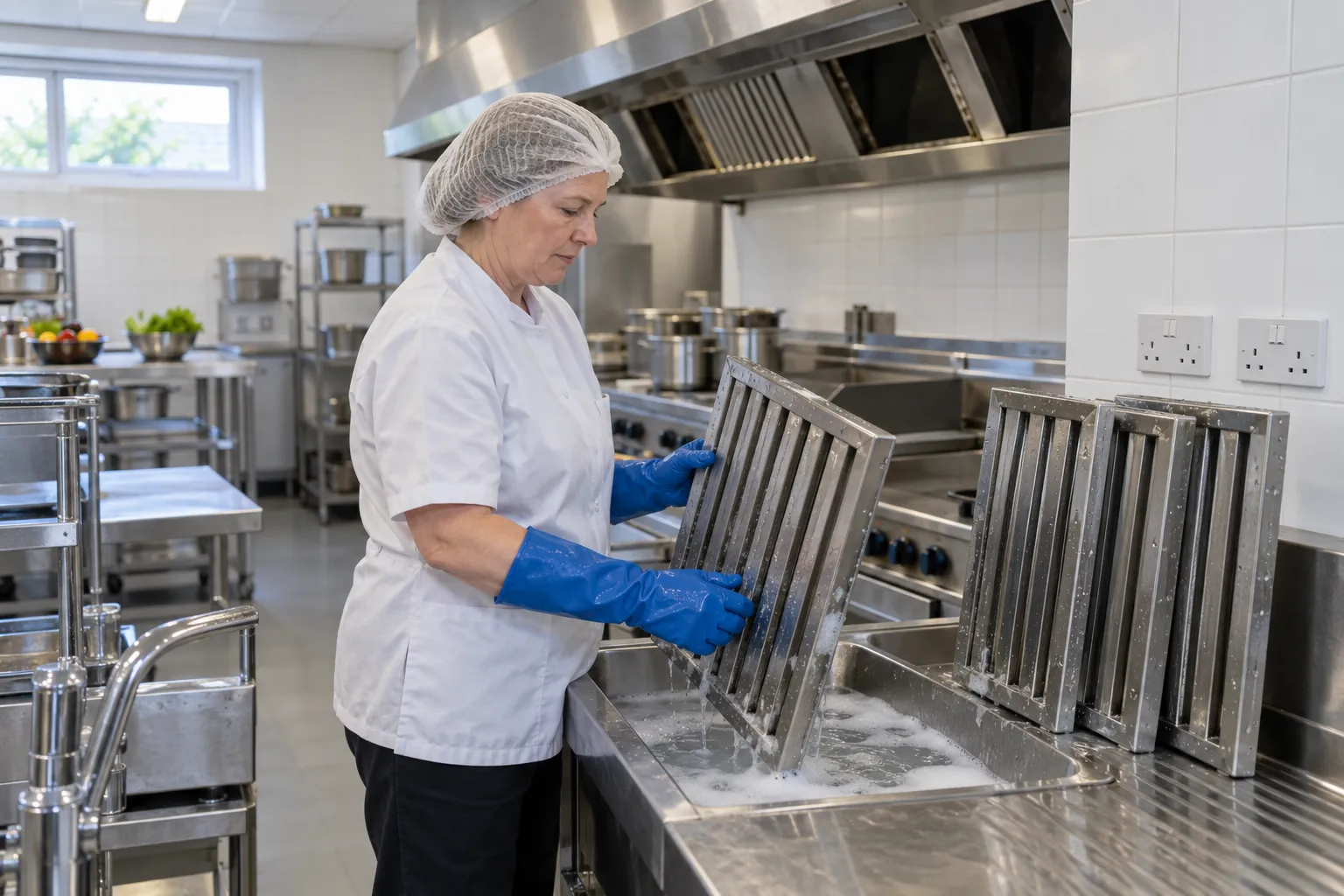
Premises and facilities management 4 guides
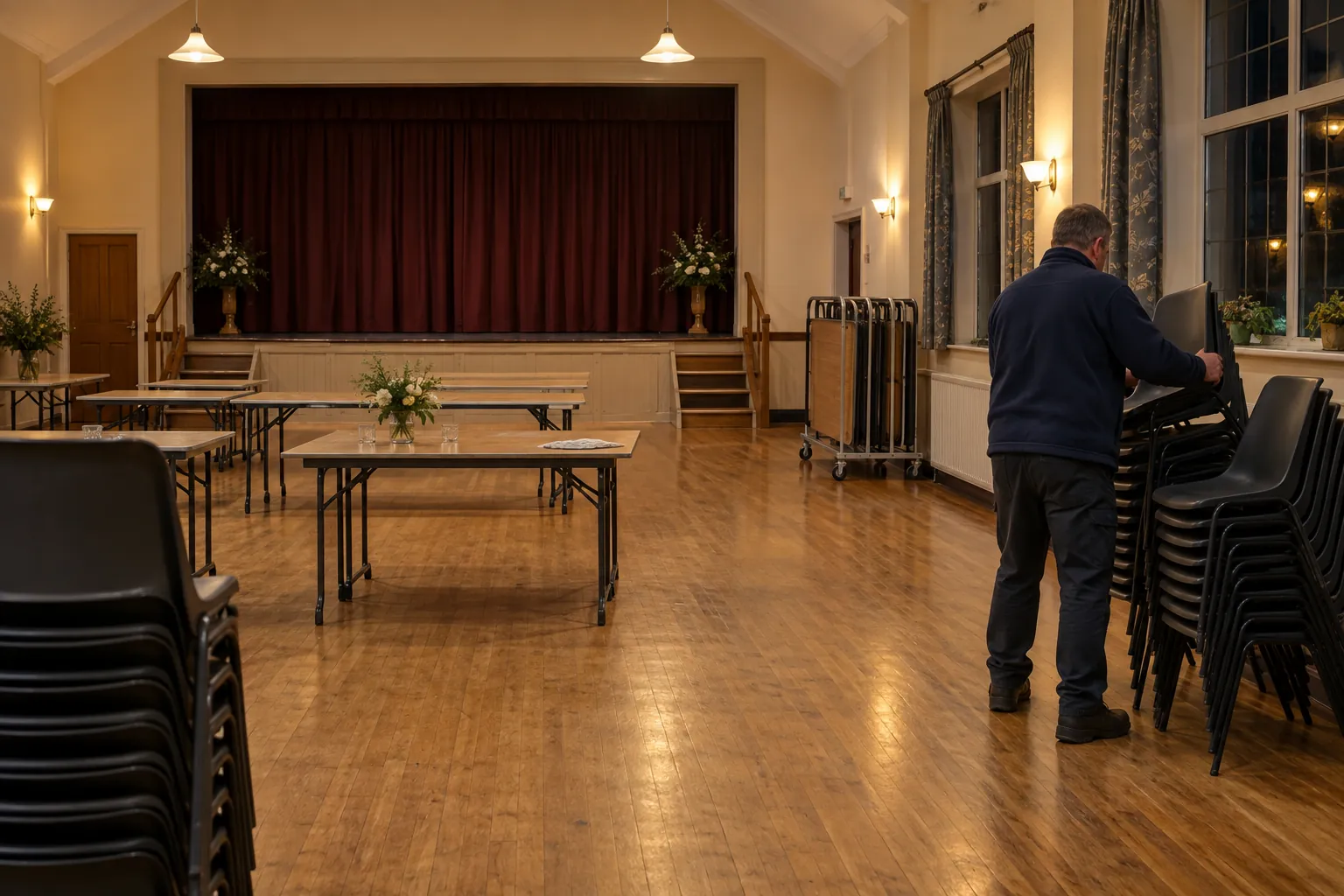 Premises and facilities managementCaretaker duties: what the job involves, and how to show it was doneCaretaker duties in halls, churches, offices, flats and schools: opening and locking, routine checks, minor repairs, cleaning and working alone safely.
 Premises and facilities managementFacilities management contract: what to put in it, and how to make it workWhat goes into a facilities management contract: scope, specifications, payment, KPIs and deductions, TUPE, mobilisation and exit, and the NEC4 standard form.
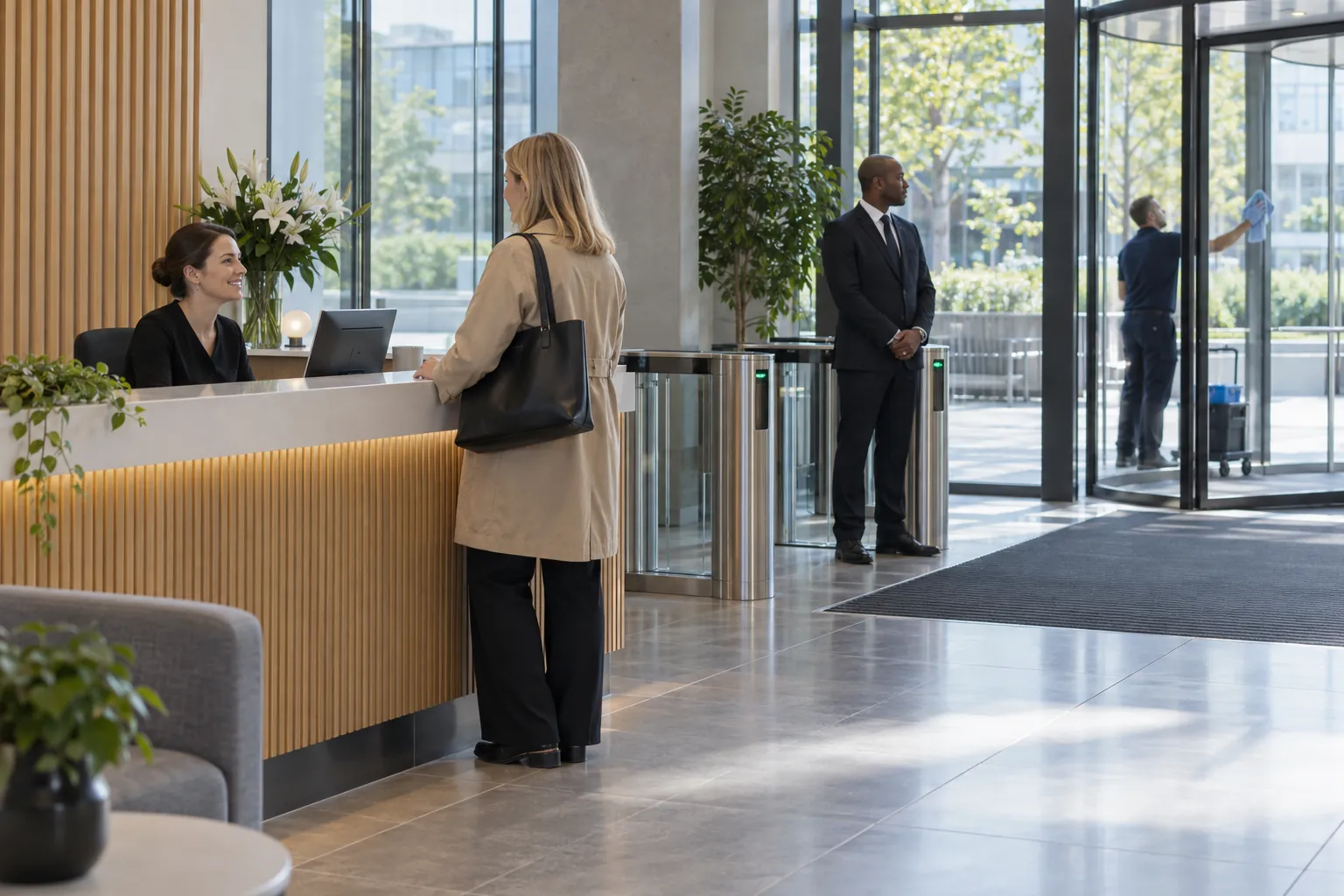 Premises and facilities managementSoft facilities management: what it covers, how it is bought, how it is measuredWhat soft facilities management covers compared with hard FM, how soft FM is contracted, from single service to total FM, and how performance is shown.
 Premises and facilities managementThe Workplace Regulations 1992: what they require of a building, and how to show itWhat the Workplace (Health, Safety and Welfare) Regulations 1992 require of a building: maintenance, cleaning, floors, toilet numbers and welfare facilities.